Week 10 - Simulating Combustion of Natural Gas.
Simulating Combustion of Natural Gas
Part I
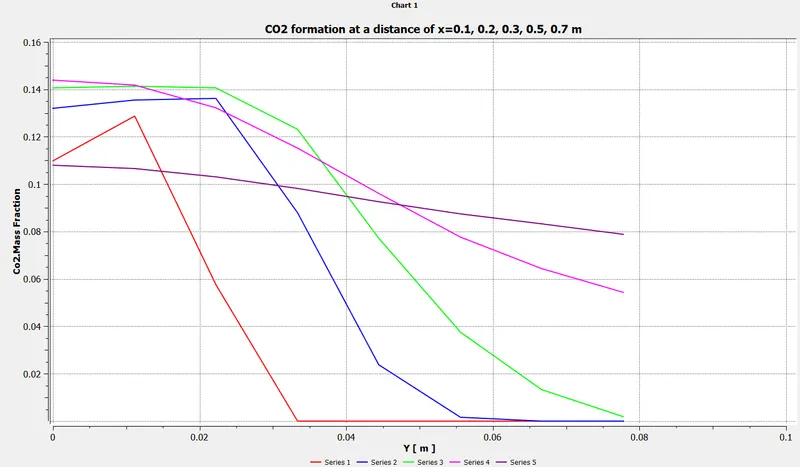
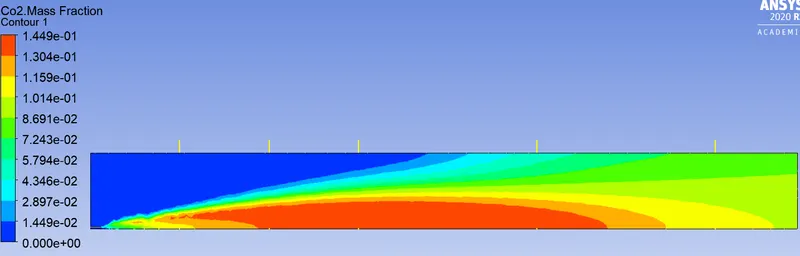
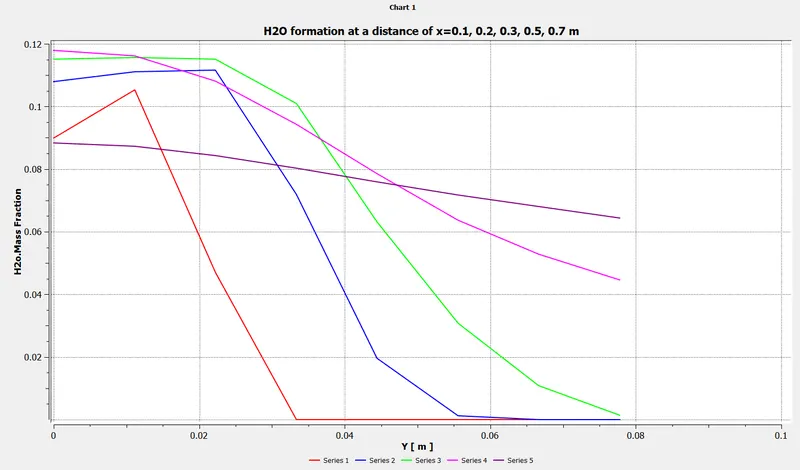
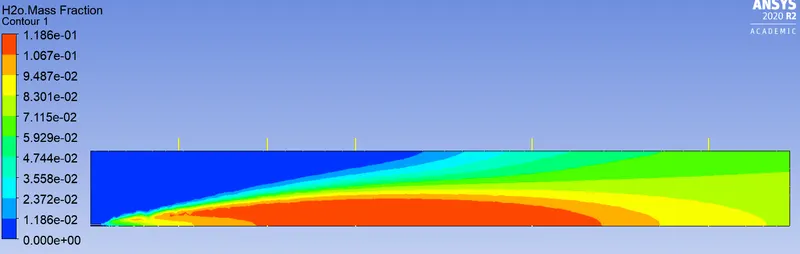
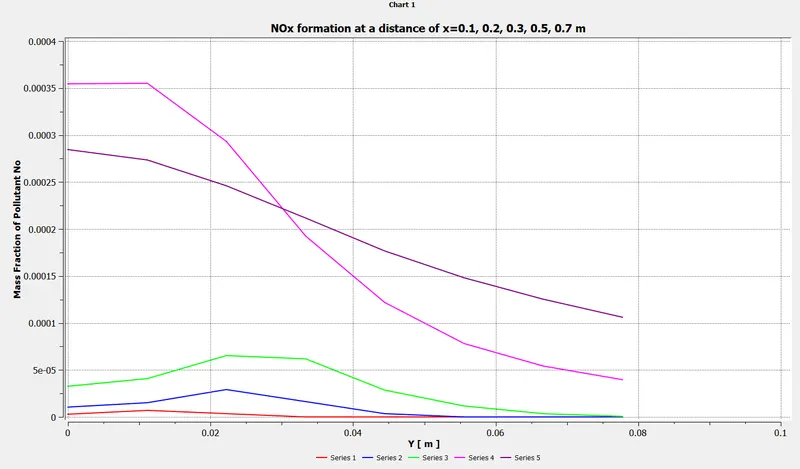
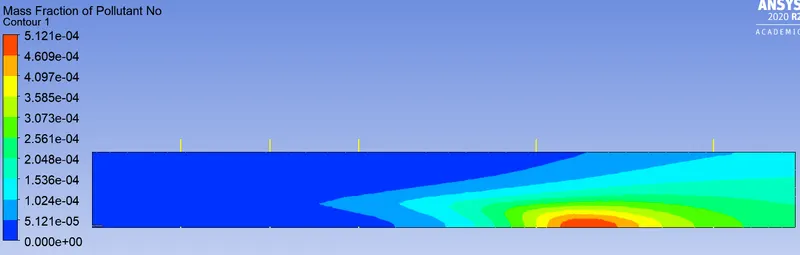
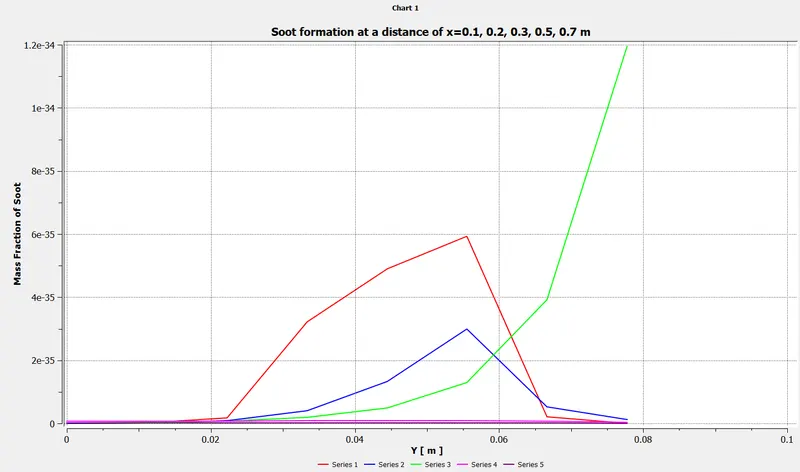
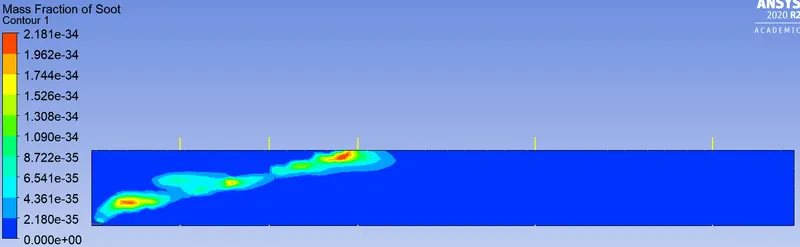
Perform a combustion simulation on the combustor model and plot the variation of the mass fraction of the different species’ in the simulation using line probes at different locations of the combustor as shown in Fig. You need to plot for CO2, H2O, CH4, N2, O2, NOx emissions & Soot formation.
Part II
As you must have observed from the above simulation, the Nox and soot is getting formed at the outlet of the combustor. Such formation has harmful effects on the environment and humans. The stringent government norms also demand the least formation of Nox and soot and to satisfy those requirements, you need to check the effect of adding the water in the fuel.
In this part, you need to add the water content in the fuel from 5% to 30% by mole and observe the effect of it on the results. It is necessary to provide line plots and contours to prove your claim.
--------------------------------------------------------------------------------------------------------------------------------------------------------
Combustion-
Combustion is a chemical process in which a substance reacts rapidly with oxygen and gives off heat. The original substance is called the fuel, and the source of oxygen is called the oxidizer. The fuel can be a solid, liquid, or gas, although for airplane propulsion the fuel is usually a liquid. The oxidizer, likewise, could be a solid, liquid, or gas, but is usually a gas (air) for airplanes. For model rockets, a solid fuel and oxidizer is used.
Simulation-
Steps in simulation-
CAD Setup-
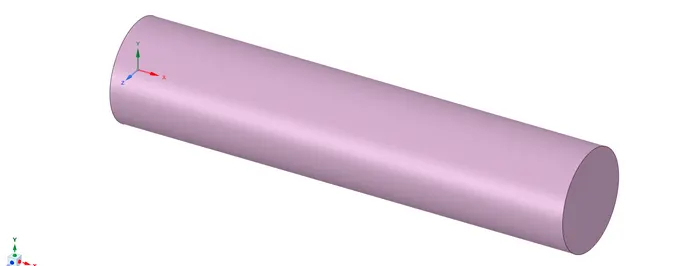
If we simulate the entire geometry, this will be more time consuming & expensive, so we assume that the flow is axisymmetric.
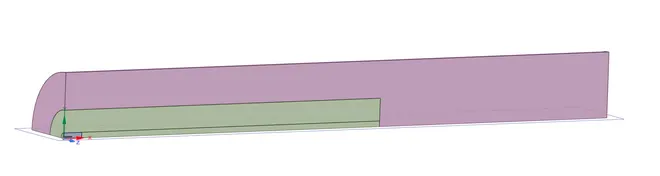
Split the 3D body in XY plane into 1/4th, then copy the faces & paste it into the new XY plane to convert it into 2D geometry.
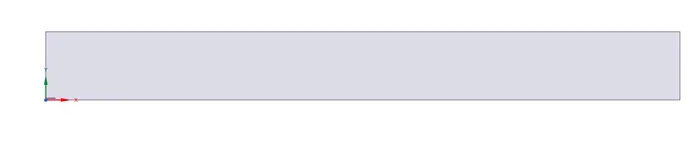
Mesh Generation-
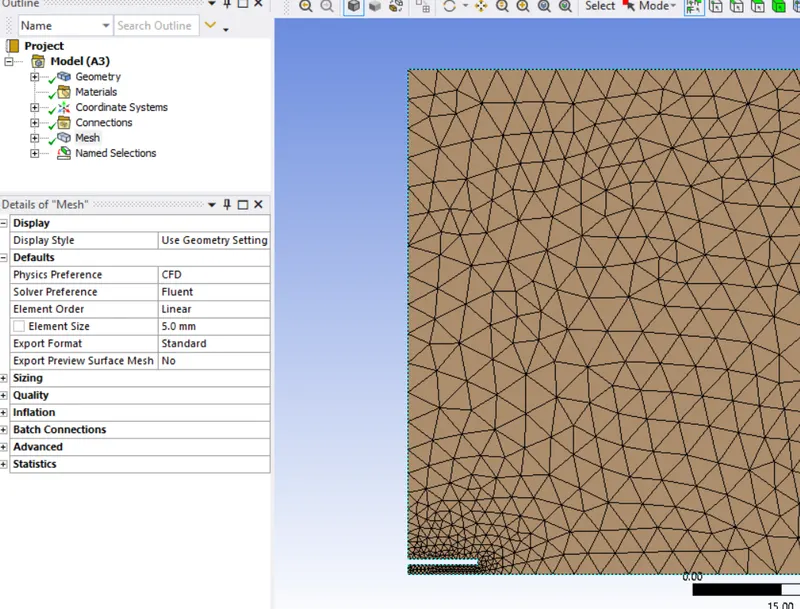
Mesh element size 5 mm.
Capture proximity to more refines the mesh near the gaps.
Assign the number of cells across gap 3.
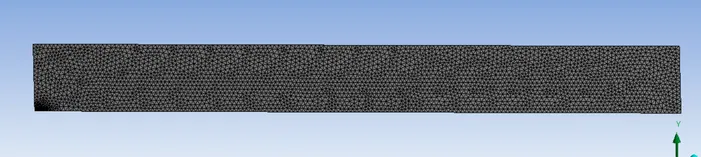
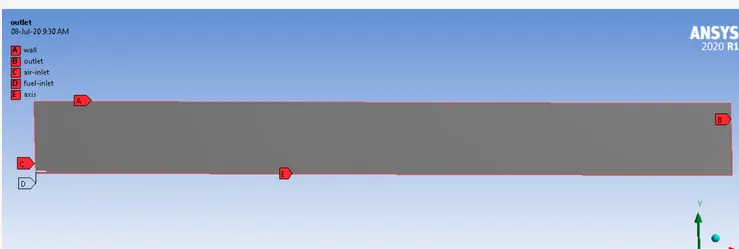
The done name selection process.
Fluent Setup-
Setting up physics: select k-epsilon, standard model.
model->species->species transport->reaction type->volumetric.
option->inlet diffusion, enable diffusion energy source.
mixture properties-methane air, when we want to add water content into fuel, use methane-air-2-step mixture to allow water in the fuel.
turbulence chemistry interaction->eddy dissipation->ok.
Solver- pressure based
assign time as steady state solver
enable 2D mode-axisymmetric
Material selection-
Methane-air for fuel without water.
methane-air 2 step for fuel with water content.
Boundary conditions:
for air inlet-
velocity=0.5 m/s
temperature= 300 k
species= mass fraction of O2= 0.23
For fuel inlet-
velocity=80 m/s
temperature= 300 k
species= mass fraction of CH4= 1
For outlet-
pressure outlet=0
Enable Thermal NOx model.
Solving-
Hybrid initialization.
create a temp plot & calculate for 1500 iterations.
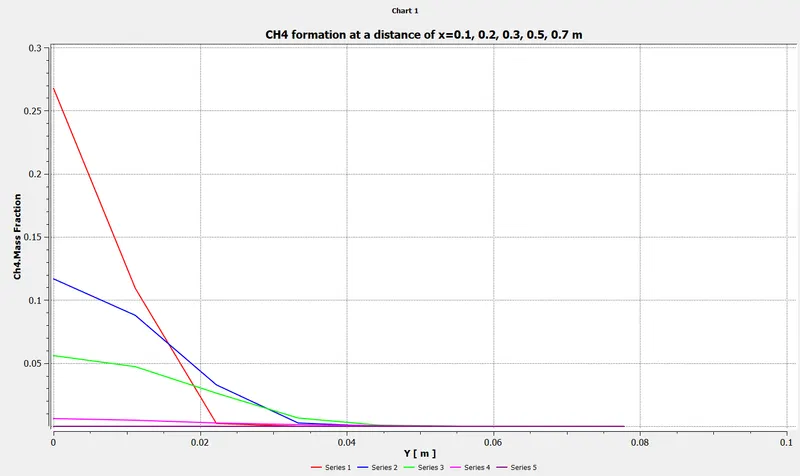
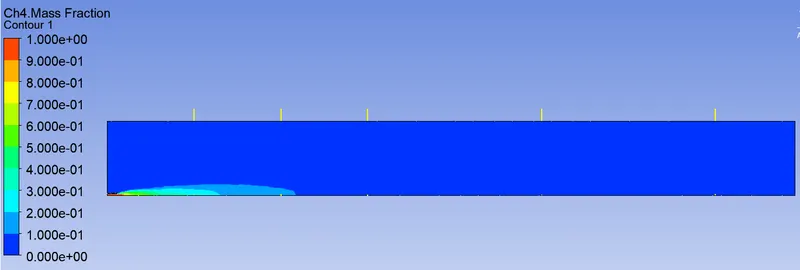
Plots & results for CO2,H2O,CH4,N2,O2,NOx emissions & soot formation:
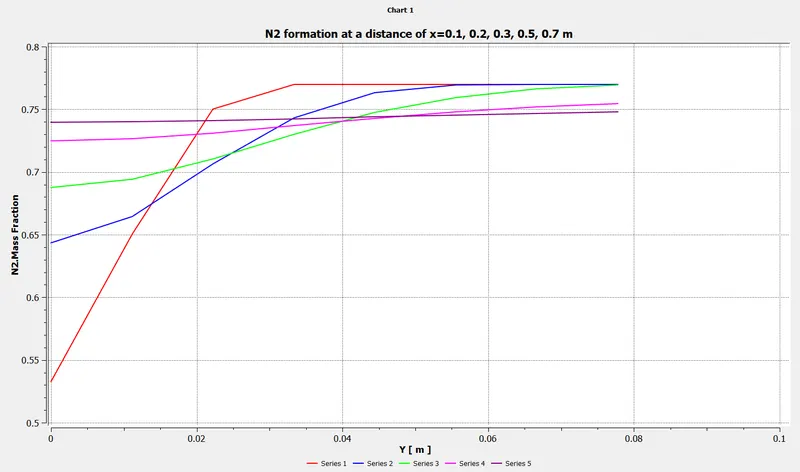
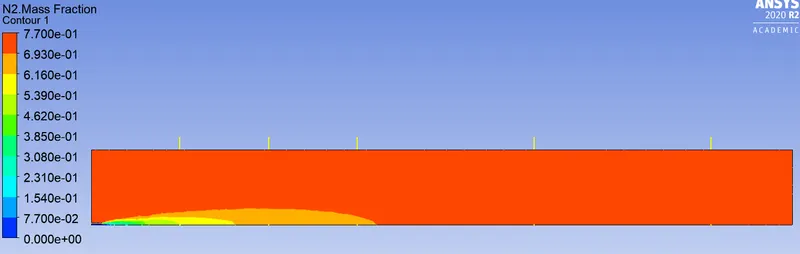
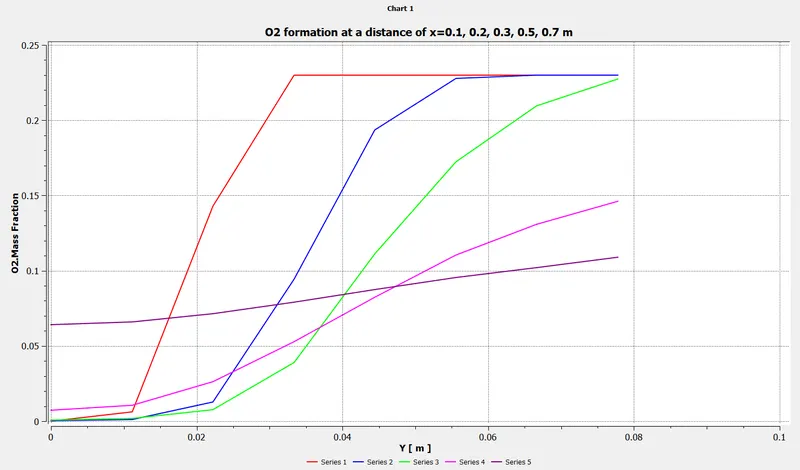
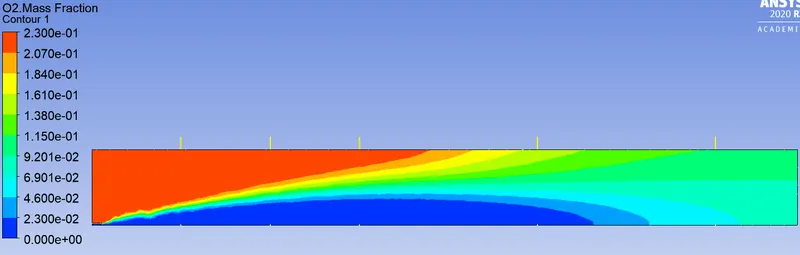
At a distance of X=0.1,0.2,0.3,0.5 & 0.7 m
CH4
CO2
H2O
N2
O2
NOx
Soot
-------------------------------------------------------------------------------------------------------------------------------------------------------------------------------------------------------------------------------------------------------------------------------------------------------------------------------------------------------------------------------------------------
Part2:
In this part, you need to add the water content in the fuel from 5% to 30% by mole and observe the effect of it on the results.
Plots & results for CO2,H2O,CH4,N2,O2,NOx emissions & soot formation:
At a distance of X=0.1,0.2,0.3,0.5 & 0.7 m
when the water content is 5%, 15% & 30% of mass fractions
CH4
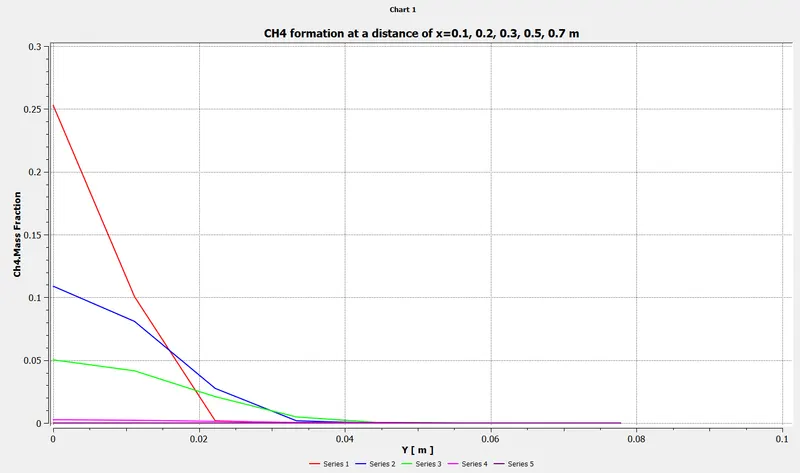
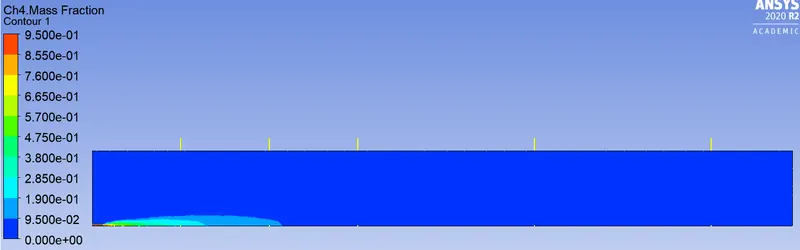
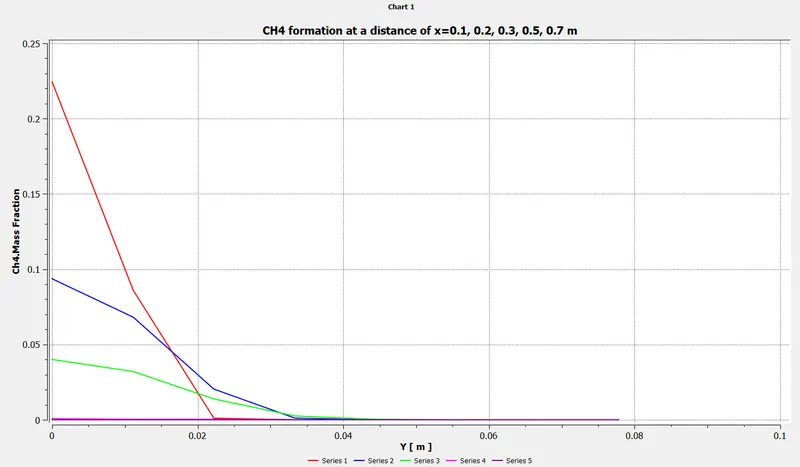
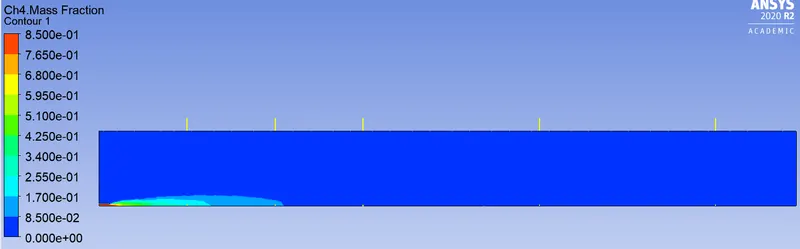
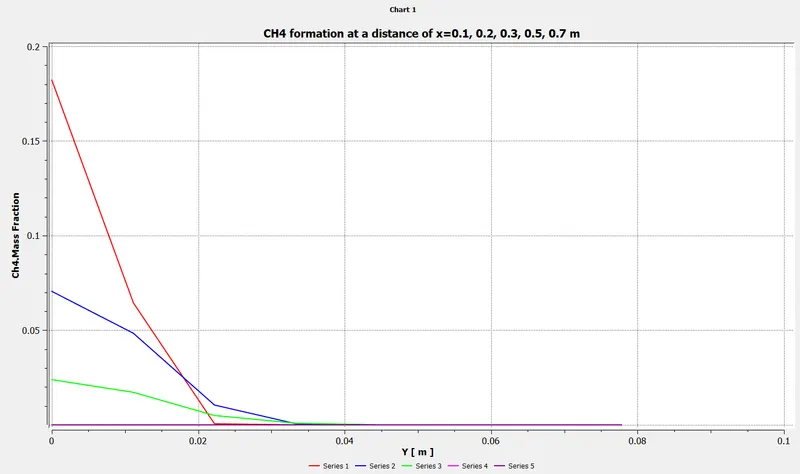
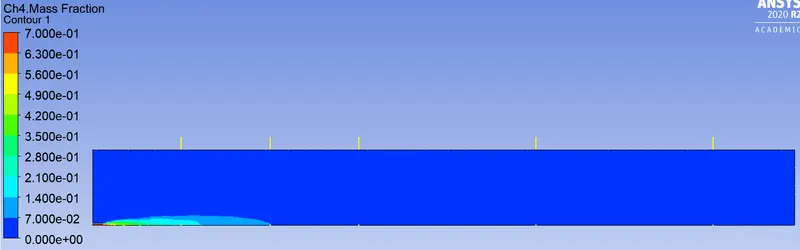
Mass fraction of methane reduces when the water is added.
CO2
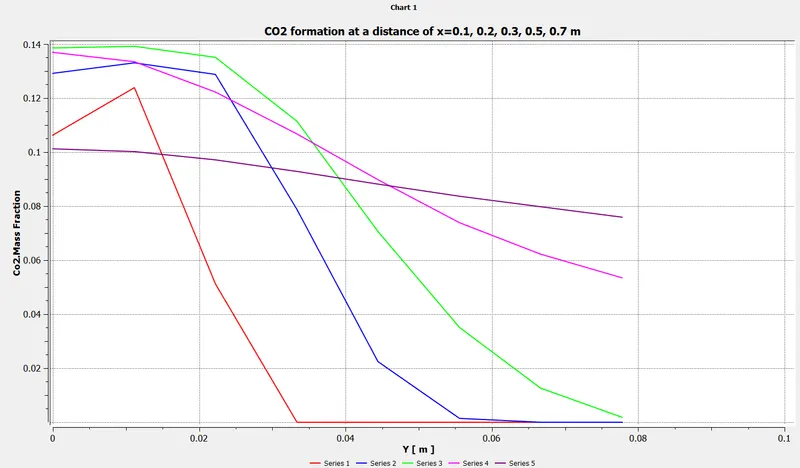
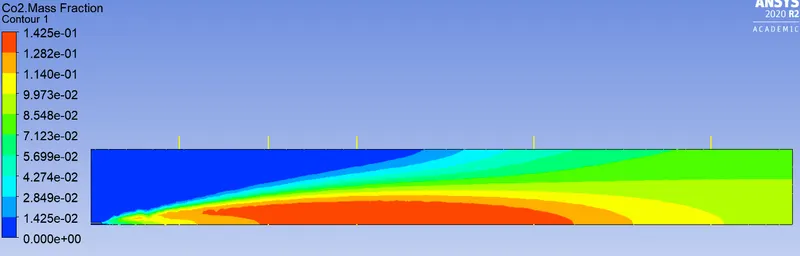
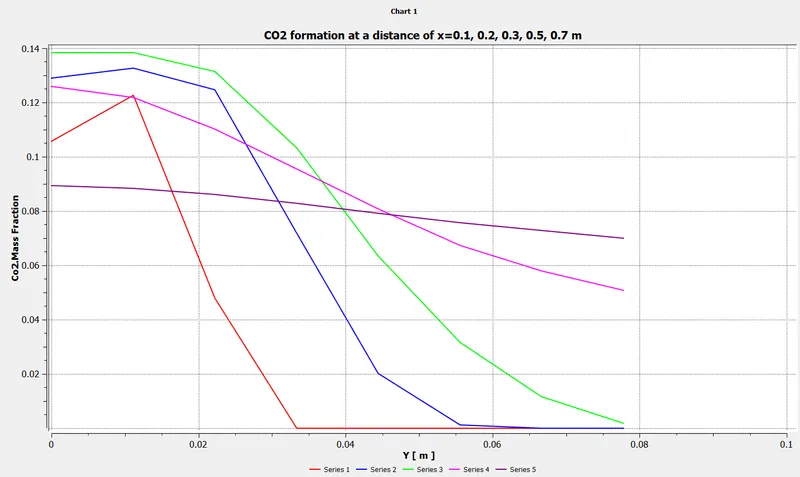
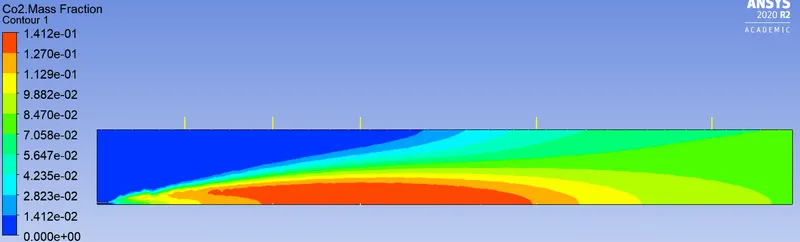
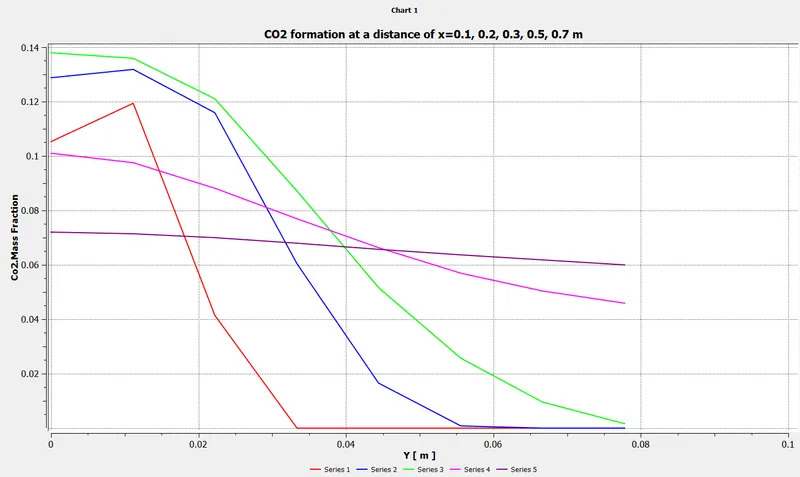
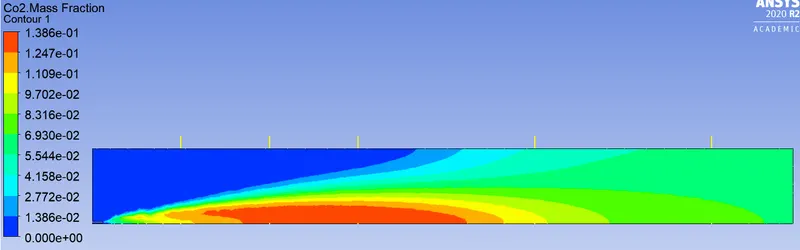
CO2 emissions reduced slightly when water is added.
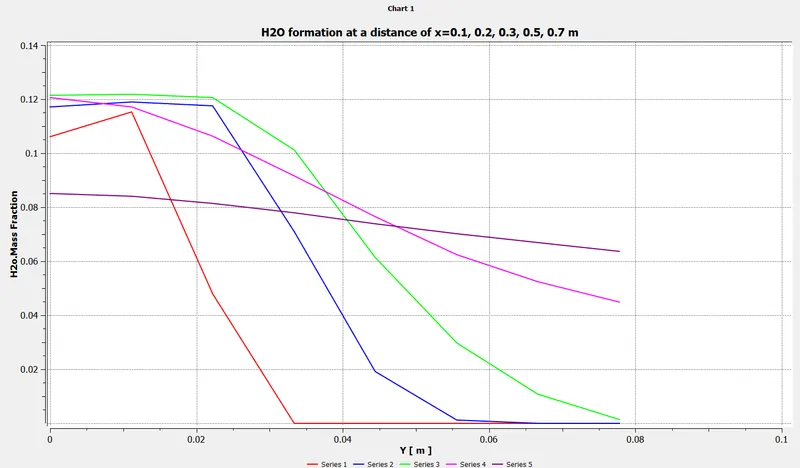
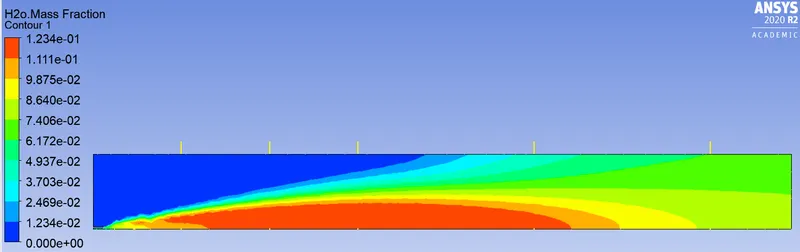
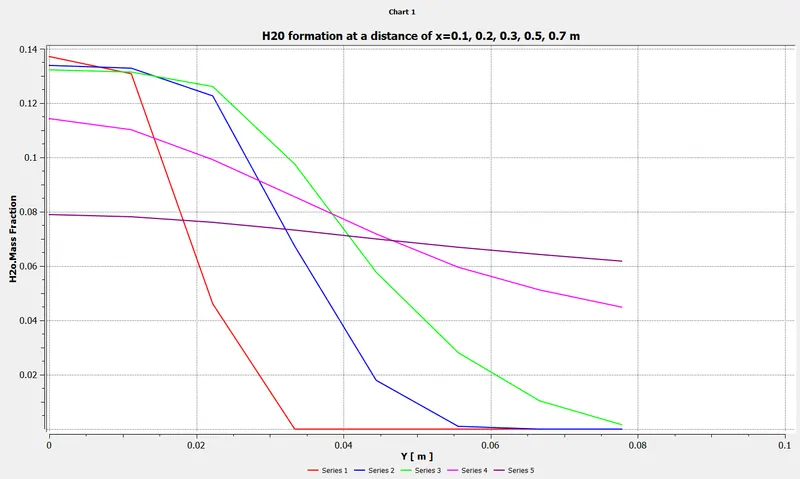
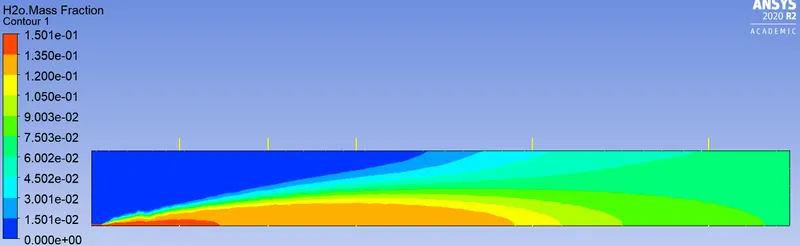
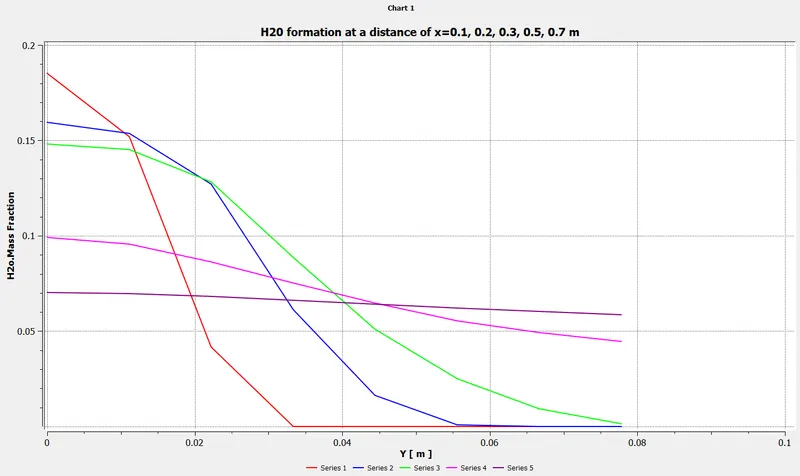
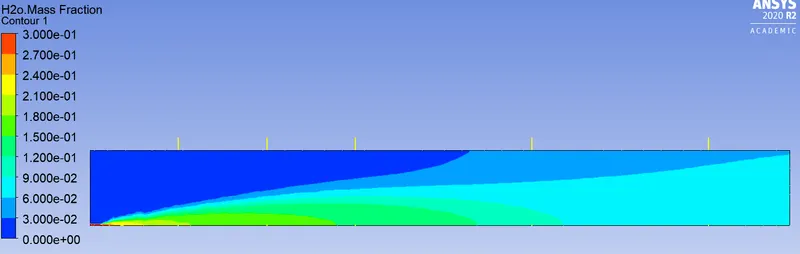
H2O
N2
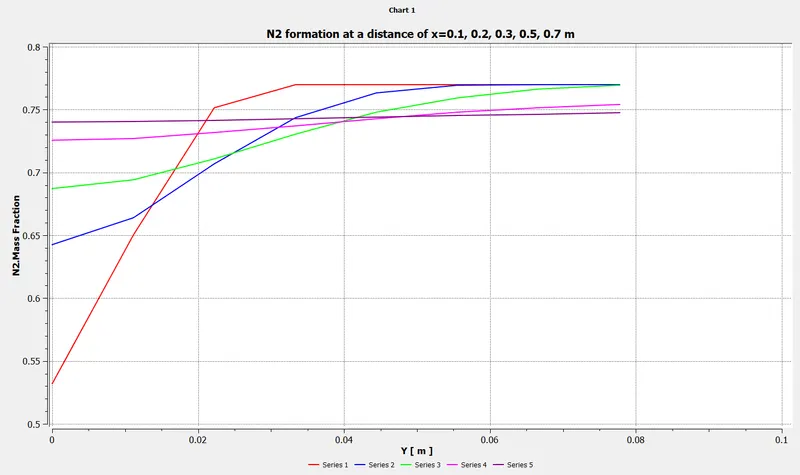
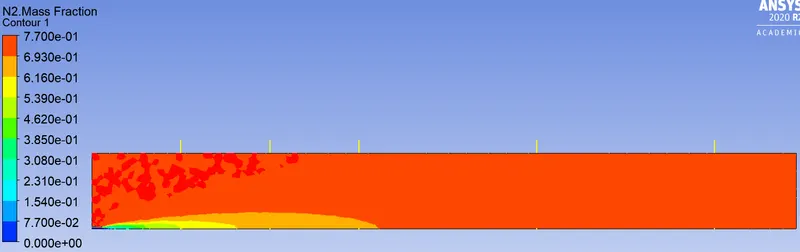
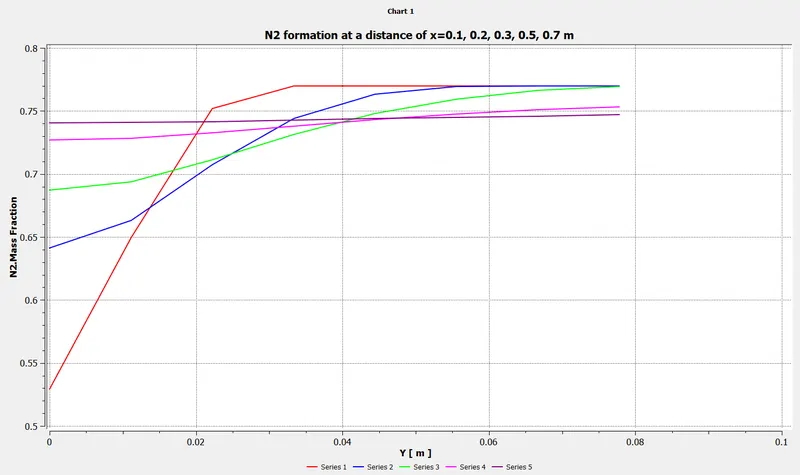
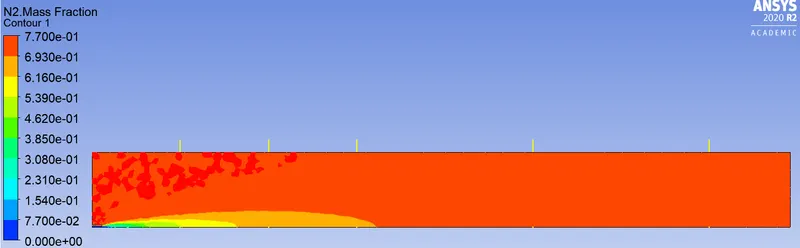
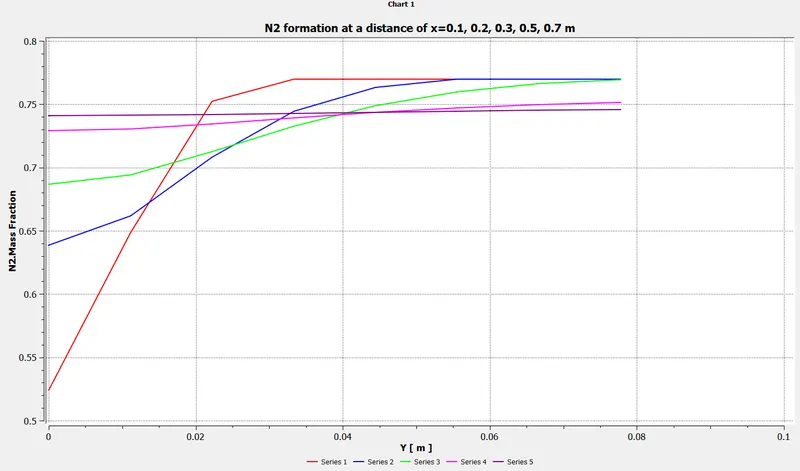
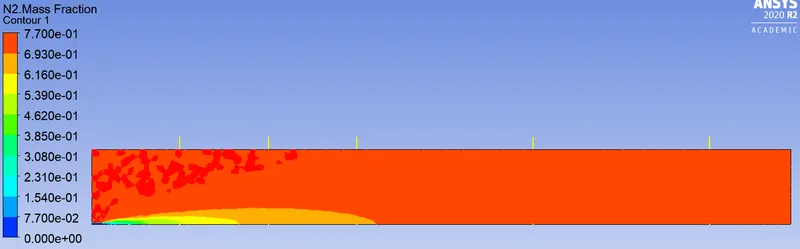
There is no effect on N2 when water is added.
O2
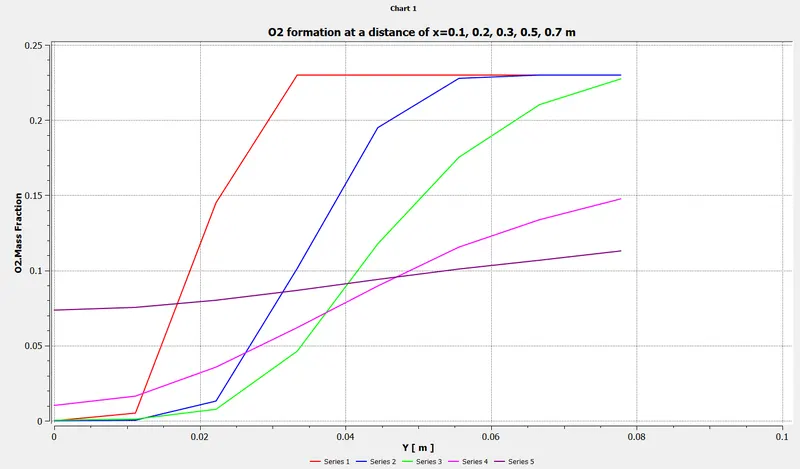
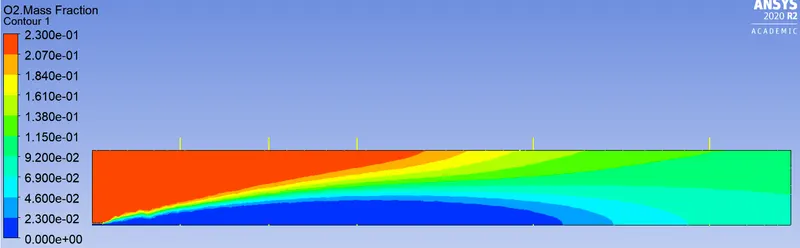
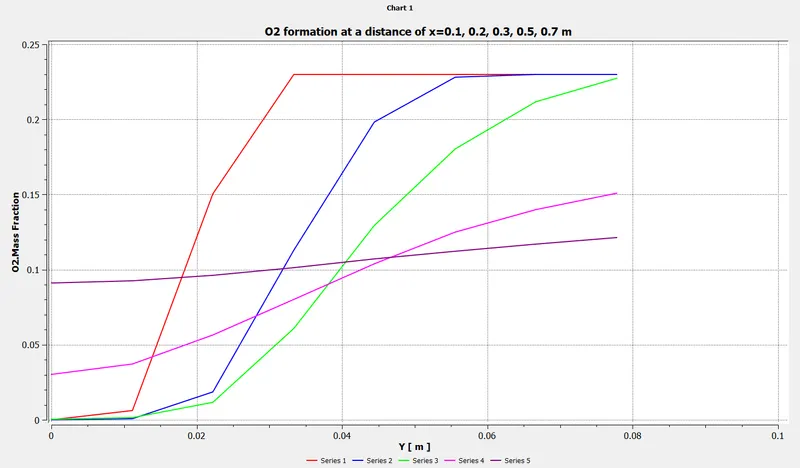
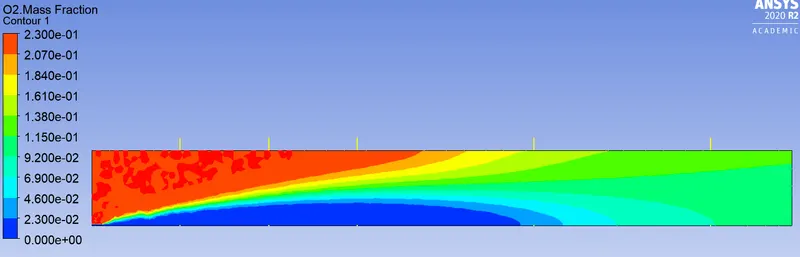
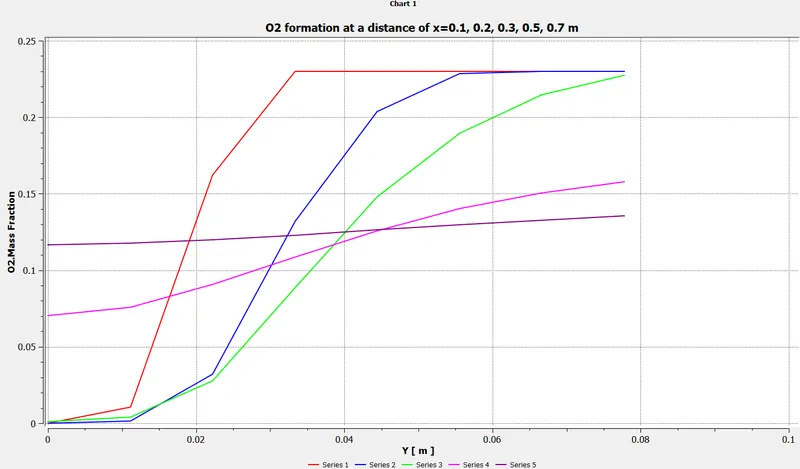
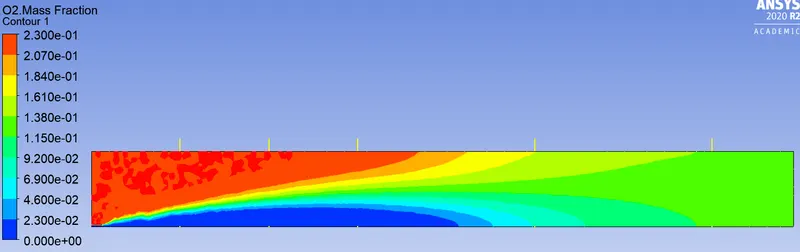
There is slightly increment on O2.
NOx
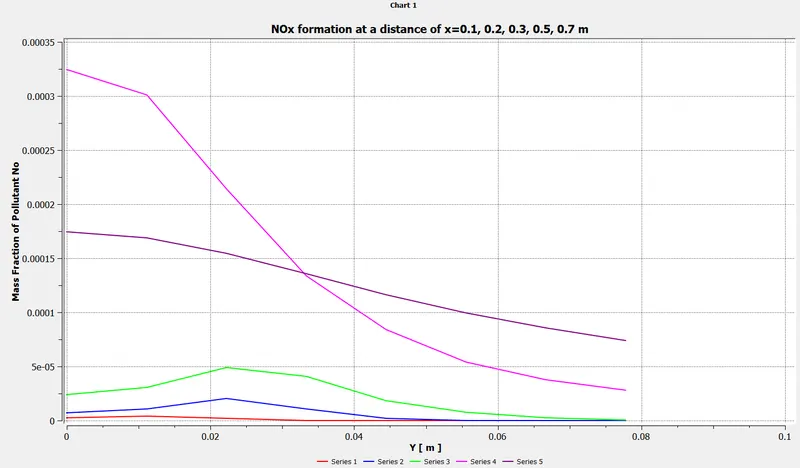
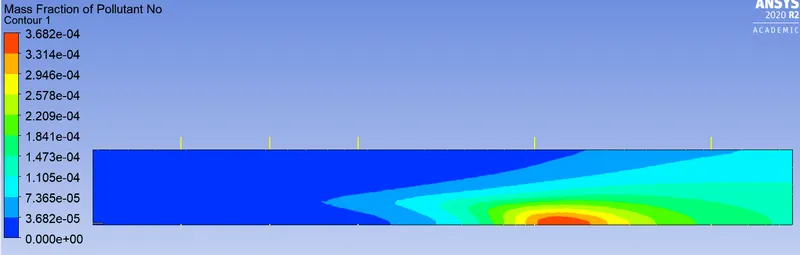
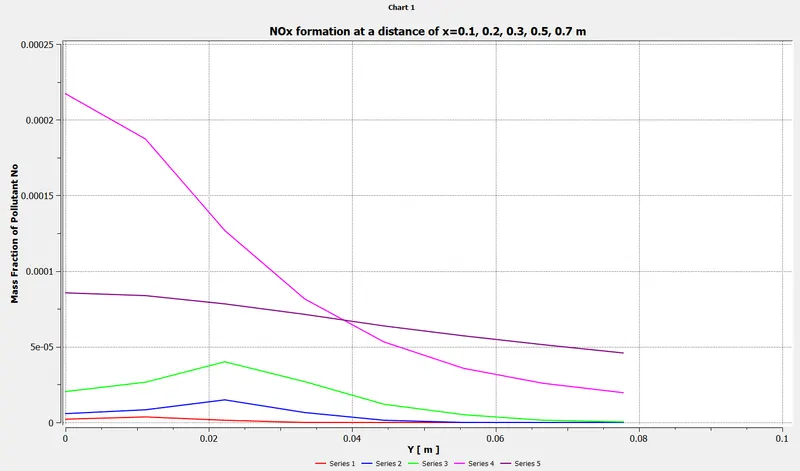
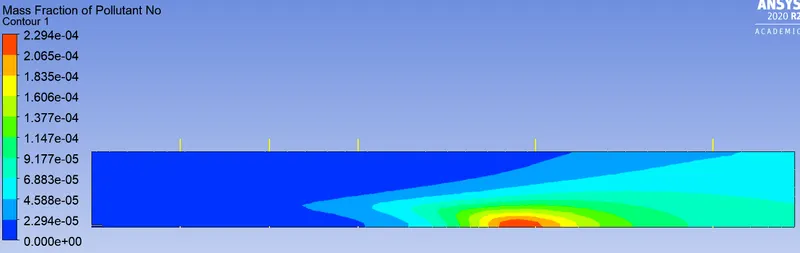
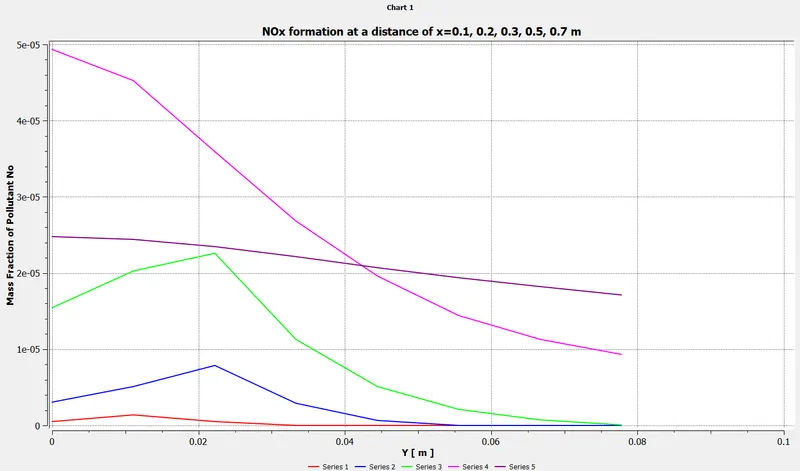
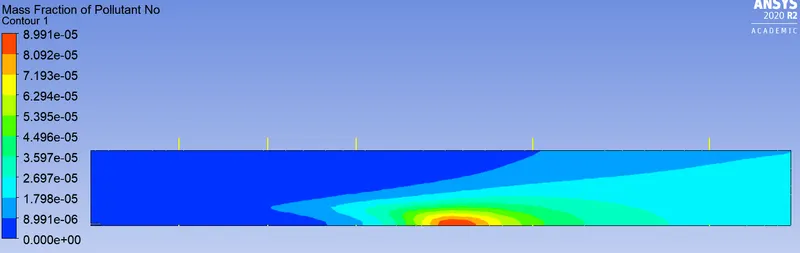
There is a reduction in the NOx emission when water is added in fuel.
Soot
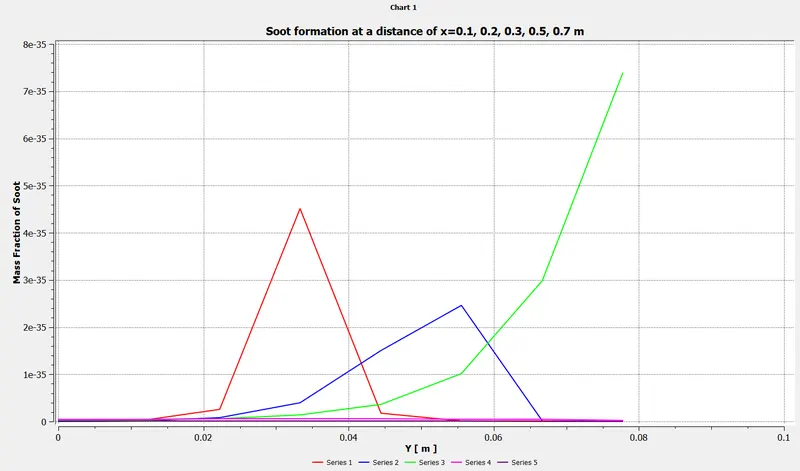
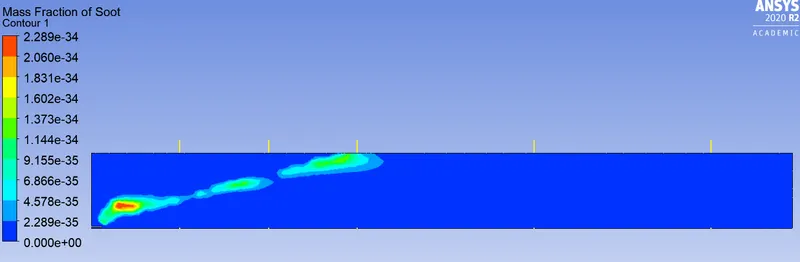
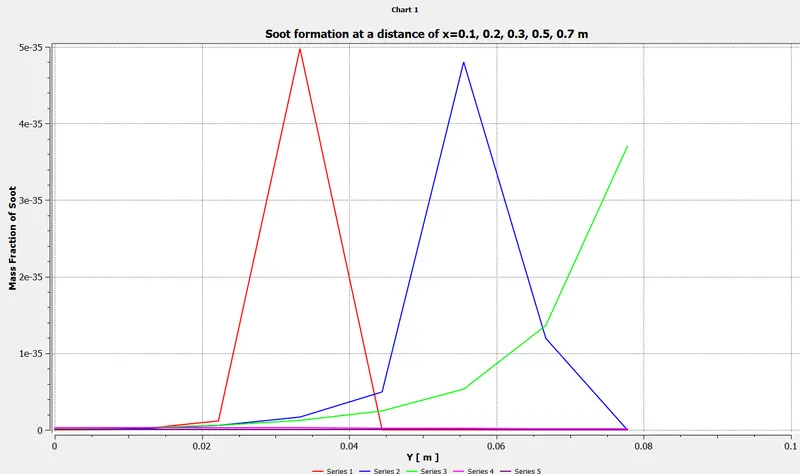
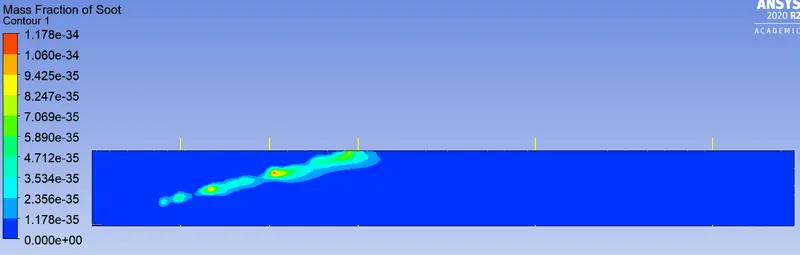
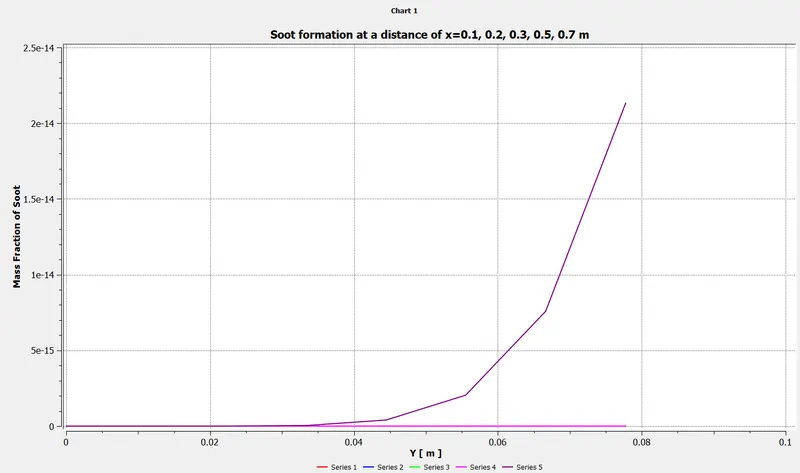
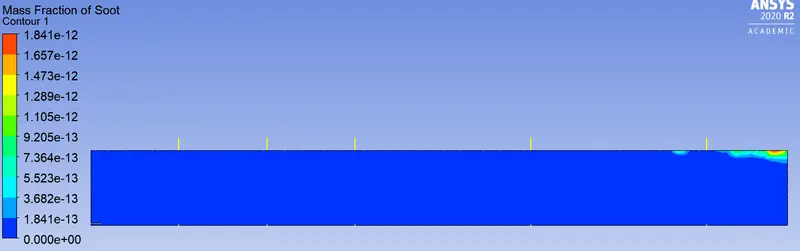
There is a reduction in the Soot emission when water is added in fuel.
Effect of adding water on different species:
| Species | CH4 | CO2 | H2O | N2 | O2 | NOx | Soot |
| Effect | decrease | decrease | increase | no effect | slightly increase | decrease | decrease |
Conclusion:
- There is reduction of emissions such as NOx, Soot & CO2 after adding water.
- As we adding water, so H2O increases & no effect on N2 & O2.
- As per above study emissions can be controlled by application of water in the fuel.