Underbody Coating
UNDERBODY COATING
Introduction:
Underbody coating refers to a protective layer of material applied to the bottom of a vehicle to protect it from damage caused by road debris, moisture, and other environmental factors. This report will provide a detailed explanation of the underbody coating process in the automotive industry, its pros and cons, and the benefits it offers.
Definition:
Underbody coating is a process that involves applying a layer of material to the underside of a vehicle, typically made of rubber, tar, or wax. The primary purpose of underbody coating is to protect the vehicle's undercarriage from corrosion, rust, and damage caused by debris, rocks, and other objects encountered while driving.
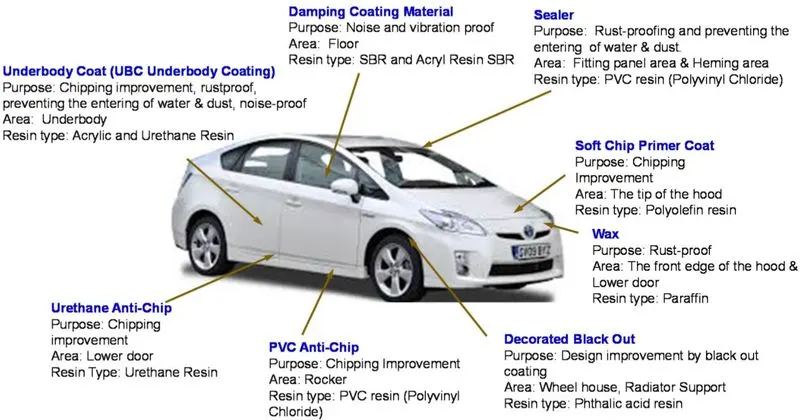
It protects the underbody substrates from:
-
Environmental conditions
-
Impacts
-
Dampens sound and vibration
-
Insulates against cold and heat
-
Protects against Corrosion
-
Seals off seams
-
Hides welds, repairs & bodywork with spray
Types of Underbody Coating:
-
Rubber-based coating: Rubber-based underbody coatings are the most common type used in the automotive industry. They provide excellent protection against corrosion, rust, and damage caused by debris.
-
Wax-based coating: Wax-based underbody coatings offer good protection against corrosion and rust, but they are not as effective at protecting against impact damage as rubber-based coatings.
-
Tar-based coating: Tar-based underbody coatings are highly effective at protecting against corrosion and rust, but they are not as widely used as rubber-based coatings due to their messy and time-consuming application process.
Process:
-
Cleaning: The undercarriage of the vehicle is first cleaned thoroughly to remove any dirt, debris, or rust.
-
Drying: Once the undercarriage is cleaned, it is allowed to dry completely.
-
Masking: Certain areas of the undercarriage that do not require coating are masked off to prevent overspray.
-
Priming: A primer is applied to the undercarriage to prepare it for the underbody coating.
-
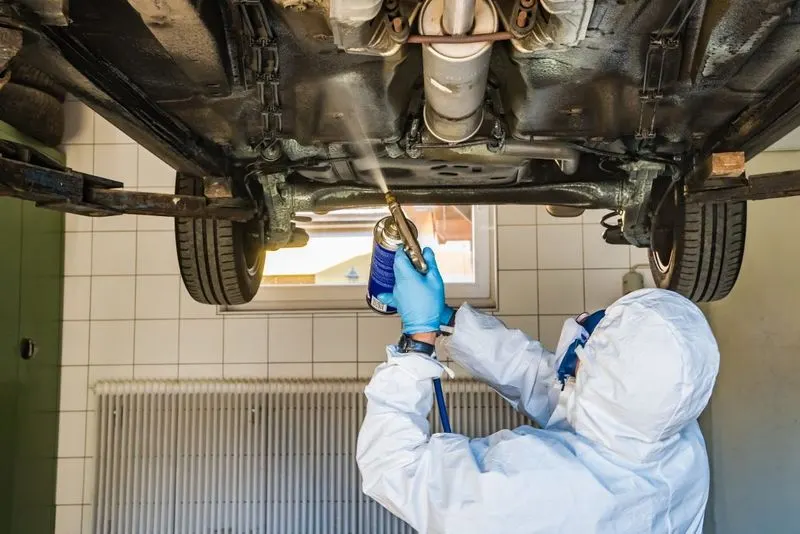
Applying the coating: The underbody coating is applied using a spray gun or similar device. It is applied in several thin layers to ensure even coverage and sufficient drying time between each layer.
-
Drying: Once the final layer is applied, the underbody coating is allowed to dry completely.
-
Finishing: Any masking tape or protective covers are removed, and the undercarriage is inspected for any missed spots or uneven coverage.
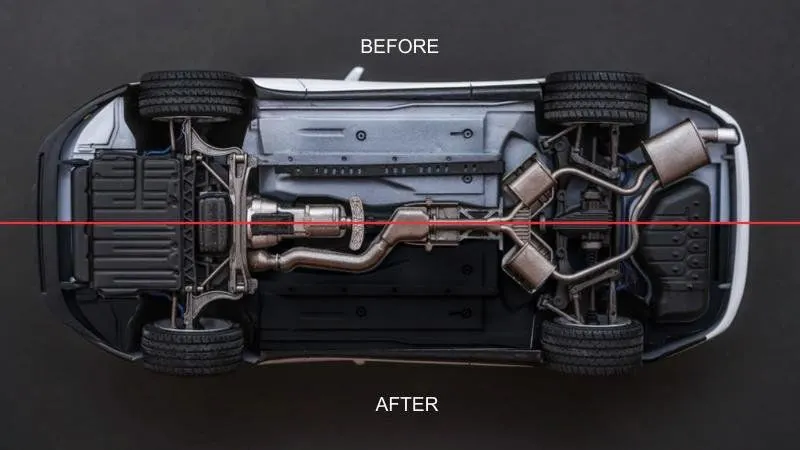
BEFORE & AFTER UNDERCOATING:
Pros:
-
Protection: Underbody coating offers excellent protection against road debris, moisture, and other environmental factors, which can cause corrosion and rust on a vehicle's undercarriage.
-
Longevity: A well-applied underbody coating can last for many years, providing long-lasting protection for the vehicle's undercarriage.
-
Cost-effective: Applying underbody coating is a relatively low-cost way to protect a vehicle's undercarriage from damage, compared to the cost of repairing or replacing corroded or rusted parts.
Cons:
-
Time-consuming: The underbody coating process can be time-consuming, requiring several layers of coating to be applied, and sufficient drying time between each layer.
-
Difficulty of application: Applying underbody coating requires skill and experience to ensure that the coating is evenly applied and adheres properly to the undercarriage.
-
Potential for overspray: Applying underbody coating can result in overspray, which can cause damage to other parts of the vehicle if not properly protected.
Conclusion:
In conclusion, underbody coating is an essential process in the automotive industry that provides excellent protection for a vehicle's undercarriage. While there are some drawbacks to the process, the benefits it offers in terms of protection, longevity, and cost-effectiveness make it a worthwhile investment for vehicle owners. However, it is important to ensure that underbody coating is applied correctly by an experienced professional to achieve the best results.