Section Modulus calculation and optimization
AIM : Brief explanation about Section Modulus. Use the Section from your Hood design and calculate the Section Modulus using the formula (S = I/y)
Where,
S = Section Modulus
I = Moment of Inertia
y = distance between the neutral axis and the extreme end of the object.
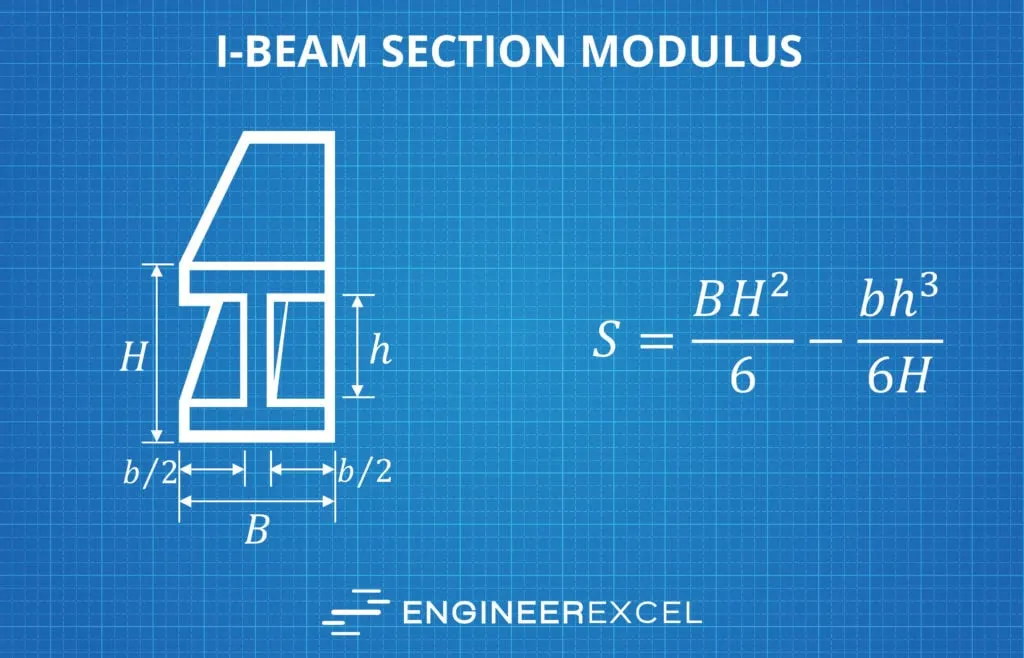
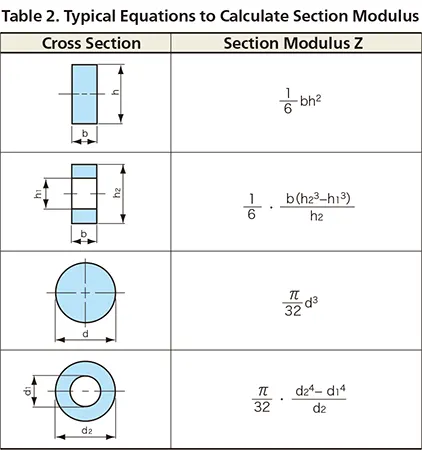
Section modulus : Section modulus is a geometric property for a given cross-section used in the design of beams or flexural members. Equations for the section moduli of common shapes are given below. There are two types of section moduli, the elastic section modulus and the plastic section modulus.
- Elastic section modulus : For general design, the elastic section modulus is used, applying up to the yield point for most metals and other common materials. The elastic section modulus is defined as S = I / y.
- Plastic Section Modulus : The plastic section modulus is used for materials where elastic yielding is acceptable and plastic behavior is assumed to be an acceptable limit. Designs generally strive to ultimately remain below the plastic limit to avoid permanent deformations, often comparing the plastic capacity against amplified forces or stresses.
The plastic section modulus depends on the location of the plastic neutral axis (PNA).The PNA is defined as the axis that splits the cross section such that the compression force from the area in compression equals the tension force from the area in tension. So, for sections with constant yielding stress, the area above and below the PNA will be equal, but for composite sections, this is not necessarily the case.
The plastic section modulus is the sum of the areas of the cross section on each side of the PNA (which may or may not be equal) multiplied by the distance from the local centroids of the two areas to the PNA:

Rectangular Section-


Importance of Section Modulus : The section modulus of the cross-sectional shape is of significant importance in designing beams. It is a direct measure of the strength of the beam. A beam that has a larger section modulus than another will be stronger and capable of supporting greater loads.
Why Young's Modulus used: The Young's modulus of a material is a useful property to know in order to predict the behaviour of the material when subjected to a force. This is important for almost everything around us, from buildings, to bridges to vehicles and more.
Using the section of hood calculating section modulus :
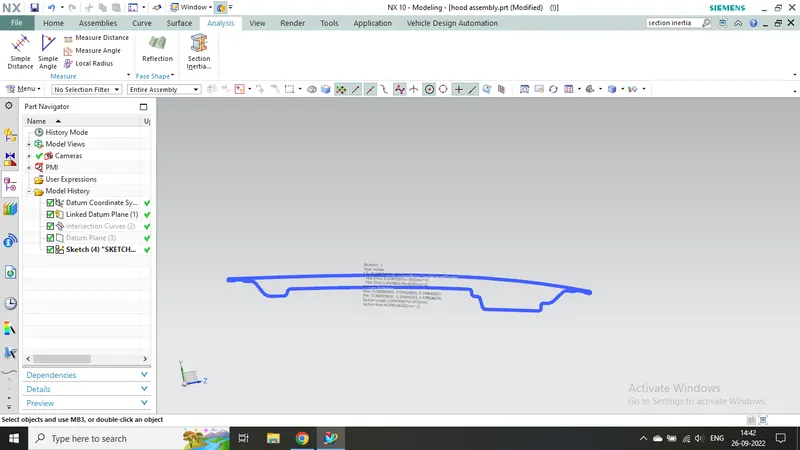
- Taking cross section of hood :
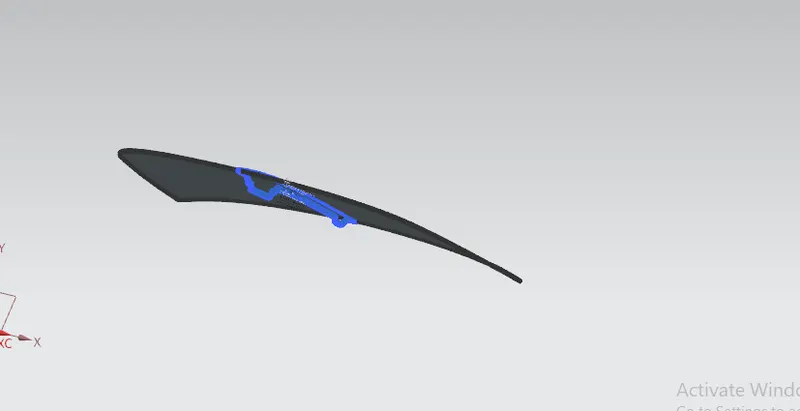
Cross section plane:
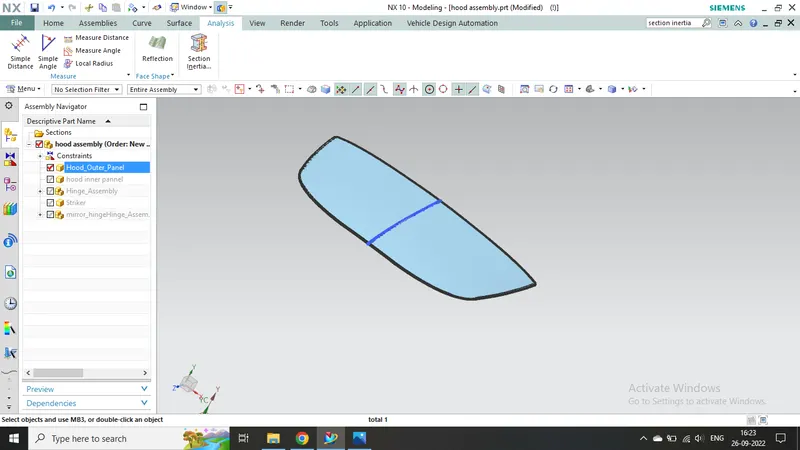
First Cross section Inertia Analysis :
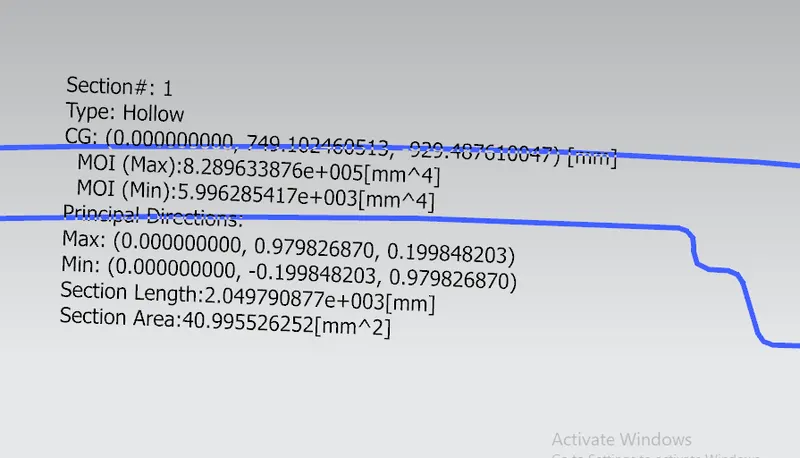
Distance between the neutral axis and the extreme end of the object : = 488/2 = 244 mm
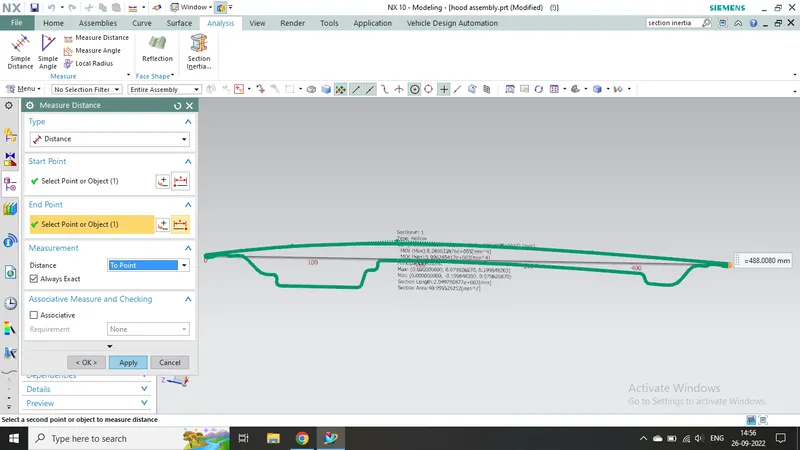
Calculation:
MOI (min) = I= 5.996285 * 10^3 = 5996.285 mm^4
y = 244 mm
S = I/y = 5996.285/244 = 24.575 mm^3
Second analysis after offseting inner panel by 0.95 mm :
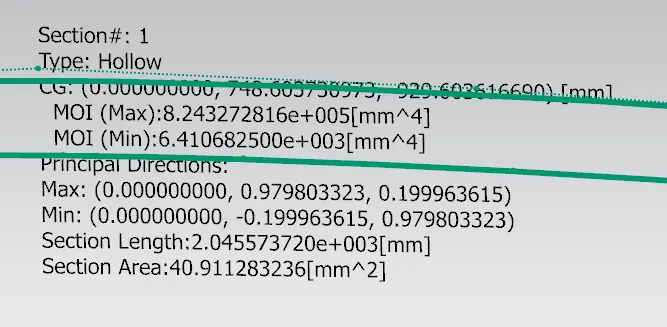
Calculation: MOI (min) = 6410.683 mm^4
y = 244 mm
S = I/y = 26.273 mm^3
Third analysis after offseting inner panel by 2mm :
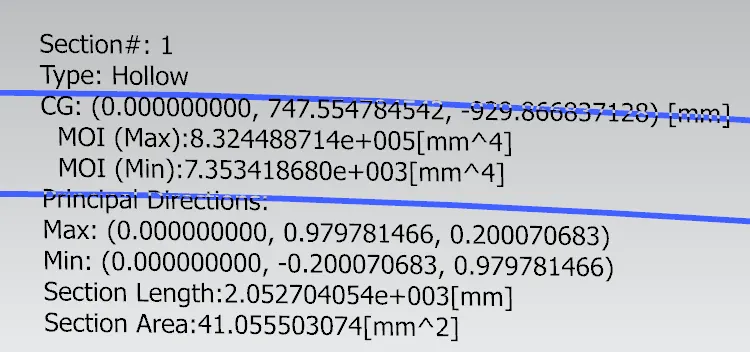
Calculation: MOI (min) = 7353.42 mm^4
y = 244 mm
S = I/y = 30.14 mm^3
Conclusion : By comparing different cross sections we see that if we increase gap between inner and outer panel then section modulus is also increasing and therefore strength is also increasing.
I have highlited the values of section modulus of all three cross sections with orange colour and also highlited the changes i have made in cross sections with yellow colour.
Thank You!