Roof Design
Introduction:
Roof is an integral part of the car or any automobile because the passangers requires a shield which protects them from varying weather conditions. The passangers sort to automobiles like cars for the comfort it offers during travelling from one place to another .
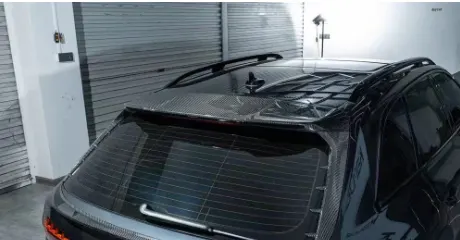
Designing of Roof:
The starting point of the roof design is the roof styling surface which is got from the styling team who take into consideration of all the aesthetic considerations of the design
The roof design engineer must take into consideration of three important factors before proceeding with the design .They are
1.Front visibility criteria
2.Rear visibility criteria
3.Head room clearance
The roofs are not the load carrying member but they should be designed to carry loads in order to remain strong without any dents or permanent deformation during the periods of unforseen situations.
Reinforcements for roof
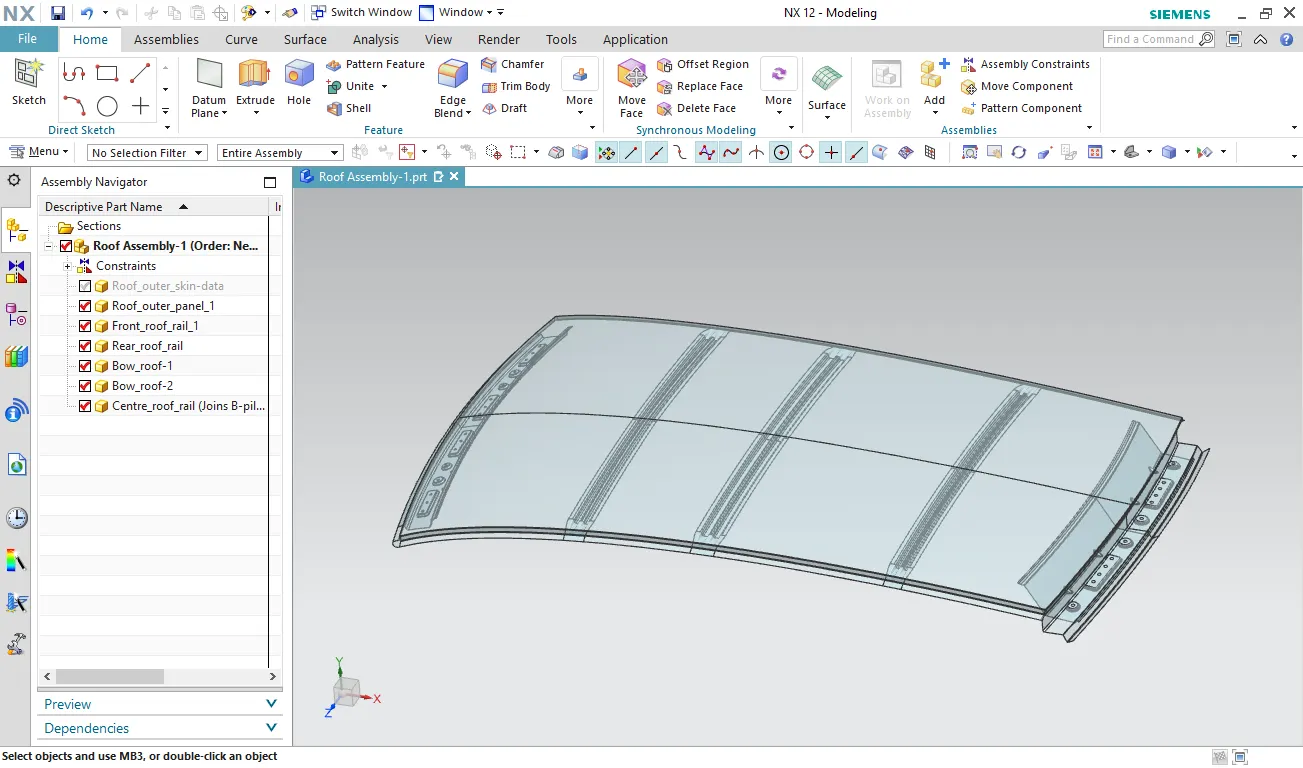
The roofs are reinforced with five structures which acts as support members.They are
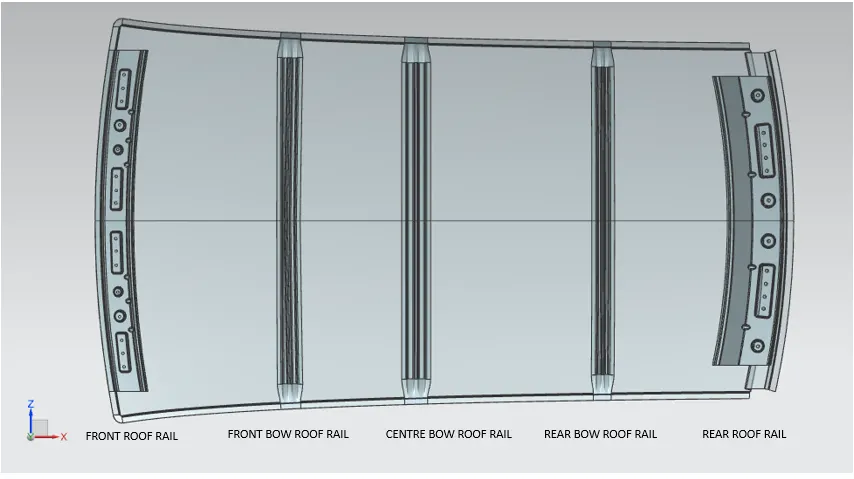
1.Front roof rail
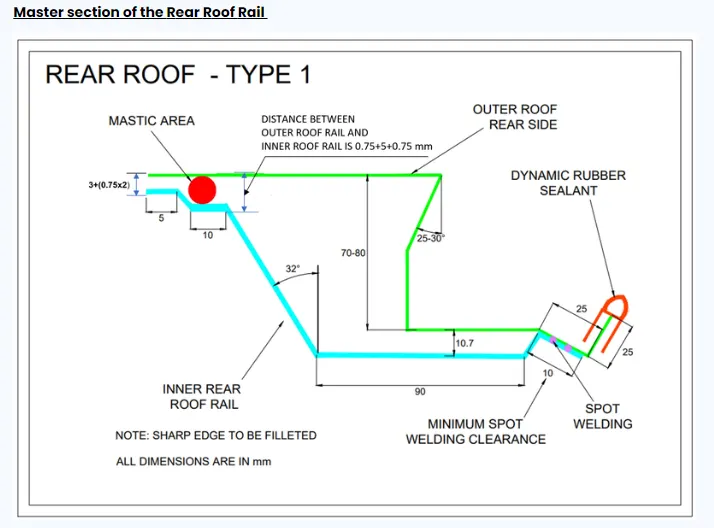
2.Rear roof rail
3.Center reinforcement roof rail or Center bow roof rail
4.Front bow roof rail
5.Rear bow roof rail.
Design considerations:
The Draft angle should be greater than 7 degrees.
Since the head room clearance should be taken into considerations, the desirable height of the bow roof rails added to support the roof surface should not be greater than 20 mm and the number of bow roof rails and the location of bow roof rails are optimized by taking into consideration of the empirical formulae like Bow load prediction formula and Snow load prediction formula.
ROOF Design Using NX-CAD (WITHOUT SUNROOF):
Roof Design Flanges and reinforcements:
All the roof rails and reinforcements are designed by taking into consideration of the draft angle and also made sure that all the sharp corners are avoided by applying blends of the surfaces
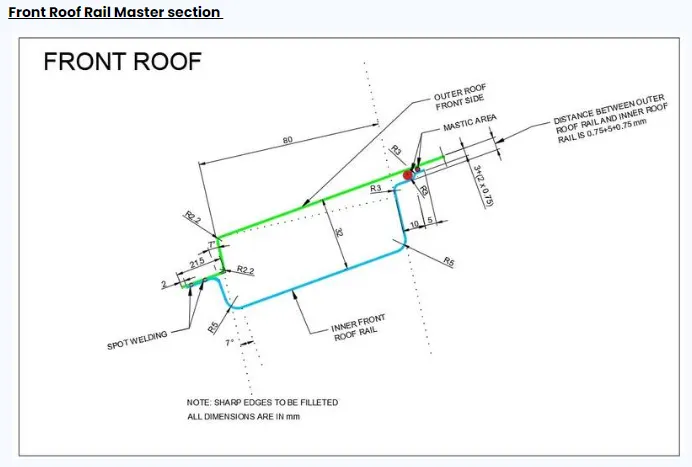
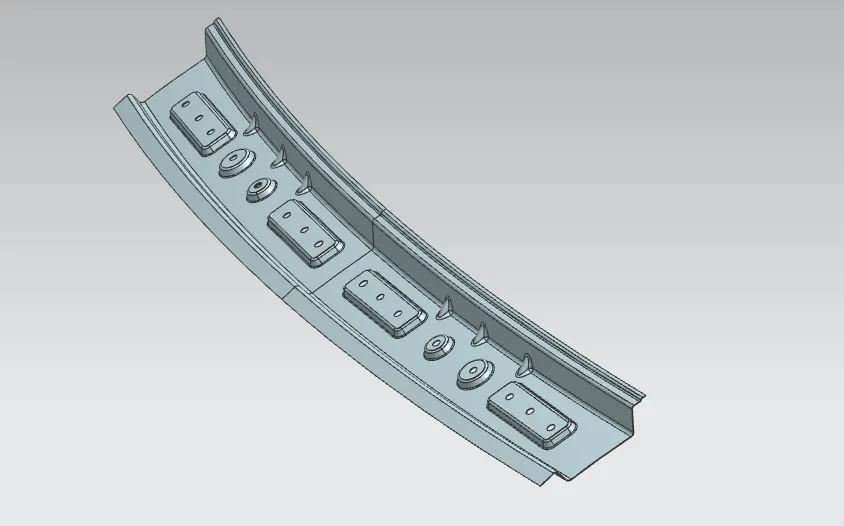
Front Roof Rail:
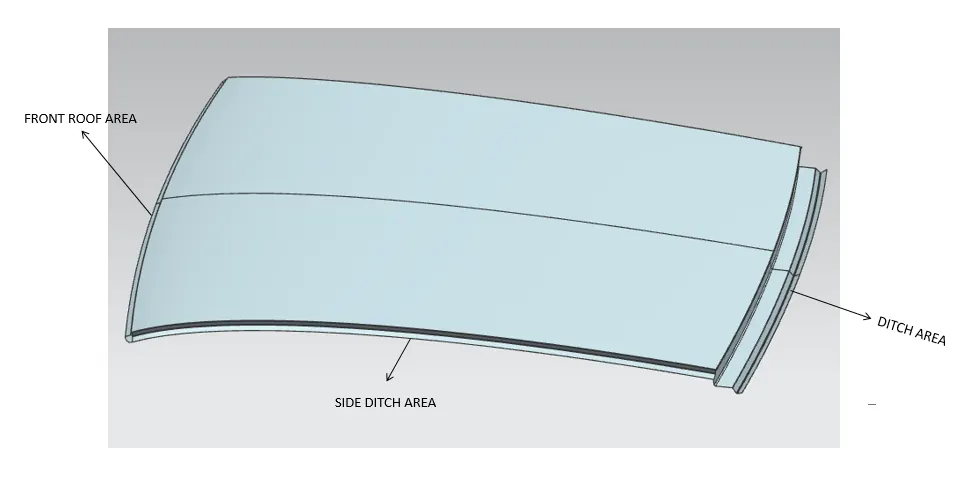
The front roof rail is created at the front side of the roof to provide strength to the roof. Headroom clearance and the driver visibility are the two important factors to be considered while designing the front roof rail. the front roof rail is connected to the roof outer panel with the help of mastic seal.
Rear Roof Rail:
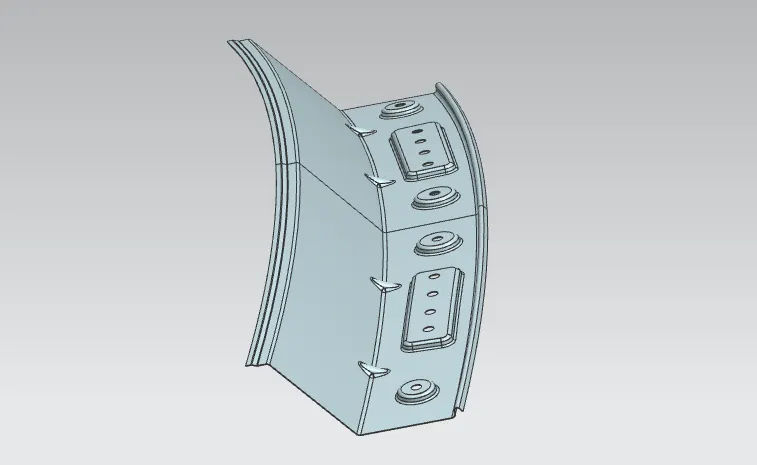
Center Reinforcement:
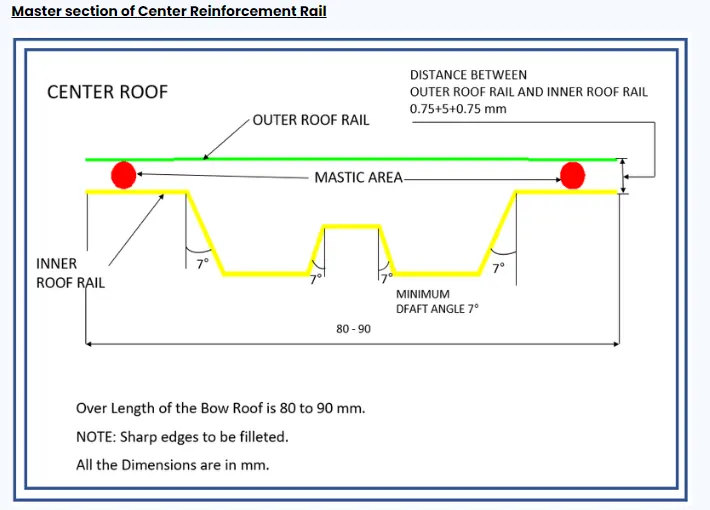
It is created at the centre of the roof. It is connected to the roof by mastic seal.
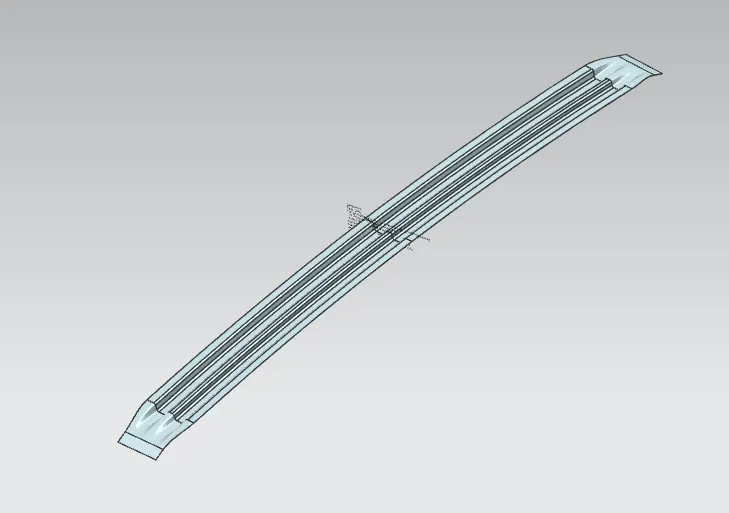
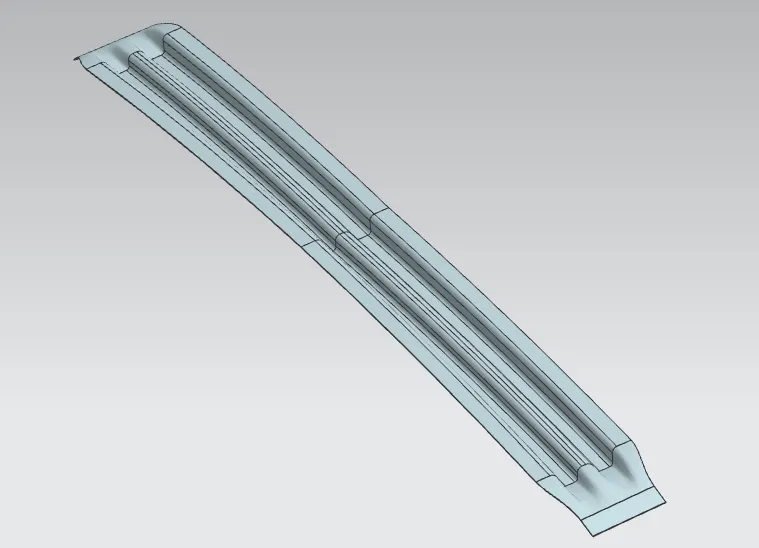
Bow Roof 1:
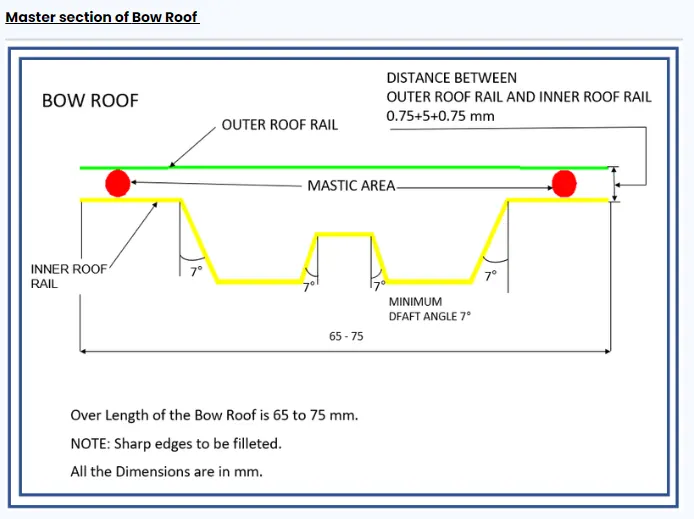
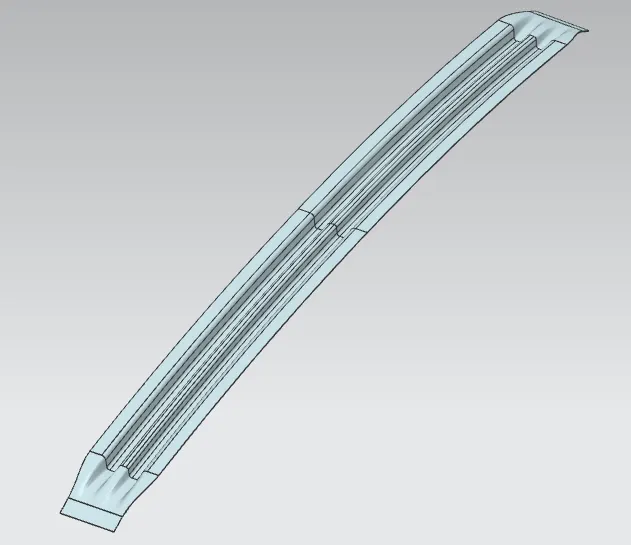
It is used to give strength to the area between the front roof and the centre roof rail. Also it is created in the area between the centre roof rail and the rear roof rail to provide enough strength. It can be created in any numbers depending upon the roof length but the position of the bow roofs is to be justified by curvature study.
Bow Roof 2:
Roof Outer panel :
Assembly:
Heat Distortion Criteria:
Introduction
Heat distortion temperature is the temperature at which the metal softens and deforms under a specific load.
This study is done to check the ability of the roof to withstand high temperature with respect to the positioning of the reinforcements which contribute to increased strength.
Why Heat Distortion Criteria?
- The use of high-tensile steel sheets on car bodies has increased, and the weight of bodies has decreased, for enhance fuel economy.
- by fabricating pieces from thinner sheets. The surface areas of outer panels such as a roof panel and door outers are large, so the effects of weight reduction are also large and thereby the needs for thinner panels are high.
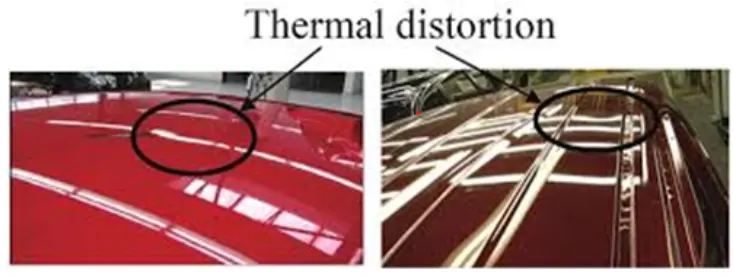
- Some studies have noted issues with the outside quality where, when thinner outer panels are employed, the surfaces of shells bend owing to thermal strain during the painting and drying processes in addition to issues with the stamping performance (hence, referred to as thermal distortion).
- The washing, electrodeposition, sealing, and finish coating steps are all included in the painting of a vehicle's body. An automobile body is submerged in an electrocoating solution during the electrodeposition process to create an electrodeposited film.
- The body is then put through the drying process, where hot air from a furnace is used to dry the electrocoating solution. If thermal distortion is discovered, it requires a significant amount of labour -hours for reworking and checks for numerous parts and across multiple manufacturing processes.
- Thermal distortion is frequently evaluated by the exterior check conducted for completed vehicles with various parts installed.
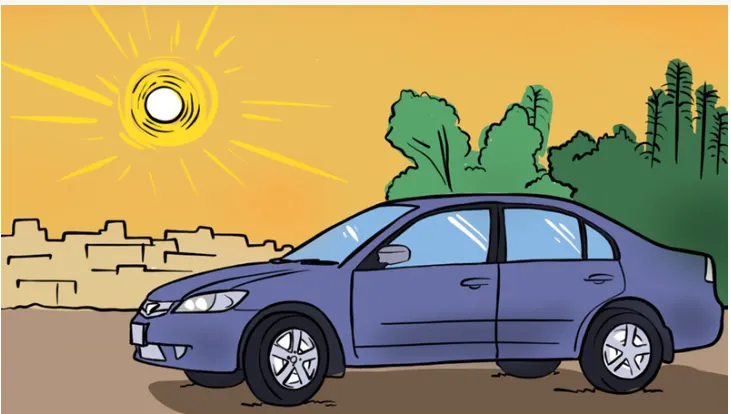
- Countries where the summer is high, there are chances of heat distortion due to sun heat. When the radiation of sun falls on the form of your car, then due to that heat, thermal expansion occurs and due to some thermal expansion, possibility of hanging the roof of the car is more in that area and the roof of your car becomes weak in that area.
- By this calculation we verify these things whether your roof will be able to withstand in that condition or not?
-
Heat Distortion Criteria:
Bow Roof prediction
W = [1.73 x 10^(-3) x L] + [1.85 x 10^(-8) x (R^2)/t] + [ 1.10x10^(-3) x l] - 2.68
R = 2(Rx*Ry)/(Rx+Ry)
Judgement Condition : OK< 2> 3.1
Were,
L = Roof Length in X-Direction[mm](Roof dimension in 0-Y)
R = Roof curvature
R = 2(Rx*Ry)/(Rx+Ry)
Rx = X curvature
Ry = Y curvature
t = Roof plate thickness [mm]
l = Bow Roof Span [mm
The values that must be got from the Design are L,R,t and lIf so that the area is not able to tolerate this condition then we have to give better support on that area to make your roof stronger.
 SNOW LOAD PREDICTION:
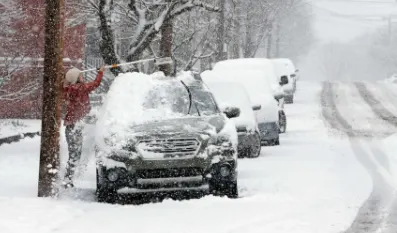
 - Snow Load Criteria study is done to check the withstand ability when the snow loads over the roof during winter in snow fall regions. This study will also analyse the roof that whether the permanent deformation occurs after removing the snow load. That it may bend but needs to be bounce back to its original position.
- roof design must pass through these calculations to ensure that it has sufficient stiffness to withstand the load due to accumulation of snow over the roof.
Snow Load Prediction:
This empirical formula is used to predict whether the car's roof surface is designed strong enough to carry the accumulated weight of the snow or ice
Procedure:
Create a center line in oy direction from there offset 100mm on both side and make centerline between the FRR to BR1 and offset by 100mm on both side so we get three points on horizontal and vertical direction.
Formula:
Qr = [Iy x t2] / [α x s x [(Rx + Ry)/2]2 x 10-8]
α = My x Lx2 x 10-12 , My = Y(Ly -Y)
s = L1/2 + L2/2
Judgement condition = Qr ≥ 3.1 ; 250 ≤ s ≤ 380
t = Roof plate thickness [mm]
Ly = Distance between the front and rear roof Rails on the Vehicle along with 0Y[mm]
Length of Roof panel with the center point between Roof rail Front /Rear as the front and rear reference point.
Lx = Distance between the Left and Right end of the roof on the Roof BOW [mm]
Width of the roof panel exposed on the surface.
Y = Distance front Front Roof Rail to Roof BOW[mm]
s = Distance for which Roof BOW bears divided load [mm]
s = L1/2 + L2/2
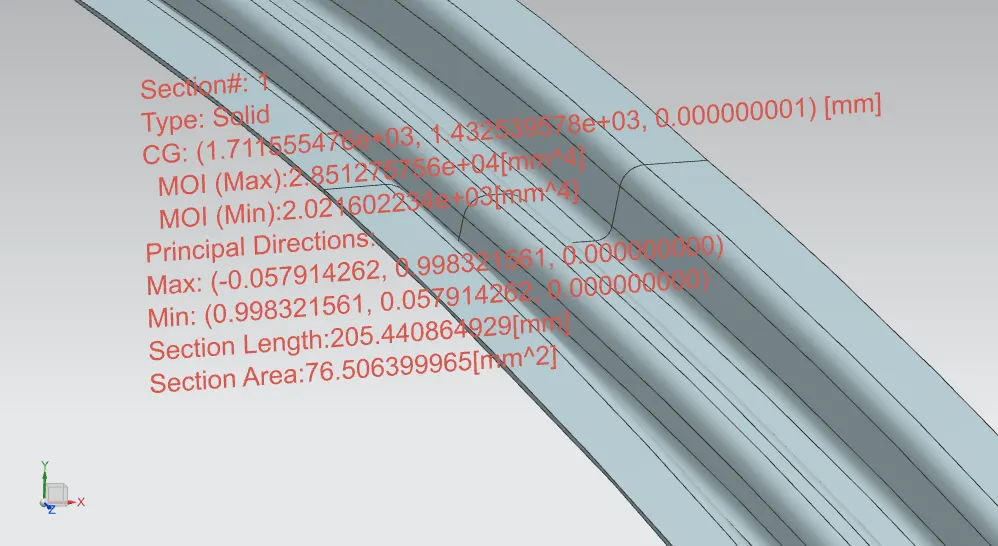
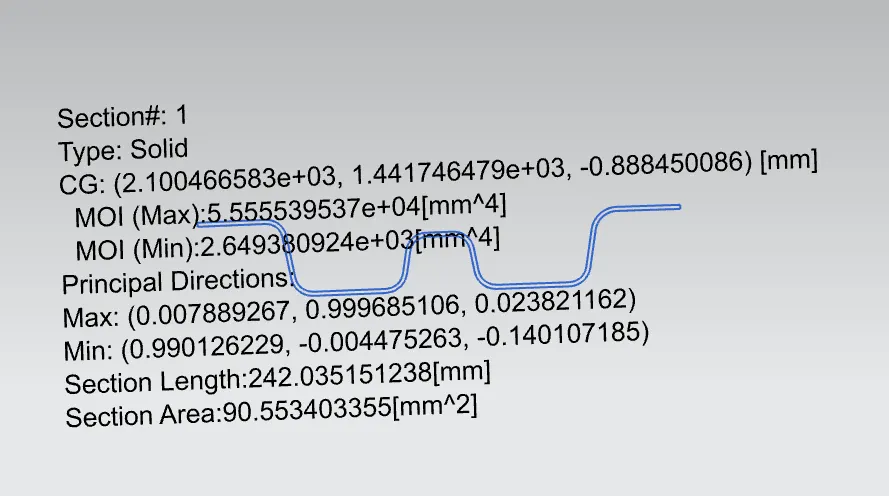
Iy = Geometrical moment of inertia of Roof BOW (Y cross-section )[mm4]
Rx = Lateral direction curvature radius of roof panel Y cross-section on Roof BOW [mm]
Roof panel curvature Radius of the Length Lx in Front view
Ry = Longitudinal Direction curvature radius of the Roof panel X cross-section on Roof BOW [mm]
Roof panel X curvature radius of length s in Side view
Moment of Inertia :
Iy for Section Bow Roof 1
 Iy for Section Center Roof Reinforcement
  Iy for Section Bow Roof 2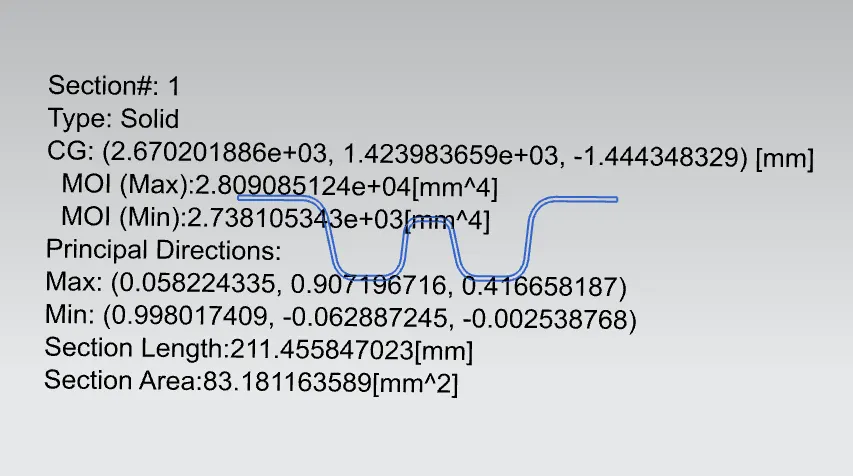

Draft Analysis:
Draft analysis is used to predict the manufacturable feasibility of the part.
The draft angle provided for design is around 7 degrees.
Roof Styling surface/Roof Outer Panel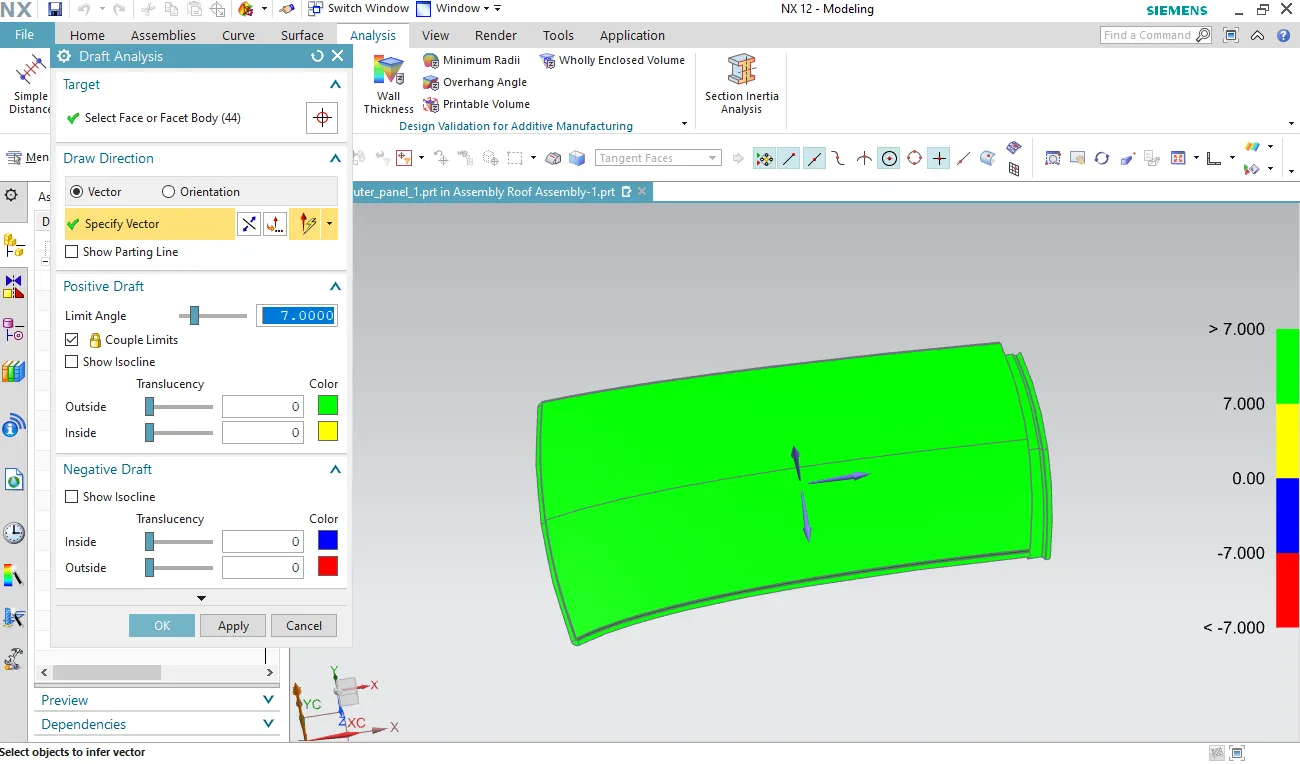 Front Roof rail
 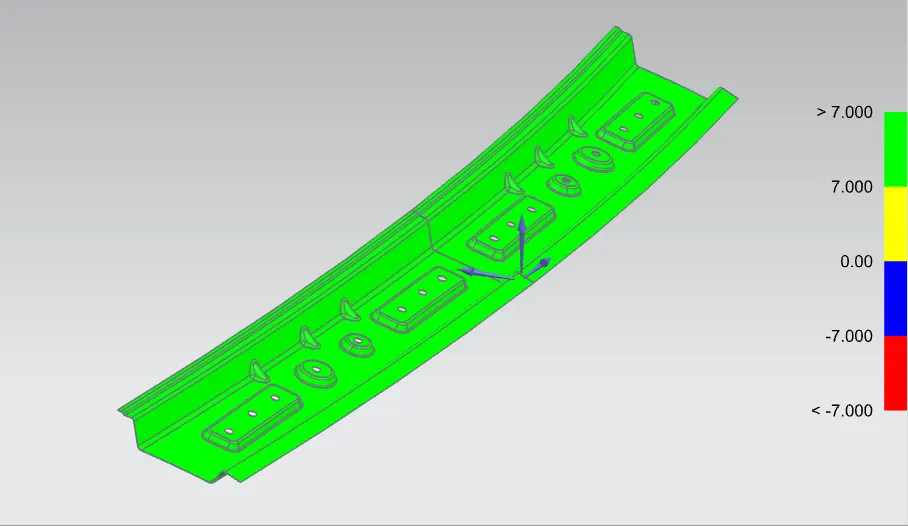 Rear roof rail
 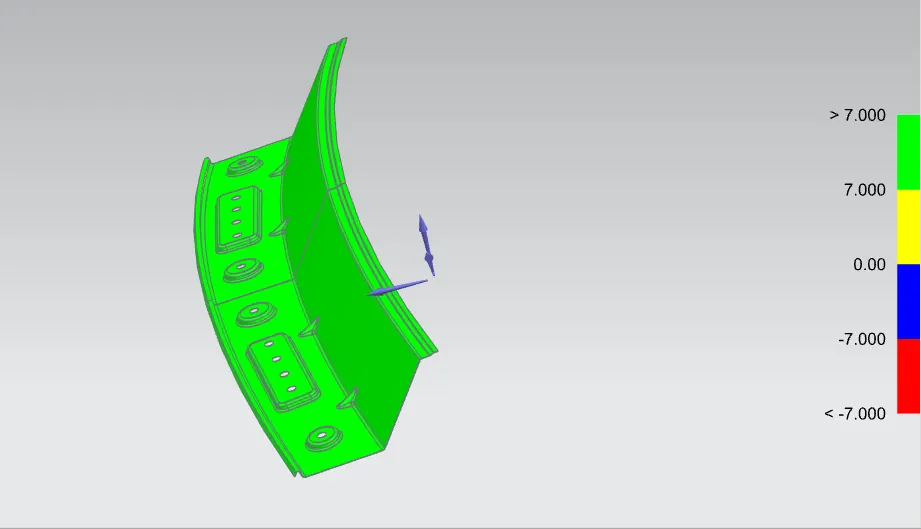 Center roof reinforcement
 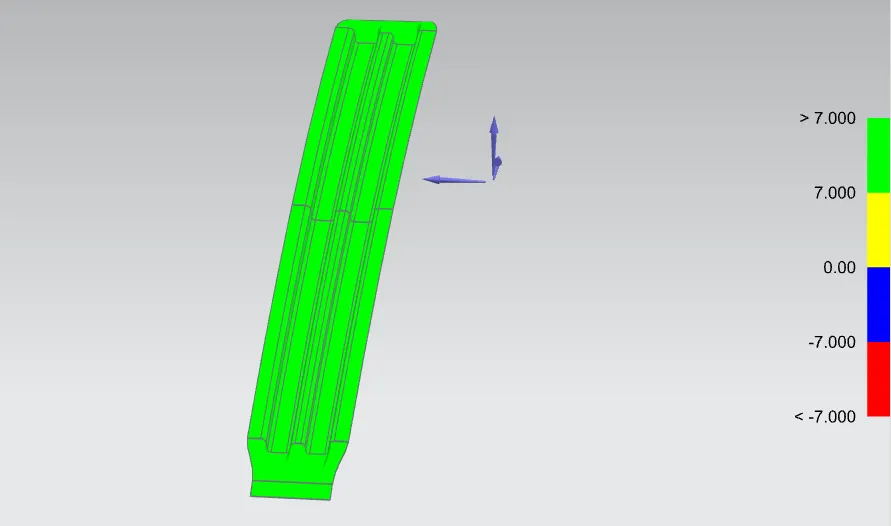 Bow Roof1
 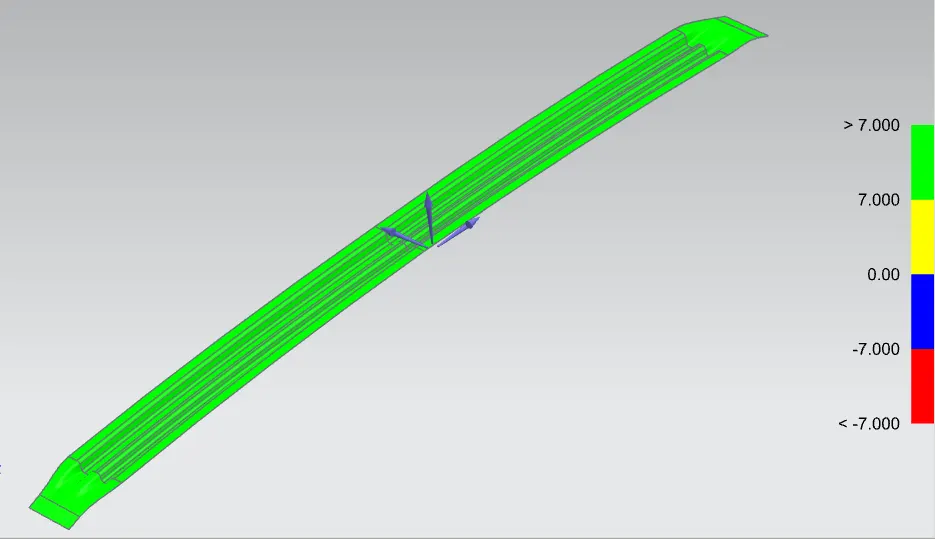 Bow Roof 2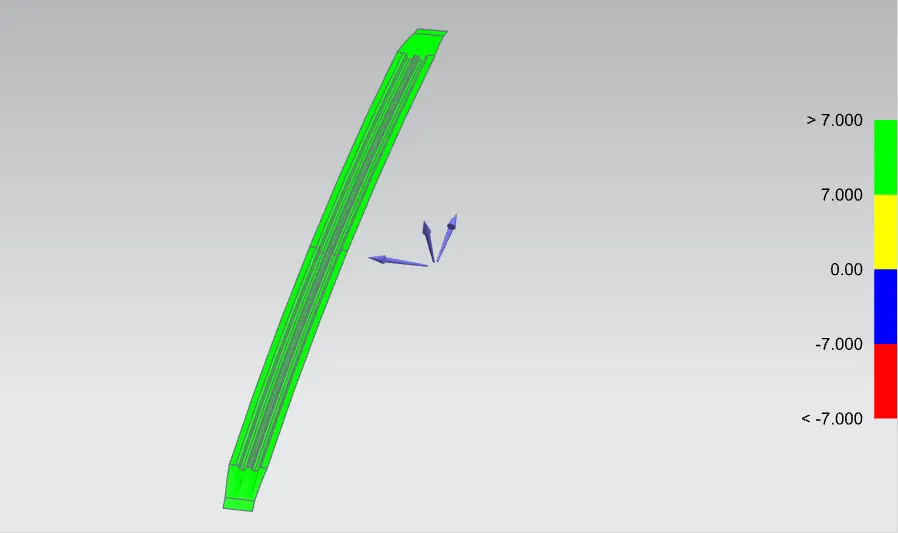
Success rate of Criteria:
The Design passes both the Bow load prediction as well as the snow load prediction criteria.So there is no modification needed in the roof design NOTE: IF Design Does not pass either the Bow load prediction or the snow load prediction criteria Then we fix this problem by providing embosses to outer panel of roof.
Conclusion :
Roof design is made as per the design and the engineering standards.
ROOF DESIGN USING CATIA(WITH SUNROOF) :Sunroof:
device that opens the roof of a vehicle, allowing sunlight to enter the vehicle. It is an optional feature on many vehicles, and it can be used to increase the amount of light inside the vehicle. Sunroofs are usually located above the rear window of a two-door vehicle, or above the front window on a four-door vehicle.
A sunroof can be manually operated by a driver or passenger (depending on how it is designed) or at times automatically opened when needed by sensors. When open, air flows through it and cools the interior of the car while allowing more sunlight into the vehicle.
A sunroof is a movable panel in the roof of a car that can be opened or closed. It’s commonly referred to as a moonroof, but you don’t need to know this word to understand what it does.
The purpose of opening and closing your car’s sunroof is simple: it allows fresh air into your vehicle so you can breathe easier while driving and also provides an outside view for enjoyment on those sunny days when it’s too cold for windows to open completely.
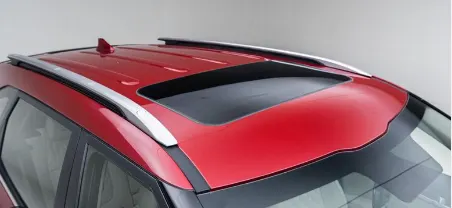
Moonroof:
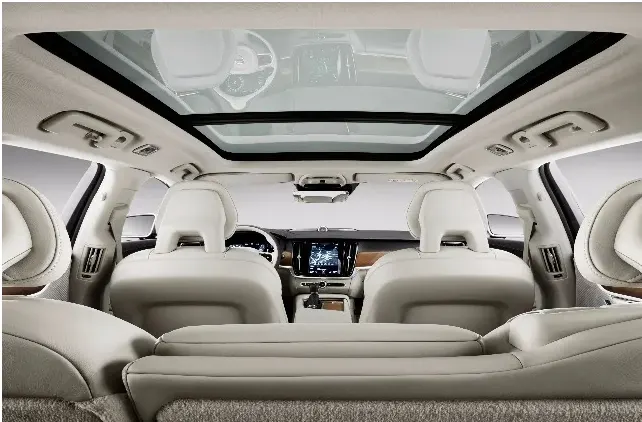
feature in many types of cars, from small economy cars to luxury sports cars. They are one of the easiest ways to increase the value of your car and make it more comfortable for you.
What is a Moonroof?
A moonroof is a flat glass window that covers the entire roof area. It is installed on many vehicles because it allows you to see out of your vehicle while still remaining protected from the sun, rain, and other elements.
The Different Types of Moonroofs
There are three different types of moonroofs: power, manual, and tilt-up windows. Power moonroofs have electric motors that open or close them automatically when you turn on the ignition and shut them when you turn off the ignition or if they are too hot to touch. Manual moonroofs require you to open them manually using levers located on either side of the windows or from inside your car by pressing buttons located on each door panel.
A moonroof is a sunroof with transparent glass. It can be opened or closed by the driver, passenger, or both. - The driver will open and close it from inside the vehicle.
- The passenger will also be able to do so if they’re sitting in the back seat (or even outside).
Panoramic Sunroof:
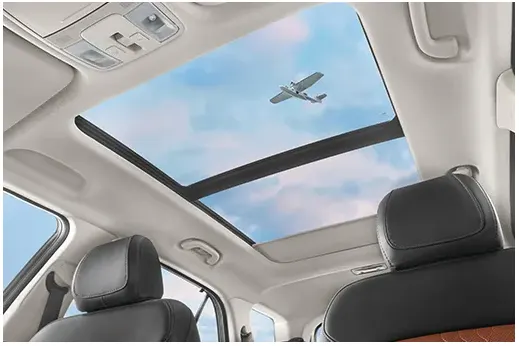
A panoramic sunroof doesn’t have any moving parts, so it doesn’t need to be serviced often. When you do need service, it’s usually because something has come loose or cracked and needs replacing. There are some things that can go wrong with these types of windows, but most problems are easily fixed by replacing just one part at a time. Panoramic sunroofs are similar to normal ones, but they are able to open at a wider angle. This allows you to see more of the sky while driving. A panoramic roof can be found on some luxury cars and SUVs, but it is not as common as other types of roofs. A panoramic sunroof is a huge glass window in the roof of a car that opens up to make passengers feel like they’re riding in a convertible. They are available on many vehicles, including:
- Expensive luxury models like BMW and Mercedes-Benz
- Low-cost economy cars such as Ford, Honda, and Hyundai
Sunroofs and moonroofs aren’t just for fancy vehicles anymore.
Sunroofs and moonroofs aren’t just for fancy cars anymore. You can get them in your car or SUV, too! The latest trend is panoramic sunroofs, which allow you to open up the space between your seats and let in light, fresh air, and views of the surrounding landscape without sacrificing any headroom.
A sunroof also lets you enjoy some sunlight while driving during the day—you’ll love how much better it feels when all that warm rays hit your face as soon as you pull out of a parking spot on a sunny day!
Roof Assembly: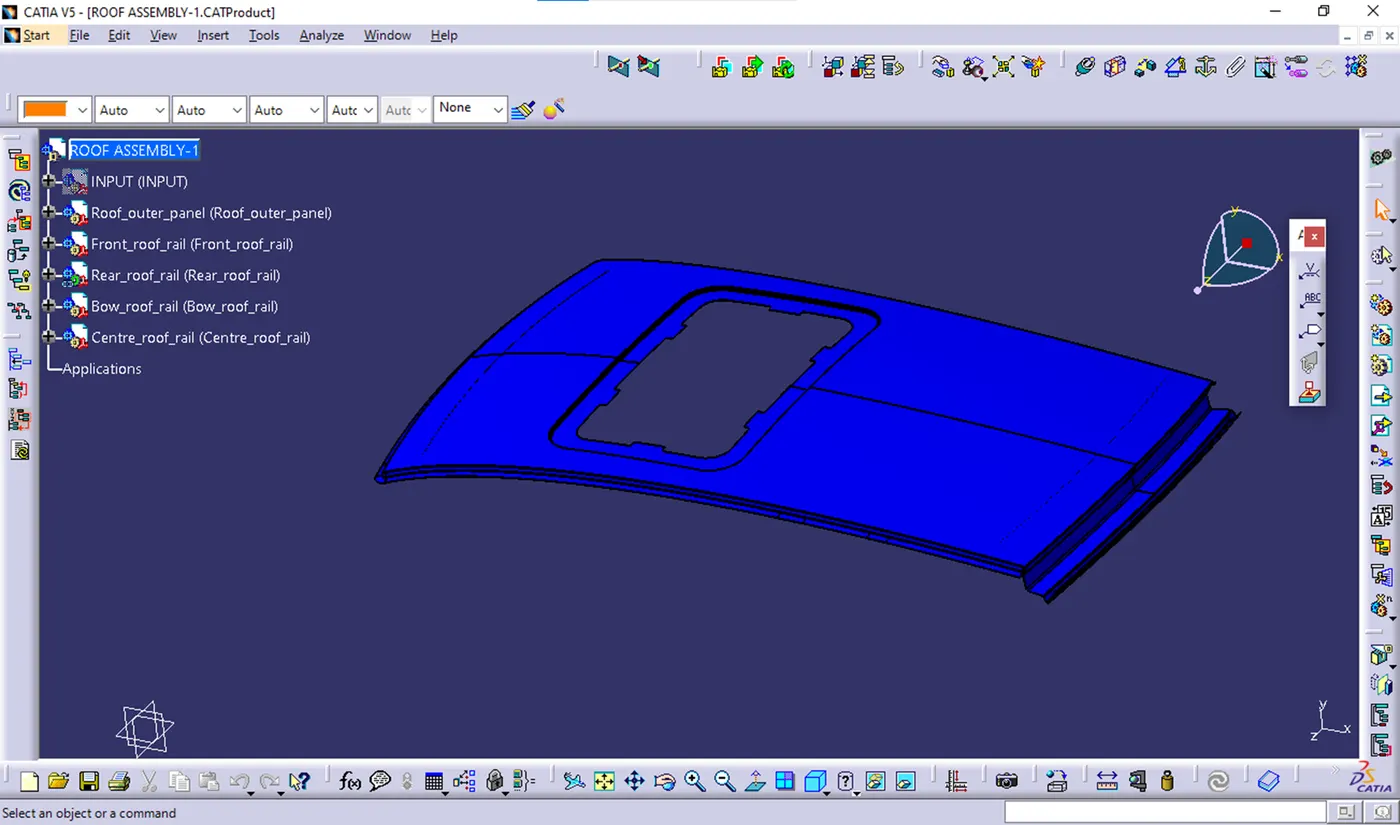
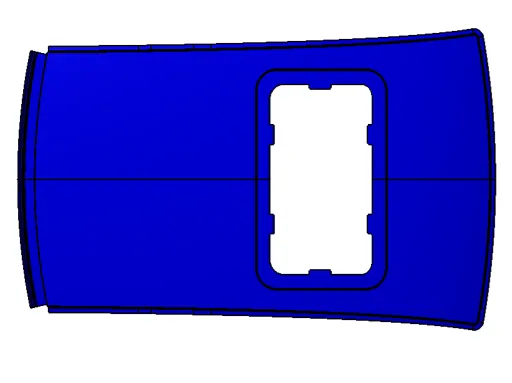
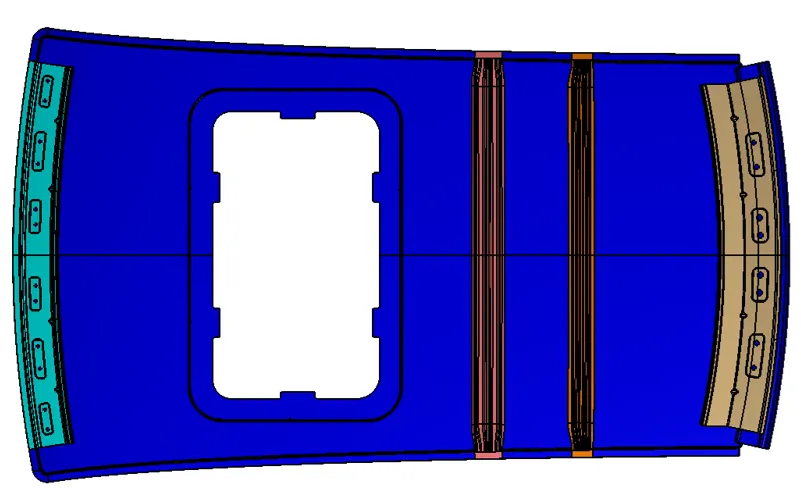 Roof Styling surface
 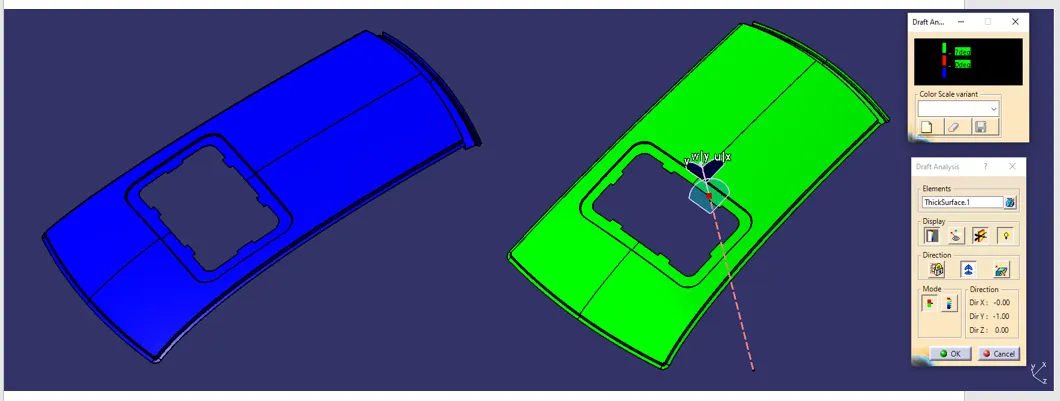 Front Roof rail
 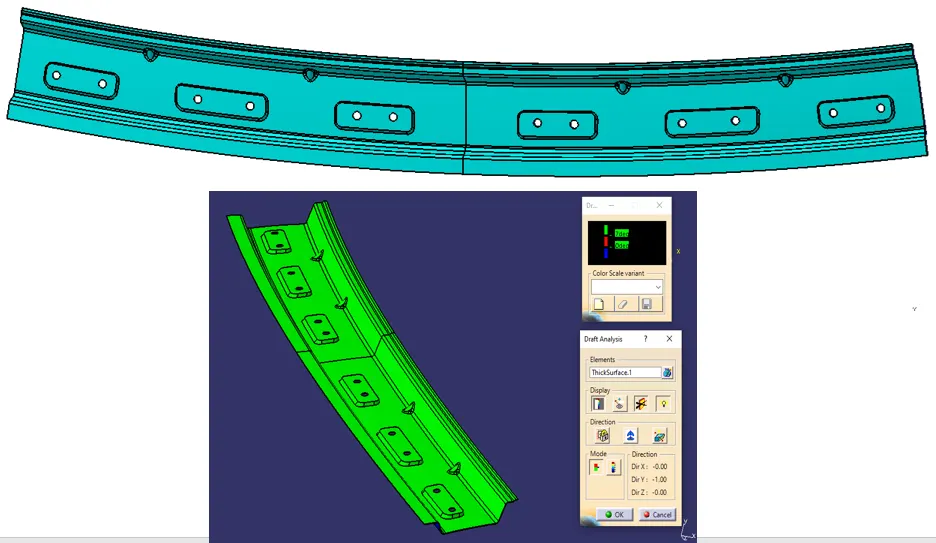 Rear roof rail
 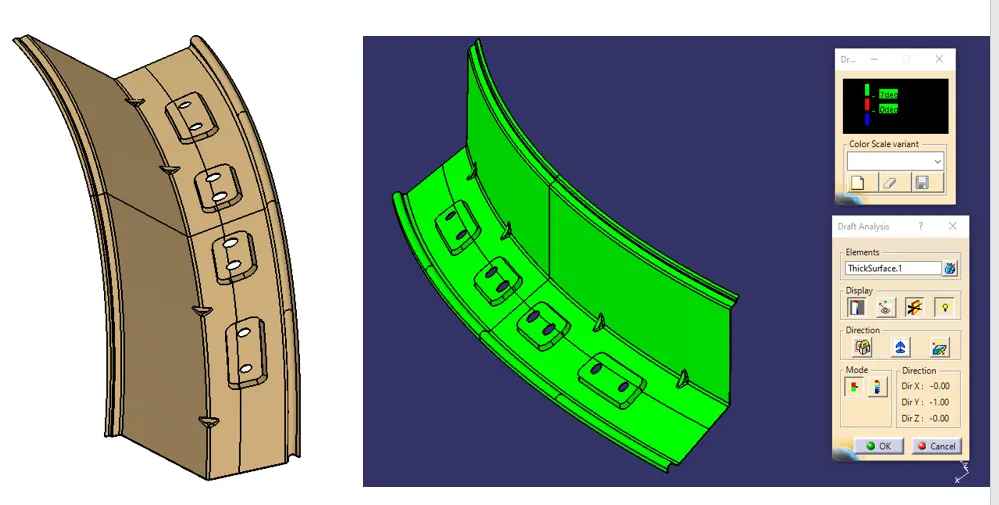 Center roof reinforcement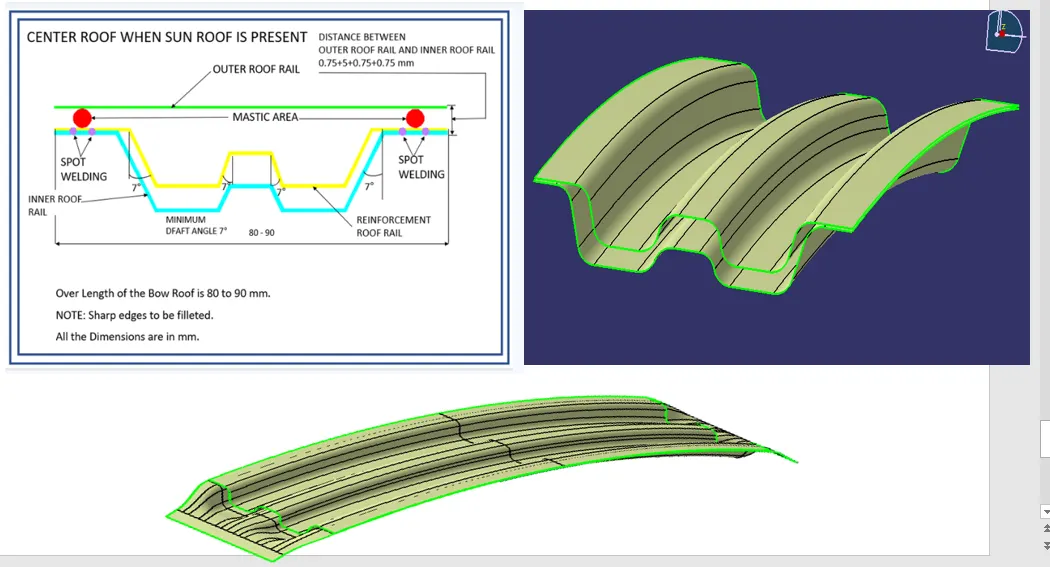
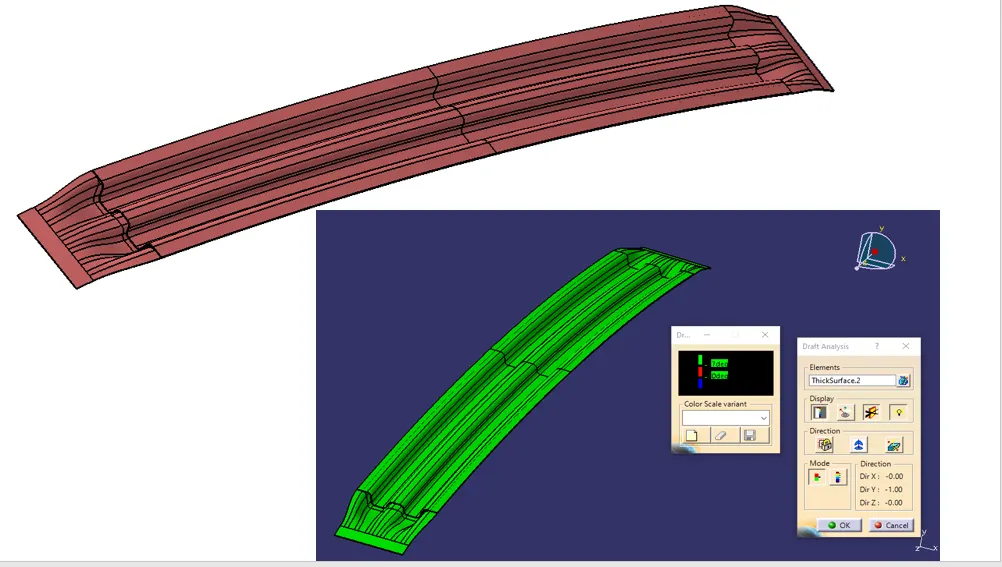 Bow Roof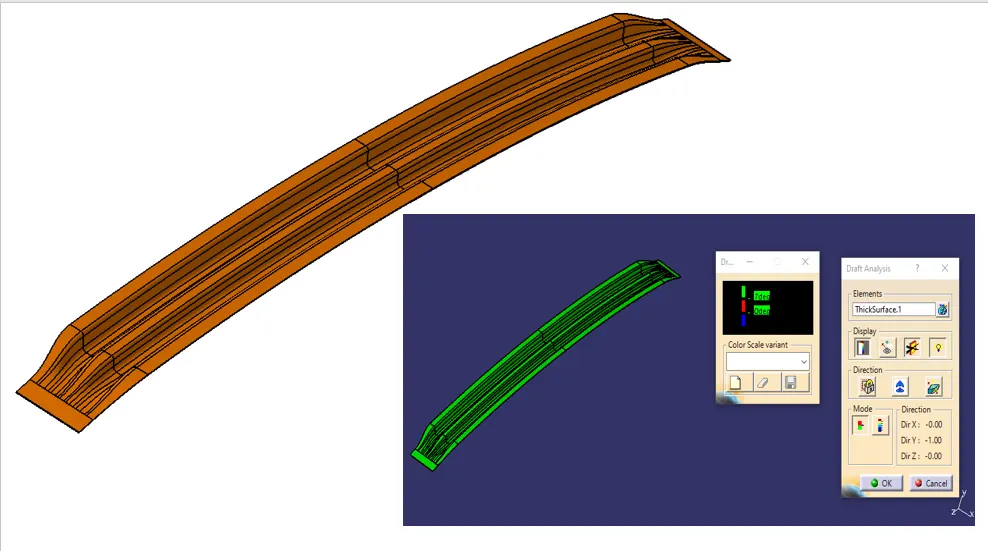
Heat Distortion Criteria:
Bow Roof prediction
W = [1.73 x 10^(-3) x L] + [1.85 x 10^(-8) x (R^2)/t] + [ 1.10x10^(-3) x l] - 2.68
R = 2(Rx*Ry)/(Rx+Ry)
Judgement Condition : OK< 2> 3.1
The values that must be got from the Design are L,R,t and l

Snow Load Prediction:
This empirical formula is used to predict whether the car's roof surface is designed strong enough to carry the accumulated weight of the snow or ice
Procedure:
Create a center line in oy direction from there offset 100mm on both side and make centerline between the FRR to BR1 and offset by 100mm on both side so we get three points on horizontal and vertical direction.
Formula:
Qr = [Iy x t2] / [α x s x [(Rx + Ry)/2]2 x 10-8]
α = My x Lx2 x 10-12 , My = Y(Ly -Y)
s = L1/2 + L2/2
Judgement condition = Qr ≥ 3.1 ; 250 ≤ s ≤ 380
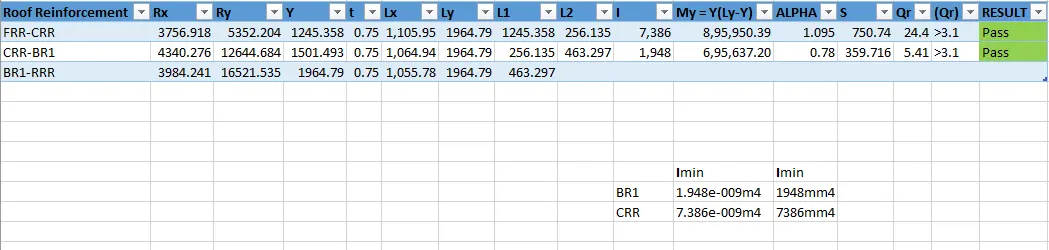 The Design passes both the Bow load prediction as well as the snow load prediction criteria.So there is no modification needed in the roof design