Project
Aim: To modelling of a Continously Variable Transmission (CVT) BAJA All- Terrain Vehicle(ATV) using simulink, carry out a system_level simulation of an all-terrain vehicle and prepare a technical report explaining the model properties & comments on the results.
Sample Model of All- Terrain Vehicle:
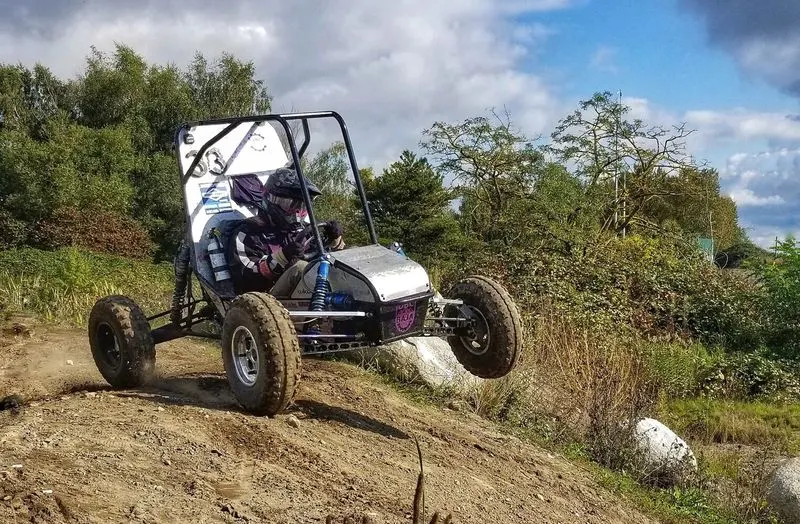
An All-Terrain Vehicle is a vehicle that travels on a low pressure tyres, with a seat that is straddled by the operator, along with handlebars for steering control.As the name implies, it is designed to handle a wider variety of terrain than most other vehicles.
Components of BAJA ATV are Vehicle Body, Suspension, Continously Variable Transmission(CVT), Tire and Engine.
Vehicle Modelling:
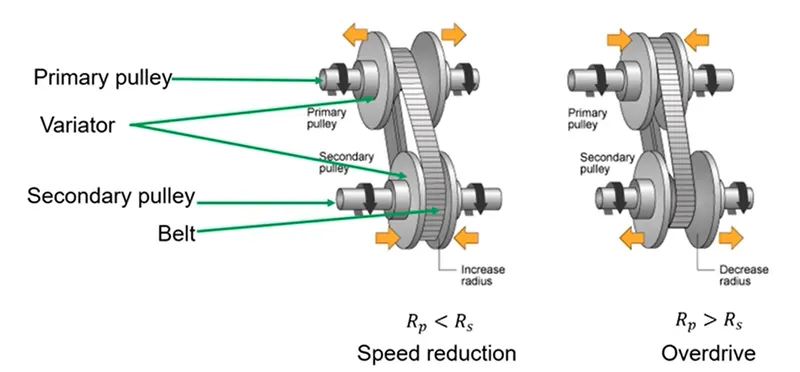
Vehicle consists of Primary pulley, Variator, Secondary pulley and Belt.
The Variator of Primary pulley outverse when Variator of Secondary pulley move inverse. In this case radius of the secondary pulley is more than the primary pulley. It will leads to speedreduction.
The Variator of Primary pulley inverse when Variator of Secondary pulley move outverse. In this case radius of the secondary pulley is less than the primary pulley. It will leads to overdrive.
We explained simulink model in 5 different ways as given below:
1)Simulink Model:
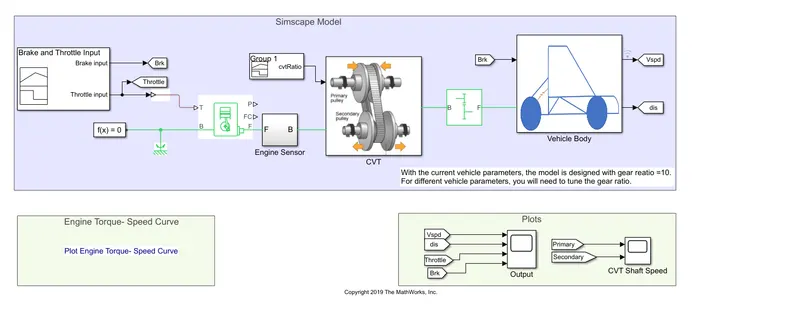
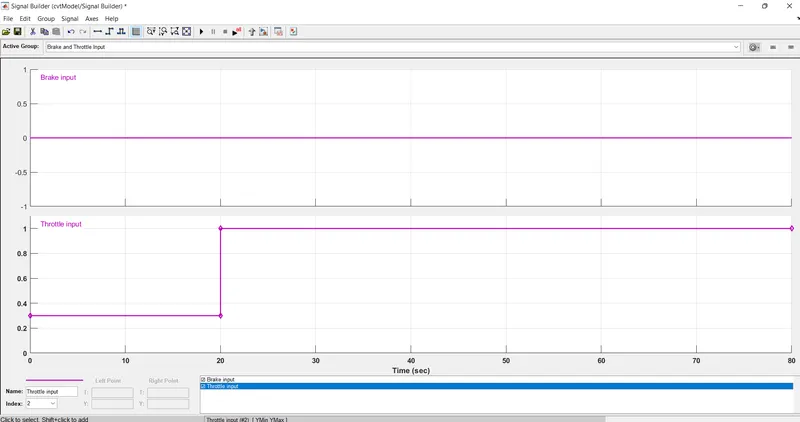
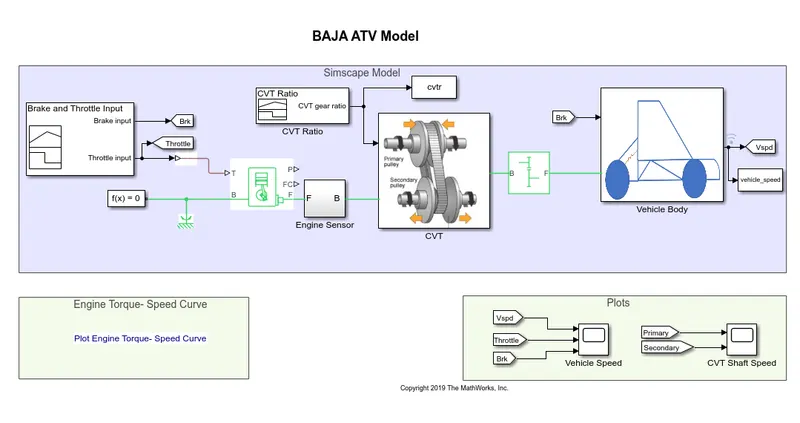
In this model signal builder used to generate throttle and break operations. Throttle is a device controlling the flow of fuel or power to an enginee. Break is a device, slowing or stopping a moving vehicle, typically by applying pressure to the wheels.
Here initially Break given as '0'
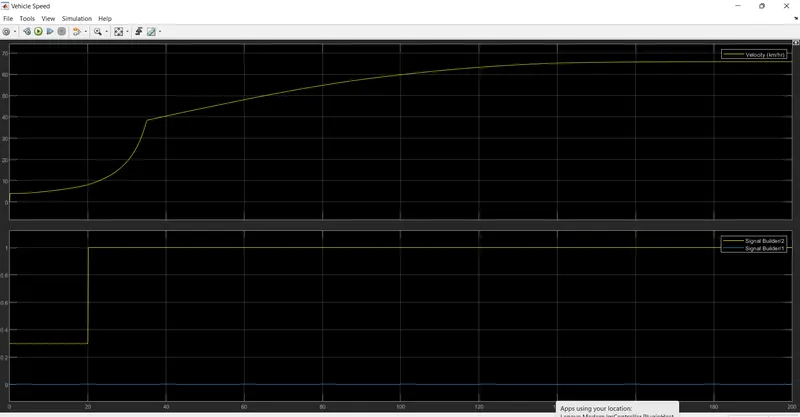
Throttle given as 0.3 at 0sec after 1 at 20sec
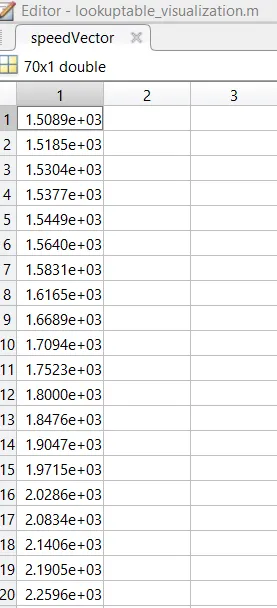
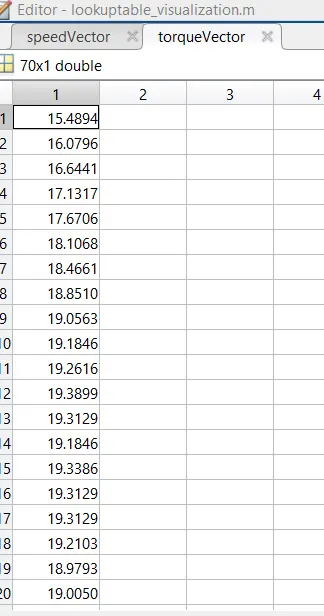
Generic Engine: Generic Enginee represents a system-level of spark - ignition and diesel engines suitable for use at initial stages of modeling when only basic parameters are avaliable. In this model speed vector and troque vector given a predefined values using workspace. The maximum RPM of generic enginee BAJA ATV is 8340.
Subsystem Block of CVT:
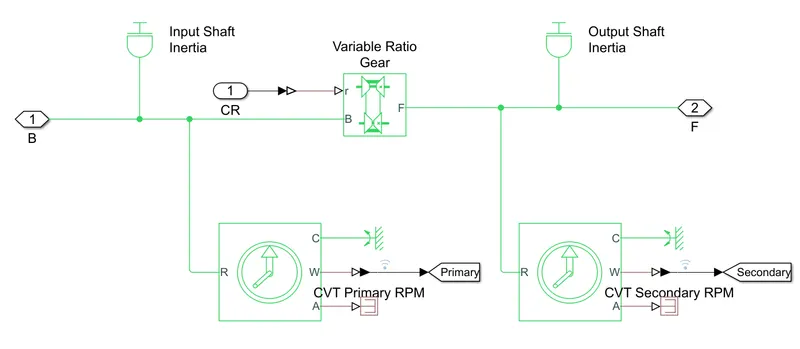
In this subsystem of cvt defined the CVT primary rpm and CVT secondary rpm using a CVT gear ratio. the speed of the veichle is depends on secondary rpm.
Subsystem Block of Vehicle Body:
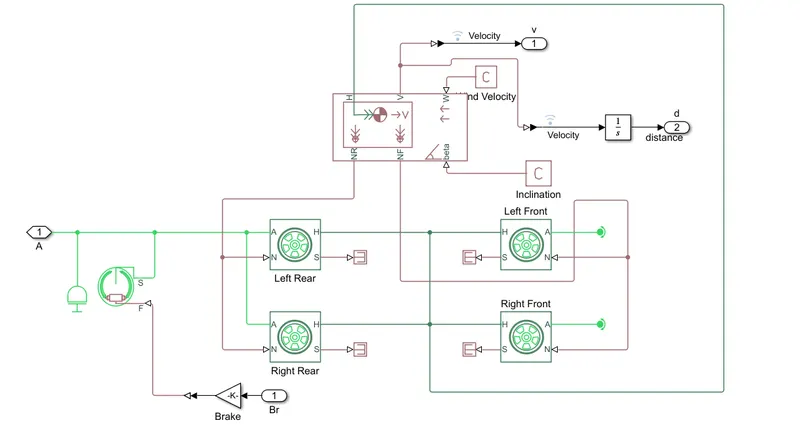
Here taken a wheels with predefined default parameters like weight, radius, velocity, break, etc..
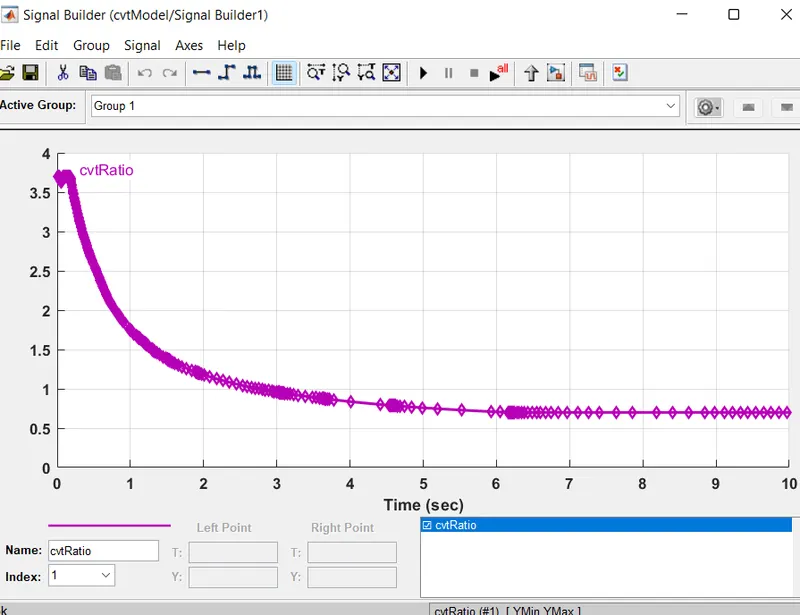
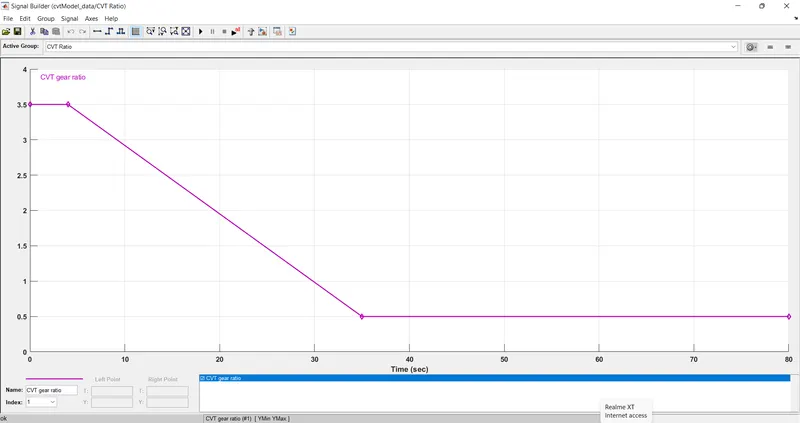
As per the above signal builder graph the gear ratio given to the cvt model range from 3.7 to 0.7.
Outputs:
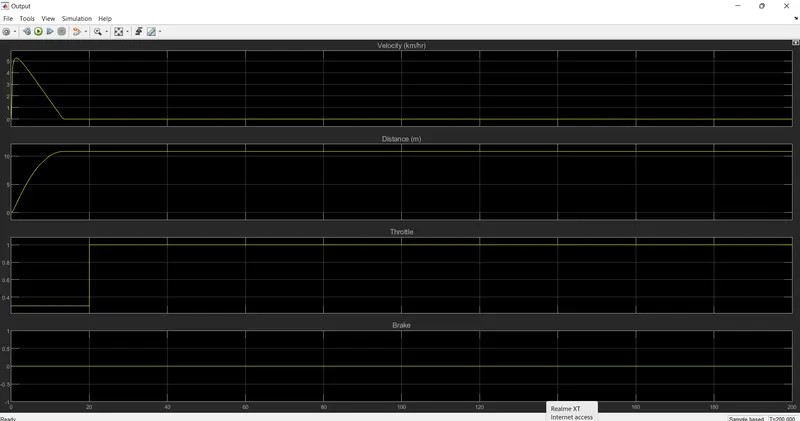
Here you can observe distance and velocity at different time intervels. The output is varies based on cvt ratio. We can also change based
on our requirements.
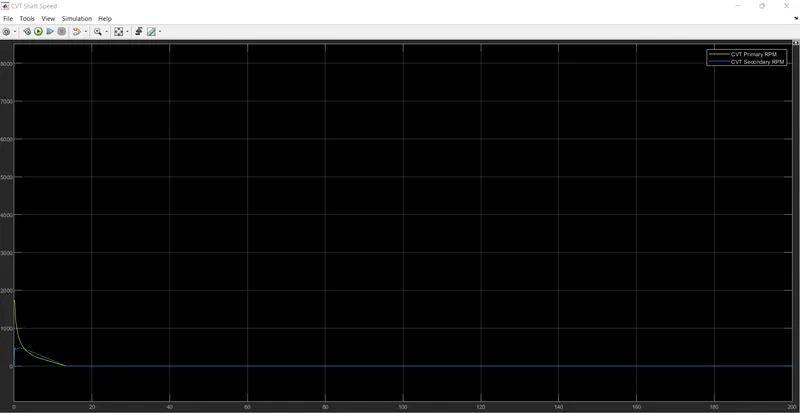
Here u can observe the primary rpm and secondary rpm is based on the gear ratio(cvt ratio).
2)Simulink Model with Dashboard:
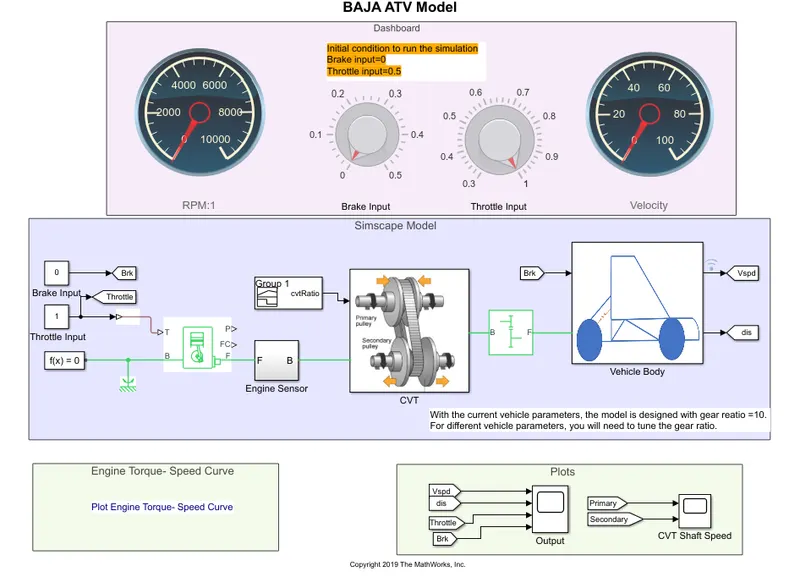
It is very similar to the normal simulink model, here we designed a dashboard. We can implements realtime practical environment by varying the brackinput and throttle.
3)CVT Model with Data to work space:
Given CVT gear ratio:
Veichle speed:
4)CVT Model using Engine sensor RPM as a CVT gear ratio:
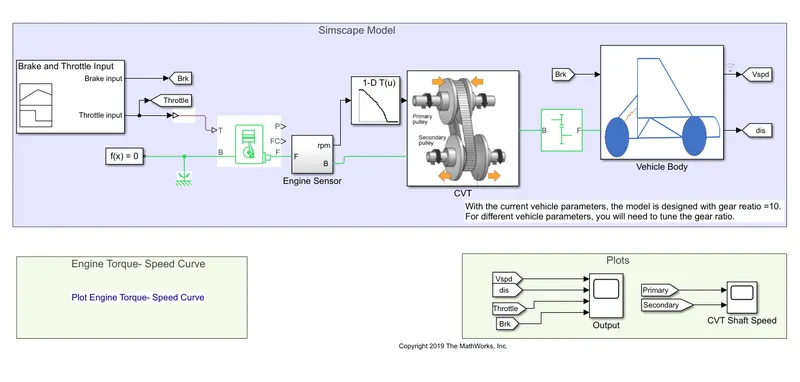
CVT Model using Lookup table of CVT gear ratio
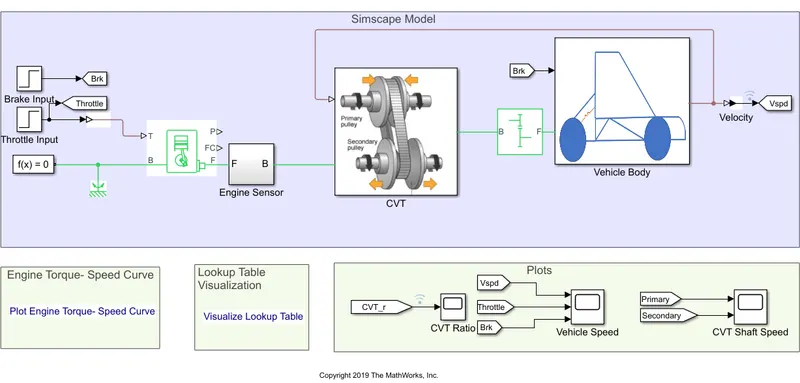 :
:
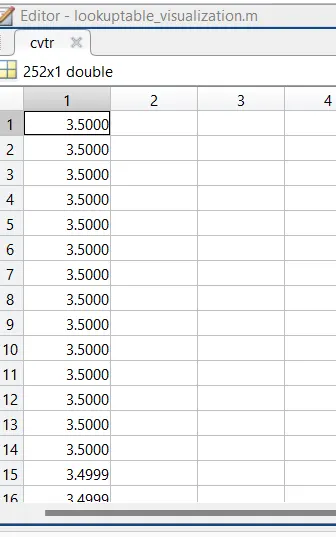
Here given the CVT gear ratio using a lookup table in the CVT subsystem.
5)CVT Model using Lookup table of CVT Gear ratio with Dashboard:
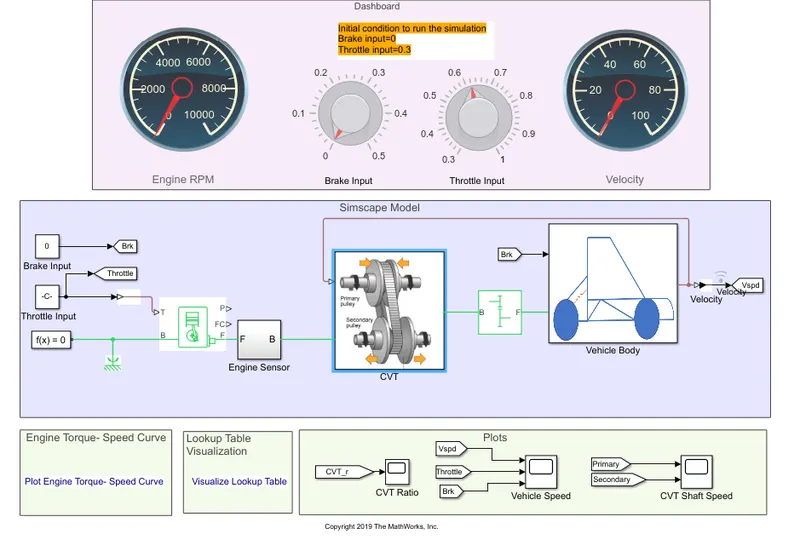
Conclusion:
Here i learned many things related to BAJA ALL-TERRAIN VEICHLE. Wroking principle of mechanical parts, calculaing the velocity by varing CVT gear ratio, Throttle and break at minimum to maximum levels. And also learned how to use simulink more effciently by using signal builder, lookup table(interpolation and extrapolation), taking the values from excel from work space and to the workspace by using Lookup table and To workspace blocks respectively, moving the data from main system to subsystem using goto and from block and using of dashboard like practical experience.
Hence provided the results for different values of parameters and carried out system level simulations of ATVs.