Pre-processing Dashboard of the car - ANSA
OBJECTIVE : To create mesh on the given modified dash board under given quality criteria and thickness has to be assigned on each and every macros of the component. Dash board is nothing but the instrumentation panel located ahead to driver. It is the only one interface between driver and vehicle.
- It is a casting component with uniform thickness on base plate so that auto mid surface could be possible.
- Projecting ribs on the base plate has to be mid surfaced seperately since their thickness are different to each other.
PROCEDURE :
- Geometry clean up
- Lock views enabled
- Manual mid surfacing and auto mid surfacing
- PID's assignation
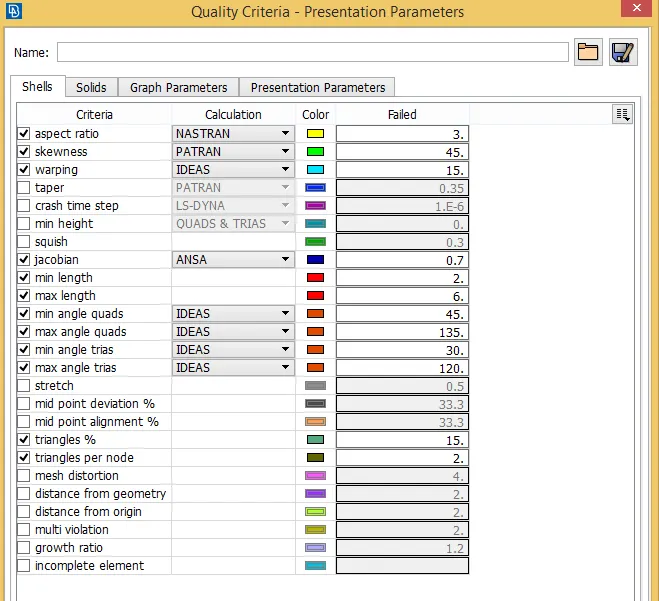
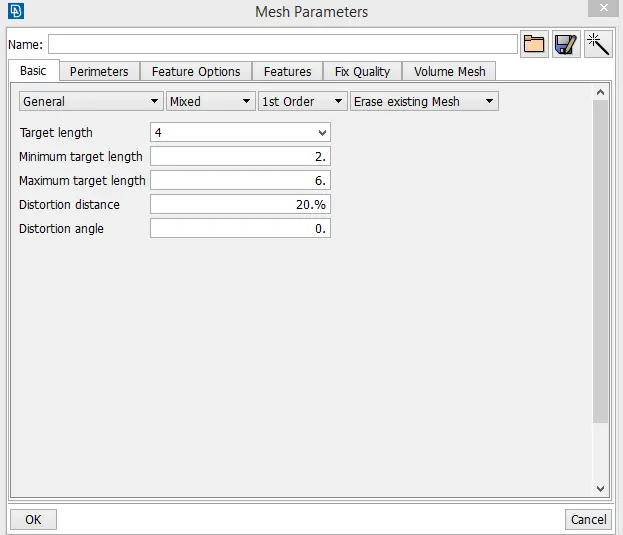
- Quality parameters
- Meshing
- Quality criteria check up
- Presentation views
Geometry clean up
The given dash board is imported into ANSA pre processing unit.
- All the free cons are made to shared edges by topo tool. While doing so, some of the shared edges more nearer to each other would resulted in joining together which leads to blue edges. This could be removed manually by releasing it and then join either manually or by topo tool.
- Needles surfaces are some of the errors shown by ANSA itself since they would result in mesh quality failure. Those needle surfaces are cleared by auto fixation.
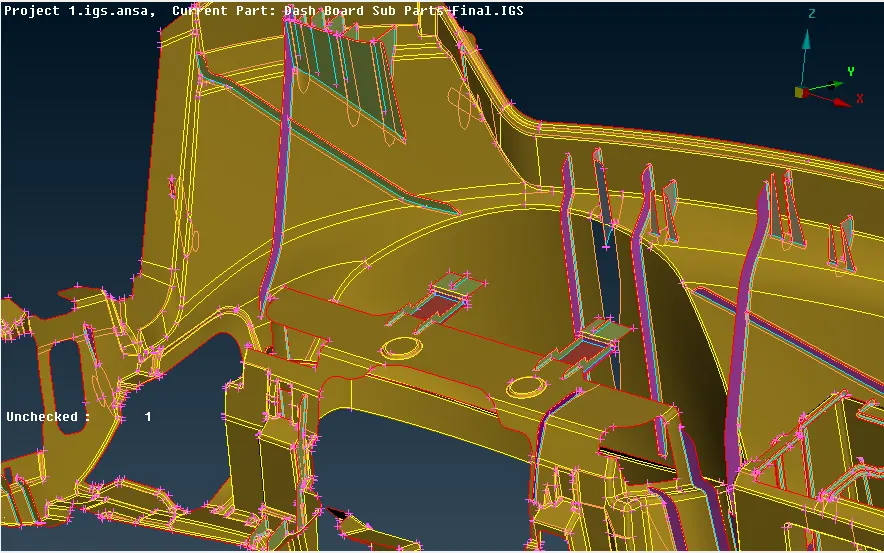
- Unchecked faces are the issues at the places where the macros are collapsed when doing topo. In other words, the faces are randomly placed in zig zag manner.
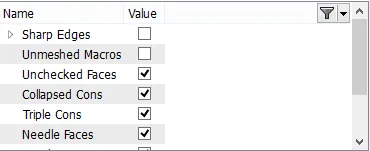
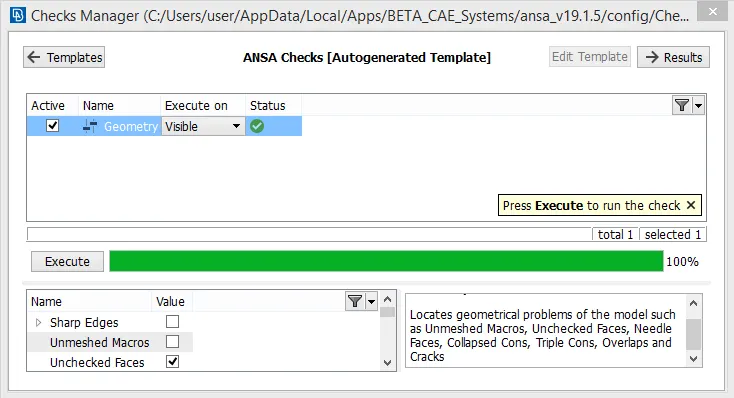
Once all the checks are done and geometry on execution provide no errors, it then moved to mid surfacing.
Lock views enabled
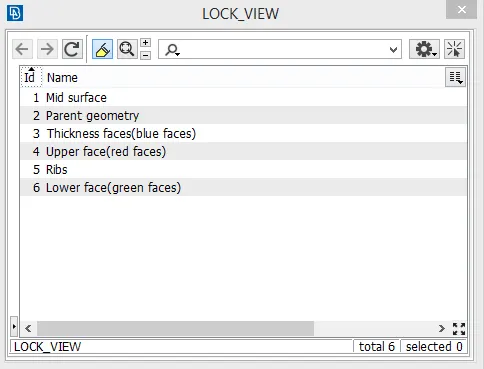
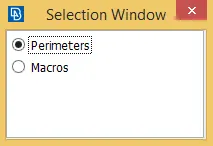
Dash board consists of number of faces and offsetting it manually would results enormous amount of time to have mid surface. For quick manual mid surfacing, thickness surfaces(blue edges), upper surfaces(red edges), lower surfaces(green edges) are placed under lock views seperately. Ribs are also placed under seperate lock view.
Manual mid surfacing and auto mid surfacing
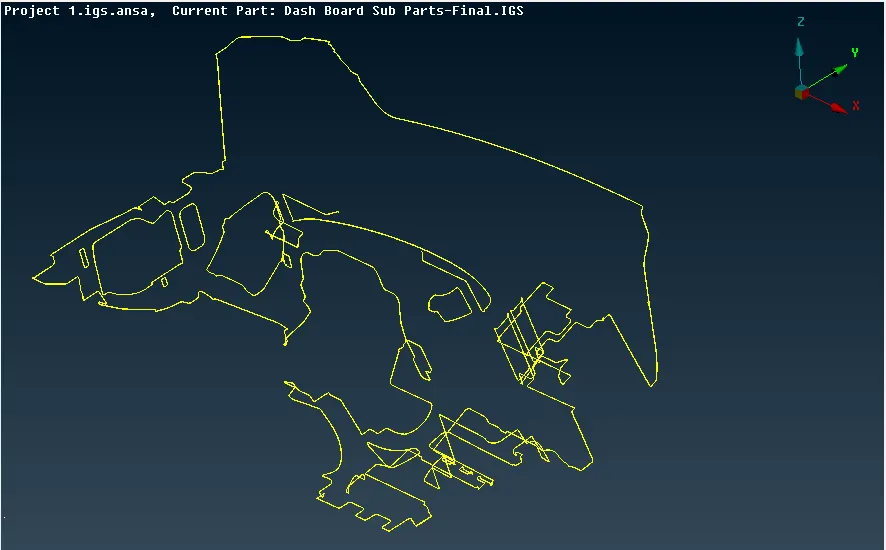
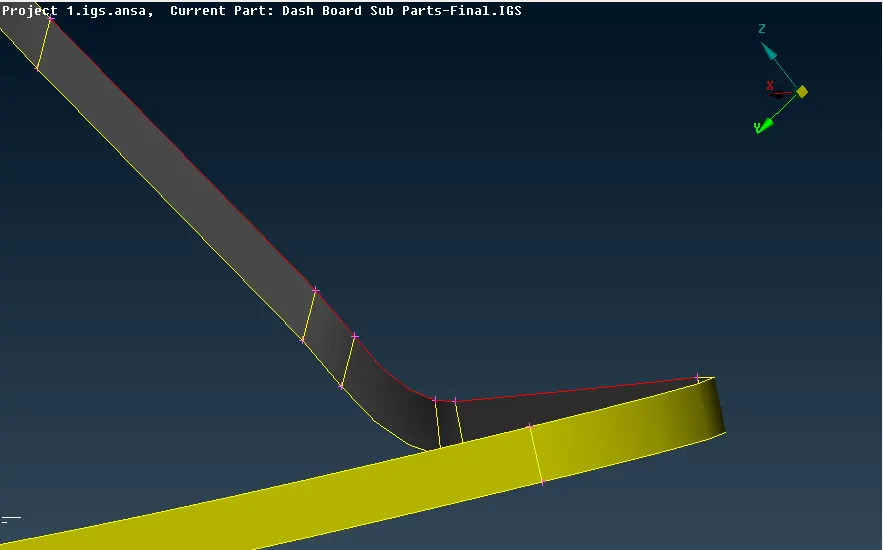
- The base plate of the dash board is having uniform thickness so that auto mid surfacing is possible. But here the manual mid surface is done at one step for all faces. For that, all the side edges connecting upper and lower faces are seperated. Then releasing the upper cons of all side edges will make upper faces independent to side and lower edges. The reason for choosing the upper faces to have mid surface is it contains the ribs and some other features than lower faces.
- After releasing the cons, upper faces are selected for offsetting from their original thickness. The original thickness is 0.6mm and it offsetted to -0.3mm. The negative symbol indicates that the offsett is done opposite to ANSA indicating direction.
- This is so called manual mid surfacing at one step for all faces.
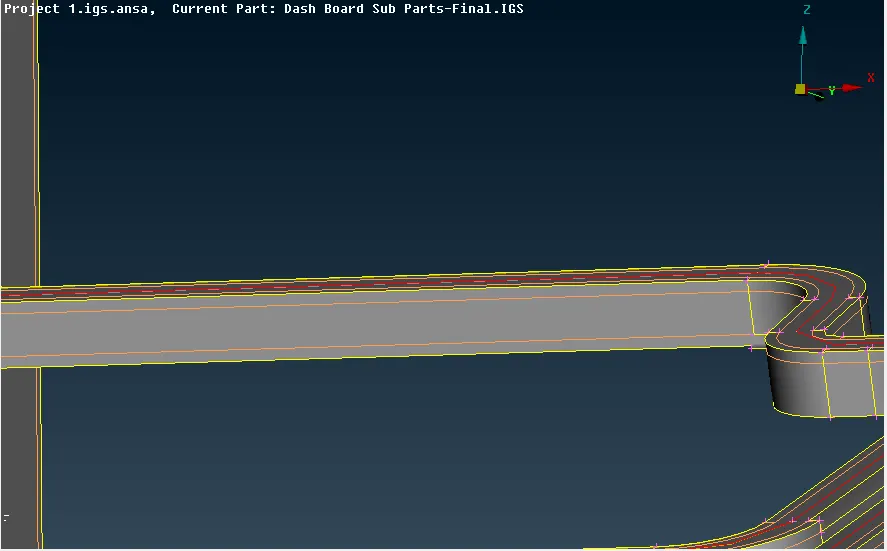
- The ribs are the other features for which the mid surface has to be taken. The notable point is there are fillets in it. Before mid surfacing it, all the fillets are suppressed by dach tool to have fine edges. This leads to having ribs with fillets. If fillets not suppressed, the whole ribs could not be taken into account.
- For ribs having uniform thickness, auto mid surfacing is done.
PID's assignation
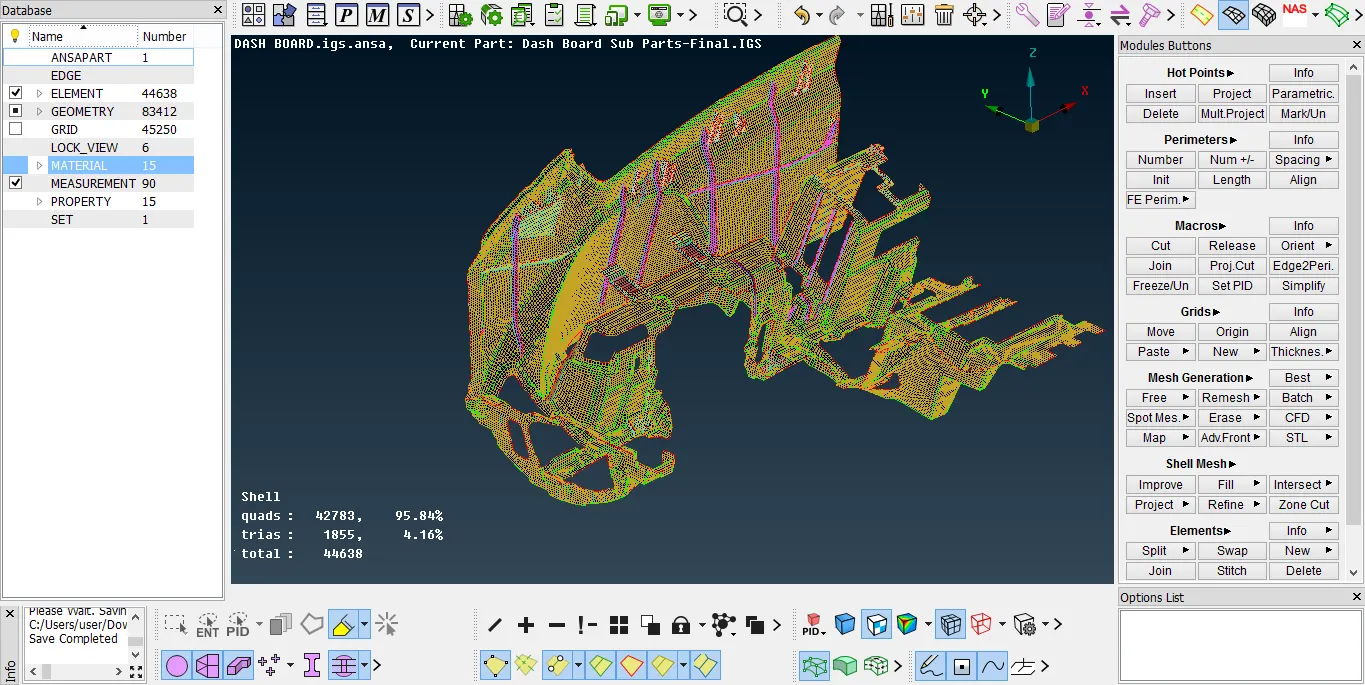
After complete mid surfacing, all the faces are placed under different PID's based on their measured thickness. For verification, ENT mode is changed to PID mode. Here it found all the surfaces are placed on their respective thickness category.
Meshing
After editing quality and mesh parameters, meshing task is started.
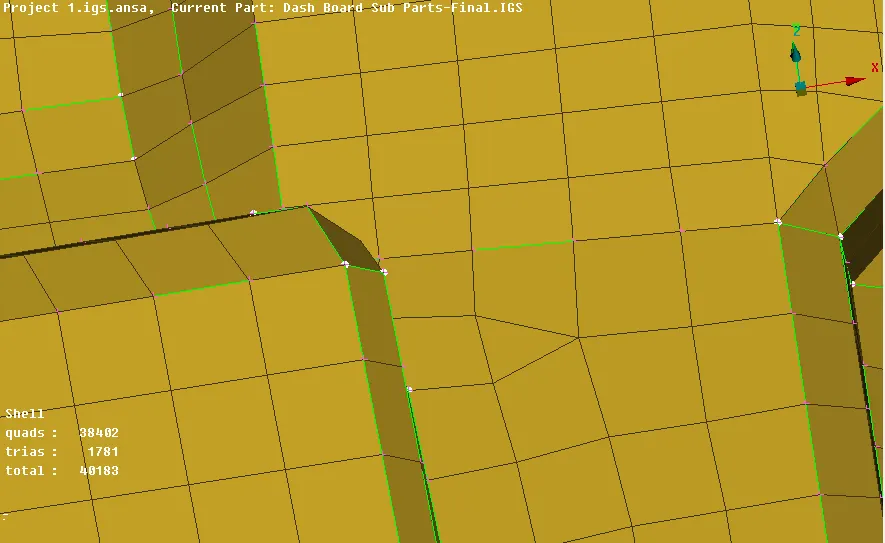
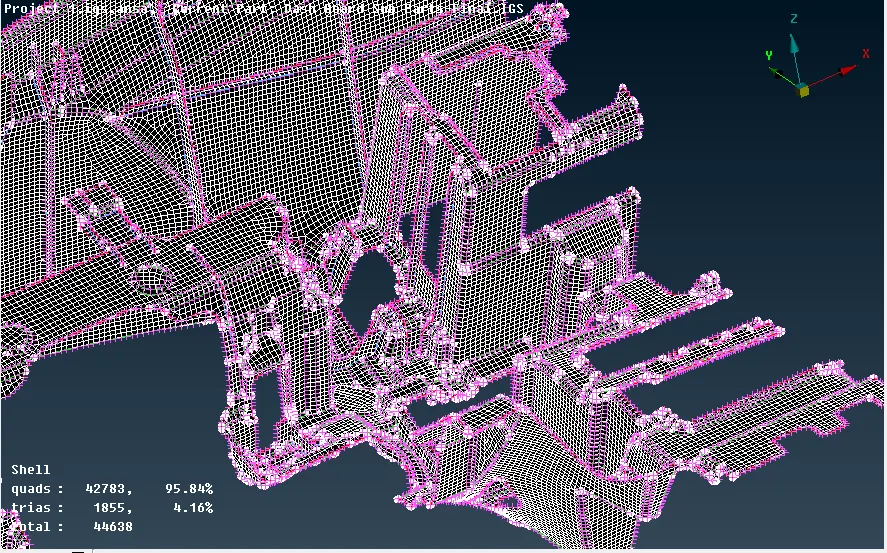
- Initially the complex macros are meshed for the better convinience of avoiding more trias on the simple macros.
- For meshing best tool is used to deploy the elements on macros. Since it also results in improper mesh, tools like improve, reconstruct etc under mesh generation are played a vital role in mesh adjustment.
- Even simpler macros are also having some of the trias. These trias are removed by split and join tool under elements. Before proceeding this, the macros are verified whether it is located near free edges. Otherwise it could leads to generation of trias on nearby macros, if it splitted and joined.
- Another mesh feature i.e, splitting the macros is done here to have good mesh. If we mesh macros as it is, it is possible to have trias. But if we split the macros and mesh it would results in reduced number of trias. How long we go for macros splitting that much possible to reduce trias concentration!
- Some of the trias are located near to the fillet regions. At that locations swap tool is used to move away the tria from fillet regions. It is a norm that trias should not be placed on the fillets.
Quality criteria check up
- Dash board consists number of inclining surfaces. At there warpage criteria is possible to fail. In unavoidable conditions in order to eliminate the warpage failure the elements are splitted to have ortho trias. Ortho trias greatly reduces the warpage element failure and made to zero failure.
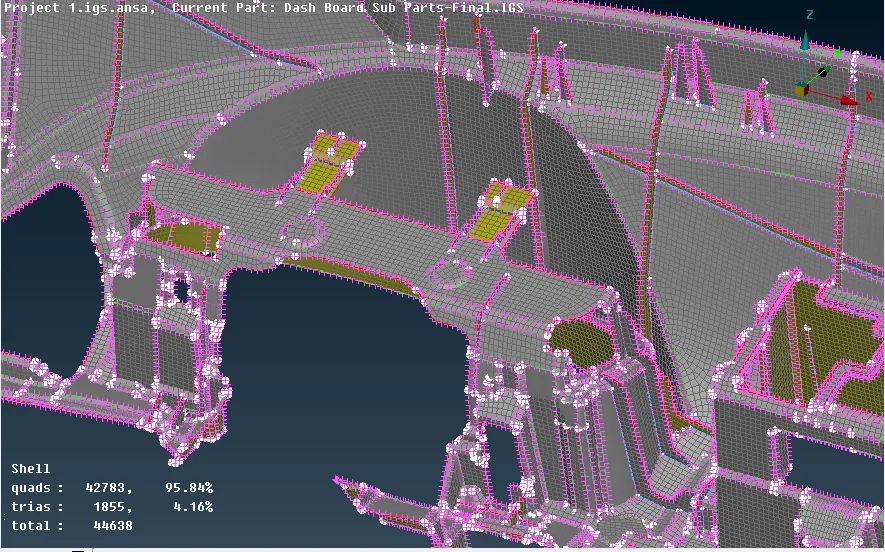
- In given quality criteria, the trias percentage mentioned is 15 percent. Here it made to 4.16 percent. But this percentage has to be reduced further more.
- Some of the elements are failed under angle criteria. Angle for an element will arise if only it is rotational quads. Improving the mesh at there eliminated the rotational quads. How the trias should not be locate on the fillets like rotational quads also should not be on the model.
- Minimum element length criteria are also eliminated by improving or reconstructing the mesh.
Presentation views
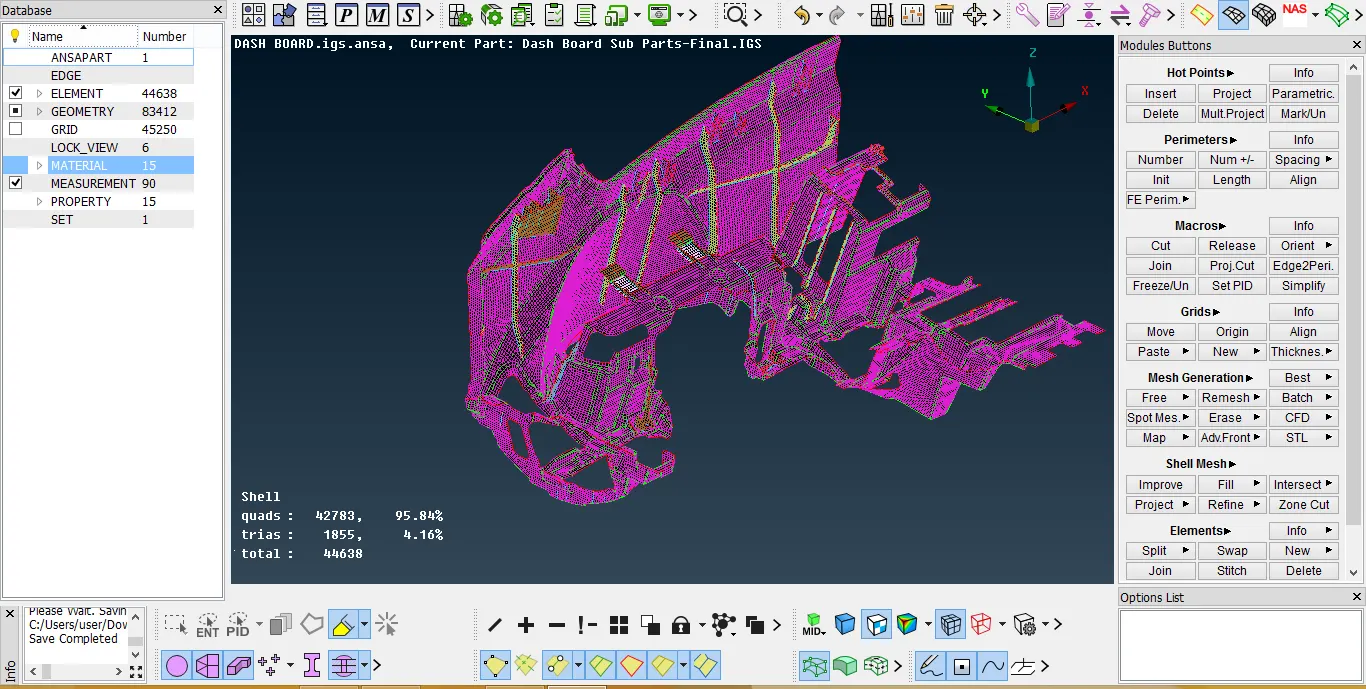
After completion of all the above steps, the model is checked through presentation parameters. Changing the 2D elements to 3D element representation in presentation parameters to find out the errors is done. PID's and MID'S are also checked whether it is defined or undefined.
LEARNING OUTCOME :
- How to mid surfacing the most complicated component with uniform thickness at one step?
- How to adjust the mesh at complex macros when it bends or inclining more?
- How to clear warpage criteria failure?
- How to check the final model by using presentation parameters?
CONCLUSION :
Thus the given dash board is meshed with given quality criteria and thickness assigned to it.
https://drive.google.com/file/d/1YtGK1dRuTB24v-FcDatB-gUvXEOTWJmC/view?usp=sharing