Photo Realistic Rendering
Design And Rendering Of American Chopper Bike Using Solidworks
Objective:-To design individual components of American chopper bike using solid works and assemble them in a felicitous way and render it to make a realistic view of the model using photo view and solidworks visualize. The whole process is carried out in solid works tool
Introduction: - This project is accomplished using solidworks by sketching and part modelling each component and then they were sent to assembly process to assemble each part in arrangement to demonstrate a American chopper. This report explanation includes basic commands used while designing the model step by step.
Components of American Chopper
- Transmission belt
- Kick stand
- Front fender
- Rear fender
- Chain
- Oil tank
- Pedal
- Front wheel
- Rear wheel
- Front fork
- Chassis
- Engine
- Gas tank
Design methodology
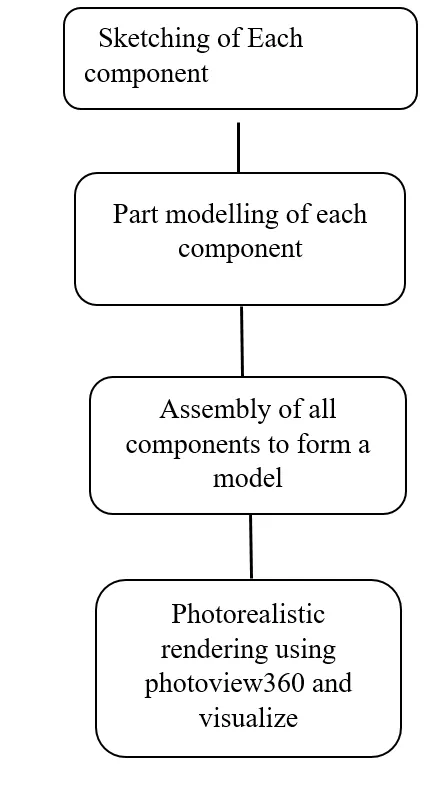
Sketching: - A rough diagram which represents the chief features of an object, to examine the model before going into part modelling.
Part modeling: - It is the next process of sketching where we will be giving a calculated dimension of virtue prototype of an object by modeling each individual part separately.
Assembly: - In this we will insert each component and assemble them using mates to form a model.
Tools used in part modeling
- Extrude boss/base:-An Extruded Boss/Base feature will allow you to take a 2D sketch and add thickness to it in the third dimension. Every few releases, this feature gets some terrific functionality added to it.
- Extrude cut: Extruded cut feature removes material from the part. The End Condition, Draft, and Thin Feature options are same as described in Extruded Boss/Base.
To create an extruded cut:
1) Sketch the profile for cut.
2) Click Extruded cut on the Features toolbar.
- Fillet: - Fillet/Round creates a rounded internal or external face on the part. You can fillet all edges of a face, selected sets of faces, selected edges, or edge loops.
- Chamfer:-
The chamfer tool creates a beveled feature on selected edges, faces, or a vertex. Set the Distance and Angle in the Chamfer Property Manager or in the graphics area.
A manipulator arrow appears that points in the direction in which the distance is measured
- Offset:-.
Offset one or more sketch entities, selected model edges, or model faces by a specified distance. For example, you can offset sketch entities such as splines or arcs, sets of model edges, loops, and so on. You can also offset finite lines
- Convert entities: - The Convert Entities tool allows users to make a copied projection of a given sketch, face, or set of edges onto the active sketch plane. These sketch entities will update their size and/or positioning if either of these characteristics changes in the source sketch.
- Loft: - The loft feature in SOLIDWORKS allows you generate complex geometry in a single feature. It does this by interpolating surfaces between various cross-sections of a model. These cross-sections can be sketches, faces, or edges. In the loft interface, these cross-sections are considered "Loft Profiles'
- Dome:-The software calculates the distance using the radius of the arc as a basis for the dome. It creates a dome that is tangent to the adjacent cylindrical or conical face.
- Spline: - A Spline sketch is defined by its continuously changing curvature. Points are placed to shape the curve.
- Trim entities: - Select the trimtype based on the entitiesyou want to trim or extend. All trim types are available with 2D sketches and 2D sketches on 3D planes. You can use any of the following trim options: Power trim.
- Revolve base: - Revolved Boss or Base is a SolidWorks feature tool which is used to create solid 3D model around an axis.
- Dynamic mirror: - This tool allows the user to mirror a sketch about a line while the user is creating their sketch.
- Block: - You can make, save, edit, and insert blocks for drawing items and sketch entities that you use often, such as standard notes, title blocks, label positions, and so on. You can also attach blocks to geometry or to drawing views, and you can insert them into sheet formats.
- Linear pattern: - The linear Driven Pattern tool allows you to create patterns along a planar or 3D curve
- Circular pattern: - The Curve Driven Pattern tool allows you to create patterns along a planar or 3D curve.
- Shell: - It is define to reduce the thickness of model.
- Combine: - It is define to add, subtract, or common the 2 different element to make into one element
- Projection curve: - It is a tool you are going to use to form 3D curves from two 2D curves from two different planes.
- Surface sweep: - Solidworks swept cut is features tool, mainly used to cut a solid model or part by sweeping a completely closed profile along an open or closed path.
- Surface cut: - You can cut a solid model by removing material with a surface or plane. With multibody parts, you can select which bodies to keep. To cut a solid body with a surface or plane.
- Mirror: - Creates a copy of a feature, or multiple features, mirrored about a face or a plane.
- Move /copy Body: - In multibody parts, you can move, rotate, and copy solid and surface bodies, or place them using mates.
- Fill surface: - The Filled Surface feature constructs a surface patch with any number of sides, within a boundary defined by existing model edges, sketches, or curves, including composite curves. You can use this feature to construct a surface to fill a gap in a model.
- Split: - This tool is used to split faces on multiple bodies with one command.
Description of components designed in part modelling
- Transmission Belt:-Transmission Belt is used to transmit power from engine to gear box
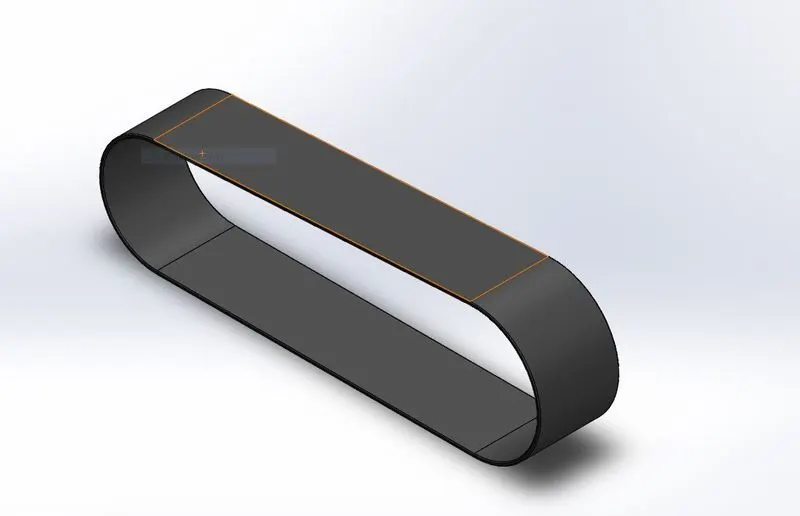
Features used to create Transmission Belt:
- Sketch
- Offset
- Extrude
- Fillet
- Appearances
- Kick stand:- It is used to support the chopper while it needs rest on ground and it is also known as side stand
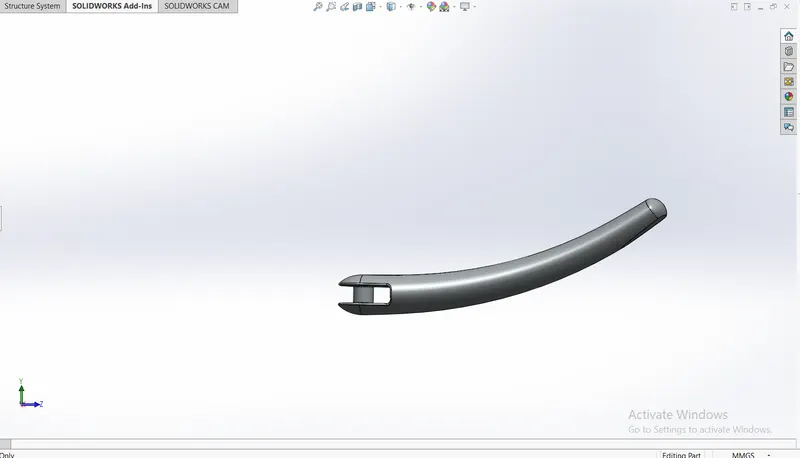
Features used to create kickstand:
- Sketch
- Loft
- Dome
- Extrude boss
- Extrude cut
- Fillet
- Split
- Front fender:- The front fender is mounted on the front fork above the wheel to protect the rider and other parts of chopper bike from the debris and foreign particles
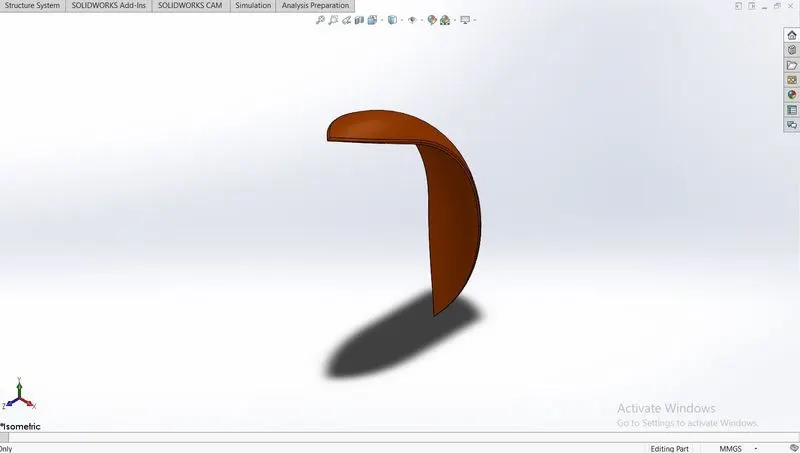
Features used to create Front fender:
- Sketch
- Offset entities
- Trim entities
- Revolve
- Dynamic Mirror
- Split
- Appearances
- Rear fender:-The use of rear fender is same as the front fender.it is mounted on the chassis of the rear part above the rear wheel
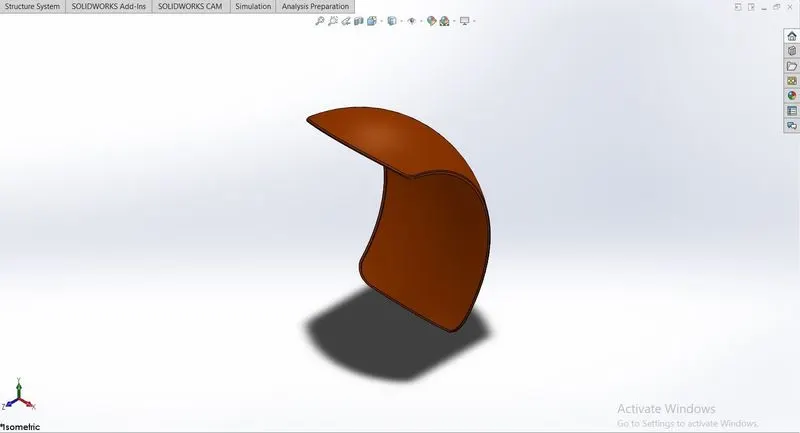
Features used to model Rear Fender:
- Sketch
- Offset Entities
- Trim Entities
- Revolve
- Appearances
- Chain:-Chain is a type of transmission system that is used to transmit a power from engine to the rear wheel. The sprocket is used to transmit the power to the chain. The sprocket is connected with the shaft with the help of a key
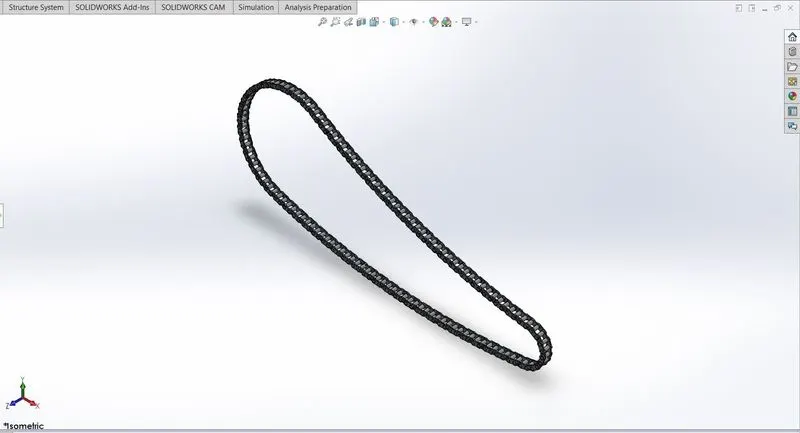
Features used to create Chain
- Sketch
- Trim
- Fillet
- Blocks
- Extrude
- Patterns
- Appearances
- Oil tank:-The oil tank is used to store the oil required to run the engine. It is a hollow one. We have taken 3mm as a thickness of the oil tank for our chopper model
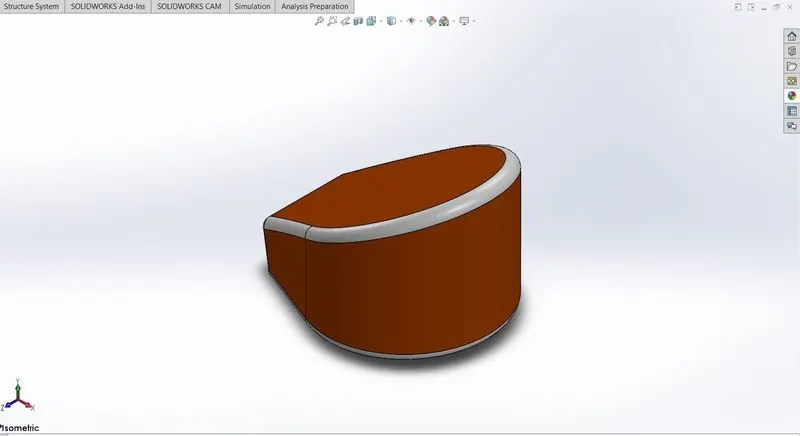
Features used to create oil tank:
- Sketch
- Boss Extrude
- Combine
- Fillet
- Shell
- Pedal:-Pedal is external part attached to the chassis. It is used to place the leg on top of that to give comfort to the rider.
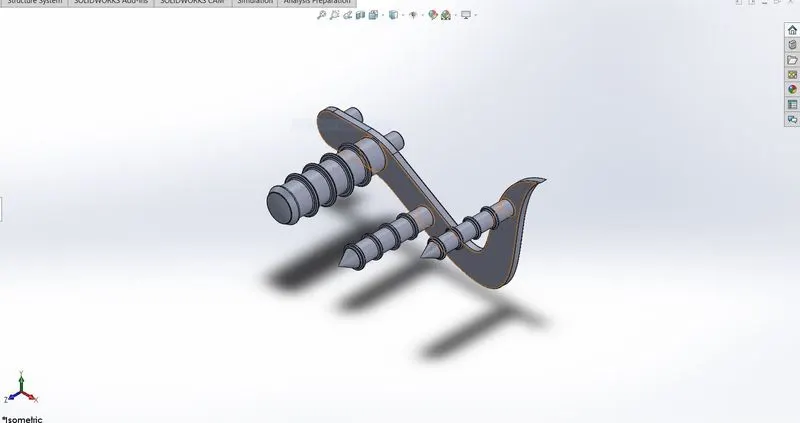
Features used to create Pedal:
- Sketch
- Extrude
- Fillet
- Linear pattern
- Dome
- Chamfer
- Front wheel:-A wheel is a circular block made of steel/alloy material. On the top of wheel, the Tire is covered.The tire is made of rubber and it has thin wires within it.
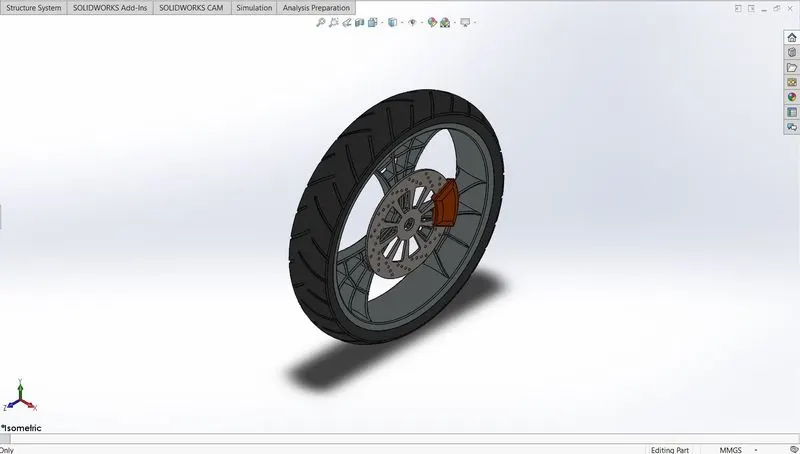
Features used to create Front Wheel:
- Sketch
- Revolve
- Trim
- Fillet sketch
- Boss Extrude
- Revolve Cut
- Linear Pattern
- Chamfer
- Cut Extrude
- Circular Pattern
- Rear wheel:- A circular object that revolves on an axis and is fixed below a vehicle or other object enabling it to move easily over the ground
The disc and sprocket are attached with rear wheel.
The chain is connected between the Engine and rear wheel.
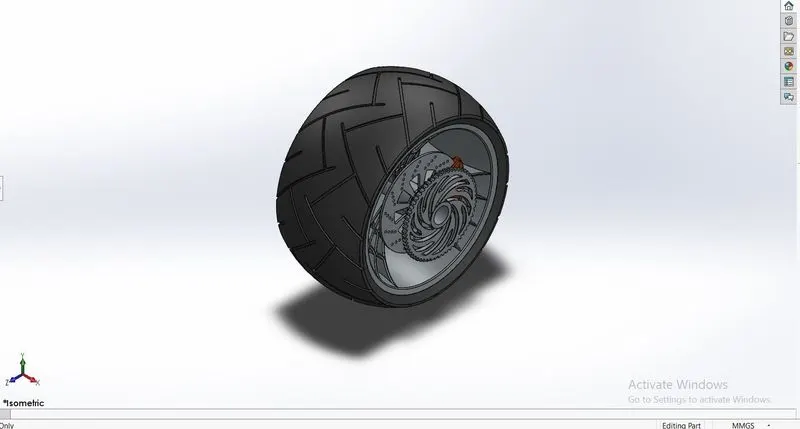
Features used to create rear wheel
- Sketch
- Revolve
- Trim
- Sketch fillet
- Extrude Boss
- Planes
- Revolve cut
- Linear pattern
- Chamfer
- Fillet feature
- Extrude Cut
- Circular pattern
- Front fork:-Most motorcycles today use telescopic forks for the front suspension. The forks can be most easily understood as simply large hydraulic shock absorbers with internal coil springs.
They allow the front wheel to react to imperfections in the road while isolating the rest of the motorcycle from that motion.
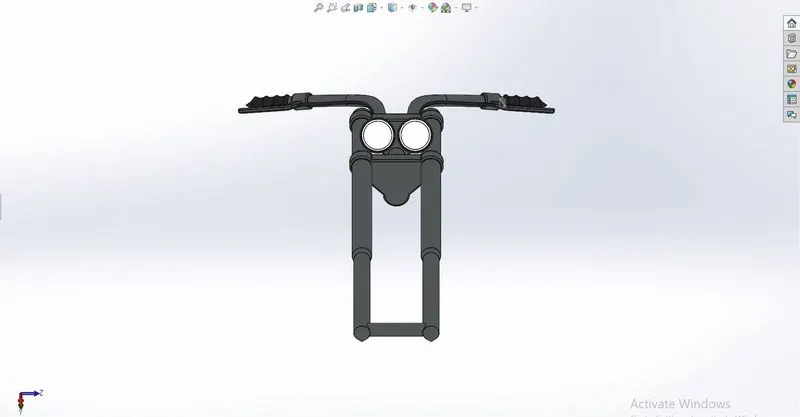
Features used to create Front Fork:
- Sketch
- Extrude
- Trim
- Revolve
- Split
- Move/copy bodies
- Dome
- Mirror
- Combine
- Projected curve
- Sweep
- Chassis:-A chassis or a frame forms its skeleton. All the components of a motorcycle like suspension, wheels, fuel tank, seats, handle bars etc. are attached to this base structure which lends a motorcycle its strength and ability to handle well.
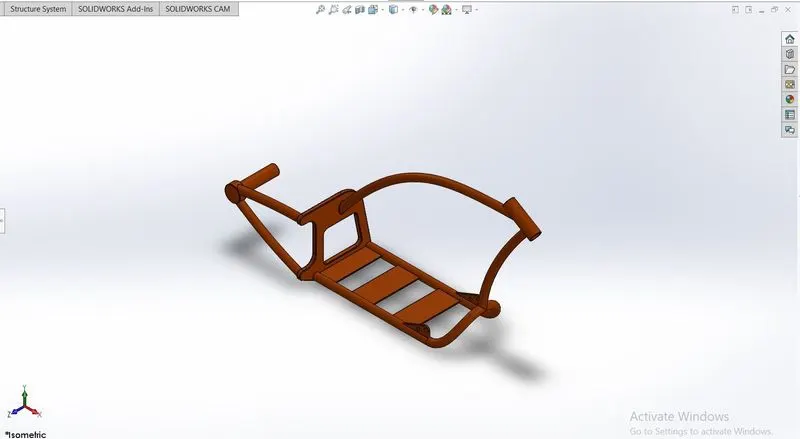
Features used to create Chassis:
- Sketch
- Offset
- Convert Entities
- Project Curve
- Trim
- Sweep
- Split
- Revolve
- Cut Extrude
- Fillet
- Combine
- Engine:-Engine is the prime mover for the bike. The engine converts a chemical energy into the heat energy and then the heat energy is converted to mechanical work.The mechanical work in the engine is a rotational motion. This rotation is transmitted to wheel with the help of chain and sprocket through the gear box and clutch.
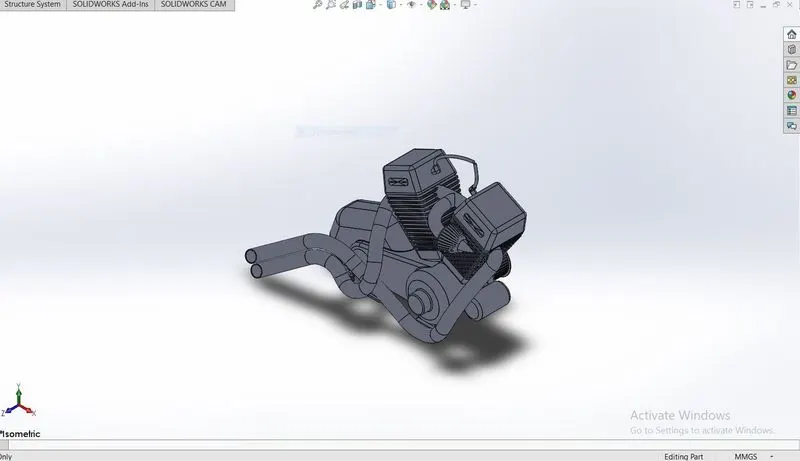
Features used to create engine:
- Sketch
- Trim
- Revolve
- Boss Extrude
- Extrude Cut
- Offset
- Dome
- Fillet
- Projected Curve
- Composite Curve
- Sweep
- Mirror
- Circular pattern
- Split
- Gas tank:-Gas tanks are used to store gas and its gives gas to the engine when required.
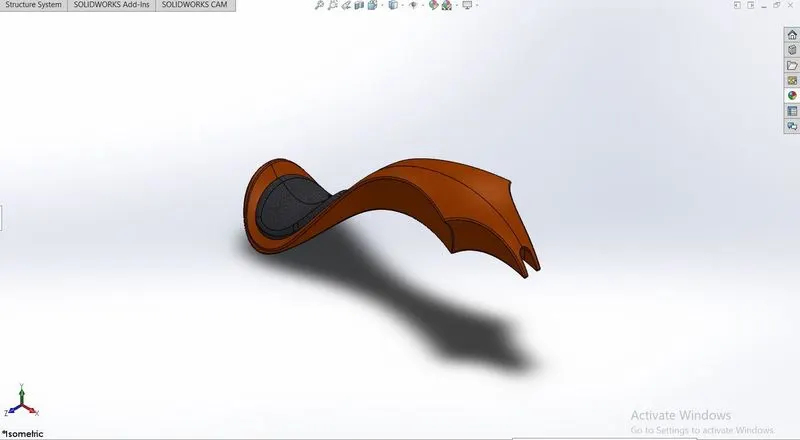
Features used to create Gas tank :
- Trim
- Projected curve
- Sweep surface
- Loft surface
- Fill surface
- Surface Trim
- Surface Knit
- Sweep Cut
- Fillet
Assembly of the Chopper:-
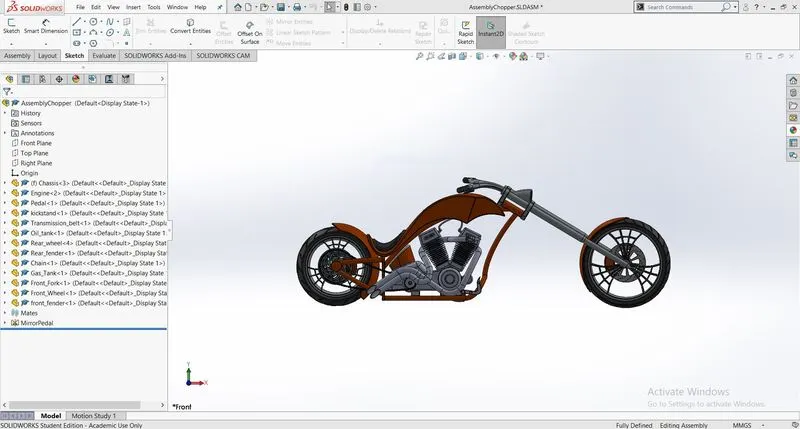
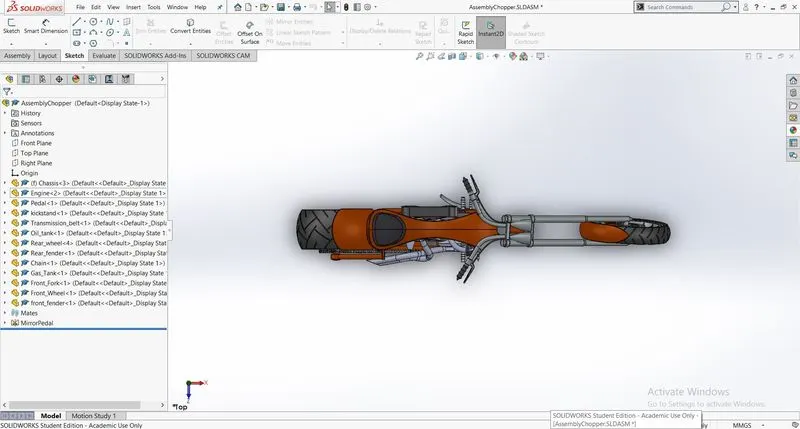
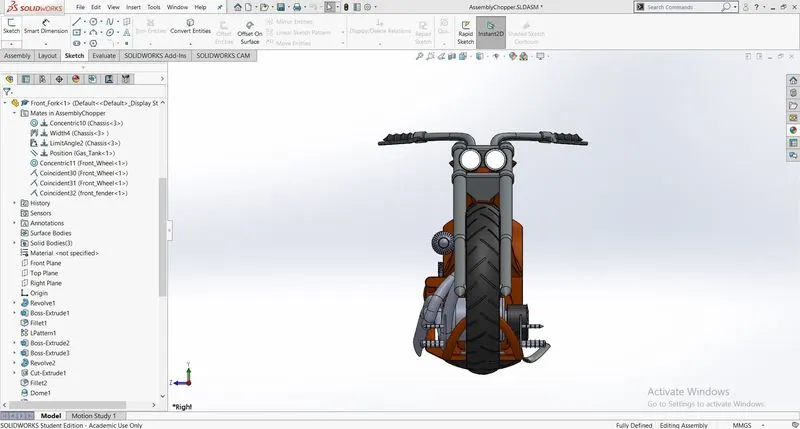
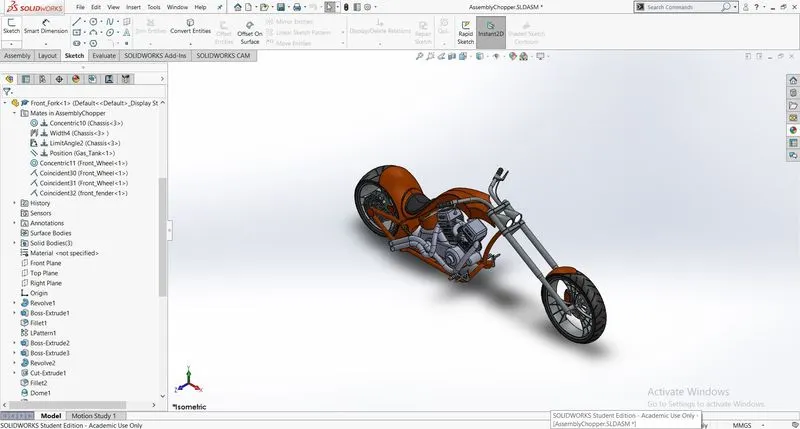
- Initially the Chassis part is inserted in the assembly by using insert parts in the option. After that the part is inserted in the assembly environment and click ok to fix the Chassis.
- After that other parts of the chopper are inserted into the assembly and given passible mate conditions.
Front View
Top View
Side View
Isometric View
Features used to assemble chopper:
- Inserting Parts
- Mates
Mates:
Mates create geometric relationship between the assembly components. As we add mates, we define the allowable directions of linear or rotational motion of the components. We can move a component within its degree of freedom, visualizing the assembly behavior.
Rendering:
- Rendering is a process of creating realistic images of the photorealistic model with the environment.
- Rendering has been done in two ways in Solidworks:
- Photo view 360
Camera View of the Model:
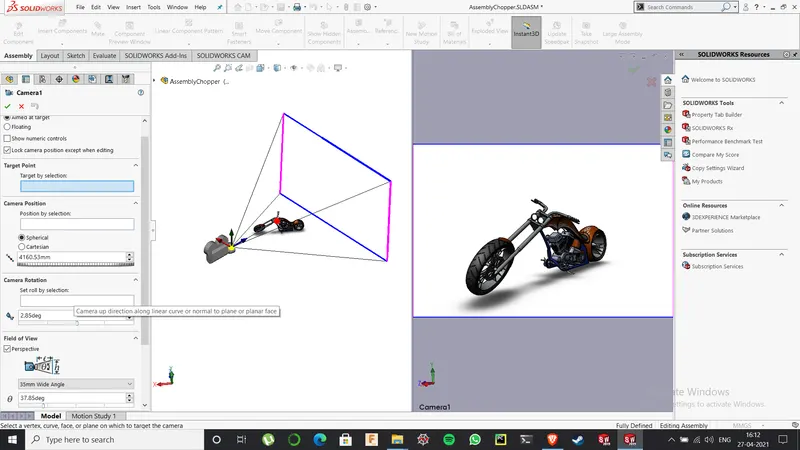
Solidworks Visualize:
In the photorealistic model some of the mate conditions and positions are changed to render realistic models.
Then, the photorealistic model is rendered into realistic images with different views.
Photo view 360:
Photo view 360 is a visualization and rendering solution includes with Solidworks. Providing a highly interactive environment for viewing designs as well as for creating photo-realistic rendering it can be used to showcase our designs as well.
Rendering image 1
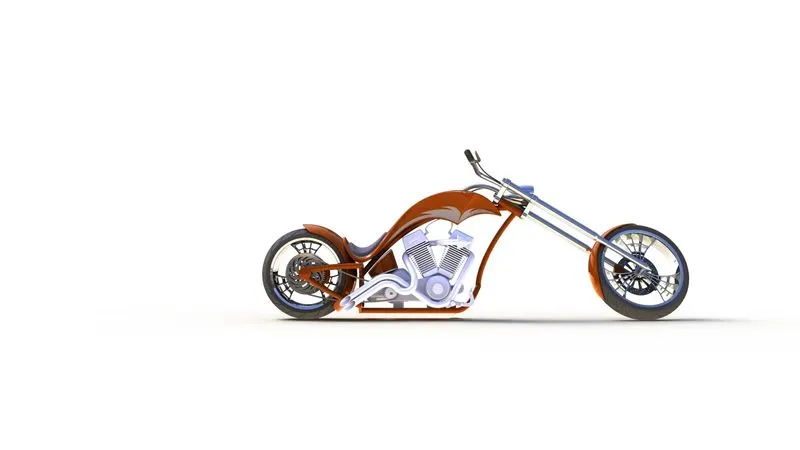
Rendering image 2
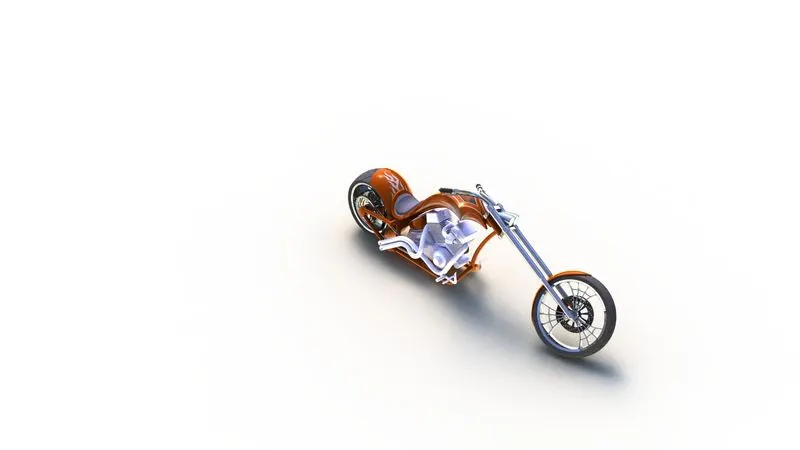
Rendering image 3
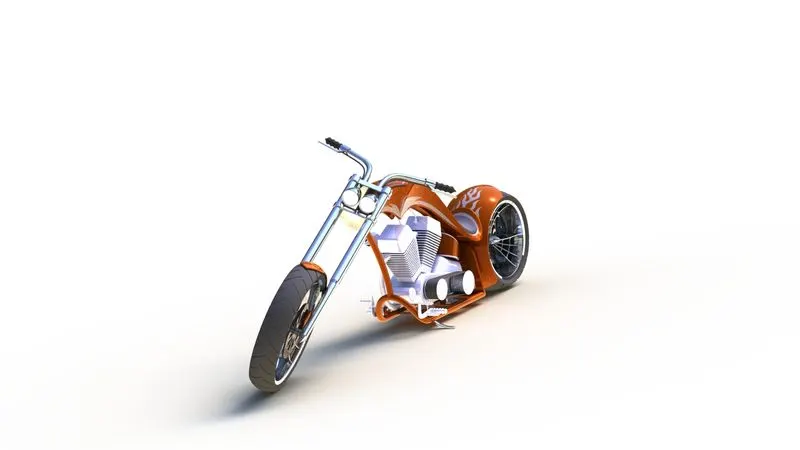
Rendering image 4
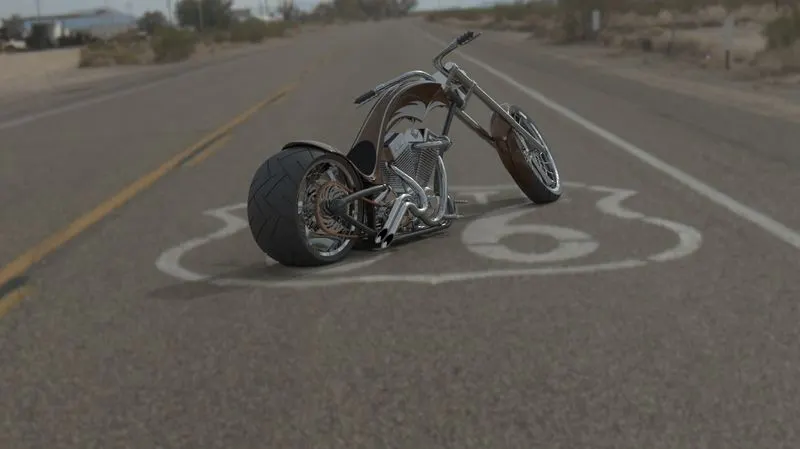
Rendering image 5
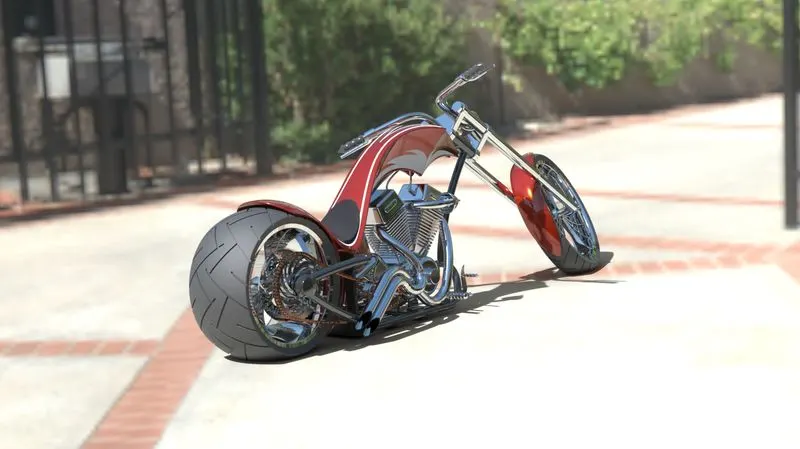
Conclusion:-
We have designed chopper bike using solidworks and rendered it using photo view 360 and by designing this model i have learned some advanced commands and topics in solidworks