Design of backdoor
Design of the backdoor of the car using Nx cad software
Aim: To design the back door of the car using the given outer class 'A' surface in Nx cad software.
Backdoor of a car:
The Backdoor or Tailgate is the panel that covers the boot (or trunk) of an automobile. It enables access to the main luggage compartment. A hinge allows the boot lid to be raised, while devices such as springs or gas cylinders hold it up in the open position.
In principle, the tailgate has to fulfill similar requirements and is subject to the same design guidelines as bonnets. However, aluminum sheets are used much less for tailgates than for bonnets.
The Backdoor is hinged at the top and open upwards, tailgates are lateral opening doors that are hinged at the left or right side. They greatly benefit from a reduced weight due to easier handling. In addition, a reduced weight can translate into significant lower rear axle loads (as these panels overhang the rear axle) and hence additional seating capacity.

Components of the Back Door:
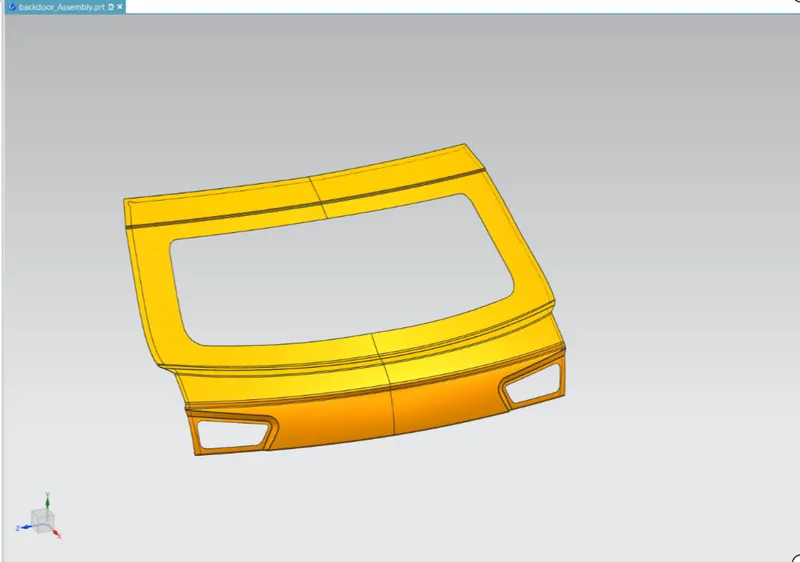
Outer panel upper
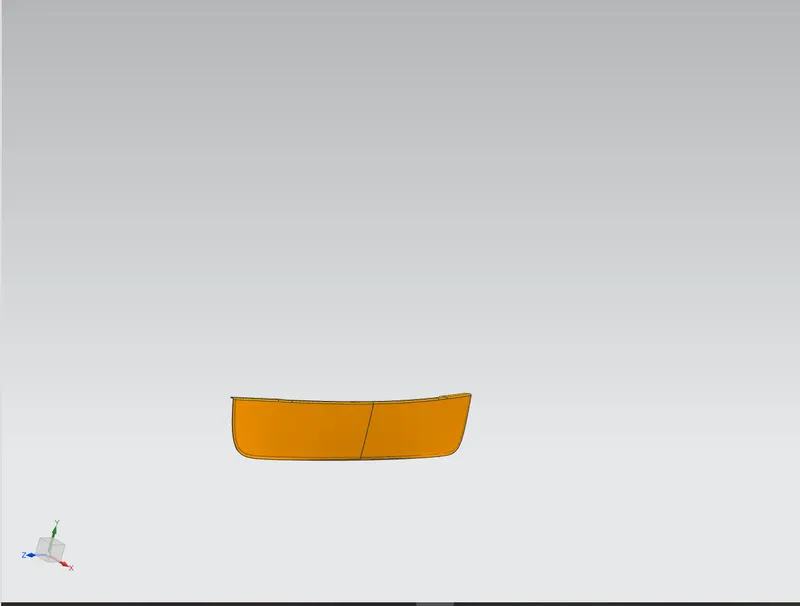
Outer panel Lower
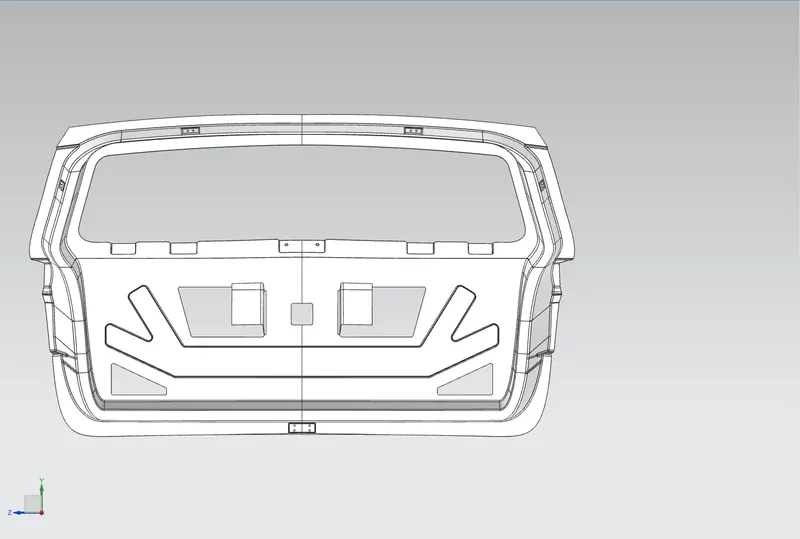
Inner panel
Latch and Striker Reinforcement
Hinge Reinforcement
Gas stays Reinforcement
Wiper motor reinforcement
Design consideration for a Back Door:
Rear Visibility
Boot Space and accessibility
Fit and Clearance
Support Structures like hinge and gas stays
Mounts for wiper motor,
Tail lamps, and other wiring loops.
Embossing :
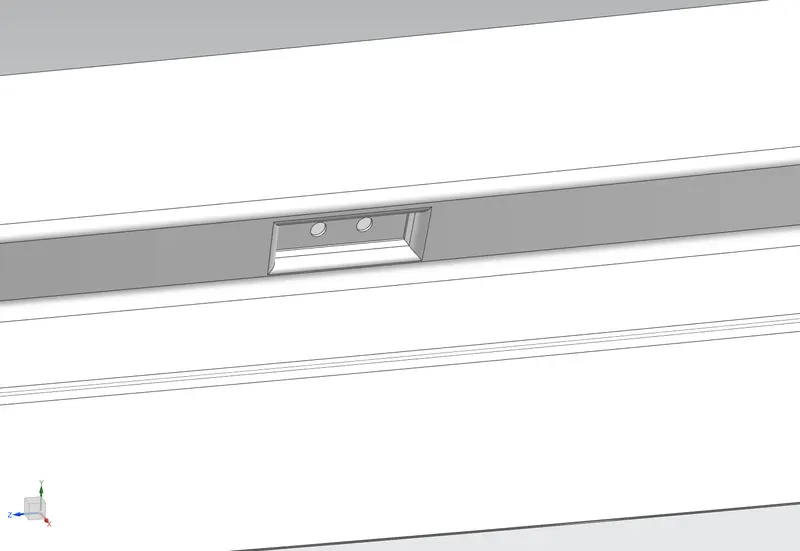
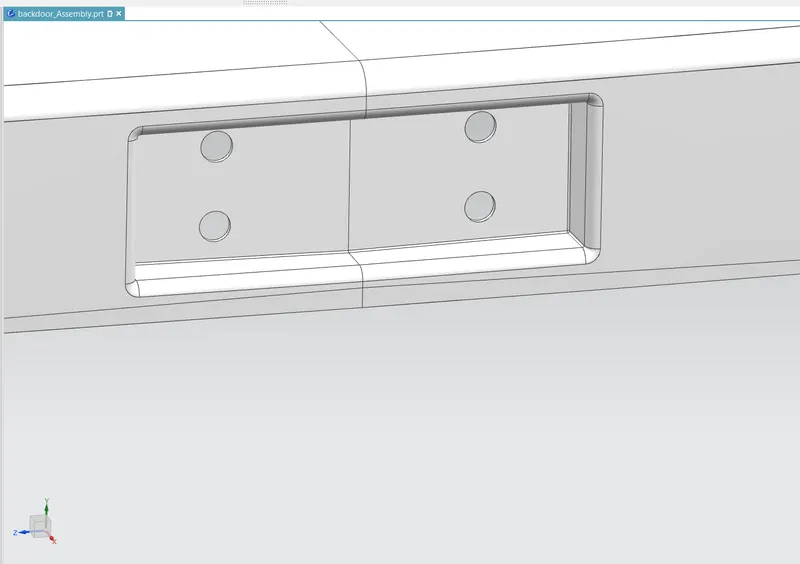
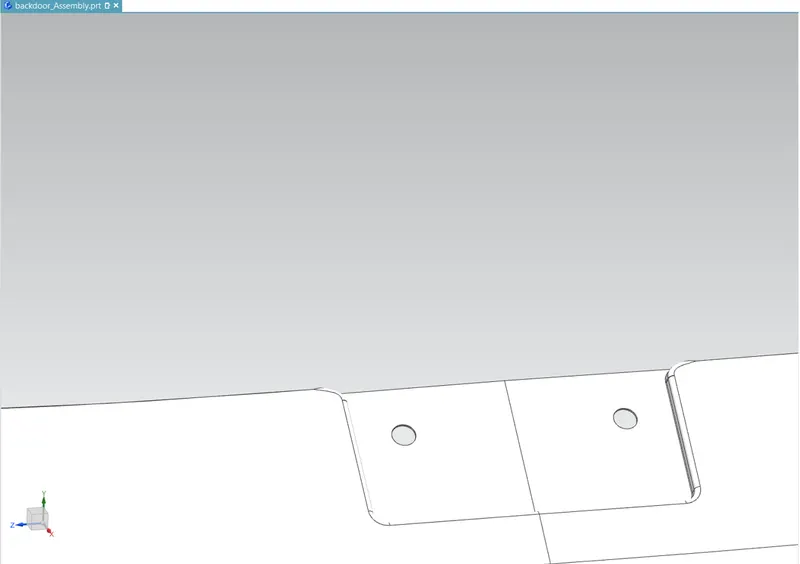
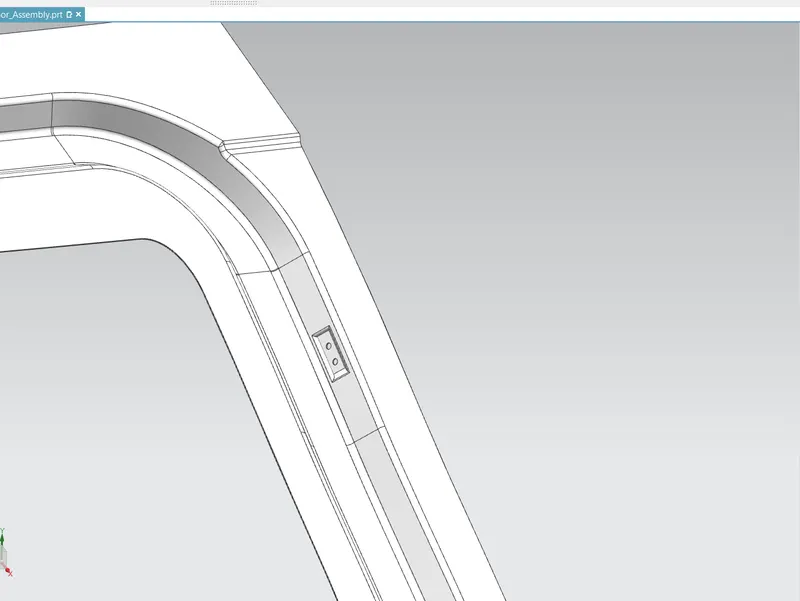
Embossing is a metal forming process for producing raised or sunken designs or relief in sheet material by means of matched male and female roller dies, theoretically with no change in metal thickness. Embosses are created to provide additional strength and to direct the forces towards the hinge and body of the car.
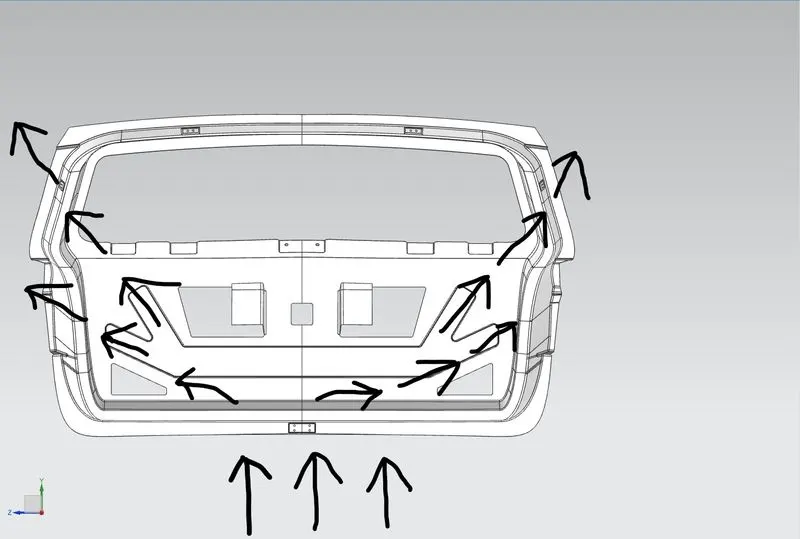
For the inner panel to act as a good reinforcement, it needs to disperse the stress
outwards, hence the emboss was designed In such a way that the forces are directed outwards or away from the center.
Hinge Emboss
Latch and striker Emboss
Wiper Motor Emboss
Gas Stay Emboss
Reinforcement:
Instead of making the whole inner panel a thicker sheet, a sheet with less thickness in addition to local reinforcement is provided to increase the strength of the component and reduce the weight.
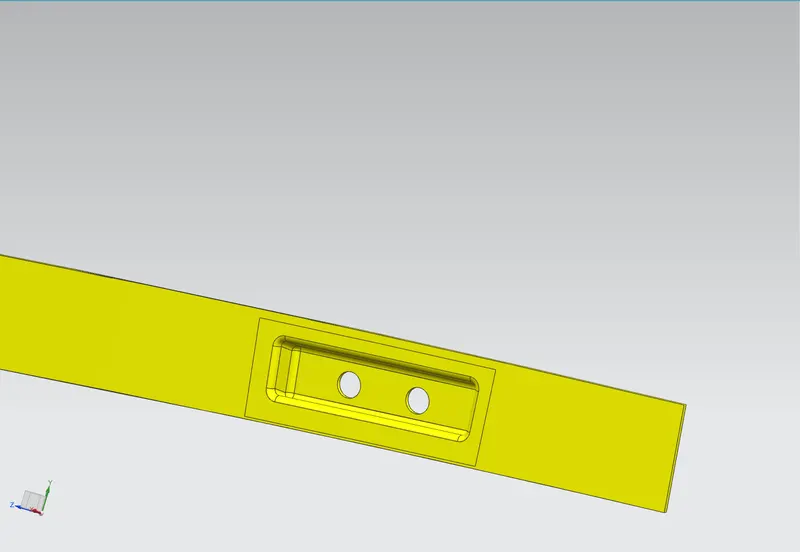
Hinge reinforcement
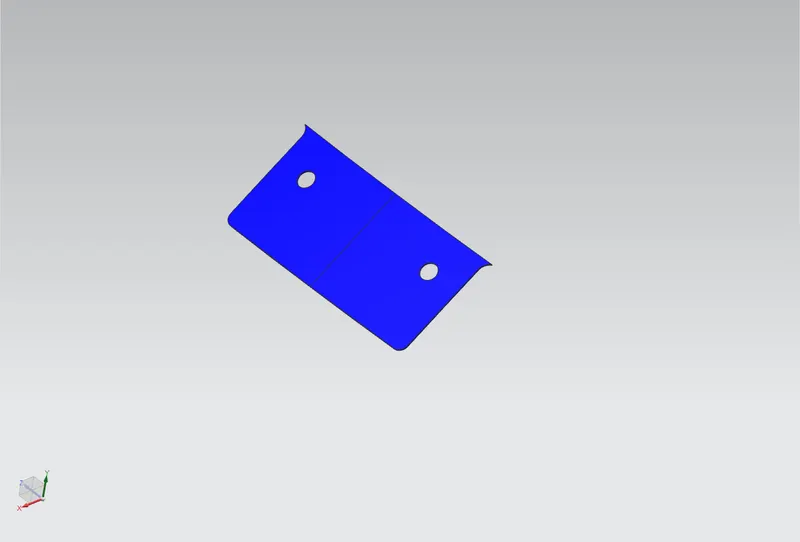
Wiper motor reinforcement
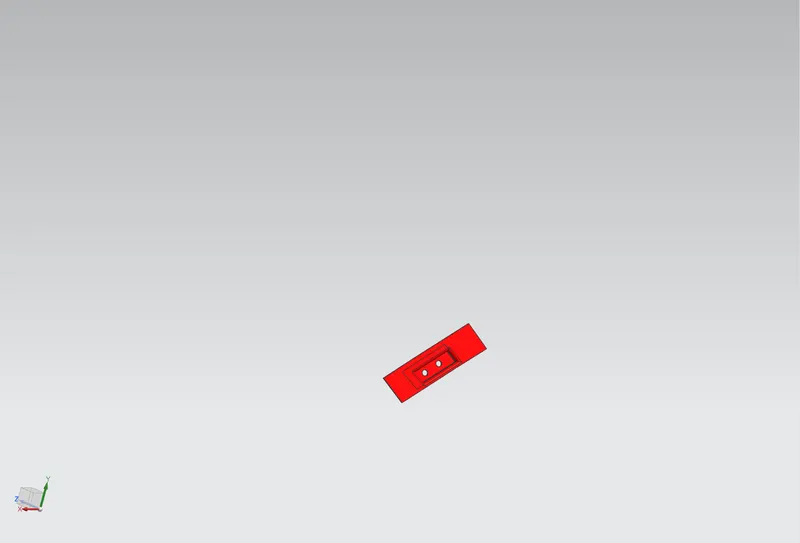
Gas stay reinforcement
Mastic Sealings:
Mastic sealants are elastic compound that behaves like the rubber. It is placed between the outer and inner panels. Initially is it in paste form, but after the hot furnace bath, it gets hardened thus joining the outer and inner panel.
Mastic sealant has the tendency to increase the strength of the panel and has the influence of 80mm diameter.
Hemming:
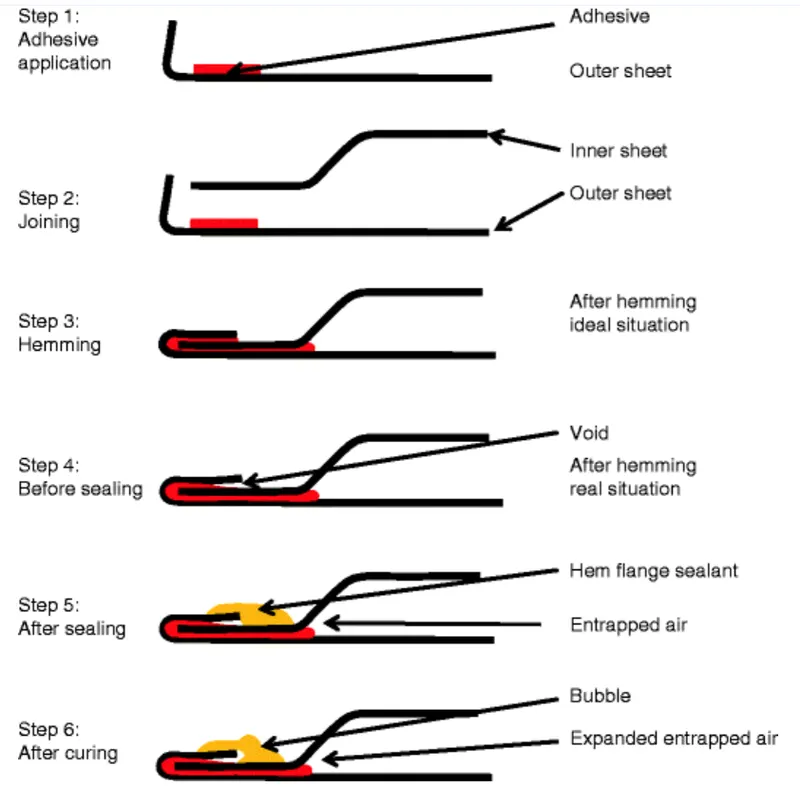
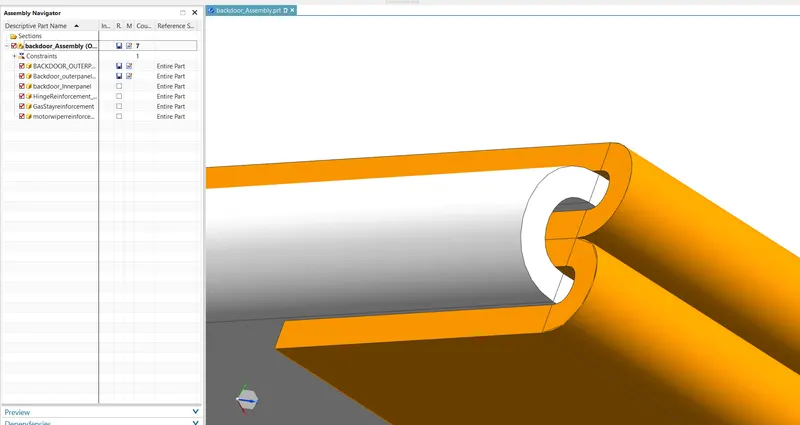
Hemming is the process in which the edge is rolled flush to itself, while a seam joins the edges of two materials. Normally hemming operations are used to connect parts together, to improve the appearance of a part, and to reinforce part edges.
Relief is provided onto the part or component in order to remove any stresses developed in a particular area i.e. sharp corners that take place during the hemming process are carried out. Thus corners are rounded or chamfered.
Force Distribution :
When the car hit the rear end, the force which acted should react outside. The Y emboss which is helps to move the force to the outer end.
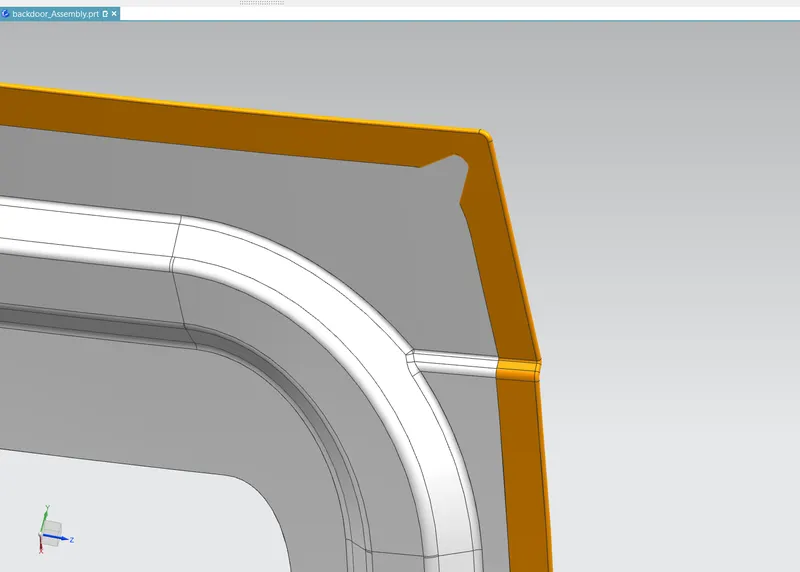
Corner Relief:
Relief helps to control sheet metal material behavior and to prevent unwanted deformation during unbend operations. So here I gave two corner reliefs for the Back door.
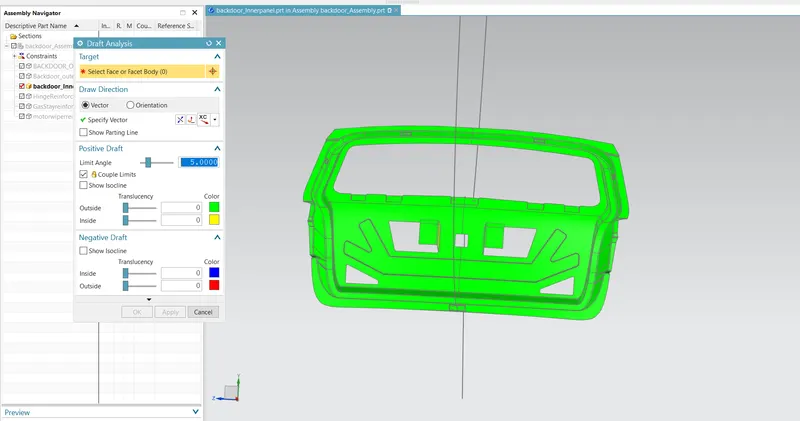
Draft analysis :
Final Images:
Outer panel Upperpart
Outerpanel Lowerpart
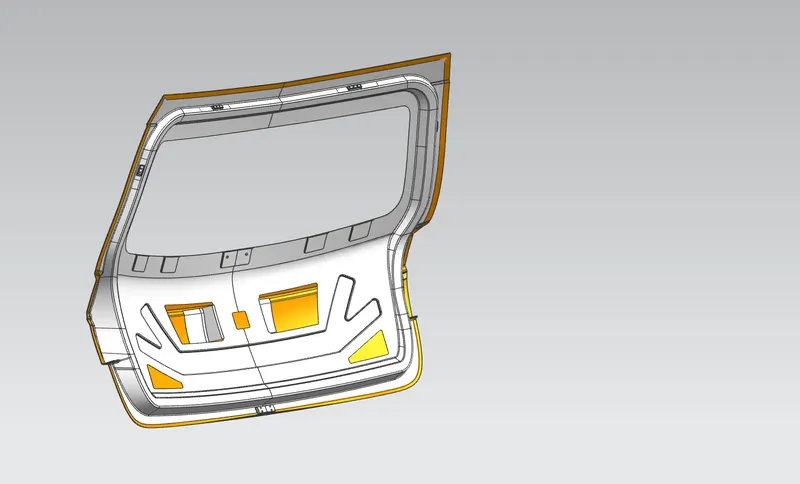
Innerpanel
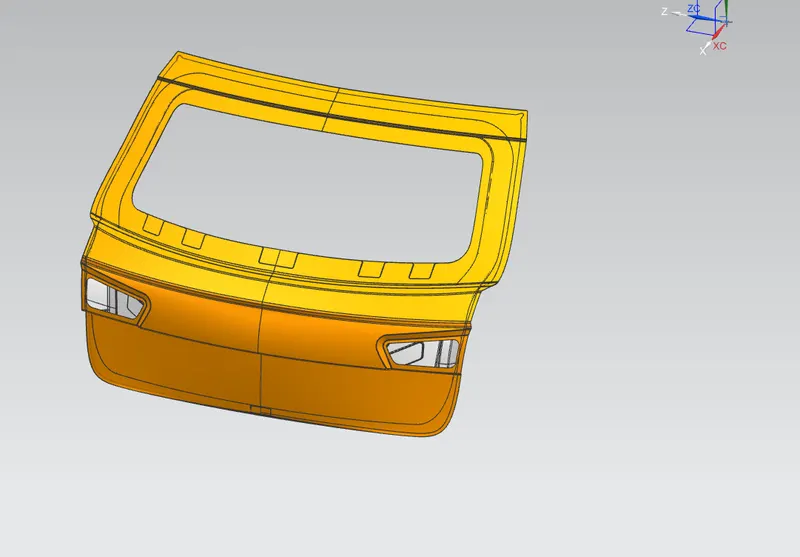
Final assembly
Conclusion:
Hence we have BIW of the backdoor of a car using NXCad12 software by using given parent parts.