Fender Design
AIM
Prepare a report explaining the different fender design and its different mounts, manufacturing process and its design parameter.
FENDER
- Fender is the American English term for the part of an automobile, motorcycle or other vehicle body that frames a wheel well (the fender underside).
- In other word Fender is a housing for the wheels that keeps road debris contained.
- The fenders of a car are the parts of the body over the wheels.
- In British English, the fender is called the wing.
- In modern unibody vehicle fender may also be called as quarter panel.
- The equivalent component of a bicycle or motorcycle or the "cycle wing" style of wing fitted to vintage cars, or over tires on Lorries which is not integral with the bodywork, is called a mudguard in Britain.
- Fenders are made of metal, plastic, fiberglass, rubber, etc.
- Fender skirts, known in Australia and the United Kingdom as spats, are pieces of bodywork on the fender that cover the upper portions of the rear tires of an automobile.
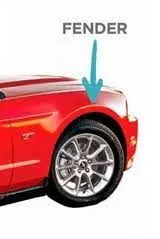
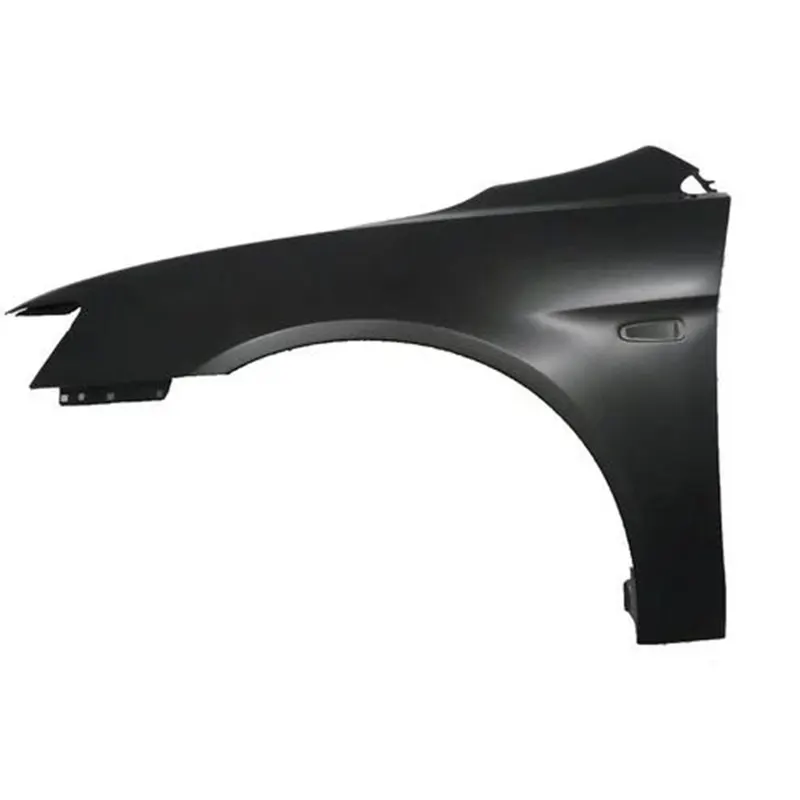
PURPOSE OF FENDER
- The primary purpose of fender is to keep mud, rocks, sand, liquids and other road debris from being thrown around by the tires.
- The fender not only protects your car from sustaining damage from road debris but it prevents this debris from being thrown up at other vehicles on the road.
- When the tire rotates, rocks, debris, dust and water are all picked up from the road. The tires throw these materials, leading to impact to nearby objects or an accident. However, fenders prevent these items from being thrown away from the vehicle.
- Fenders prevent dirt and other particles from entering the wheel well.
- It improve the aerodynamics of the car.
THERE ARE TWO FENDER
- FRONT FENDER
- REAR FENDER
- FRONT FENDER
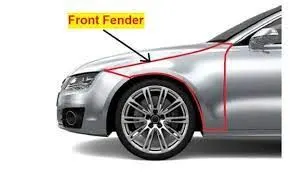
- Front section between the door and the hood (bonnet), is called a Front Fender.
- It consist of two fender-: Left Front Fender and Right Front Fender.
- It is a front outer side member of a car, which covers the wheel side.

- REAR FENDER
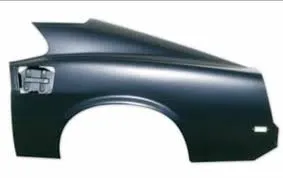
- Body panel (exterior surface) of an automobile between a rear door (or only door on each side for two-door models and the trunk (boot) and typically wraps around the wheel well is called as Rear Fender.
- It consist of two fender-: Left Rear Fender and Right Rear Fender.

BUMPER
- The bumper is installed on the front and rear side of a vehicle. Its main function is to absorb the impact upon collision, minimizing the damage to the main body.
- The bumper is installed on the front and rear side of a vehicle. Its main function is to absorb the impact upon collision, minimizing the damage to the main body.
- The bumer is often moulded contoured plastic. It spreads horizontally across the front and back of an automobile that protects it from the minor front and rear collisions or “bumps”.
TYPES OF FRONT FENDER ACCORDING TO BUMPER
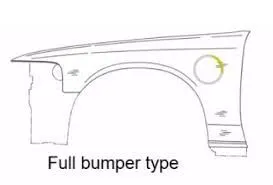
- FULL BUMPER TYPE
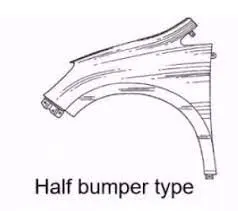
- HALF BUMPER TYPE
- FULL BUMPER TYPE
- These types of fenders were used in earlier models of vehicles.
- The size of full bumper type is big.
- The blend which is used to create full bumper type is really big.
- It have high possible of wastage of sheet metal in full bumper type.
- Weight of the full bumper type is more than the half bumper type.
- The performance of the vehicle is less due to the increased weight.
- HALF BUMPER TYPE
- These types of fenders were used in present models of vehicles.
- The size of the high bumper is less than the full bumper type.
- In half bumper type there is possibility to reduce the scrap which means by slightly increasing the blank size, we can produce two fenders in same time.
- In half bumper type the lots of plastic uses on the bumper which in term decreases the cars weight.
- Every inch of sheet have some cost, it reduce the blank cost.
- The price of half fender is cheaper than the full bumper type.
- The performance of the vehicle is increased by weight reduction.
- The wastage of sheet is less in half bumper type.
FRONT FENDER DESIGN
- Bumper design & height should be such that in case of accident it hits passenger below the knee. In this case the passenger will fall on to the vehicle otherwise on road which would be more dangerous
- The fender's openings for the wheel wells tend to be much larger than the diameter of the tire, because they do not move with the tire suspension and consequently must be large enough to allow the full range of tire motion on the suspension without touching the interior of the wheel well
There are 5 mounting region on the front fender
- Drip area mounting
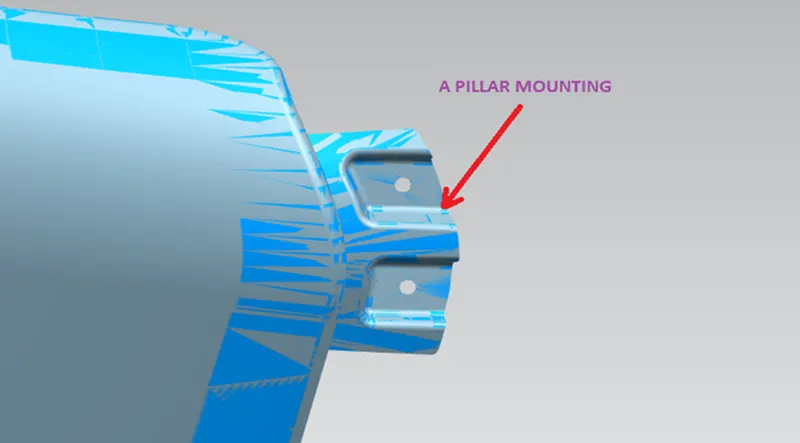
- A-pillar mounting
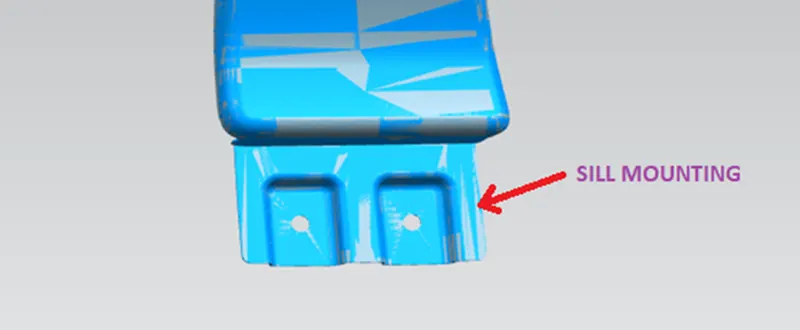
- Sill mounting
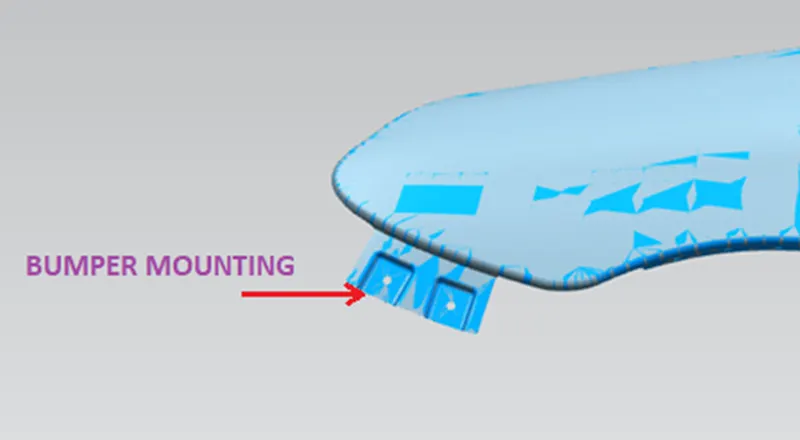
- Bumper mounting
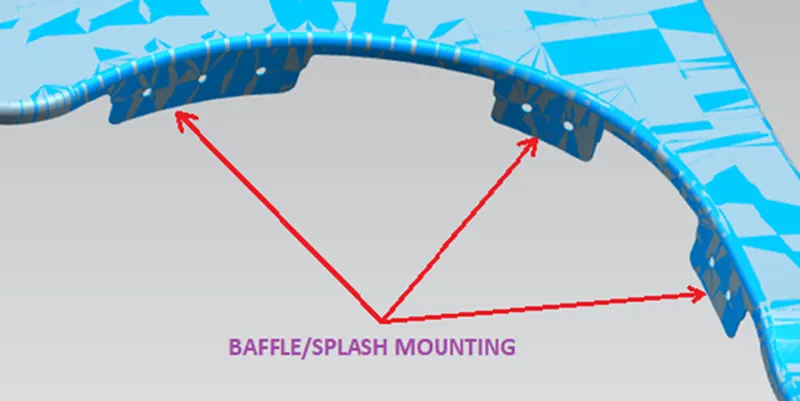
- Baffle/Splash mounting
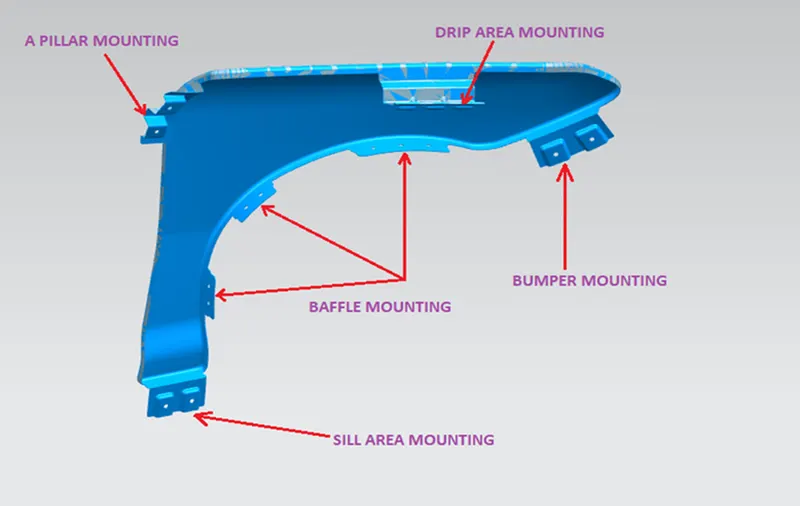
- DRIP AREA MOUNTING
- Drip area of fender are used to mount on the engine compartment.
- It is very important mounting area.
- Drip area is joining between fenders to engine compartment.
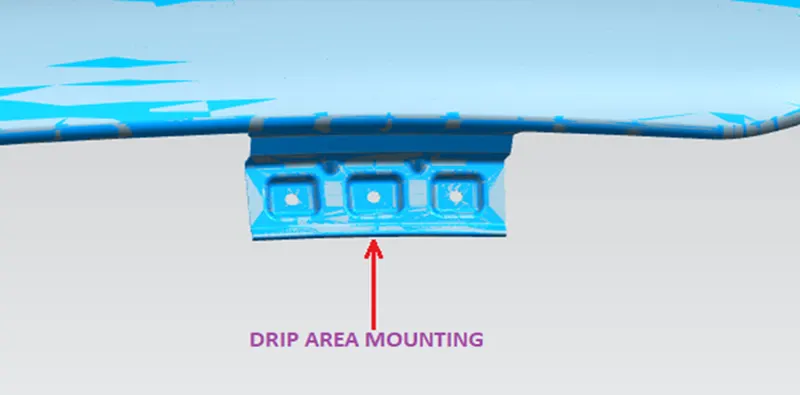
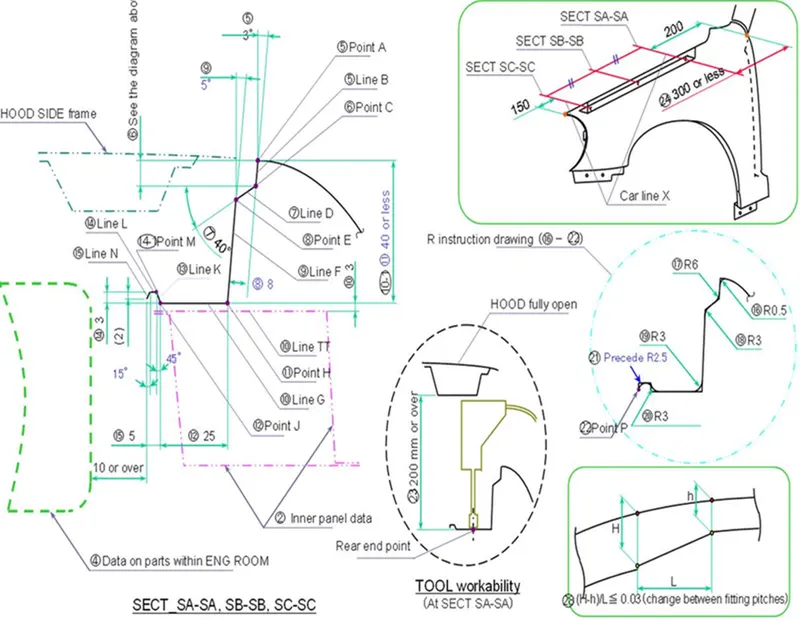
DRIP AREA DESIGN PARAMETERES
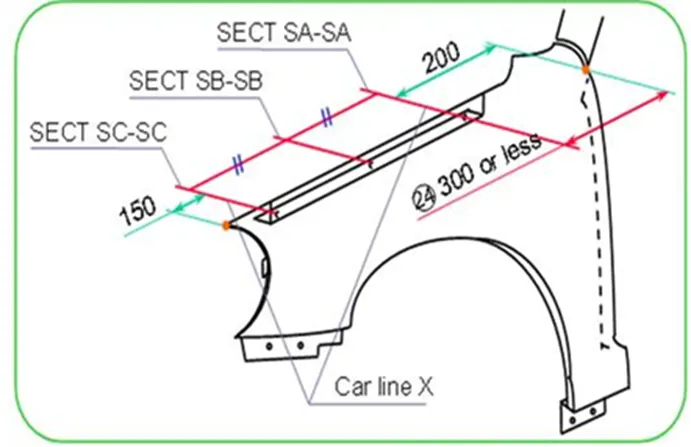
- A) LENGTH OF THE DRIP AREA
- The gap of drip area from rear end of fender and front end of fender side is very important.
- There have a cowl top on the rear end of fender. On the cowl top part will be carrying the wiper motor and its instrument.
- To have the sufficient space for this cowl top, we minimum need 200mm and maximum we can take 300mm.
- On the front bend, there have a head lamp, which have a housing unit, so for that minimum gap of drip area from the front end is about of 150mm.
- Thus the drip area is considered as per from end clearance and rear end clearance of fender.
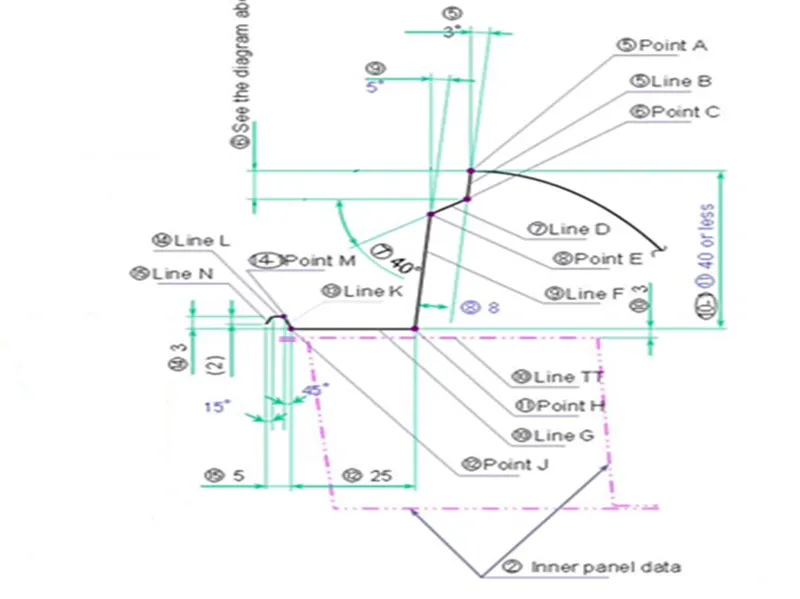
- B) MASTER SECTION
- The master section is taken for develop of drip area is very important.
- From the fender 3 degree is taken for the drawing reason. Because if it is straight, it create some problem while production. So, minimum opening angle of 3 degree is taken to avoid this.
- The structure (line L and line N) is given on the drip area for strengthen the part.
- The height of the drip area should be maximum 40mm to avoid the spring back effect.
- The maximum height of the Drip area have more spring back effect. So, it is considered upto40mm height of drip area.
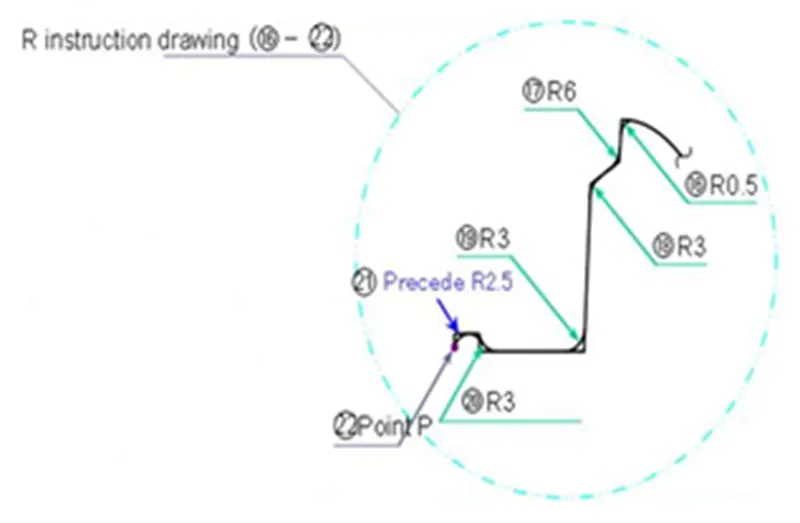
- C) BLEND RADIUS
- Blend is given as per provide on the master section.
- Blend is given all the area to avoid the corner.
- A-PILLAR MOUNTING
- It is a vertical support of a body frame.
- A-pillars on each side of the windshield to help improve driver vision and through the use of stronger alloy steel.
- Forward positioned A-pillars provide for increased interior room and make for less angle and visual difference between the hood and windshield.
- A-pillars are critical in providing strength to an automobile body.
- SILL MOUNTING
- The side frames reinforcing the floor pan, body sills also transmit loads between them.
- The panel (metal plate) directly below the bottom of doors supporting the floor and may be used to combine floor & body.
- BUMPER MOUNTING
- Bumper is attached to the fender.
- BAFFLE/SPLASH MOUNTING
IMPORTANT DESIGN PARAMETER
1) BLEND RADIUS -: Blend should be provided on all the corner to avoid the sharp edges.
2) THICKNESS -: Thickness of the fender should be applied of 0.75mm.
3) DISTANCE OF FLAT SURFACE -: The distance of flat surface should be minimum 6mm for the strength of the front fender.
4) GAP BETWEEN HOLE -: The gap between the two hole should be 2D. It means if the diameter of the hole is 5mm then the minimum gap between the two hole should be 10mm.
5) DART -: Dart should be applied on required area to provide the strength on that part.
CONCLUSION
Fenders prevent dirt and other particles from entering the wheel well, as well as improve the aerodynamics of the car. So, it is very much important to design front fender and it’s mounting as per all constraint in the master section. The thickness of the fender should be 0.75mm only and also it should be blend well all required area to avoid sharp corners.