Fender Design - Wheel Arch Challenge
FENDER WHEEL ARCH
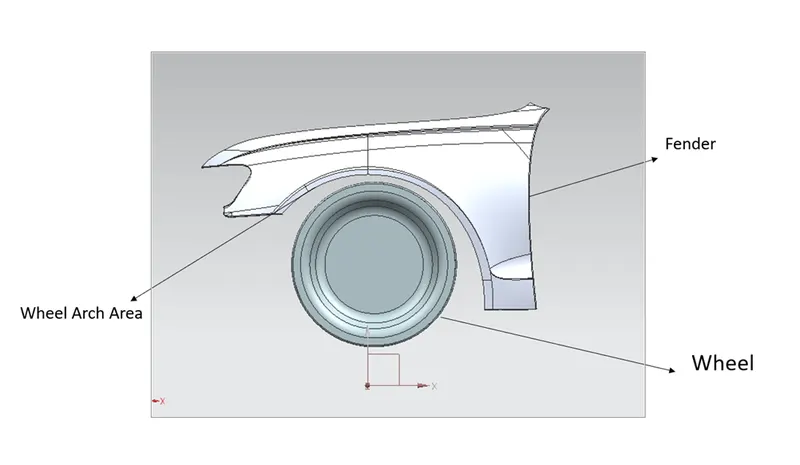
Wheel Arch is the semi-circular part of the fender positioned above the wheel of the vehicle. The main role of wheel arch is it protects both passenger’s compartment and pedestrians from the projection of water, mud and stones. The wheel arch area is usually designed as a cover or shield over the tyre along its perimeter to stop any debris or stones, dirt, sand, snow, etc from getting thrown into the vehicle or onto other vehicles or pedestrians on the road. Different countries have different wheel arch regulations and the wheel arch design has to comply with them to be deemed usable in that country.
Different countries wheel Arch regulations:
Japan Regulation:
The Value of 'L' shall be minimum of 5mm at all the 3 sections.
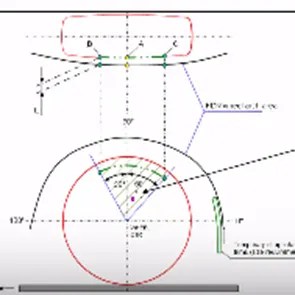
European Regulations:
The value of 'L' shall be minimum of 10mm at all the sections.
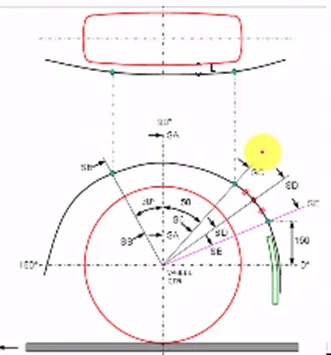
US Regulations:
The value of 'L' shall be minimum of 5mm at all the sections.
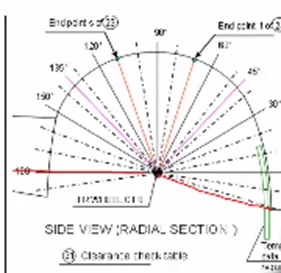
Below are the results according to European Regulations:
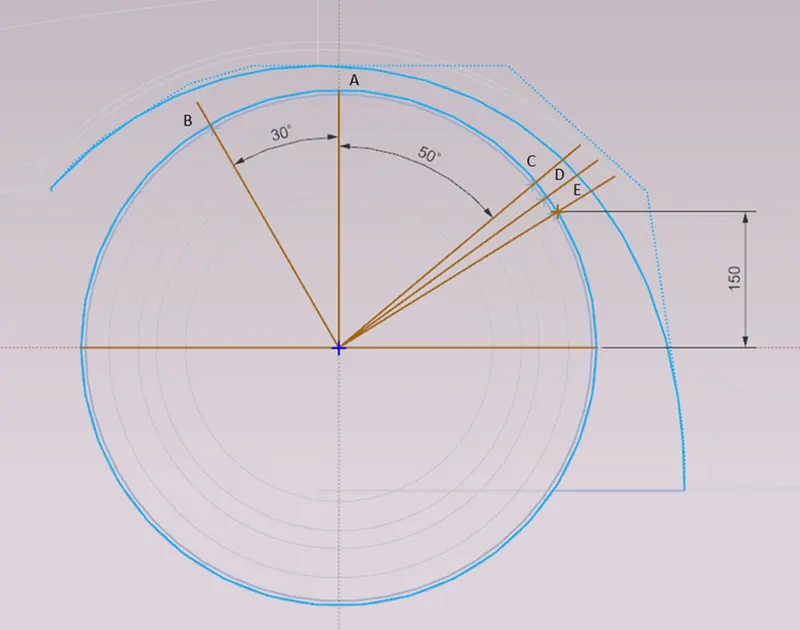
- A Horizontal and vertical axis is drawn from the centre of the wheel.
- The vertical axis intersection point is labelled as A.
- Similar references are drawn at 30 degrees to left (named as B) and 50 degree to the right (named as C).
- A line of 150mm is drawn perpendicular to the horizontal axis and normal from the normal point on fender which gives point E.
- The midpoint of the arc cut by the sections C and E results in a new section D.
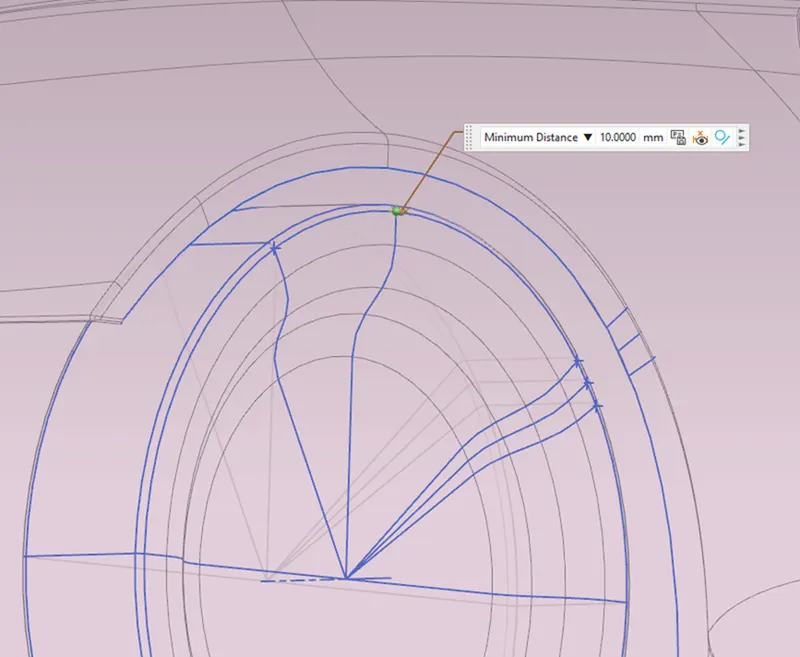
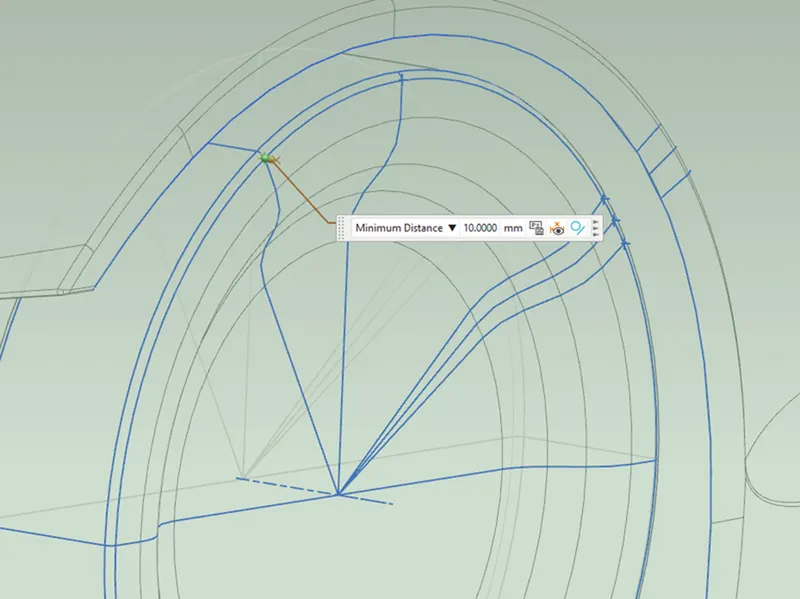
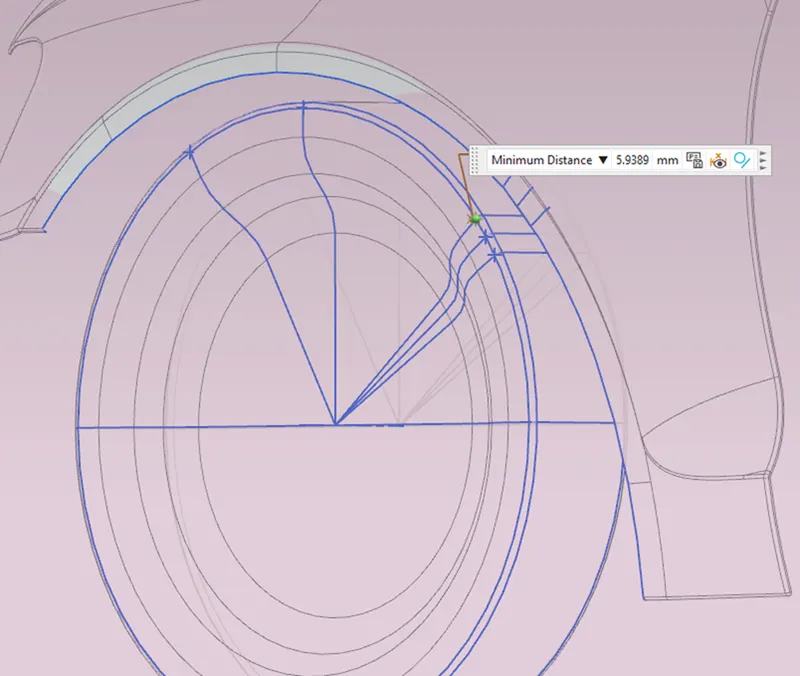
- The value of 'L' at each section are measured.
- According to European Standard at each section 'L' should be minimum of 10mm.
Value of L at Section A
Value of L at Section B
Value of L at Section C
Value of L at Section D
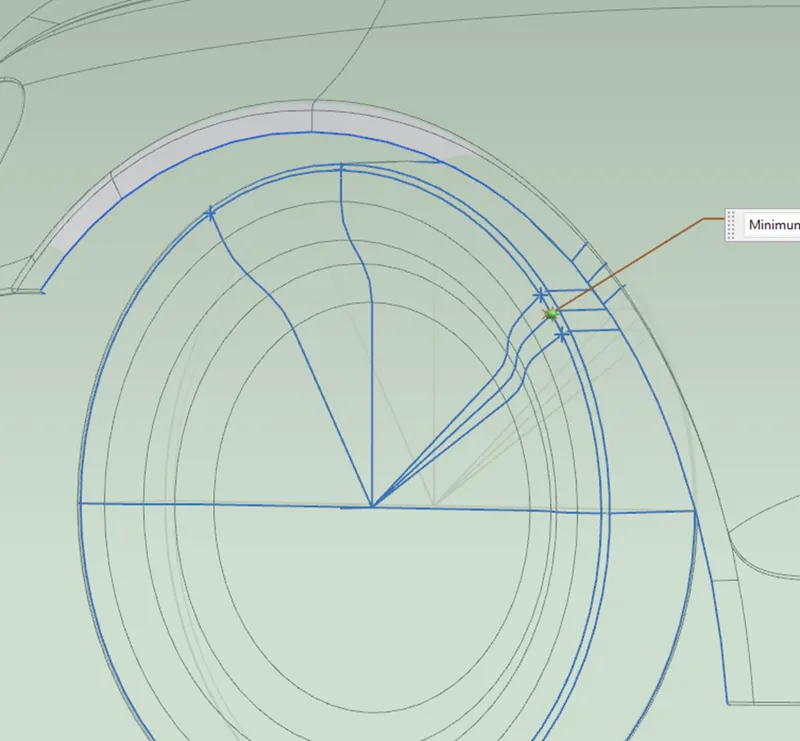
Value of L at Section E
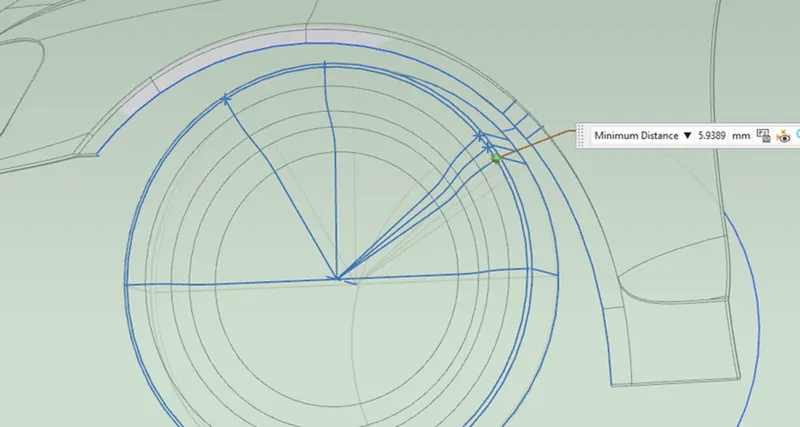
THE VALUES AT C,D AND E SECTIONS ARE BELOW 10mm.
THE FENDER FAILS AS THE VALUES DOES NOT LIE IN BETWEEN THE VALUES OF THE EUROPEAN STANDARD.