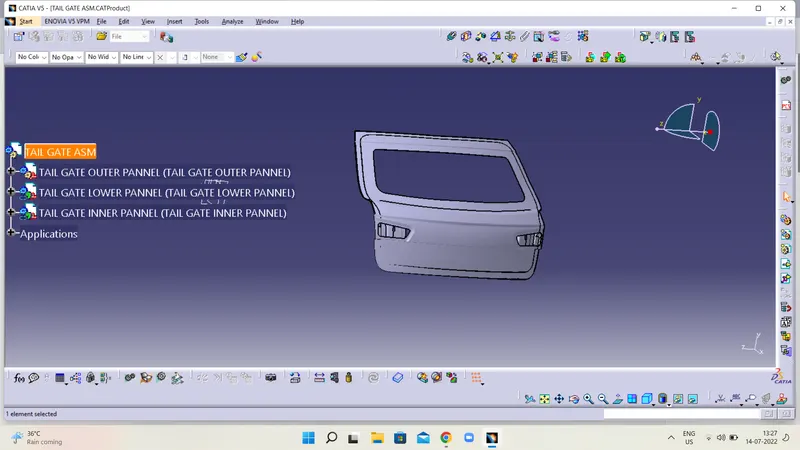
Design of backdoor
Aim: To develop the car Backdoor(Tail gate) with the reference of given skin data as perengineering standared by using catia v5
Back Door :
The Back door is typically hinged, but sometimes attached by other mechanisms suchas tracks, in front of an opening which is used for entering and exiting a vehicle.
A vehicle door can be opened to provide access to the opening, or closed to secure itThese doors can be opened manually, or powered electronically. Powered doors areusually found on minivans, high end cars, or modified cars.
or
A door which is located at the rear side of a car which gives access for the boot space tostore luggage, spare wheel etc. These doors can be operated manually or electric powered. In most of the luxury cars dooris electrically operated.
Types of doors based on working position,
1.Top Mounted Door
2.Side mounted Door
3.Bottom Door
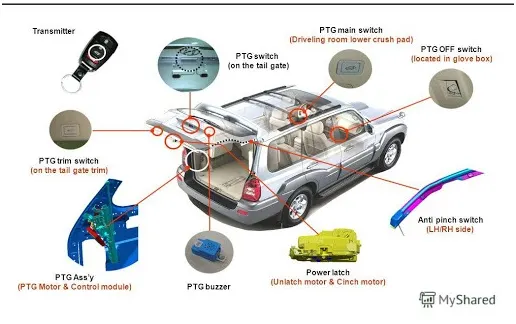
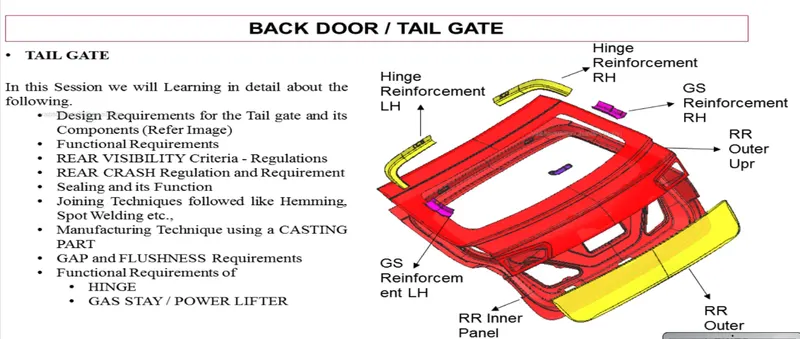
Back Door Assembly:
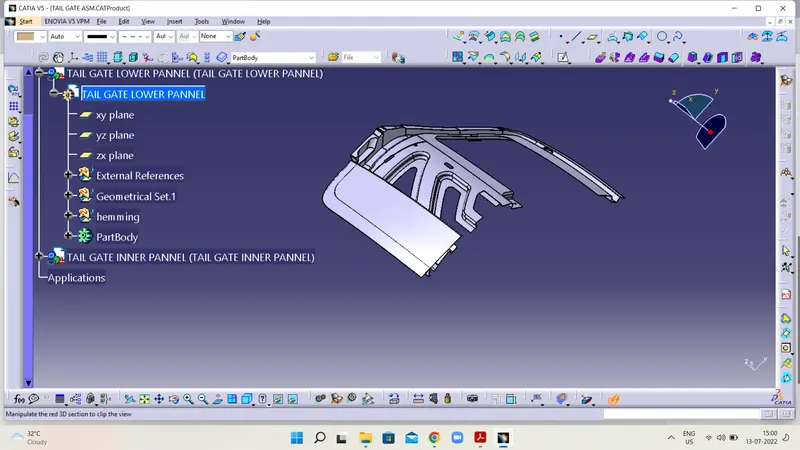
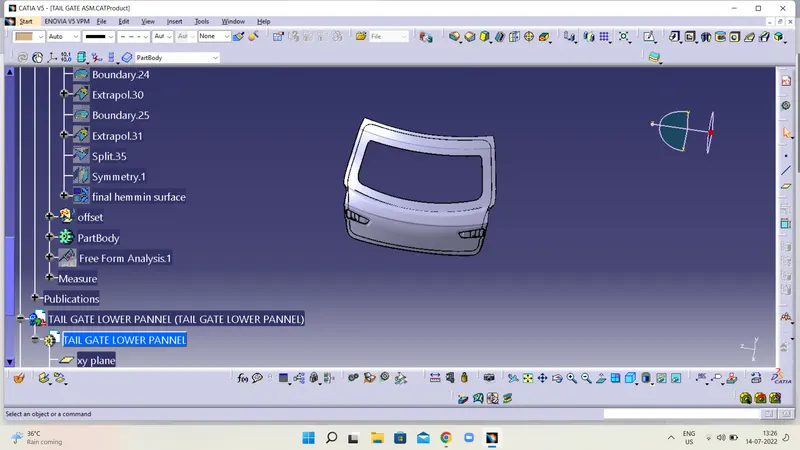
tail gate outer upper panel
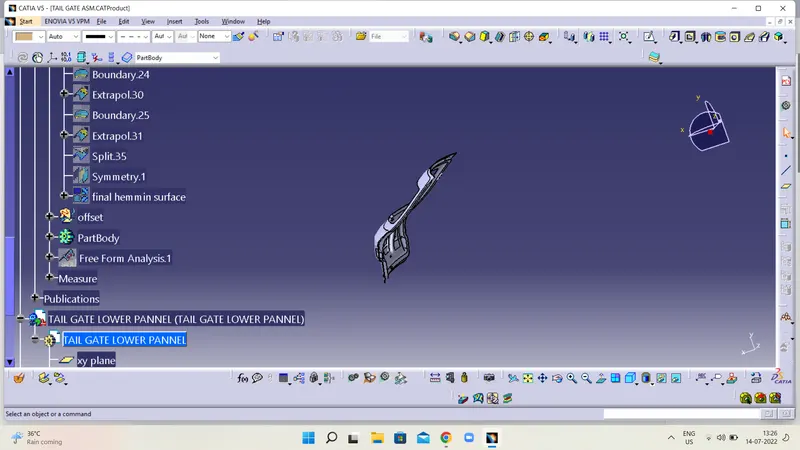
tail gate outer lower panel
tail gate outer lower panel
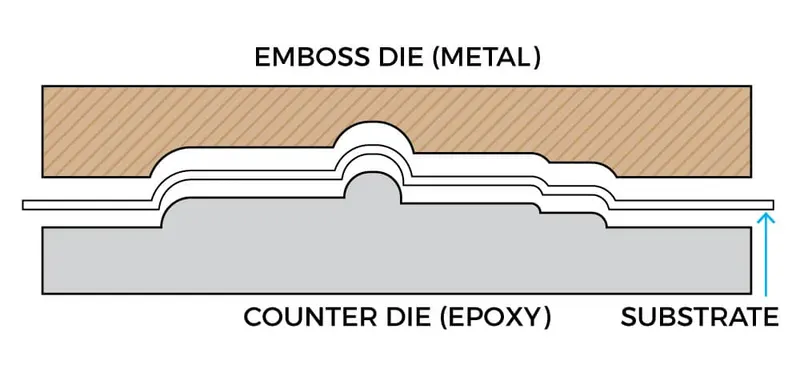
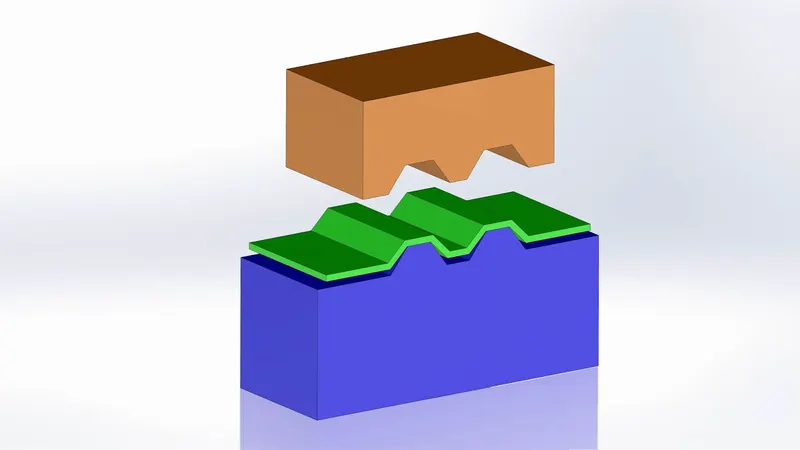
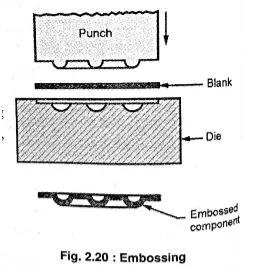
Embossing:
Embossing is a metal forming process for producing raised or sunken designs or relief insheet materials by means of matched male and female roller dies, theoretically with nochange in metal thickness or by-passing sheet or a strip of metal between rolls of thedesired pattern. Metal sheet is drawn through the male and female roller dies producing apattern or design on the metal sheet. Depending on the roller dies used, different patternscan be produced on the metal sheet.
Materials commonly used in the metal embossing process include:
Aluminum alloys
Steel alloys
Zinc
Copper
Galvanized steel
Brass
Cold rolled steel
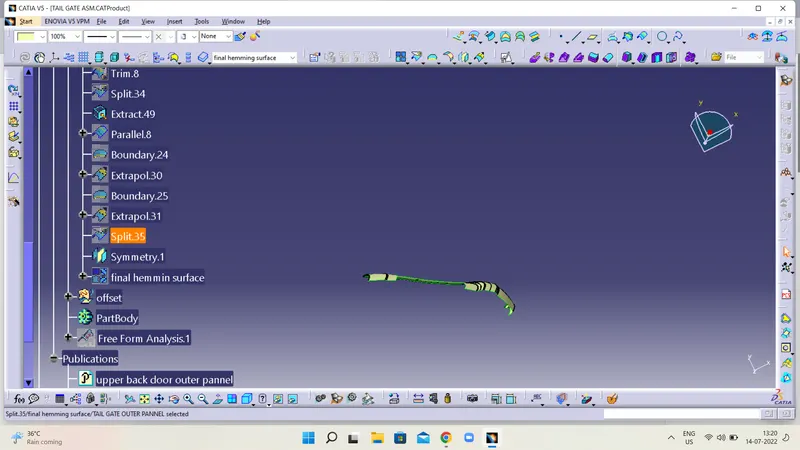
Hemming:
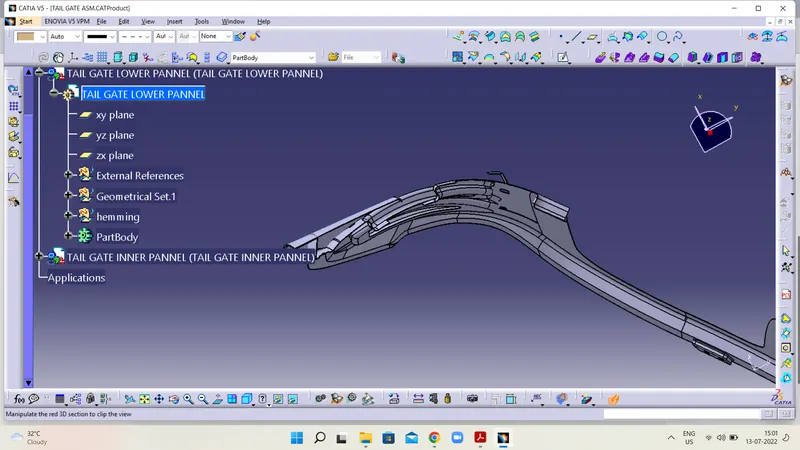
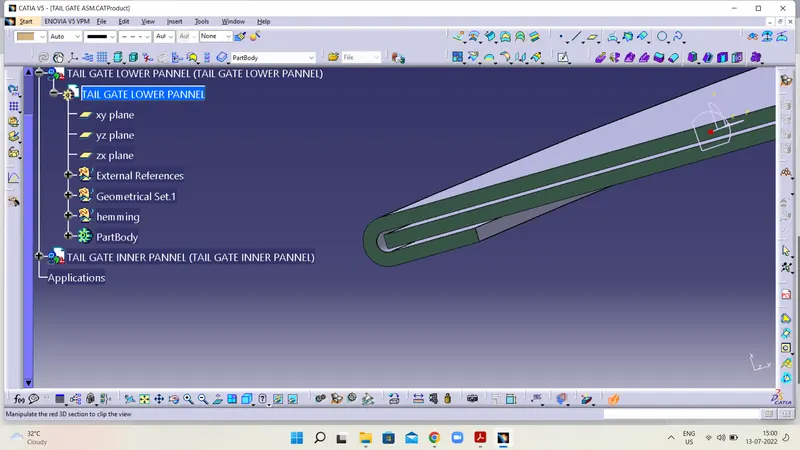
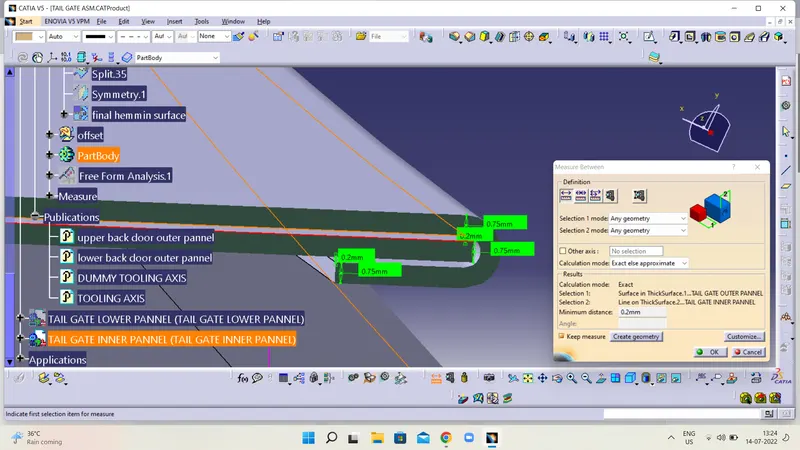
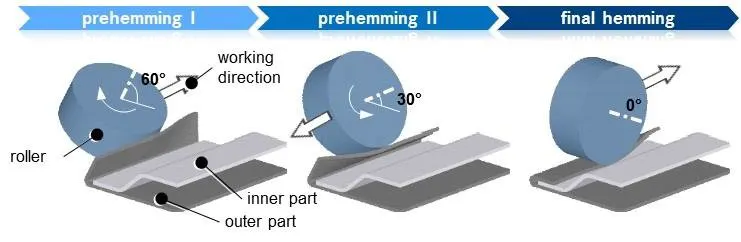
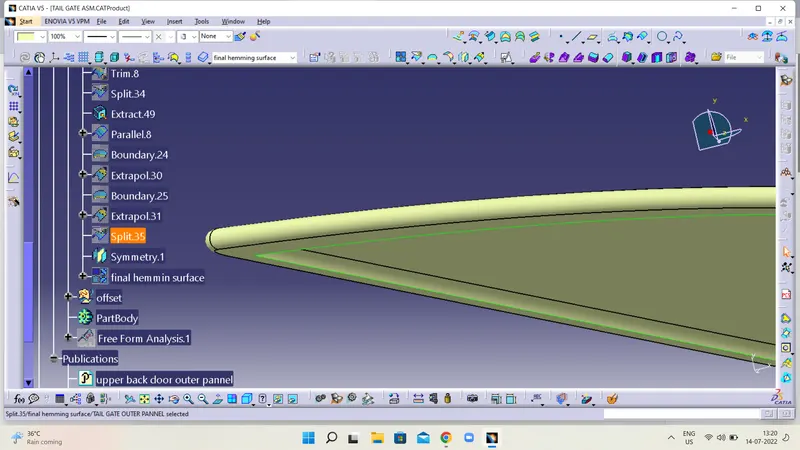
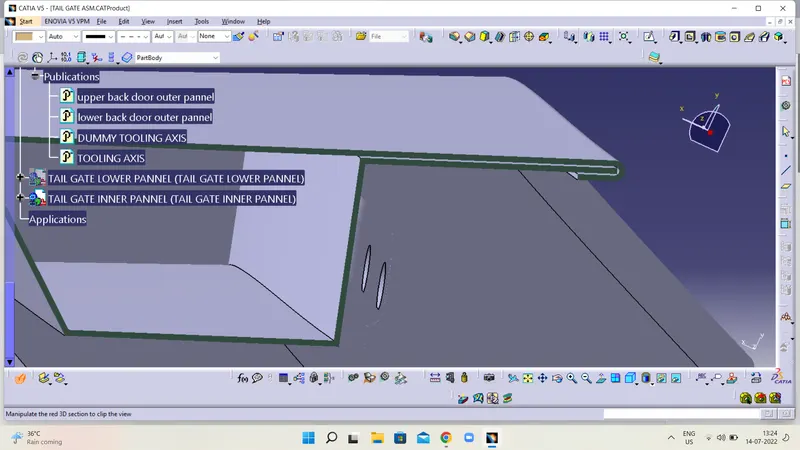
Hemming is a forming operation in which the edges of the sheet are folded or folded overanother part in order to achieve a tight fit. Normally hemming operations are used toconnect parts together, to improve the appearance of a part and to reinforce part edges.
In car part production, hemming is used in assembly as a secondary operation after deepdrawing, trimming and flanging operations to join two sheet metal parts (outer and inner)together. Typical parts for this type of assembly are hoods, doors, trunk lids and fenders..
There are various types of hemming operations:
1.Conventional die hemming: In conventional die hemming, the flange is folded over theentire length with a hemming tool.
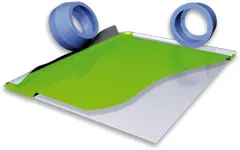
2.Roll hemming: In roll hemming, the hemming roller is guided by an industrial robot to formthe flange.
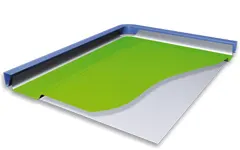
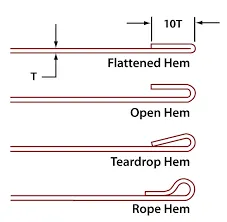
Open Hem: A Hem has a full round feature and a return flange. In open hem bend angle isequal to 180 degrees.
Tear drop Hem: In tear drop hem the bend angle is greater than 180 degrees.
Closed Hem: Hems without any inside radius are called as closed hem. Closed hems arenot recommended if the hem geometry is to be painted or if the material used is SST or Aluminium.
Blanking:
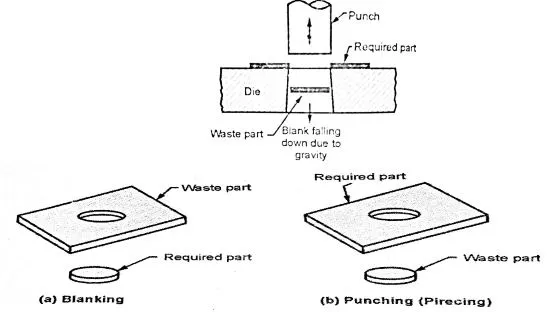
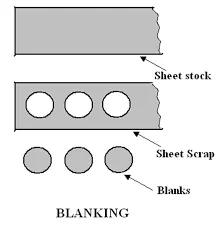
Blanking is a cutting operation of a flat metal sheet and the article punched out is knownas blank. Blank is the required product of the operation and the metal left behind isconsidered as a waste.
Punching:
It is similar to blanking only the main difference is that, the hole is the required product andthe material punched out from the hole is considered as a waste.
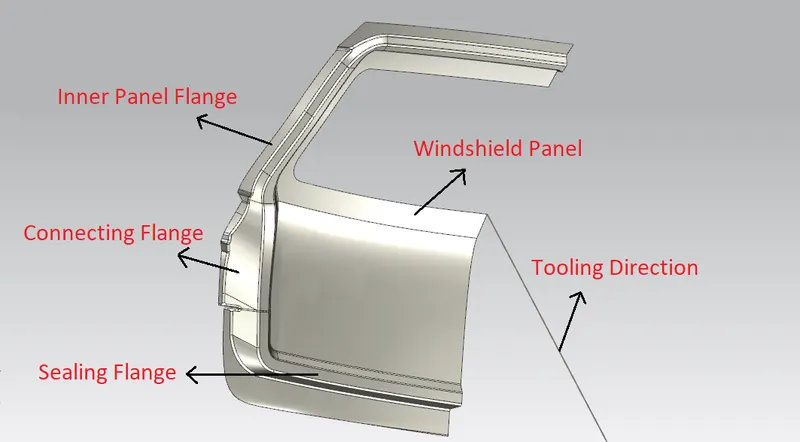
Design of Back door in CATIA V5:
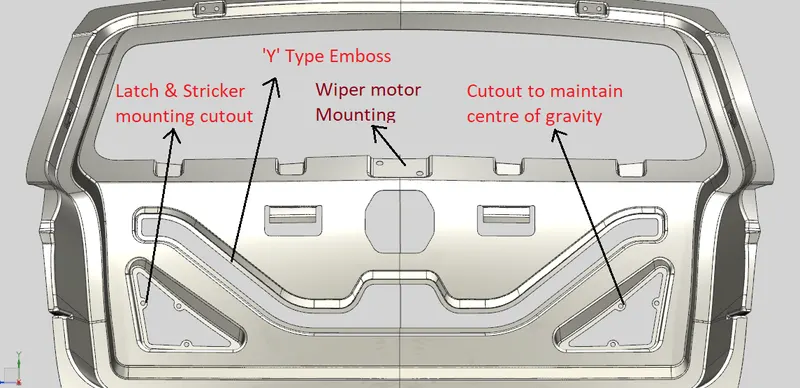
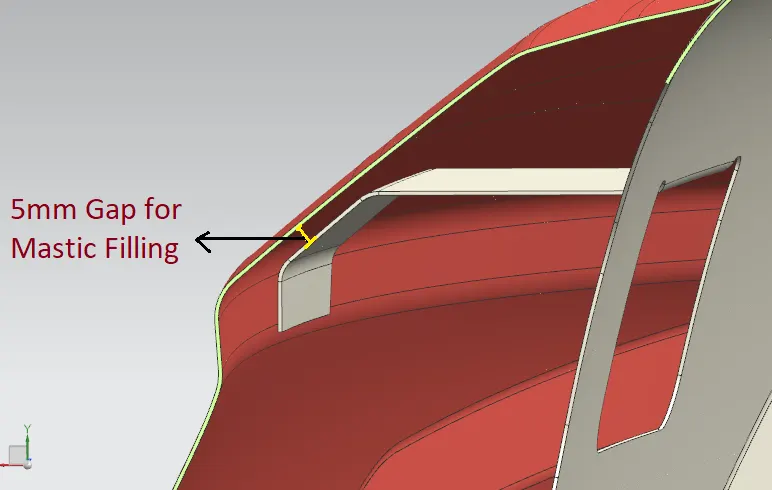
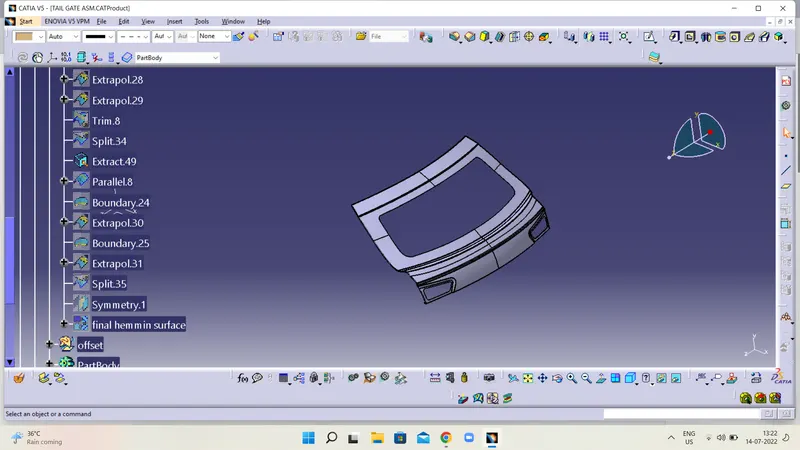
CLASS A SURFAE
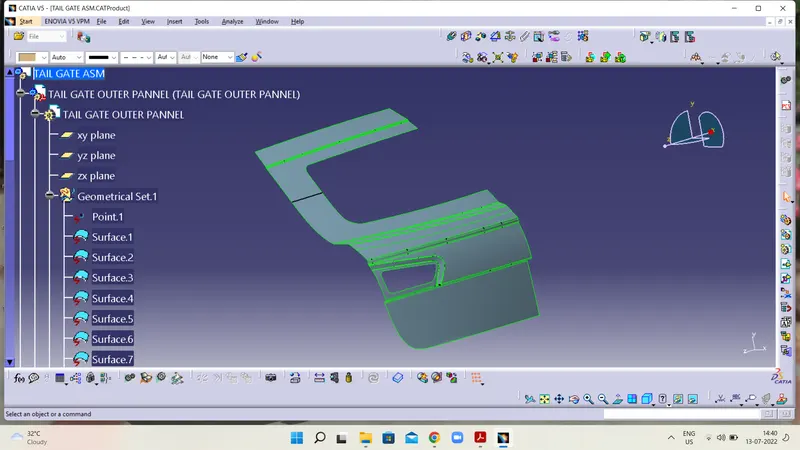
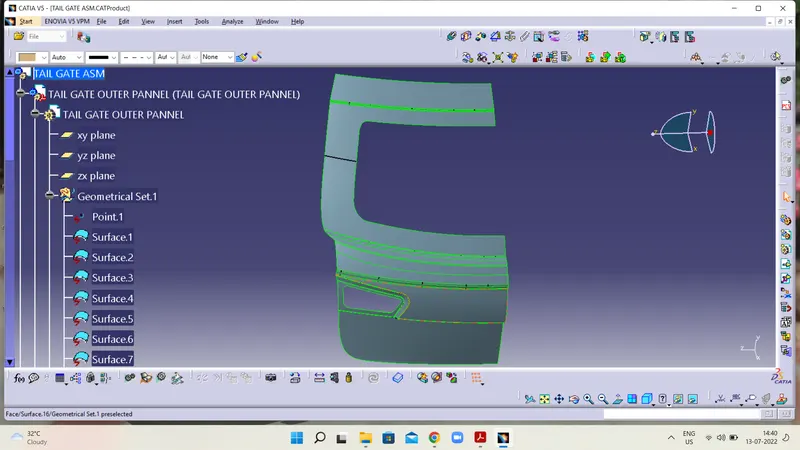
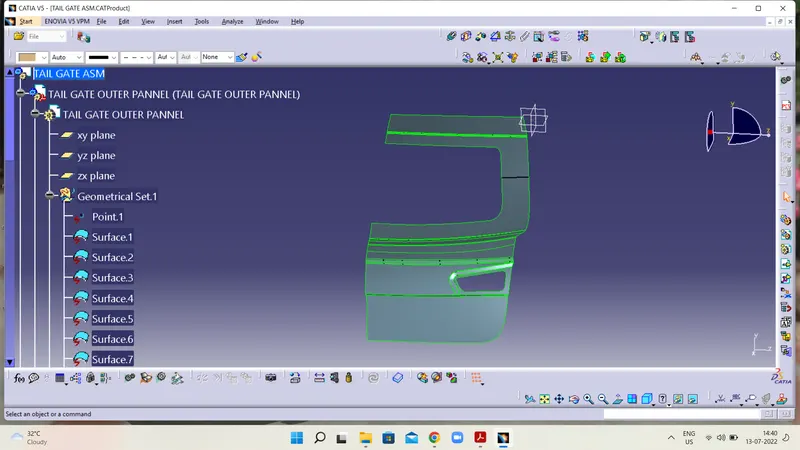
Door parts thickness is given below,
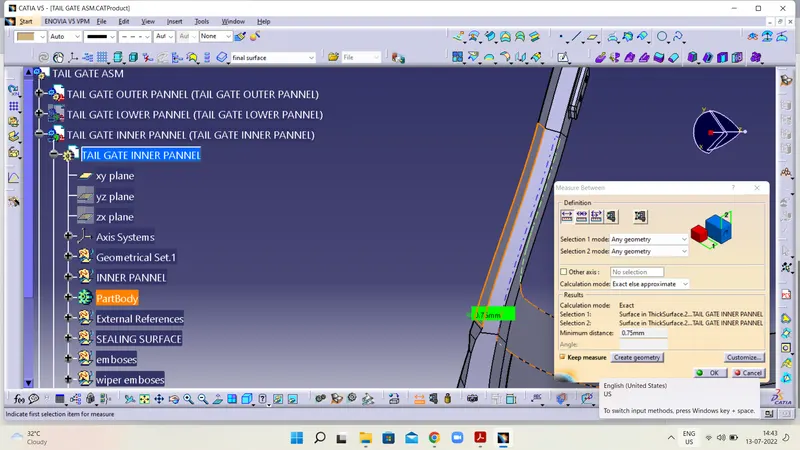
1.Outer Panel - 0.75 mm
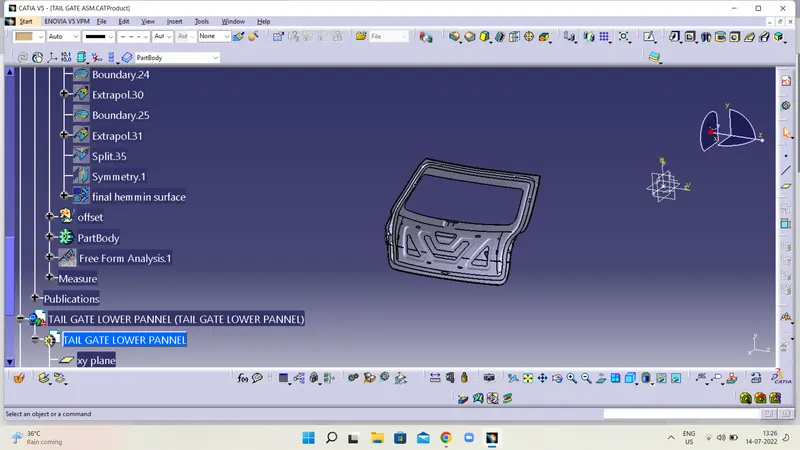
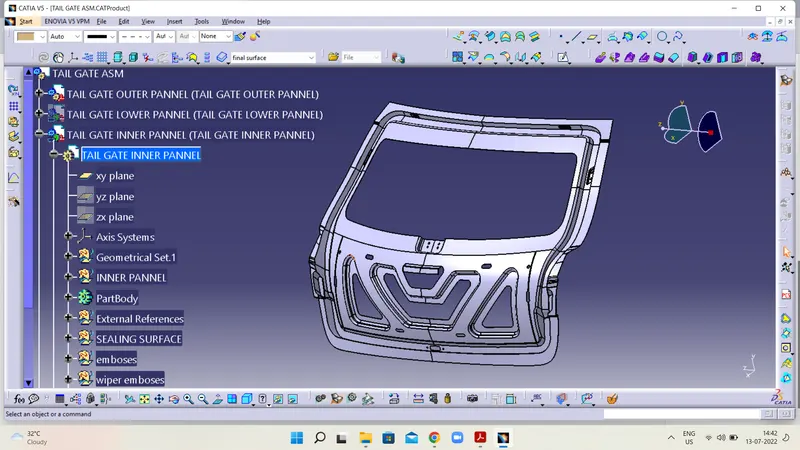
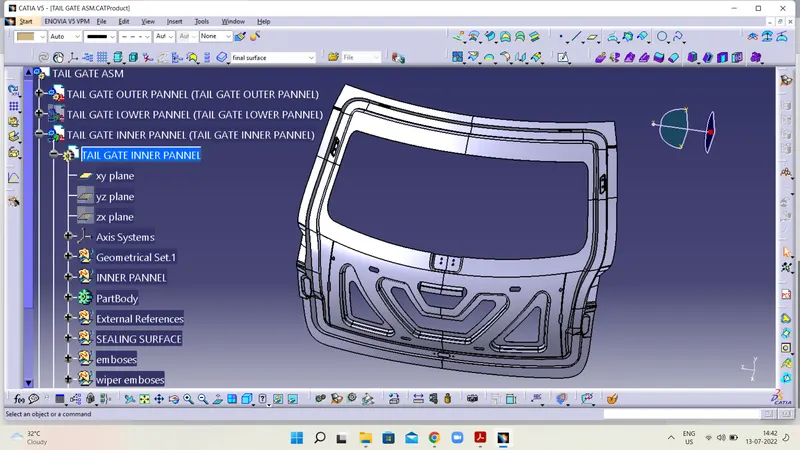
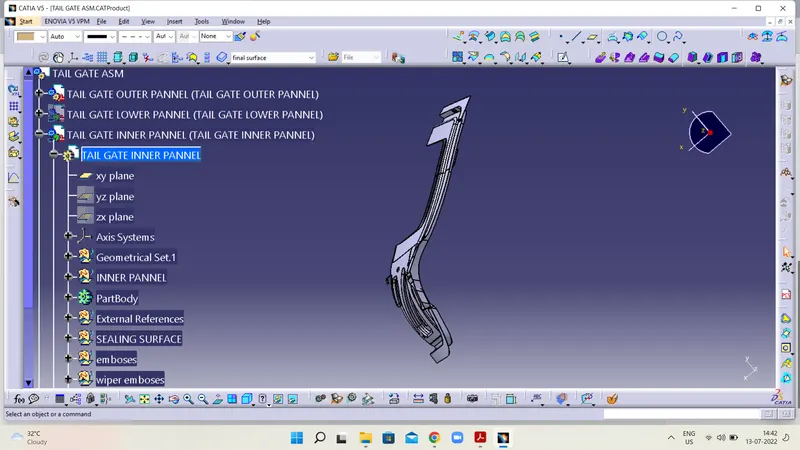
TAIL GATE INNER PANNEL.
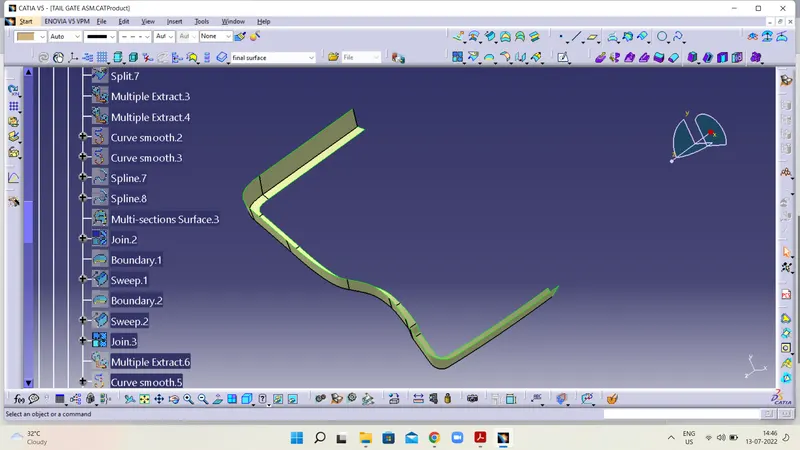
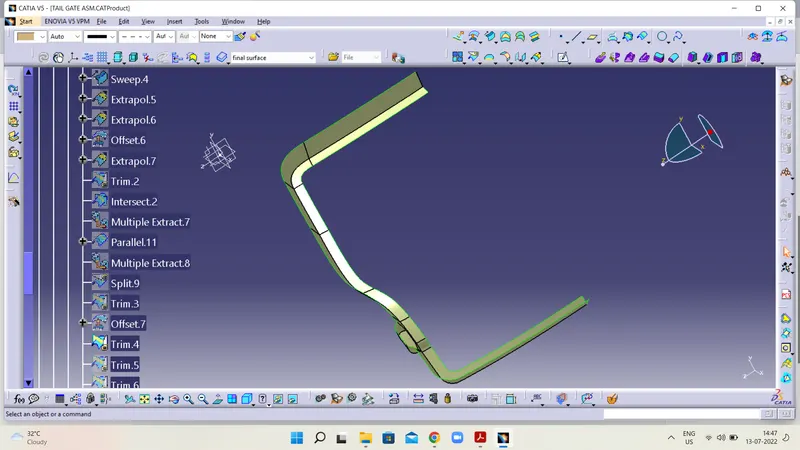
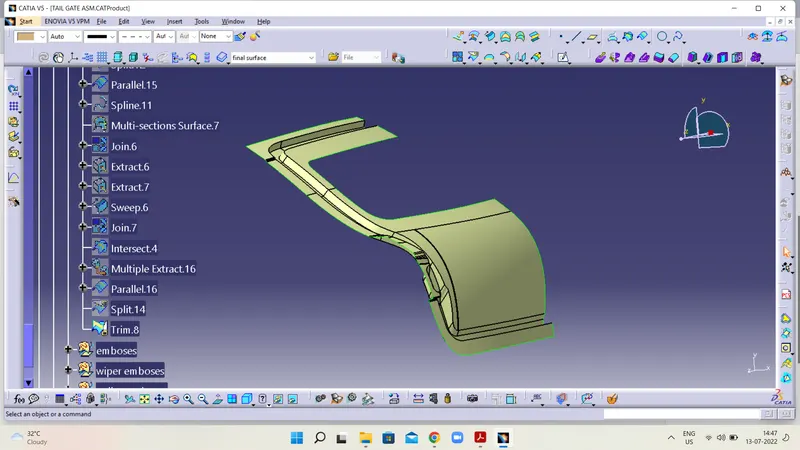
EMBOSES
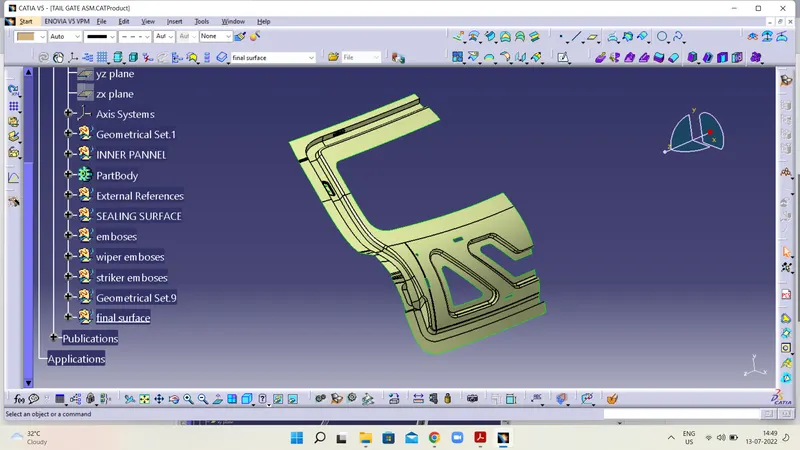
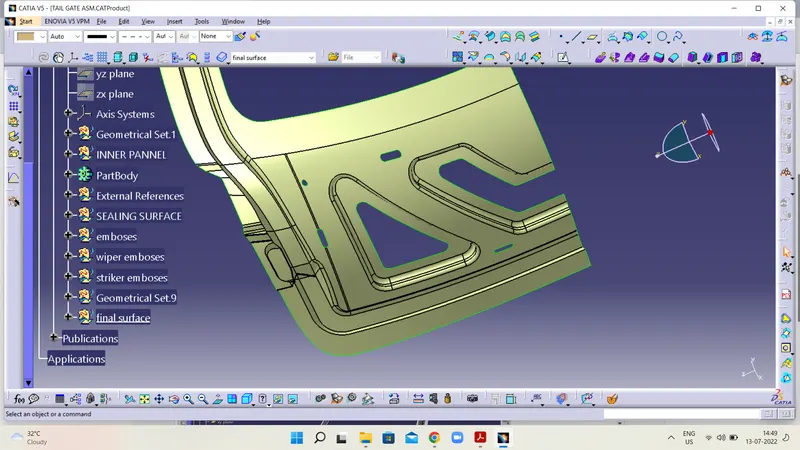
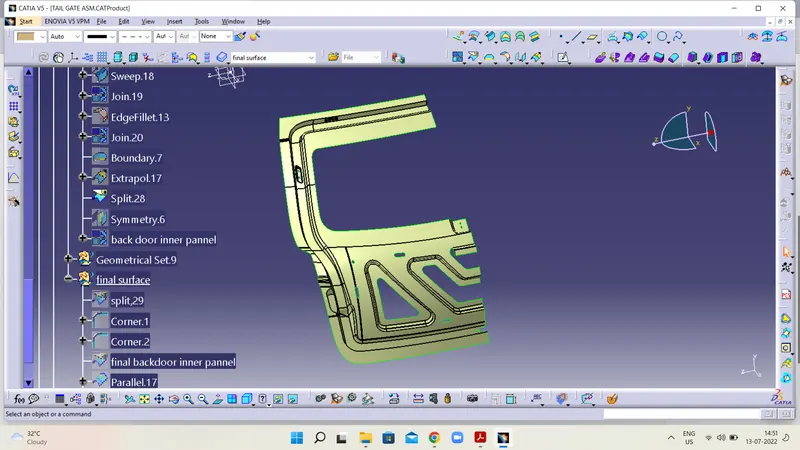
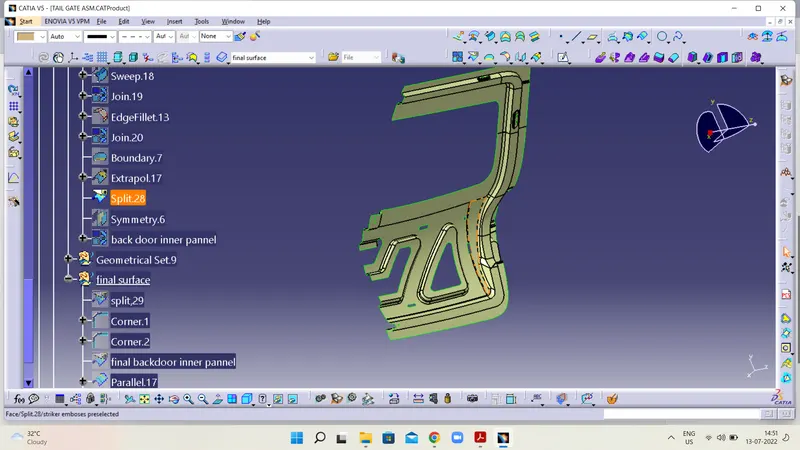
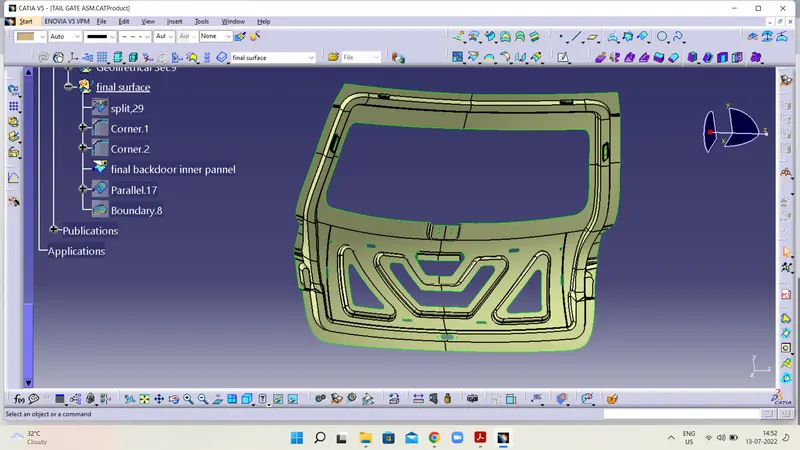
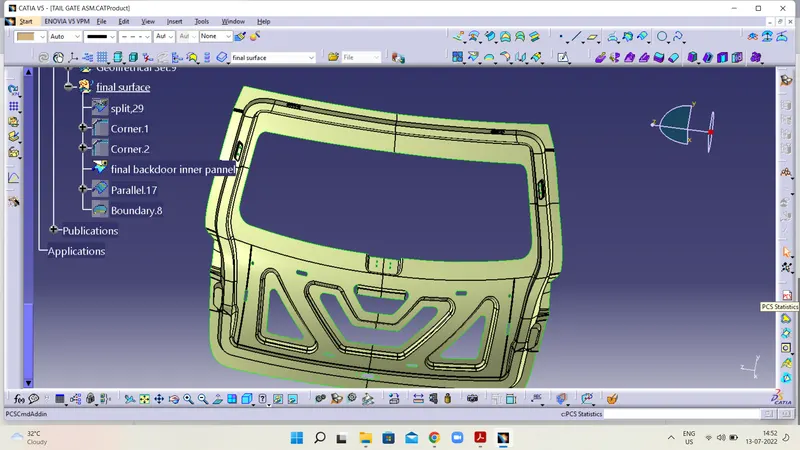
THIKEEN PART WITH (0.75)
 .
.
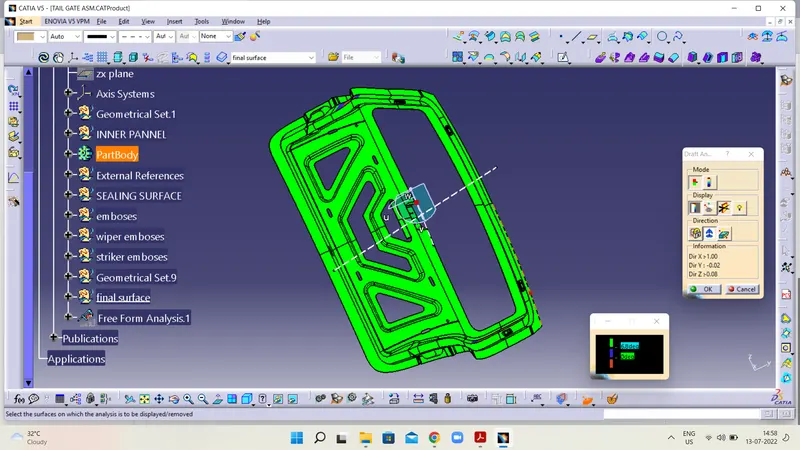
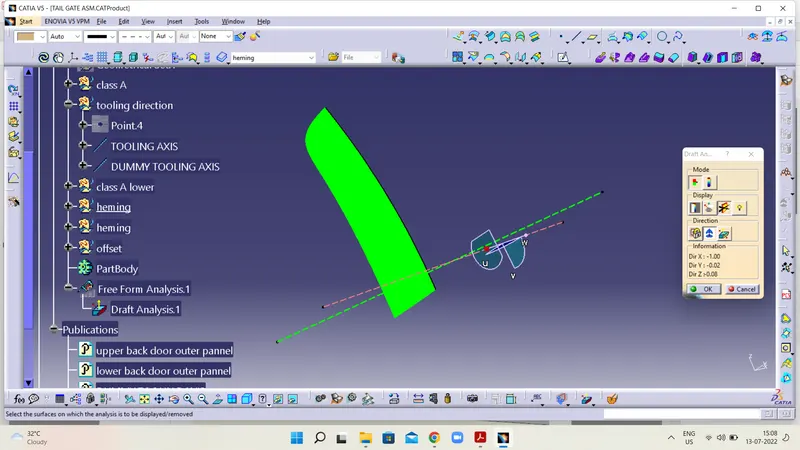
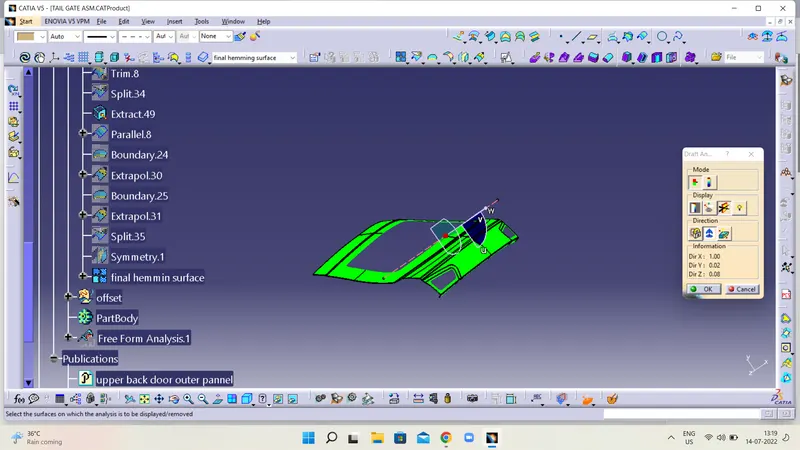
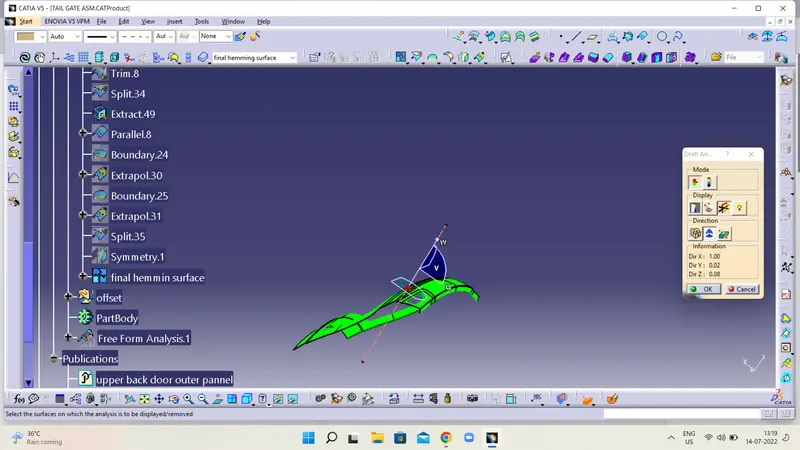
DRAFT ANALYSIS
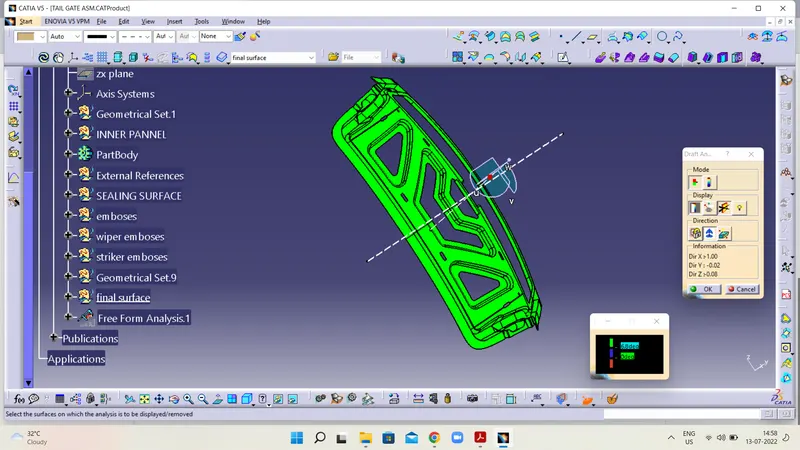
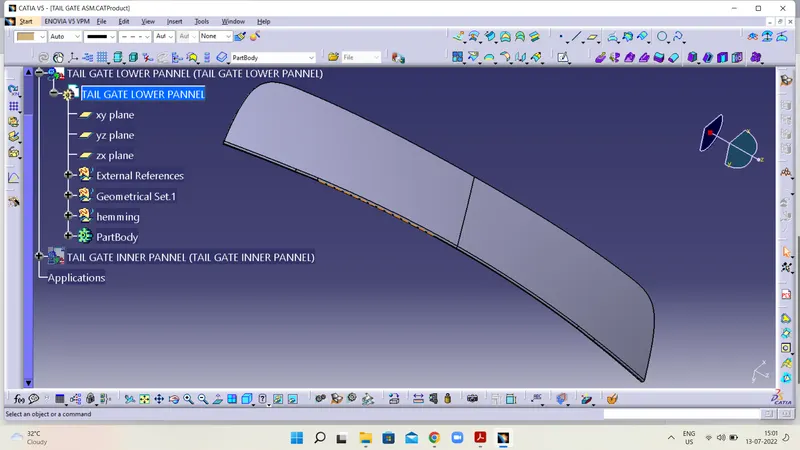
TAIL GATE OUTER LOWER PANNEL
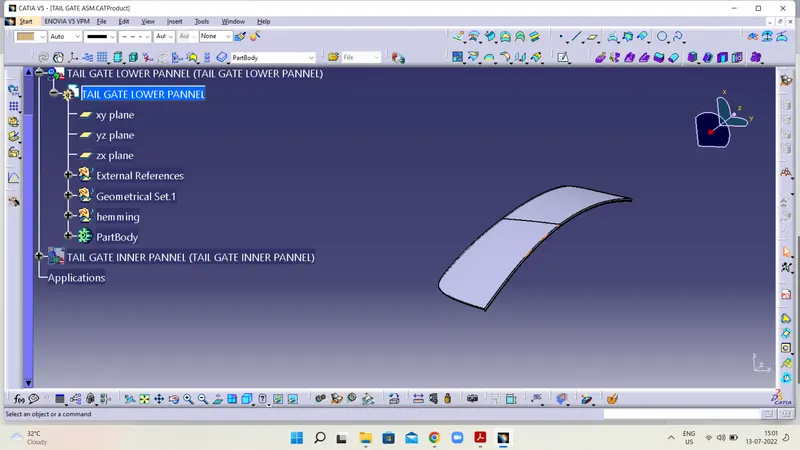
DRAFT ANALYSIS
TAIL GATE OUTER upper PANNEL
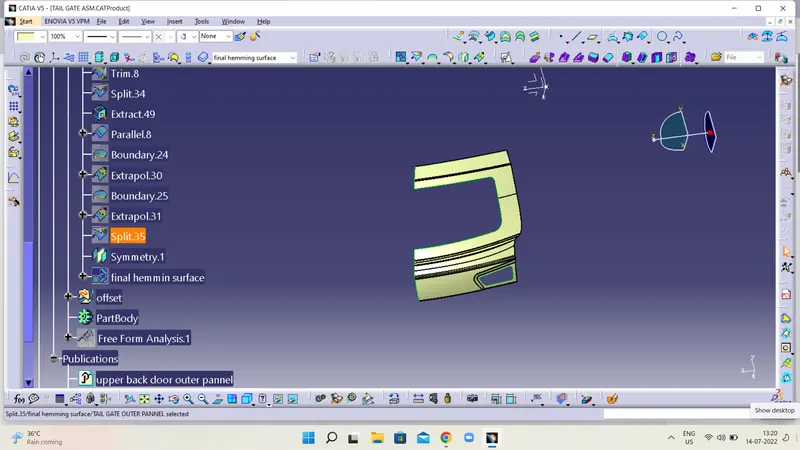
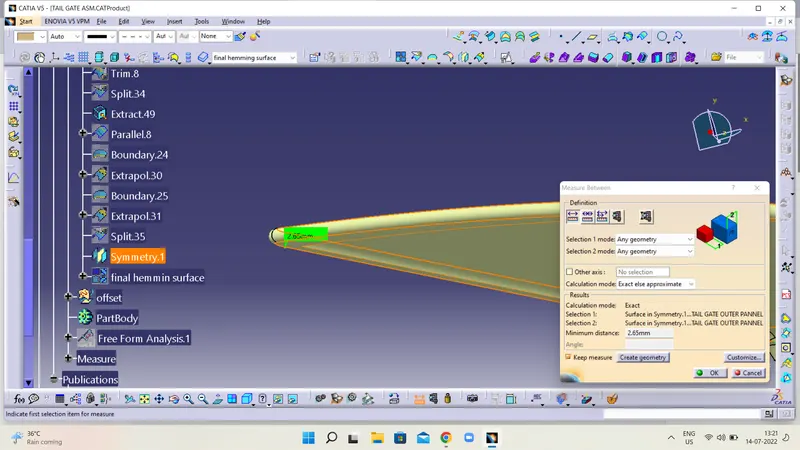
DRAFT ANALYSIS
ASSEMBLE