Design of backdoor
AIM : Develop a detailed report for the Back door design by explaining the design methodologies and about the components developed in the design. Do draft analysis and design back door assembly with reinforcement.
Back Door : An automobile back door or Tailgate is the panel that covers the boot (or trunk) of an automobile. It enables access to the main luggage compartment. A hinge allows the boot lid to be raised, while devices such as springs or gas cylinders hold it up in the open position The Backdoor is an assembly of many parts such as inner panel, outer panel upper, outer panel lower and Reinforcement. Inner panel is attached to the outer panel using mastic sealant.
The material used in making the backdoor of the car is mainly steel but nowadays Aluminium is also used in making the panels.
The main advantage of Aluminium is that the density of Aluminium is very less as compared to steel so it reduces the overall weight of the car. But Aluminium is more costly as compared to steel.
Types of Door opening :
- Top-mounted door
- Side-mounted door
- Bottom Door
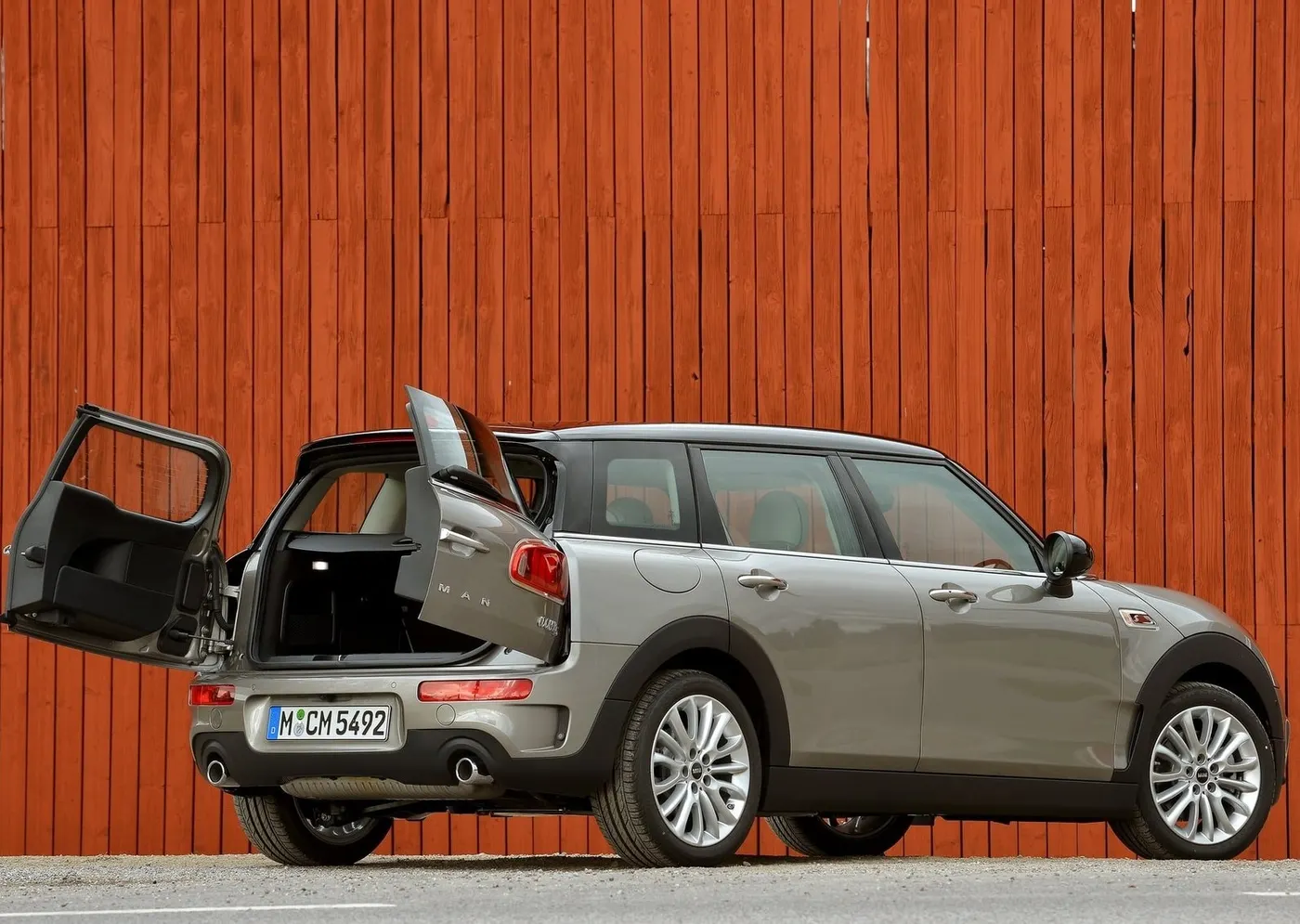
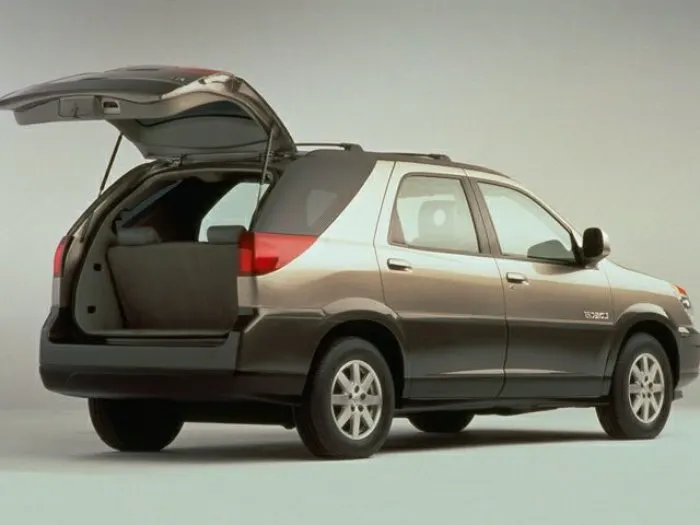
Parts in Backdoor are:
- Back door outer panel (upper)
- Back door outer panel (lower)
- Back door inner panel
- Hinge reinforcements
- Gas stay reinforcements
- Latch and striker reinforcements
- Wiper motor reinforcements
Different processes used for manufacturing the Back Door
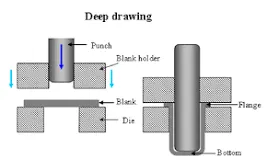
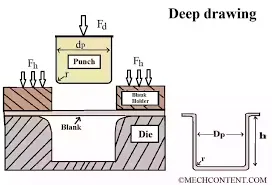
Deep Drawing:
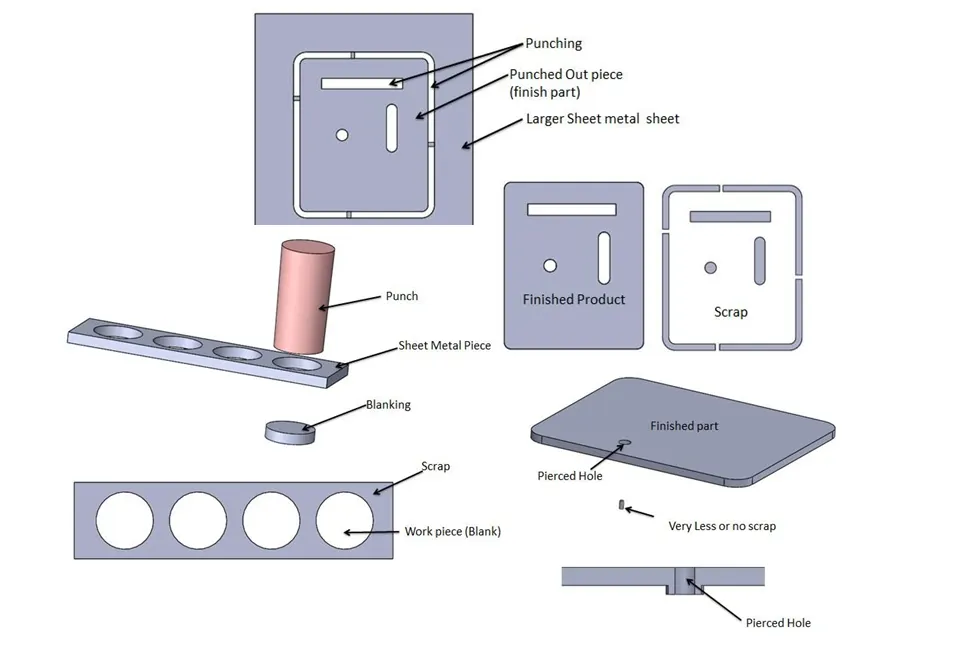
Deep drawing is a sheet metal forming process in which a sheet metal blank is radially drawn into a forming die by the mechanical action of a punch. It is thus a shape transformation process with material retention.
Punching : Sheet metal punching is a cutting process in which material is removed from a piece of sheet metal by applying a great enough shearing force.
Hemming
The inner & outer panels are joined by the process of hemming.
Hemming is a forming operation in which the edges of the sheet are folded over other parts in order to achieve a tight fit. Usually, hemming operations are used to connect parts together, to improve the appearance of a part, and to reinforce part edges.
In car part production, hemming is used in assembly as a secondary operation after deep drawing, trimming & flanging operations to join two sheet metal parts together. Typical parts for this type of assembly are hoods, doors, trunk lids & fenders.
The accuracy of the hemming operation is very important since it affects the appearance of the surface & surface quality.
There are different types of hemming operations:
- Conventional die hemming
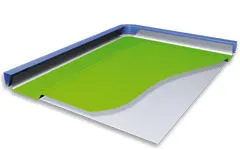
In conventional die hemming, the flange is folded over the total length with a hemming tool.
- Roll Hemming
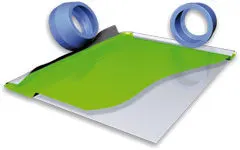
In roll hemming, the hemming roller is guided by an industrial robot to make the flange.
Design Consideration:
- Functional Requirement of Hinge and gas stay
- Rear visibility criteria
- Luggage volume area
- Crash Analysis
- Bend Test, Dent Test, Torsion Test & Endurance Test
- Rear Crash Regulation
- Gap and flushness Requirements
Design of Back Door
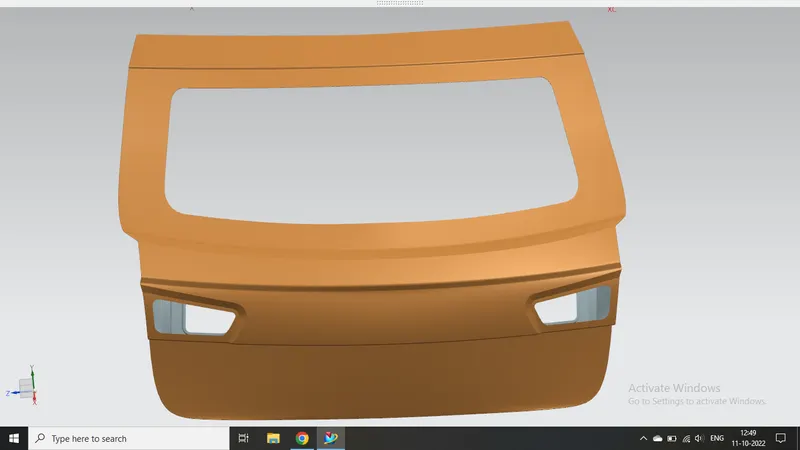
In this design outer panel is divided into two-part.
- Outer Upper Panel
- Outer Lower Pane
Outer Upper Panel:
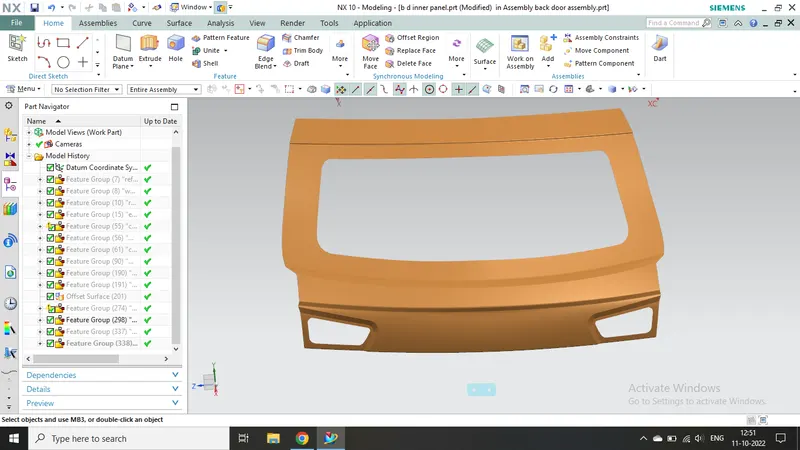
The Outer Upper Panel Extracted from a provided styling surface.
Outer Lower Panel:
The Outer Lower Panel Extracted from the given styling surface.
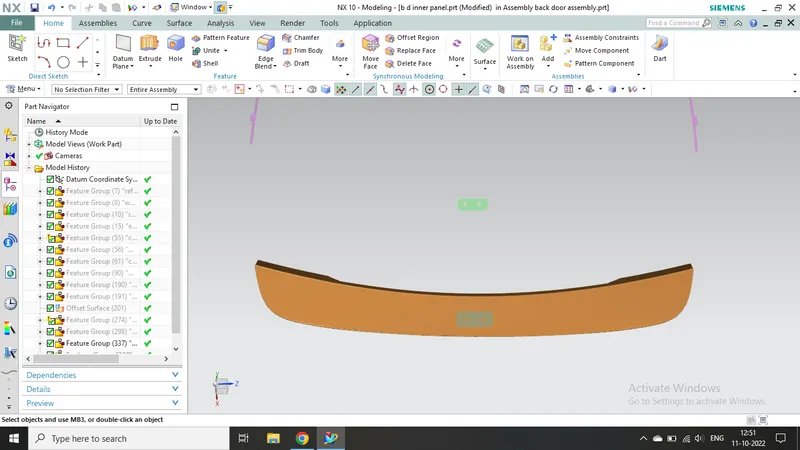
Outer Upper & Lower Panel
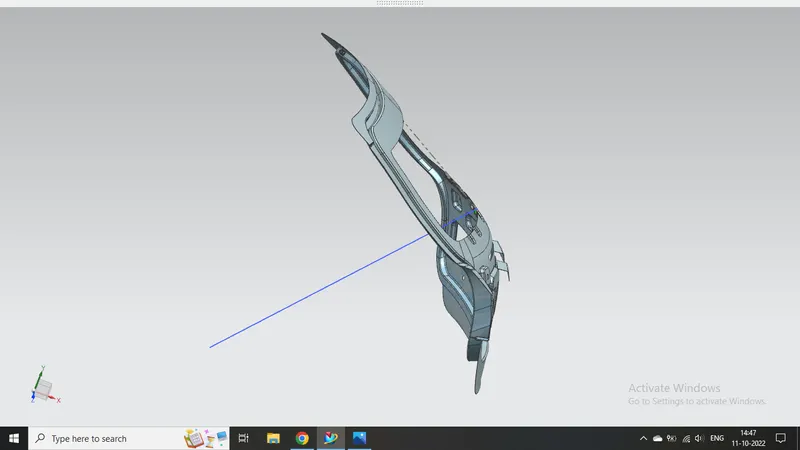
Tooling Direction:
- Before starting to design the inner panel of the back door the tooling direction for Deep Drawing purposes should be created.
- Then the styling surface needs to be checked properly and analyzed since it might have irregularities, hence it must be fixed first.
- The back door was designed using a top-down approach.
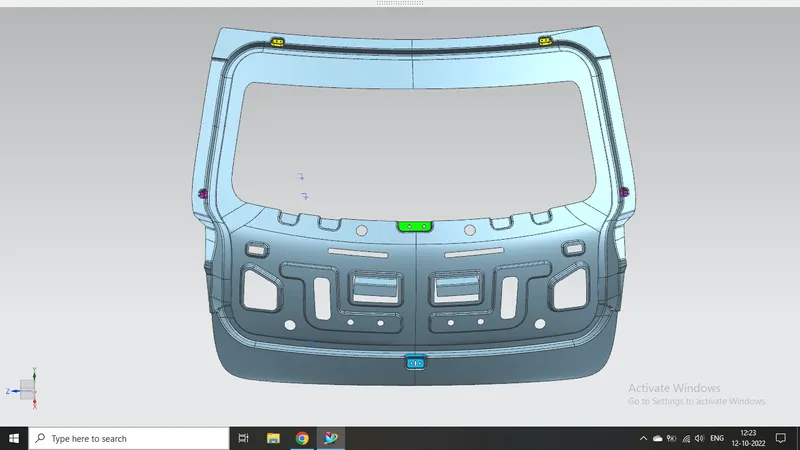
Design of Inner Panel:
The Inner Panel Extracted from a given styling surface.
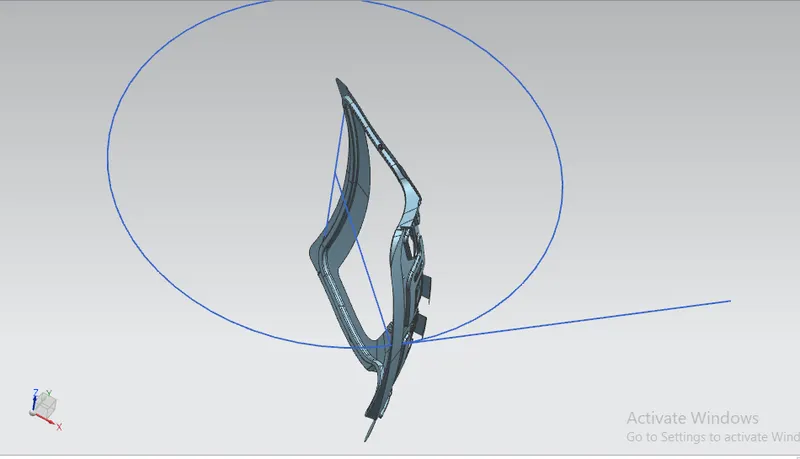
Trajectory :
The position of the hinge should be perpendicular to the latch at the time of latch and striker meets. The circle is drawn from the center of the hinge axis to find the path of the striker and perpendicular to the path.
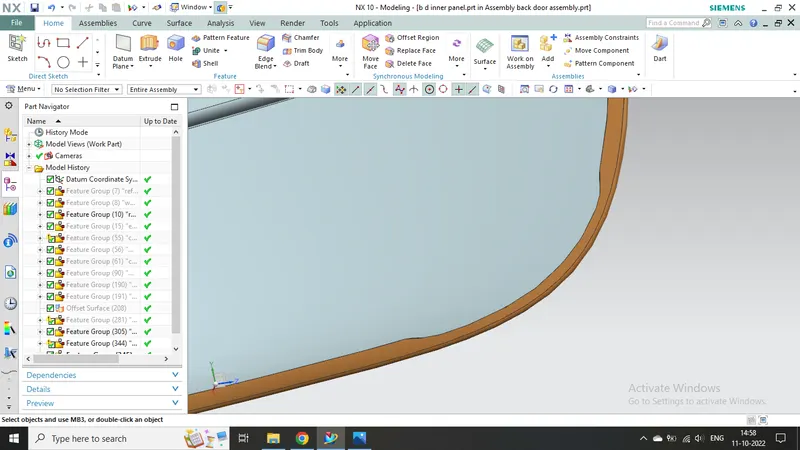
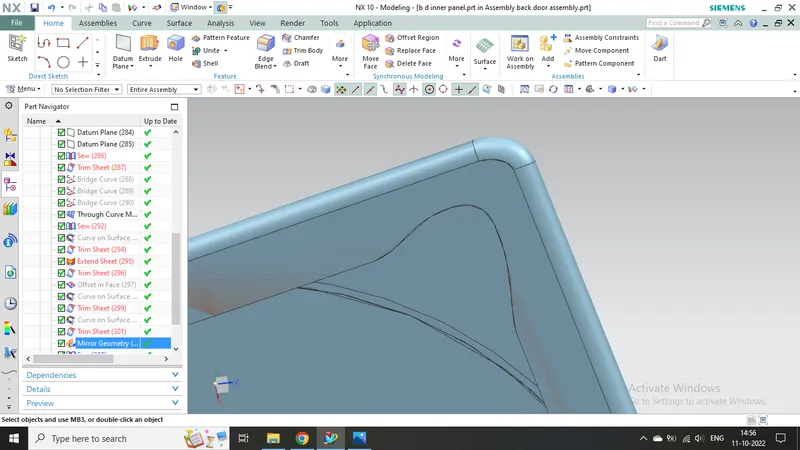
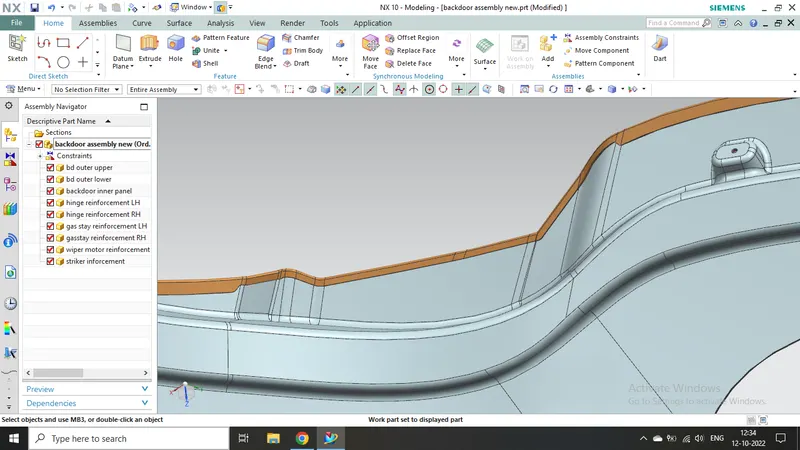
Corner Relief:
During the hemming process, when giving the Corner Relief helps to control sheet metal material behavior & to prevent unwanted deformation during unbend operations & also helps to minimize the number of passes in hemming.
Reinforcements :
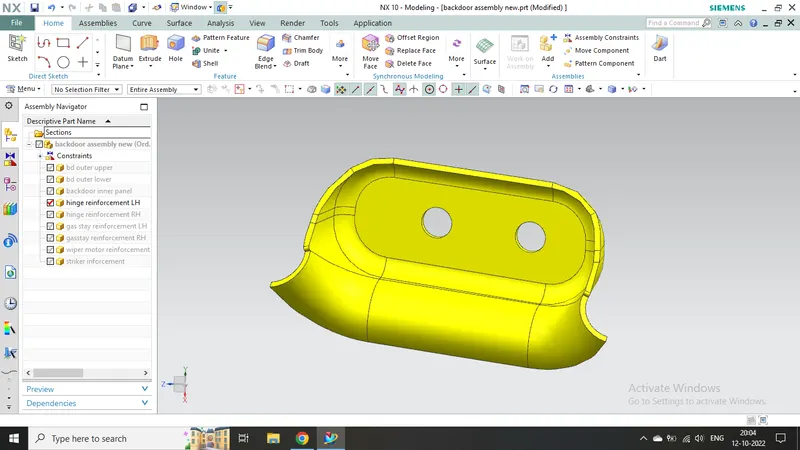
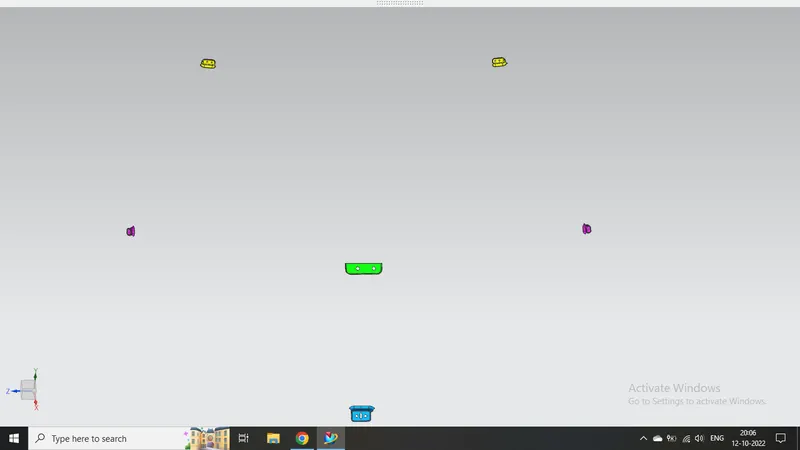
1.Hinge reinforcement (Yellow Colour):
Hinges allow the opening and closing of the back door. One end of the hinge is fixed on the backdoor and the other end on the Roof. Hinges can be placed outside or inside the backdoor.
The hinge reinforcements are added to compensate for the weak region due to the acting load over it.
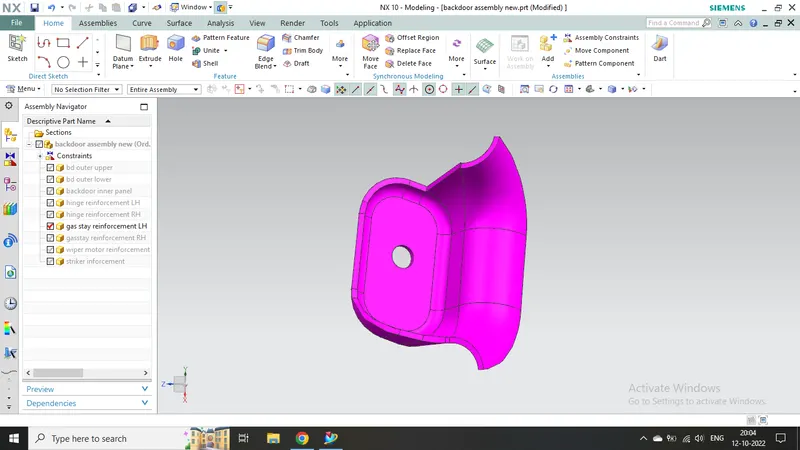
2. Gas Stay Reinforcement (Pink Colour):
Gas Stay is a device used to support the back door in its open position. Gas stay requires no manpower & it is engaged into support position automatically as the back door opens. One end of the Gas Stay is fixed on the backdoor & another end is on the Body Side or on the Back door stationary area.
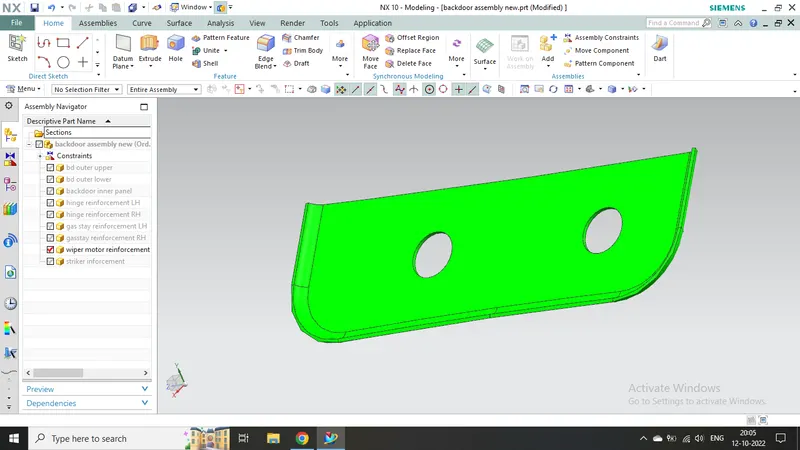
3.Wiper Motor Reinforcement (Green Colour):
Wiper motor reinforcement is made to mount the wiper motor assembly.
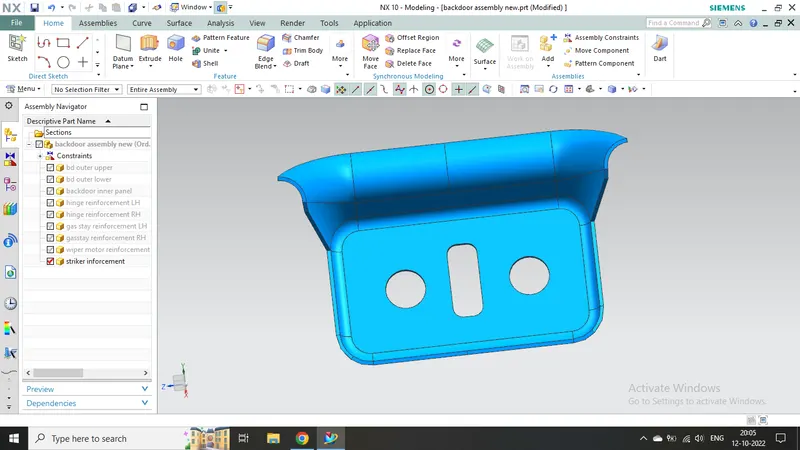
4.Latch and Striker Reinforcement (Blue Colour):
The Latch & Striker together form the locking mechanism of the backdoor with the car. Due to regular opening, closing, and over slamming of the backdoor, there is stress developed in the Latch & Striker area. To recoup for the same, reinforcements are added in this area.
Draft Analysis :
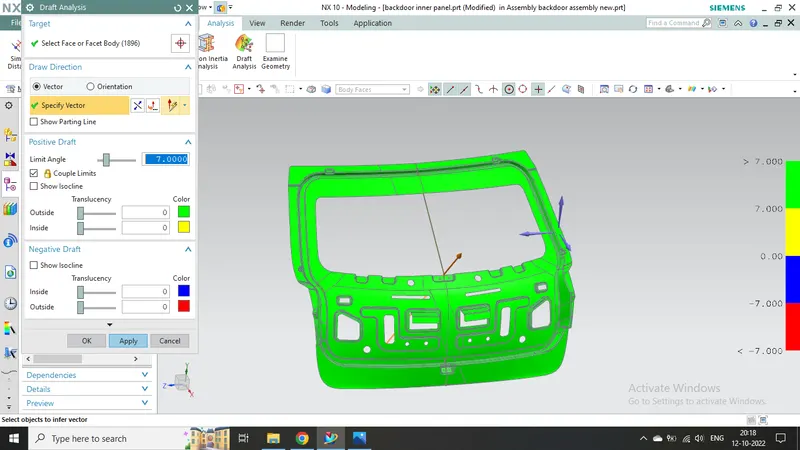
- The draft analysis was performed for the tooling direction created at first and checked that the model is suitable for manufacturing.
- Then to get a complete green portion the required changes to the draft angle of the embosses were carried out by optimizing the model.
- The Draft Analysis command is used to detect that the part drafted will be easily removed or not.
- This type of draft analysis is performed based on color ranges.
- The identifying zones on the analyzed element where the deviation from the draft direction at any point, corresponds to specified values.
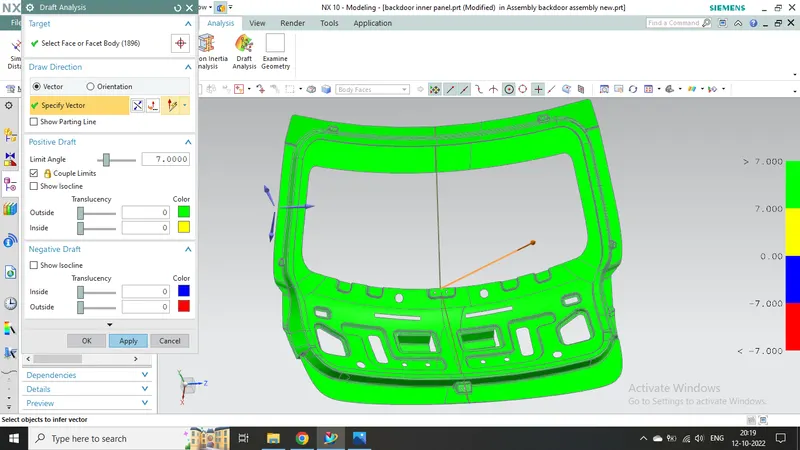
Conclusion : Design of back door assembly with reinforcement has completed, all the neccessary definitions of manufacturing processes are mentioned in the report. Draft analysis completed.
I have created both zip file and stp file of the assembly and attached in the given section.
Thank You!