Design of backdoor
1. BACK DOOR:
Every car needs a back door because it allows access to the storage space at the back of the vehicle. It enables the storage of objects in the trunk or cargo compartment as well as the entry and exit of passengers. Depending on the make and model of the car, back doors are available in a range of sizes and forms. Usually built of strong materials like steel or aluminium, they are intended to be both useful and visually beautiful. The rear door could have components like hinges, a glass panel, or a locking mechanism, each of which contributes to the back door's overall appearance and usefulness in a particular way. The car's rear door is often a essential part of any car, providing access, security, and convenience to drivers and passengers alike.
1.1 Types of the back door based on working positions.
The door or opening of a cargo area may be hinged at the top, side, & bottom. If the door hinged in the bottom it is called as a tailgate.
- Top-mounted:
This type of back doors is used in a station wagon, pickup truck and some of the sport utility vehicles
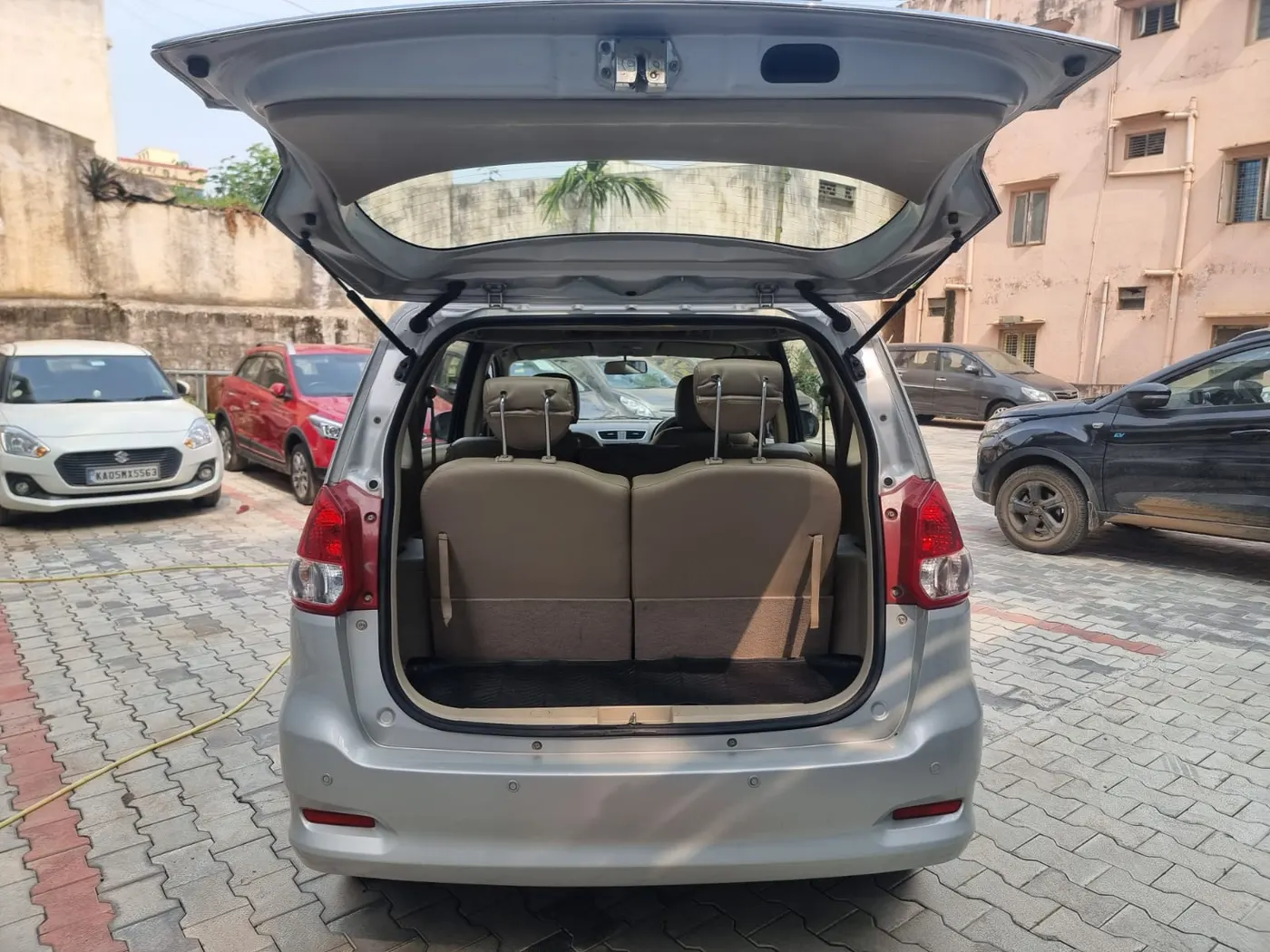
Fig.1.1 Top mounted back door
Today’s modern cars use top-mounted tailgating systems which are both powered and also gas stay supported. These top mounted tailgates provide greater rear visibility compared to side-mounted or bar doors which have canter pillars in it.
- Side mounted:
As the name signifies side-mounted doors are the one which is used in the van type MPVs, SUVs, pickup truck vehicles. These side-mounted doors or barn doors are a lot easier compared to top-mounted doors.
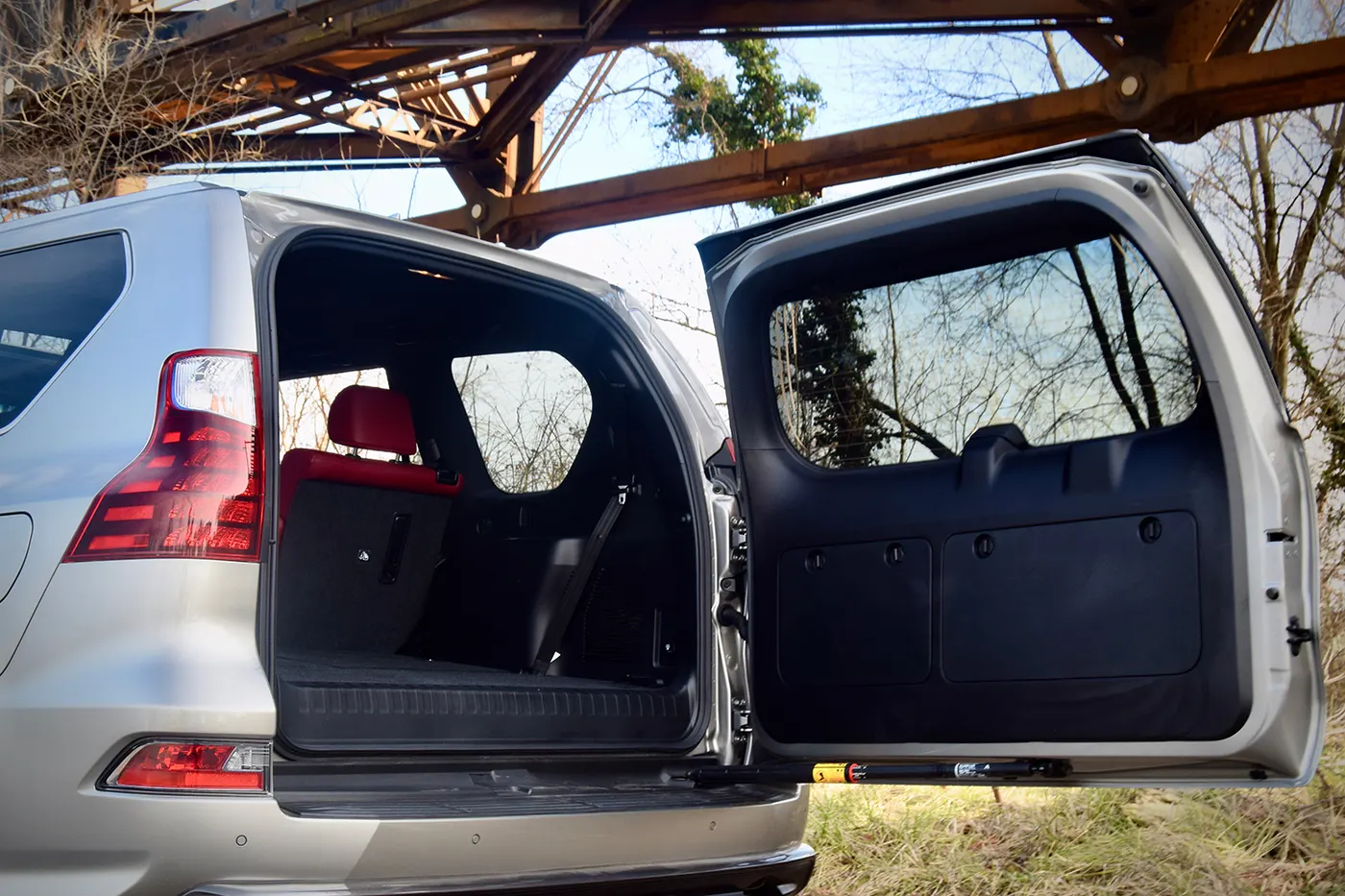
Fig.1.1.2 Side mounted back door
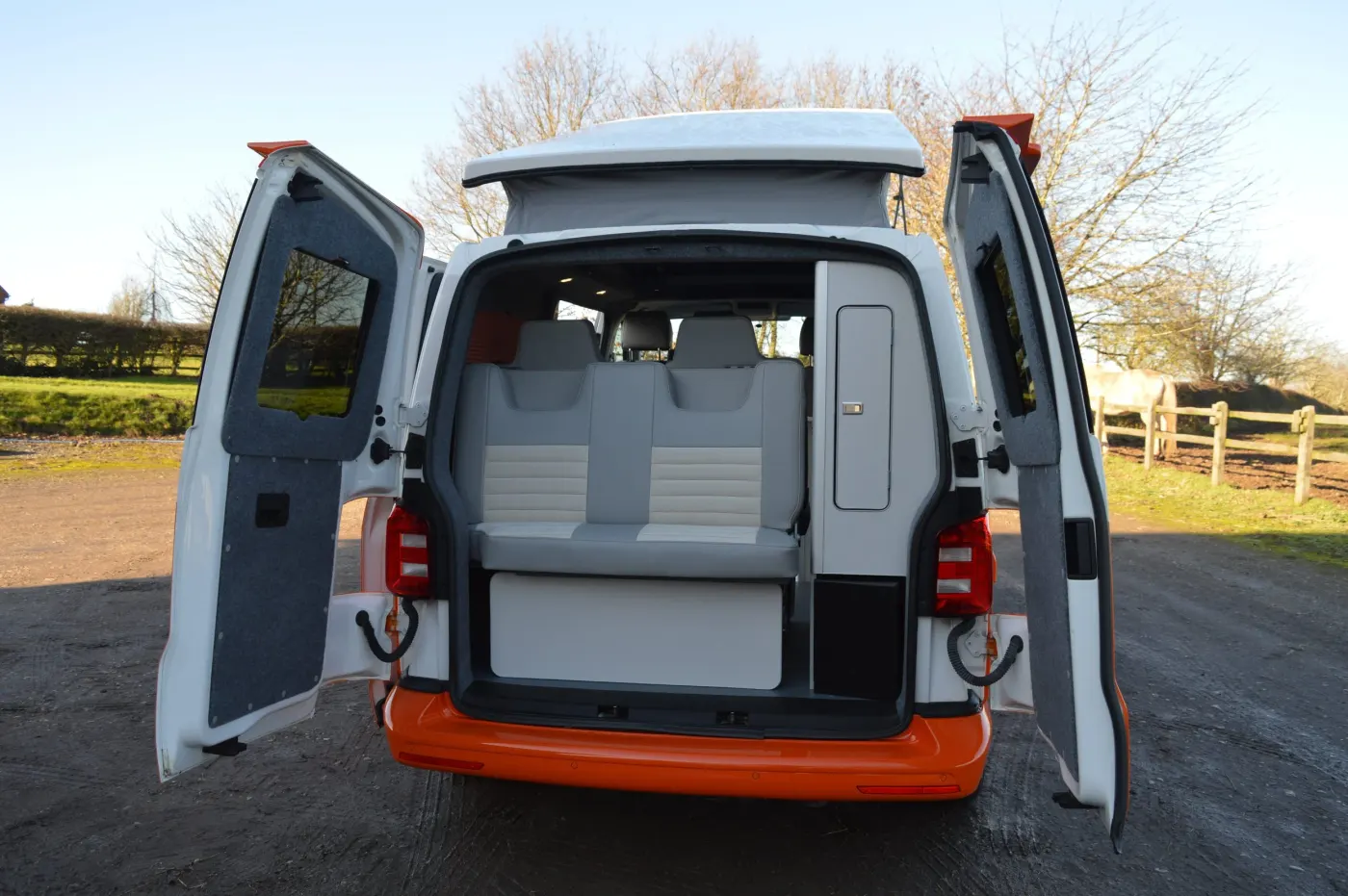
Fig.1.1.3 Double side mounted back door
These doors are generally smaller in size and can be easily accessed. These doors are more convenient for the goods handlers for long pipe and lengthy components where one door is kept open. These doors also save accidental head impacts. It is a lot easier to load and unload items in the side-mounted doors.
- Bottom / split type:
This bottom type or split type backdoor system are used in the car type such as estate type car, pickup trucks and some luxury SUVs.
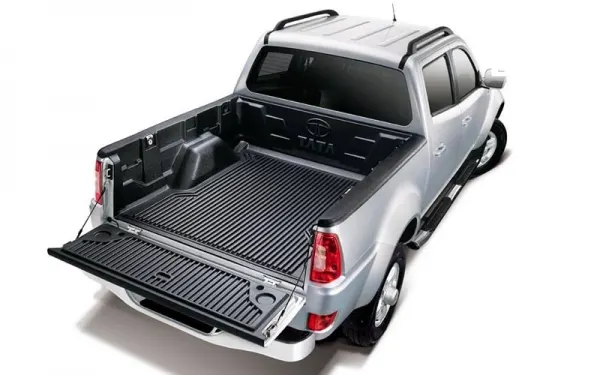
Fig.1.1.4 Bottom/ split back door
These are the most convenient type of back door in which the bottom split is used as a support or even as a table for the tour going people.
1.2 Types based on Working Mechanism
In addition to the working positions, back doors can also be classified based on their working mechanism. Some of the most common types are:
- Gas Stays type.
- Manual Back Door: This type of back door is operated manually by the driver or passenger. It may have a latch, handle or knob, which needs to be turned or pulled to open or close the back door.
- Hydraulic Back Door: This type of back door uses hydraulic pressure to open and close the back door. The hydraulic system may be powered by an electric motor or a mechanical pump. Hydraulic back doors are often found on commercial vehicles, such as delivery trucks and ambulances
- Pneumatic Back Door: This type of back door uses compressed air to open and close the back door. The pneumatic system may be powered by an electric compressor or a mechanical pump. Pneumatic back doors are often found on buses and some commercial vehicles.
- Powered Lift system
A power back door, also known as a power liftgate, is a type of back door that is operated by a motorized mechanism. It can be opened and closed by pressing a button on the key fob, dashboard, or the back door itself. Power liftgates are found on many SUVs, minivans, and luxury cars, and are becoming increasingly popular in the automotive industry.
The mechanism for a power back door typically includes a motor that drives a set of gears, which move the back door up or down. The motor is usually powered by the vehicle's battery or electrical system. A control module or sensor is also included to ensure that the back door stops at the correct position and does not close on an object or person.
Overall, the type of back door chosen for a vehicle depends on various factors, such as the vehicle's size, intended use, and the driver's preferences. Each type of back door has its own advantages and disadvantages, and car manufacturers offer a range of options to suit different needs and preferences.
2. DESIGN METHODOLOGIES:
The design of the car back door involves a combination of different methodologies, including the following:
-
Functional Requirements: The first step in the design process is to define the functional requirements of the back door. This involves identifying the purpose of the door, the size and shape required, and the specific features that are needed.
-
Concept Development: After identifying the functional requirements, designers will generate several concept ideas for the back door. These concepts are evaluated based on their feasibility, cost-effectiveness, and ability to meet the functional requirements.
-
Computer-Aided Design (CAD): Once the concept has been chosen, the next step is to create a detailed design using computer-aided design software. This allows designers to create a 3D model of the back door, which can be used to test its functionality and performance.
-
Prototype Testing: After the CAD design is completed, a prototype of the back door is built and tested. This is done to ensure that the design is robust and can withstand the stresses and forces that it will encounter in real-world conditions.
2.1 Material Selection:
The choice of materials has a significant impact on the rear door's overall weight. Steel and aluminium are the most often utilised materials. As steel has a higher density than aluminium, the door will be heavier as a result. Generally, the material is chosen depending on the car's budget because steel is less expensive than aluminium. When aluminium is utilised in place of steel, fewer parts, such as reinforcements for each mounting, are required, and as a result, the overall weight is decreased by 5 to 10 kg. The disadvantage is that aluminium is more expensive than steel. Aluminum is therefore used for the automobile depending on its budget. higher-end cars like those made by Mercedes, Audi, Porsche, and BMW we can find aluminium is used instead of steel resulting in reduced weight and increased performance of the vehicle.
Another thing to keep in mind is that employing reinforced cast aluminium components instead of deep drawn steel ones results in a slight gain in space for the final product since the draught angle for cast aluminium is significantly lower (3 degrees) than that of the deep drawn steel inner panel (7-9 degree). As a result, the cabin area is significantly bigger than it would be with an interior panel made of deep drawn steel. Hence, one of the design considerations is the choice of material. The car's rear visibility is improved as a result of the smaller gap between the inner and outer panels, providing more room for the mirror to observe.
2.2 Manufacturing process:
Recently, there have been two approaches to reducing automobile weight. One is by using material lighter than steel and the other is by redesigning the steel structure. Althrough the former seems very effective, it is very expensive so that it may only be used for an expensive automobile industry is trying to use steel, which is not costly and recyclable. Light weight steel can be achieved by improving the performance of the structure or adopting by improving the performance of the structure or adopting new manufacturing techniques. One of the efforts is the ULSAB (Ultra Light Steel Auto Body) concept.
ULSAB suggests three main weight reduction techniques such as hydro forming and the Tailor Welded Blank (TWB)
- Hydroforming:
Hydroforming is a cost-effective way of shaping ductile metals such as aluminum, brass, low alloy steel, and stainless steel into lightweight, structurally stiff, and strong pieces. Hydroforming is a specialized type of die forming that uses high-pressure hydraulic fluid to press room temperature working material into a die. To hydroform aluminum into a vehicle's frame rail, a hollow tube of aluminum is placed inside a negative mold that has the shape of the desired result. High-pressure hydraulic pumps then inject fluid at very high pressure inside the aluminum tube which causes it to expand until it matches the mold.
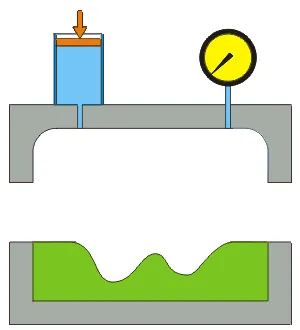
Fig.2.2 hydroforming
- Tailor Welded Blank:
A Tailor Welded Blank is a blank that is compared of two seperate pieces of sheet metal that have been welded together prior to stamping. Tailor Welded Blanks allow the welding of the different grades, different thickness or different corrosion coating together in order to give the properties needed in differeent areas, without increasing the number of tools needed to form the part and eliminating the fit ability concerns. They also allow a high degree of flexibility in designing parts and large blanks can be formed from much smaller sheets. The use of Tailor Welded Blanks would reduce the weight of the car. Having the ability to selectively place different thickness of materrial would result in weight reductions. An example of this production is the door inner panel. The only strength requirement on a door inner is in the region where the hinges attach to the panel.
3. DESIGN CONSIDERATIONS IN BACK DOOR DESIGN:
Before starting with designing we should take into account the design protocols which are to be followed while designing. In the case of the backdoor following are the design parameters
-
Rear Visibility Criteria: A car back door should be designed in a way that provides adequate visibility for the driver when reversing or changing lanes. This can be achieved through the use of rearview mirrors, backup cameras, or by designing the back door with a large window or glass panel.
-
Rear Crash Regulations: Car back doors must meet certain crash regulations to ensure occupant safety in the event of a collision. These regulations typically specify minimum strength and deformation requirements for the door structure, as well as requirements for the latching mechanism and the ability of the door to remain closed in a crash.
-
Functions of Sealing: Car back doors must be designed to provide effective sealing against the elements such as water, wind, and dust. This can be achieved through the use of weatherstripping or gaskets around the door perimeter, as well as through the design of the door panel itself to minimize gaps or crevices where water or wind could enter.
-
Joining Techniques: Car back doors are typically assembled from multiple components, which may be joined together using various techniques such as hemming, spot welding, or adhesive bonding. The joining technique used will depend on the specific materials and design of the components, as well as the desired strength and durability of the joint.
- Hemming:It is a forming operation in which the edges of the sheet are folded or folded over another part in order to achieve a tight fit. Normally hemming operations are used to connect parts together, to improve the appearance of a part and to reinforce part edges. In-car part production, hemming is used in assembly as a secondary operation after deep drawing, trimming and flanging operations to join two sheet metal parts (outer and inner) together. Typical parts for this type of assembly are hoods, doors, trunk lids and fenders.
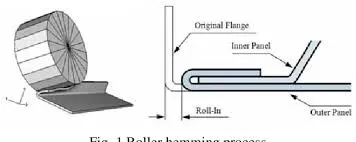
Fig.3.1 Hemming
- Spot Welding: Spot welding is a type of electric resistance welding used to weld various sheet metal products, through a process in which contacting metal surface points are joined by the heat obtained from resistance to electric current
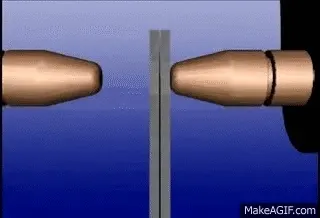
Fig.3.2 Spot welding
-
Mastic Sealant Data :
Hood commonly possess large surface area and hemming can only be provided through its boundary. We cannot use other joining techniques like welding, riveting etc because they leave marks on the outer panel which spoil its aesthetic appearance. So, mastic sealants are used to stick the inner surfaces of outer panel and inner panel. Mastic sealants are elastic compound that behave like rubber. It is applied between the inner and outer panels at specified spots. Each spot of mastic sealants has its effect around a circular region of 80mm diameter and inner panel & outer panel should have minimum 5mm gap between them.Thus, the mastic points are arranged in such a way that it covers the areas away from the hemming which are more vulnerable to vibrate.
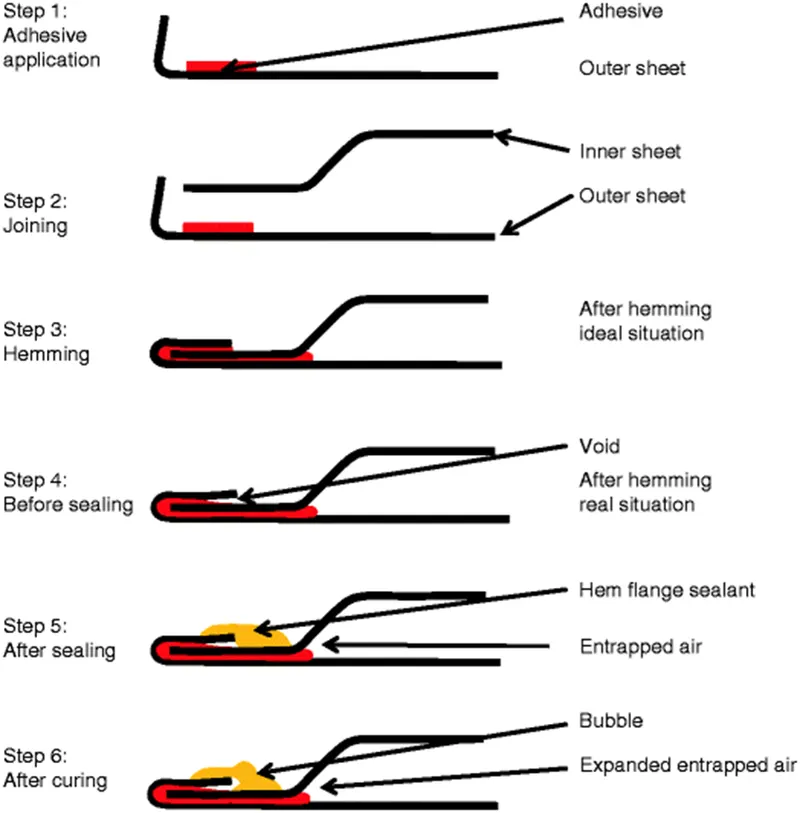
Fig.3.3 mastic sealant
4. ELEMENTS OF BACKDOOR:
Backdoor is again an assembly it is not a single part it consists of two panels one is an outer panel and the other is an inner panel the inner panel is enclosed beneath the outer panel of the back door and in between these sheet metal bodies other components are located.
Assembly of Backdoor
-
Different panels of backdoor
1) Outer panel upper
2) Inner panel
3) Outer panel lower
ii. Other components of backdoor
1) Hinge reinforcemen
2) Wiper motor reinforcement
3) Gas stay mounting reinforcement
4) Latch & striker reinforcement
4.1 Outer panel:
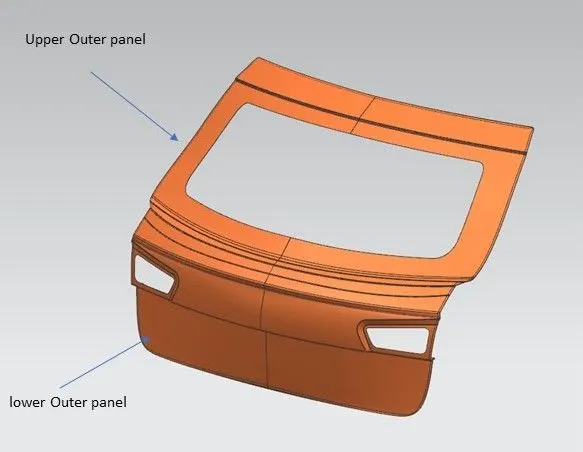
Fig.4.1 outer panel
Upper outer panel:
It forms the outside covering of the backdoor with other parts enclosed beneath it. It offers appropriate strength to the automobile by covering it from the rear side. It also improves the car's visual appearance. It comprises of cutouts for the installation of rear tail lights, fog lamps, and so on. The outer panel is another BIW component, and as previously stated, it is created in an one piece procedure employing a stamping operation. The steel sheet is positioned above the negative die with the appropriate form, and then the punch is pushed to hit the steel sheet with a large load acting in a normal direction, expanding the steel sheet to the shape of the negative die and taking the desired component.
Lower outer panel:
It is located just below of upper outer panel it is manufactured separately and afterward joined with the outer panel by using joining methods like spot welding as explained earlier. Heming operation is also carried out on the edges of the outer panel so that it gets fit with the inner panel sheet. Mostly Car number plate is located on the outer lower panel.
4.2 Inner Panel:
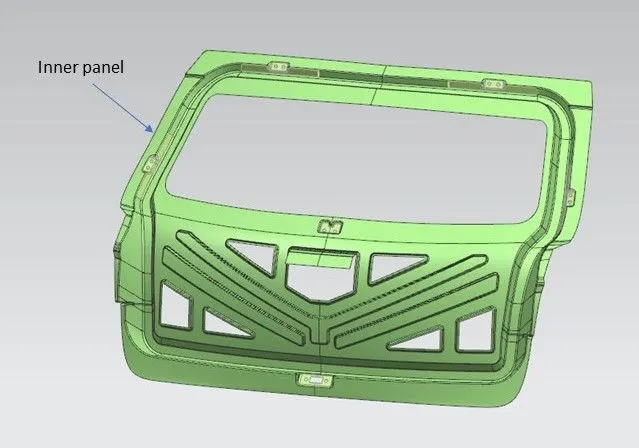
Fig.4.2 Inner outer panel
It is located on the inner side of the outer panel the main purpose is to provide further strength and all the components such as wiper mounting, hinges, gas stay, latch, and striker reinforcements are all fixed on the inner panel that's why it is very important that the inner panel should be sufficiently strong enough to carry all the load of this components and also strengthen the structure to safeguard the backdoor from the rear crash conditions. The process used for manufacturing of inner panel is generally deep drawing it is similar to that of the outer panel, a tooling direction is to be decided in which the punch will act upon and apply load on the metal sheet to deform it in the desired shape. Embosses are also provided on the inner panel to transfer the force away from the center to the sealing flange and other body members.
4.3 Reinforcement:
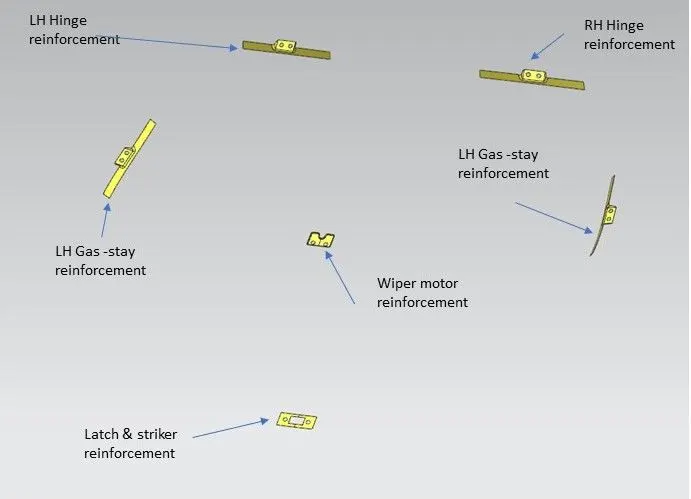
Fig.4.3 Reinforcement
Reinforcement is frequently used in sheet metal forming operations to give strength and support to metal objects. It can be achieved in several ways, including through the use of additional metal pieces or structures, such as braces or stiffeners, or through the application of coatings or treatments to the surface of the metal.
Reinforcement can help to reduce the weight of the parts by allowing for the use of thinner, lighter-weight materials while still maintaining the required strength and performance characteristics.
- Latch and Stiker Reinforcement:
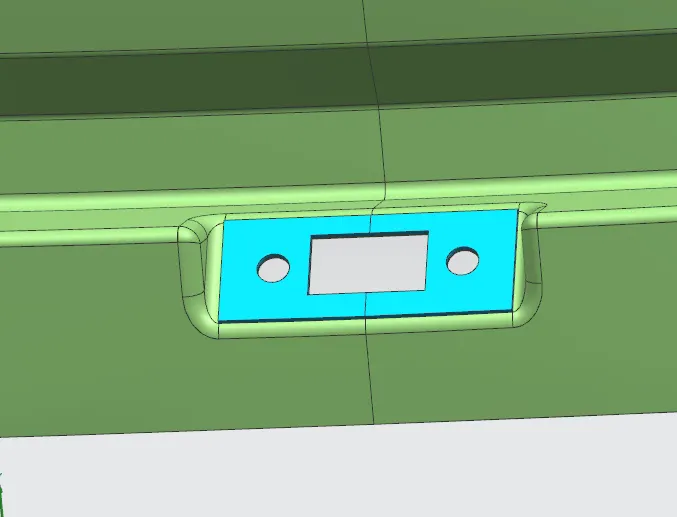
Fig.4.3.1Latch and Stiker Reinforcement
To reduce the impact to the occupants inside the car, additional latch and hinge reinforcement to the back door. When latch and striker are placed, there is drop in strength at that position thus reinforcement is required. Also stiffness pads are placed to reduce NVH. Hinge and latch reinforcement thickness is kept at 1.5 mm but it may vary.
Where there is movements like hinge,hood opening and closing,Doors etc,In this cases there is less strength in that particular opening and closing areas in that we need to add Reinforcement to giving the additional strength to that areas.
- Hinge Reinforcement:
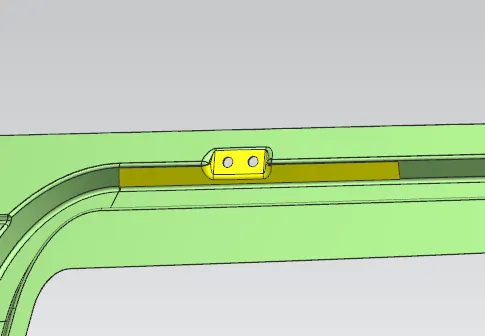
Fig.4.3.2 Hinge Reinforcement
Hinge rotates in the rotational axis in that it will loose some strength there,It means huge Back door opens with the help of small hinges only in this case hinge needs extra strength,For this we providing extra strength in the form of Reinforcement
- Gas Stay
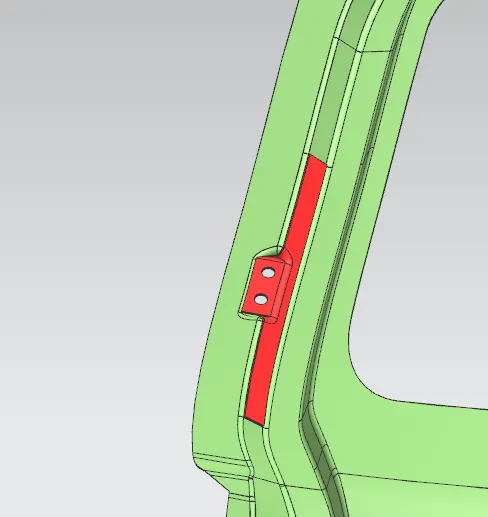 .
.
Fig.4.3.3 Gas stay Reinforcement
gas struts are rods that provide support for doors, hatches, lids and covers that are horizontally hinged. They act as support in a variety of ways including, lifting, positioning and lowering; because of this versatility they are used in a wide range of applications.
- Wiper Motor Reinforcement:
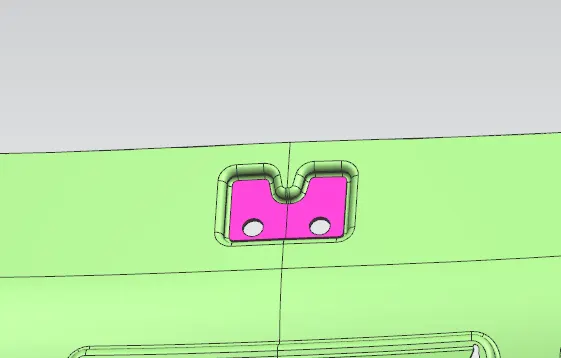
Fig.4.3.4 Wiper motor Reinforcement
5.FORCE DISTRIBUTION:
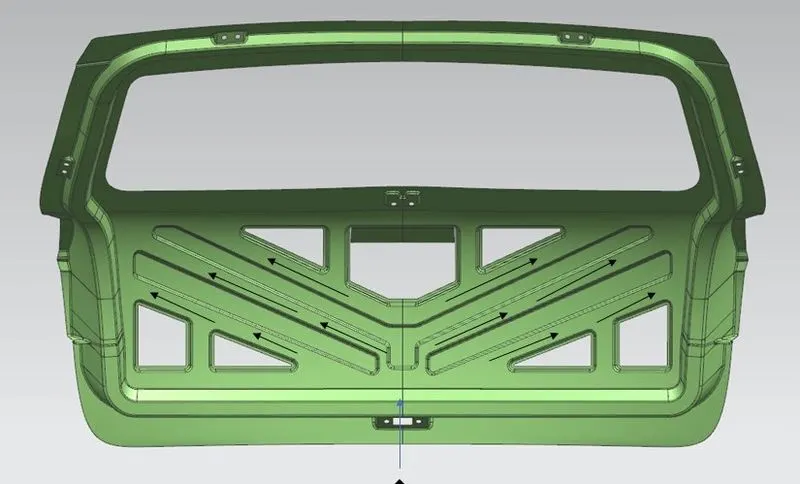
Fig.5 Force distribution
6. DRAFT ANALYSIS:
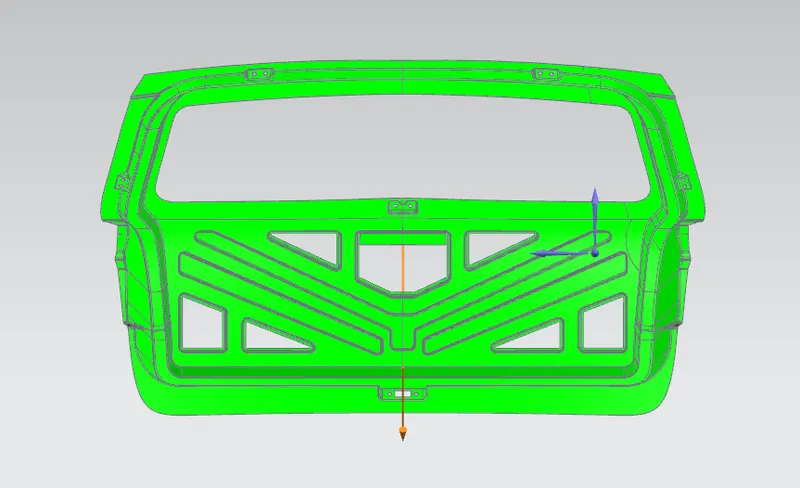
Fig.6 Draft analysis
7.HEMMING PROCESS:
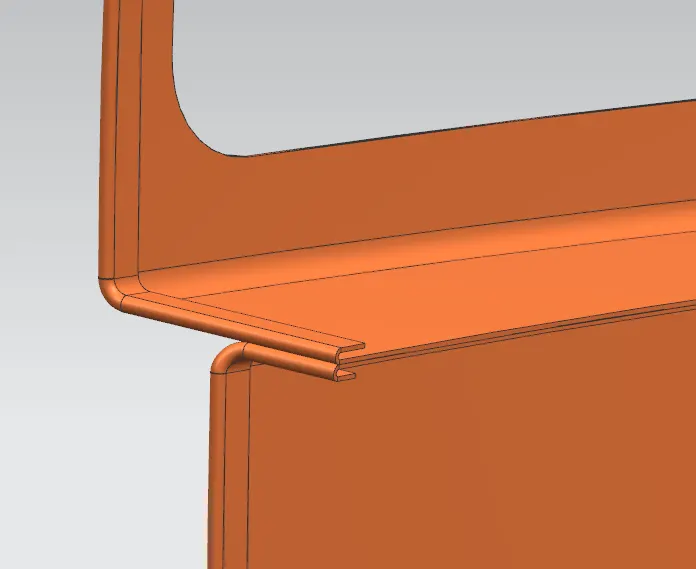
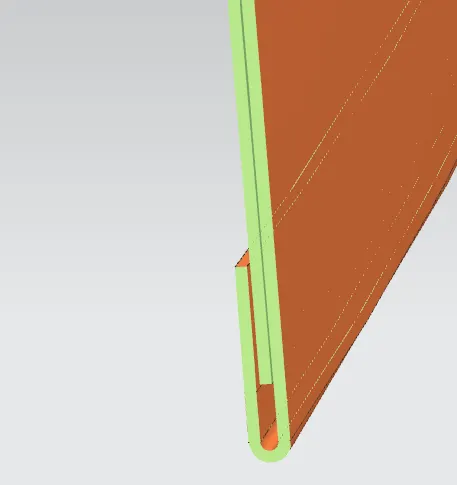
Fig.7.1 Upper and Lower outer panel hemming
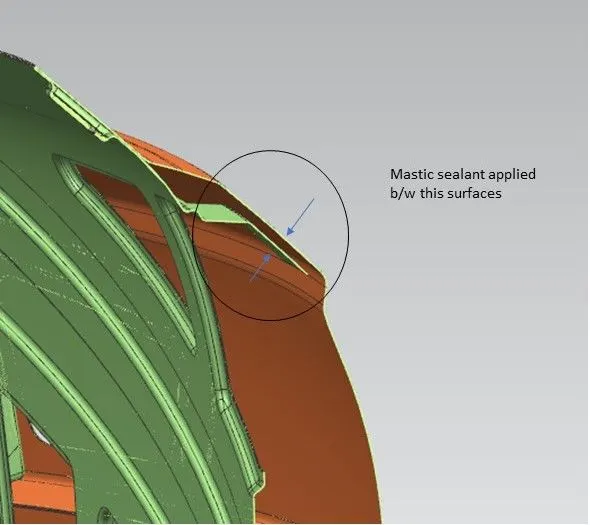
Fig.7.2 Mastic sealant
8.FINAL ASSEMBLY:
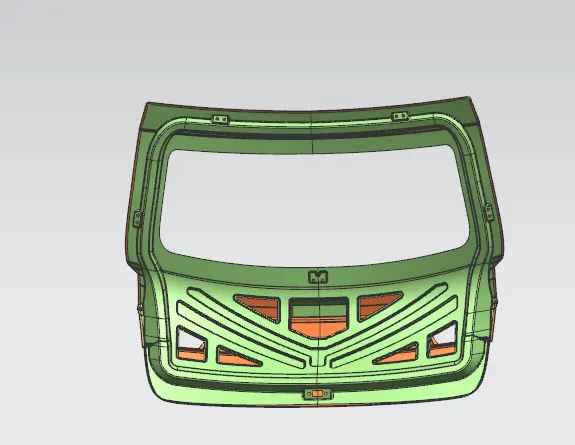
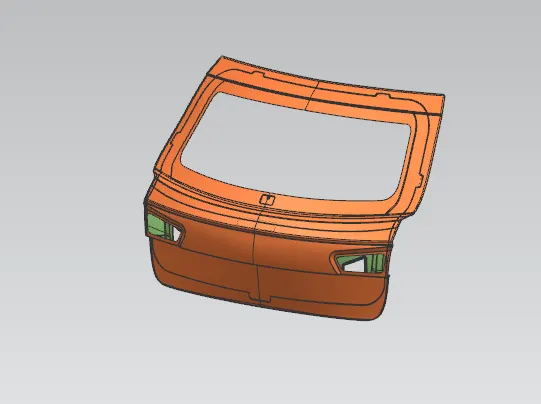
Fig.8.1 Assembly of back door
CONCLUSION:
The backdoor is designed based on design considerations .Required reinforcement provided on inner panel. The design is checked by using draft analysis feature .