Design of backdoor
Aim:
Using the provided styling surface to come up with a back door and using appropriate design methodologies and make the necessary reniforcements and embosses.
Backdoor/Reardoor/Tailgate/Trunk:
A Door is a hinged part which is used for entry and exit of the vehicles. Backdoor are one of the type of door of the vehicle which are located next to the passanger seat which provides access to the luggage compartment. In the most of the cars, these back door are operated with the help of gas stay which in turn reduces the effort required to lift the door. Some luxuary cars have powerd backdoor which in turn is driven by an electric motor. This kind of system is also called a powered trunk lid system hatchback or station wagons are sold as 3 doors or 5 doors models. In this case, the rear hatch is classified as door this is because it enters the passenger compartment. The naming is mainly used in Europe countries. In case of safety, the backdoor designed should meet the safety requirement of the rear collision.
Types of Backdoor based on working positions:
The door or opening of a cargo area may be hinged at the top, side & bottom. If the door hinged in the bottom it is called as a tailgate.
1.Top mounted
2.Side mounted doors
3.Bottom type
1.Top mounted:
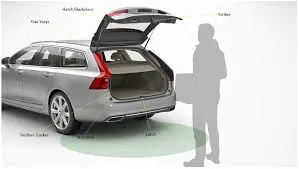
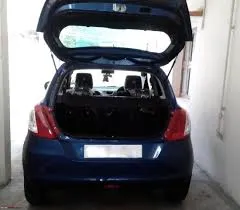
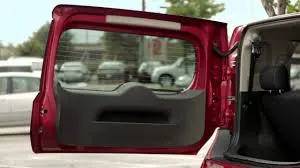
This type of back doors is used in a station wagon, pickup trunk and some of the spot utility vehicles. Today's modern cars use top mounted tail gating system which are both powered and also gas stay supported. These top mounted tail gates provide greater rear visibility compared to side mounted or backdoor which have center pillars in it.
2.Side mounted door:
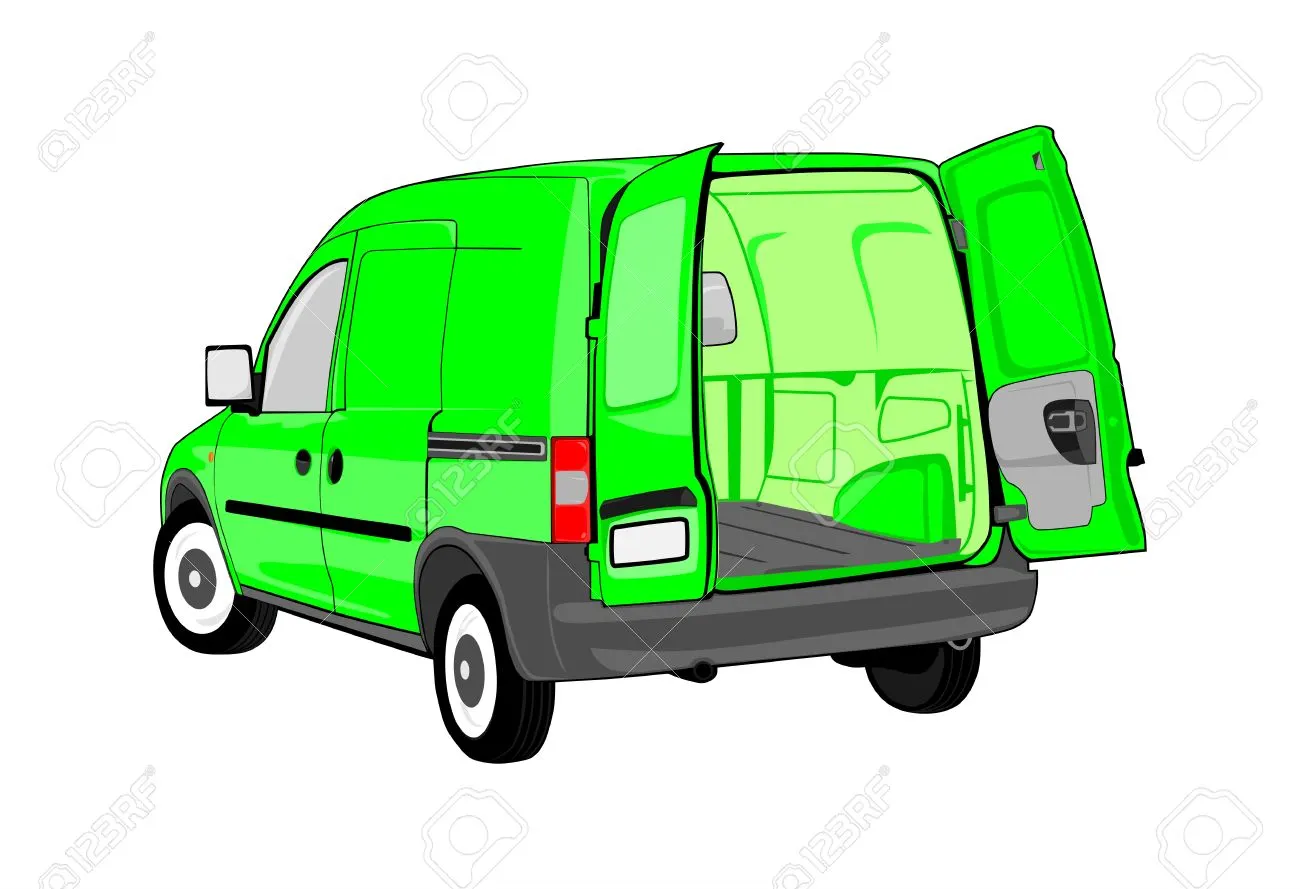
As the name signifies the side mounted doors are the one which is used in the van type MPVs, SUVs, pickup truck vehicles. These side mounted doors or barn doors are a lot easier compare to top mounted doors. These doors are generally smaller in size and can be easily accessed. These doors are more convenient for the goods handlers for long pipe and lengthy components where one door is kept open. These door also save accidental head impacts. It is a lot easier to load and unload items in the side mounted doors
3.Bottom type:
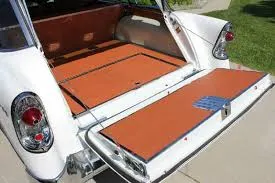
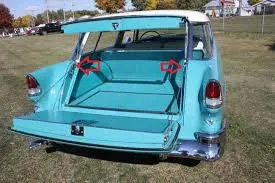
This bottom type type backdoor system are used in the car type such as car, pickup truck and some luxury SUVs. These are the most convenient type of back door in which the bottom split is used as a support or even as a table for the tour going people.
Types based on Working Mechanism:
1.Gas Stays type.
2.Powered Lift system.
1.Gas Stay type:
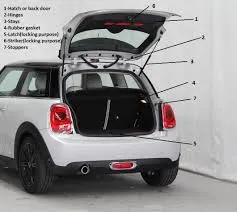
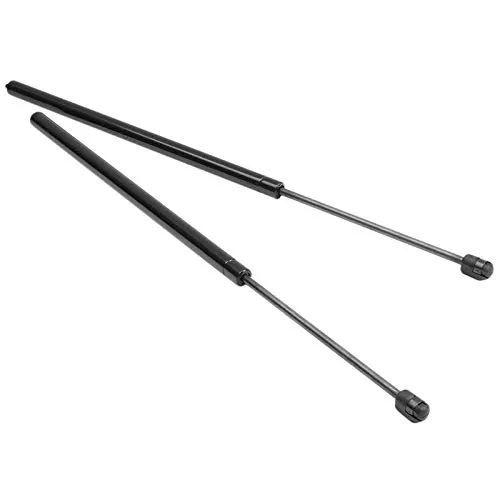
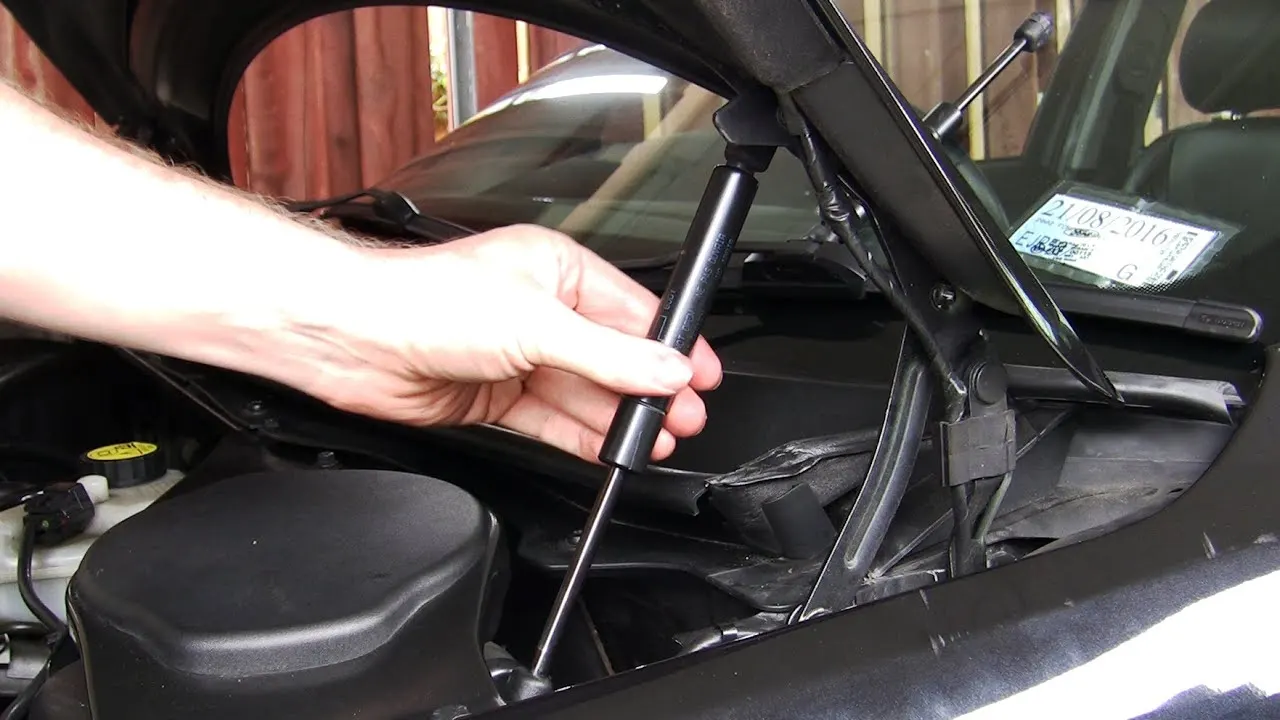
Gas Stay type backdoor is an ideal and most commonly used tailgate mechanism from lower segment car to luxury car segment. The ideal components of tailgate consist of a hinge, door, gas stay and some rubber beadings for sealing of door.
2.Powered Lift System:
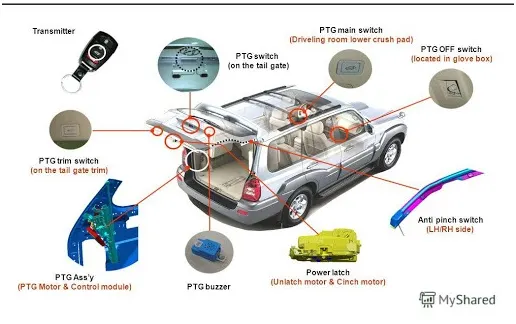
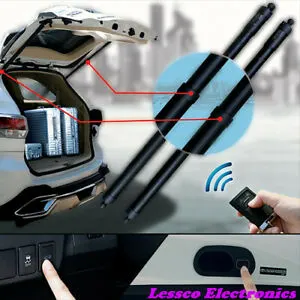
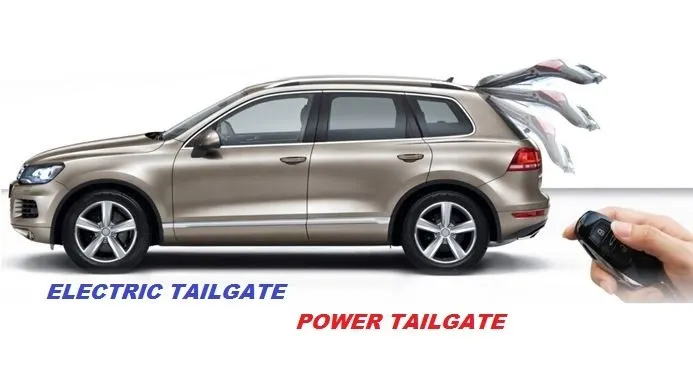
Power trunk lift system is another sophisticated way of trunk or liftgate opening mechanism which is to automatically open and close of the trunk and release of the latch by the touch of a bottom. Powered trunk Lift system consists of a power latch, anti pinch switch, PTG assly, PTG main switch. When the switch is pressed in the compartment or outside the power latch releases the latch and the entire backdoor is opened. The anti pinch switch is located in order to avoid accidental hand insertion during the operation of the door.
Materials Selection:
The selection of material plays a major role in determining the overall weight of the back door. The common materials used are Steel & Aluminum. The density of Steel is higher than Aluminum thus adding more weight to the door. The material used in the manufacturing of the backdoor depends upon the budget of the car, most low cost vehicles use steel as it is cheaper compared to Aluminium. Another aspect to be noted is that, if casted Aluminum parts are used instead of deep drawn steel parts there is no need of reinforcements and the overall weight of the car is reduced by approximately 5-10kg thus increasing the performance of the vehicle. Also the draft angle for casted parts is around 3 degrees while for deep drawn parts is around 7-10 degrees which helps in increasing the luggage/ cabin space.
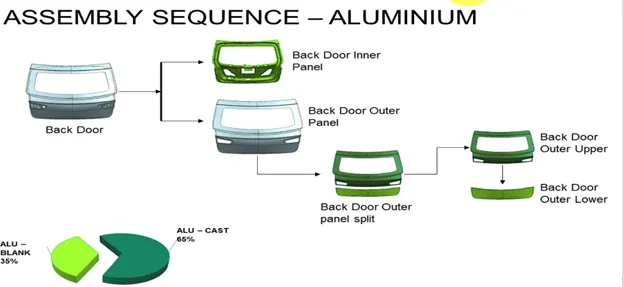
Fig. above shows possible no. of parts in aluminium backdoor
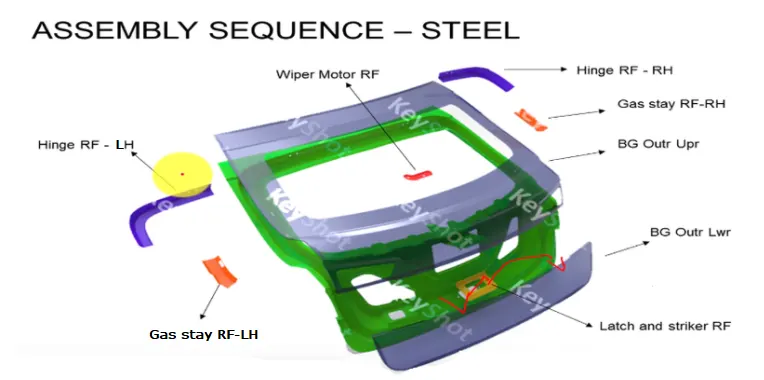
Fig. above shows possible no. of parts in Steel backdoor
The below table gives a comparative information about Steel and Aluminium.
| Aluminium | Steel | |
| Parts | Parts are casted | Parts are stamped |
| Reinforcements | Reinforcements can be neglected | Reinforcements are necessary |
| Thickness | Thickness can be varied | Thickness should be uniform |
| Weight | Lighter in weight | heavier in weight |
| Cost | Costly as compared to Steel | Cheap as compared to Aluminium |
| No. Of components | Less No. of components | More No. of components |
Manufacturing methods:
Recently, there have been two approaches to reducing automobile weight. One is by using material lighter than steel and the other is by redesigning the steel structure. Althrough the former seems very effective, it is very expensive so that it may only be used for an expensive automobile industry is trying to use steel, which is not costly and recyclable. Light weight steel can be achieved by improving the performance of the structure or adopting by improving the performance of the structure or adopting new manufacturing techniques. One of the efforts is the ULSAB (Ultra Light Steel Auto Body) concept.
ULSAB suggests three main weight reduction techniques such as hydro forming and the Tailor Welded Blank (TWB)
Hydroforming Process:
Hydroforming process was to provide a cost effective means to produce relatively small quantities of drawn parts or parts with asymmetrical or irregular contours that do not lend themselves to stamping. Virtually all metals capable of cold forming can be hydroformed, including aluminum, brass, carbon and stainless steel, copper, and high strength alloys.
A hydroforming press operates like the upper or female die element. This consists of a pressurized forming chamber of oil, a rubber diaphragm and a wear pad. The lower or male die element, is replaced by a punch and ring. The punch is attached to a hydraulic piston, and the blank holder, or ring, which surrounds the punch.
The hydroforming process begins by placing a metal blank on the ring. The press is closed bringing the chamber of oil down on top of the blank. The forming chamber is pressurized with oil while the punch is raised through the ring and into the the forming chamber. Since the female portion of this forming method is rubber, the blank is formed without the scratches associated with stamping.
The diaphragm supports the entire surface of the blank. It forms the blank around the rising punch, and the blank takes on the shape of the punch. When the hydroforming cycle is complete, the pressure in the forming chamber is released and the punch is retracted from the finished part.
Tailor Welded Blank:
A Tailor Welded Blank is a blank that is compared of two seperate pieces of sheet metal that have been welded together prior to stamping. Tailor Welded Blanks allow the welding of the different grades, different thickness or different corrosion coating together in order to give the properties needed in differeent areas, without increasing the number of tools needed to form the part and eliminating the fit ability concerns. They also allow a high degree of flexibility in designing parts and large blanks can be formed from much smaller sheets. The use of Tailor Welded Blanks would reduce the weight of the car. Having the ability to selectively place different thickness of material would result in weight reductions. An example of this production is the door inner panel. The only strength requirement on a door inner is in the region where the hinges attach to the panel.
The Different panels or regions are as follows:
1.Inner Panel.
2.Outer Panel Upper.
3.Outer Panel Lower.
Backdoor Assembly:
1.Inner Panel
2.Outer Panel
3.Hinge Reniforcement.
4.Gas Stay Reniforcement.
5.Wiper Motor Reniforcement.
6.Latch and Striker Reniforcement.
1.Inner Panel:
The inner Panel is a component which is used for strengthening the door and it is one of the most important components on which all accessories are mounted like hinges, glass guide channel, mounted trim, latch etc.., The possible method is the integration method. In the integration method, the part is stamped out of a single blank. This reduces the number of tools needed the assembly cost and eliminates any fit ability problem.
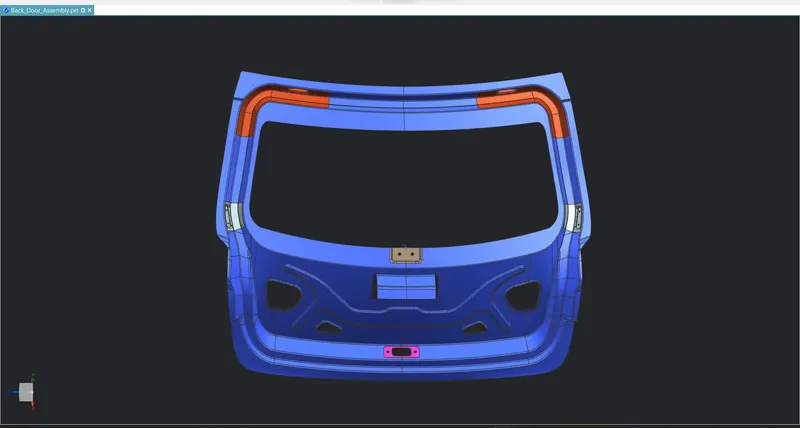
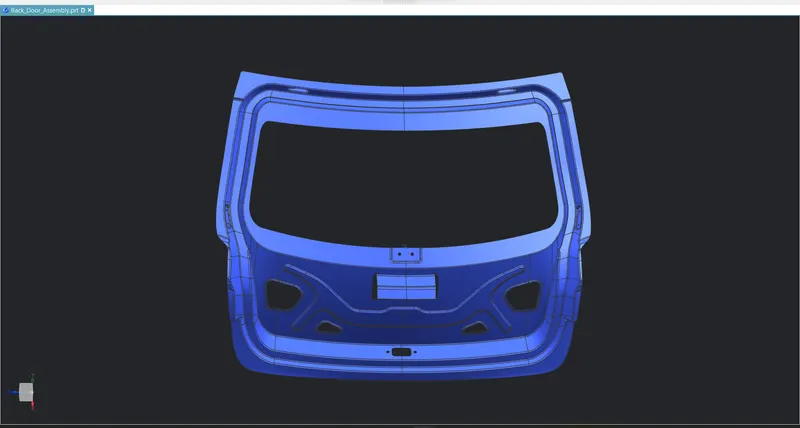
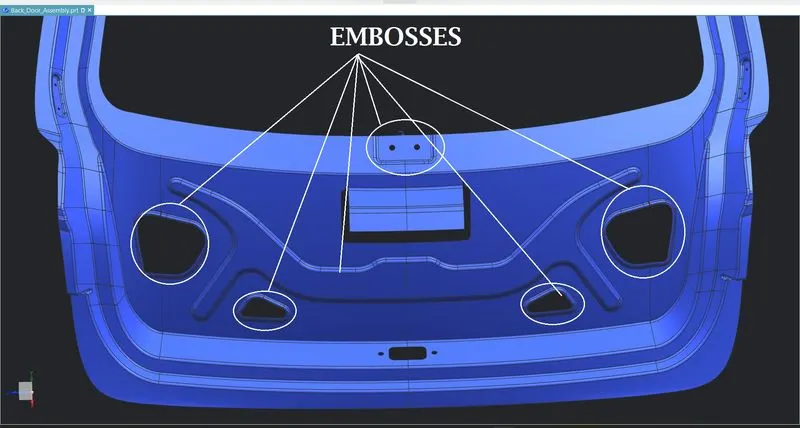
Embosses: It is provided to give extra strength to sheet metal panel and to help dissipate forces/energy towards a specific direction. Here embosses (Y/V emboss) are designed in such a way so as to direct them towards the outer end of the backdoor as shown in the image.
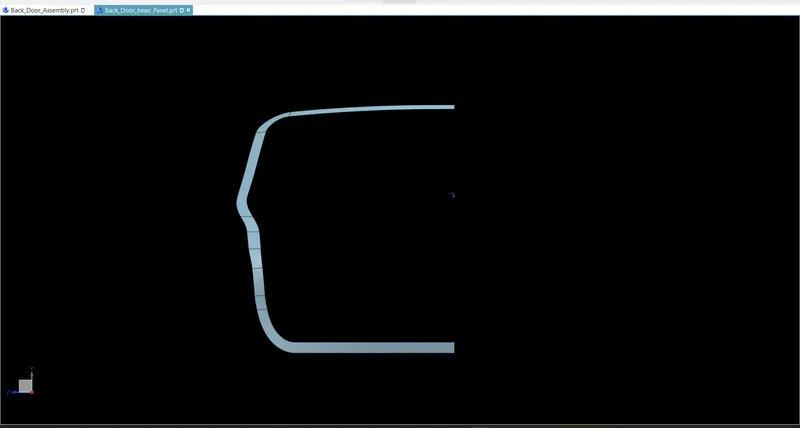
Sealing Flange: It is that section of the inner panel which enables the backdoor to sit over the rear body side of the car. Its design is important as it decides how a backdoor is mounted on the rear body side of the car and also restricts any external matter to enter inside the vehicle.
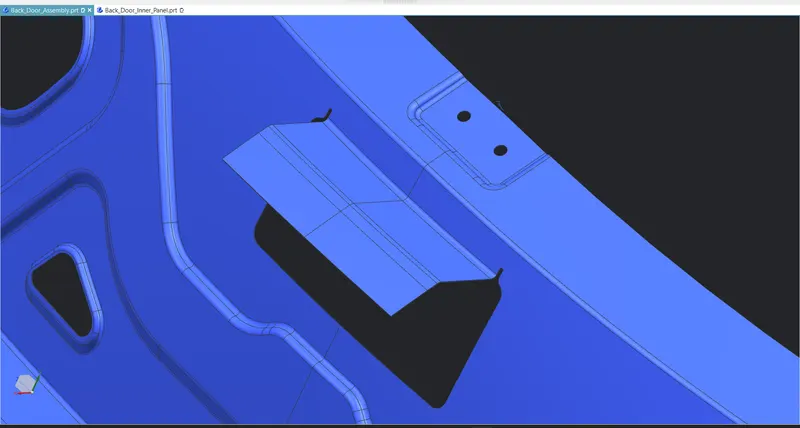
Mastic Sealants: As we know the outer panel gives the aesthetic look to the vehicle, so we can’t use bolting or spot welding or any other joining technique which damages the aesthetic looks of the panel. Thus mastic sealants are used for joining the Inner panel elements with outer panel. A maximum gap of 5mm is to be maintained in between parts where mastics are to be applied.
2.Outer panel:
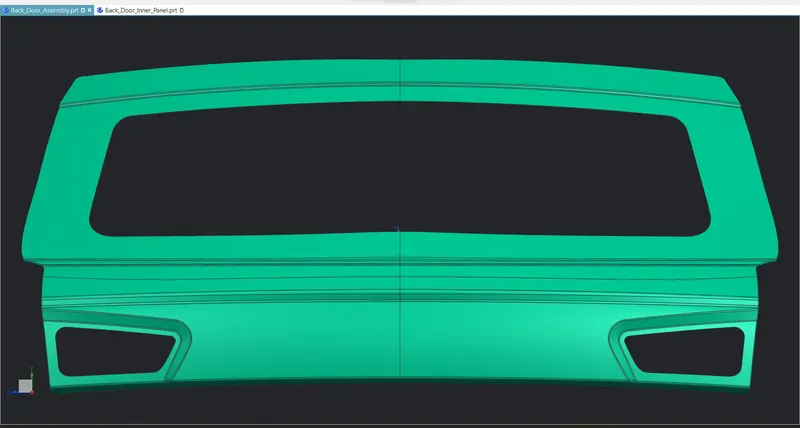
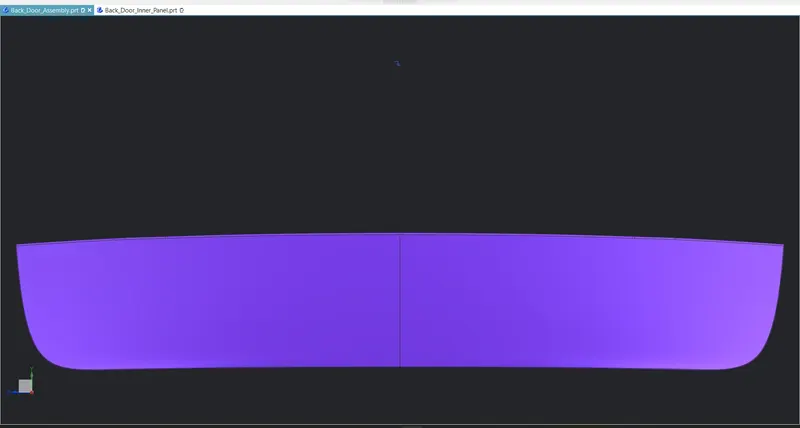
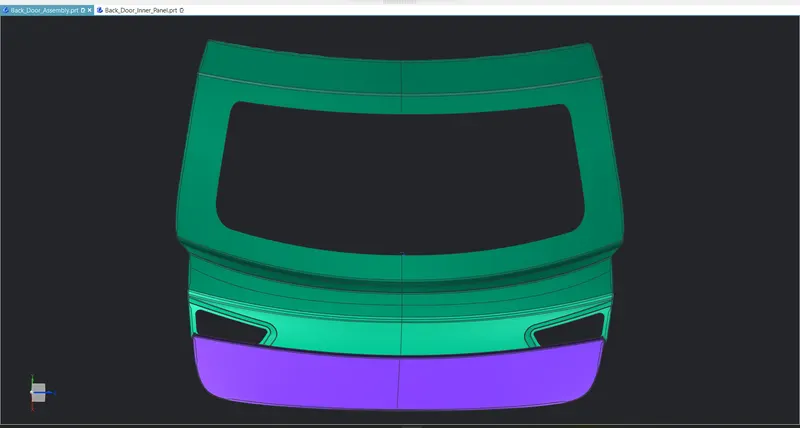
The Outer panel of the back door is similar to other BIW components where it is the aesthetic part of a vehicle. The coating provided is of multi stage which has the property of scratch resistance, rush prevention and smooth and attractive finishes. The Outer panel also has the provisions for the tail lamp, rear fog lamp and also has the provision for lisence plate mountings. Most of the hatch back cars have the provision for wiper motor.
Operation to be Perfomed on Outer Panel:
Hemming: Hemming is a forming operation in which the edges of the sheet are folded over another part in order to achieve a tight fit. Usually hemming operations are used to connect parts together, to improve the appearance of a part and to reinforce part edges. In car part production, hemming is used in assembly as a secondary operation after deep drawing, trimming and flanging operations to join two sheet metal parts (outer and inner) together. Typical parts for this type of assembly are hoods, doors, trunk lids and fenders.
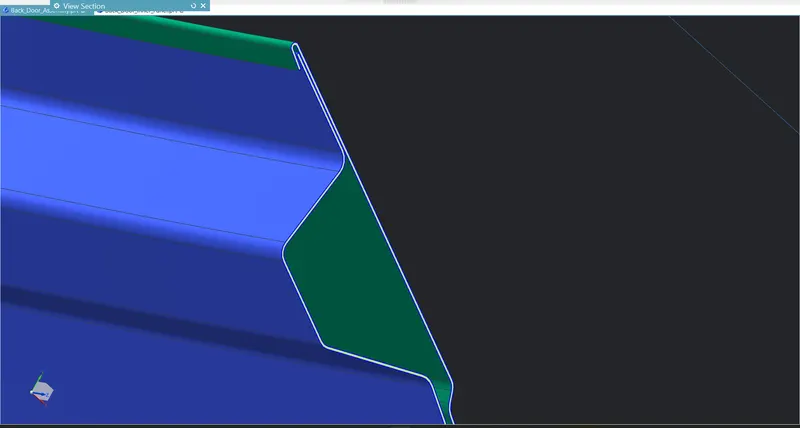
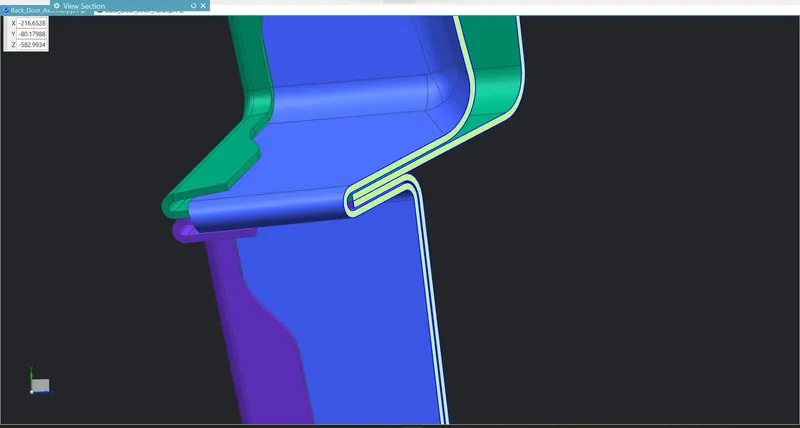
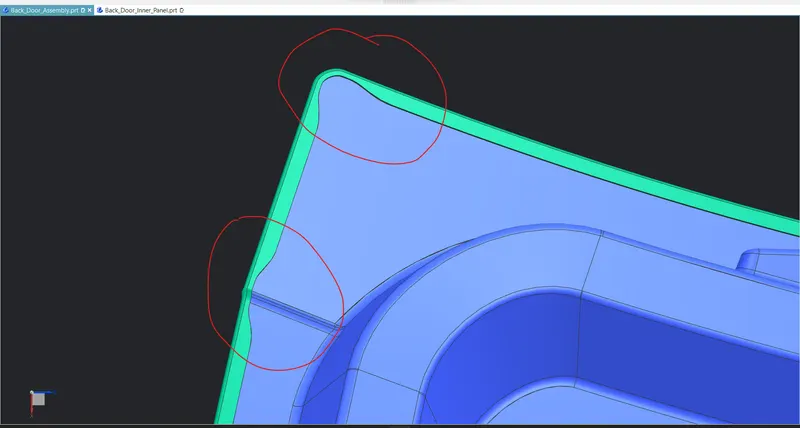
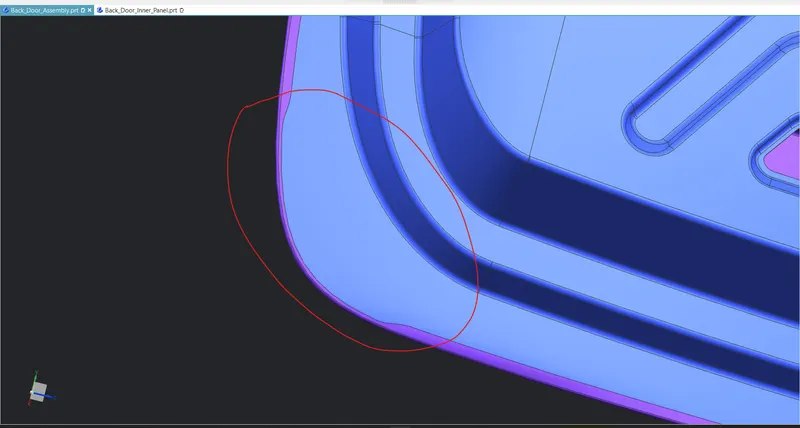
Corner Relief: During hemming process multiple rollers are used which causes vibrations and stress concentrations at the some locations due to which design intent of the panel shouldn’t be changed (i.e the panel should spring back to original formation after roller is removed). But most of the time that is not the case at corners so to avoid that situtaion reliefs are provided at corners.
Reinforcements:
Reinforcements are generally placed to increase the strength of the panel in localized areas which is relatively small compared to sheet metal parts for absorbing loads imposed thereon and dissipating such loads throughout the panel assembly to help maintain rigidity of the panel assembly. The reinforcements are usually 1-1.5mm thick as opposed to 0.75mm thick panel used in this part.
1.Hinge Reinforcement:
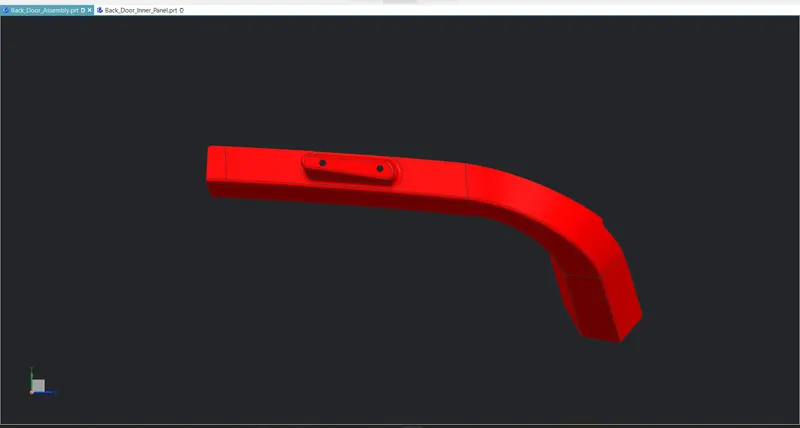
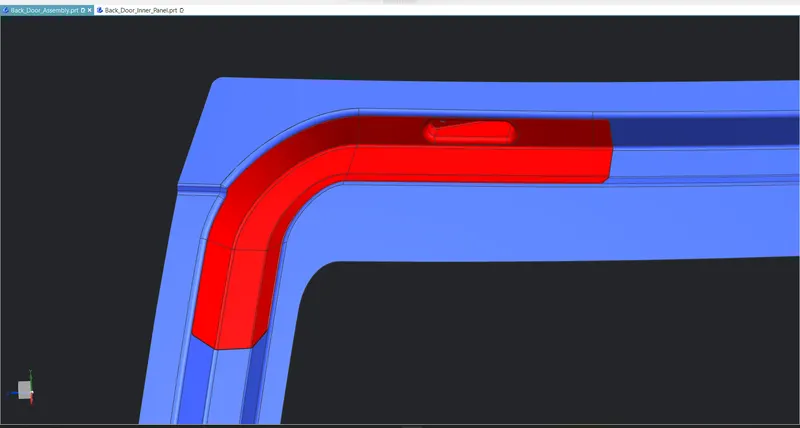
Hinge is a pivot mechanism which support the weight of the whole backdoor. So reinforcements are added for strength and rigidity. Hence a reinforcement are provided here too. Emboss is designed such that the hinges should operated freely. The electrical wiring looms are through the holes along the periphery to keep them hidden.
2.Gas stay Reinforcement:
Gas stay is used to lift the backdoor automatically and is used to support the backdoor in its open position. It can be of Two types Semi-automated and fully automated. An angled or Diabolic emboss is provided for the gas stay mounts. The angle makes it easy to be machined and stamped. It is reniforcement with a thicker sheet.
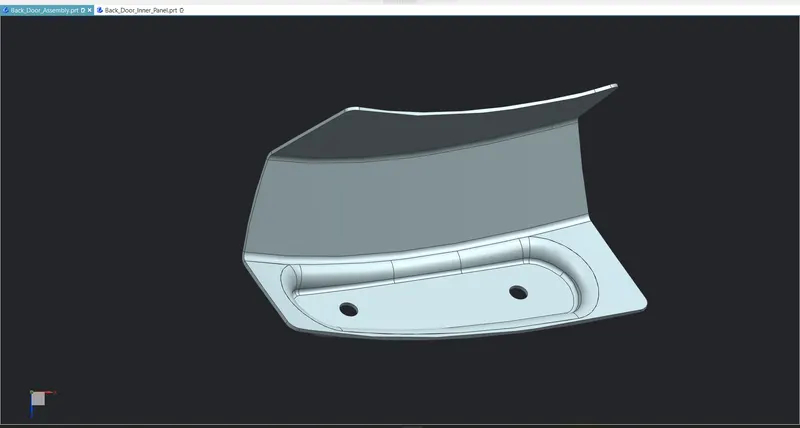
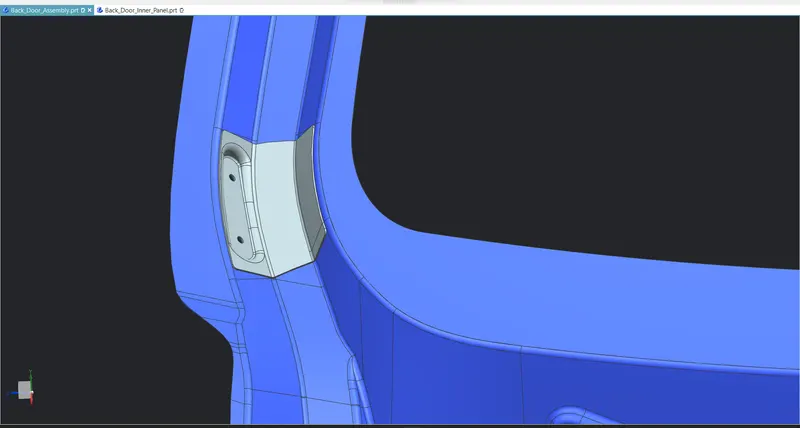
3.Wiper motor Reniforcement:
Wiper is used to wipeout the dust particles/water on the windshield glass which affects the rear visibility. It is actuated by the motor which is mounted on the inner panel. Due to vibration and heat of the motor, inner panel gets deformed which results in loss of strength & rigidity of the panel thus leading to poor NVH. So reinforcement is provided to avoid these conditions. A dedicated space near the window is left for wiper motor assembly. A cavity is placed in the middle of the panel for the necessary components in the assembly as well as other accessories.
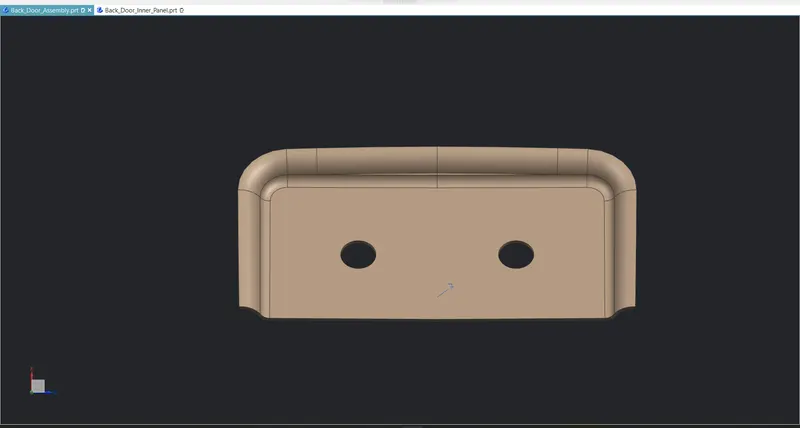
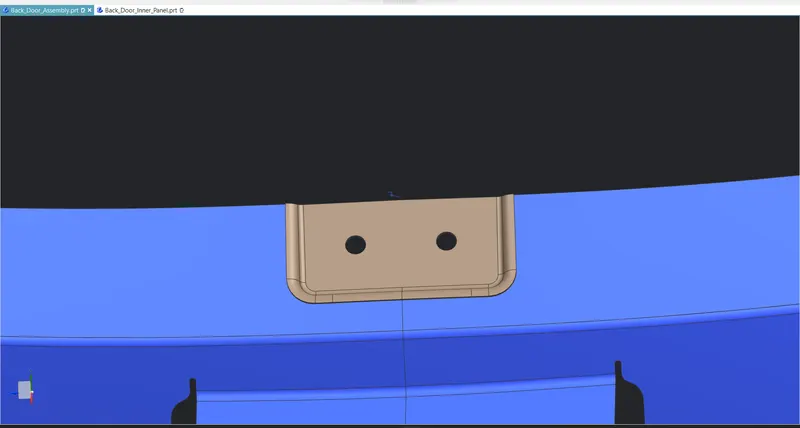
The holes or cavities are placed strategically to accommodate wiring looms, tail lamp mount, and other accessories. Embosses help stiffening the panel and act like local reniforcements. Extensions are provided around holes which are attached to outer panels and acts are crumple zone elements in case of rear impacts.
4.Latch and striker Reniforcement:
In the bottom part of the panel emboss is created for placemnet of latch and striker assembly. There is over slamming and abusing while opening and closing of the door, thus arising the need for reinforcement to be placed. At the bottom of the latch and striker assembly. Generally a key operated or automatic remotely controllable locking mechanism is used to keep the door closed and open.
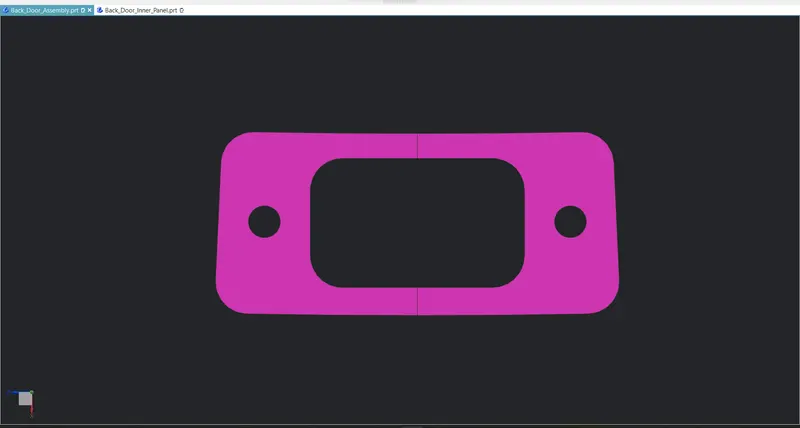
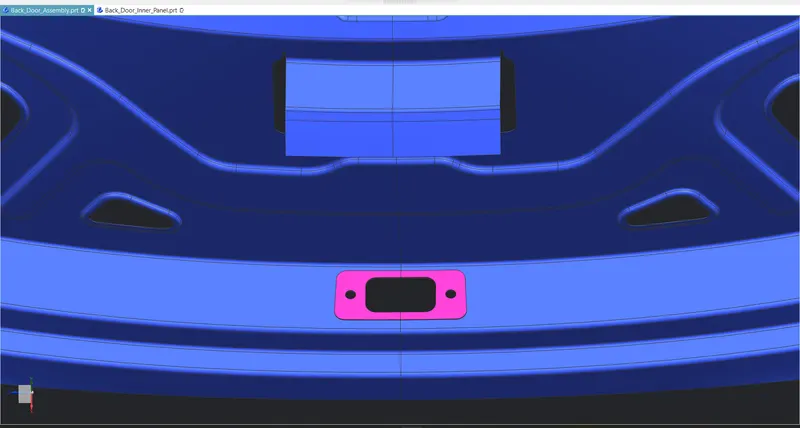
Another purpose of the emboss design is to distribute impact force towards hinges and latch assembly which are reniforced and can absorb them.
Final Assembly:
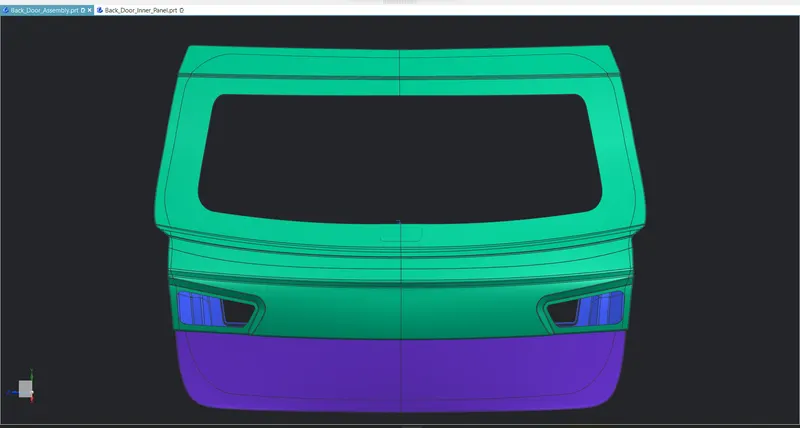
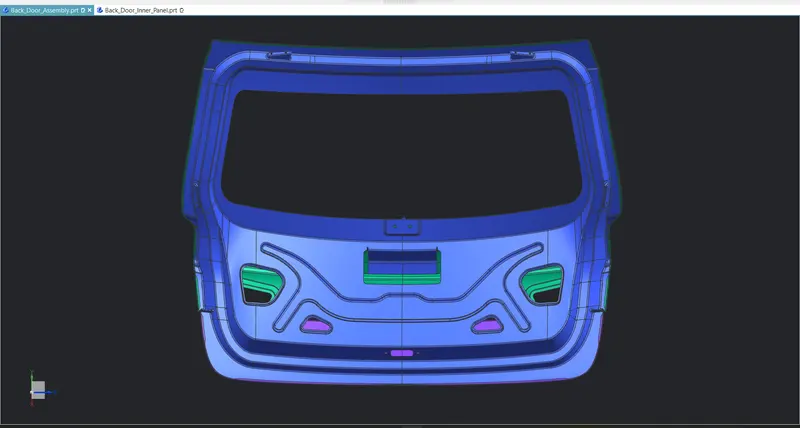
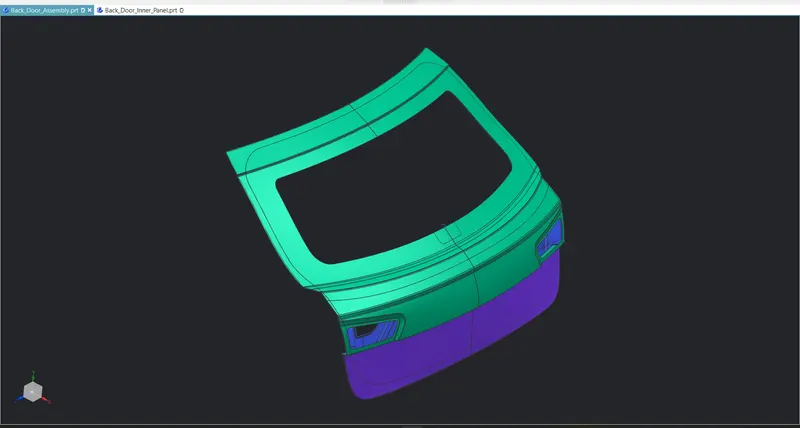
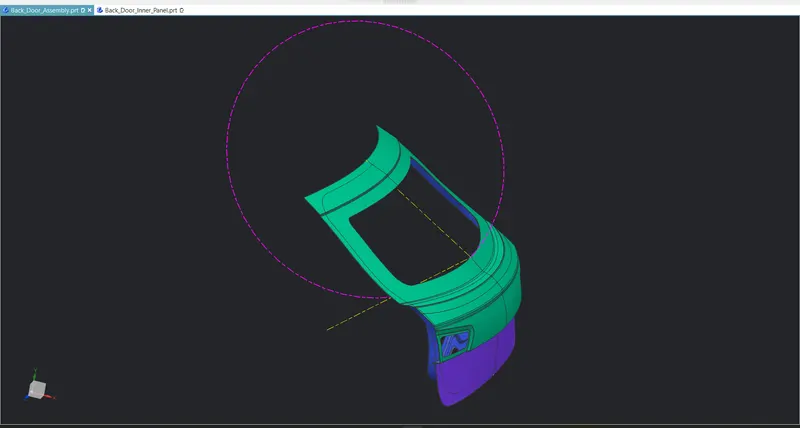
Positioning of Latch & striker/ Latch Trajectory:
Backdoor is the swinging part which rotates about hinge axis. The position and orientation of latch striker is important for proper opening and closing of the backdoor. The positioning is done by sketching a circle with center as the axis of the hinge which passes through the striker at appropriate position with respect to inner panel.
Design considerations
- Rear visibility
- Boot space & accessibility
- Sealing Flange
- Support structures like hinges and gas stays.
- Mounts for wiper motor, tail lamps and other wiring loops
- Rear crash regulations
- Joining techniques such as hemming, spot welding etc.
- Gap and flush requirements
Analysis: Draft analysis
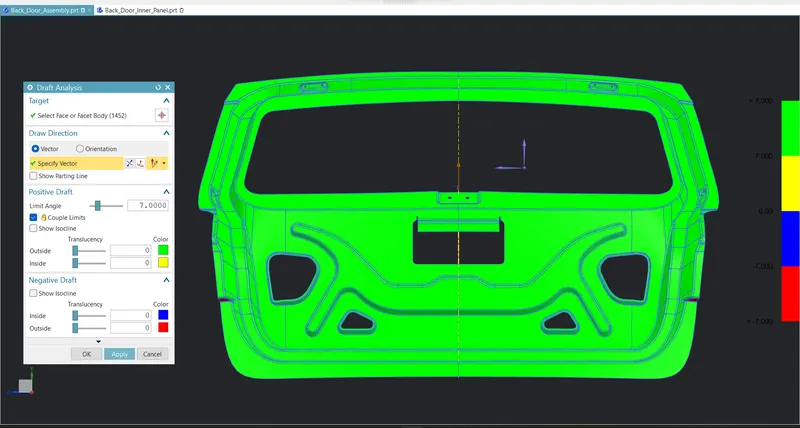
Every part which is manufactured from press tool or other forming tools require some positive draft on the faces which are parallel to the tooling direction. If we don’t give draft (Zero Draft) or give negative drafts on these faces it will stick to the mould surface and when the mould is in motion it will destroy surface thus reducing its surface finish. Thus Draft Analysis command enables us to detect if the part we have drafted can be easily ejected or not. It also give insights about the critical zones, so that appropriate changes in the design can be made if needed.
Conclusion:
By appling solid and sheet modelling methodoligies and accord of Engineering Standards, the design of backdoor was complete using Siemens NX