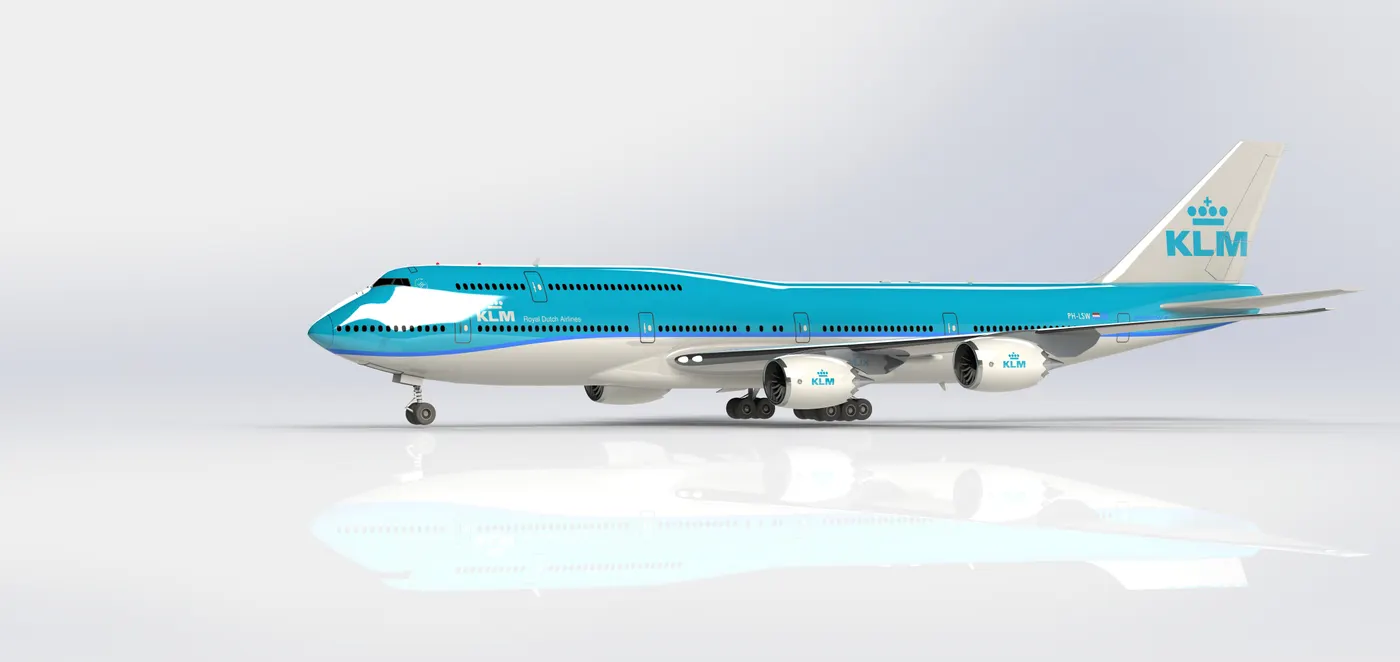
Boeing-747 _ Final_Project
BOEING 747-8 USING SOLIDWORKS
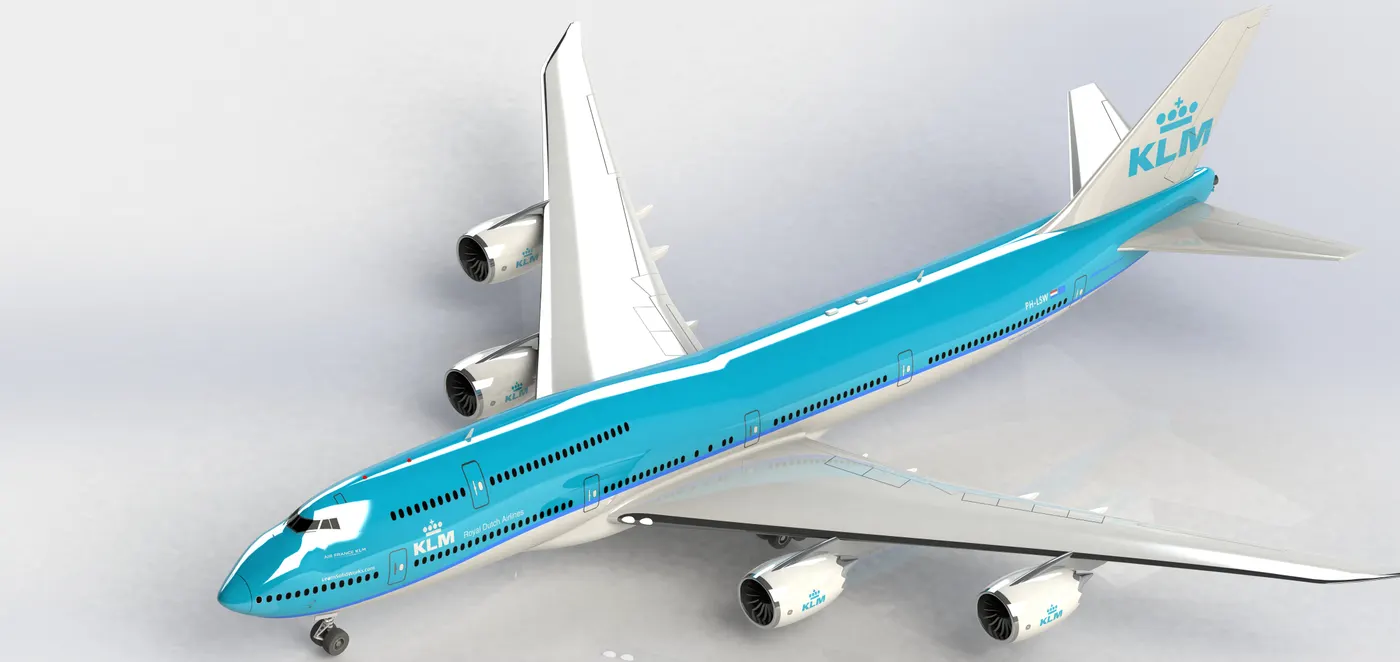
Objective –The objective is to design Boeing 747 – 8 using solid-works.
Introduction - The Boeing 747-8 is a wide body airliner developed by boeing commercial airplanes, the latest and largest variant of the 747. Its fuselage is stretched by 18 ft (5.6 m) to 250 ft (76.3 m), the longest airliner until the 777X-9, first flown in 2020. While keeping its basic structure and sweep, the wing is thicker and deeper, holding more fuel, and wider with raked wingtips. Powered by the more efficient general electric GEnx turbofan of the 787 dreamliner, its maximum takeoff weight (MTOW) grew to 975,000 lb (442 t), the heaviest Boeing airliner. The Freighter version has a shorter upper deck and it can haul 137 t (302,000 lb) over 4,120 nmi (7,630 km). The airliner version can carry 467 passengers in a typical three-class configuration over 7,790 nmi (14,430 km).
Solidworks Introduction - SolidWorks is a solid modeling computer-aided design (CAD) and computer-aided engineering (CAE) computer program that runs primarily on Microsoft Windows.
Building a model in SolidWorks usually starts with a 2D sketch (although 3D sketches are available for power users). The sketch consists of geometry such as points, lines, arcs, conics (except the hyperbola), and splines. Dimensions are added to the sketch to define the size and location of the geometry. Relations are used to define attributes such as tangency, parallelism, perpendicularity, and concentricity. The parametric nature of SolidWorks means that the dimensions and relations drive the geometry, not the other way around. The dimensions in the sketch can be controlled independently, or by relationships to other parameters inside or outside the sketch.
In an assembly, the analog to sketch relations are mates. Just as sketch relations define conditions such as tangency, parallelism, and concentricity with respect to sketch geometry, assembly mates define equivalent relations with respect to the individual parts or components, allowing the easy construction of assemblies. SolidWorks also includes additional advanced mating features such as gear and cam follower mates, which allow modeled gear assemblies to accurately reproduce the rotational movement of an actual gear train.
SolidWorks allows saving 3D Model information in *.step format, which lets the model be displayed and modified in other platforms from other vendors.
Flowchart –
| 1 |
Building different parts of the model |
2 |
2D SKETCH |
3 |
Geometry -points, lines, arcs, splines |
| 6 |
From 2D sketch to 3D model |
5 |
Relations Added - tangency, parallelism, perpendicularity, concentricity |
4 |
Dimensions Added |
| 7 |
Assembly of different parts of the model |
Solidworks commands used –
(A) Part -
1 – Sketching tool – Sketching tools are used to draw 2D sketch on any planes and surfaces. It includes tools such as line, circle , rectangle , etc.
2 – Smart dimensions – This is used to add dimensions to the sketch which was drawn using sketching tools. Dimensions can be apply in any units such as m , cm , mm , etc., depends on our interest of model.
3 – Reference plane – Reference plance is used to create planes on any surface of the model. In this plane, we can draw another sketch as per requirement of the model.
4 – Convert entities – Converts selected model edges or sketch entities into sketch segments.
5 – Offset entities – Add sketch entities by offsetting faces, edges, curves, or sketch entities a specified distance.
6 – Extruded boss/base – This command is used to convert 2D sketch into 3D.
7 – Revolved boss/base – Revolves a sketch or selected sketch contours around an axis to create a solid features.
8 – Swept boss/base – Sweeps a closed profile along an open or closed path to create a solid feature.
9 – Lofted boss/base – Adds material between two or more profiles to create a solid features.
10 – Extruded Cut – Cuts a solid model by extruding a sketched profile in one or two directions.
11 – Revolved cut – Cuts a solid model by revolving a sketched profile around an axis.
12 – Linear pattern – Patterns features, faces and bodies in one or two linear directions. This includes also circular pattern , mirror, curve driven patterns, sketch driven patterns, etc.
13 – Fillet – Creates a rounded internal or external face along one or more edges in solid or surface features. It also includes chamfer fillet type.
14 – Draft – Tapers model faces by a specified angle , using a neutral plane or parting line.
15 – Shell – Removes material from a solid body to create a thin walled features.
16 – Mirror – Mirrors features , faces and bodies about a face or a plane.
17 – Extruded surface – Creates an extruded surface.
18 – Revolved surface – Revolve is a method of defining three-dimensional geometry by revolving a sketched section around a centerline. A revolved section requires an axis of revolution that can be created either with the section or defined by selecting model geometry.
19 – Swept surface – Creates a surface features by sweeping an open or closed profile along an open or closed path.
20 – Lofted surface – Creates a lofted surface between two or more profiles.
21 – Offest surface – Creates offset surfaces using one or more contiguous faces.
22 – Edit appearance – Edit the appearance of entities in the model.
23 – View orientation – Changes the current view orientation or number of viewports. Can be viewed from top , side , front , etc.
22 – Display style – Changes the display style for the active view. This includes shaded with edges, shaded, hidden lines removed, hidden lines visible, wireframe.
(B) Assembly -
1 - Edit component -Toggles between editing a pat or a subassembly and the main assembly.
2 - Insert component - Adds an existing part or subassembly to the assembly.
3 - Mate - Position two components relative to one another.
4 - Linear component pattern - Patterns components in one or two linear directions. This command includes linear component pattern, circular component pattern , etc.
5 - Move components - Moves a component within the degrees of freedom define by its mates. It includes move and rotate component.
6 - Show hidden component - Temporarily show all hidden components and make selected hidden components visible.
7 - Reference geometry - Reference geometry commands.
Parts of Boeing 747 - 8 –
1 – Fuselage
2 – Belly Fairing
3 – Nose cone
4 – Pitot tubes
5 – Cockpit windows
6 – Windshield wipers
7 – Passenger windows and doors
8 – Hatches
9 – Lights and antennas
10 – Auxiliary power units
11 – Vertical stabilizer
12 – Horizontal stabilizer
13 – Wings
14 – Flaps and ailerons
15 – Flaps track fairings
16 – Landing gear
17 – Nose gear base
18 – Nose gear suspension arm
19 – Nose gear assembly
20 – Main gear base
21 – Main gear suspension arm
22 – Main gear assembly
23 – Engine
24 – Livery
25 – Final assembly
Description of parts of Boeing 747 – 8
1 – Fuselage :
The fuselage is an aircraft's main body section. It holds crew, passengers, and cargo. The fuselage also serves to position control and stabilization surfaces in specific relationships to lifting surfaces, which is required for aircraft stability and maneuverability. Types of fuselage consists Truss structure , Geodesic construction , Monocoque shell , Semi-monocoque .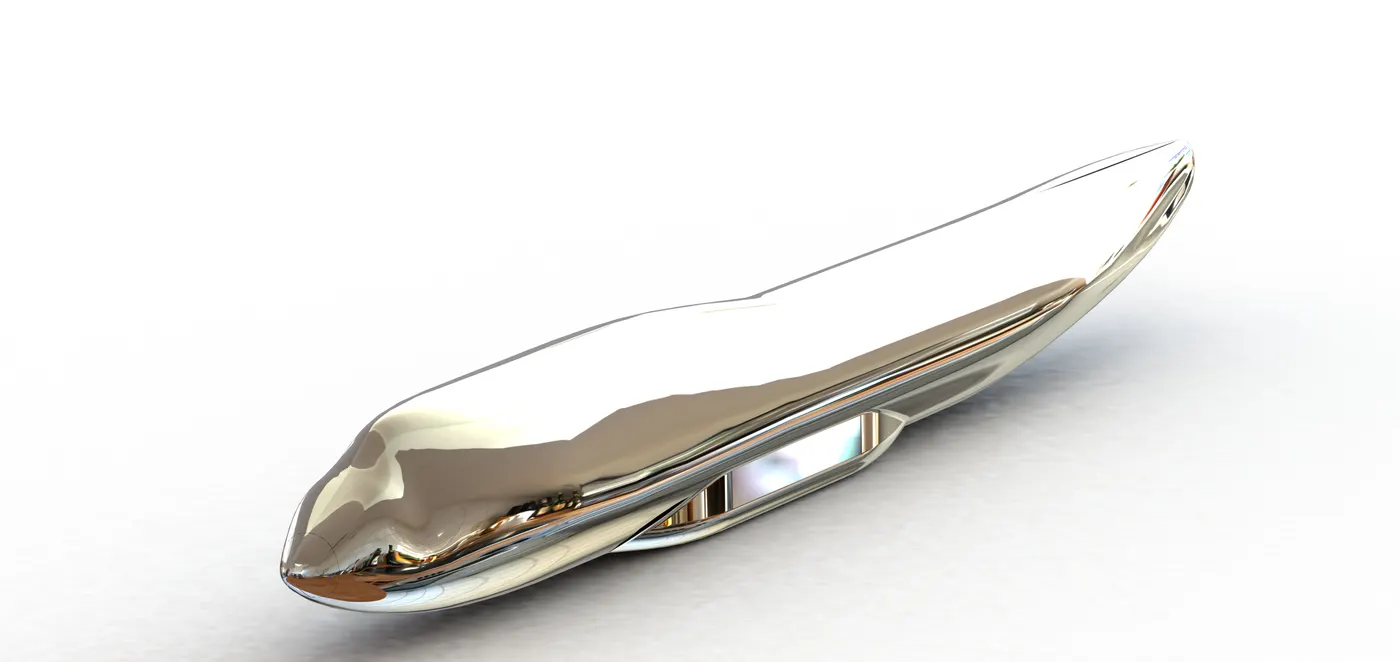
2 - Belly Fairing :
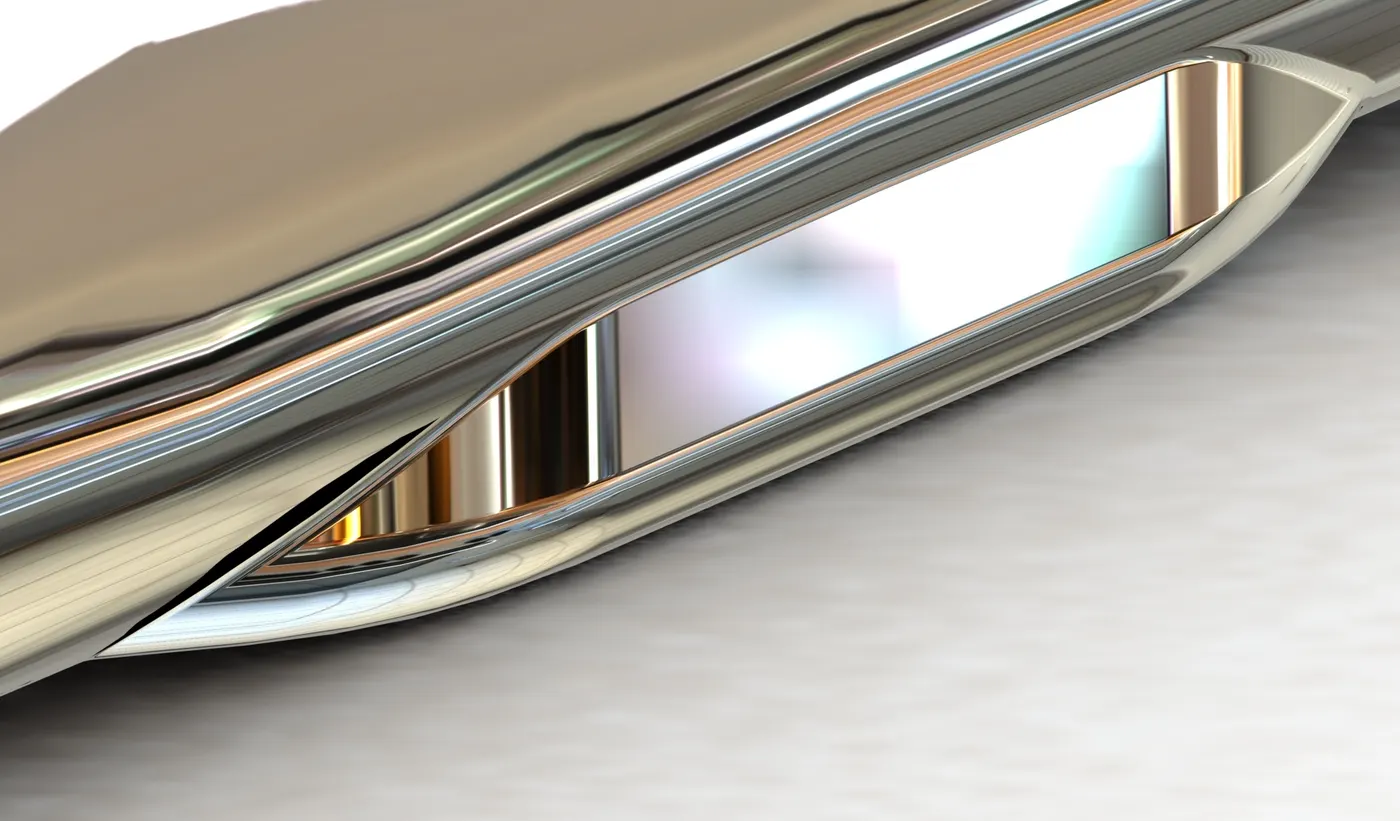
Also called a "ventral fairing", it is located on the underside of the fuselage between the main wings. It can also cover additional cargo storage or fuel tanks. The belly fairing also gives aerodynamic cover to many aircraft systems, as air conditioning and pressurization pack, that have to be located in the lower region of the fuselage.
3 - Nose cone :
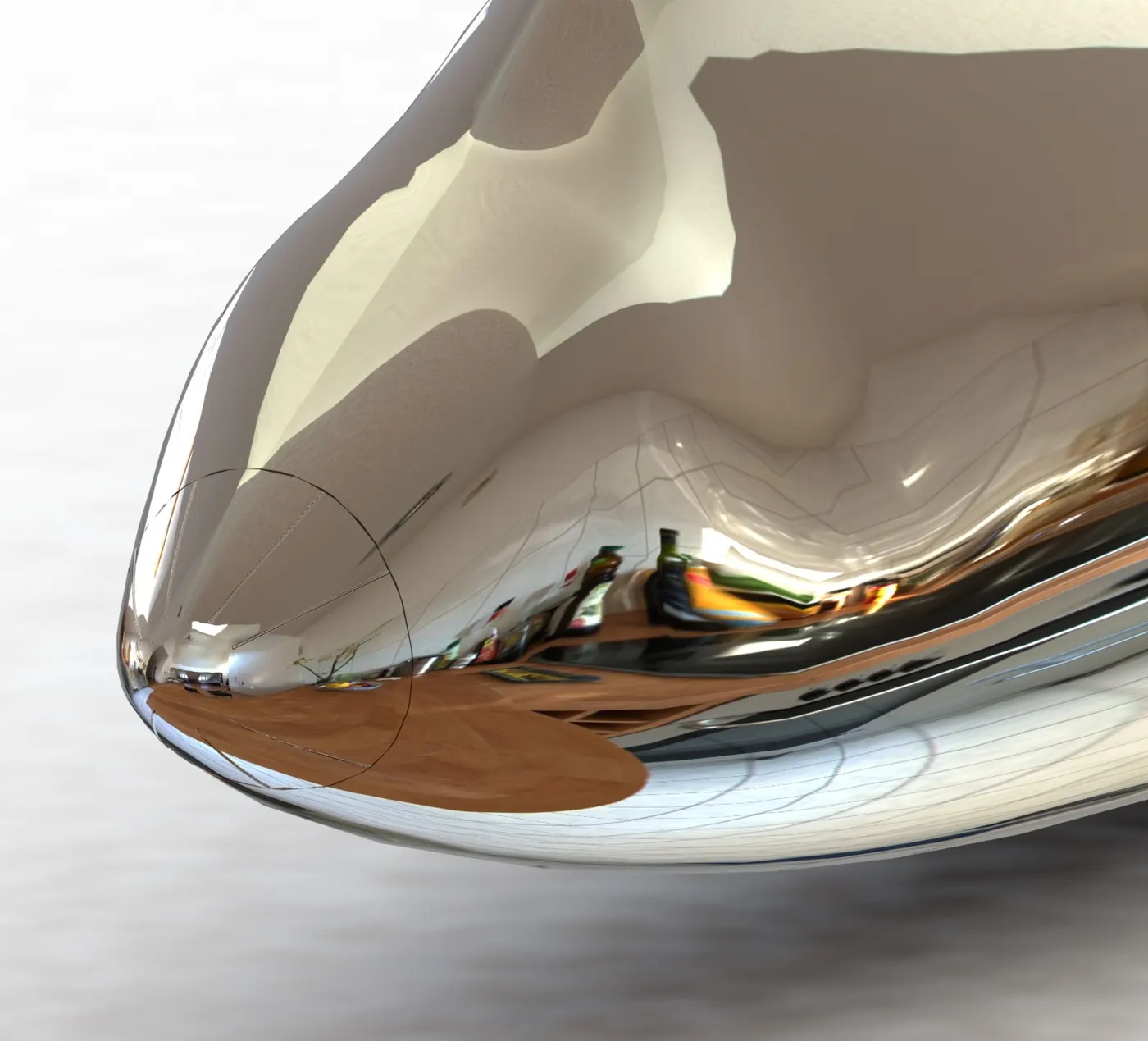
A nose cone is the forward most section of a aircraft. On airliners the nose cone is also a radome protecting the weather radar from aerodynamic forces. The shape of the nose cone must be chosen for minimum drag so a solid of revolution is used that gives least resistance to motion.
4 - Pitot tubes :
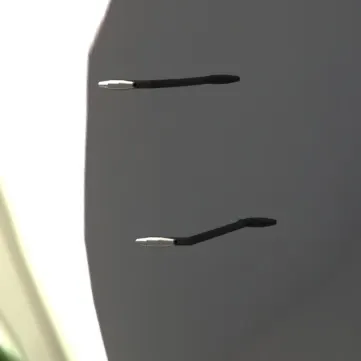
A pitot tube, also known as pitot probe, is a flow measurement device used to measure fluid flow velocity. It is widely used to determine the airspeed, mach number of an aircraft. The basic pitot tube consists of a tube pointing directly into the fluid flow. As this tube contains fluid, a pressure can be measured; the moving fluid is brought to rest (stagnates) as there is no outlet to allow flow to continue. This pressure is the stagnation pressure of the fluid, also known as the total pressure or (particularly in aviation) the pitot pressure.
5 - Cockpit windows :
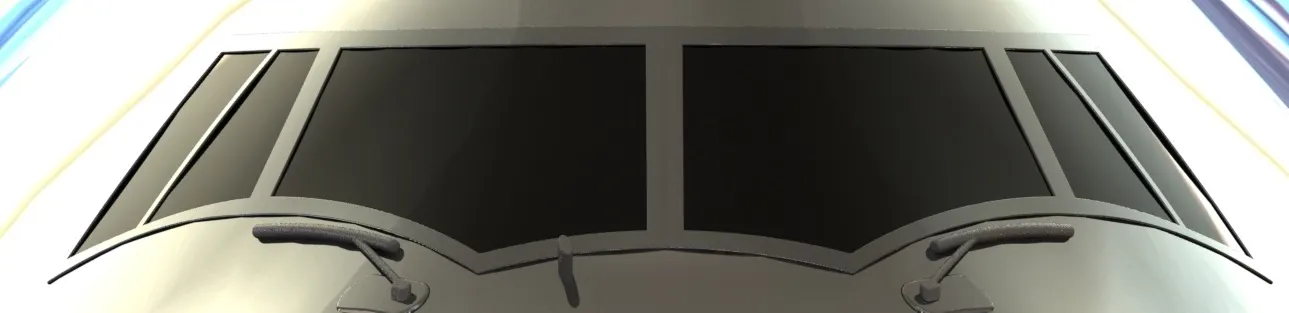
Cockpit windows may be equipped with a sun shield. Most cockpits have windows that can be opened when the aircraft is on the ground. Nearly all glass windows in large aircraft have an anti-reflective coating, and an internal heating element to melt ice. Smaller aircraft may be equipped with a transparent aircraft canopy.
6 - Windshield wipers :
Airplane windshield wiper systems include a basic system that consists of wiper blades that work by the electrical system on the plane. The system consists of the wiper itself, a wiper arm, and a wiper motor or converter.

7 - Passenger windows and Door :

8 – Hatches :
Hatches are used to evacuate the flight control area in case of an emergency – notably if the cockpit door is blocked.
9 - Lights and antennas :

10 – Auxiliary power units :
An auxiliary power unit (APU) is a device on a vehicle that provides energy for functions other than propulsion. They are commonly found on large aircraft. APUs can provide power through single- or three-phase systems. APU had three section – power section, load compressor section, gear box section.
11 - Vertical stabilizer :
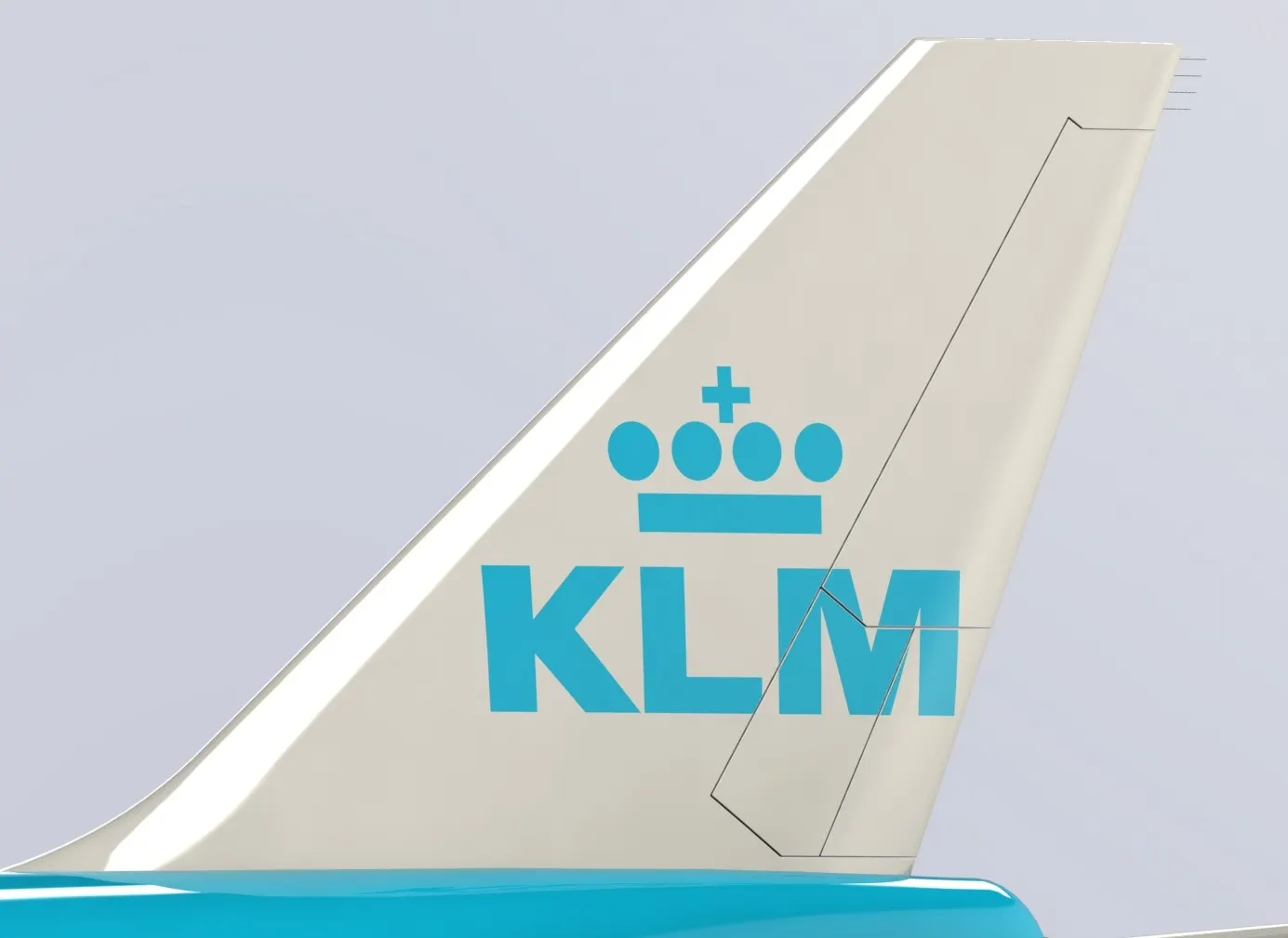
A vertical stabilizer, typically found on the aft end of the fuselage or body, and are intended to reduce aerodynamic side slip and provide direction stability. It is analogous to a skeg on boats and ships. On aircraft, vertical stabilizers generally point upwards. These are also known as the vertical tail, and are part of an aircraft's empennage. This upright mounting position has two major benefits: The drag of the stabilizer increases at speed, which creates a nose-up moment that helps to slow down the aircraft and prevent dangerous overspeed.
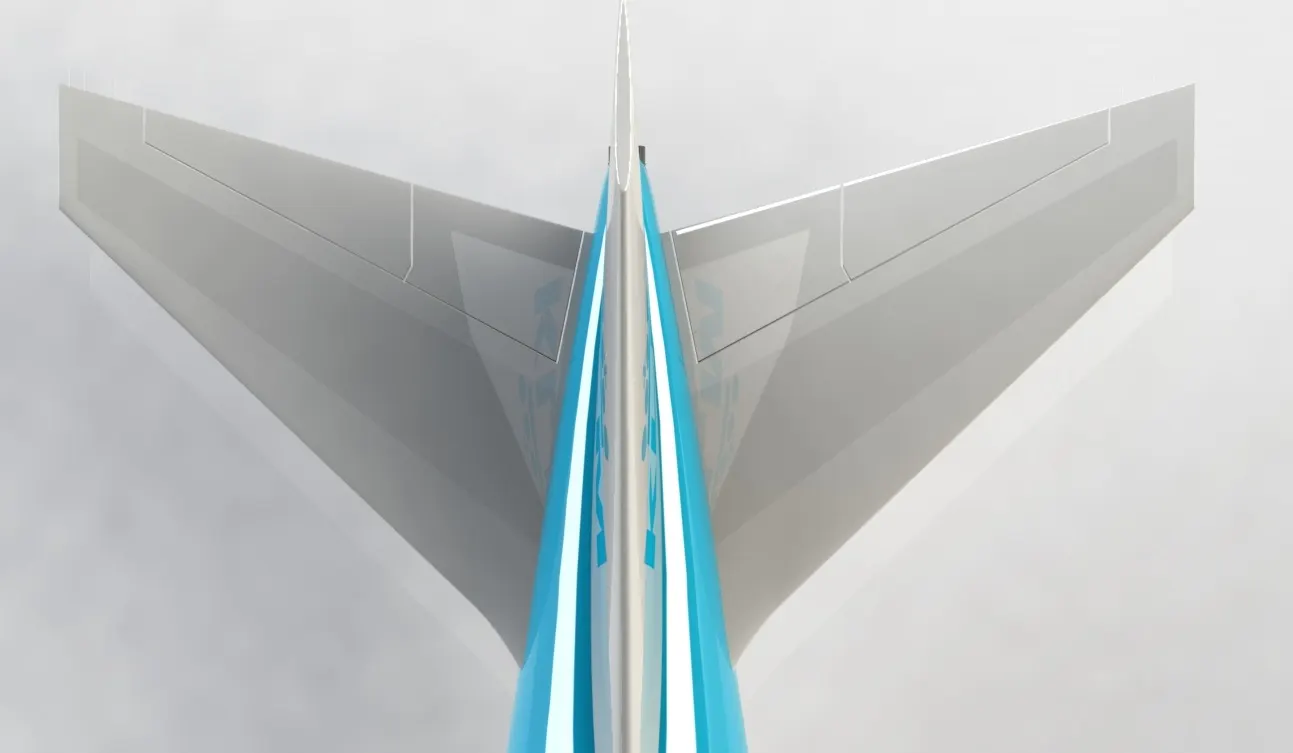
12 - Horizontal stabilizer :
A horizontal stabilizer is used to maintain the aircraft in longitudinal balance, or trim: it exerts a vertical force at a distance so the summation of pitch moments about the center of gravity is zero. The vertical force exerted by the stabilizer varies with flight conditions, in particular according to the aircraft lift coefficient and wing flaps deflection which both affect the position of the center of pressure, and with the position of the aircraft center of gravity (which changes with aircraft loading and fuel consumption). Another role of a horizontal stabilizer is to provide longitudinal static stability. Stability can be defined only when the vehicle is in trim; it refers to the tendency of the aircraft to return to the trimmed condition if it is disturbed. This maintains a constant aircraft attitude, with unchanging pitch angle relative to the airstream, without active input from the pilot.
13 – Wings :
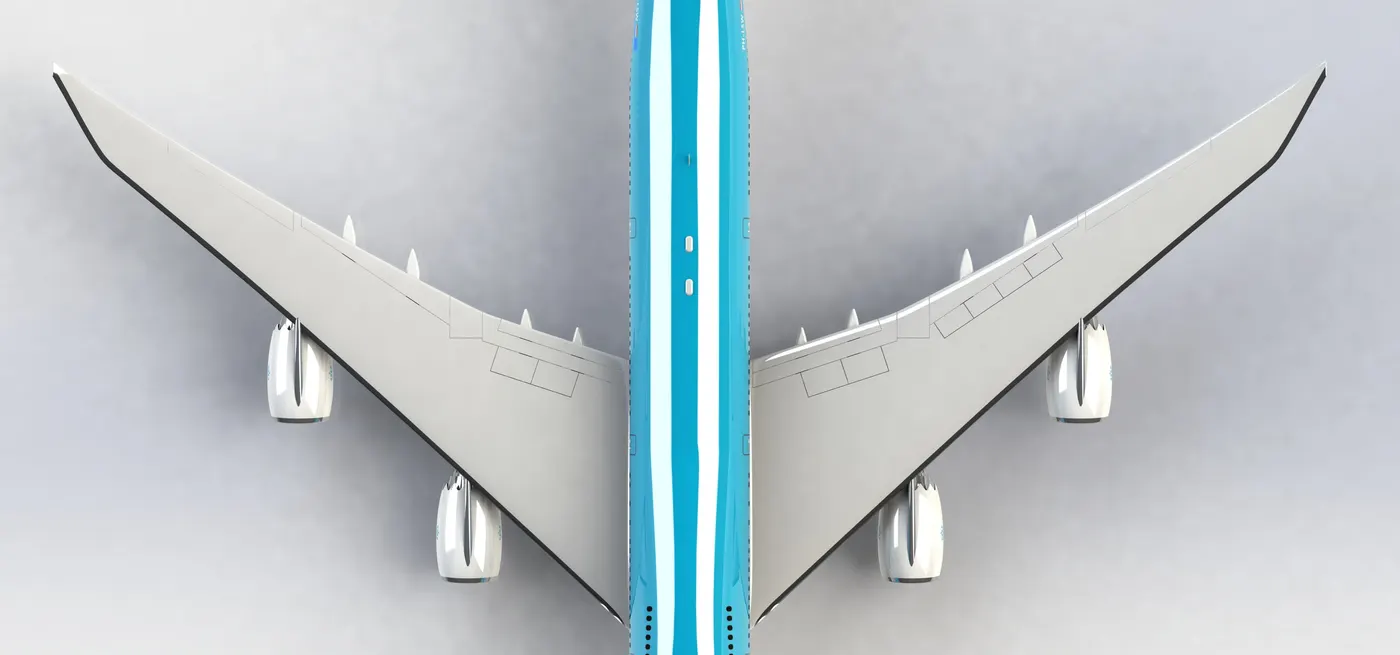
A wing is a type of fin that produces lift, while moving through air or some other fluid. As such, wings have streamlined cross-sections that are subject to aerodynamic forces and act as airfoils. A wing's aerodynamic efficiency is expressed as its lift-to-drag ratio. The lift a wing generates at a given speed and angle of attack can be one to two order of magnitude greater than the total drag on the wing. A high lift-to-drag ratio requires a significantly smaller thrust to propel the wings through the air at sufficient lift.
14 - Flaps and ailerons :
Flaps are movable panels on the trailing edge (back) of the wing used to increase lift at lower speeds. They are used during takeoff and landing. Ailerons are panels near the tip of the wing that move up and down, causing lift to increase (when they go down) or decrease (when they go up), allowing the pilot to roll the airplane to a desired bank angle or return from a bank to wings level.
15 - Flaps track fairings :
Most jet airliners have a cruising speed between Mach 0.8 and 0.85. For aircraft operating in the transonic regime (about Mach 0.8–1.2), wave drag can be minimized by having a cross-sectional area which changes smoothly along the length of the aircraft. This is known as the area rule. On subsonic aircraft such as jet airliners, this can be achieved by the addition of smooth pods on the trailing edges of the wings. These pods are known as anti-shock bodies, Küchemann Carrots, or flap track fairings, as they enclose the mechanisms for deploying the wing flaps.
16 – Landing gear :
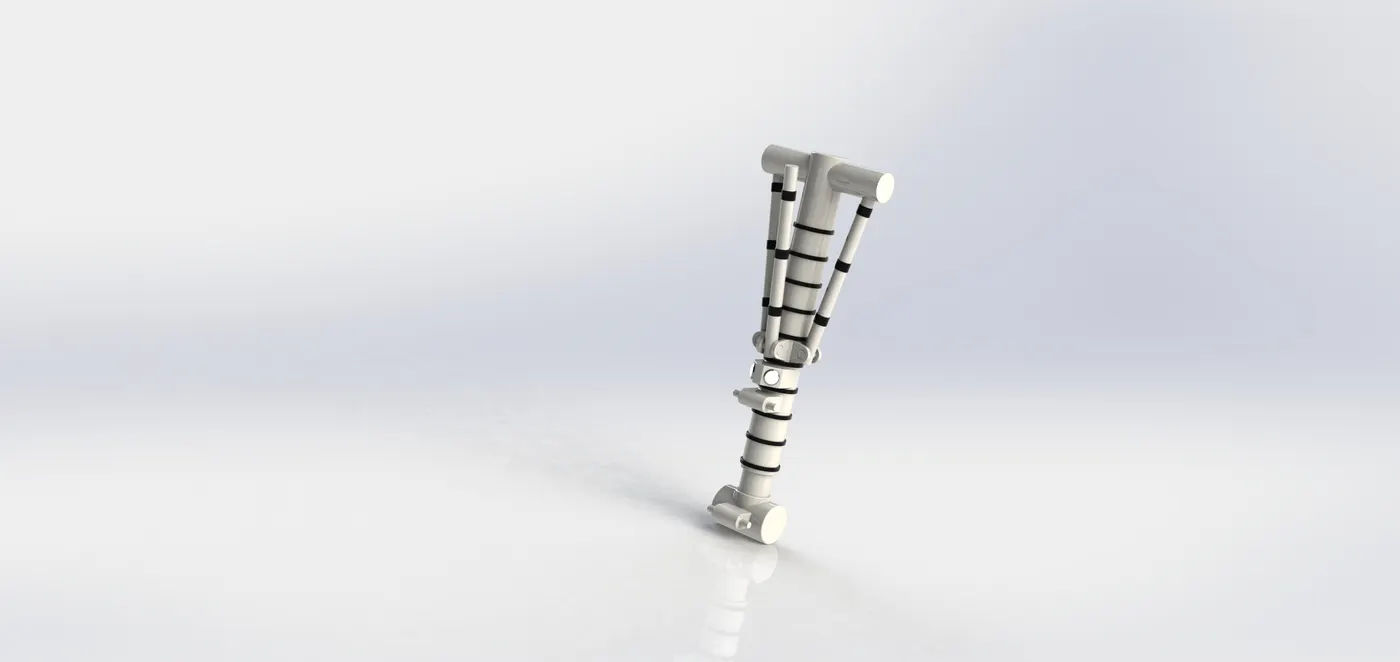
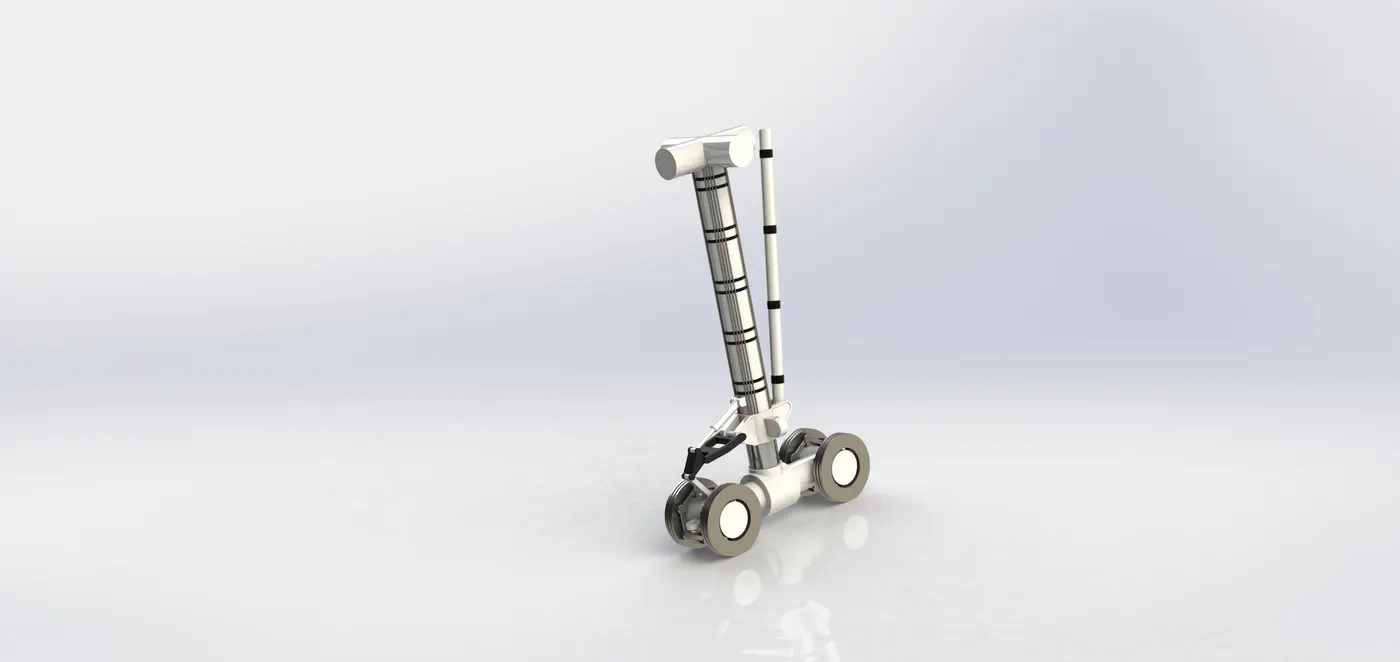
Landing gear is the undercarriage of an aircraft and may be used for either takeoff or landing. For aircraft it is generally needed for both. For aircraft, the landing gear supports the craft when it is not flying, allowing it to take off, land, and taxi without damage.
17 – Nose and Main gear :
the main and nose gear located fore and aft of the center of gravity under the fuselage with outriggers on the wings. This is used when there is no convenient location on either side of the fuselage to attach the main undercarriage or to store it when retracted.
18 – Nose and Main gear base :
19 – Nose and Main gear suspension arm :
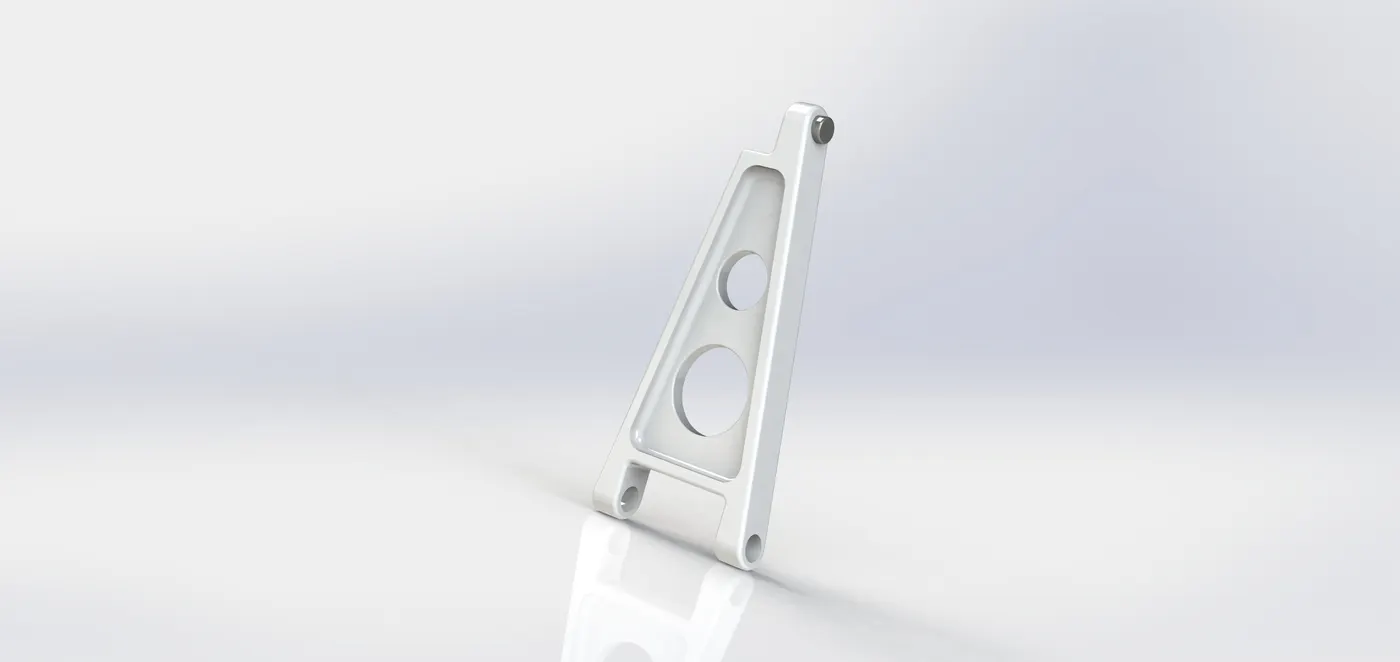
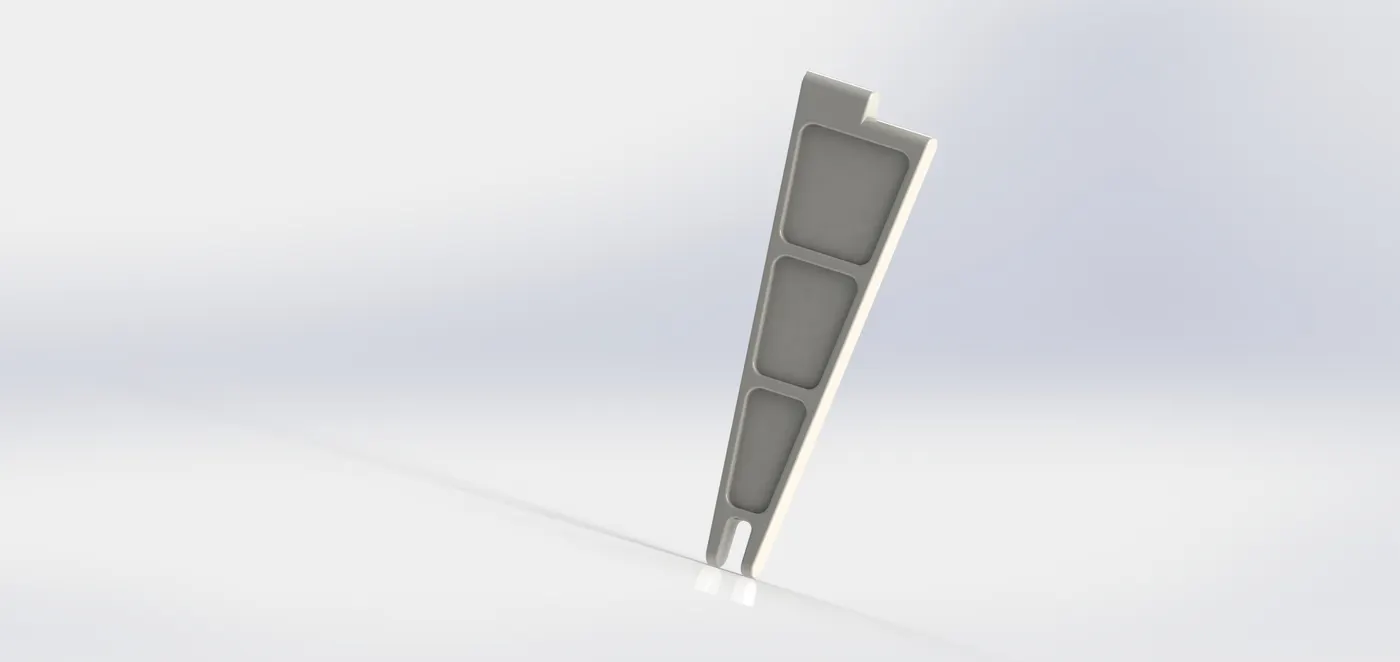
20 – Nose and Main Gear assembly :
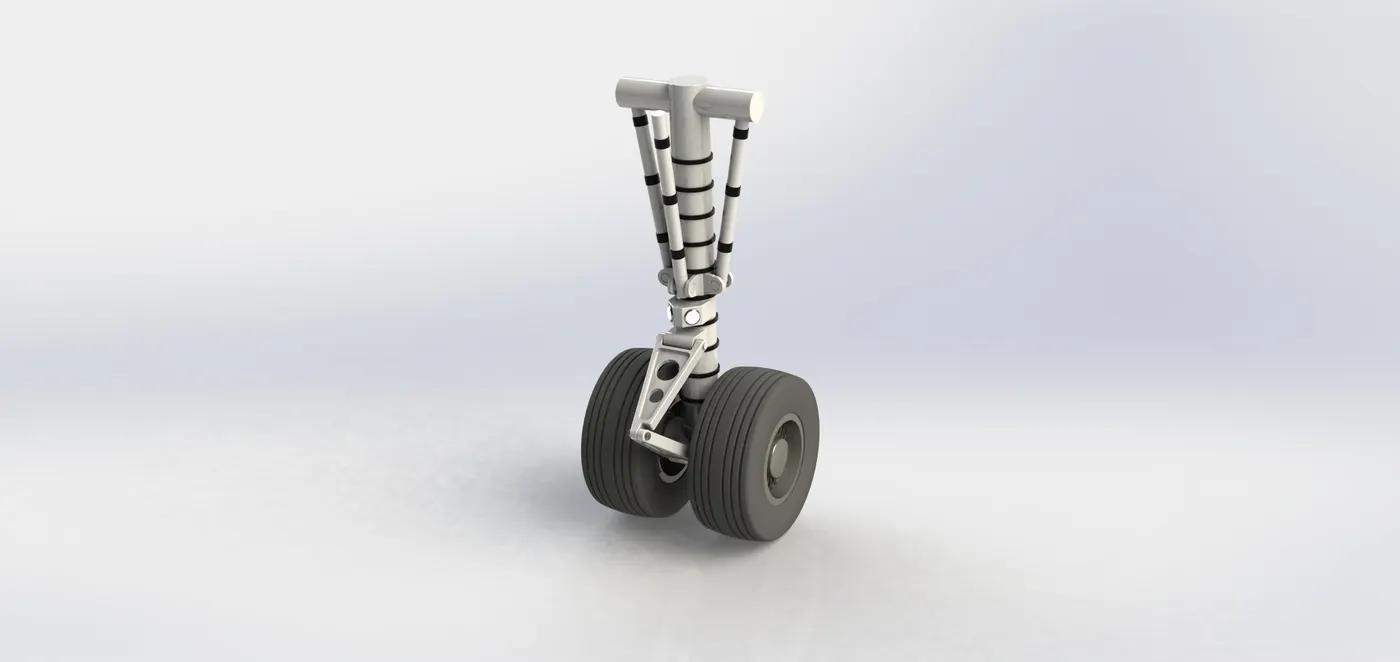
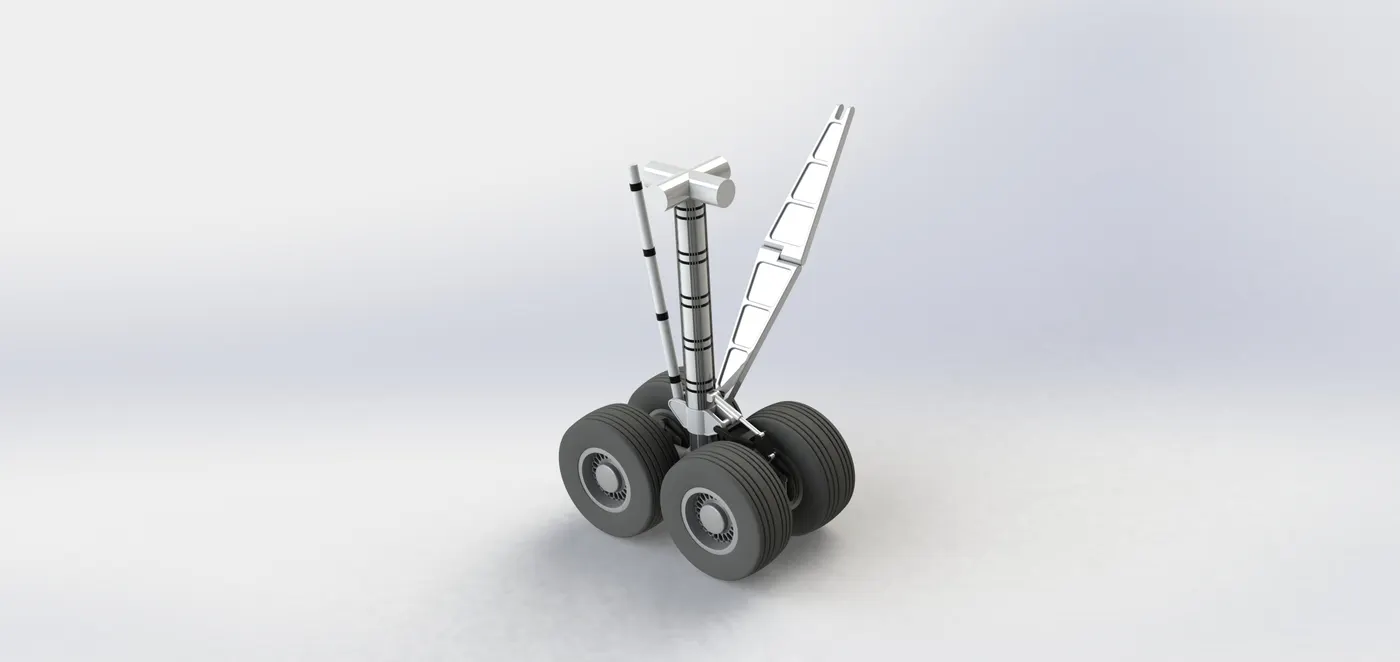
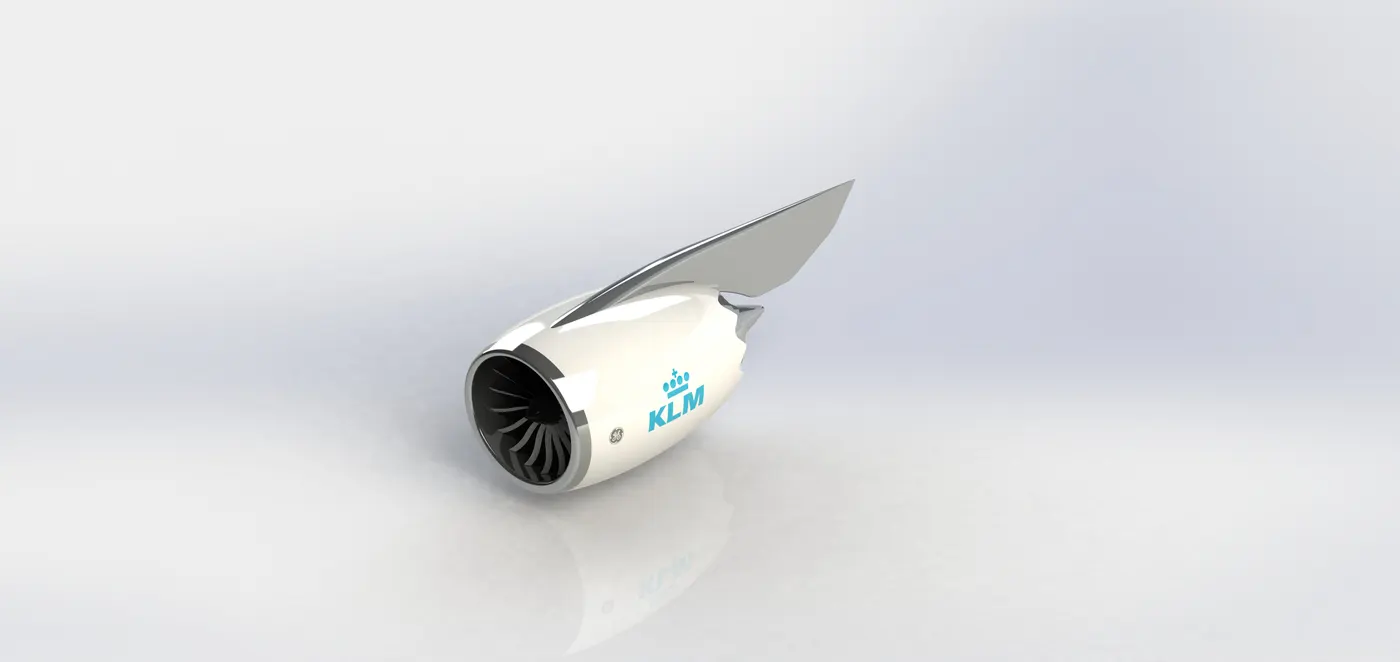
21 – Engine :
An aircraft engine, often referred to as an aero engine, is the power component of an aircraft propulsion system. engines move the airplane forward with a great force that is produced by a tremendous thrust and causes the plane to fly very fast.
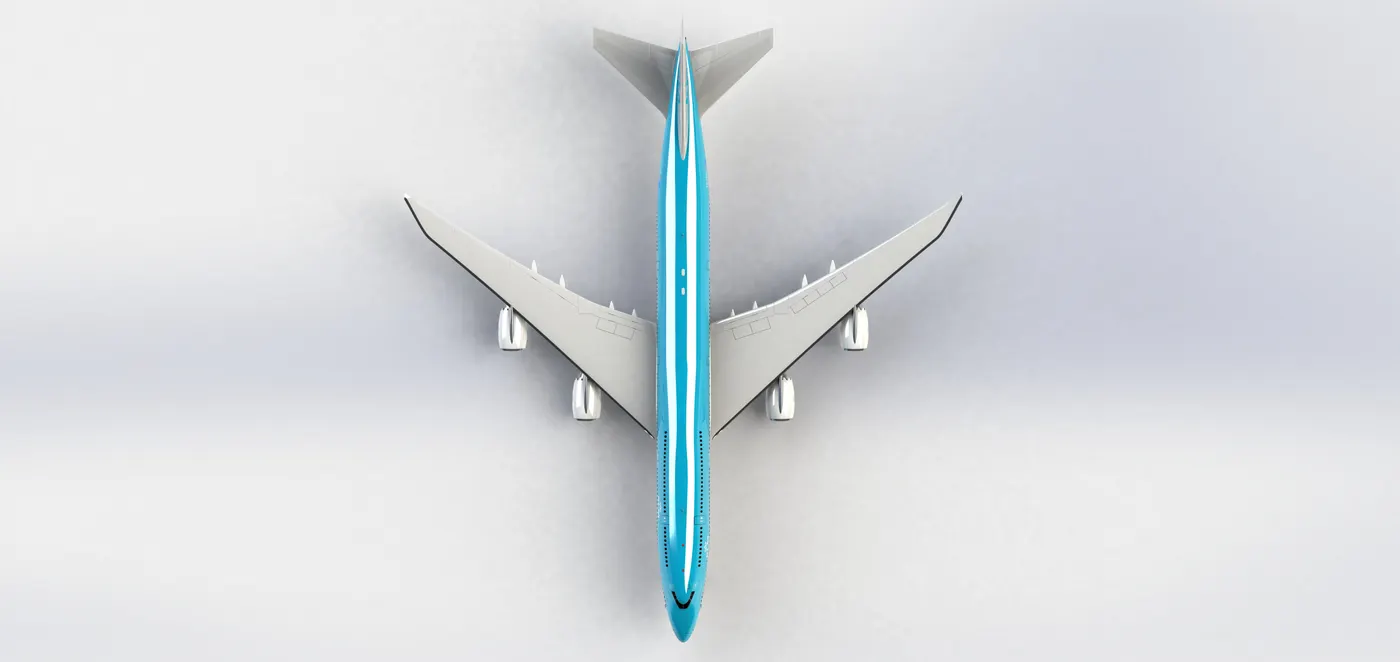
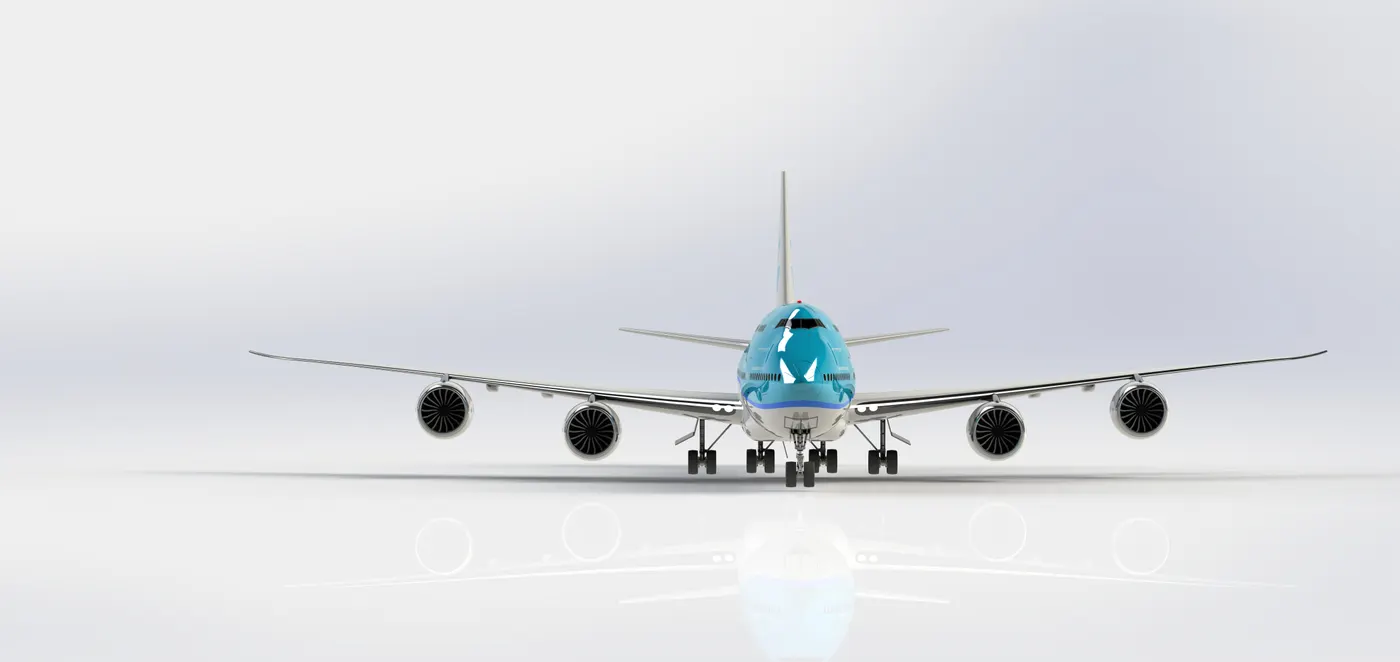
22 – Main Assembly : All parts are merged to create one model that is Boeing 747 – 8.
Top view :
Front view :
Side view :