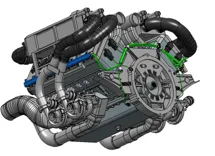
Wiring Harness on Engine
This project deals with the design of the wiring harness of the engine. Here, the students will perform wiring harness routing, flattening and 2D drawing creation for the Engine mo…
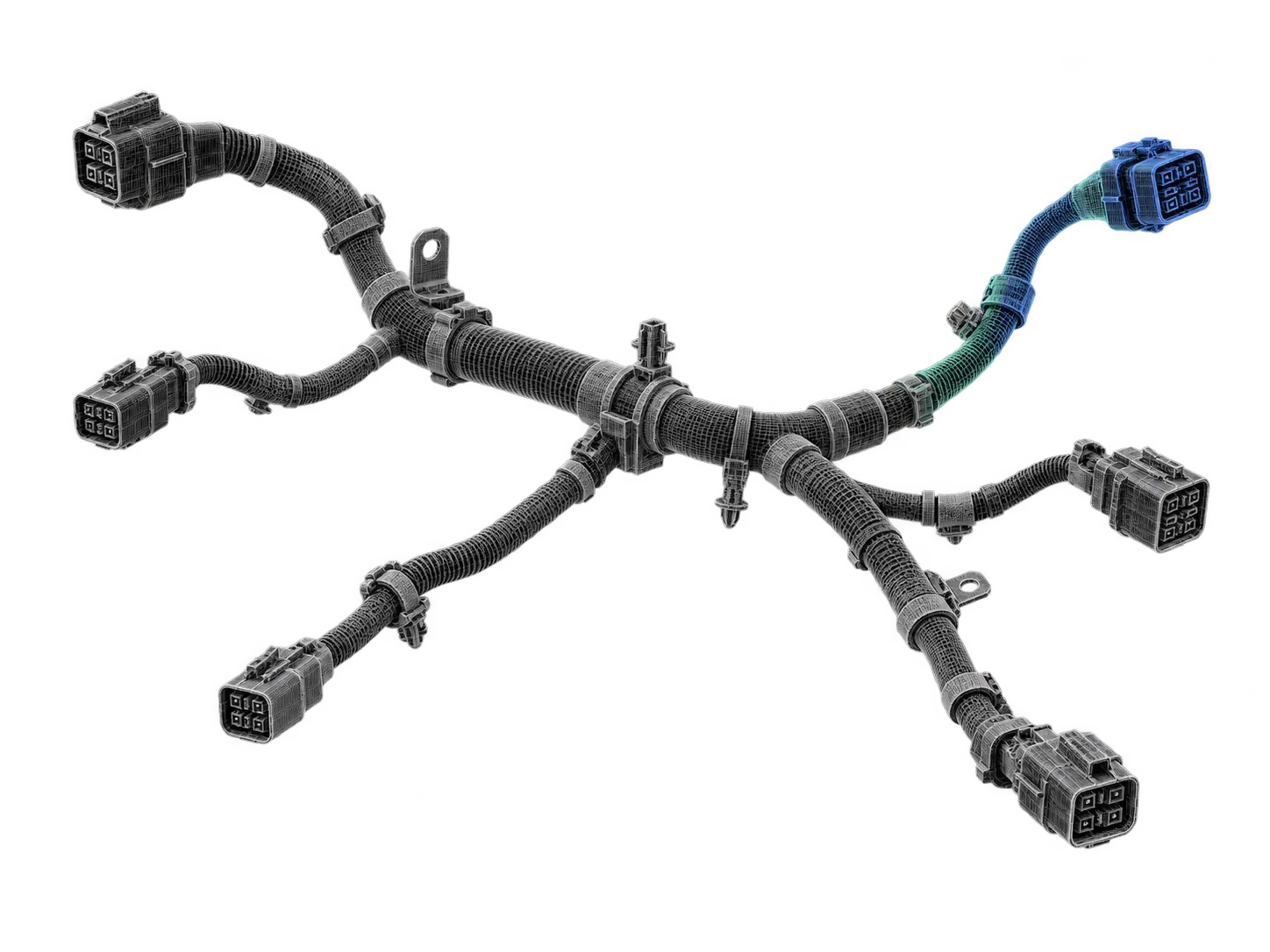
A comprehensive course on Introduction to Automotive Wiring Harness using CATIA-V5. This course is highly suited for beginners
Automotive Wiring Harness using CATIA V5 is an online course from Skill-Lync: 12 weeks, 19 hours of content and 2 industry projects.
1 h 12 min of this course's own recorded sessions, with transcripts, on Grow by Skill-Lync:
Our projects are designed by experts in the industry to reflect industry standards. By working through our projects, Learners will gain a practical understanding of what they will take on at a larger-scale in the industry. In total, there are 2 Projects that are available in this program.
This project deals with the design of the wiring harness of the engine. Here, the students will perform wiring harness routing, flattening and 2D drawing creation for the Engine mo…
This project deals with the design of the wiring harness on the car body. Here, the students will perform wiring harness routing, flattening and 2D drawing creation.
Video stories from learners of related mechanical programs, from Skill-Lync's YouTube channel.
by the Skill-Lync team
A wiring harness design engineer turns a vehicle's electrical schematic into a harness that can be built and fitted: splitting it into separate harnesses (the topology), routing every bundle in 3D through the body and engine bay, choosing connectors, terminals, clips and coverings, and releasing a flattened 2D drawing the supplier builds it from.
In Skill-Lync's course the instructor lays the flow out as logical architecture, then the electrical schematic (pin-to-pin connectivity, wire gauges and colours), then the physical architecture (where each component sits), harness topology and concept routing, 3D routing and packaging, and finally the harness drawing. The schematic supplies the logical data; the 3D routing supplies lengths, branch points and dimensions. The first three lessons are free to watch on Grow.
Harness work uses two kinds of software. Routing bundles through the 3D vehicle model is done in CAD tools with electrical modules, such as CATIA V5, Siemens NX, Creo and SOLIDWORKS. Schematics are drawn in electrical CAD such as Zuken E3.series, Siemens Capital or AutoCAD Electrical. This course teaches the CATIA V5 route.
Inside CATIA V5 you work in the electrical workbenches the syllabus lists: electrical part design (defining connectors, clips, backshells and coverings as electrical parts), harness assembly and installation (geometrical bundles, routing on external references, splices, bundle continuity checks) and flattening (turning the 3D harness into a 2D drawing). If you also want AutoCAD Electrical, see the comparison below.
Routing a harness is mostly about protecting it. The last two modules of this course cover clearance management, water ingress protection and IP ratings, thermal protection near hot parts, chafing and vibration protection, routing on or near moving parts such as the engine and wheels, bend rules for harnesses and battery cables, and parking interconnection connectors.
You apply them in two projects: routing, flattening and drawing the harness for an engine model, then for a car body. The whole course is 44 recorded sessions, about 19 hours of video.
Both. Harness engineers read schematics and work with wire sizes, fuses and terminals, which is electrical work, and they route bundles, choose clips and check clearances in 3D CAD, which is mechanical design. This course starts from the basics of a vehicle's electrical distribution system, so mechanical, automobile and electrical students can all take it; some CAD practice helps.
A few so far, so treat this as a small sample, not a promise. As of 16 Nov 2026, Skill-Lync's placement records (n = 3,905) list 2 learners hired with the title wiring harness engineer: at Ashok Leyland (2023, ₹3.0 LPA) and Patel Engineering (2024, ₹5.5 LPA), both from the electric and hybrid electric vehicle PG programs.
For the wider picture, see design engineer salaries from Skill-Lync placements and 5 wiring harness job roles for engineers.
| Course | Length | Projects | Tools | Fee |
|---|---|---|---|---|
| Automotive Wiring Harness using CATIA V5 (this page)3D routing, packaging and flattening in CATIA V5, 2 projects | 12 weeks, 19 h | 2 | CATIA V5 | ₹40,000 |
| Electrical wiring harness using Catia V5 & Electrical AutoCADCATIA V5 with AutoCAD Electrical for the schematic side | 10 h | - | - | ₹40,000 |
| PG Program in Electric Vehicle Design & DevelopmentHas an EV System and Wiring Design track | 48 weeks, 513 h | 59 | MATLAB, Simulink, SocketCAN, LINUX, C++, ANSYS Maxwell, Altium Designer, LTspice, C Programming, STM32CubeIDE, AVR ATmega328, SimulIDE, Microchip Studio, Embedded Linux, Mbed Simulator, Arm Cortex M4 - STM32, CAN Protocol, LRDA Tool Suite, CATIA V5 | ₹2,75,000 |
| PG Program in Automotive Design using CATIA V5Includes this course with plastic, sheet metal, BIW fixture, lighting and seating design | 24 weeks, 118 h | 18 | CATIA V5, Siemens NX CAD | ₹2,75,000 |
Lengths, projects and fees are taken from each course page on 16 Nov 2026; fees are the Premium plan in INR, including all charges.
Become job ready with our comprehensive industry focused curriculum for freshers & early career professionals
Students and graduates of mechanical, automobile and electrical engineering. The course starts from the basics of the vehicle electrical distribution system, so no harness experience is needed.
Yes, it is 100% online: recorded sessions on Skill-Lync's learning platform plus live sessions for queries.
It is a 12-week course with 10 modules and about 19 hours of recorded sessions.
The Premium plan is ₹40,000 including all charges. It gives 1 year of access to Skill-Lync's learning management system, live individual and group sessions to resolve queries and discuss progress, and a personalised page to showcase your projects and certificate.
Yes. Everyone who completes the course gets a Skill-Lync course completion certificate, and the top 5% of scorers also get a merit certificate.
Through the forum and email, and in the live individual and group sessions included in the Premium plan.
Industry experts in automotive electrical distribution and harness design. Skill-Lync reviews the curriculum with automotive companies such as Tata Elxsi and Mahindra.
Yes, two: harness routing, flattening and 2D drawing creation for an engine model, and the same for a car body.
A counsellor will walk you through the syllabus, projects and fee options — and tell you honestly if another course suits you better.