Automotive Lighting Design using CATIA V5
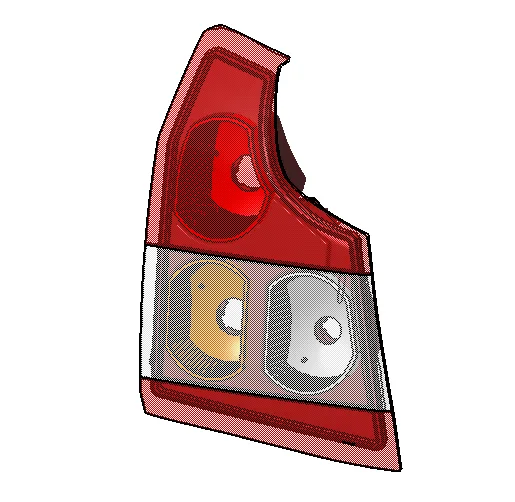
Tail Lamp Design 1
This project is about modelling the tail lamp of a vehicle. Here, the students will create a complete tail lamp assembly using the given styling data.
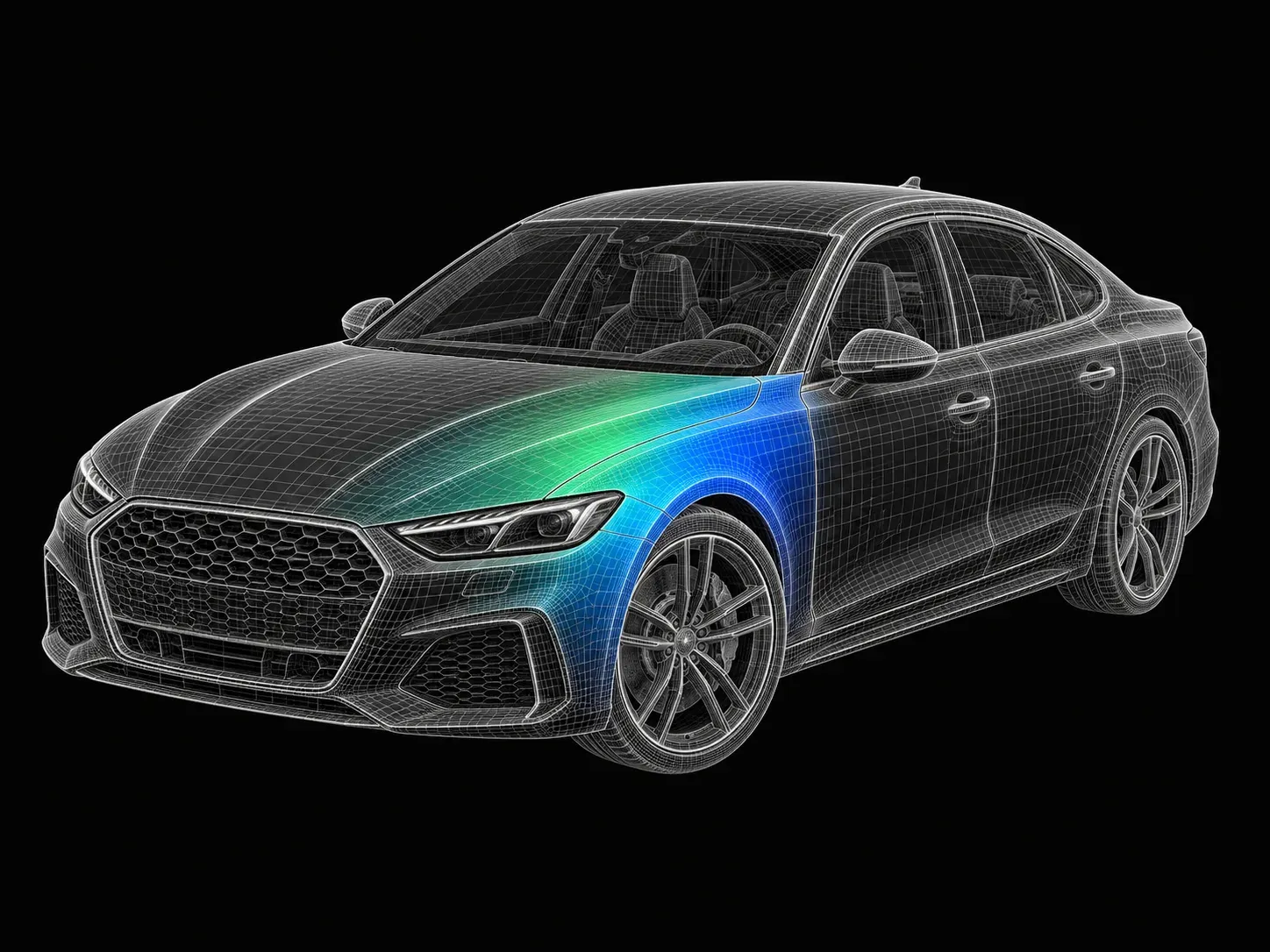
A comprehensive program on Passenger Car Design using a wide range of design tools. This program is highly suited for beginners
The Post Graduate Program in Complete Passenger Car Design & Product Development is an online PG program from Skill-Lync: 24 weeks, 122 hours of content, 6 courses and 19 industry projects.
Compare all 21 Skill-Lync automotive design courses · Compare all 23 Skill-Lync CATIA courses · Compare all 12 Skill-Lync Siemens NX courses · Best Autodesk Alias course in India: other providers compared · Best automotive design course in India: other providers compared
Our projects are designed by experts in the industry to reflect industry standards. By working through our projects, Learners will gain a practical understanding of what they will take on at a larger-scale in the industry. In total, there are 19 Projects that are available in this program.
This project is about modelling the tail lamp of a vehicle. Here, the students will create a complete tail lamp assembly using the given styling data.
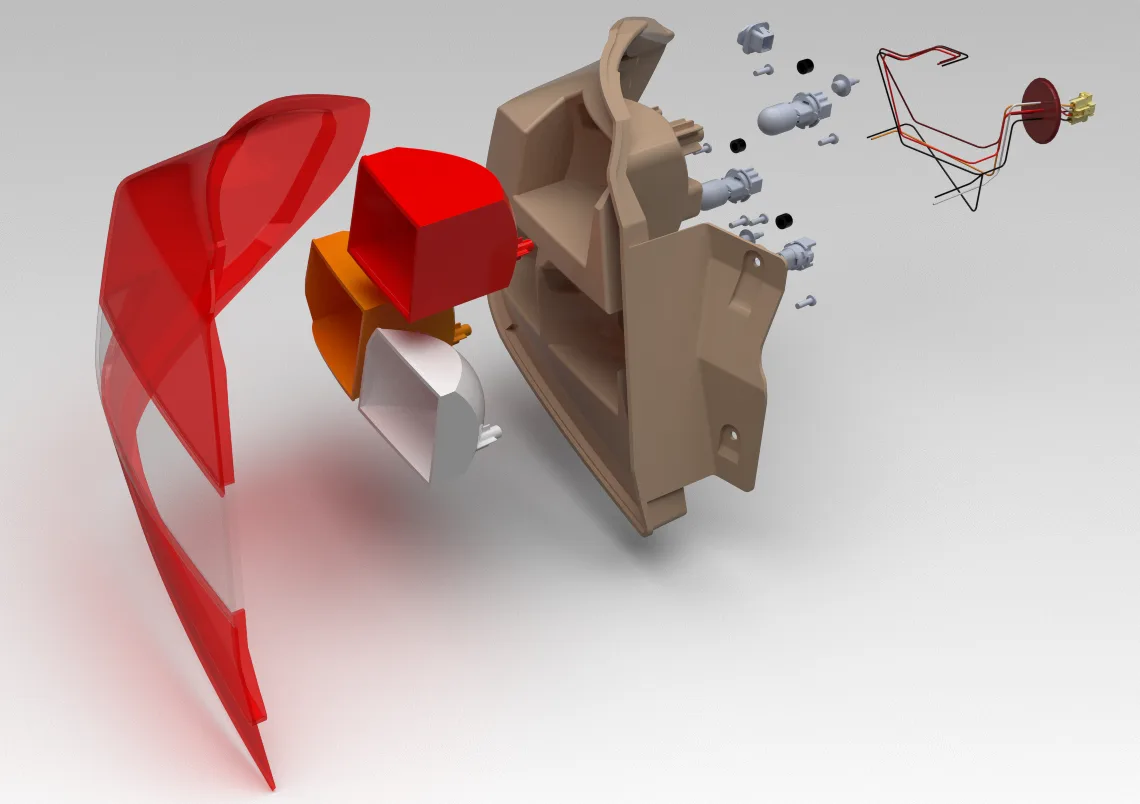
This project also deals with the modelling of the tail lamp. Here, the students will create a complete tail lamp using a hot plate welding section for the given Styling data.
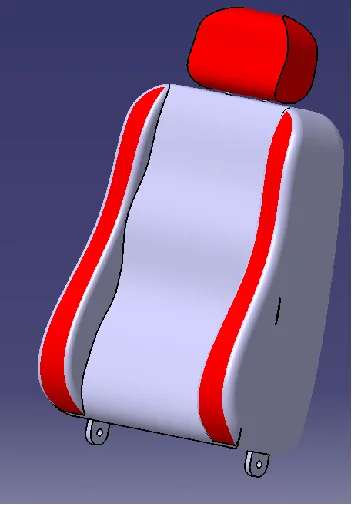
In this project, you will design a parametric front row back foam. Use Underbuild / Overbuild Technique and foam terminology standards for making the parts.
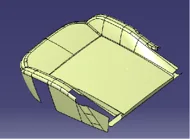
This project deals with the design of front row cushion foam. Here, the students will design a parametric CAD model from the Input Class A and the H-Point given using the Foam desi…
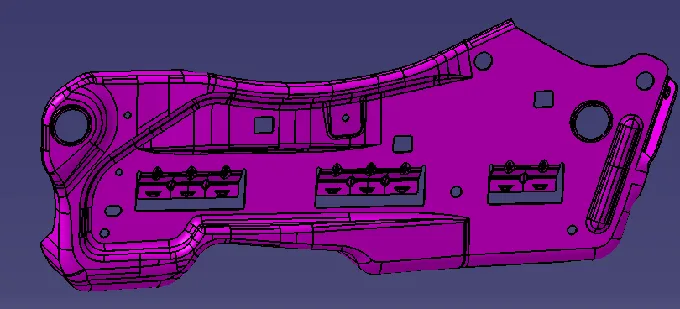
In this project, the students will remaster the complete solid of the side structure for the front seat. They should apply the best practices learnt in the course for remastering.
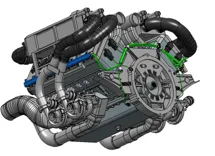
This project deals with the design of the wiring harness of the engine. Here, the students will perform wiring harness routing, flattening and 2D drawing creation for the Engine mo…
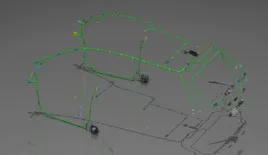
This project deals with the design of the wiring harness on the car body. Here, the students will perform wiring harness routing, flattening and 2D drawing creation.
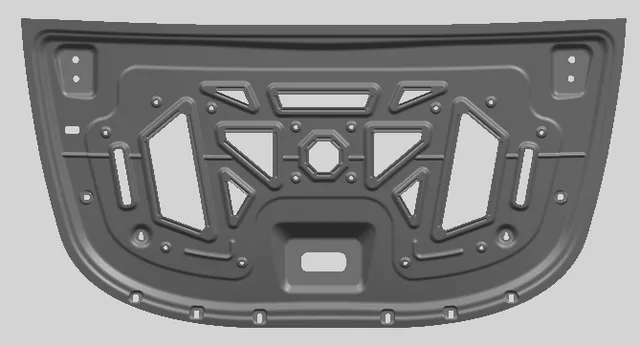
In this particular project, you will be working on designing the inner panel of the hood, according to EURO NCAP standards.
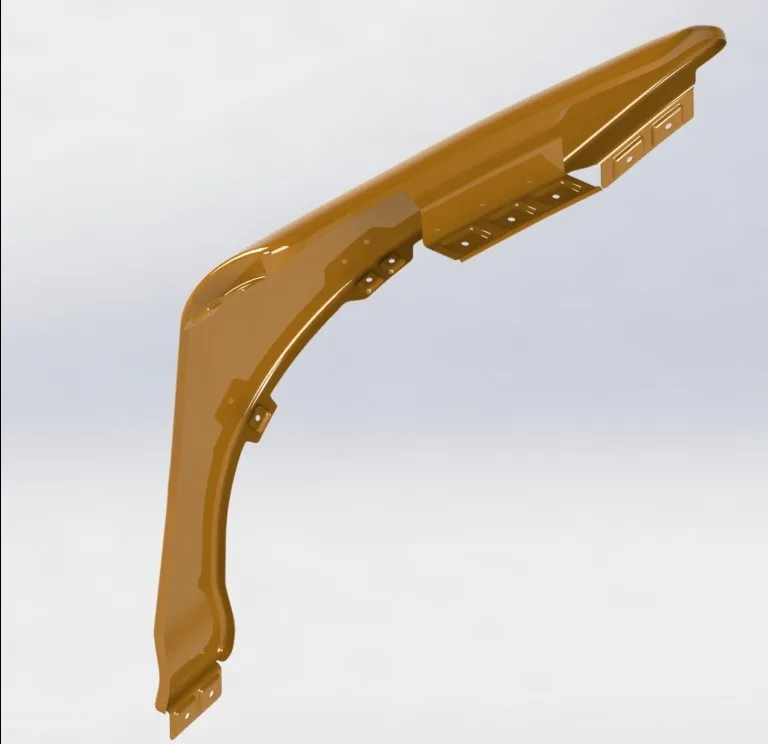
In this particular project, you will be working on designing the Fender, according to EURO NCAP standards.
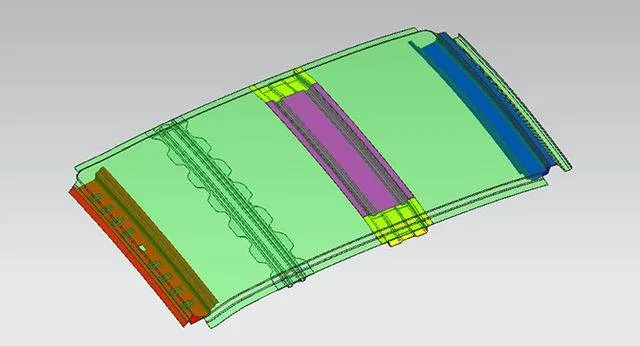
In this particular project, you will design a complete roof assembly with all the necessary reinforcements using automotive standards.
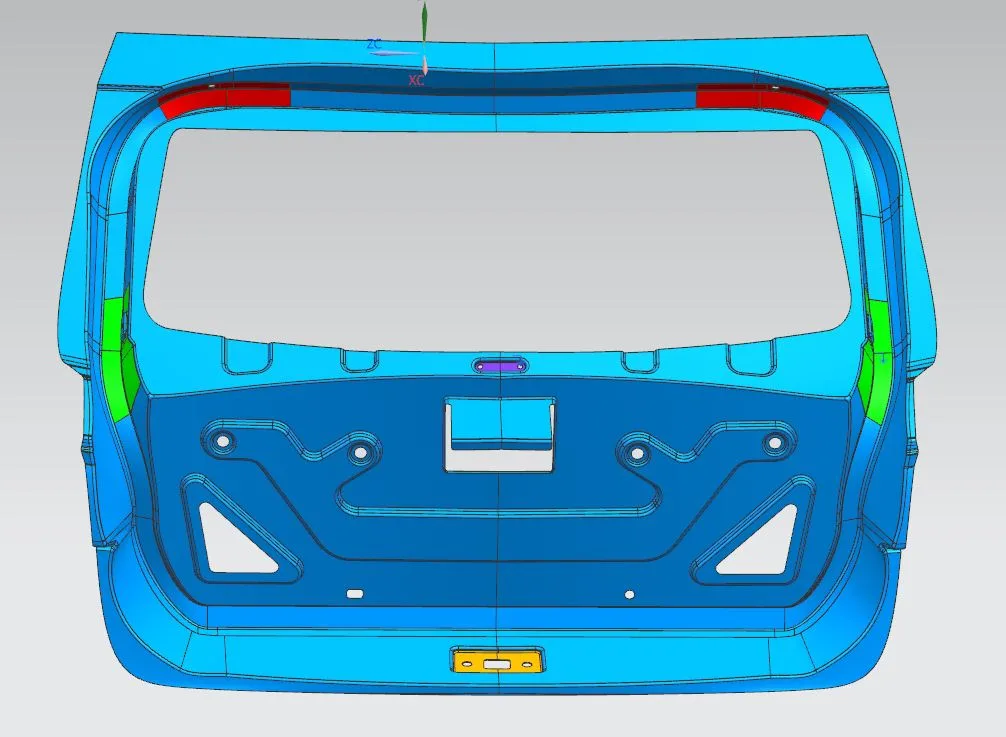
In this project, you will design and develop the complete Tailgate assembly using the given styling data.
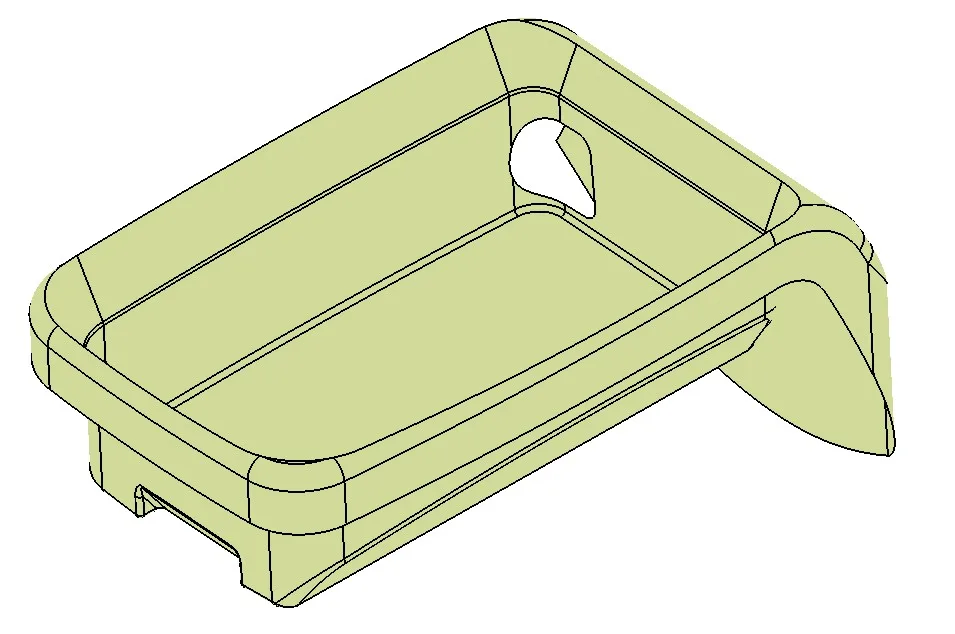
In this project, you will design a coin holder plastic trim part from the given Class-A surface. Check if the product is manufacturable.
+ 7 more projects in the full syllabus
Video stories from learners of related mechanical programs, from Skill-Lync's YouTube channel.
by the Skill-Lync team
It is a 24 week online program with 122 hours, 6 courses and 19 projects, in Autodesk Alias, CATIA V5 and Siemens NX CAD. Each course takes one system of a passenger car and teaches how its parts are designed. It does not cover engines, chassis or crash simulation.
Think of a car as a set of systems that different design teams own. The six courses are those teams.
The first section of the sheet metal course is called Vehicle development cycle. It covers the stages a car goes through before it reaches the customer, and the three years of development activity before that. For the same stages in more depth, see BIW Design and Development Part 1. For single-course depth, see plastic design, lighting design and seating design.
They tell you how steep a ramp a car can drive onto, off, or over before its body touches. Approach angle is at the front, departure angle at the rear, breakover angle is between the wheels. They come from packaging choices: how far the bumper sticks out, how high its lowest edge sits, how long the wheelbase is.
US federal rules define them with a tangent, a line that just touches a circle at one point. The approach angle is the angle between the ground and a line tangent to the front tyre that also touches the underside of the car ahead of the tyre (49 CFR 523.2). Departure is the same at the rear. Breakover is the supplement of the largest angle formed by two tangent lines, one to the front tyre and one to the rear, meeting at a point under the car. With equal tyres that is twice the angle of one such line.
Take a tyre of radius with its centre at height . Take a body point ahead of the axle and above the ground. The line through it that just touches the tyre makes angle with the ground. That happens when the distance from the axle centre to the line equals :
There is no handy closed form, so the code below searches for . For breakover use (half the wheelbase) and = floor height, then double the angle.
from math import sin, cos, radians, degrees

def ramp(R, d, h):
    """Angle of the line through a body point (d ahead of the axle, h high)
    that just touches a tyre of radius R: (R-h)cos(a) + d sin(a) = R"""
    lo, hi = 0.0, 89.0
    for _ in range(60):
        a = (lo + hi) / 2
        if (R - h) * cos(radians(a)) + d * sin(radians(a)) < R:
            lo = a
        else:
            hi = a
    return a

R = 0.30                               # loaded tyre radius, m (assumed)
print(f"approach, lip 0.85 m ahead, 0.25 m high: {ramp(R, 0.85, 0.25):.1f} deg")
print(f"approach, lip 0.75 m ahead, 0.25 m high: {ramp(R, 0.75, 0.25):.1f} deg")
L = 2.45                               # wheelbase, m (assumed)
print(f"breakover, floor 0.15 m high: {2 * ramp(R, L / 2, 0.15):.1f} deg")
print(f"breakover, floor 0.17 m high: {2 * ramp(R, L / 2, 0.17):.1f} deg")
It prints:
approach, lip 0.85 m ahead, 0.25 m high: 17.3 deg
approach, lip 0.75 m ahead, 0.25 m high: 19.7 deg
breakover, floor 0.15 m high: 14.2 deg
breakover, floor 0.17 m high: 16.1 deg
Moving the bumper lip 0.10 m closer to the axle raises the approach angle from 17.3 to 19.7 degrees. Raising the floor by 20 mm raises the breakover angle from 14.2 to 16.1 degrees. A rough shortcut, degrees, ignores the tyre. It lands close here because the tyre is small next to 0.85 m.
The catch: every value here is assumed for a small hatchback and is not any maker’s car. The lowest point under a real car is often an exhaust or a subframe rather than the bumper, and the tyre radius changes with load. The free lesson Class A surfacing of an SUV looks at competitors and vehicle packages before the design starts.
Continuity says how smoothly two curves or surfaces meet. G0: the edges touch. G1: they also point the same way. G2: they also bend by the same amount. Class A surfaces are the visible outer panels, and G2 across their joins keeps reflections flowing instead of kinking. The Alias course covers continuities in Week 3 and Technical Surfacing in Week 9.
Autodesk’s Alias documentation says two G1 curves have the same tangent at the join but may have very different apparent speeds. That speed is curvature. A circle of radius has curvature , and a straight line has zero. Think of driving along the edge: curvature is how far the steering wheel is turned. At a G1 join the direction matches, but the wheel can jump from one angle to another.
def k(radius_mm):                      # curvature = 1 / radius
    return 0.0 if radius_mm is None else 1 / radius_mm

joins = [("flat panel to R80 fillet", None, 80),
         ("R120 to R60, tangent", 120, 60),
         ("R100 to R100, tangent", 100, 100)]
for name, r1, r2 in joins:
    jump = abs(k(r2) - k(r1))
    print(f"{name}: curvature {k(r1):.4f} -> {k(r2):.4f} per mm, jump {jump:.4f}")
It prints:
flat panel to R80 fillet: curvature 0.0000 -> 0.0125 per mm, jump 0.0125
R120 to R60, tangent: curvature 0.0083 -> 0.0167 per mm, jump 0.0083
R100 to R100, tangent: curvature 0.0100 -> 0.0100 per mm, jump 0.0000
A flat door panel blending into an 80 mm fillet is G1 at best. Curvature jumps from 0 to per mm, and highlights bend at that line. Two tangent arcs of radius 120 and 60 mm are also only G1: the jump is per mm. Two arcs of radius 100 mm bending the same way have no jump, so they are G2.
The catch: matching curvature is checked to a tolerance, not as yes or no, and each carmaker sets its own. This page gives no tolerance values. Alias also checks continuity with a curvature comb, not only with numbers.
It is the six-course body, trim, lamp, seat and wiring set with Class A surfacing included, at 122 hours over 24 weeks. The nearest programs change one or two courses. Pick by which car system you want to be hired for.
For a side-by-side with other providers, see the automotive design course comparison. For every automotive design course in one place, see the automotive design hub.
No prior CAD is stated as a requirement. The program page calls it highly suited for beginners, and the FAQ says any student with a technical background can enrol. The design courses teach the software from the start.
The plastic course goes from Introduction to CATIA through the Sketcher and Part Design workbenches before it reaches surfaces and moulds. The Class A course begins with Digital Design Foundation and Curves Introduction. The wiring harness course starts with the vehicle electrical distribution system.
This program has no hand-sketching course. Automotive Sketching is a separate 23 hour course that sits in the longer CAD program above. What you need is comfort with engineering drawings and basic geometry.
Mostly to CAD design engineer roles at engineering-services firms, but the sample for this program is thin. As of 22 Nov 2026, 32 of Skill-Lync’s 3,905 placement records name this program. This is a self-reported learner sample, mostly 2021 to 2023 starting offers, not a promise.
The catch: salaries are starting offers, and the job-title cut mostly counts learners of other programs, such as the CAD program. Roles listed on the program page, such as plastic design engineer and wiring harness designer, do not all appear in our records.
| Course | Length | Projects | Tools | Fee |
|---|---|---|---|---|
| PG Program in Complete Passenger Car Design & Product Development (this page)6 car-system courses, 122 h, 24 weeks | 24 weeks, 122 h | 19 | Autodesk Alias, CATIA V5, Siemens NX CAD | ₹2,75,000 |
| PG Program in CADAdds Automotive Sketching; 203 h, 48 weeks | 48 weeks, 203 h | 32 | CATIA V5, Autodesk Alias, Siemens NX CAD, SOLIDWORKS | ₹2,75,000 |
| PG Program in Automotive Design using CATIA V5CATIA only, adds BIW fixture; 118 h | 24 weeks, 118 h | 18 | CATIA V5, Siemens NX CAD | ₹2,75,000 |
| PG Program in BIW Fixture and Plastic DesignTooling and fixtures focus; 82 h | 24 weeks, 82 h | 18 | CATIA V5, Siemens NX CAD, SOLIDWORKS | ₹2,75,000 |
| Post Graduate Program on Automotive BIW Design and DevelopmentBIW design plus crash analysis; 92 h | 24 weeks, 92 h | 11 | CATIA V5, HyperMesh, Radioss, Siemens NX CAD | ₹2,75,000 |
| Automotive Class A surfacing using ALIASAlias surfacing alone; 21 h, 12 weeks | 12 weeks, 21 h | 3 | Autodesk Alias | ₹40,000 |
Lengths, projects and fees are taken from each course page on 22 Nov 2026; fees are the Premium plan in INR, including all charges.
Become job ready with our comprehensive industry focused curriculum for freshers & early career professionals
The program runs 24 weeks, about six months, online. It has 6 courses and 122 hours of course content.
It puts the design of a passenger car’s main systems in one place: Class A surfaces in Autodesk Alias, then sheet metal, plastic trim, lamps, seats and wiring harness in CATIA V5 and Siemens NX CAD, with 19 projects. It teaches how these parts are designed. It does not teach styling a whole car from a blank page, or engine and chassis design.
Yes. There are 19 projects across the 6 courses, for example Tail Lamp Design 1, Designing of Hood and Technical Surfacing of Kia Sportage.
Any student with a technical background can enrol for this car design course.
Yes, Skill-Lync provides placement assistance, which means help with your resume and mock interviews. It is not a job guarantee.
Yes, students will get a merit certificate for these online car design courses.
Yes, students always get technical assistance for the car design online course at Skill-Lync.
A counsellor will walk you through the syllabus, projects and fee options — and tell you honestly if another course suits you better.