DussehraFestive scholarship on Skill-Lync courses, this week onlyFestive scholarship is openOffer ends Wed, 21 Oct, 11:59 pm IST.
Dussehra 2026

Start your next chapter this Dussehra

Tell us where you want to work. A counsellor will match you to the right course and confirm the festive scholarship you qualify for.

  • Festive scholarship on course fees, confirmed on your call
  • Free 20-minute call to map the right course to your goal
  • Real industry projects and placement support with every course

Offer ends Wed, 21 Oct, 11:59 pm IST

3,905 engineers placed since 2019 · 1,277 hiring companies

By submitting you agree to our Terms and Privacy Policy.

You're on the list

Browse courses
Mechanical · Course

Basics of FEA - Explicit and Implicit FEA

Get trained by industry-experts in FEA classes designed to help engineers gain a basic understanding of FEA using practical examples. Enroll in an FEA course with modules focused on helping engineers develop industry-oriented training with our 3 projects simulating real-world problems.

Duration
12 weeks
Content
23 hours
Projects
3
Mode
Online
Overview

What you'll
be able to do.

  • The objective of this course is to provide high-level concept-based instruction on FEA.
  • The fundamentals of FEA are covered in this course.
  • This course will provide you with extensive hands-on experience with ANSYS Workbench.
  • This module will also provide you with Explicit and Implicit analysis of different case studies.
  • This course specifically focuses on the strengthening of mathematical aspects of element formulations, material modelling and analytical aspects of explicit and implicit analysis.
  • You will gain confidence in facing interviews in the automotive industry as a result of this course.
Tools you'll use
ANSYS Workbench
Curriculum

10 modules,
built with industry.

  1. 01Basics of FEA - Explicit and Implicit FEA10 modules
    1. Introduction to FEAW01
      • What is FEA? and Why FEA?
      • Advantages and industrial applications of FEA
      • Different types of FEA analysis
      • Pre-requisites of FEA
      • Basics of Approximate and Exact solution methods
    2. Methods of FEAW02
      • Weighted residual techniques
      • Basics of Petrov-Galerkian
      • Potential energy approaches
    3. Basics of FEAW03
      • Meshing/Discretization
      • Types of Elements in FEA
      • Terminologies like Nodes, Elements etc.
      • Introduction to Stiffness matrix, Plane stress and Plane strain conditions
    4. 1D Element (Bar element)W04
      • Stiffness Matrix of 1D element
      • Nodal Displacements
      • Nodal DOF
      • Stress and Strain Calculations
      • Shape functions
      • Homogenization of Problems
      • Case study Problem
    5. 2D ElementW05
      • Stiffness Matrix of 2D element
        • Nodal Displacements
        • Nodal DOF
        • Stress and Strain Calculations
        • Shape functions
        • Stiffness matrix of CST elements
    6. 3D Element and FEA characteristicsW06
      • Stiffness Matrix of higher order 1D element
      • Stiffness Matrix of LST element
      • Stiffness Matrix of 3D element
      • Nodal Displacements
      • Different non-linearities in FEA
      • Basic types of material models
      • Factors influencing Solution of FEA
    7. Basics of ANSYSW07
      • Introduction to ANSYS
      • Material Models
      • Meshing techniques
      • Solving Simple Static Problems
    8. Equations of MotionW08
      • Study of Basic Equations of Motions
      • Mass Matrix, Stiffness Matrix
      • Time dependance of Analysis
      • Physics of Crash
      • Study of Mathematics related to Crash
    9. Explicit and Implicit FEAW09
      • What are Explicit and Implicit analysis
      • Basic Applications
      • Advantages and Disadvantages of methods
      • Difference between Explicit and Implicit methods
      • Time steps, Hourglassing and Contacts used
      • Mathematical approaches used by Explicit and Implicit analysis
      • Case Studies:
        • Hydroforming of Automotive Structures
        • Modelling of Shape memory alloys
    10. ANSYSW10
      • Case Studies:
        • Crush Analysis of square/rectangular tube using ANSYS
        • Impact of ball/bullet on Steel thin plate
Industry projects

3 projects
you'll ship.

Our projects are designed by experts in the industry to reflect industry standards. By working through our projects, Learners will gain a practical understanding of what they will take on at a larger-scale in the industry. In total, there are 3 Projects that are available in this program.

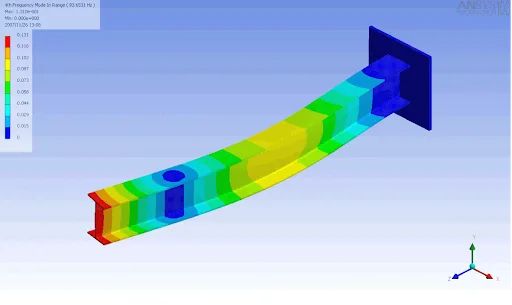
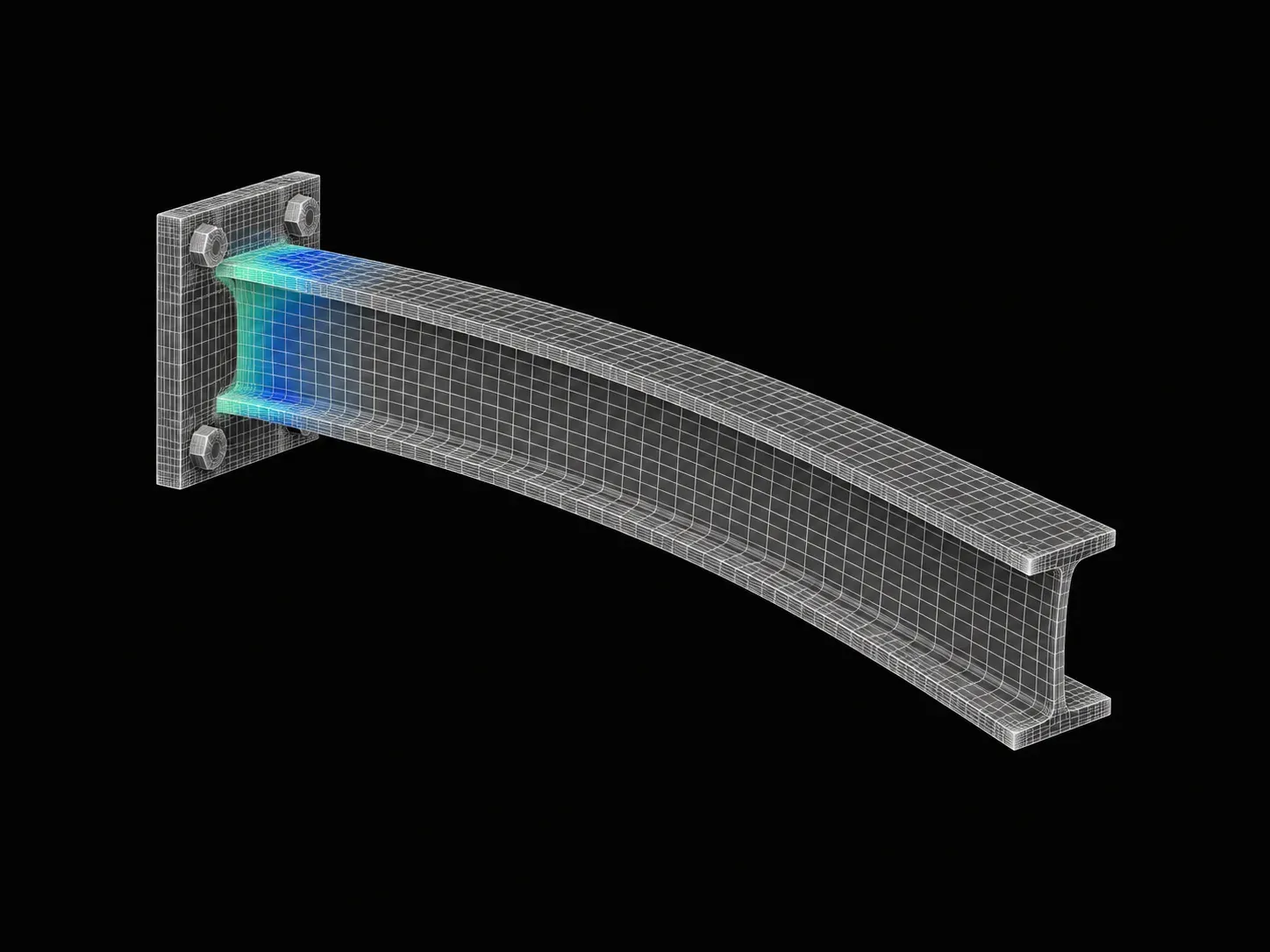
Study of cantilever beam

Study of cantilever beam

To study a cantilever beam and to find the effect of deflection on the cross-section of the beam
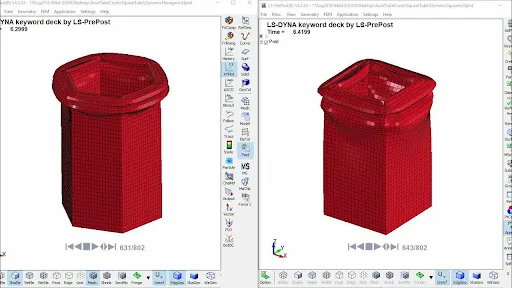
Study of crushing of square steel tube

Study of crushing of square steel tube

The students need to find the best configuration among the tubes that are crushed between fixed and moving plates.
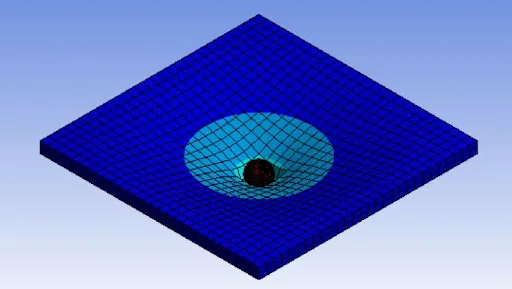
Study of impact of steel ball on aluminum plate of 5 mm thickness

Study of impact of steel ball on aluminum plate of 5 mm thickness

The students need to estimate the resistance offered by the plate due to the impact caused by a moving ball.

Fee

One fee.
Everything included.

Become job ready with our comprehensive industry focused curriculum for freshers & early career professionals

Premium
₹40,000
Inclusive of all charges
  • 1 Year Access
  • Personalized Page
  • Live Individual & Group Sessions
  • Personalized & Hands-On
  • Job-Oriented Industry Relevant Curriculum
Check eligibility →
FAQ

Questions,
answered.

What are the real-world applications of the tools and techniques taught in this course?

LS-DYNA is widely used for various analyses in the industry. In the automotive sector, crash test simulations are primarily performed by LS-DYNA. Along with this, high-speed impact analysis and explosive analysis are performed by this software too. 

Will this course help me in my applications for MS OR PhD?

The course is oriented towards the industrial aspects of FEA. Developing a strong background in such aspects will help you write proposals to universities and create an industry-oriented application. 

Which companies use the techniques taught in this course, and for what?
  • Over 80% of automotive OEMs use LS-DYNA for crash analysis.
  • General Motors – NVH, Crash analysis, Impact analysis.
  • Bosch – Non-linear simulations.
  • Service Industry- Altran, Faurecia, Kaizenet, TE connectivity, Xitadel, and other service-oriented industries in India use LS-DYNA for different applications like crash analysis, impact analysis, non-linear analysis, dynamic analysis, etc.
What specialized software skills can be gained from the course?

Through the course, you will learn to use ANSYS and LS-DYNA. 

How do I resolve any doubts during the course duration?

You will receive excellent one-on-one support during the course through various modes. You can communicate via videoconferencing, WhatsApp messages/calls, individual online sessions, and also in-person to resolve any course doubts.

Will I have to pay the full cost of the course upfront?

You can enroll in this course and avail of the 0% EMI option instead of paying the entire course fees upfront. Further, you can win a 10% scholarship for this course to reduce costs.

Next step

Not sure it's
the right fit?

A counsellor will walk you through the syllabus, projects and fee options — and tell you honestly if another course suits you better.

Get the syllabus + a call back

We'll email the full syllabus and call within one working day.

By submitting you agree to our Terms and Privacy Policy.

Call usEnquire

Talk to a career counsellor

Free 20-minute call. We'll map the right course to where you want to work.

By submitting you agree to our Terms and Privacy Policy.