
Traffic Jam Assist Feature in MATLAB Environment
To develop the Traffic Jam Assist feature in the MATLAB Simulink environment. While working on the project, the students should develop the model based on the MBD guidelines.
Black FridayUpgrade your career this Black Friday. Get up to ₹60,000 Scholarship on IIT programsUp to ₹60K Black Friday Scholarship52 seats leftOffer ends Fri, 27 Nov, 11:59 pm IST.
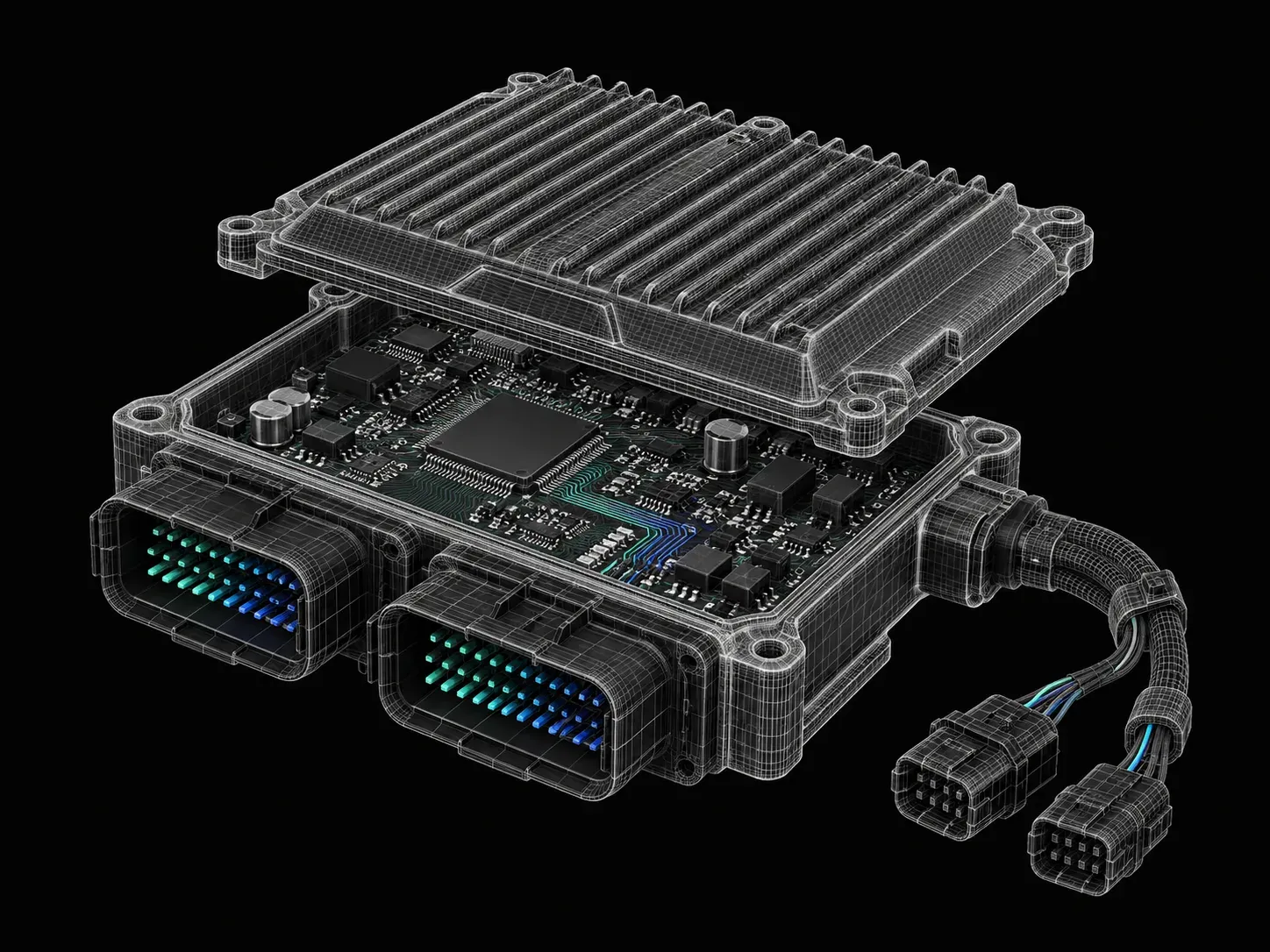
A comprehensive course on AUTOSAR and Automotive Embedded Systems using practical and real-world examples. This course is highly suited for beginners
Introduction to Automotive Embedded Systems and AUTOSAR is an online course from Skill-Lync: 12 weeks, 44 hours of content and 2 industry projects.
The following are covered in this week:
This week covers the following topics:
In this week, the following topics are covered:
The following topics are covered in this week:
In this week, the following topics are covered:
The following topics are covered this week:
The following topics are covered in this video:
In this week, the following topics are covered:
The following topics are covered this week:
The following topics will be covered this week:
In this week, the following topics are covered:
In this week the following topics are covered.
Our projects are designed by experts in the industry to reflect industry standards. By working through our projects, Learners will gain a practical understanding of what they will take on at a larger-scale in the industry. In total, there are 2 Projects that are available in this program.
To develop the Traffic Jam Assist feature in the MATLAB Simulink environment. While working on the project, the students should develop the model based on the MBD guidelines.
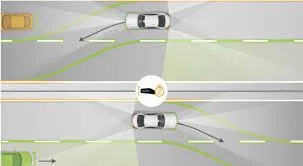
Development of Highway Assist – Lane Change Assist algorithm as per the MBD (Model-Based Development) guidelines in the MATLAB environment.
Video stories from learners of related electrical programs, from Skill-Lync's YouTube channel.
by the Skill-Lync team
A standard way to build the software inside a car's control units (ECUs). It was started in 2003 by carmakers and suppliers including BMW, Bosch, Continental and Volkswagen, so that application software would not have to be rewritten for every new chip or supplier.
Think of it like an apartment building. Every flat (an application feature) plugs into the same wiring and plumbing (the AUTOSAR layers below it), so a flat can be moved to another building without rebuilding it. Classic AUTOSAR, the subject of weeks 6 to 10, has these layers:
Adaptive AUTOSAR is a separate platform for high-performance computers running POSIX operating systems. It is not part of this course.
Through ports, never by calling each other directly. There are two main kinds:
The code inside a component is split into runnables, functions that the RTE triggers on events: every 10 ms, when new data arrives, or when a server call comes in. While you design, you wire the components to each other as if they sat on one ECU (the "virtual functional bus"). Only later do you decide which ECU each one runs on. If two end up on different ECUs, the RTE and the communication stack send the data over CAN instead.
CAN, covered in week 2, is the network most of those signals travel on. A classic CAN frame with an 11-bit identifier and 8 data bytes is 111 bits long, including the 3-bit gap between frames. The controller also inserts a "stuff" bit after every five identical bits so receivers stay in sync. In the worst case (Davis et al., 2007) the frame grows to:
with for 11-bit identifiers and data bytes, that is 34 + 64 + 13 + 24 = 135 bits. At 500 kbit/s each bit takes 2 µs, so one frame occupies the bus for up to 270 µs.
Now put 20 such messages on the bus, each sent every 10 ms: 20 × 135 = 2,700 bits every 10 ms, which is 270 kbit/s, or 54% of a 500 kbit/s bus. Without stuffing it would be 44%. That 10-point difference is why network designers budget for worst-case frames.
Three steps of the same test plan in model-based development (week 5):
Each step costs more than the one before, so bugs should be caught as early as possible. The course's two projects, traffic jam assist and a lane change assist, are built in Simulink to MAAB modelling guidelines (week 4), the rules that keep models readable and ready for code generation.
Weeks 11 and 12 cover ISO 26262, the functional safety standard for road vehicles. Every hazard a feature could cause is rated on three scales:
The worst combination, S3 + E4 + C3, is ASIL D, the strictest level. Each one-step reduction on any scale lowers the ASIL by one level: D, C, B, A, then QM (quality management, no extra safety requirements). So:
The ASIL then decides how much process the software and hardware need: reviews, test coverage, independent checks. That is why safety-relevant ECU work moves more slowly than ordinary software work.
Week by week: automotive embedded systems and vehicle domains (1); CAN, FlexRay and an introduction to model-based development (2); requirement analysis, configuration and data dictionaries in MATLAB (3); MAAB guidelines and code generation (4); MIL, SIL and HIL (5); AUTOSAR basics and software components (6); basic software, MCAL and services (7); diagnostics and the memory stack (8); RTE, complex drivers, OS and C rules (9); modelling AUTOSAR components in MATLAB, Embedded Coder and AUTOSAR code mapping (10); functional safety and ISO 26262 (11 and 12). The recorded course is 61 lessons, about 44 hours of video, with 2 Simulink projects.
Most of the hands-on work is in MATLAB and Simulink, not hand-written C. If you want microcontroller fundamentals first, start with Fundamentals of Embedded Systems. To go deeper into testing, see Software Verification and Validation for Model-Based Development.
Our own records show a narrow but real route. As of 19 Nov 2026, Skill-Lync's placement records (n = 3,905) have 7 learners with AUTOSAR in the job title, all at Acsia Technologies in 2022. The 6 who disclosed pay earned ₹3.0 to ₹3.5 LPA.
The bigger route is model-based development, which this course also teaches: 135 placements name MBD or model-based development, median ₹3.5 LPA (n = 129 who disclosed pay), mostly at Expleo (59) and Tata Elxsi (34). Most of those placements were in 2021 and 2022, so ask for recent ones before you decide.
| Course | Length | Projects | Tools | Fee |
|---|---|---|---|---|
| Introduction to Automotive Embedded Systems and AUTOSAR (this page)MBD in Simulink, AUTOSAR layers, ISO 26262 | 12 weeks, 44 h | 2 | MATLAB, Simulink | ₹40,000 |
| Fundamentals of Embedded SystemsECUs, ARM Cortex-M and sensors first | 12 weeks, 13 h | 2 | Mbed Simulator, SimulIDE | ₹40,000 |
| Embedded Programming EssentialsC programming on STM32 | 35 h | 3 | C Programming, STM32CubeIDE | ₹40,000 |
| Software Verification and Validation and System Testing for Model-Based DevelopmentTesting model-based software: MIL, SIL, coverage | 12 weeks, 20 h | 2 | MATLAB, Simulink | ₹40,000 |
| Introduction to Automotive Cybersecurity and Vehicle NetworksVehicle networks and automotive cybersecurity | 12 weeks, 19 h | 3 | SocketCAN, LINUX, C++ | ₹40,000 |
| PG Program in Embedded Systems for EV ApplicationsPG program: embedded hardware and software for EVs | 24 weeks, 198 h | 23 | Simulink, MATLAB, C Programming, STM32CubeIDE, Embedded Linux, AVR ATmega328, SimulIDE, Microchip Studio, Arm Cortex M4 - STM32, Mbed Simulator, CAN Protocol, LRDA Tool Suite | ₹2,75,000 |
Lengths, projects and fees are taken from each course page on 19 Nov 2026; fees are the Premium plan in INR, including all charges.
Become job ready with our comprehensive industry focused curriculum for freshers & early career professionals
The duration of this automotive embedded systems course is three months.
By enrolling in this online certification course, you will gain hands-on expertise in Model-Based Design in a MATLAB environment.
Students and graduates of electrical, electronics, mechanical or automotive engineering. Basic MATLAB helps, because most of the hands-on work is in MATLAB and Simulink.
Yes, learners have access to the recorded lectures on the Skill-Lync platform.
Automotive embedded systems and CAN/FlexRay, model-based development in MATLAB and Simulink with MAAB guidelines, MIL/SIL/HIL testing, the Classic AUTOSAR architecture (software components, RTE, basic software, MCAL, diagnostics, memory stack, OS), AUTOSAR modelling and code mapping in MATLAB, and functional safety with ISO 26262. It has 2 Simulink projects: traffic jam assist and lane change assist.
Yes, through this embedded systems course learners have the option to get a one-on-one doubt-clearing session from expert mentors who can help students sharpen their skills to earn better job opportunities.
AUTOSAR (AUTomotive Open System ARchitecture) is a standard software architecture for car control units (ECUs), developed since 2003 by a partnership of carmakers and suppliers. It separates application software from the hardware so the same features can run on different ECUs.
It is used to standardize the hardware and software platforms used for automotive ECUs.
A counsellor will walk you through the syllabus, projects and fee options — and tell you honestly if another course suits you better.