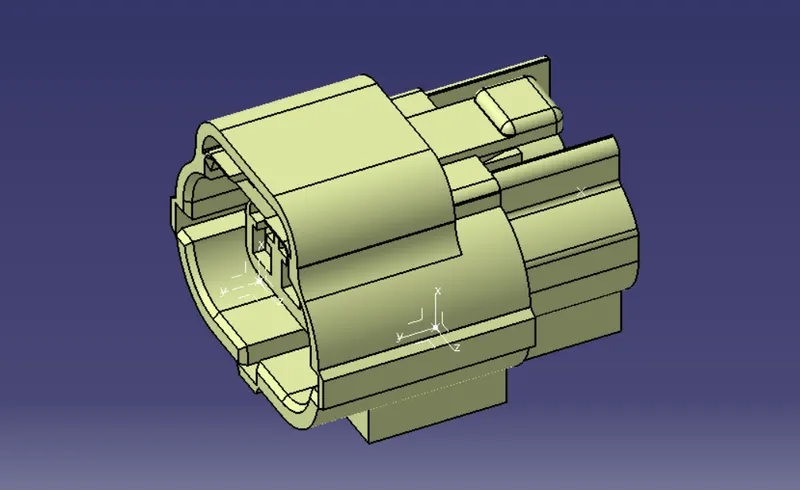
Wiring harness design in CATIA V5 - 3D modeling Week 2 Challlenge
INTRODUCTION : - Cars today are equipped with electronic components that, in addition to the basic operations of moving, turning, and stopping, perform various other functions as well. Wiring harnesses are indispensable in controlling these electronic components, transmitting power and signals to every part of the vehicle. Comprising connectors, terminals, clamps, sheaths, and other elements surrounding a core of electrical wires, they are crucial components akin to the human body's blood vessels and nerves.
Wiring harness:- A wiring harness is an organized set of wires, terminals and connectors that run throughout the entire vehicle and transmit information and electric power, thereby playing a critical role in “connecting” a variety of components. ...
Electrical distribution system deals with the physical, logical architecture, schematic development, power distribution.
Wiring harness Topology is trategy to divide or split the harness betweeen different pieces to achieve the best manufactuability, serviceability.
Wiring harness routing deals with desired path of wiring harness into given vehicle environment by applying set of design rules
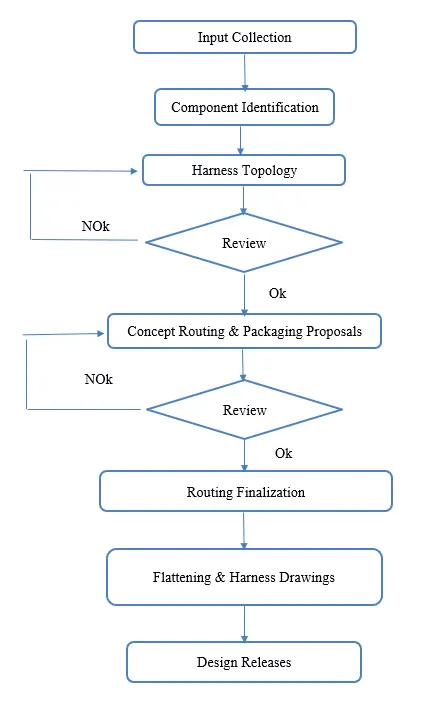
Design Flow of EDS
Defining a component as an electrical part:
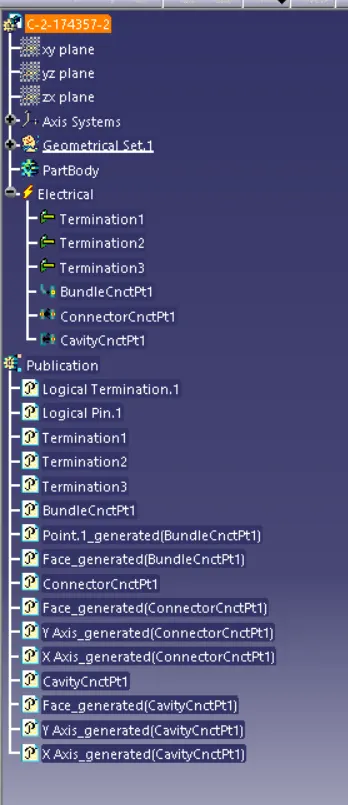
To define the part as electrical, following steps should be performed in CATIA:
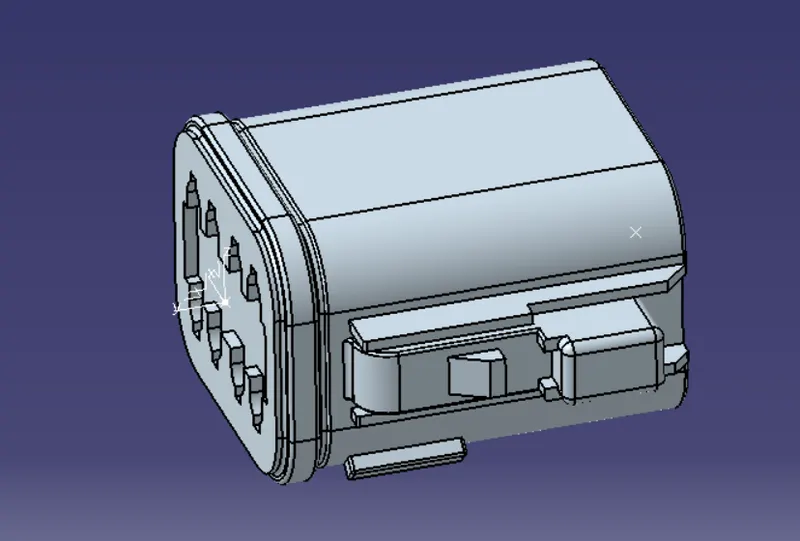
1. Downloading the component, or creating the component, in this case a connector. and if already in catalogue
2. Geometrical Parameters: Points and axis system needs to be created for the various connection points on the component.
3. Define Component: Then we move on to the eletrical part design workbench to define the part as electrical, without this, the connection points cannot be defined.
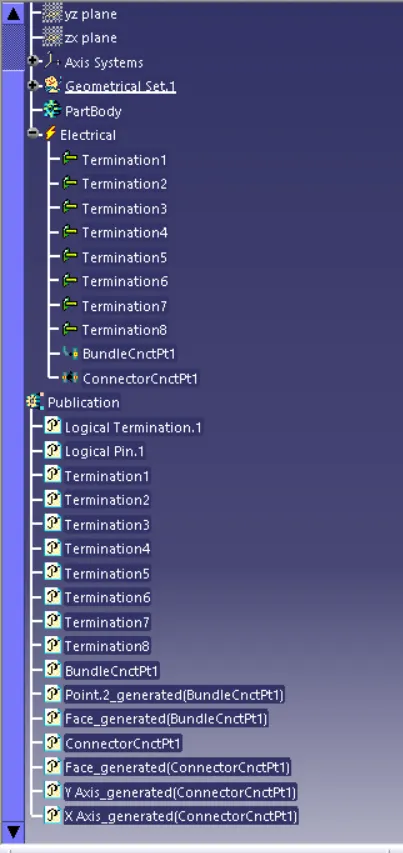
4. Define Bundle connection point: Defines where the harness bundle will enter from in the given point.
5. Define Connector connection point.
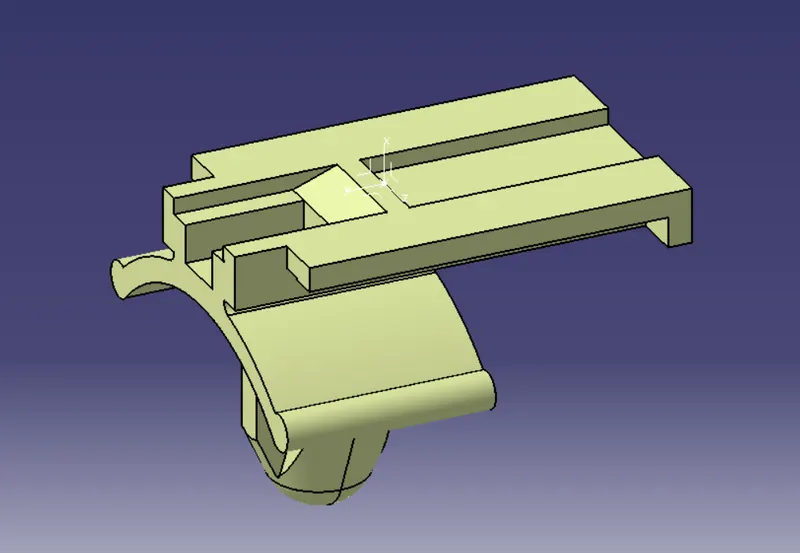
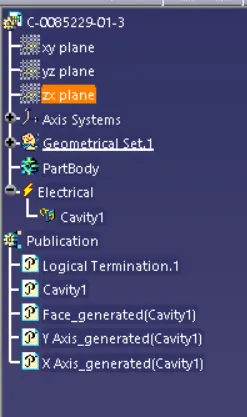
6. Define Cavity connection point: It is optional as the connector may or may not have a clip.
By defining the above given points the part is electrically defined and can be added to the catalogue to be used whenever required.