Transient Structural Analysis of Worm Gear
AIM:
To perform a transient structural analysis on a worm gear assembly
THEORY:
A worm gear is a gear consisting of a shaft with a spiral thread that engages with and drives a toothed wheel. Worm gears are an old style of gear, and a version of one of the six simple machines. Basically, a worm gear is a screw butted up against what looks like a standard spur gear with slightly angled and curved teeth.
It changes the rotational movement by 90 degrees, and the plane of movement also changes due to the position of the worm on the worm wheel (or simply "the wheel"). They are typically comprised of a steel worm and a brass wheel.
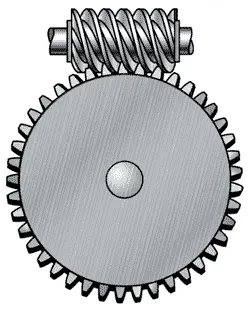
How Worm Gears Work
An electric motor or engine applies rotational power via to the worm. The worm rotates against the wheel, and the screw face pushes on the teeth of the wheel. The wheel is pushed against the load.
Worm Gear Uses
There are a few reasons why one would choose a worm gear over a standard gear.
The first one is the high reduction ratio. A worm gear can have a massive reduction ratio with little effort - all one must do is add circumference to the wheel. Thus you can use it to either greatly increase torque or greatly reduce speed. It will typically take multiple reductions of a conventional gearset to achieve the same reduction level of a single worm gear - meaning users of worm gears have fewer moving parts and fewer places for failure.
A second reason to use a worm gear is the inability to reverse the direction of power. Because of the friction between the worm and the wheel, it is virtually impossible for a wheel with force applied to it to start the worm moving.
Why Not Use Worm Gears
There is one particularly glaring reason why one would not choose a worm gear over a standard gear: lubrication. The movement between the worm and the wheel gear faces is entirely sliding. There is no rolling component to the tooth contact or interaction. This makes them relatively difficult to lubricate.
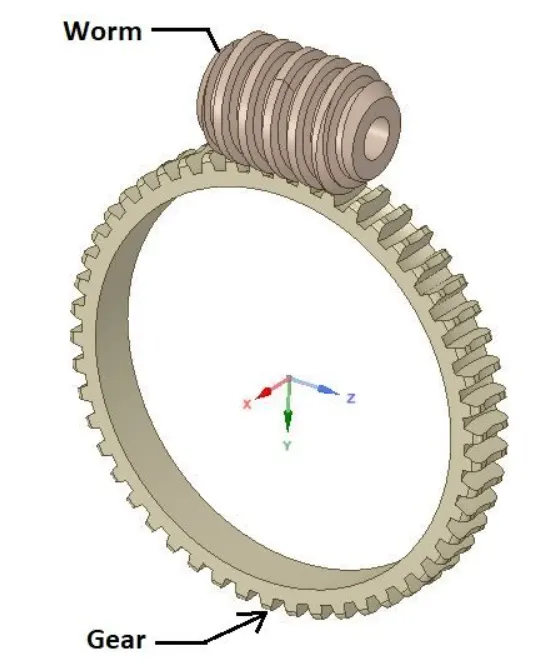
GEOMETRY:
MATERIAL PROPERTIES:
PROCEDURE:
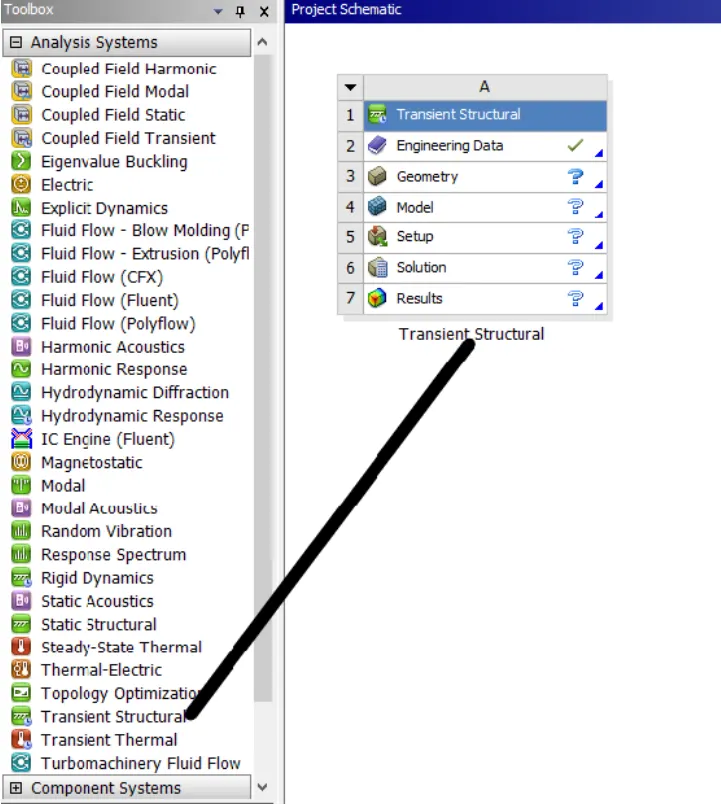
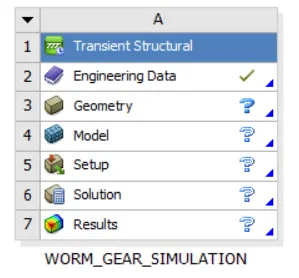
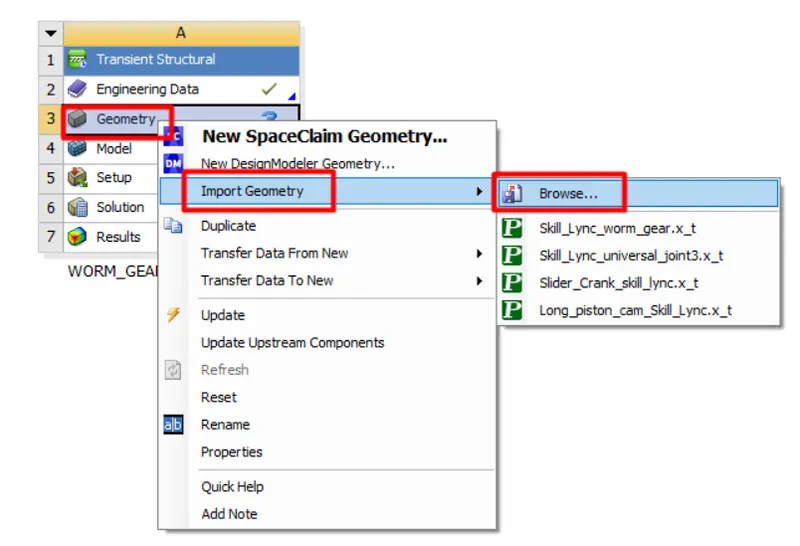
1. Import the Transient Structural module in ANSYS workbench. We can rename the module as WORM_GEAR _SIMULATION.
2. Now we have to import the model into the geometry section. We open the model in SpaceClaim to check for any errors
3. Here we cut the geometry to nearly half to bring down the model to the academic version limits
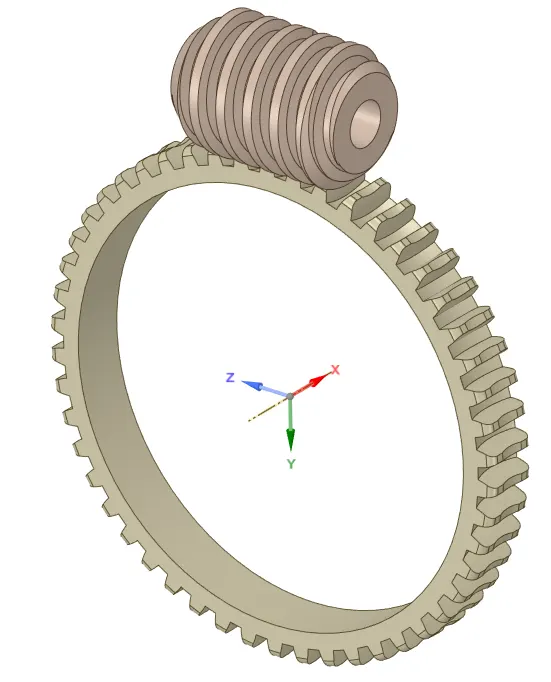
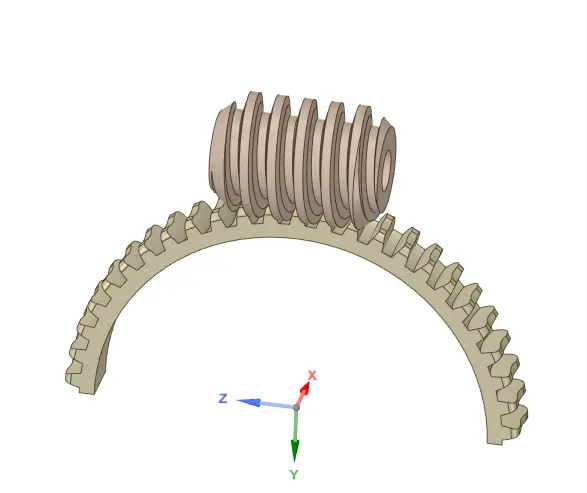
FULL MODEL REDUCED MODEL
4.Then go to the Mechanical model section. Here we Rename the Parts of the setup as “Worm”, and “Gear” as shown in the above geometry image.
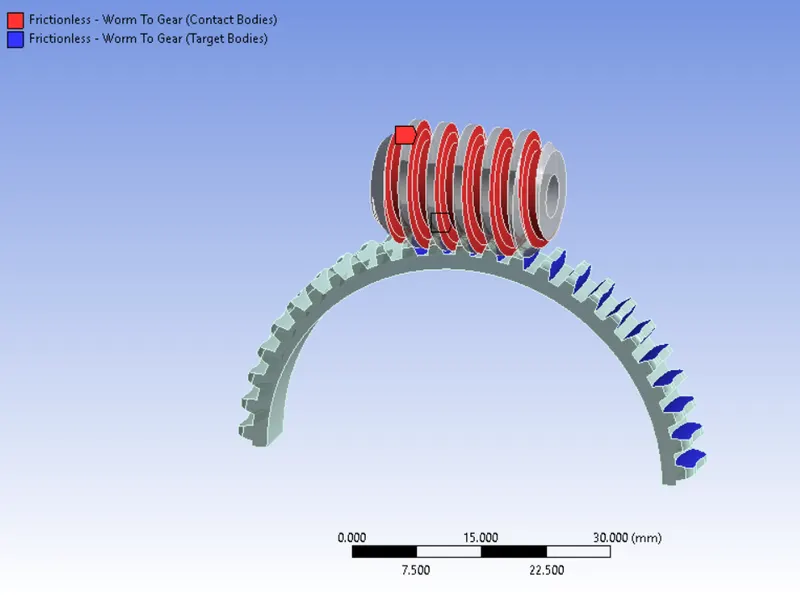
5. Now we have to set up the required contacts for the simulation
Connections:
Contacts:
Contact_1: Worm to Gear
Type: Frictionless
Contact Body = Worm
Target Body = Gear
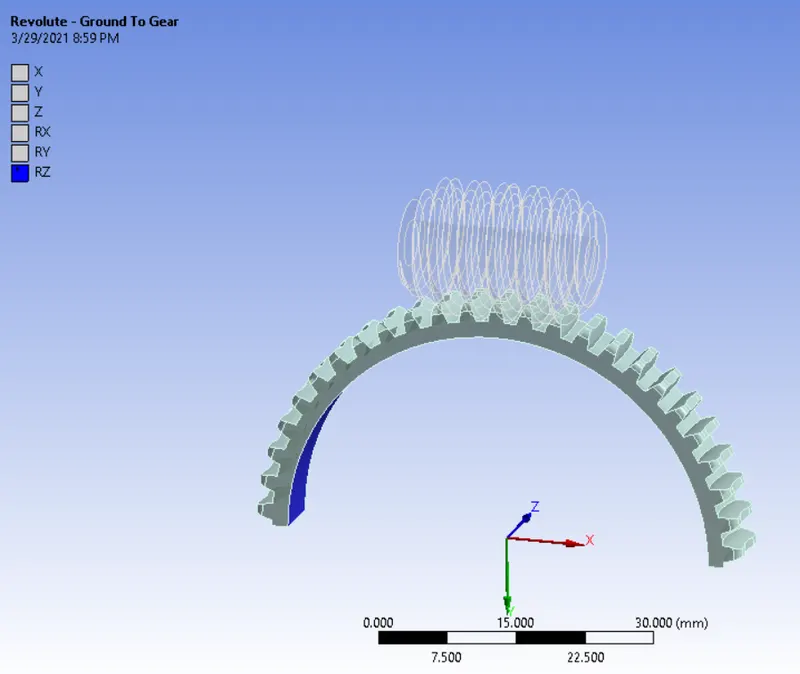
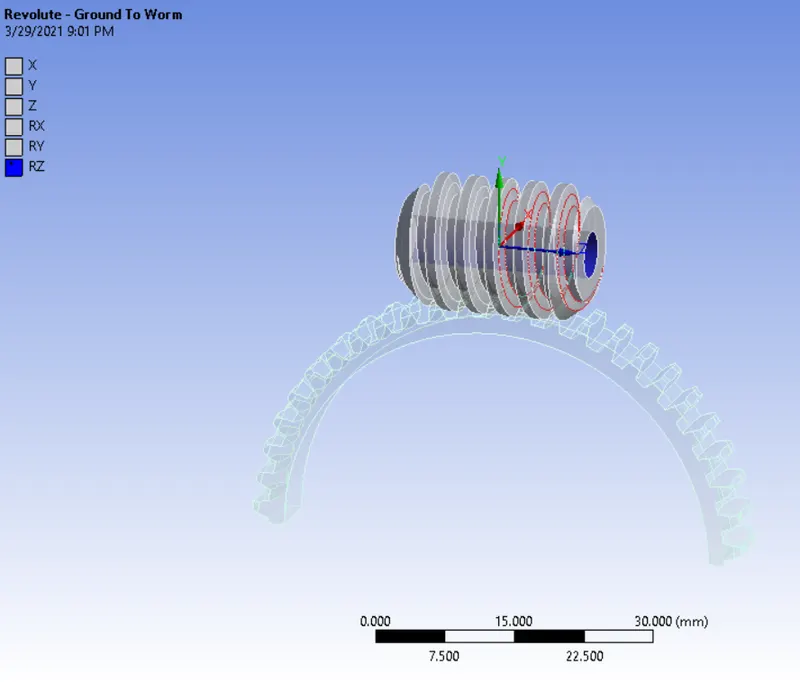
Joints :
Joint_1
Connection Type: Ground to Gear
Type: Revolute
Body: Gear
Joint_2:
Connection Type: Ground to Worm
Type: Revolute Joint
Body: Worm
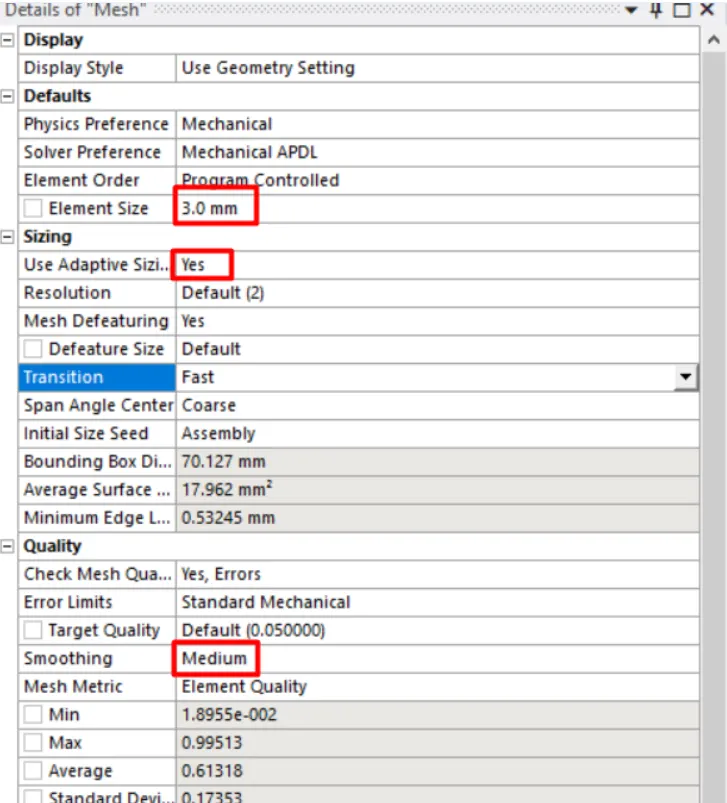
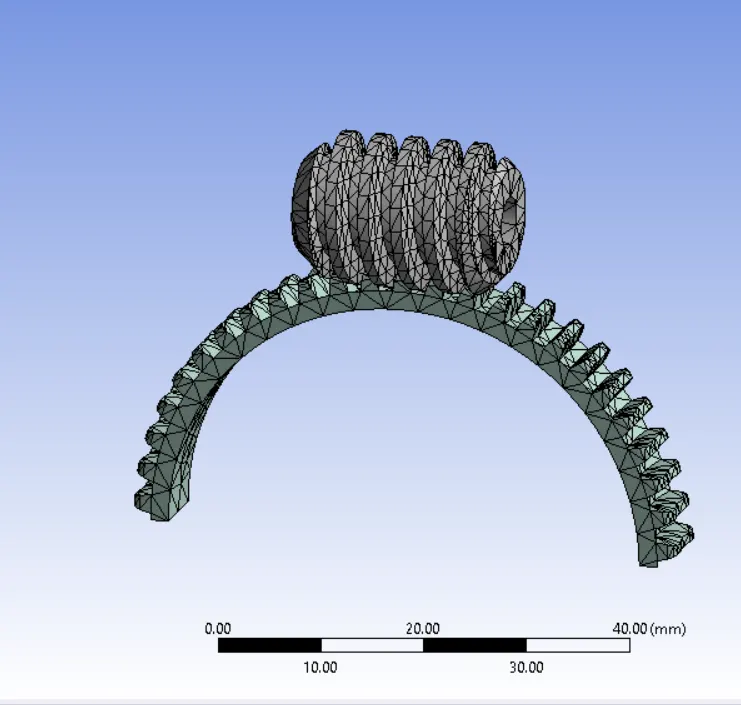
6.Once the contacts are defined now we have to mesh the given component with an element size of 3mm and switch on the adaptive sizing and smoothing metrics as medium
Boundary Conditions:
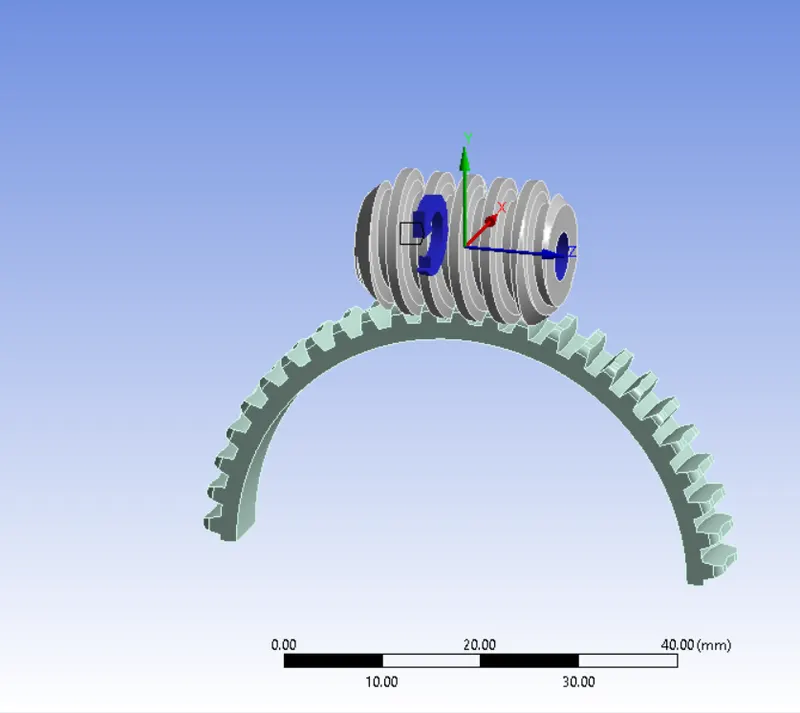
7.After meshing as described above, create Boundary Conditions as given below: We use 60 steps for the analysis to bring the worm to the end part of the gear by giving a rotation of 50 degree for each step
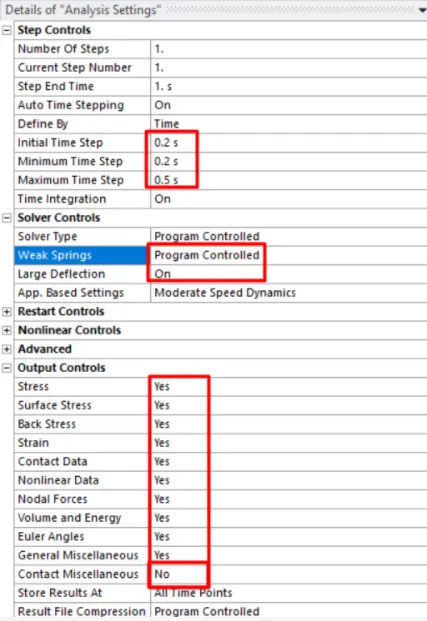
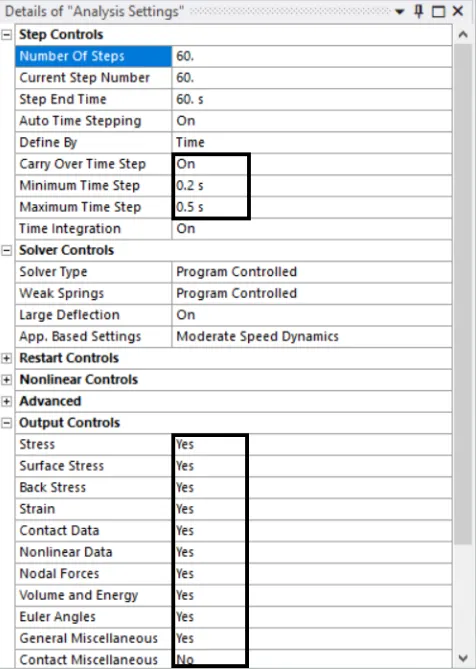
ANALYSIS SETTINGS FOR STEP:1 ANALYSIS SETTINGS FOR STEP 2 TO 60
8.Insert joint load for the worm for 50 steps with an increment of 50 degrees for each step
Solution:
9.After giving proper boundary conditions, create desired solutions for output results in the solution block. Here we create solutions for
Equivalent Stress
Equivalent Elastic Stress
Total Deformation
Contact Pressure
RESULTS:
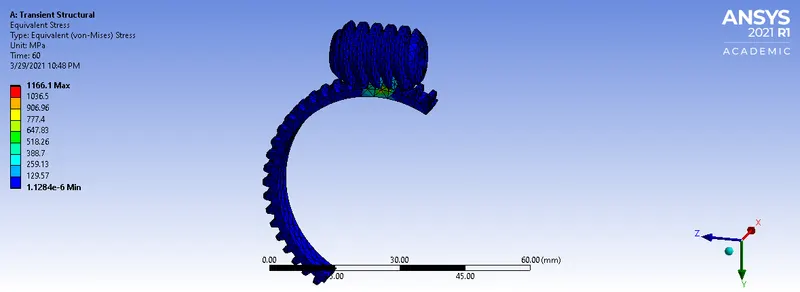
EQUIVALENT STRESS
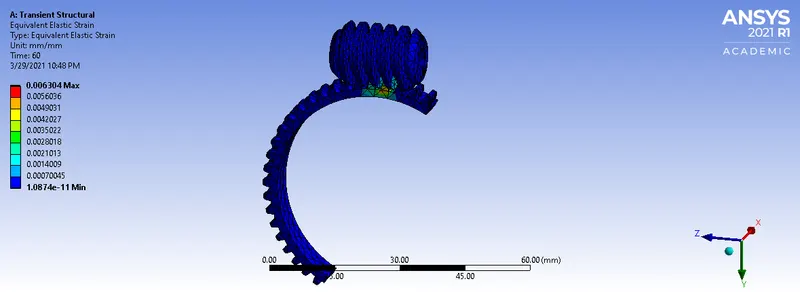
EQUIVALENT STRAIN
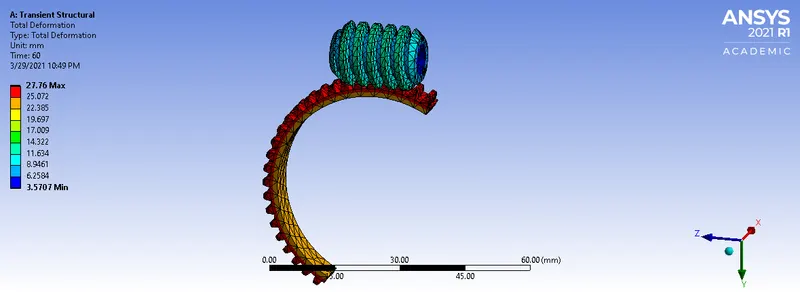
TOTAL DEFORMATION
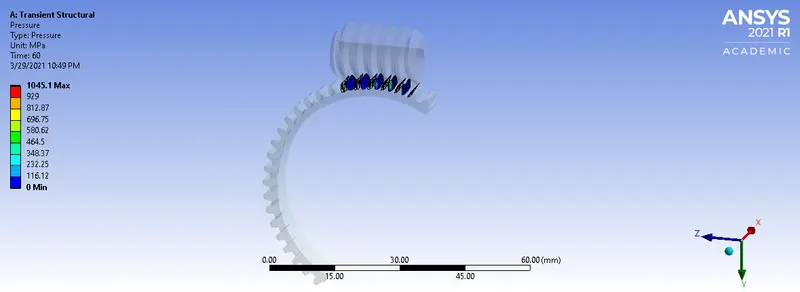
CONTACT PRESSURE
CONCLUSION:
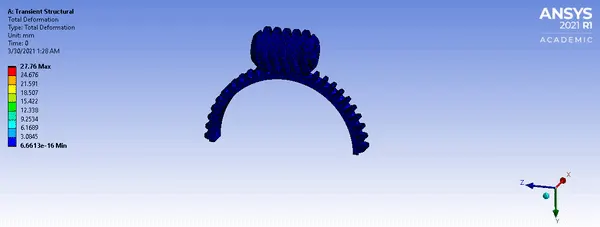
- The worm-gear simulation was setup and run successfully
- Generally, the worm and gear are simulated with different materials to reduce friction and for better transmission
- During the simulation, the worm moved till the end