Week 8 Multi cell Battery Pack
The cells at the fundamental level are just another thing manufactured by us for a purpose. Although the ingredients present might be the same, the methodologies used during manufacturing are same, there are always imperfections such as difference in quantity of electrode materials used, alterations in environmental conditions during manufacturing, human erros etc that creep in and even the slightest presence of these makes no two cells identical.
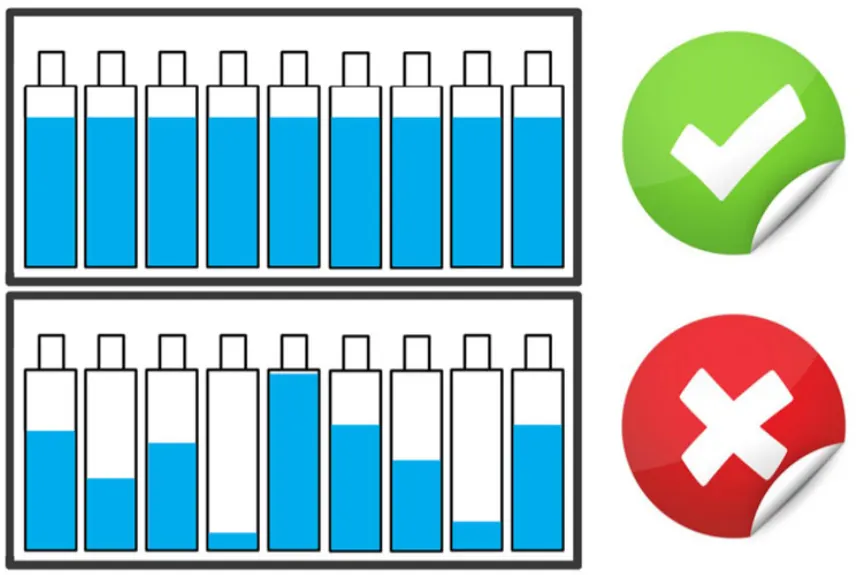
This brings a difference in capacity, internal resistance, temperature behavior, self discharge behavior etc from cell to cell even if they are of same model made by same manufacturer in the same factory. As a result, when more than one to two cells are charged or discharged simultaneuously with same power, one or few among them will always show different characteristics and will have a different SOC at the same time as other cells. If the difference is noticeable then this is not good for the battery pack as this will limit the usable capacity of the total pack.
"A battery pack is just as strong as the weakest cell present in it."
In a multi-cell battery pack, placing cells in series opens up the possibility of cell imbalance, a slower but persistent degradation of the battery.
Usually, a battery is said to have reached a full charging state when the voltage threshold is reached. For a battery, the voltage is resultant of all the individual voltages of the cells present in it. These individual cells voltages can vary from one another . If suppose there is a weak cell in the battery whose voltage is higher compared to others at a given point, then this cell will be overcharged by the time the other cells reach their maximum voltage cut off point. This results in the degradation of the cell, which over a period of time reduces its capacity. Conversely, if the voltage of this cell is lower than voltage of other cells then during discharge, this cell will reach undervoltage sooner than the other cells. This can also happen due to degradation of the cell. When the cell keeps reaching below undervoltage, then the cell is subjected to further deterioration. This will kill the cell and stop the entire battery from working as the cell is in series with other cells.
But, as there are cell protection algorithms present, the above cases of the cell crossing the limits is prevented, but this then results in not using the total battery capacity as the other cells of the battery still have enough capacity to power the vehicle but the system wouldn't allow for it.
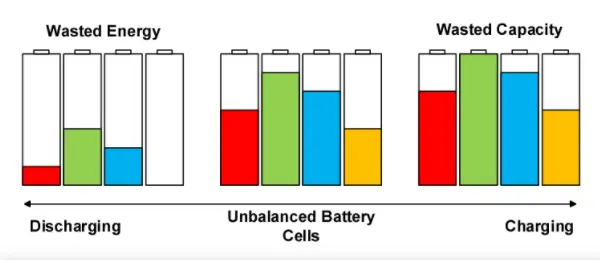
Imagine a situation as below:
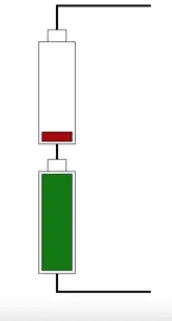
The cell can neither be charged nor discharged in this case as they will lead to over charge of cell 2 or under voltage threshold will be breached for cell 1 respectively. This makes the pack useless. This is an extreme case of cell imbalance, one that is unlikely to occur, but even with slightest imbalances, over time the cells might deteriorate or else the battery cannot be used to their maximum.
The solution for this probelm is Cell balancing.
Cell Balancing Techniques
The fundamental solution of cell balancing equalizes the voltage and state of charge among the cells when they are at a fully charged state. Cell balancing is typically categorized in two types:
- Passive
- Active
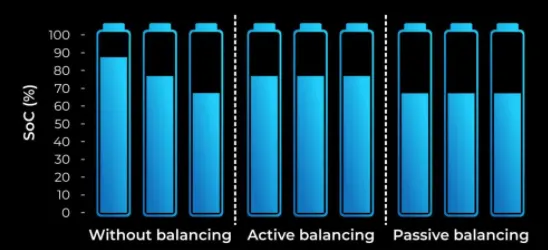
Passive cell balancing drains out the excess energy present in other higher soc cells using a dissipative bypass route that has resistor element, which exhausts electric energy as heat. This method is cheap but wastes energy and is used for low cost low energy implications.
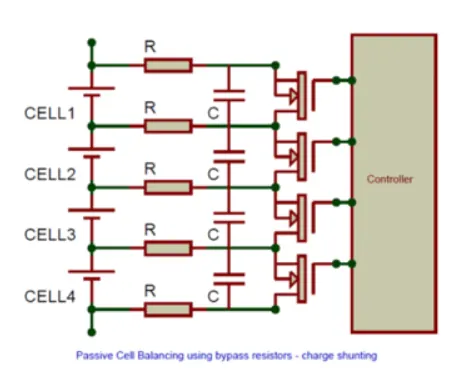
The controller senses the higher soc cells and uses switches to bleed the energy out to the resistors arranged in paralle to each cell, until the SOC reduces and all the cells can be charged.
Active balancing on the other hand utilizes excess energy present in the higher SOC cells to charge the cells with lower SOC. This is more energy efficient but costly and complicated. The circuit used for this purpose utilizes capacitive inductive elements .
Unlike the passive balancing where the cells are brought to the lowest SOC value in the pack, in active balancing, the mean of the SOC values of the cells is calculated and the all the cells are brought to that particular value.