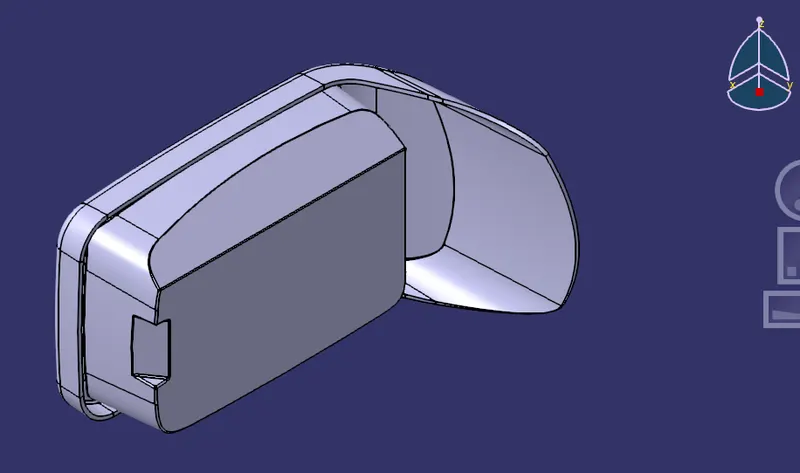
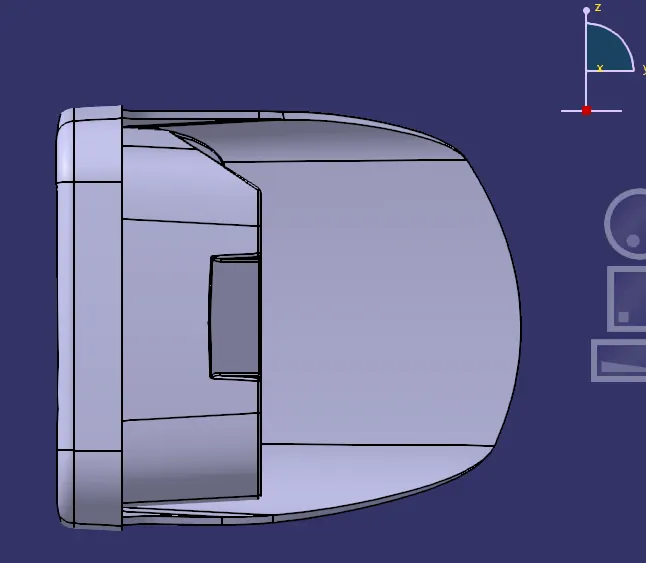
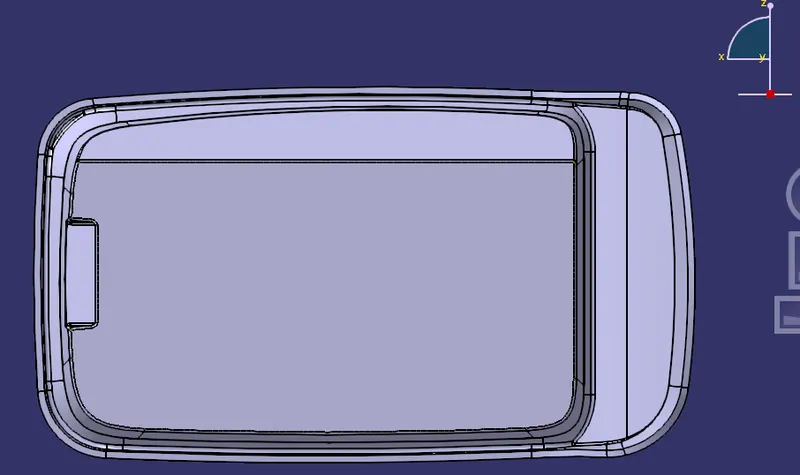
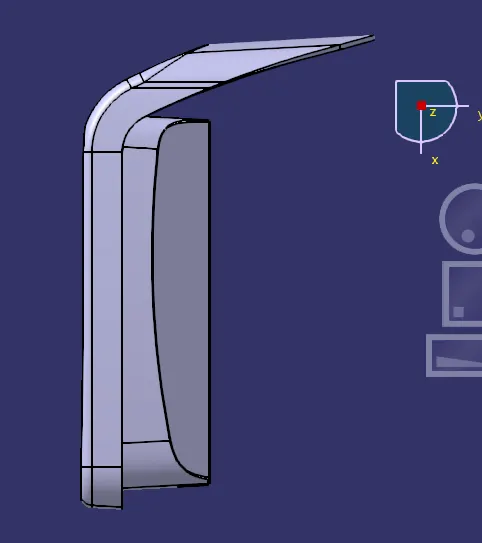
Week 8 - Challenge 3 - Coin Holder Design
Draft analysis of Automotive Coin Holder
Introduction:
The plastic components are manufactured using an Injection Moulding Machine. The machine consists of core and cavity, the male and female components that integrate into each other with gap between them equivalent to the thickness of the part required. The mould enters the core and cavity interstice, giving the part its shape and dimensions. Once the part is formed it needs to be extracted from the moulding machine. The core and cavity must disengage and move apart to eject the part out. The direction along which the core moves to engage and disengage with the cavity is called the Tooling Axis. Any surface of the part that is parallel or has some degree deviation from being parallel with the tooling axis, makes it impossible for part extraction from the mould. Parallel part surfaces make mould disengagement difficult. When the core is forcefully retrieved from cavity, it results in poor surface finishing and engenders harsh/rough surface.
To resolve this manufacturing issue, draft angle is provided to the surfaces of the part that could have the parallelism issue with the tooling axis. Draft angle is the minimum angle a surface should form with the tooling axis in order to clear out from the mould. The draft angle provided to the plastic parts is 3 degrees.
CATIA V5 is equipped with a feature to perform draft analysis on the parts to check the manufacturability. Initially tooling axis is created taking into account all the surfaces and their inclinations using Line Bisecting feature. Then draft analysis is performed with respect to this axis and all surfaces are verified for clearance.
Draft Analysis Procedure in CATIA V5:
- The part is from all angles to determine the tooling direction.
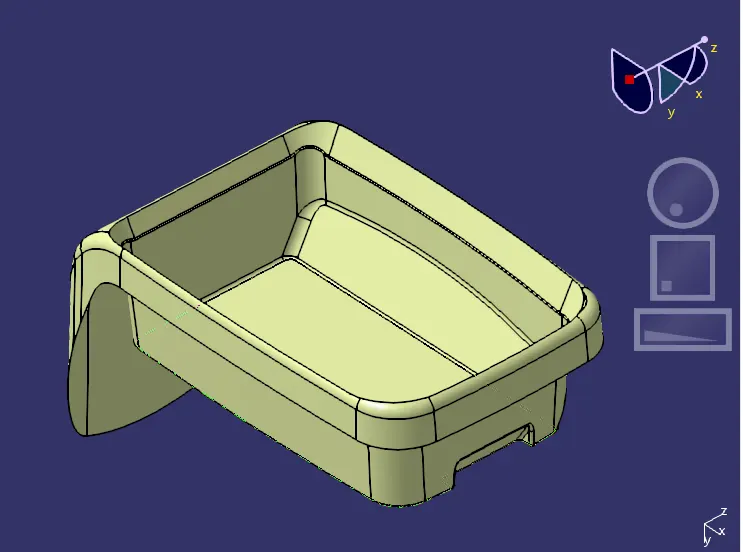
- From the above-shown part, it is concluded that Tooling Axis closely aligns with Y-axis.
- Dummy Tooling Axes are created clearing X and Z-directions
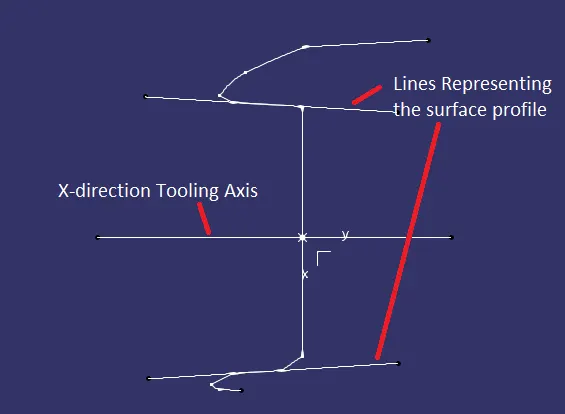
- As shown, X-Y plane are intersected with the Class-A surface to obtain surface profile from Z perspective with Intersection command. In the Intersection command, X-Y plane and Class A surface are provided as input.
- Then lines are created to represent the surfaces that could have Tooling clearing issue. So using Line command, two end points of the surface lines that are closely parallel to the presumed Tooling Axis direction are selected. Then two new lines are created that resemble the problematic surface profile.
- Tooling axis clearing X direction is created by using Line command and taking two problematic surface profiles as input Y-Z plane to obtain surface profile with X-perspective
- Same procedure is followed for creating Tooling Axis clearing Z-direction. In this case, Class-A surface intersected with
- Tooling Axis is created using Bisect option in the Line command and taking Tooling axis clearing X and Z-direction as input.
- Feature Draft Analysis command is used to perform draft analysis.
- Material mode is selected in Customize View Parameters command.
- in Feature Draft Analysis, Compass is selected to set the draft direction, hence it is aligned with Tooling Axis. Then this direction is locked in Direction panel.
- Then the Running point is used to check the draft angle on various problematic faces of the Class-A surface as shown below:
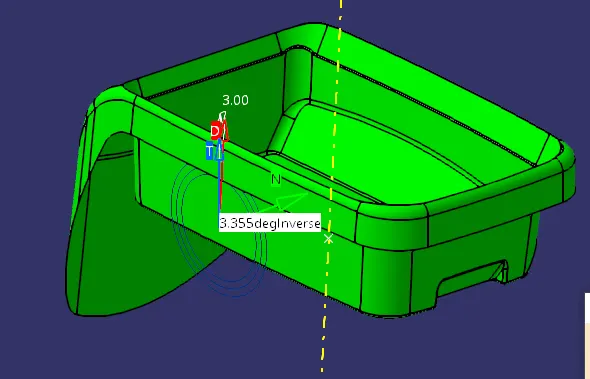
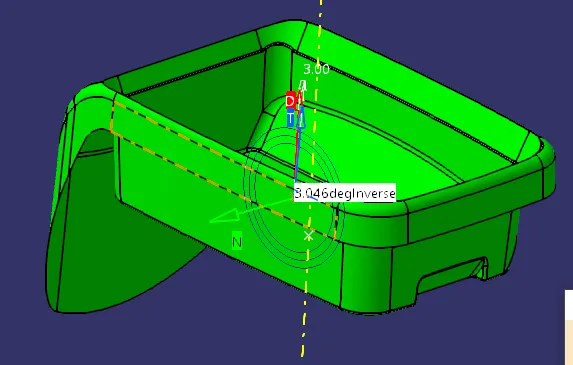
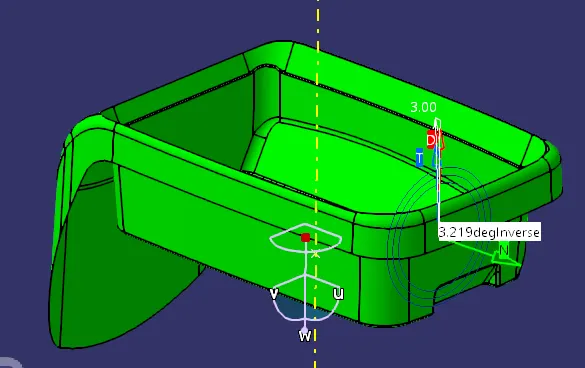
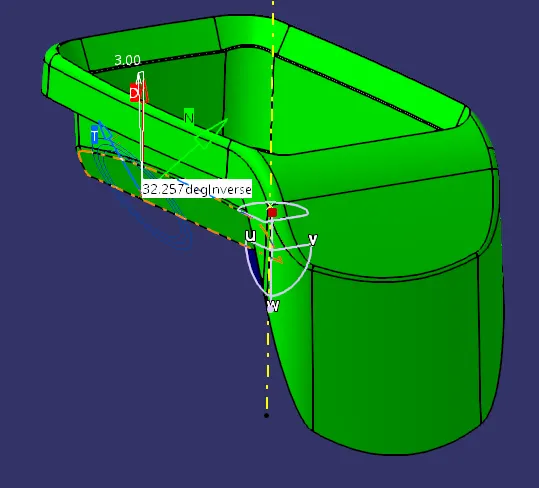
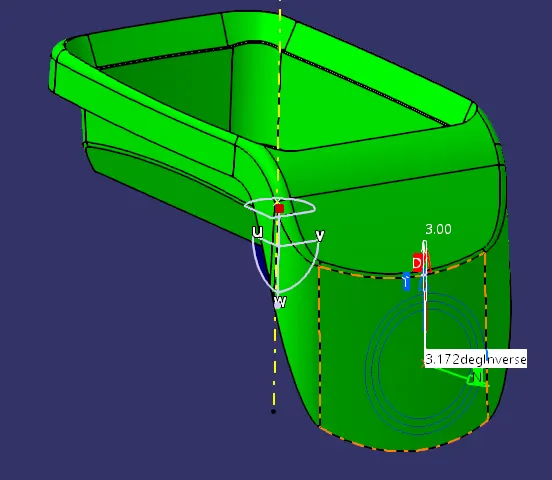
As it can be seen, all the surfaces have a minimum draft angle of 3 degrees and clear the tooling.
The same procedure is followed to perform draft analysis on the Class B surface and the following result is obtained:
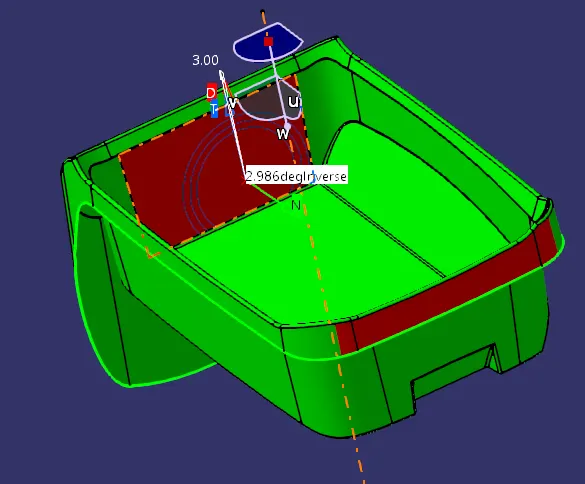
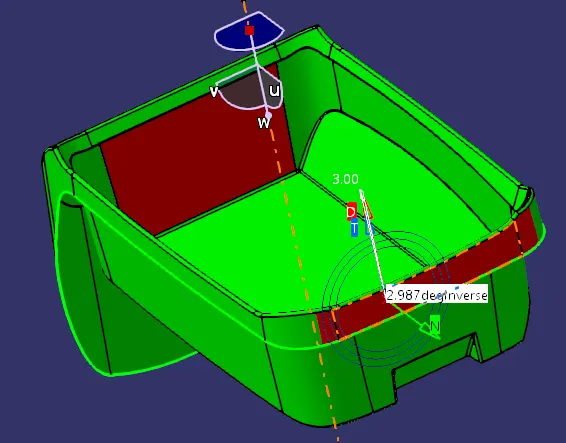
Since the sidewalls of the Clas B Coin holder have a draft angle of 2.986 degrees, so the those faces are failing and are indicated in Red. However the angle is insignificantly lower than 3 degrees, so it is acceptable.
Conclusion:
The class A surface was used to generate the Class B surface and Class C surface. All these surfaces were joined and a solid body was created using Close Surface command in Part Design module as displayed below: