Week 6 - CHT Analysis on a Graphics card
AIM:–
- To perform a steady-state conjugate heat transfer analysis on a model of a graphic card.
- To run the simulation for the best possible mesh with the combination of coarse and refined mesh quality in a different region.
OBJECTIVE:-
- Run the simulation by varying the velocity from 1m/sec to 5 m/sec for at least 3 velocities and discuss the results.
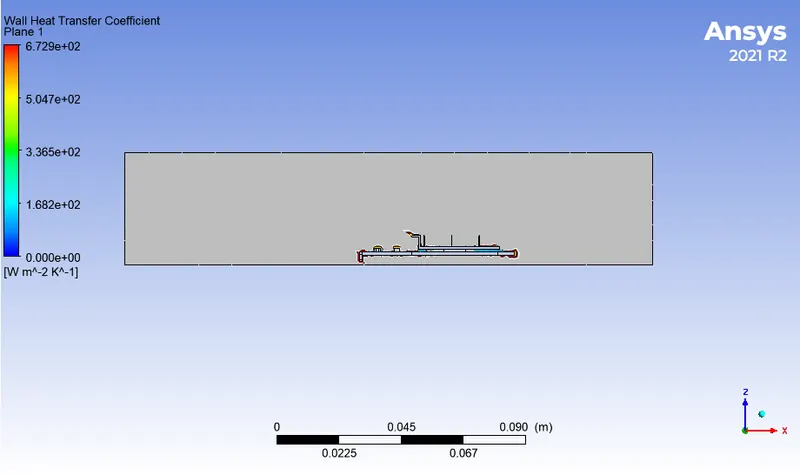
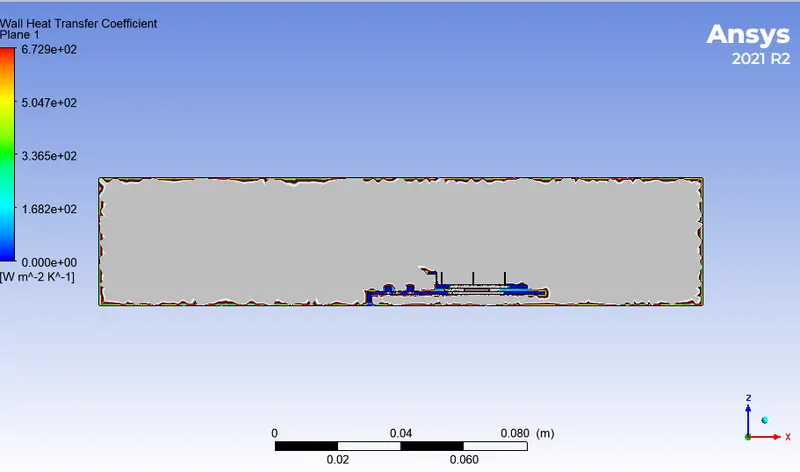
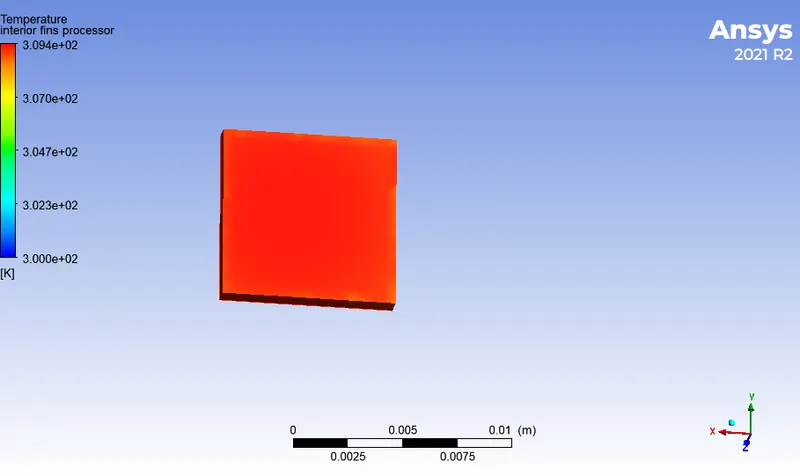
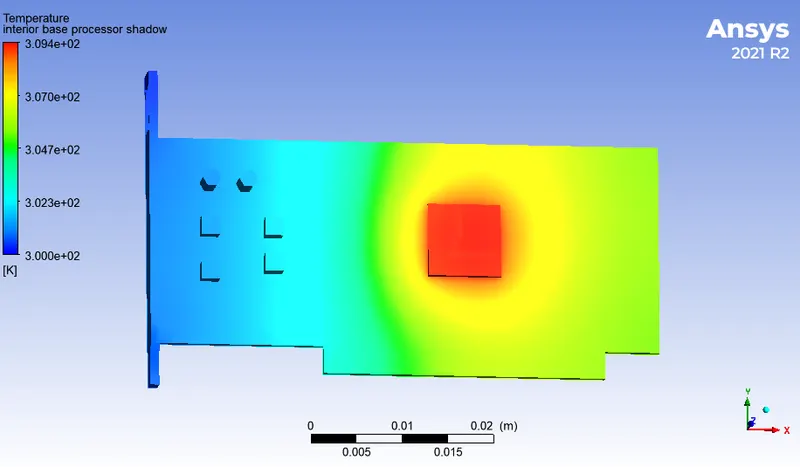
- Find out the maximum temperature and heat transfer coefficient attained by the processor.
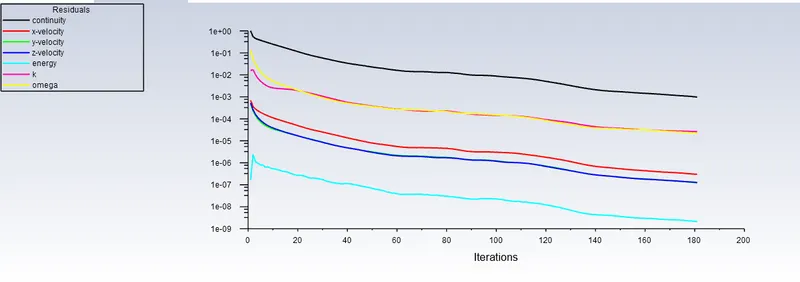
- Prove that the simulation has attained convergence with appropriate images and plots.
CONJUGATE HEAT TRANSFER (CHT)
Conjugate heat transfer is defined as the heat transfer between two domains by exchange of thermal energy. For a system the thermal energy available is defined by its temperature and the movement of thermal energy is defined by its heat flux through the outer walls. Heat transfer in solid happens through conduction and walls by convection and in liquid phase through convection.CHT provides the temperature prediction and the hotspot regions at the solid-fluid interface and we can also predict the heat transfer accurately for example- Conduction through solids, convection through fluid, and thermal radiation. It also provides the velocity and pressure distribution of fluid moving inside the solid. We can also use CHT in design optimization for improvement for heat transfer and cooling capacity.
A video card (also called a graphics card, display card, graphics adapter, or display adapter) is an expansion card that generates a feed of output images to a display device (such as a computer monitor). Most video cards are not limited to a 6-inch simple output. Their integrated graphics processor can perform additional processing, removing this task from the central processor of the computer.
Conjugate heat transfer is a behavioral analysis where convective (transfer between fluid) and conductive (transfer between solids) heat transfer takes place in a system. This combination of heat transfer has forced or natural convection where fluid is dominated by convection and solid is dominated by conduction. The objective of the Experiment is to Carry out a mesh Independent study Stimulate CHT using two different processor materials Carry out the analysis at different velocities To determine the hot spots and Heat transfer co-efficient at different velocities.
PROCEDURE:-
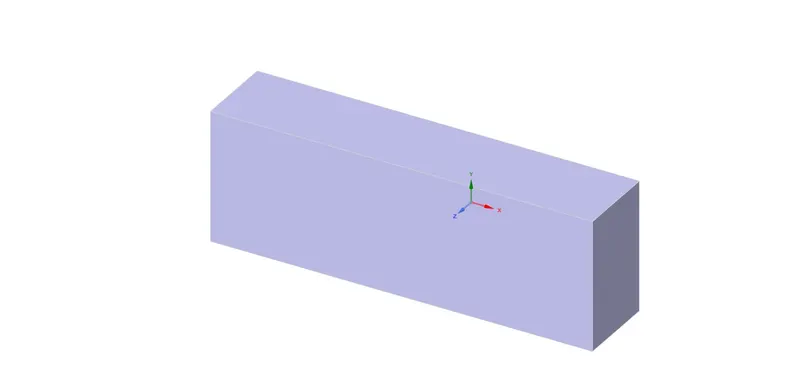
*The model is been downloaded and added to the fluent workbench and the geometry is been checked in the space claim.
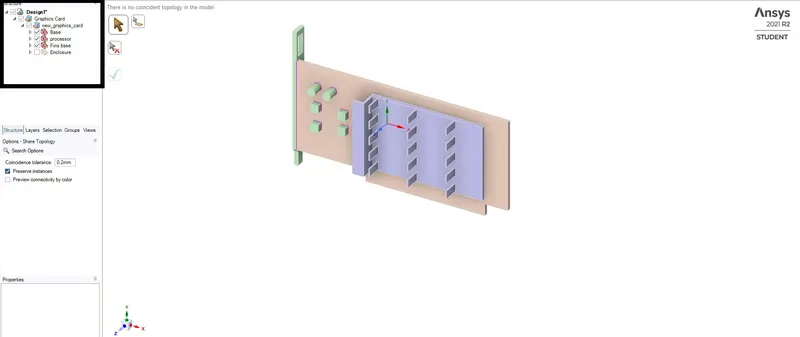
The components are been checked share so mesh inflation can be done to interconnect the components.
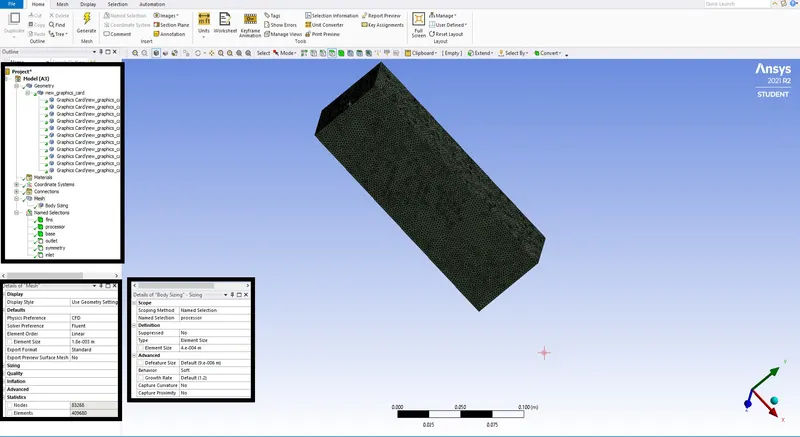
*The mesh is created for an element size of 0.25m and the quality of the elements we more than 40%, Mesh method of Body sizing for the processor.
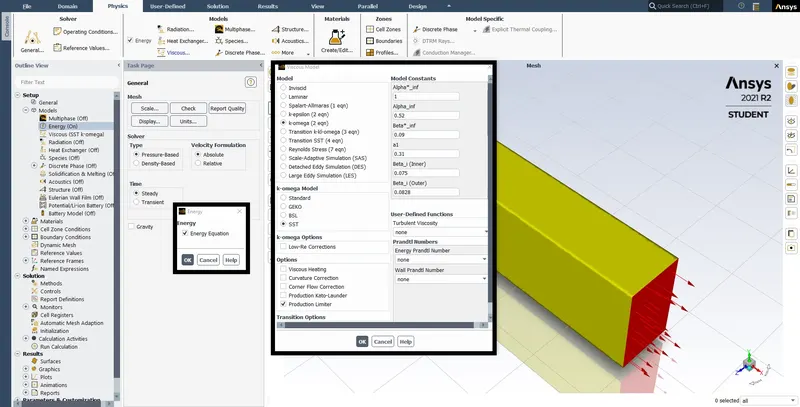
*The energy was turned on and turbulent model with k epsilon
*The material is been added, the air is been initiated with specific values for enclosure and solid material for the processor,base, and fins.
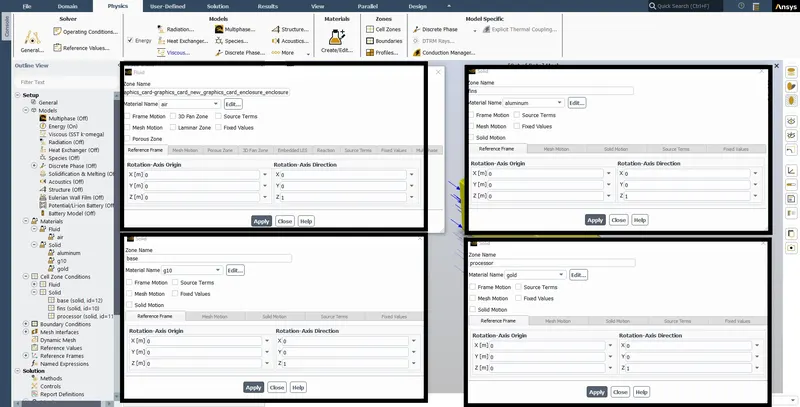
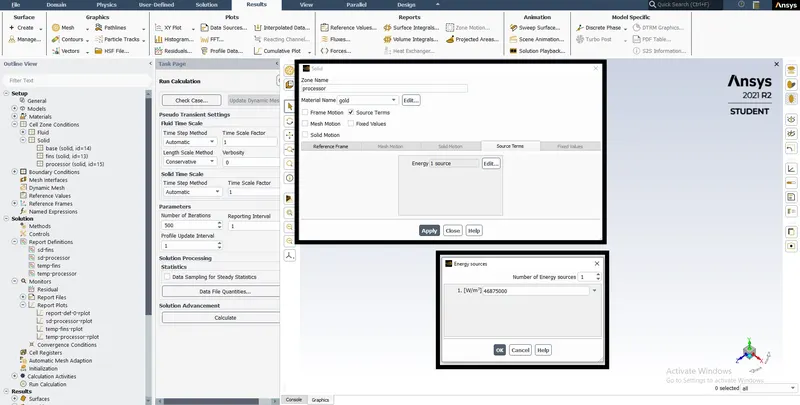
*The source terms are initialed with energy of 4,68,75,000 `W/m^3`
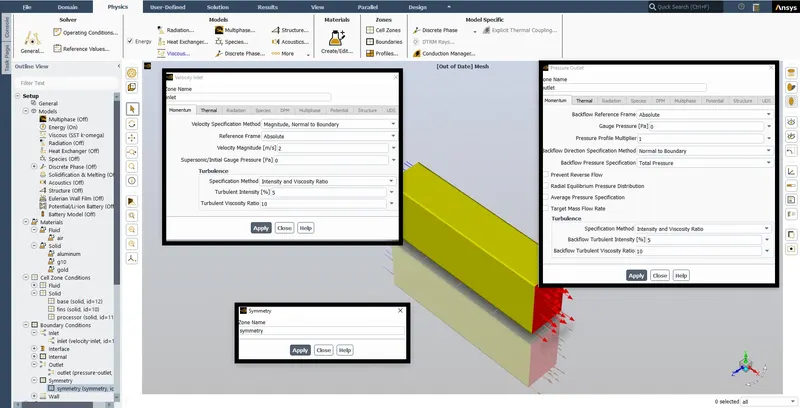
*Boundary Conditions are applied on the inlet with velocity values of 2m/s, outlet with pressure at zero, and the symmetry.
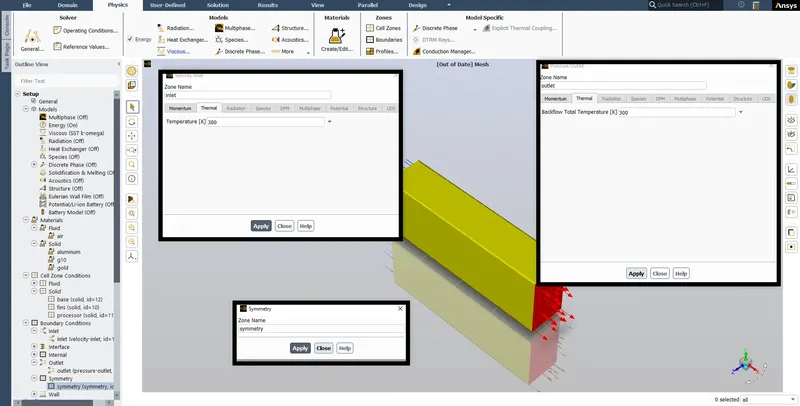
*Boundary Conditions are applied on the inlet with temperature value of 300 K, outlet with the temperature at ambient condition.
*Reference value is checked for the area, length and velocity parameter and their values.
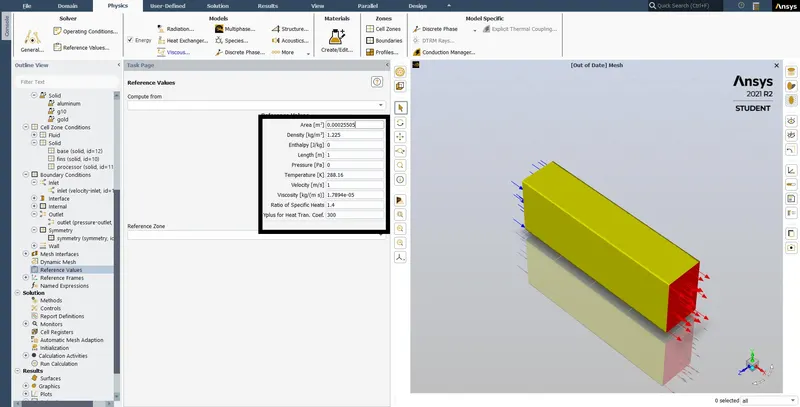
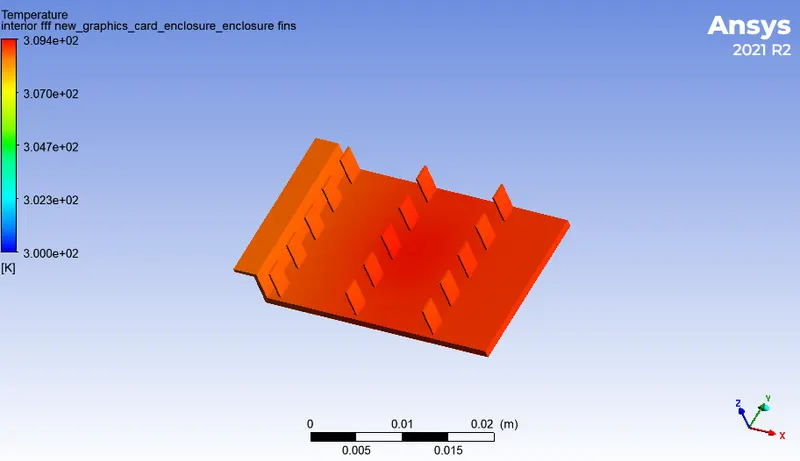
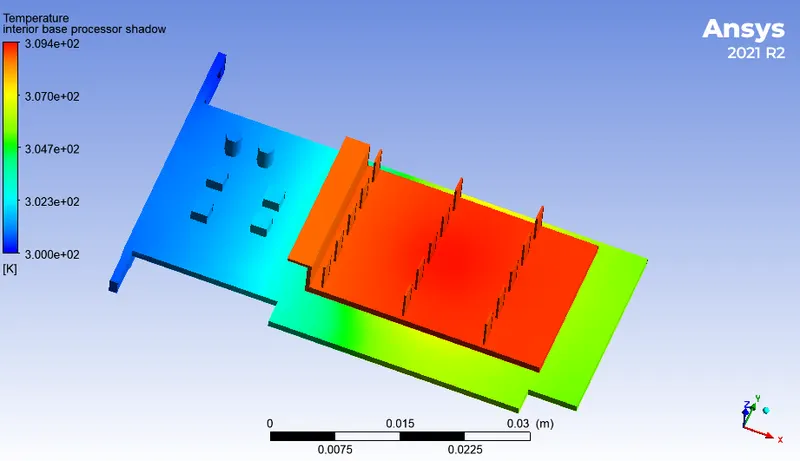
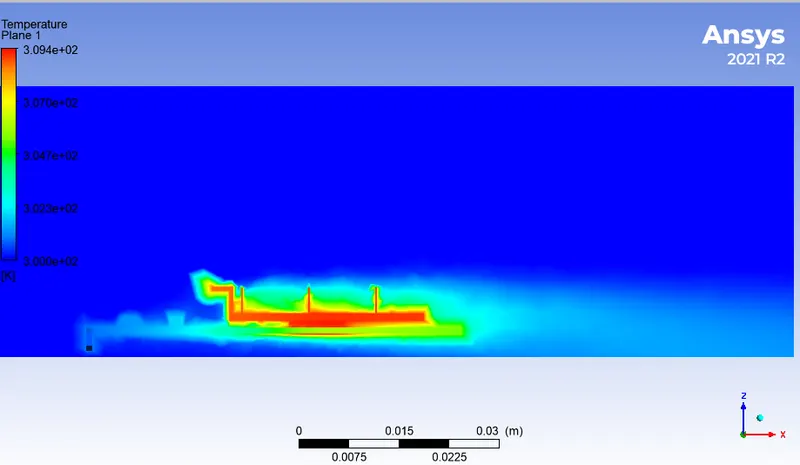
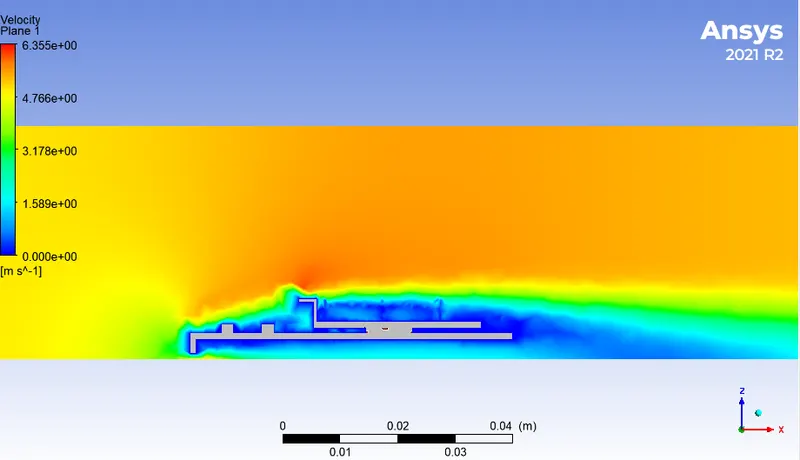
CASE 1 (velocity 2m/sec)
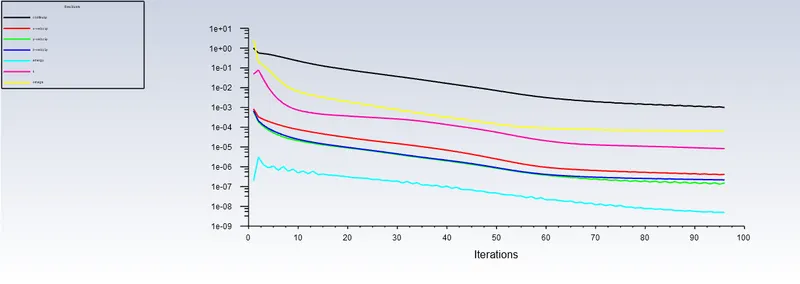
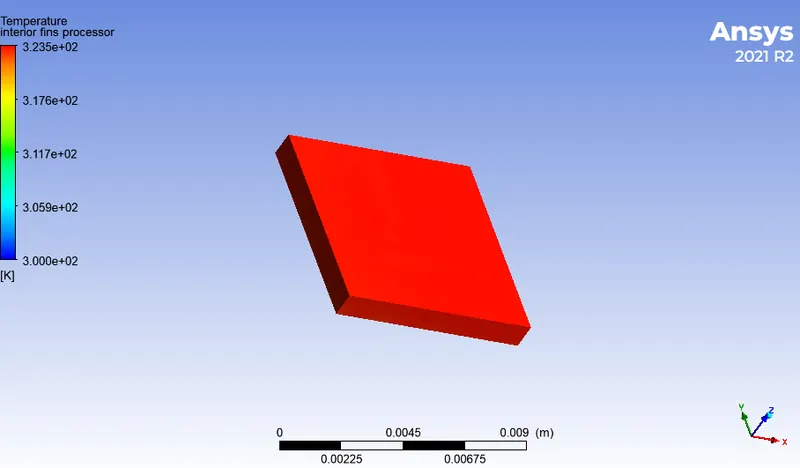
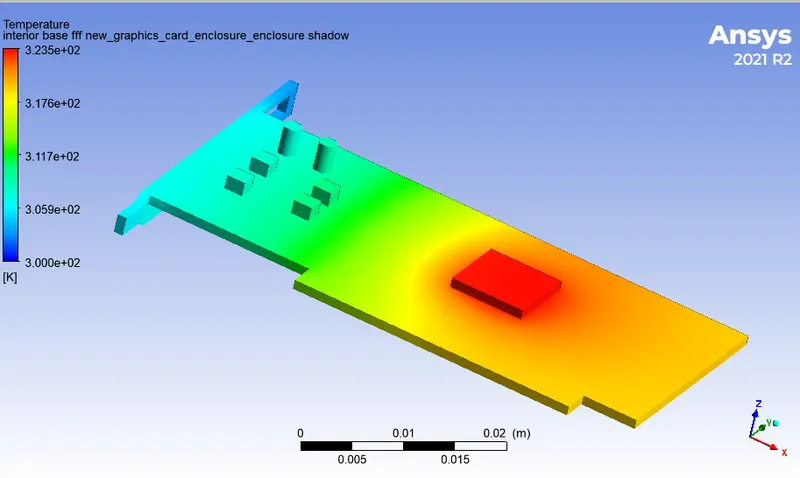
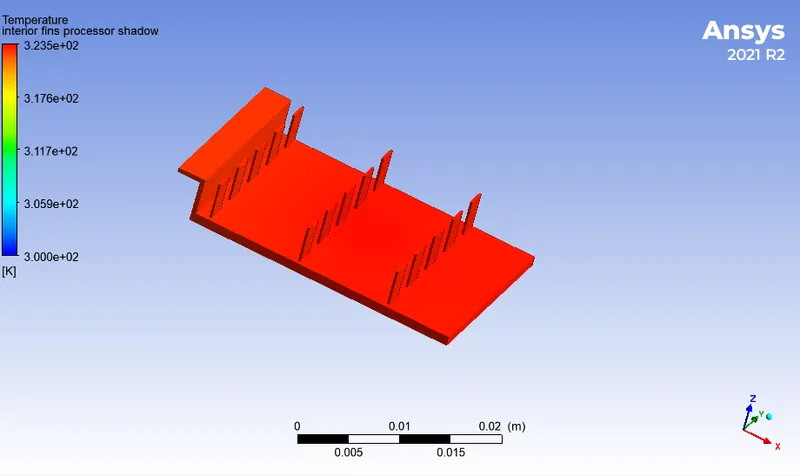
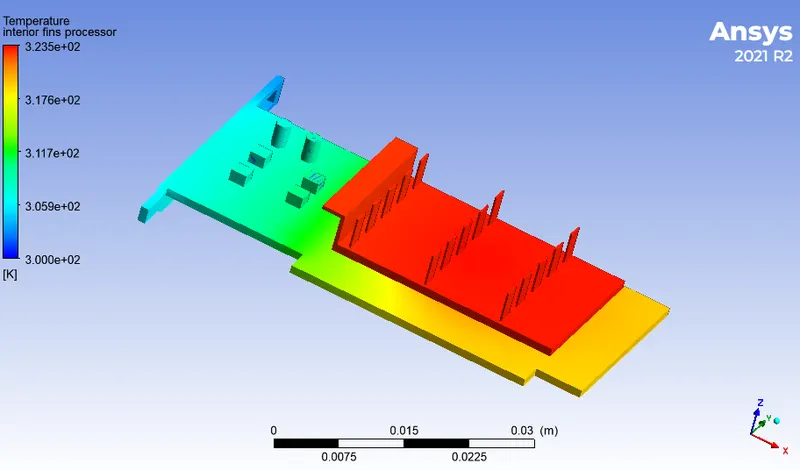
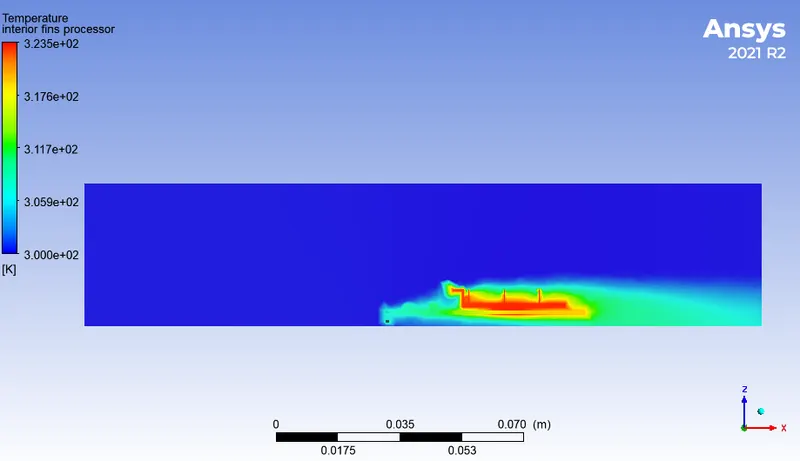
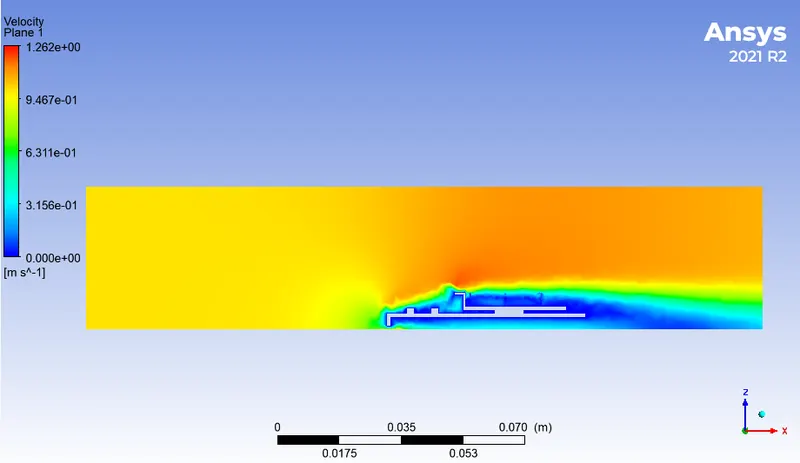
CASE 2 (velocity 3m/sec)
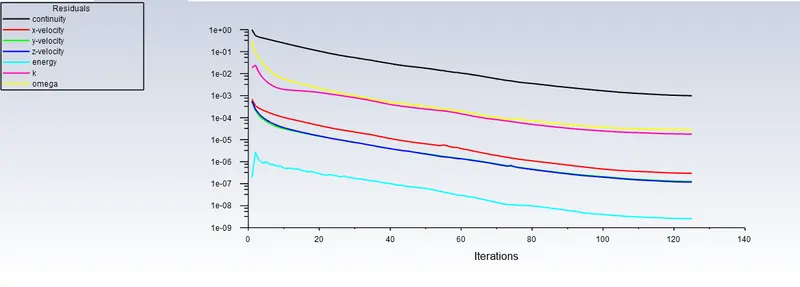
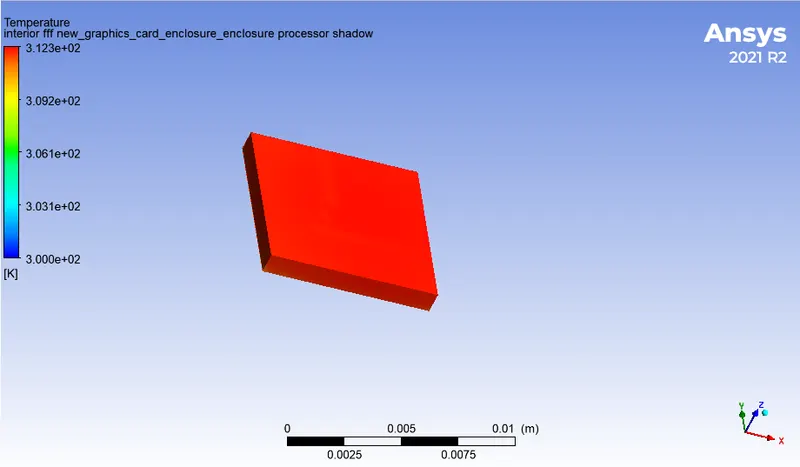
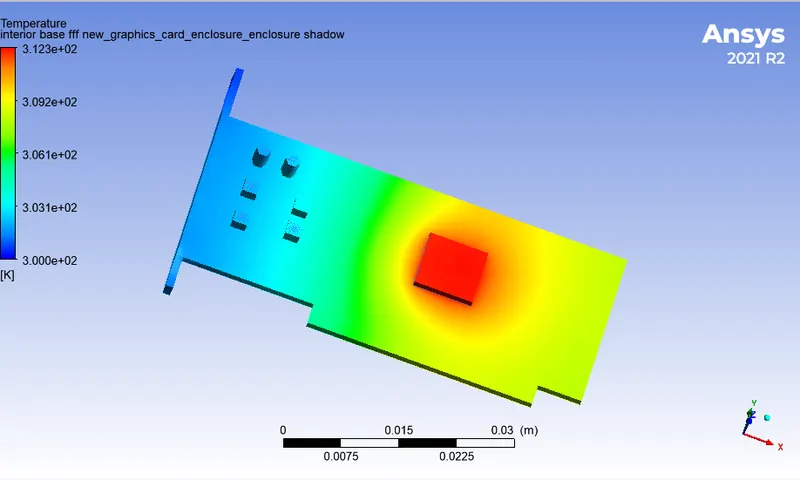
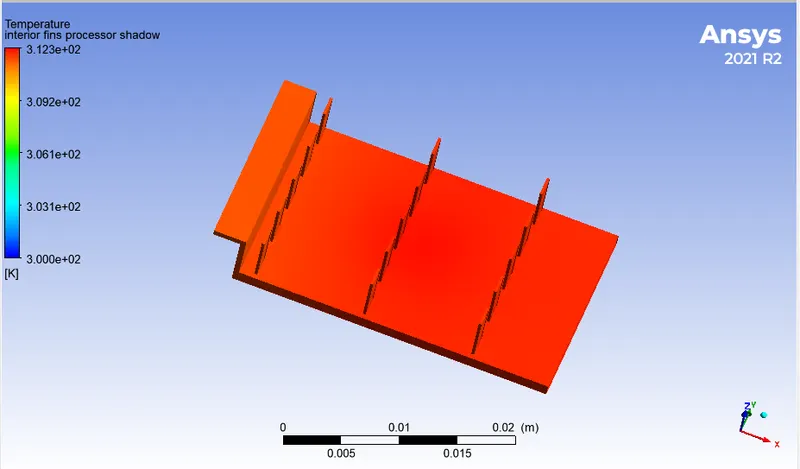
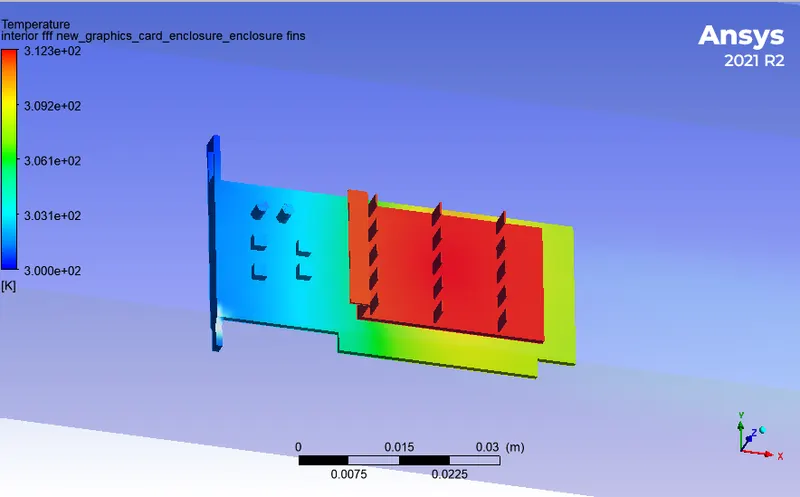
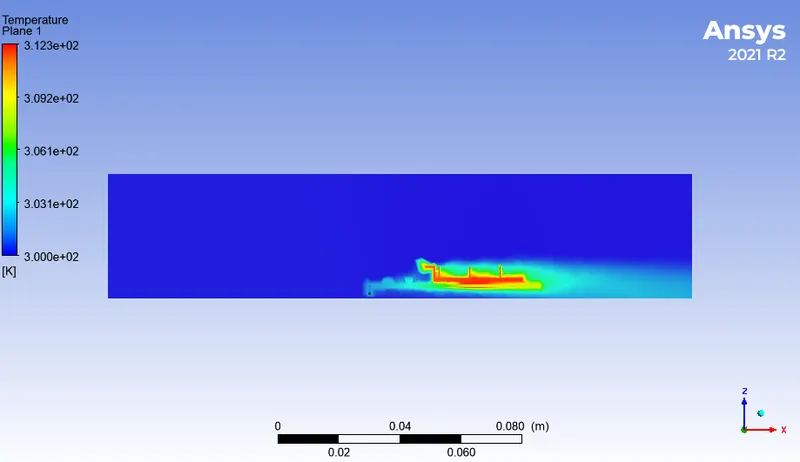
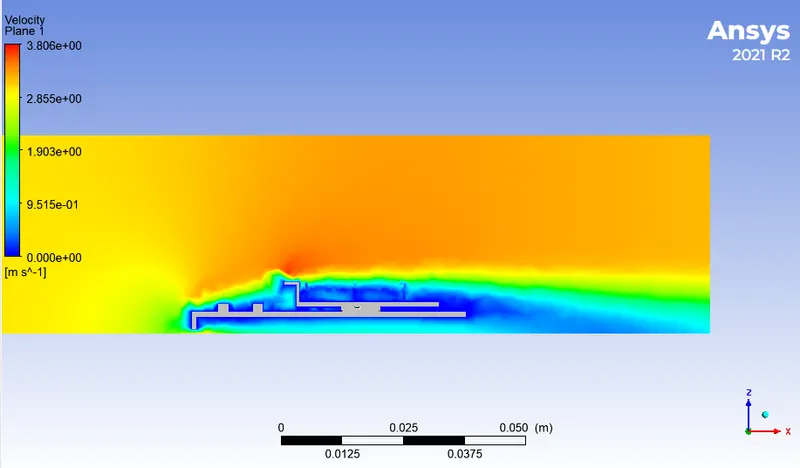
CASE 3 (velocity 4m/sec)
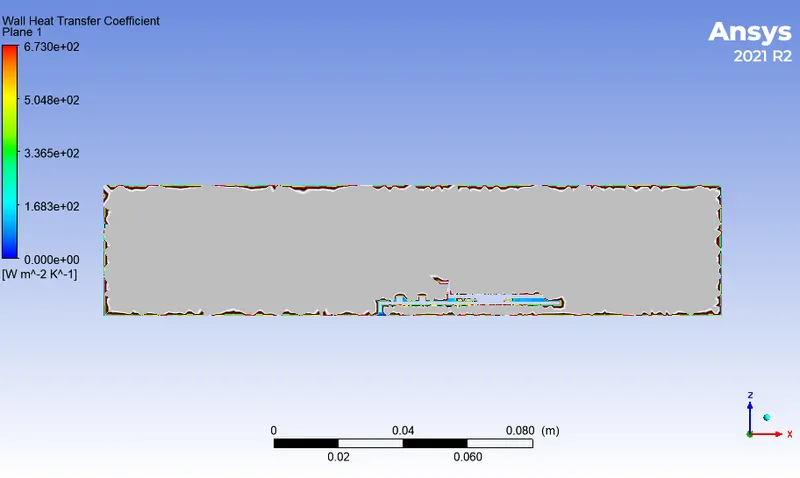
CALCULATION:-
Nussalt Number:-
`Nu=0.023*Re^0.8*Pr^0.4`
`Nu=(h*l)/(k)`
Reynolds number `=(rho*V*l)/(mu)`
`rho=1.225 (kg)/(m^3)`
V`=2m/s`
l=0.008m
`mu=1.78e^-5(kg)/(m*sec)`
`Re=(1.225*2*0.008)/(1.78e^-5)`
Re=110.112.
For Air at 300 K
Pr=0.710.
k=`1(W)/(m*K)`
`Nu=0.023*(110.112)^0.8*0.710^0.4`
`Nu=0.85750`
`h=(Nu*k)/(l)`
`h=(0.85750*1)/(0.008)`
Surface Heat Transfer Coefficient `h=107.1875(W)/(m^2*K)`
Output table
|
CASE |
VEOCITY`m/sec` |
MAXIMUM TEMPERATURE ON THE GRAPHICS CARD (K) |
SURFACE HEAT TRANSFER COEFFICIENT `(W)/(m^2.K)` |
|
COURSE MESH |
2 |
339.6 |
285.432 |
|
REFINED MESH |
2 |
324.9 |
296.807 |
|
REFINED MESH |
3 |
313.8 |
389.230 |
|
REFINED MESH |
4 |
308.0 |
467.875 |
CONCLUSION
- The refined mesh provides a more accurate result than coarser mesh. Accuracy can be increased by increasing the no. of elements.
- The temperature of the graphic card decreases with the increase in velocity because as the velocity of flow is increased, more heat is carried away by air, hence the graphic card cooled.
- The processor is the potential hotspot of the graphic card assembly since it is the only heat generation source of the entire assembly. the temperature and wall heat transfer coefficient of the processor and other parts have influenced the heat generated by the processor. Also, the heat generated by the processor depends on its workload. The higher the workload higher the heat generated by the processor.