Simulation of Bending of iPhone using ANSYS Workbench
AIM: To perform a bend test on an iPhone model using ANSYS Workbench.
History:
One of the biggest PR disasters was the bending of the iPhone 6 Plus which was demonstrated by the Youtube channel "Unbox Therapy". The video went viral and resulted in mobile phone companies having to rethink the way in which the material was the chassis of phones would be selected in future.
We will be using ANSYS Workbench for the purpose of this assignment to simulate this informal bend test using FEA.
PROCEDURE:
The following geometry was imported into ANSYS as shown below:
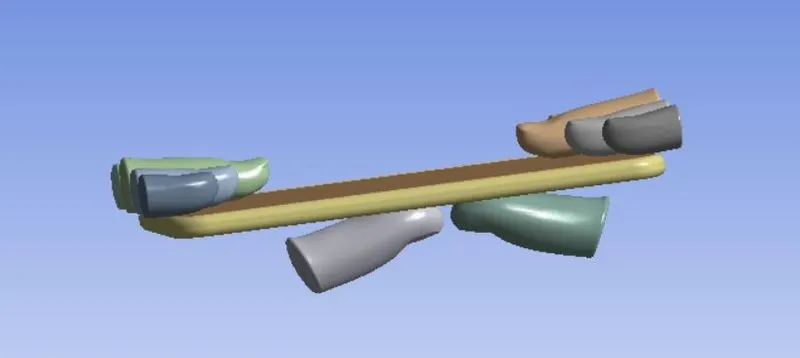
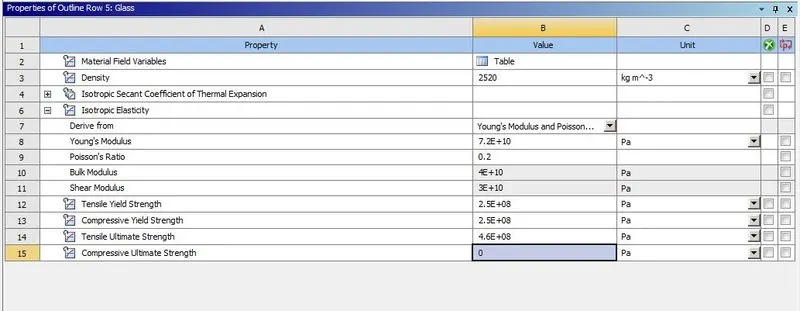
The geometry includes the phone consisting of Aluminium chassis, display and interiors. The display is assigned to be glass and interiors are assigned to be Polyethylene. The fingers are assumed to be structural steel with rigid behaviour because in this case they are used strictly for creating force. The material properties of glass are given below:
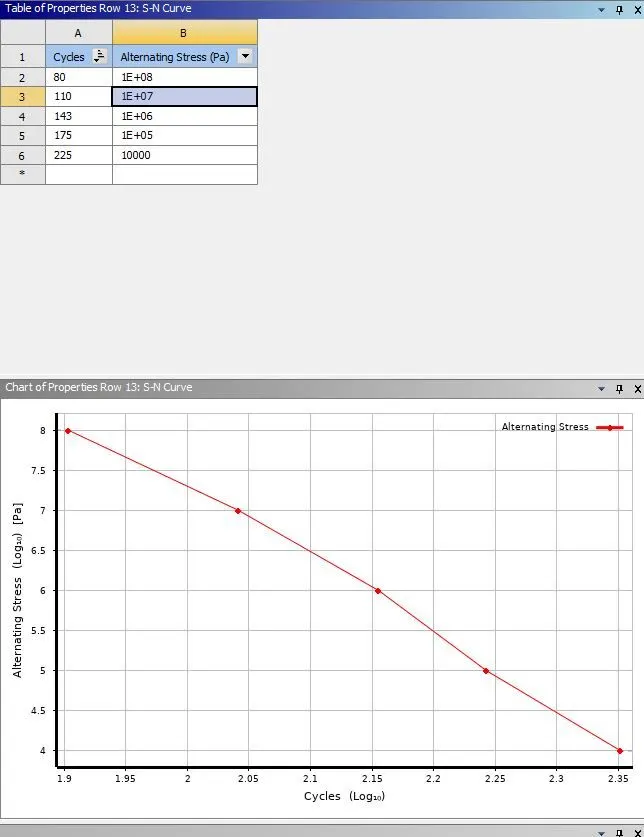
The Aluminium SN curve is modified as shown below:
The fingers are given a fixed joint as shown below:
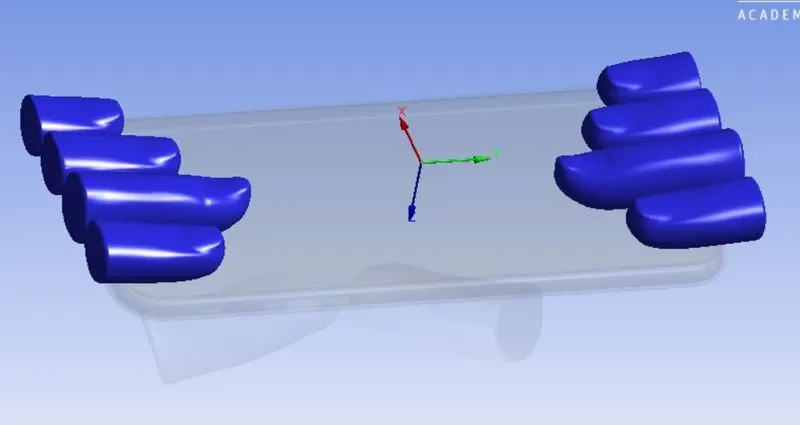
The two thumbs are given translational joint as shown below:
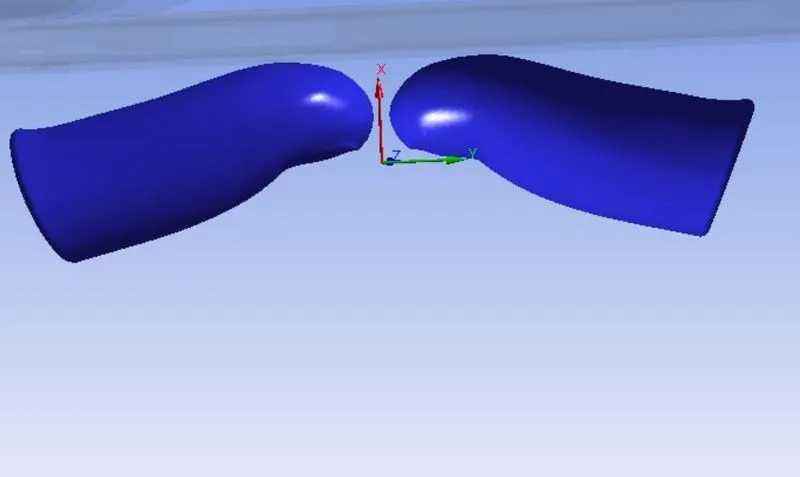
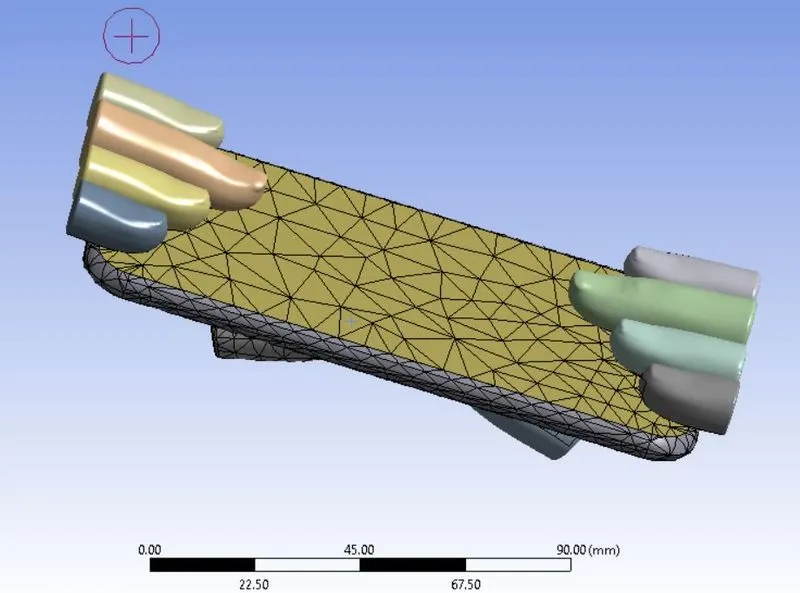
A translation of 8 mm in y-direction was given to both the thumbs and meshed with size of 12 mm element size as shown below:
The system was solved and the stress contour is given below:
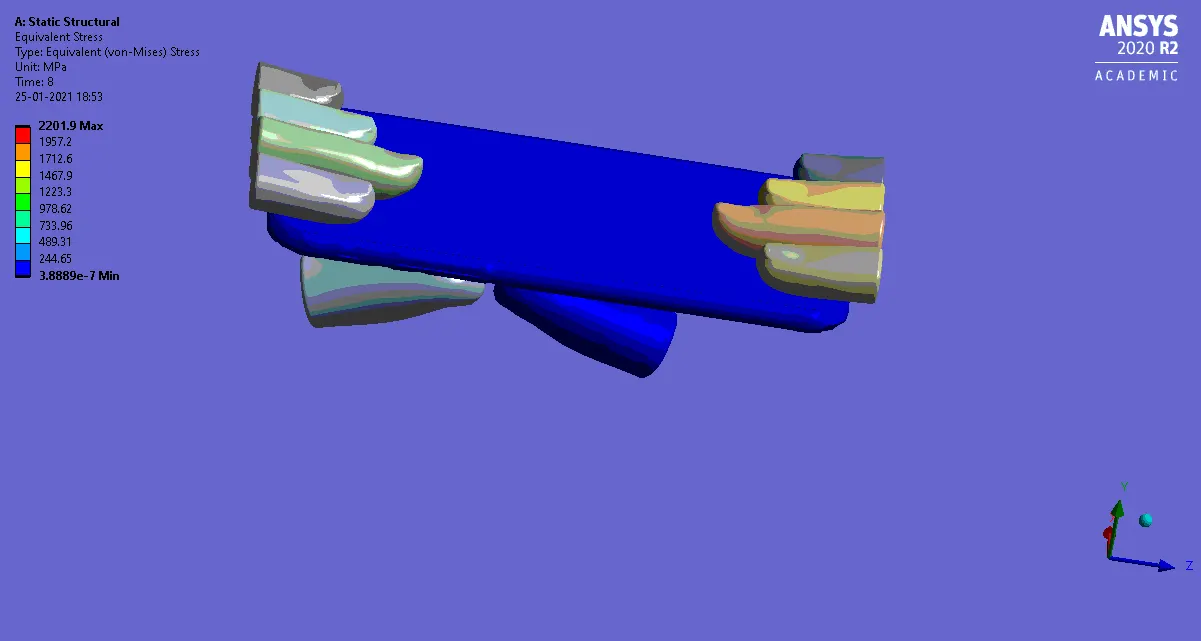
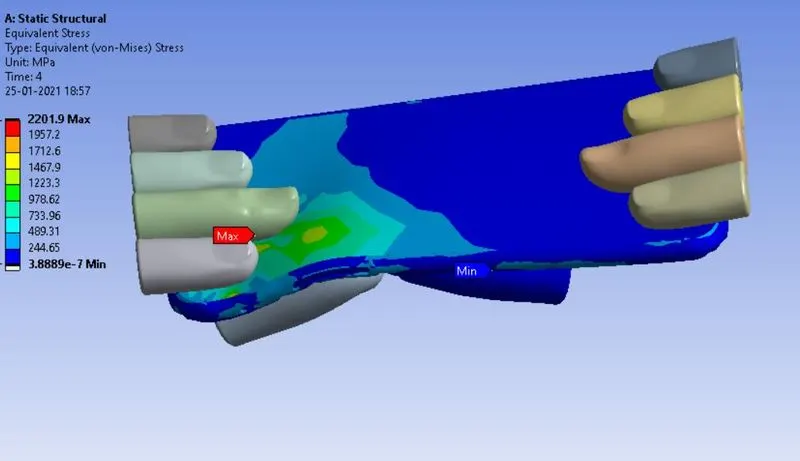
Maximum stress of 2201.9 MPa was observed. The plastic strain contour is given below:
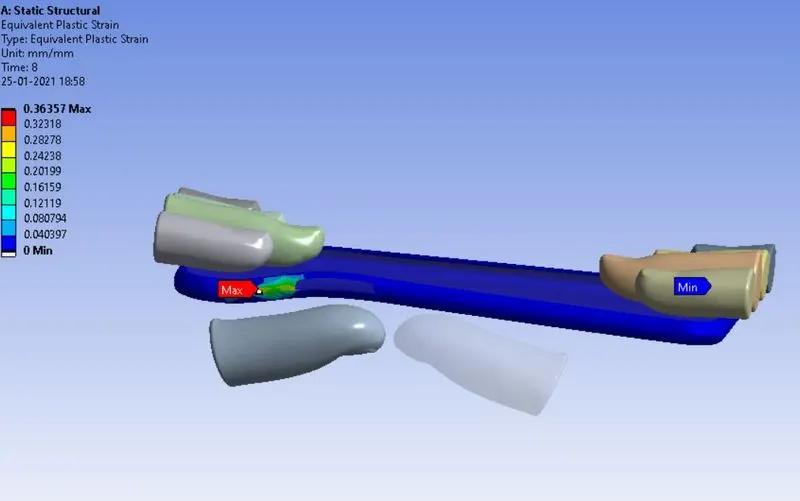
Maximum plastic strain of 0.37 was observed. Directional deformation in y-direction is shown below:
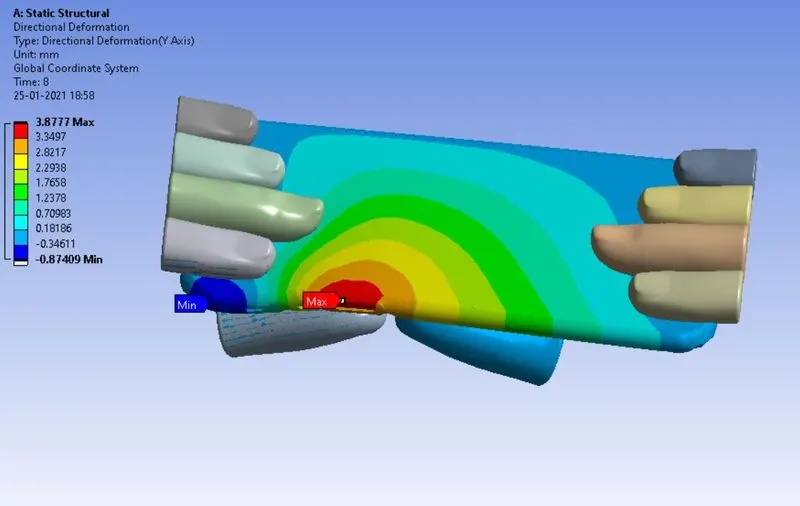
Maximum deformation of 8.28 mm was observed. The solution was also solved for fatigue life and safety factor. The stress life is shown below:
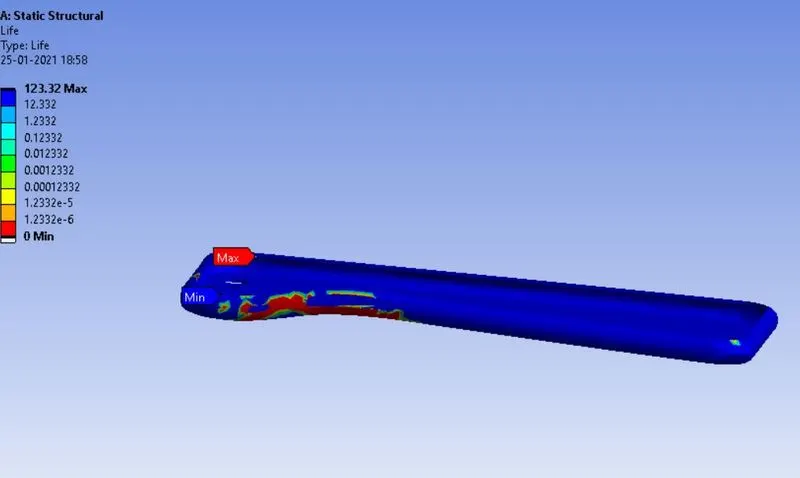
Fatigue stress life was shown to be 123.32. The safety factor is shown below:
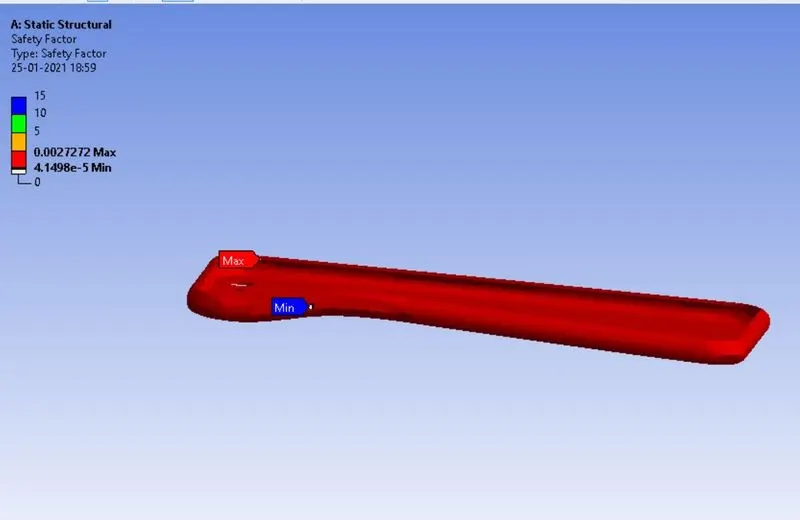
Maximum safety factor of 15 was observed.
The same simulation was conducted by transforming the thumbs by 22.5 mm in x-direction and 10 mm in z-direction as shown below:
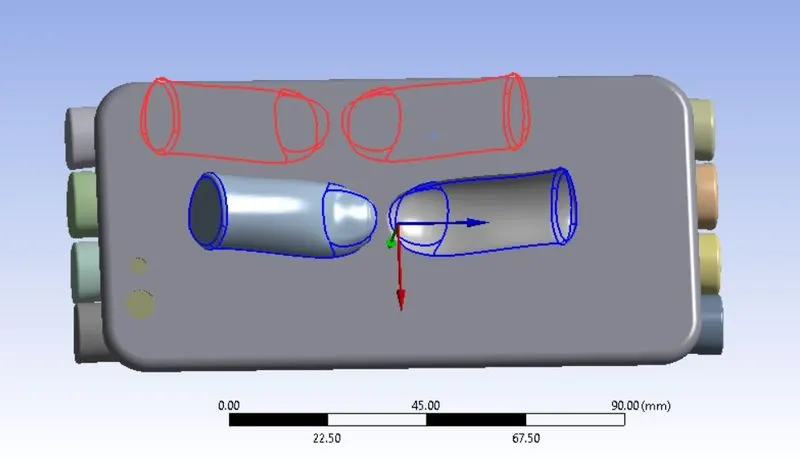
The red is the previous case and the blue is the transformed case. The same output blocks were given. The stress contour is given below for the new case:
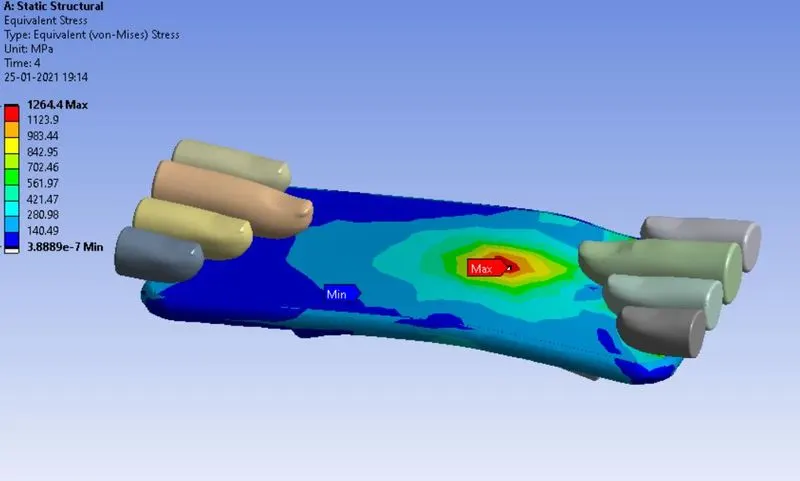
Maximum of 1264.4 MPa was observed. The plastic strain contour is given below:
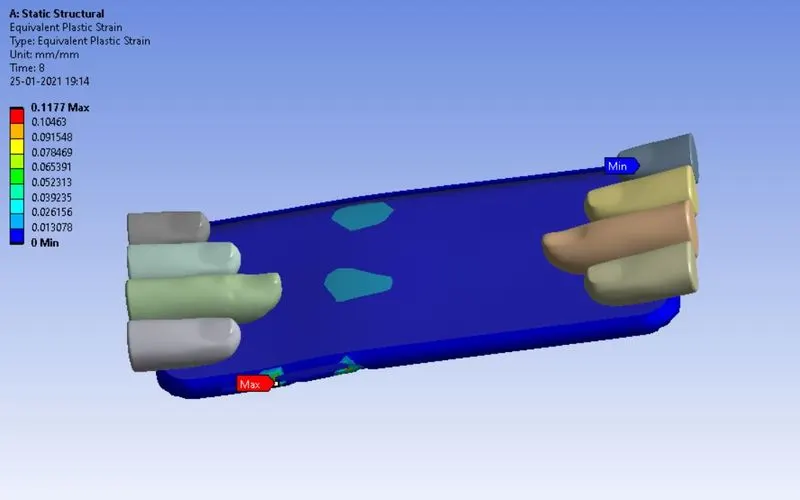
Maximum plastic strain of 0.163 was observed. The deformation in y-drection is given below:
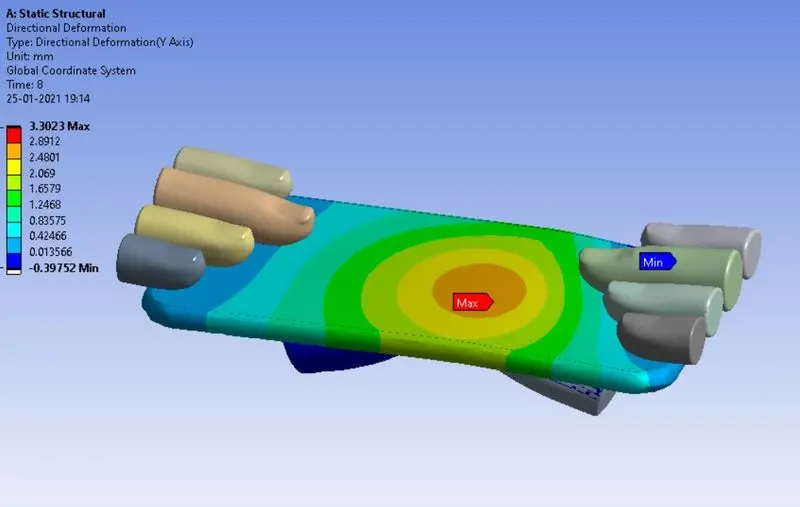
Maximum deformation of 8mm was observed. The stress life is shown below:
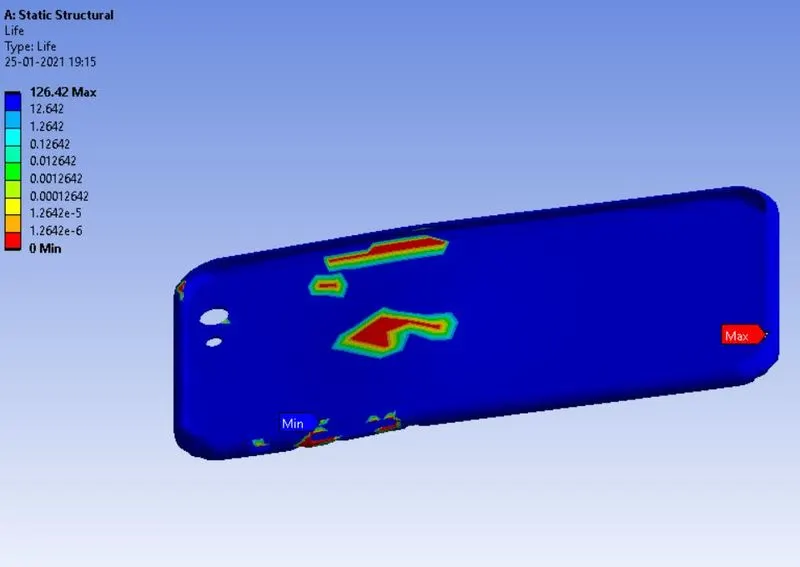
Stress life was seen to be 126.42. The safety factor is given below:
Safety factor of 15 was maximum. The results from both cases can be summarized below:
|
Cases |
Max Stress |
Max Plastic Strain |
Max deformation |
Stress Life |
Safety Factor |
|
Case 1 |
2201.9 MPa |
0.37 |
8.2428 mm |
123.32 |
15 |
|
Case 2 |
1264.4 MPa |
0.163 |
8 mm |
126.42 |
15 |
As can be seen, applying the same deformation on the centre results in more delocalization of strain. Therefore, maximum stress is lower when applying load at centre of the phone as opposed to at the corner of the phone. Therefore both stress and plastic strain are lower at the centre. This also signifies that creating the same deformation at the corners requires more stress but also results in more plastic strain. The stress life is slightly higher when applying load at the centre due to lower maximum stress. A safety factor of 15 is seen for both cases.
CONCLUSION: The structural analysis of iPhone bending was successfully simulated in ANSYS Workbench and the results were quantitatively discussed