Week 5.1 - Compact Notation Derivation for a simple Mechanism
AIM
The aim is to derive reaction rate ODE of a simple reaction mechanism
DERIVATION OF REACTION RATE
Consider the following reactions, lets number the following reactions.
CO + O2 -> CO2 + O ---(1)
O + H2O -> OH + OH--- (2)
CO + OH -> CO2 + H ---(3)
H + O2 -> OH + O ---(4)
And now lets list all the species of hydrocarbons that are taking place in the reaction
- O2
- H20
- CO2
- OH
- CO
- H
- O
Lets define vij' be the stoichiometric coefficient matrix for the reactants in which the 'i' represents the reaction. 'j' denotes the number of moles of the species coefficient
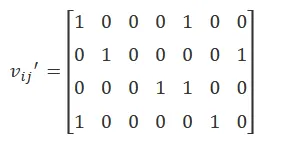
Now we have to determine the stoichiometric coefficient matrix vij′′for the products side as well
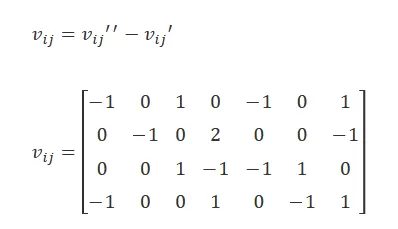
So the net reaction rate qican be written as:
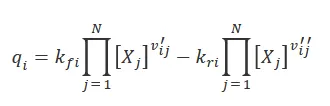
where,
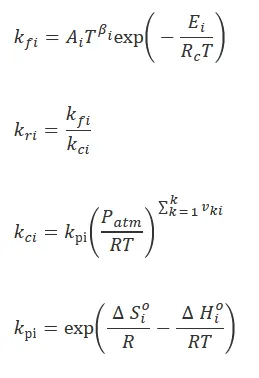
kf1is the forward reaction rate
kr1is the backward reaction rate
[Xj]vij′ is the concentration of species per unit volume of reactants
[Xj]vij′′ is the concentration of species per unit volume of products
Now substituting the values for 'i' in the net reaction rate equation we obtain:
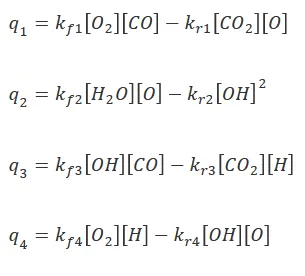
Now we define the net production rate ωjof 'j' species is written as:
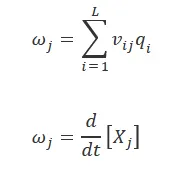
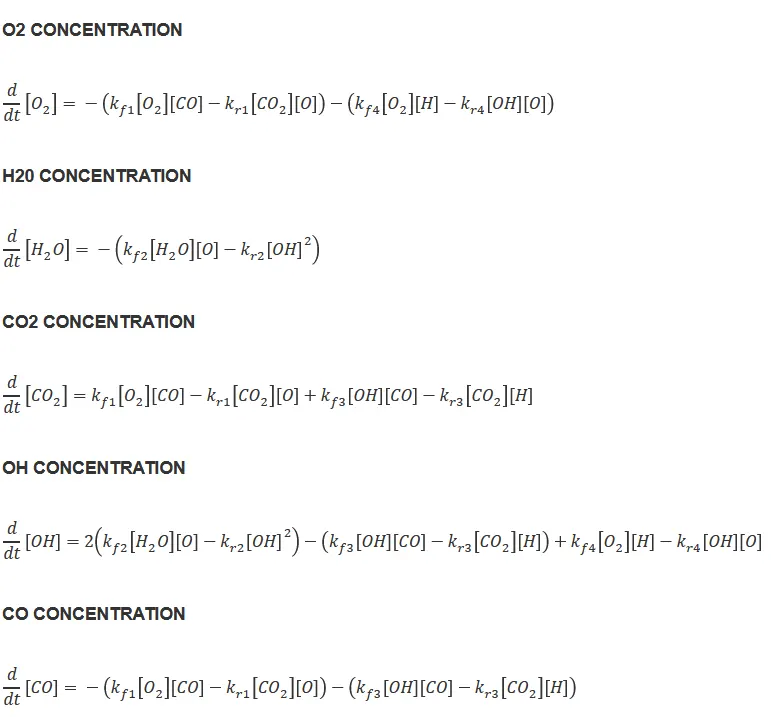
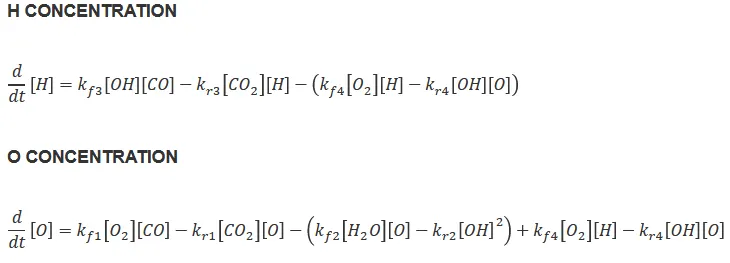
Substituting the values for 'j', we can write the net production rate
ωj=v1jq1+v2jq2+v3jq3+v4jq4
In order to evaluate the forward and backward reaction rates, the established relations are to be used,
CONCLUSION
- The concentration of each species was derived
- Reaction rates was determined using compact notations