Week-4 Challenge WOT Condition Part-2
1. What is the difference between mapped and dynamic model of engine, motor and generator? How can you change model type?
Aim:
To find the difference between mapped and dynamic model of engine, motor and generator. Also we need to change the model type.
PROCEDURE :
- We need to open the Powertrain Blockset in the MATLAB Help documentation.
- In Powertrain Blockset we need to open the Full Electric Vehicle Reference application.
- The EV reference model file consists of various powertrain blocksets.
- The model type is backward looking model and its starts from drive cycle and ends in passenger car block.
- In passenger car block there is a sub system in which there is Electric Plant and Drivetrain blocksets.
- Under the Electric plant block there is a subsytem called EV Mapped model.
- The EV Mapped model consists of both mapped MotGen model and Dynamic MotGen model.
- We need to explore both the model type like Mapped and Dynamic.
Mapped Model of Motor:
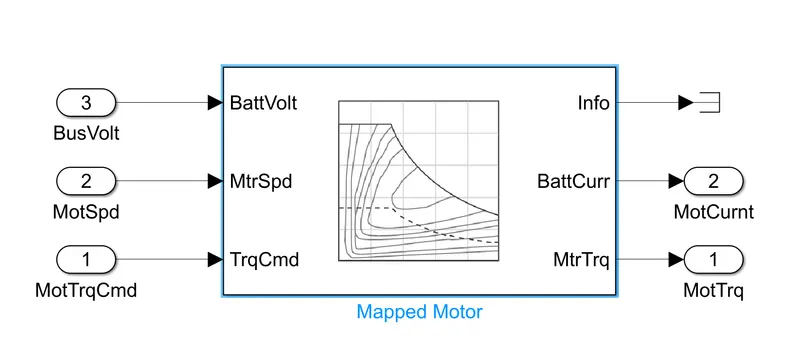
- The Mapped model is the model in which the motor details or motor data's are given in the form of look up tables.
- The look up table are incorporated with the motor details like maximum torque, power and losses etc.,
- The mapped model is also known as static model.
- The simulation time of mapped model is much quick compared to dynamic model.
- The Mapped model is quick than dynamic model because the mapped model consists of pre-defined datas in the look up table.
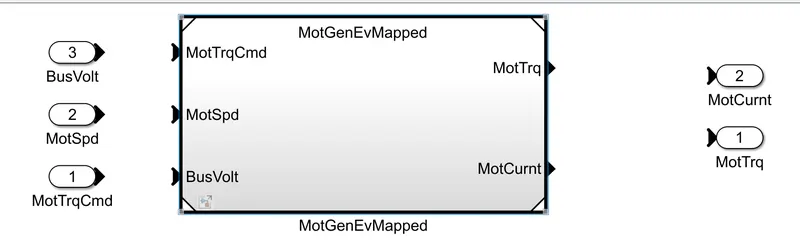
The below model is the sub system of the MotGenEvMapped block:
Dynamic Model of Motor:
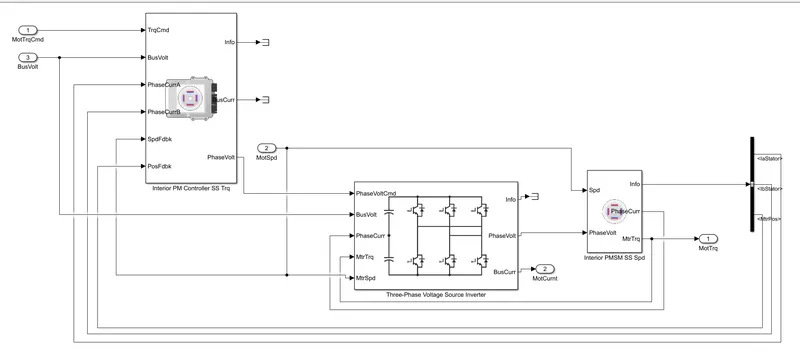
- The Dynamic model consists of real time components or the actual components of the motor.
- The Dynamic model is incorporated with real time components so the results will be more accurate.
- The simulation time for the dynamic model is more compared to mapped because it takes time to get the results based on real time situations.
- The Dynamic model consists of actual components like PM controllers, 3 Phase Voltage source inverter and 3 phase permanent magnet sychronous motor etc.,
- The below snap shows the dynamic model components used in the EV reference application.
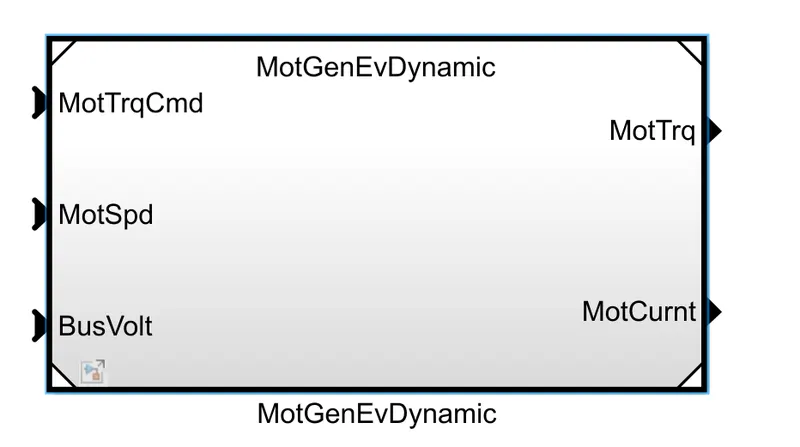
The below model shows the sub system of dynamic MotGenEv block:
To change model type:
We need to follow the below steps to change the model type:
- We need to open the EV reference application model from the Matlab Help documentation.
- In EV model we need to enter into the sub system of Passenger car block.
- The Passenger car block has sub system called Electric plant and inside Electric plant there will be MotGenEv block.
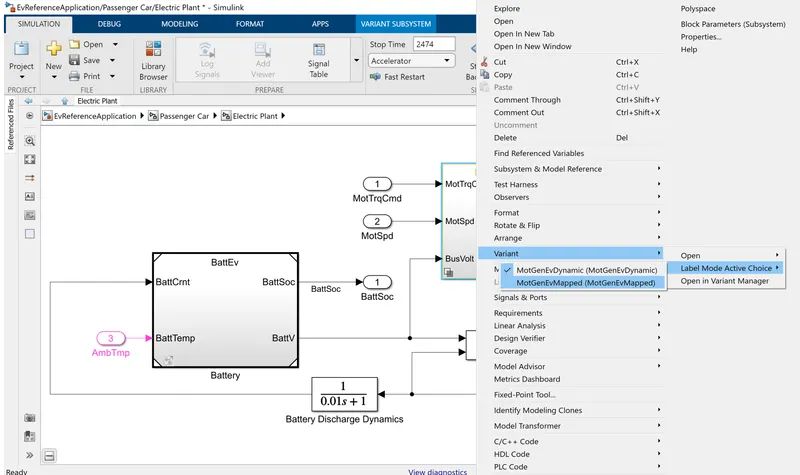
- We need to right click the block and choose variant and it shows the option like open, Open in Variant manager and Label Mode Active Choice.
- We need to choose the Label Mode Active Choice in which we can change the model type as Mapped or Dynamic.
Conclusion:
Thus the difference between Mapped and Dynamic model is explained and the model type is changed.
2. How does the model calculate miles per gallon? Which factors are considered to model fuel flow?
Aim:
To know how the model calculates the miles per gallon in the HEV Reference application and also need to discuss the factors of model fuel flow.
Procedure:
- We need to open the HEV Reference application from the Matlab Help documentation.
- In the HEV model there are several Powertrain blocksets in which we need to open the Visualization block.
- In visualization block there will be several sub systems to get the desired output results.
- The Performance calculations block will have the blocks to calculate the miles per gallon.
- Generally the miles per gallon refers to the Engine fuel consumption in the units of gallon.
The miles per gallon calculation needs 3 input values namely Battery power, Fuel flow and Vehicle speed.
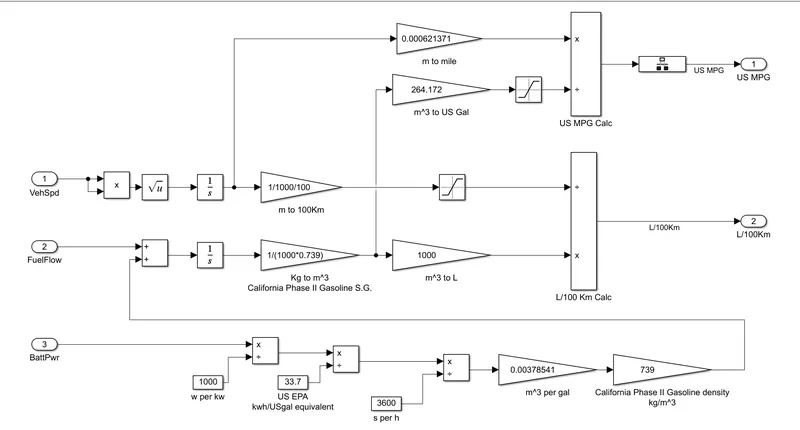
Figure 1 : The above figure shows the blocks used in the calculation of miles per gallon.

Figure 2 : The above picture shows the conversion of battery power into equivalent form of Gasoline density.
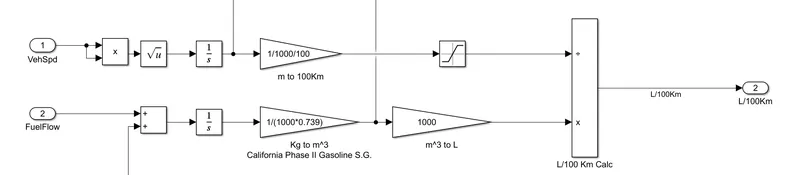
Figure 3 : In the above figure the Fuel flow gets added up with Gasoline density then it is integrated and converted into Litres(L). Also the vehicle speed is integrated to get the distance and it is used further to get miles per gallon.
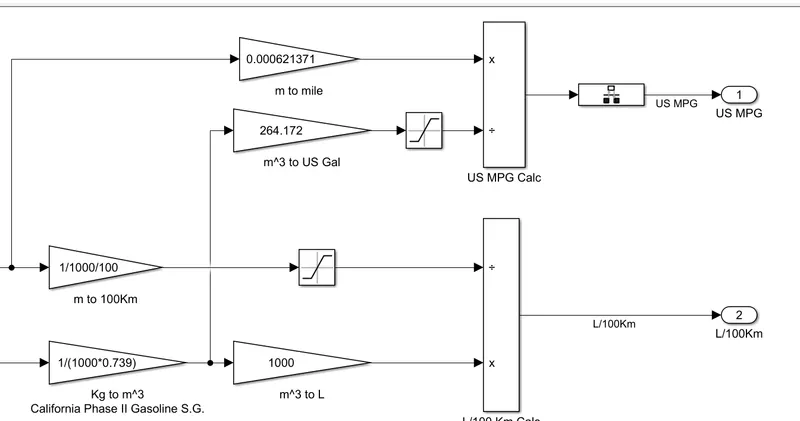
Figure 4 : In the above figure the distance in metre is converted into miles and the equivalent gasoline S.G in m^3 is converetd into US Gal. The distance in miles is divided by US Gal to get the Miles per gallons.
Conclusion:
Thus we found how the model calculates the Miles per gallon using parameters.
3. Run the HEV ReferenceApplication with WOT drive cycle. Change the grade and wind velocity in the environment block. Comment on the results.
Aim:
To run the HEV Reference Application with WOT drive cycle and also need to change the grade and wind velocity paramters in environment block and view the results.
Procedure:
- We need to open the HEV Reference Application using Matlab Help Documentation.
- In HEV Reference application there will be several powertrain blocksets, Environment block and drive cycle blocks.
- In drive cycle block we need to choose Wide Open Throttle(WOT) drive cycle and entry the reference speed, deceleration time and WOT simulation time.
- Here we are simulating the model with no changes in grade and wind velocity and observing the results.
- Now we are changing the grade and wind velocity of the simulation and observing the results.
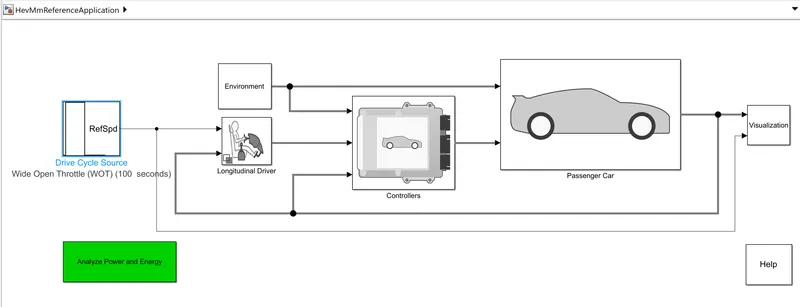
HEV Reference Model:
The below picture shows the HEV model in which series parallel type of configuration is used.
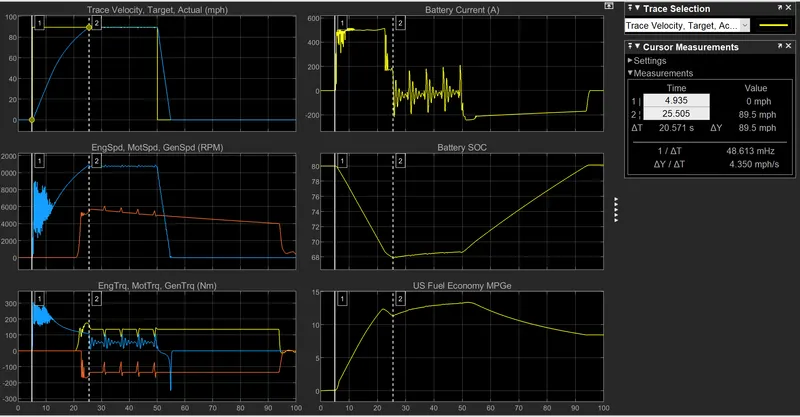
Simulation Result with no Grade and Wind velocity:
- In the below result the reference velocity and actual velocity is shown in which it takes 20.571 sec to reach the maximum speed of 89.5mph.
- The battery SOC also gets decreased from 80% to 68% due to WOT condition and it gets increased when deceleration is occured.
- The Miles per gallon also gets increased due to use of engine power.
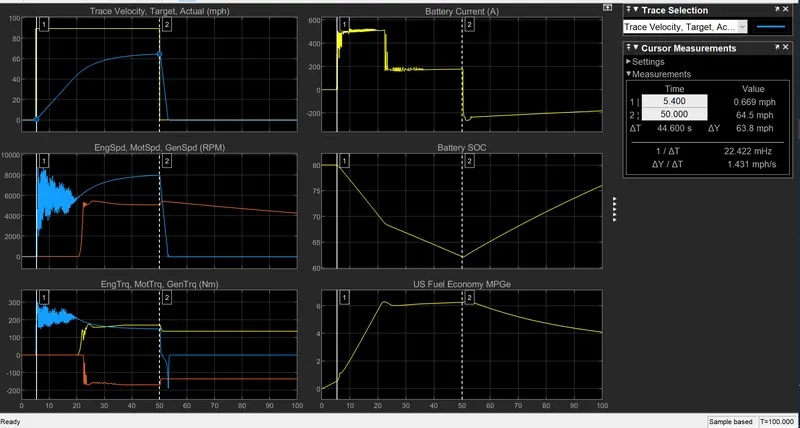
Simulation Result with Grade and Wind velocity:
- With the Grade and wind velocity the maximum speed of the vehicle gets decreased and also acceleration time to achieve maximum speed gets increased.
- The reduction in speed is due to the battery capacity or battery current is not sufficient to achieve the maximum speed.
- The battery SOC gets decreased during acceleration as usual and gets increased during deceleration.
Conclusion:
Thus the HEV Reference Application with WOT condition is executed with grade angle and wind velocity, also the results are observed.
4. Keeping all other parameters same, compare the simulated results of hybrid and pure electric powertrains.
AIM:
To compare the Hybrid Electric Vehicle reference model and Pure Electric powertrain models and view the results.
Procedure:
- First we need to open the Pure EV reference application using Matlab Help documentation.
- By keeping all the parameters same and the model made to run and the results are obtained.
- Secondly now we need to open the HEV reference application using Matlab Help documentation.
- The model is made to run by keeping all the parameters as same and results are discussed below.
Pure EV Application model:
The below model shows the Pure EV application model in which only battery is used as source of the vehicle.
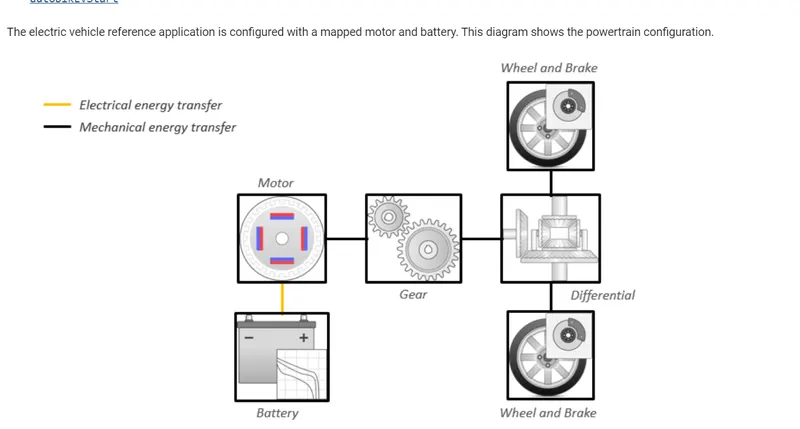
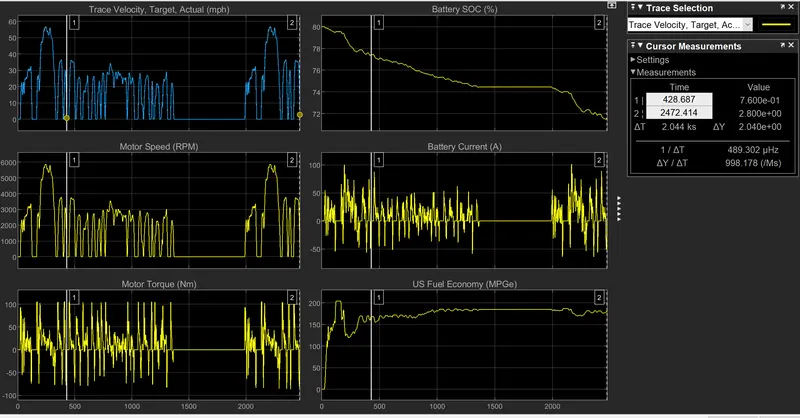
Pure EV results:
The below snap shows the output results like Actual speed, Motor speed, Motor torque, Battery SOC, Battery current and US Fuel Economy.
HEV Reference model:
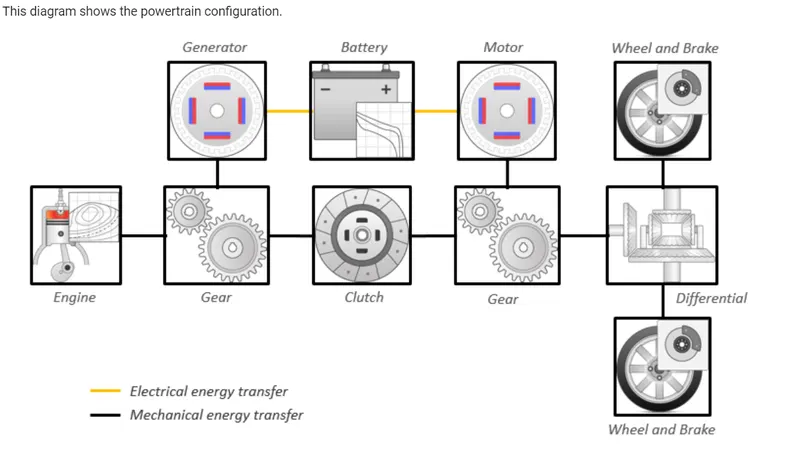
The below model shows the HEV reference model in which battery and engine is used as a source of the vehicle. The battery and Engine is connected in series parallel type.
HEV results:
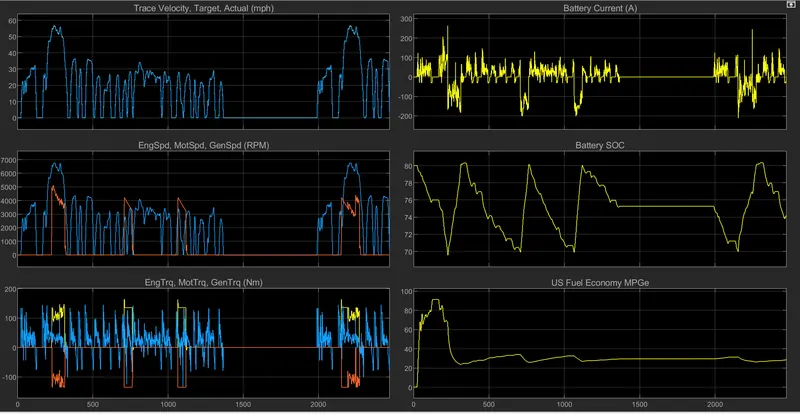
The below snap shows the output results like Actual speed, Motor speed, Motor torque, Battery SOC, Battery current and US Fuel Economy.
Comparison of Pure EV and HEV :
- In Pure EV model the battery is the only source but in the HEV model there will be both battery and engine and generator for regenerative braking.
- In pure EV model the Battery SOC is gradually decreasing but in the HEV model the Battery SOC gets decreased and increased due to regenerative braking.
- In pure EV model battery alone will help to provide the required power to run the vehicle but in the case of the HEV the engine also provides the power if battery power is not enough for the required power by vehicle.
- In the results the motor speed alone is available in EV but in case of HEV there will be engine speed, Motor speed and Generator speed.
Conclusion:
Thus the Pure EV and HEV model is compared and results are shown.