Week-4 Challenge WOT Condition Part-2
LIVE SESSION BATCH 16
AIM : to run the HEV reference application with WOT drive cycle with different parameters and comment on the results.
Objectives :
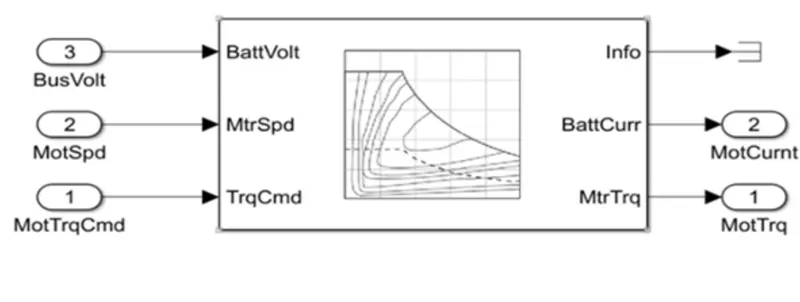
1. To find out what is the difference between mapPED and dynamic model of engine motor and generator. How can we change the model type.
2. To find out how does the modEL calculate miles per gallon and which factors are considered to model fuel flow.
CONCEPT :
Mapped Engine : Mapped engine represent macro engine behaviour as a set of look up tables consist of breaktorque fuel flow, air mass flow, exhaust temperature, eficiency, and emission as functions of command load and measured engine speed. Mapped engine models are suitable for analysis and design activities that do not require engine subsystem dynamic characteristics for example in engine and transmission powertrain matching analysis for fuel economy emission and performance trade-offs
Dynamic Engine :
Dynamic engines decompose engine behaviour into individual components models that account for engine dynamics, most notably in take airflow and turbo charger dynamics. Dynamic engine models are suitable for designing control, estimator and diagnostic algorithms that depend on dynamic subsystem states example in close loop AFR that is air fuel ratio control algorithm development.
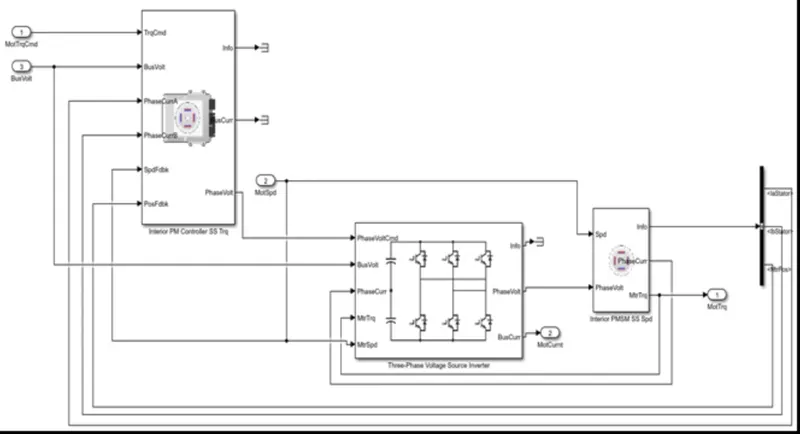
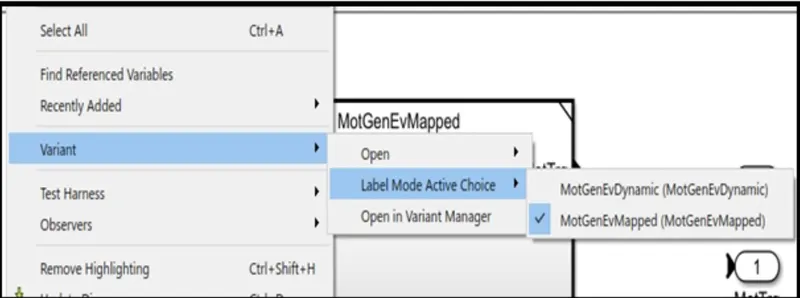
We can switch between mapped and dynamic engines by following the below procedures :
1. Open the electric vehicle model in simulink.
2. enter the messenger car block by double clicking on it.
3. Then go to electric plant Block
4. Inside the the motor Block right click to find a variant option
OBJECTIVE (2)
How does the model calculate miles per gallon and which factors are considered to model fuel flow.
for the conventional gasoline vehicle the fuel efficiency is calculated via miles per gallon. However fuel efficiency for hybrid models is calculator via miles per gallon equal Valent. Mpg is the number of miles the car can drive per gallon of gas. Figuring out and mpg rating is a little bit complicated since engines that use an alternative source of fuel can't be measured by liquid gallons of fuel. The mpg rating is calculated buy figuring out the number of miles a vehicle can go using the same energy content as a gallon of gas. The EPA calculate that 33.7 kWh of electricity is the equivalent to 1 gallon of gas.
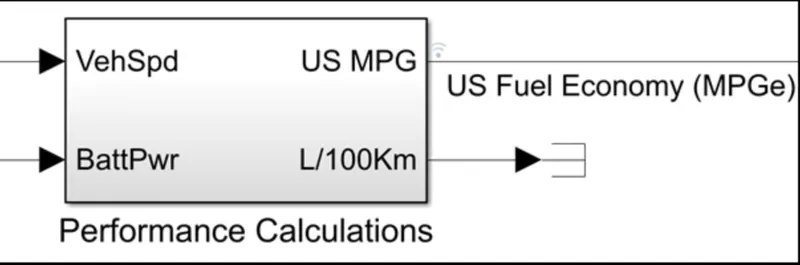
Inside our EV model inside the visualisation Block we have another block named performance calculation.
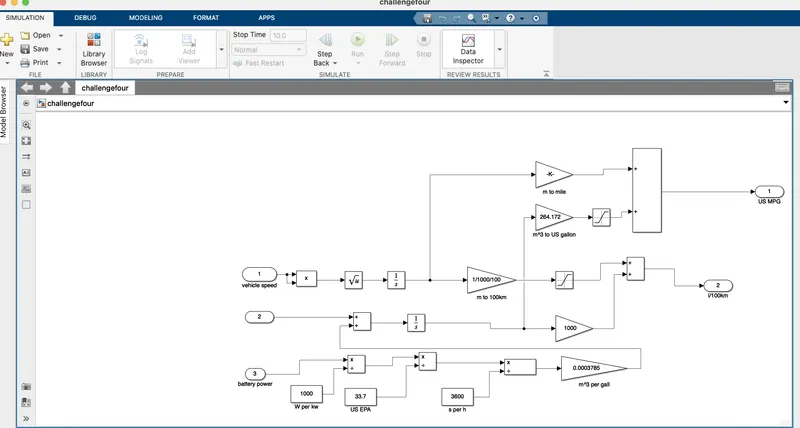
Link - https://drive.google.com/file/d/12CYmb8RyyclLBP6Xir92M6MIR6qgLwqQ/view?usp=sharing
Here three different inputs are taken into consideration
The vehicle speed input is in metre per second which is converted into miles by multiplying with 0.0006213
The kilogram of fuel is converted into cubic meter by multiplying by 1/(1000*0.739)
The cubic metre value is then converted into gallons by multiplying it with 264.172. No my value and Jay land value is used to find and MPG of the vehicle.
Now the battery value is initially converted from watts to kwh by dividing with thousand and then to gallon equivalent by again dividing it with 33.7. Because 33.7 KWH = 1 gallon
Then divide is the value by 3600 to get in per second and multiplied by 0.003785 to get the value in cubic metre per gallon.