Week-4 Challenge WOT Condition Part-2
Aim:
- What is the difference between mapped and dynamic model of engine, motor and generator? How can you change model type?
- How does the model calculate miles per gallon? Which factors are considered to model fuel flow?
- Run the HEV ReferenceApplication with WOT drive cycle. Change the grade and wind velocity in the environment block. Comment on the results.
- Keeping all other parameters same, compare the simulated results of hybrid and pure electric powertrains.
Software used:
- MATLAB R2020a
1. What is the difference between mapped and dynamic model of engine, motor and generator? How can you change model type?
- Powertrain Blockset provides two types of combustion engine models:
- Mapped and Dynamic.
Mapped Model:
- In the mapped models the data is taken from a lookup table characterises the Engine/Motor/Generator performance under certain parameters.
- Mapped engines represent macro engine behavior as a set of lookup tables (brake torque, fuel flow, air mass flow, exhaust temperature, efficiency, and emissions) as functions of commanded load and measured engine speed.
- Mapped engine models are suitable for analysis and design activities that do not require engine subsystem dynamic characteristics, for example, in engine and transmission powertrain matching analysis for fuel economy, emissions, and performance tradeoffs.
- This model leads to faster solving times.
Dynamic Model:
- It combines the results of different componenets to get the dynamic effect.
- Dynamic models are used to if you need a more detailed and component level data and to analyse the impact of individual engine/Motor/Generator components on he overall performance.
- Dynamic engine models are suitable for designing control, estimator, and diagnostic algorithms that depend on dynamic subsystem states, for example, in closed-loop AFR control algorithm development.
- Dynamic engines decompose engine behavior into individual component models that account for engine dynamics, most notably intake airflow and turbocharger dynamics.
- Both the SI and CI engine models run in real time for hardware-in-the-loop (HIL) testing.
- You can switch between engine model types based on your application.
To change Model Type:
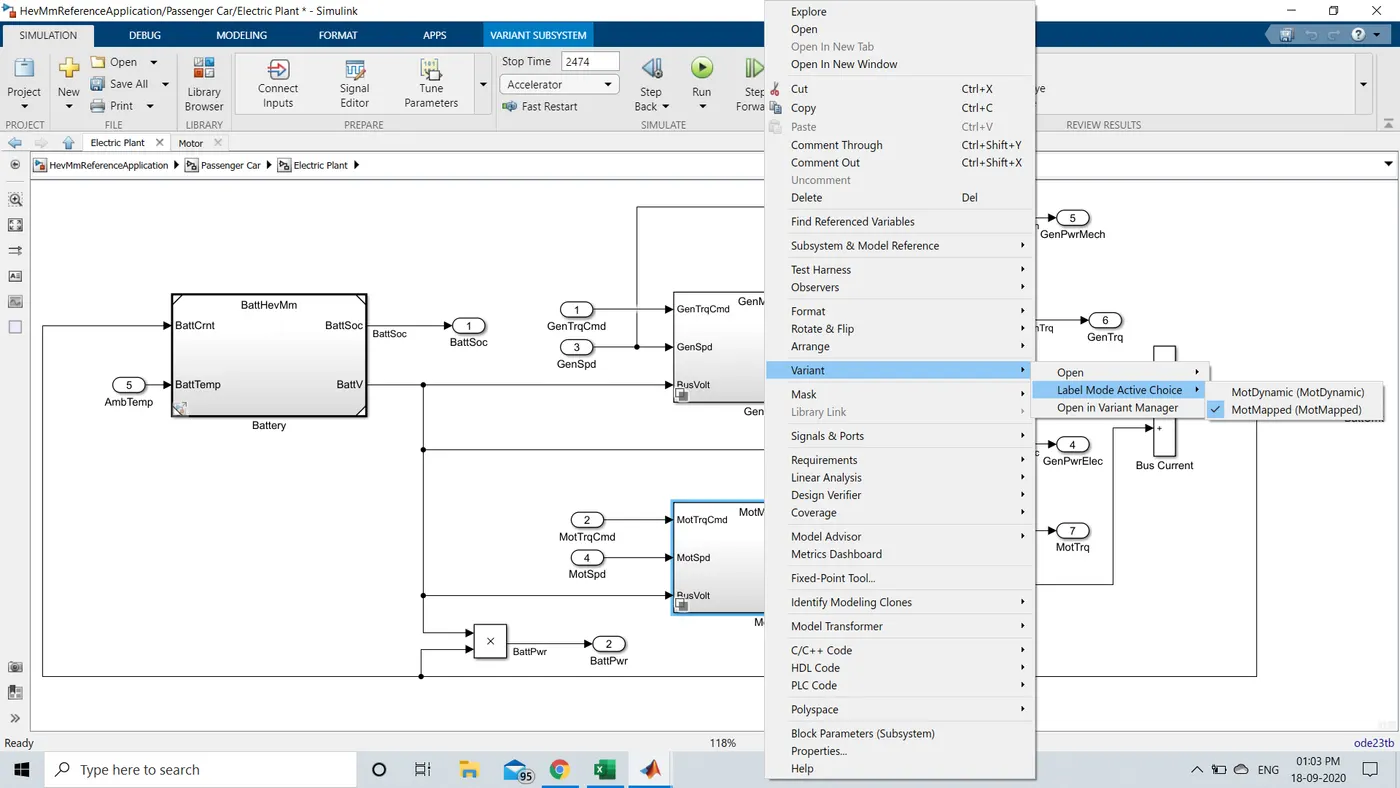
- Open the powertrain blockset for required vehicle and go to pasenger vehicle block and select the electric plant or engine plant.
- Next, Right click on the Engine/Motor/Generator based on vehicle model, select the varient and select label model active choice and choose mapped or dynamic for the required calculation.
2. How does the model calculate miles per gallon? Which factors are considered to model fuel flow?
Miles per gallon (MPG):
- MPG is a Fuel economy rating determined by how far a car can travel on a gallon of gasoline or diesel. Although the metric version would be kilometres per litre, MPG is adopted in many metric-system countries, like Canada, UK.
- While it is both cheaper and better for the environment to achieve a higher MPG rating, there is a curve, that the EPA calls the "MPG Illusion" that shows the cost-benefits of increasing MPG decrease with higher rating. For example, to travel 1,000 miles, a car that gets 10 MPG will require 100 gallons of fuel. Conversely, a car that gets 15 MPG will require 67 gallons of fuel. In this case, an increase of just 5 MPG cuts fuel consumption by 33%. When a car gets 30 MPG, however, increasing its mileage to 35 MPG will only save 5 gallons of fuel over 1,000 miles.
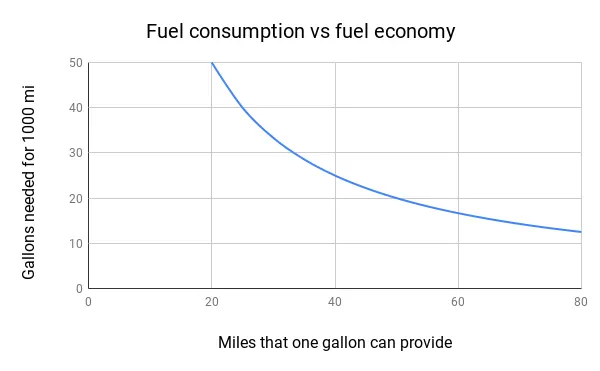
- The graph above shows the "MPG Illusion." That fuel consumption does not decrease at a linear rate with MPG increase.
- Model calculation of miles per gallon:
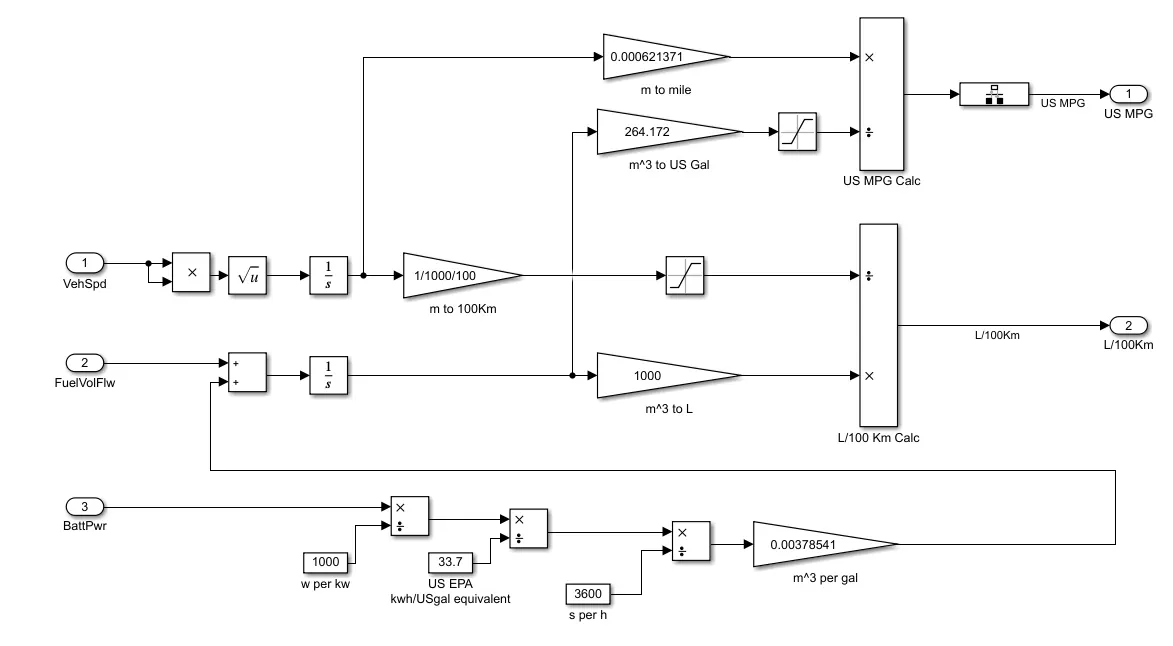
- The model calculate the MPG & L/100km by considering the Vehicle Speed, Fuel volume flow & Battery power as Input.
- The Inputs for the US MPG calculation are Vehicle speed in Miles & fuel flow volume in US gallon.
- Factors that effects the fuel Economy:
- Excessive Short Trips
- Frequent Cold Weather Travel
- Heavy Braking or Acceleration
- High Vehicle Weight or Towing Weight
- Speeding.
3. Run the HEV ReferenceApplication with WOT drive cycle. Change the grade and wind velocity in the environment block.
Hybrid Electric Vehicle Multimode Reference Application:
Powertrain configuration:
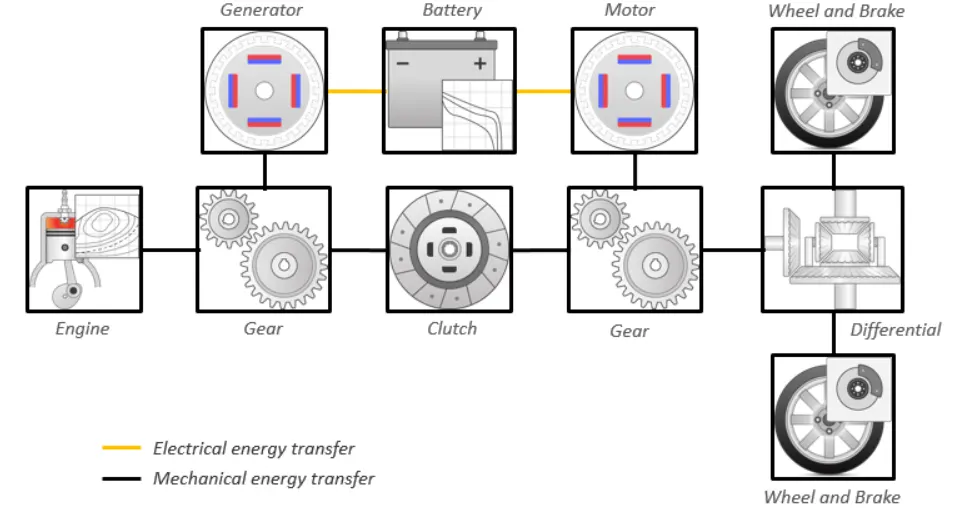
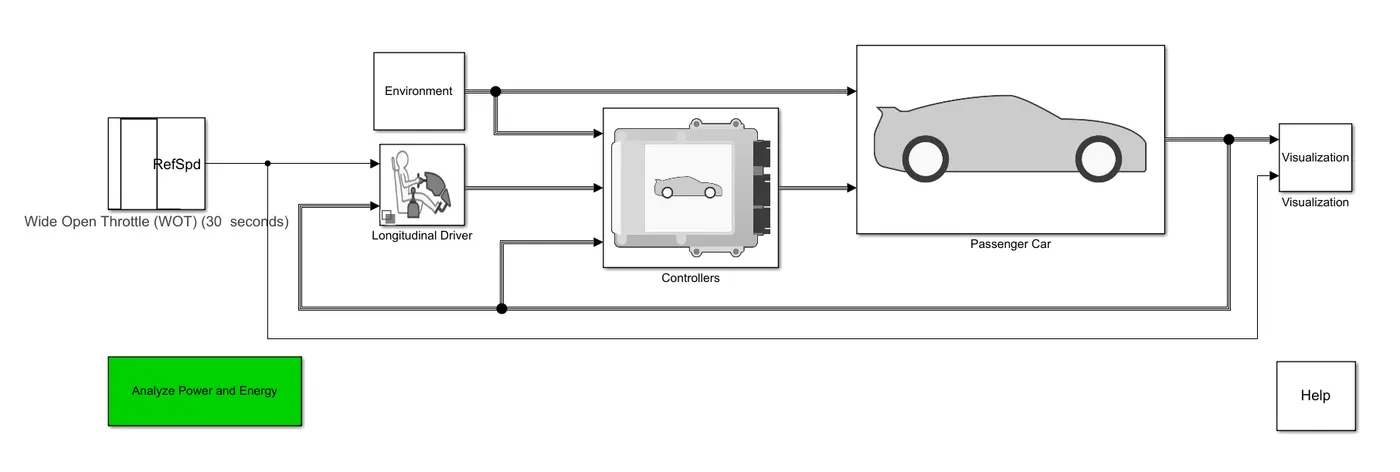
- The hybrid electric vehicle reference application represents a full multimode hybrid electric vehicle (HEV) model with an internal combustion engine, transmission, battery, motor, generator, and associated powertrain control algorithms.
By default, the HEV multimode reference application is configured with:
- Mapped motor and generator
- 1.5–L spark-ignition (SI) dynamic engine
- Considered Wide Open Throttle (WOT) Drive Cycle:
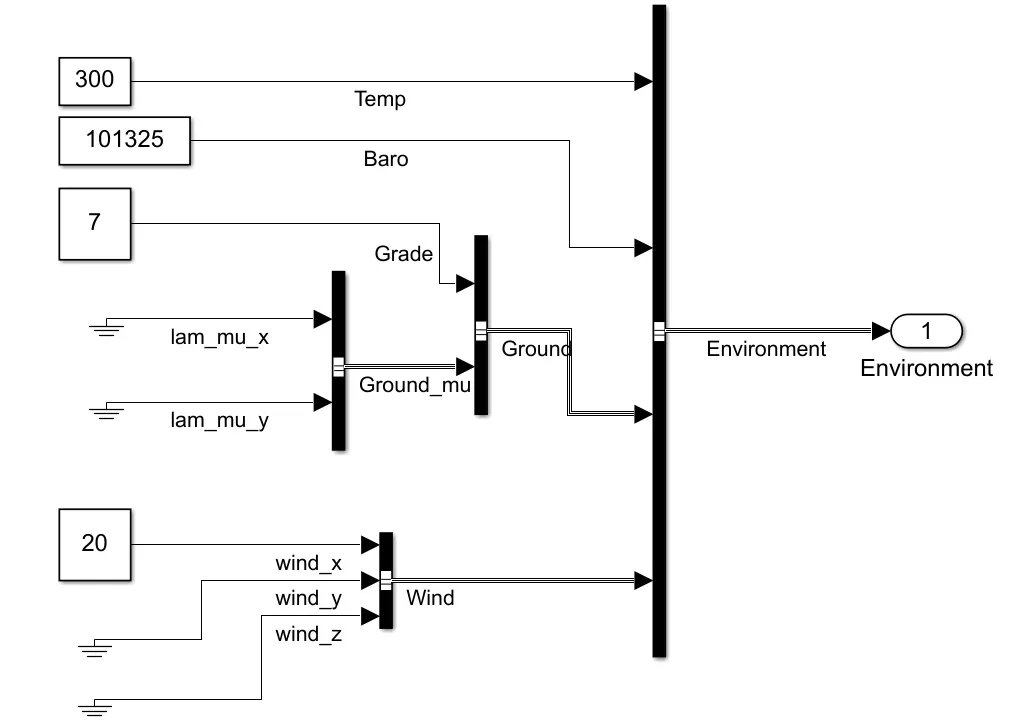
- Environment block:
- Changed the grade and wind velocity to 7 and 20 respectively.
- After changing the required parameters, Run the simulation.
Output:
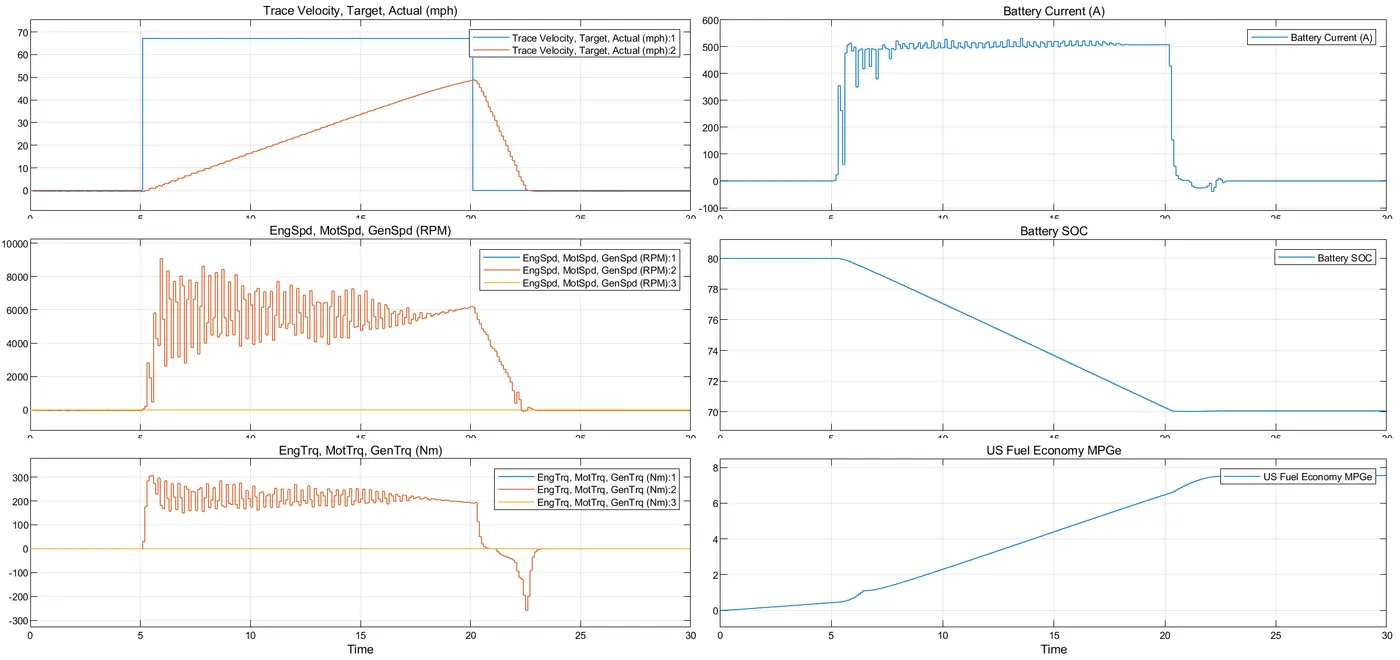
- From 0 to 5 sec the vehicle is at rest and from 5 to 20 sec vehicle accelerated and again from 20 to 30 sec vehicle came to rest.
- When the vehicle is acselerated the motor speed and torque is fluctuated.
- From 5 to 20 sec the current produced in the battery is about 500 A. And state of charge is reduced from 80 to 70.
- Fuel economy MPG is increased from 0 to 8.
- Emission plots:
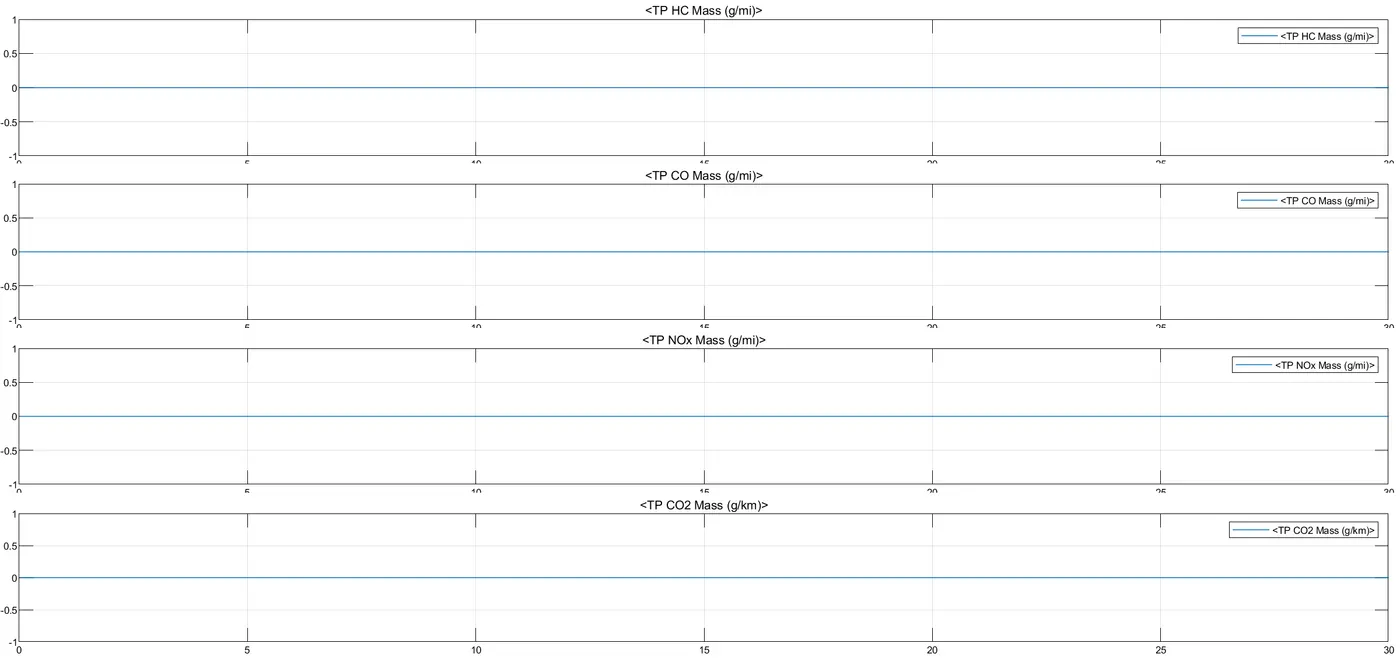
- As I run the vehicle only 30 sec the only battery is power is consumed. so, there is no emission during WOT drive cycle from the HEV.
4. Keeping all other parameters same, compare the simulated results of hybrid and pure electric powertrains.
4.1. HEV Reference Application:
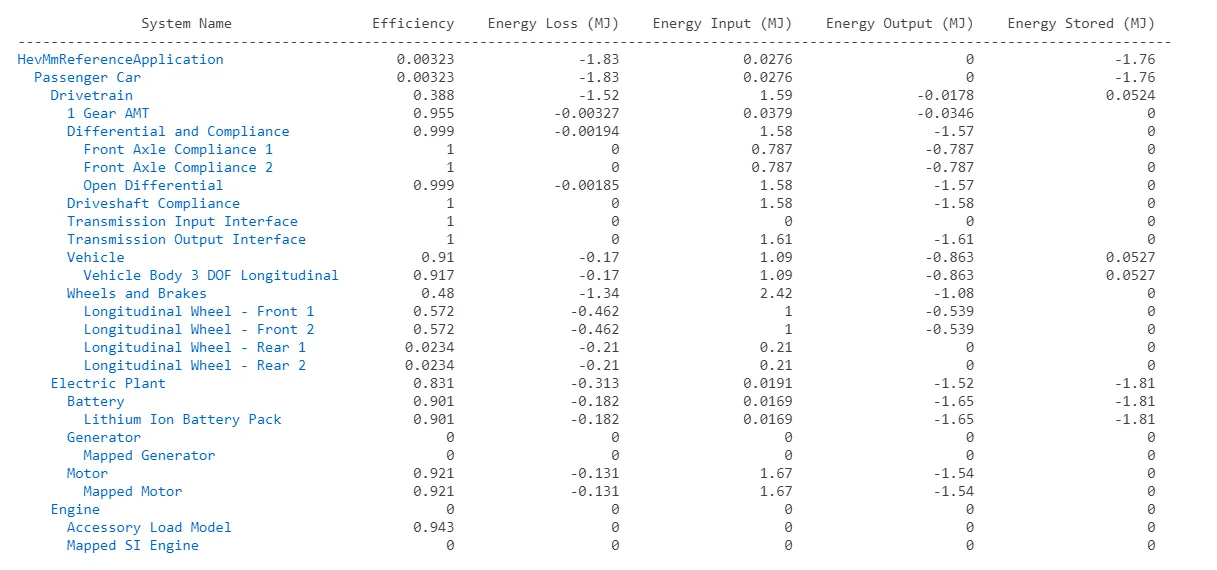
- Overall Summary of HEV:
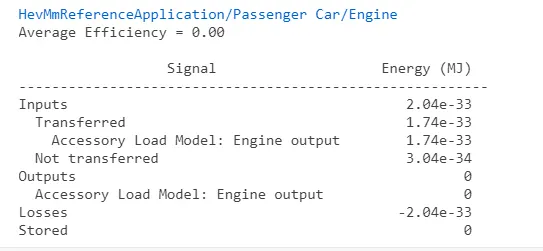
- Engine Plant Summary:
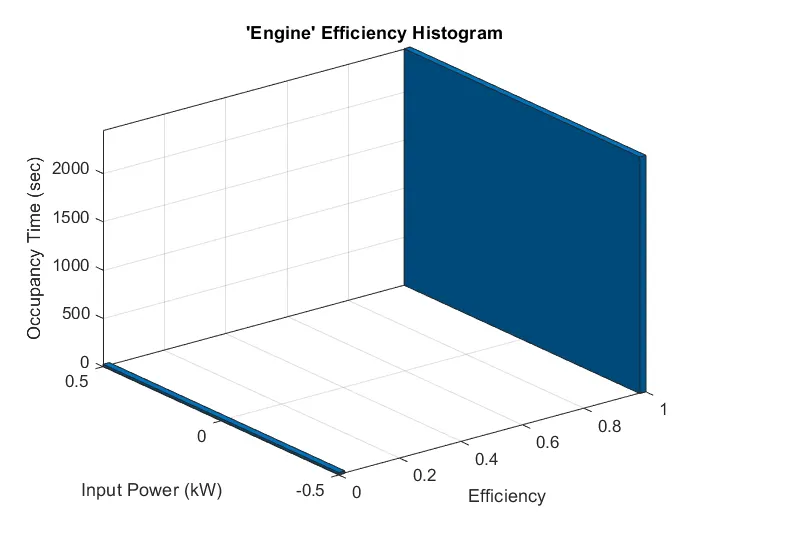
- Engine Efficiency Histogram:
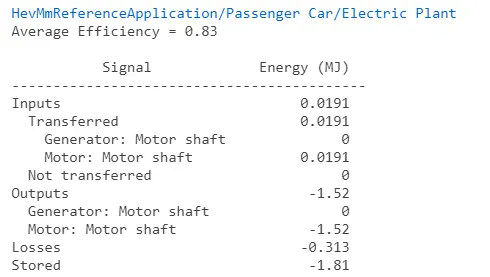
- Electric Plant Summary:
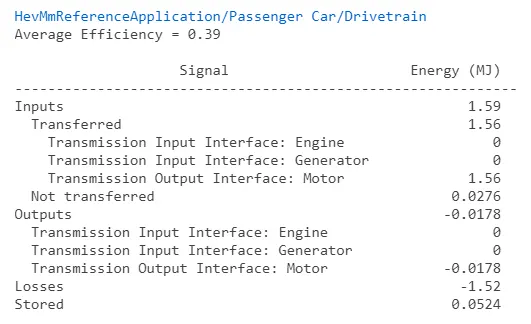
- Drivetrain Plant Summary:
4.2. Electric Vehicle Reference Application:
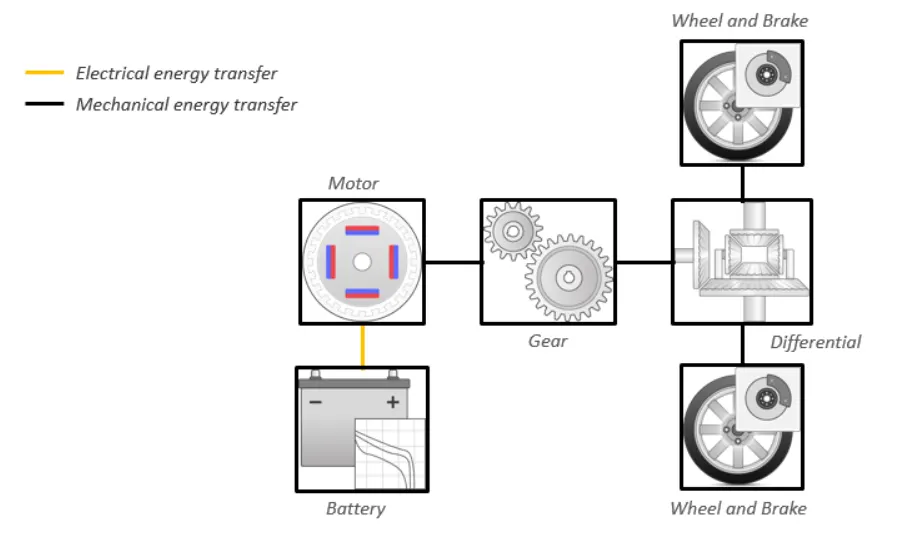
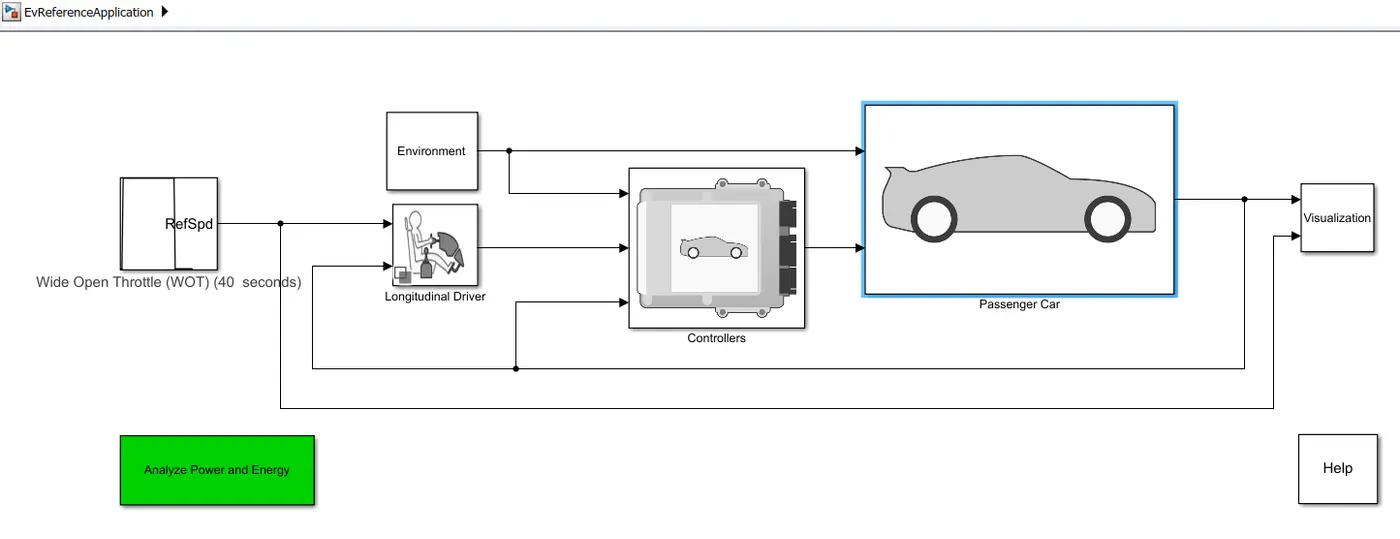
- Simulation of EV:
Results:
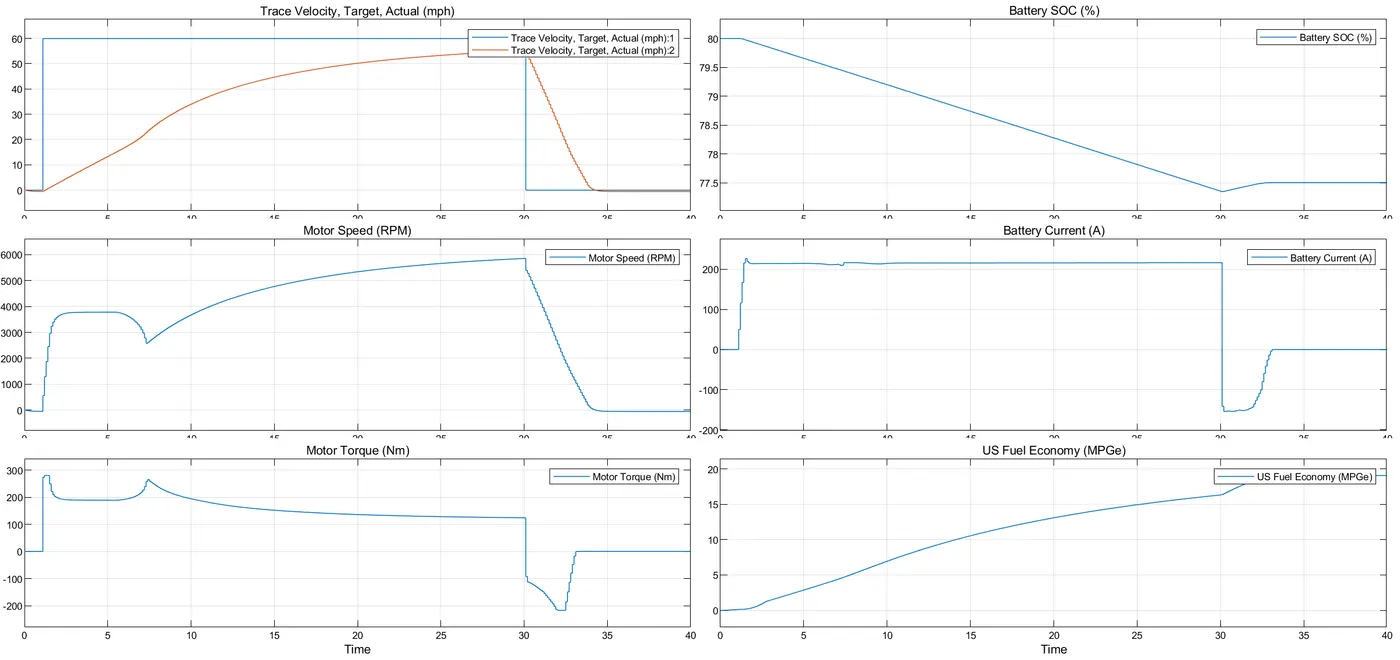
- When the vehicle is Accelerated the speed of motor increased gradually with small fluctuation initially and the motor torque is decreased gradually as shown in the above graph.
- The current poduced is around 210 A and SOC reduced from 80 to 77. The fuel Economy is increased from 0 to 19 MPGe.
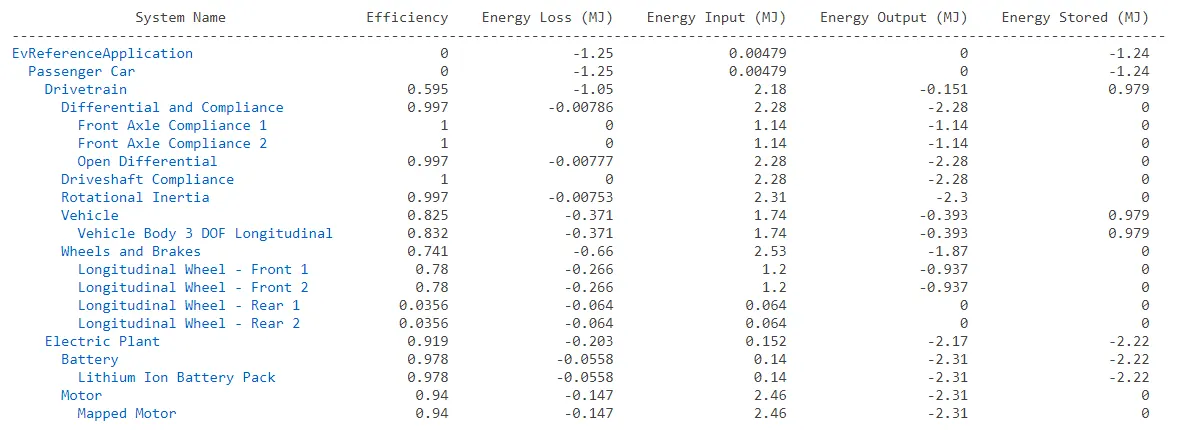
- Overall Summary:
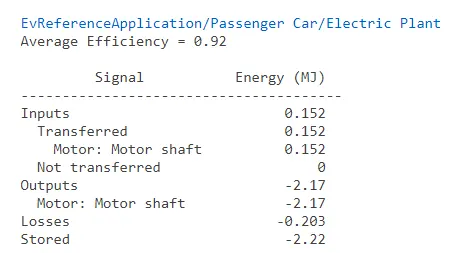
- Electric Plant Summary:
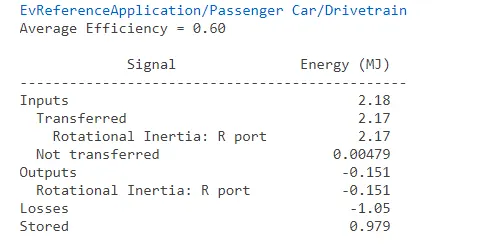
- Drivetrain Plant Summary:
Comparision:
| Parameters | HEV | EV |
| SOC reduced to | 10 | 3 |
| Current Produced | 500A | 210A |
| Motor Speed | Avg. 6000RPM (Fluctuate between 4000-8000 RPM) | 6000 RPM |
| Motor Torque | Fluctuates and reduced | Gradually Reduced |
| Average Efficiency of Drivetrainplant | 39% | 60% |
| Average Efficiency of Electric plant | 83% | 92% |
| Wheel & Brakes Efficiency | 48% | 74% |
| Vehicle Efficiency | 91% | 82.50% |
Reference: