Week 3 Sheet metal Bending challenge
Aim-
We have to perform structural analysis for sheet metal bending & is to be performed for 3 different materials. Variation of certain settings is also to be performed and conclusions are to be added to the report.
Objective-
We have to run the analysis for the material :
Case 1:Aluminium Alloy 1199( mentioned in the course video), Copper Alloy NL, and Magnesium Alloy NL. Find out the Equivalent stress, Equivalent elastic strain, and Total Deformation in the Y direction and compare the results for the three materials.
Case 2:With the material as Aluminium Alloy, change the friction coefficient to 0.19 and run the analysis as mentioned in Case 1. Compare the results with that in case 1.
Case 3: Refine the mesh on the plate such that it doesn't cross the academic limit. With Aluminium alloy as material, run the analysis as in Case 1 and compare the results.
Procedure-
- We have to first start as new project in the ansys workbench and select the proper material for the weld joint plate.
- Here material has been specified in the project so we will select materials as per case.
Case-1
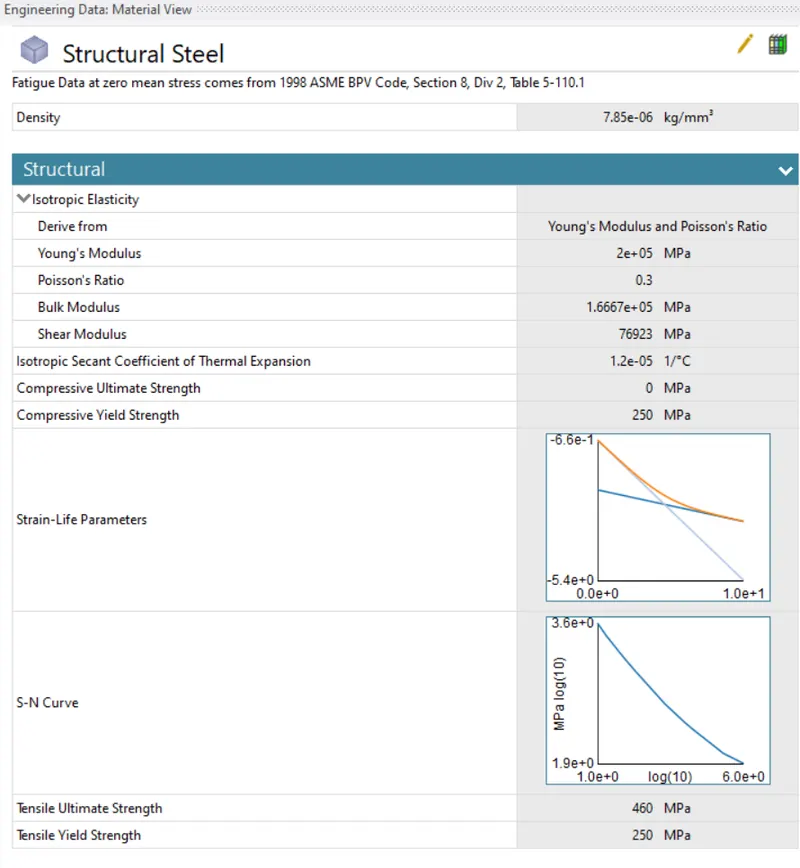
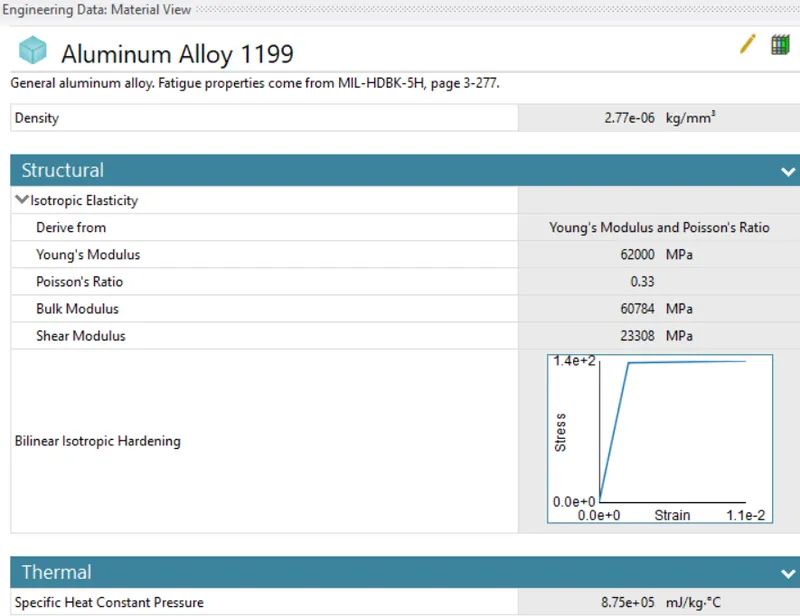
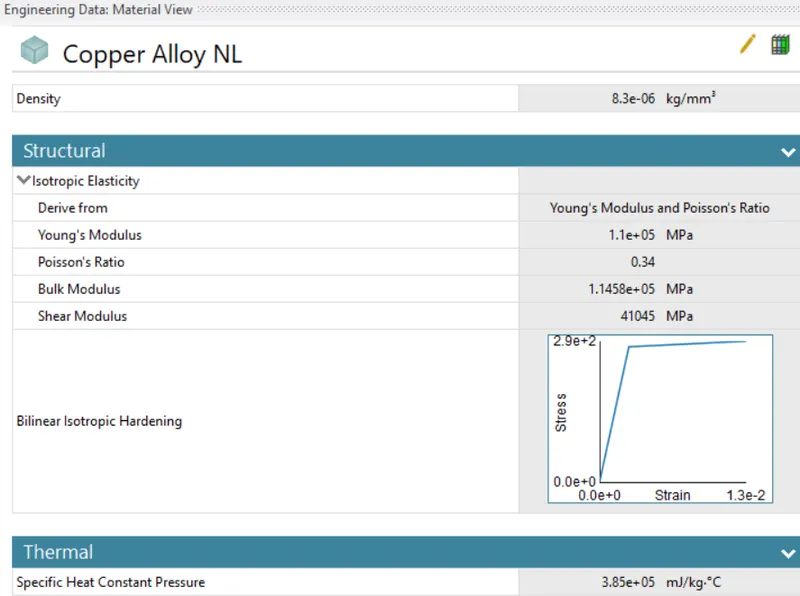
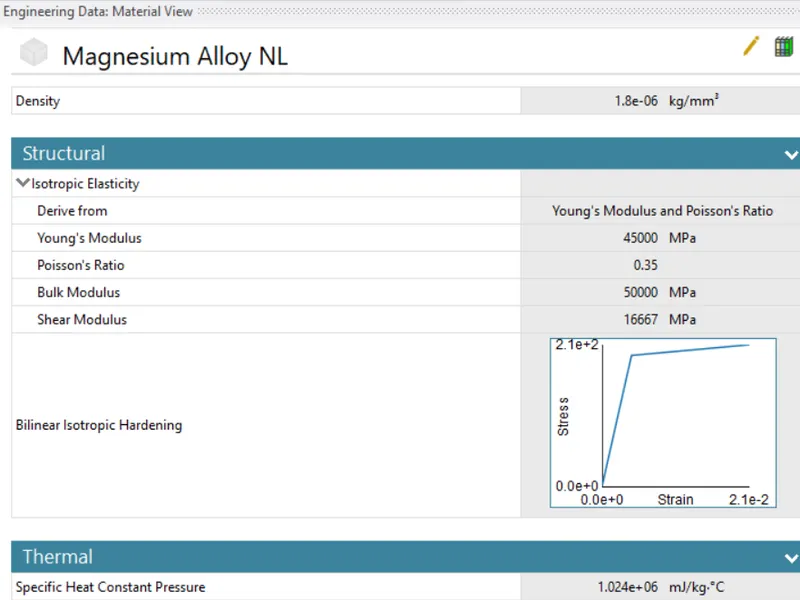
- Now we have to import the model for that right click on the geometry tab and hit import>>then select the file from saved location and hit ok.
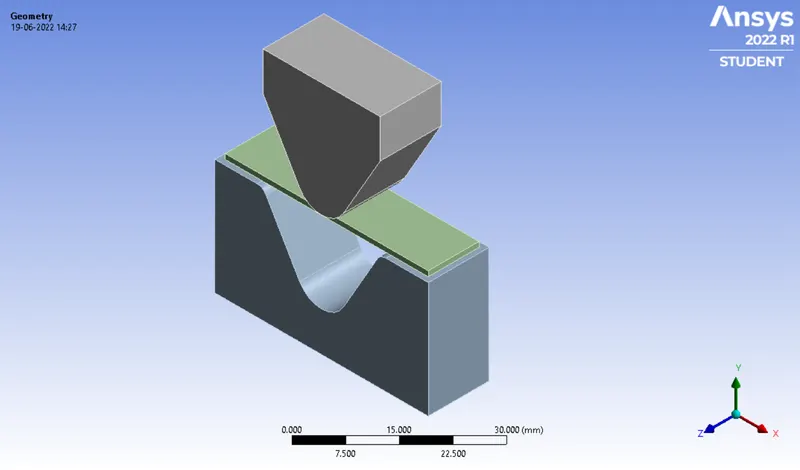
- Now we have to open mechanical Model and wait for a while till our model loads.
- For sheet metal select material as alluminium alloy 1199.
- We have to now remane the Bending parts name and the proceed further for connections.
Connections-
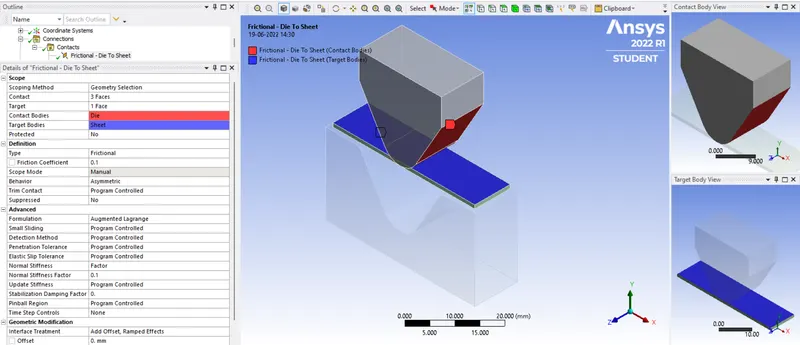
- Now we have to delete the old connections and then need to specify new connections.
- We have to insert>>manual contact region>>select faces one by one(between die and sheet).
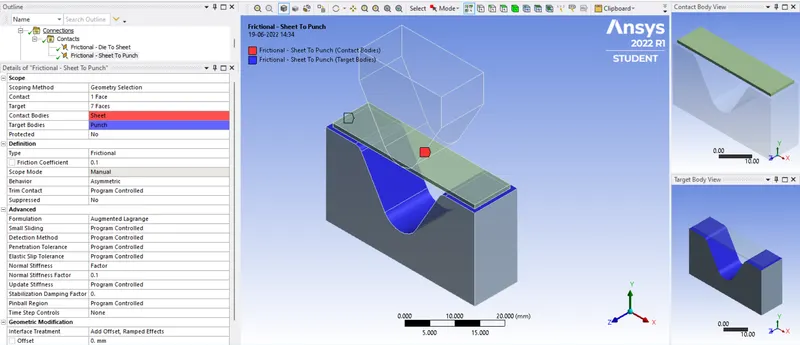
- Again we have to form a new connection to do so, go to insert>>manual contact region>>select faces one by one(between punch and sheet). Select bottom face of sheet.
Note-
- Here for both cases Firctional coefficient is 0.1
- For case 2 and 3 it is going to be 0.19.
Mesh-
For Case-1 & 2
- Go to mesh then right click and the click on insert and select sizing.
- select size of 4mm as mesh size for die and punch.
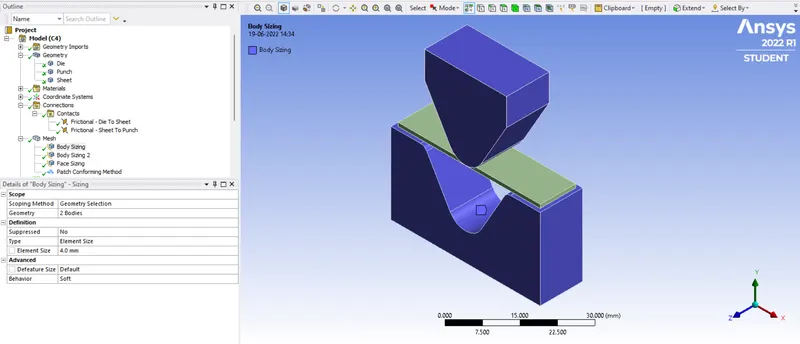
- Again right click and the click on insert and select sizing.
- select size of 1mm as mesh size for sheet metal.
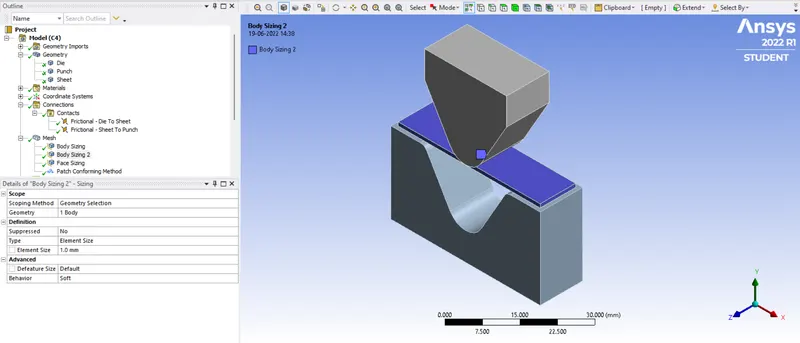
- Again right click and the click on insert and select sizing.
- select size of 1mm as mesh size for die and punch selected faces.
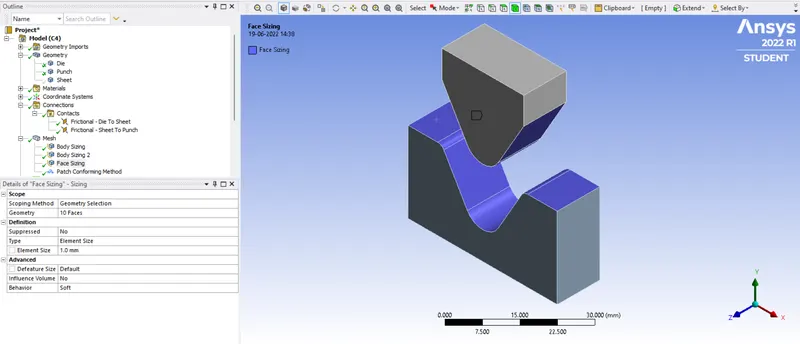
- Now right click and the click on insert and method.
- select element type as tetrahedron.
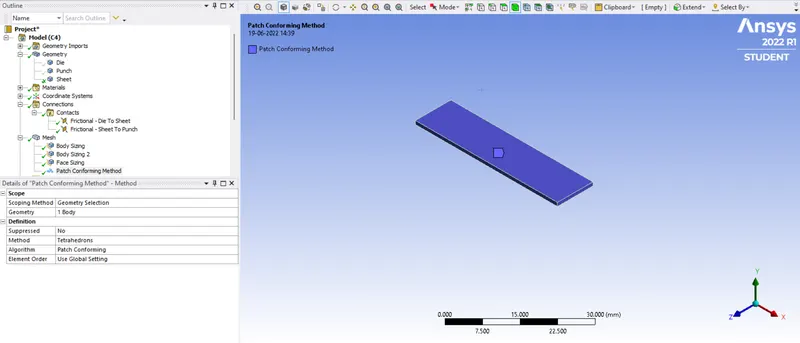
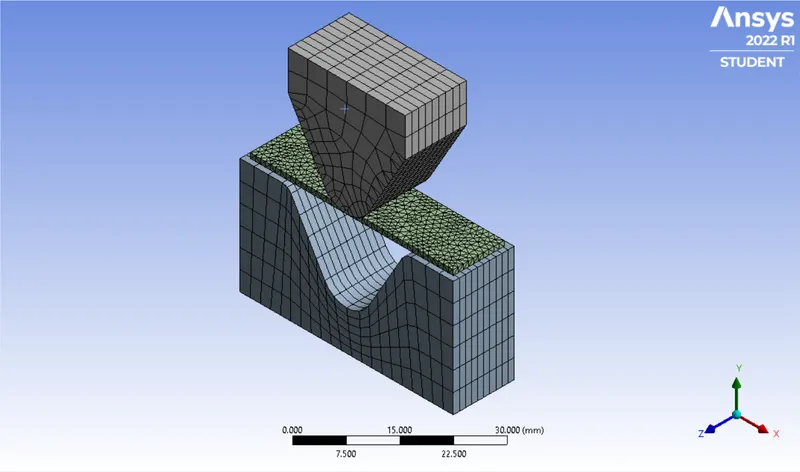
For Case-3-
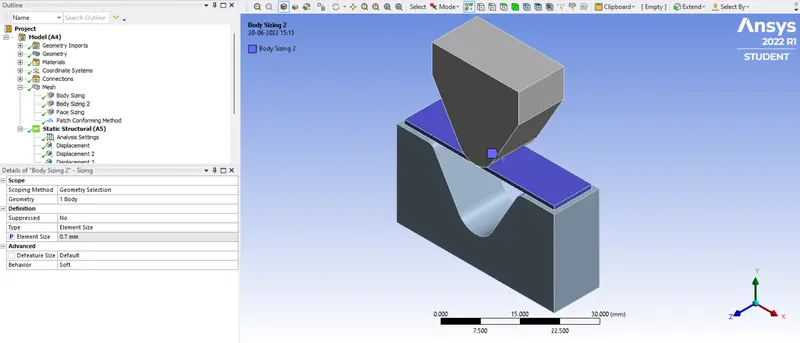
- For mesh refinement here we can use parametric option to do so.
- Here mesh size used is 0.7mm.
Analysis setting-
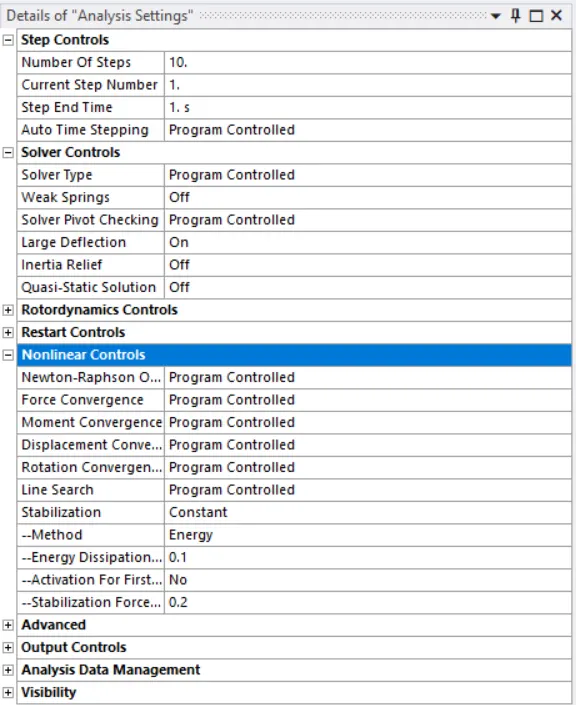
- Go to analysis setting and set number of set as 10 and refer below setting for 1st step.
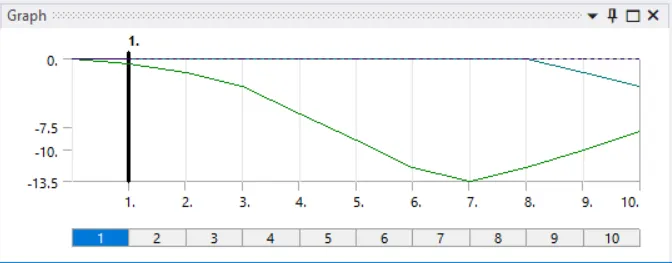
- Now we have to give dispalcement setting to punch as perbelow snap and select top and top two side faces of punch.
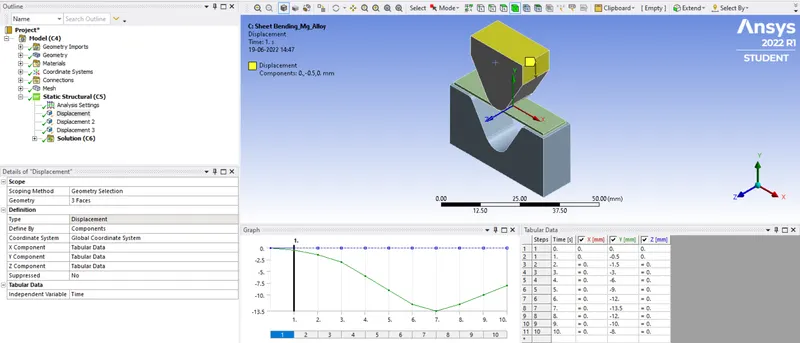
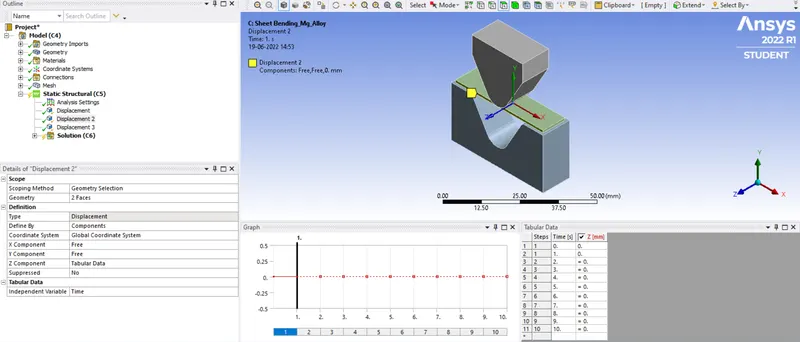
- Now for plate define the boundry condition as follows, here select side face of sheet metalfron and back as marked by yellow.
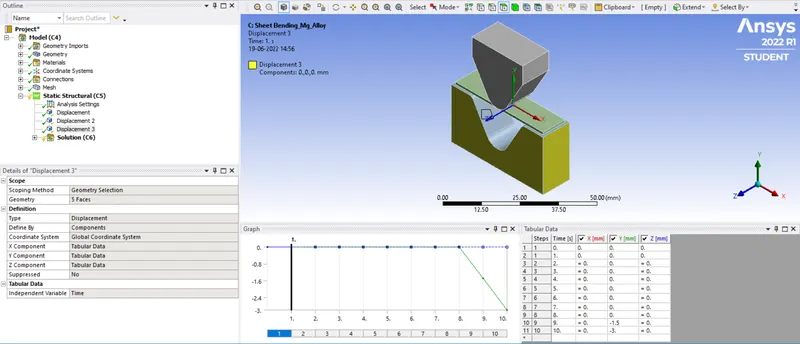
- Now select dispalcement BC for Punch, here select all five outer faces for BC.
Solution-
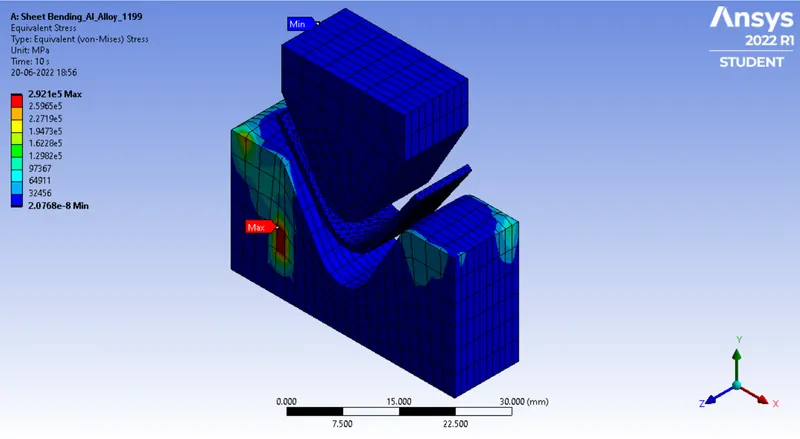
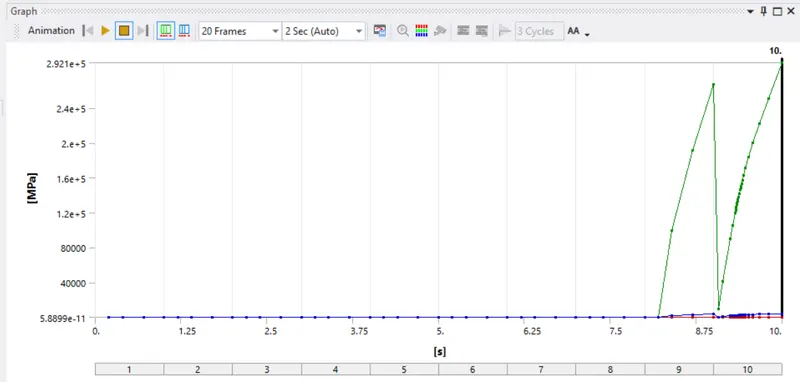
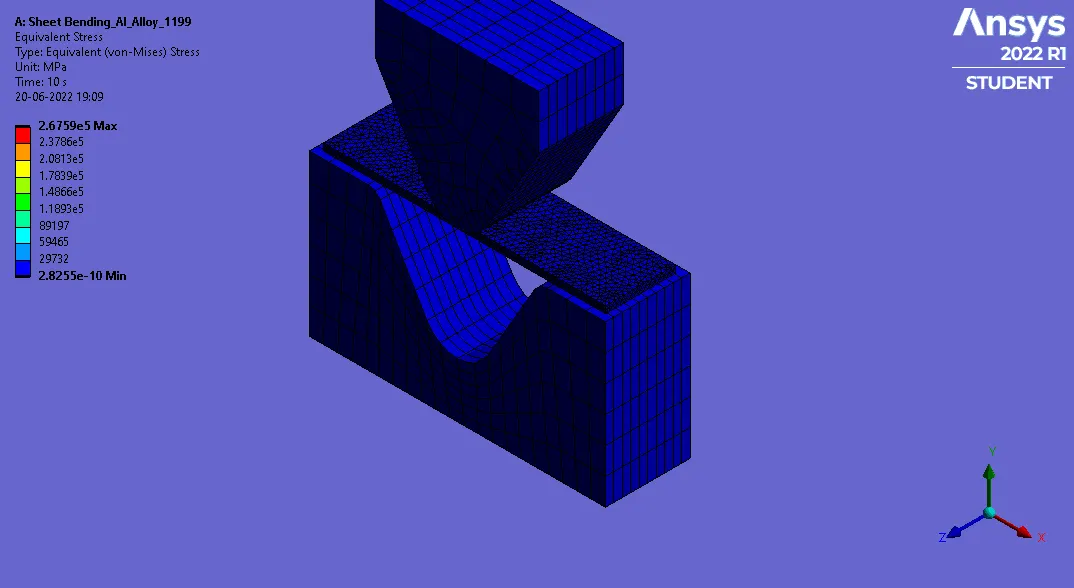
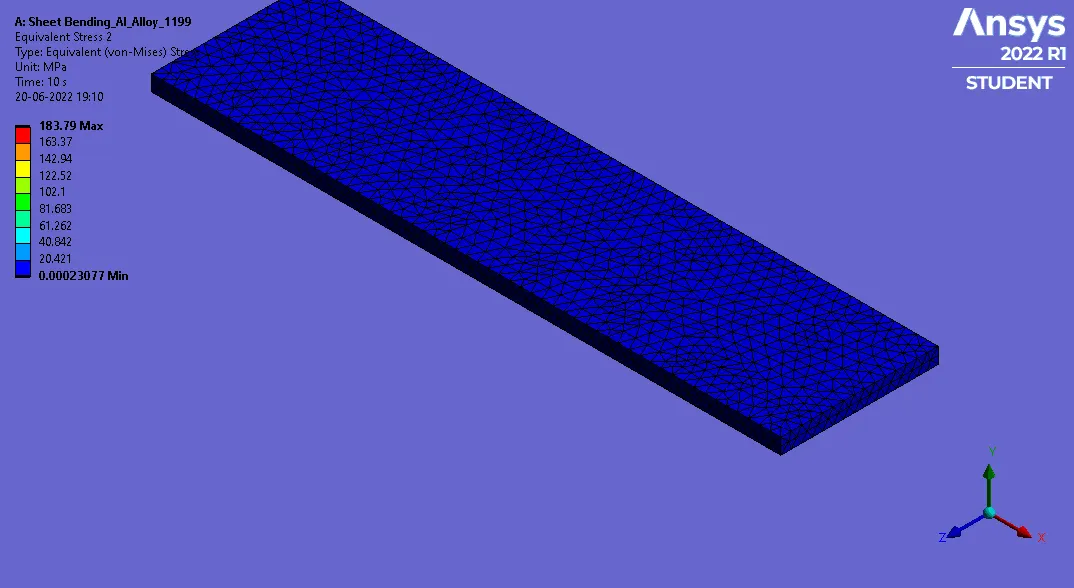
- Now for stress right click on the solution>>insert>>stresses>>equivalent (von-Mises).
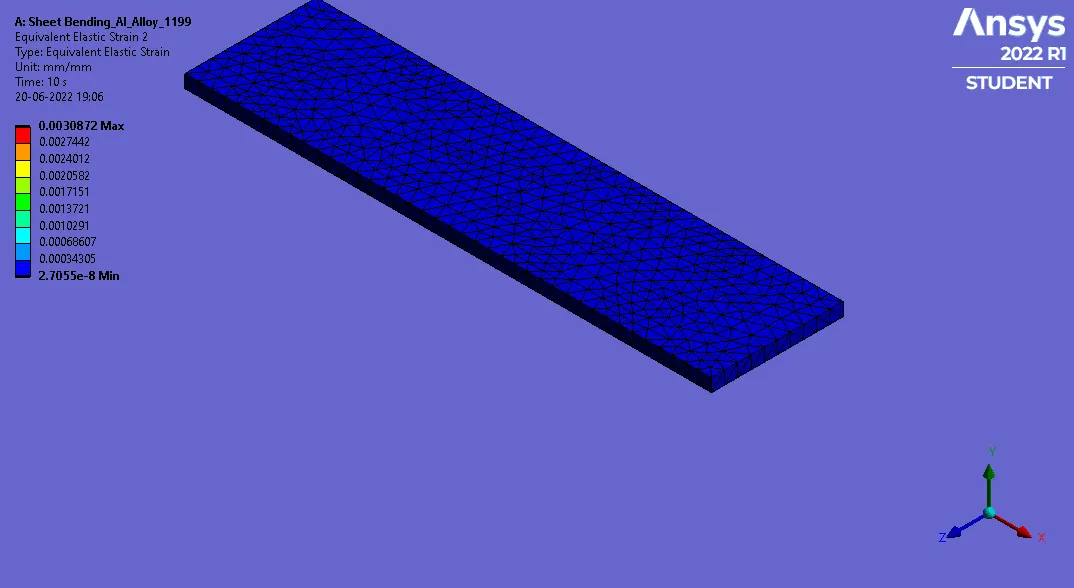
- Now for strain right click on the solution>>insert>>strins>>equivalent (von-Mises).
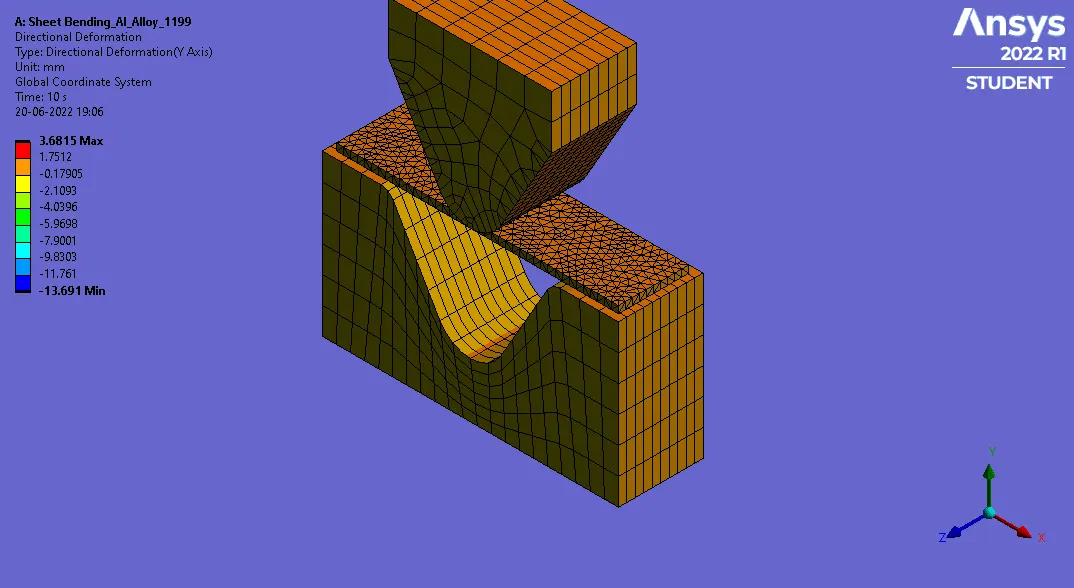
- Here we have to define total deformation, to do so right click solution>>insert>>deformation>>directional, select Y-axis.
Result-
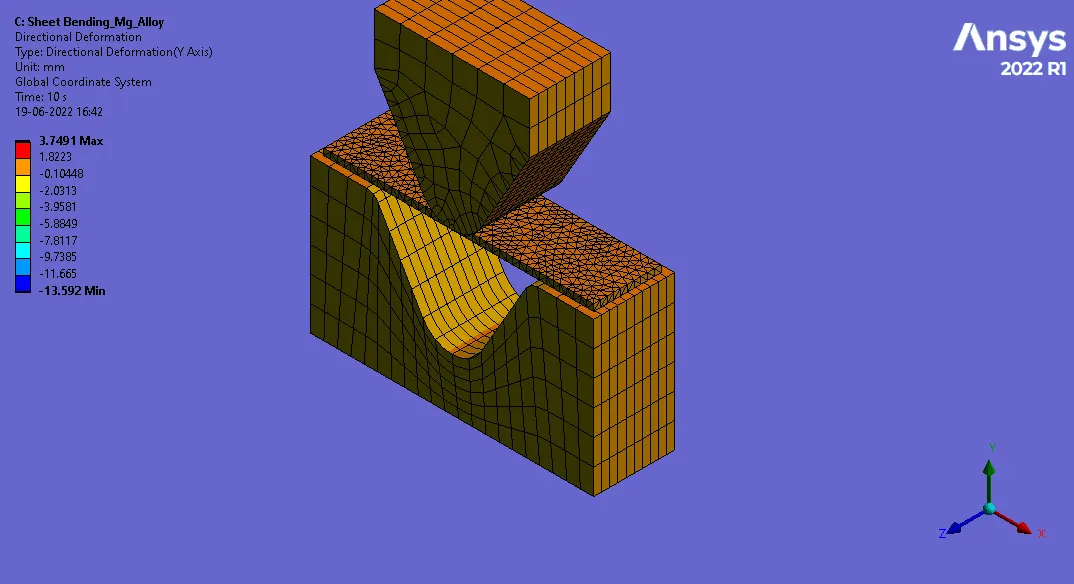
Case-1- Results for aluminium alloy, Copper alloy & Magnesium Alloy-
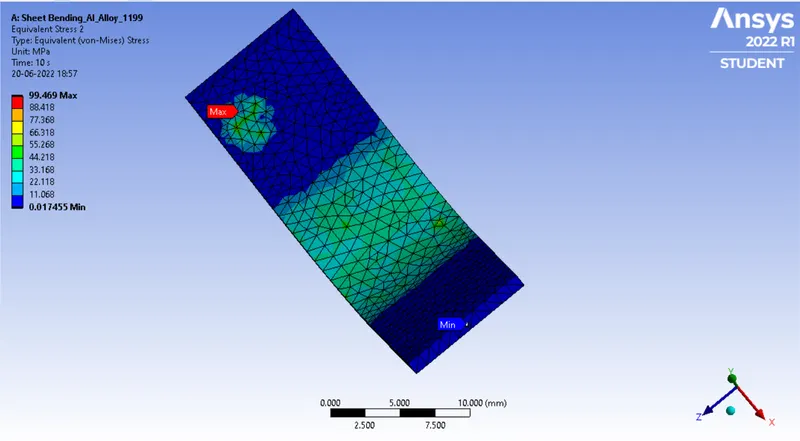
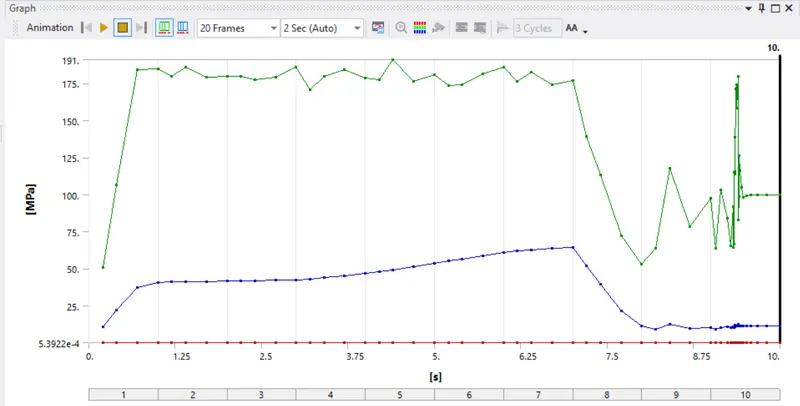
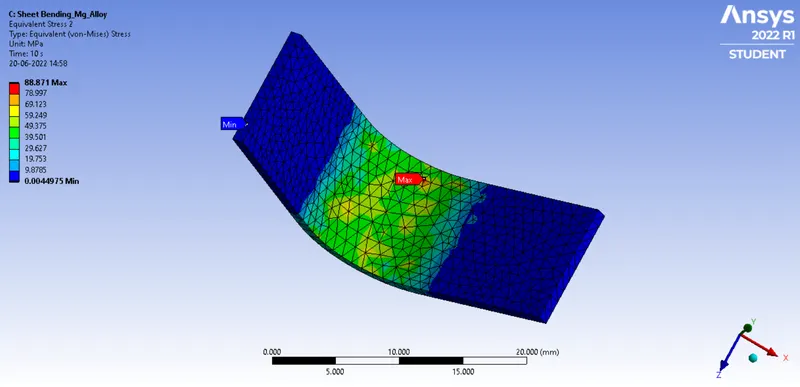
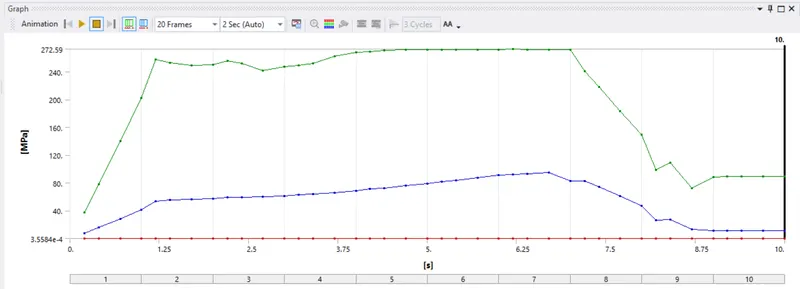
Equivalent Stress-
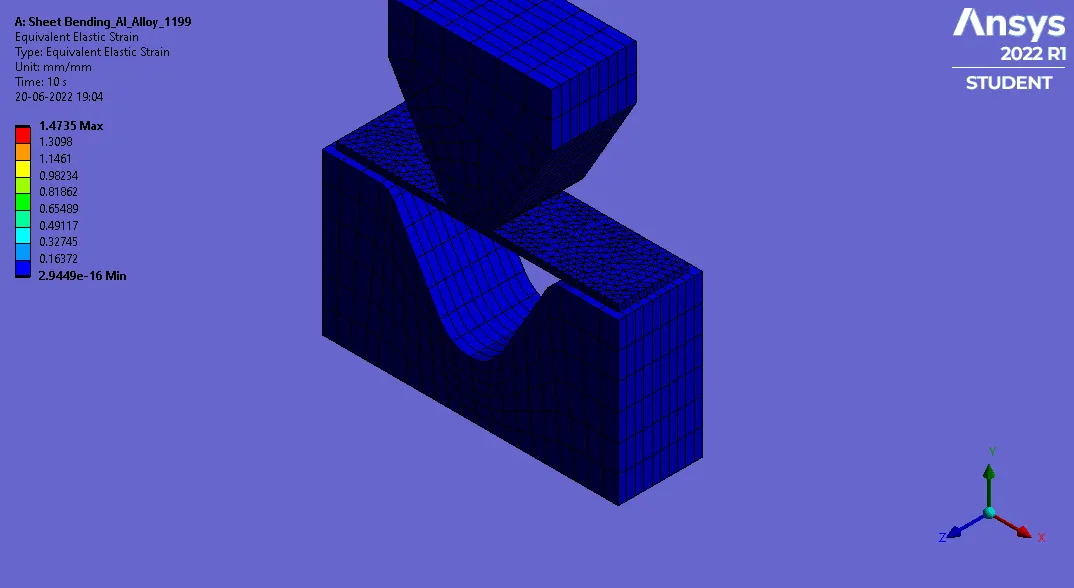
1. Aluminium Alloy 1199-
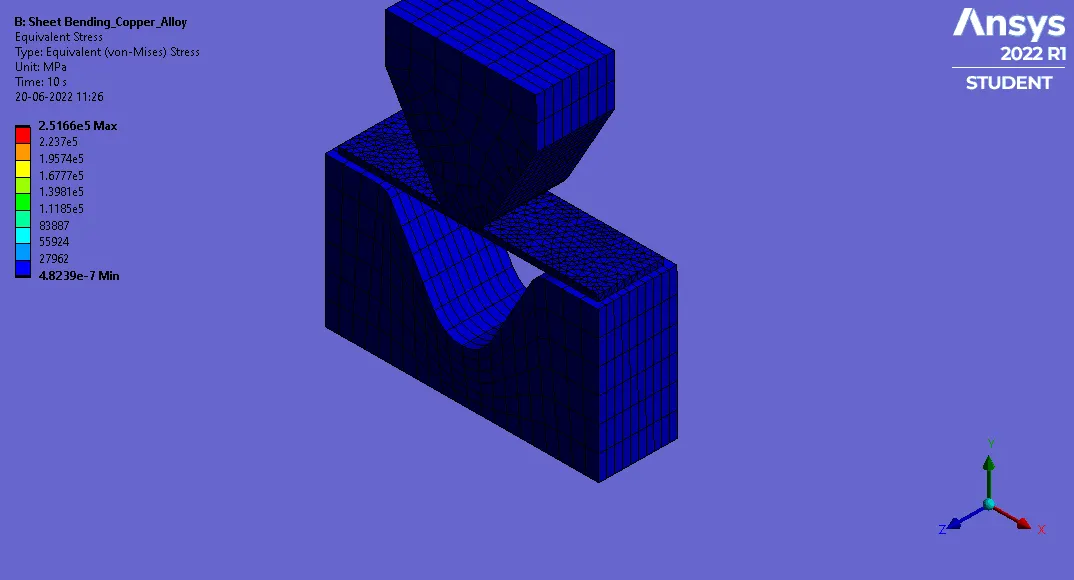
2. Copper Alloy NL-
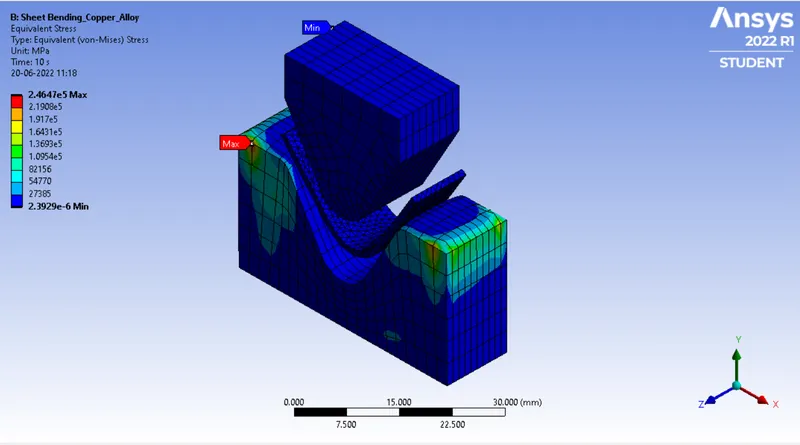
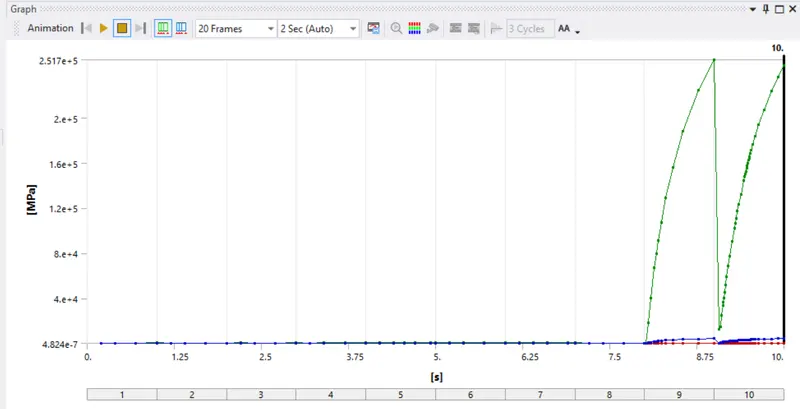
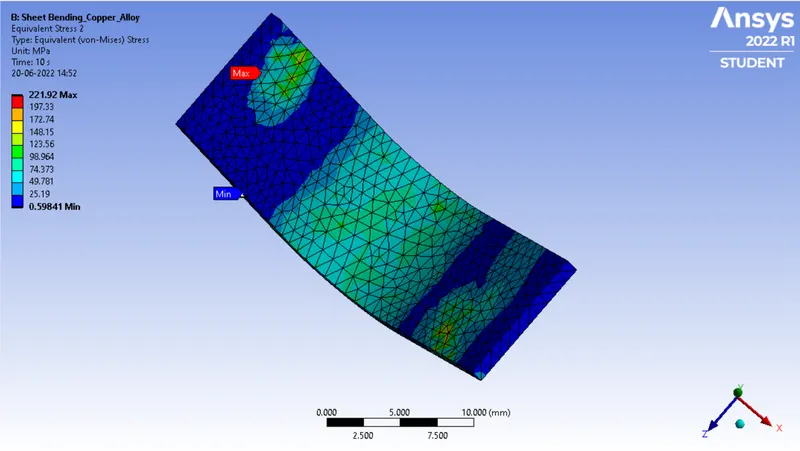
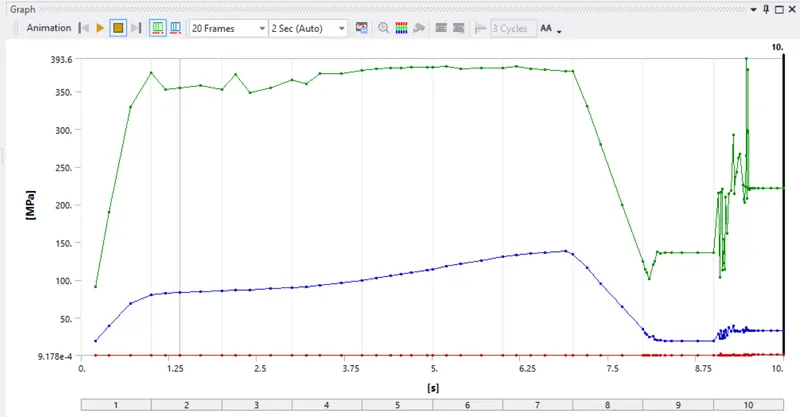
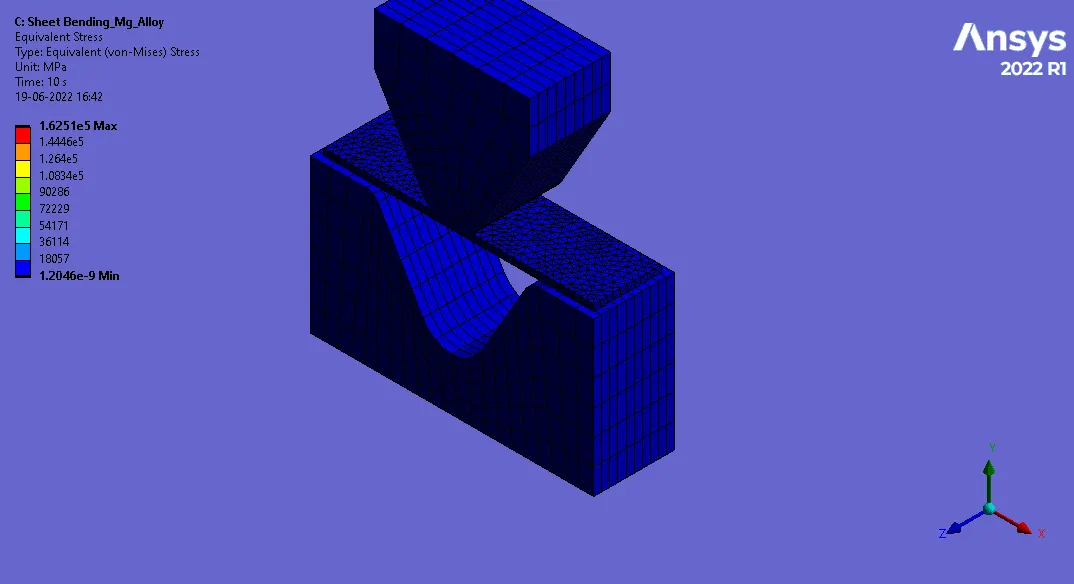
3. Magnesium Alloy NL-
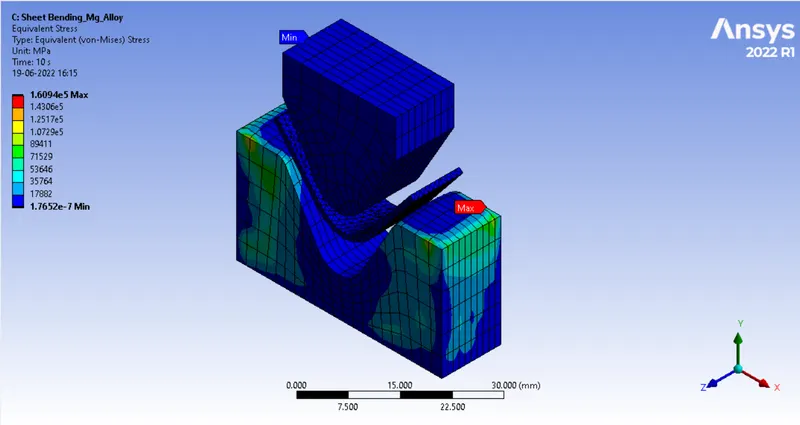
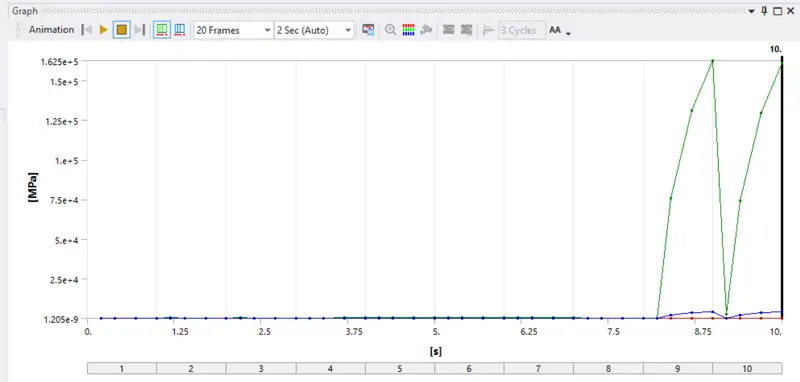
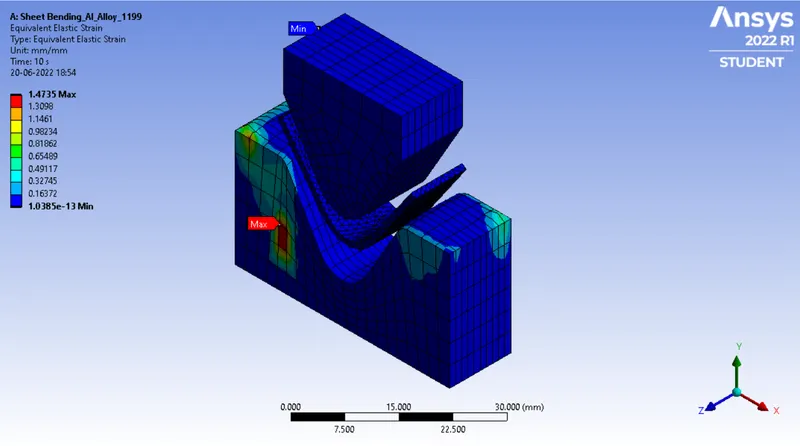
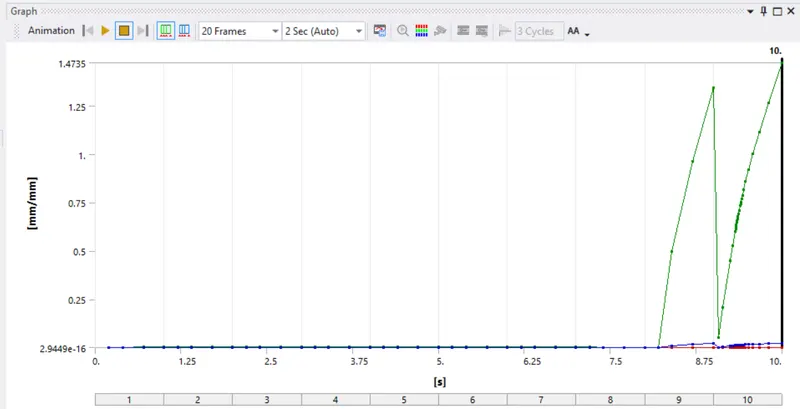
Equivalent Strain-
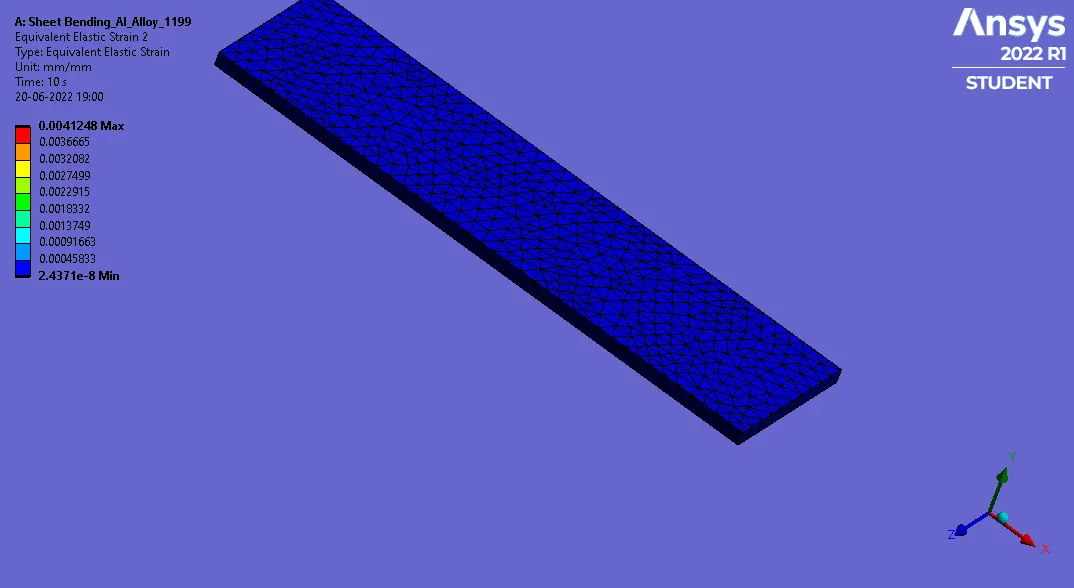
1. Aluminium Alloy 1199-
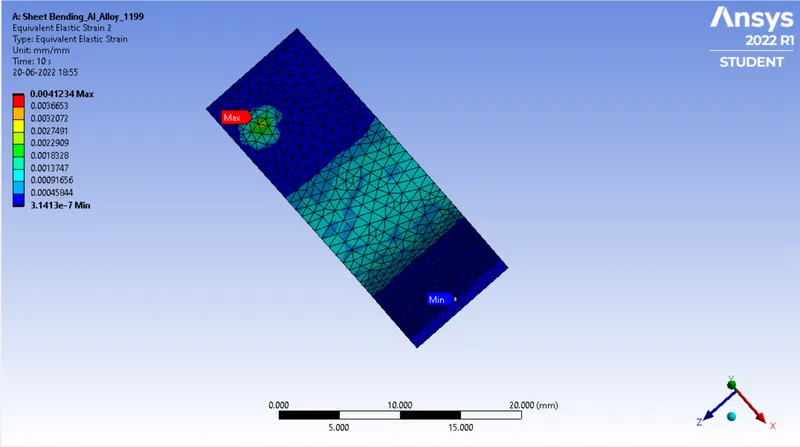
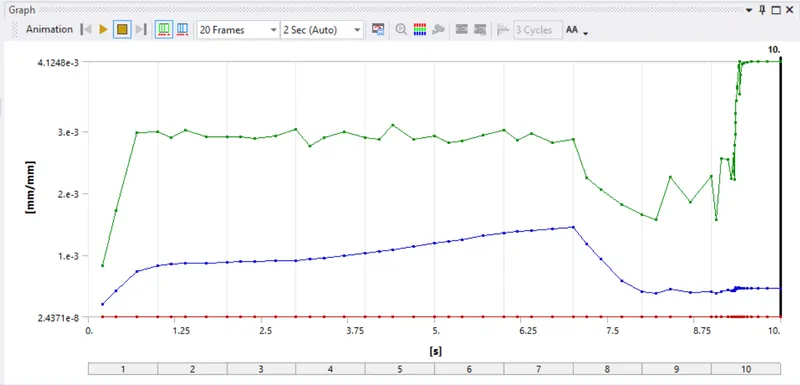
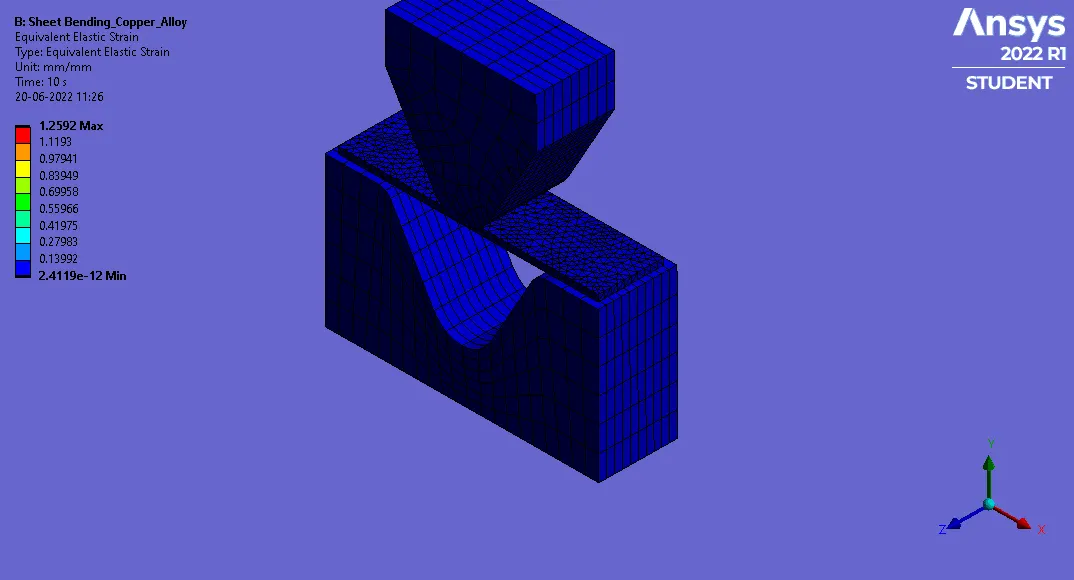
2. Copper Alloy NL-
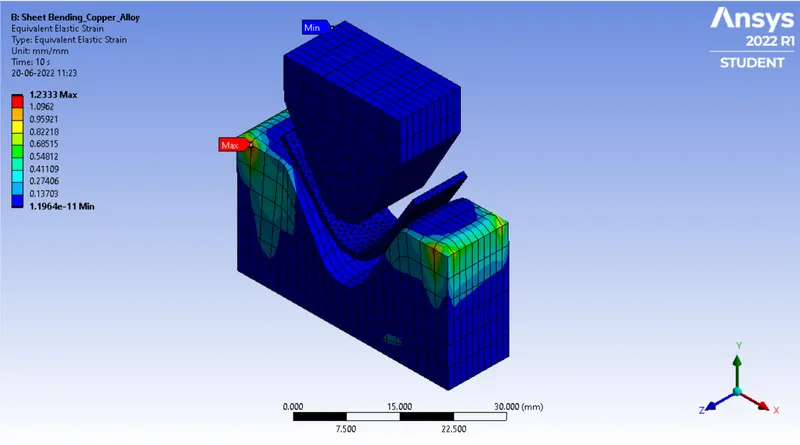
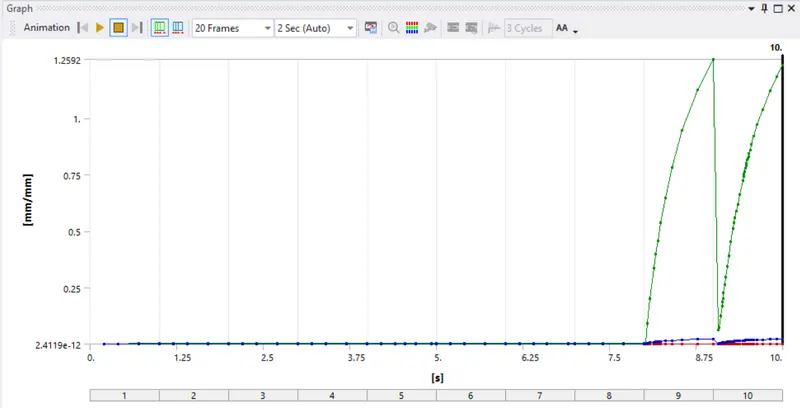
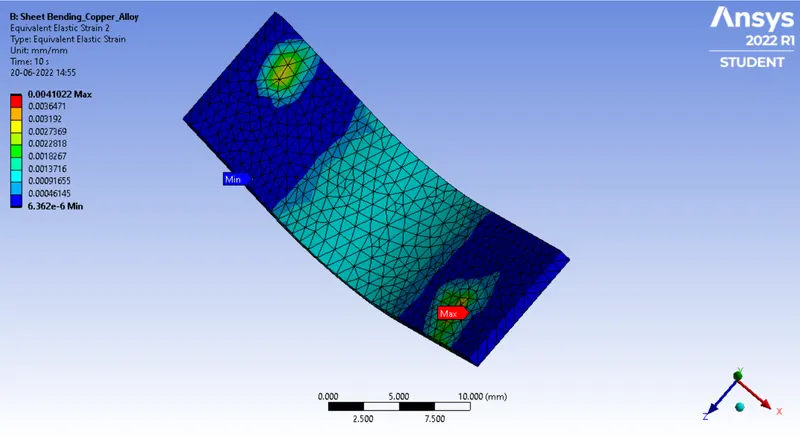
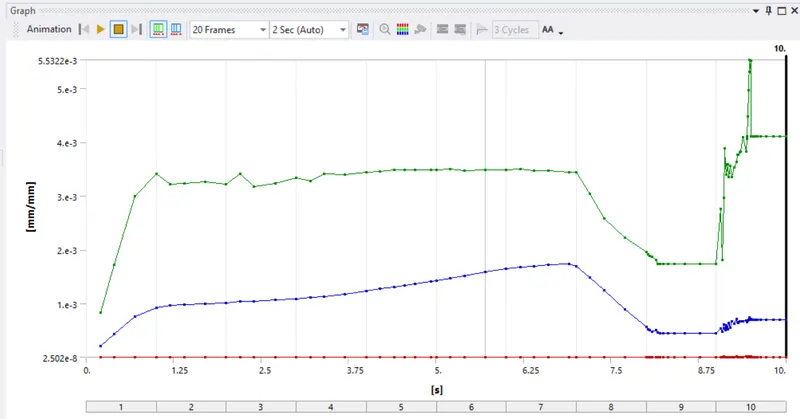
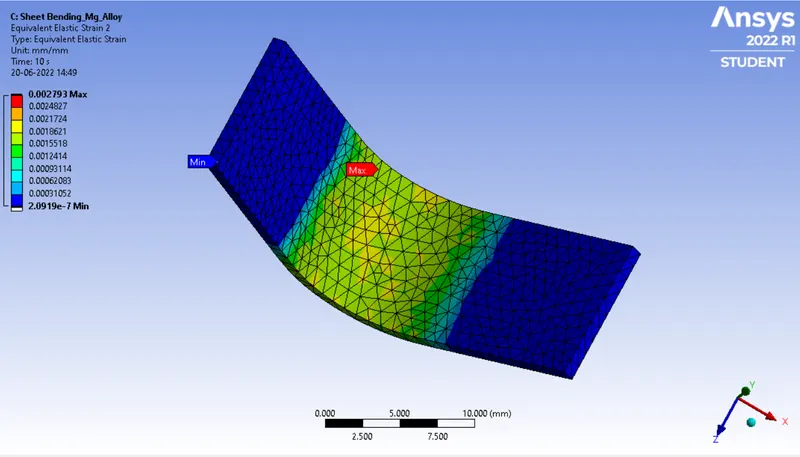
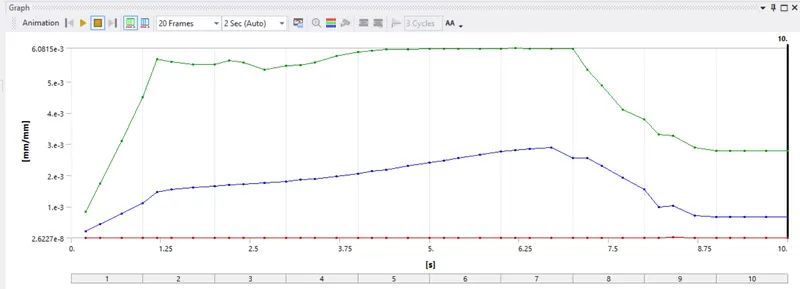
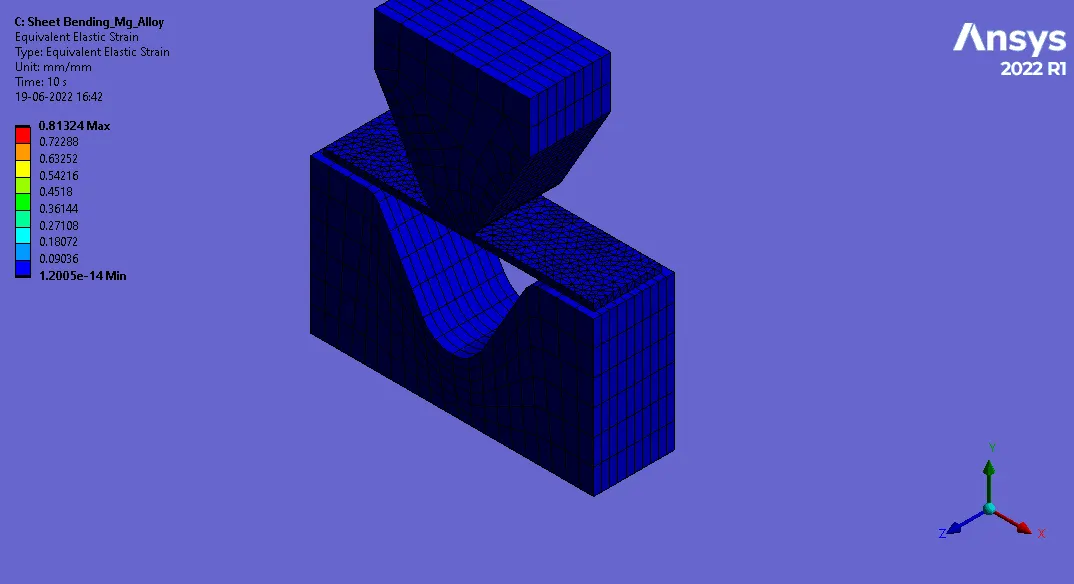
3. Magnesium Alloy NL-
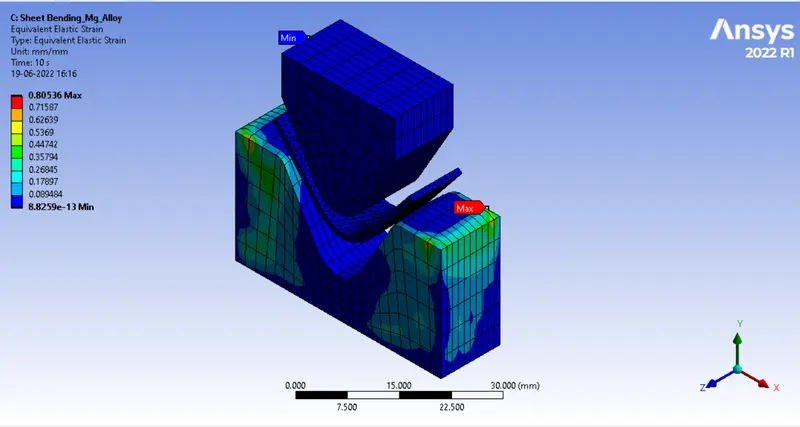
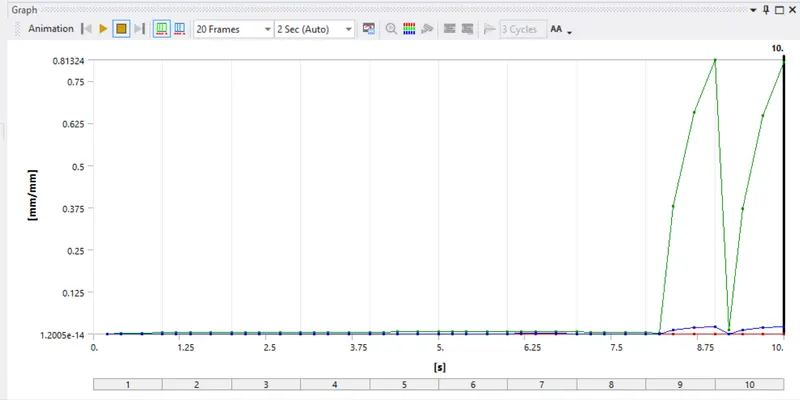
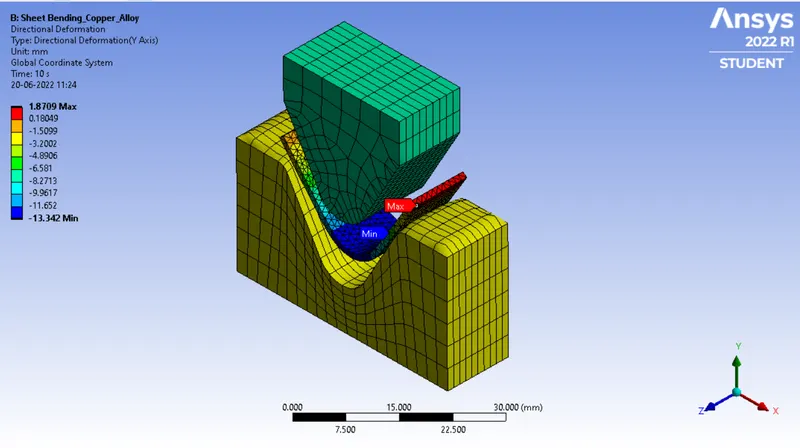
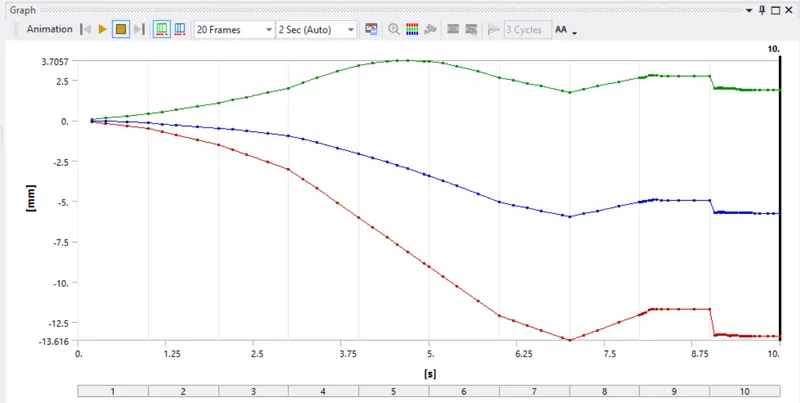
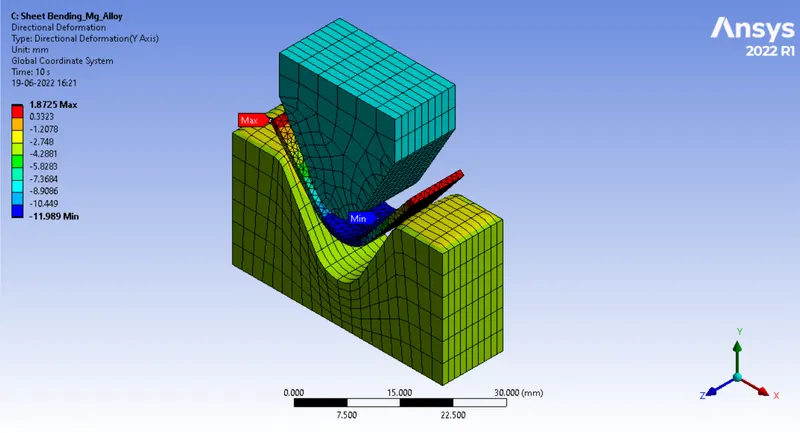
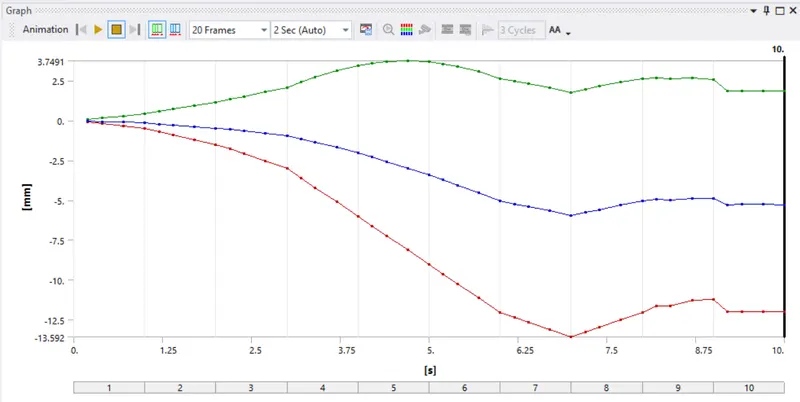
Directional Deformation Along Y-axis-
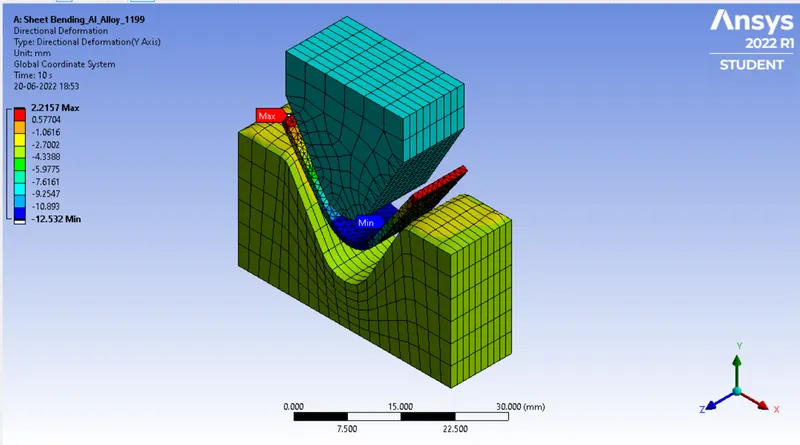
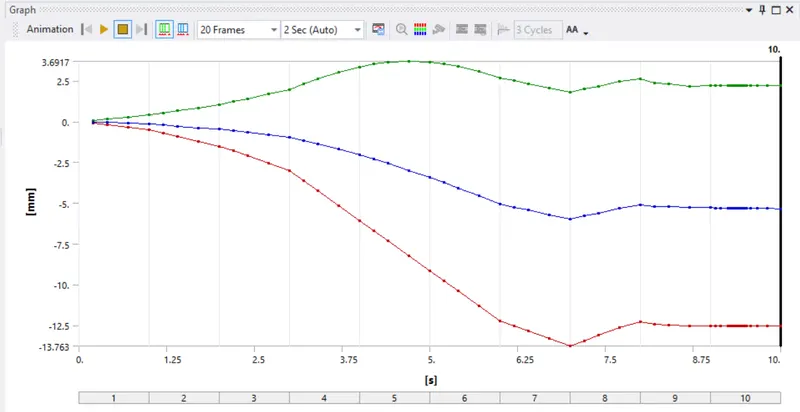
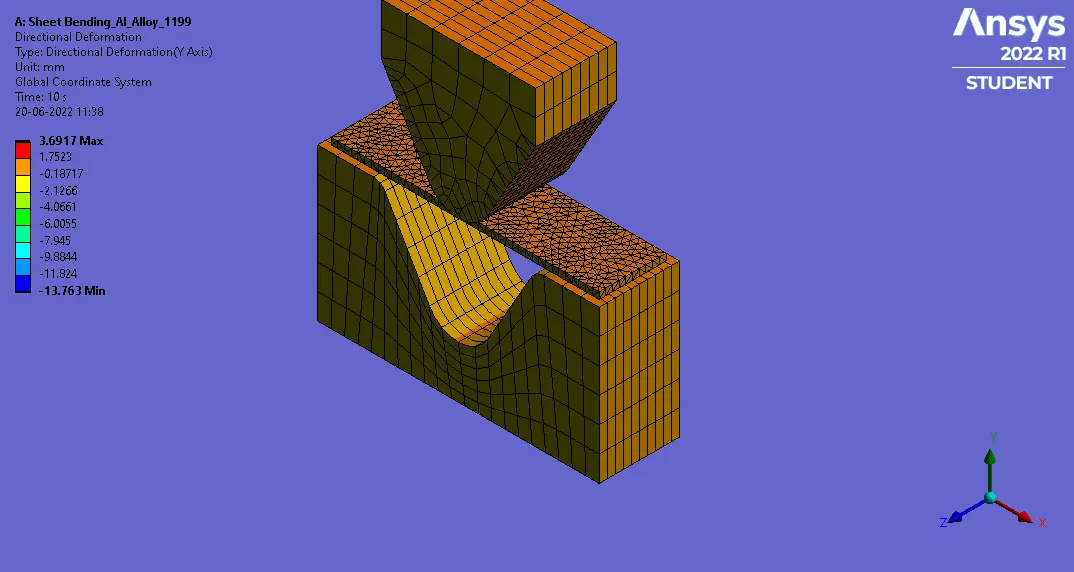
1. Aluminium Alloy 1199-
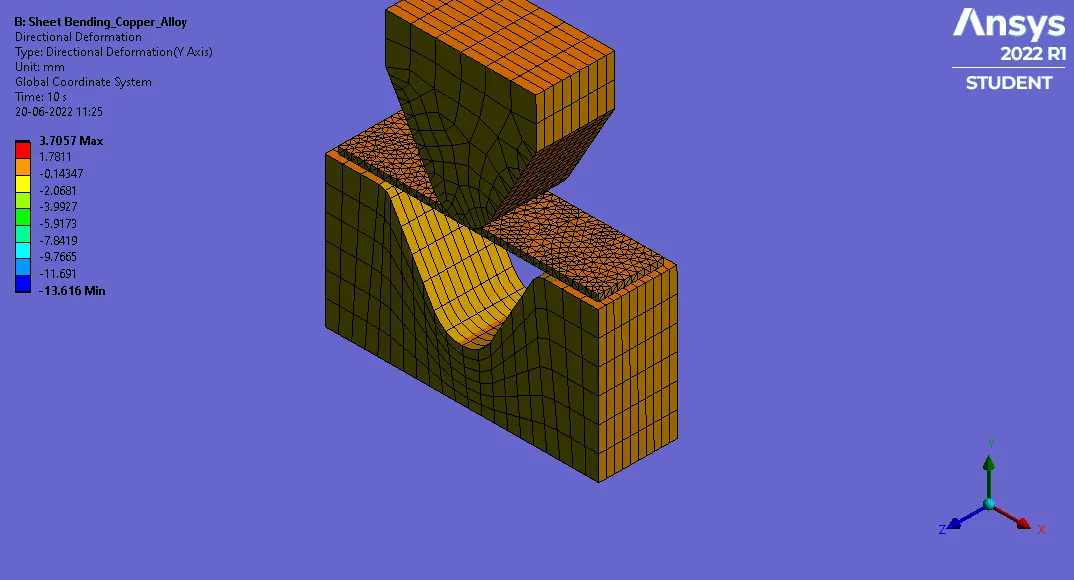
2. Copper Alloy NL-
3. Magnesium Alloy NL-
Result Comparision for total assembly
|
Case-1 Materials |
Equivalent Stress (MPa) |
Equivalent Strain |
Directional Deformation along Y-axis (mm) |
|||
|
Min. |
Max. |
Min. |
Max. |
Min. |
Max. |
|
|
Aluminium Alloy 1199 |
2.0768E-8 |
2.921E5 |
1.0385E-11 |
1.4735 |
-12.532 |
2.2157 |
|
Copper Alloy NL |
2.3929E-6 |
2.4647E5 |
1.1964E-11 |
1.2333 |
-13.342 |
1.8709 |
|
Magnesium Alloy NL |
1.7652E-7 |
1.6905E5 |
8.826E-13 |
.80536 |
-11.989 |
1.8725 |
from above table we can observe that the max. stress, strain and deformation observed in the aluminium alloy 1199. maximum values observed near die are on top side after removal of punch force and stresses developed in the sheet are lower as compared to die due to non-linear property.
Result Comparision for sheet only
|
Case-1 Materials |
Equivalent Stress (MPa) |
Equivalent Strain |
||
|
Min. |
Max. |
Min. |
Max. |
|
|
Aluminium Alloy 1199 |
0.17455 |
99.469 |
3.1413E-7 |
0.0041234 |
|
Copper Alloy NL |
0.59841 |
221.092 |
6.362E-6 |
0.004102 |
|
Magnesium Alloy NL |
0.0044975 |
88.871 |
2.0919E-7 |
0.002793 |
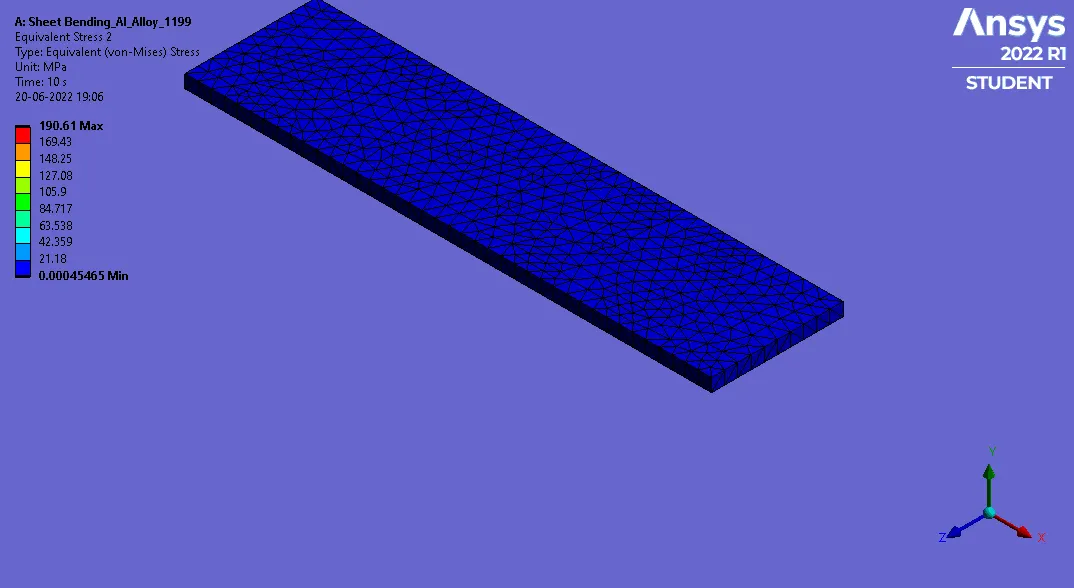
From above table we can observe that the max, values of stress and strain is observed in copper alloy sheet.
Case-2-Changing Friction coeff. to 0.19 for aluminium alloy and comparision with previous case-1 result-
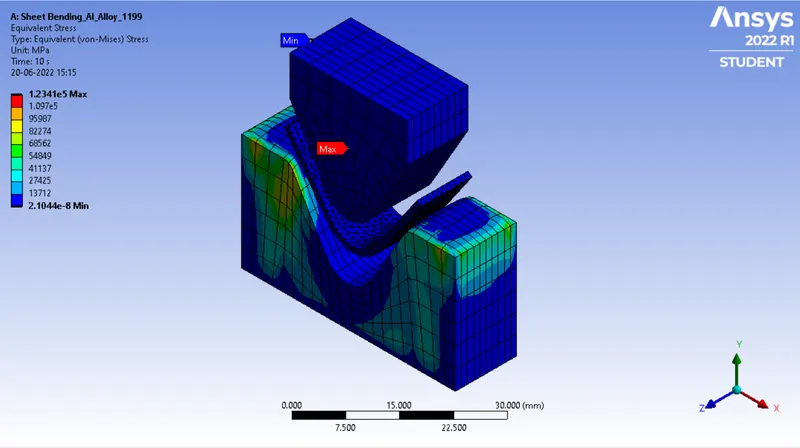
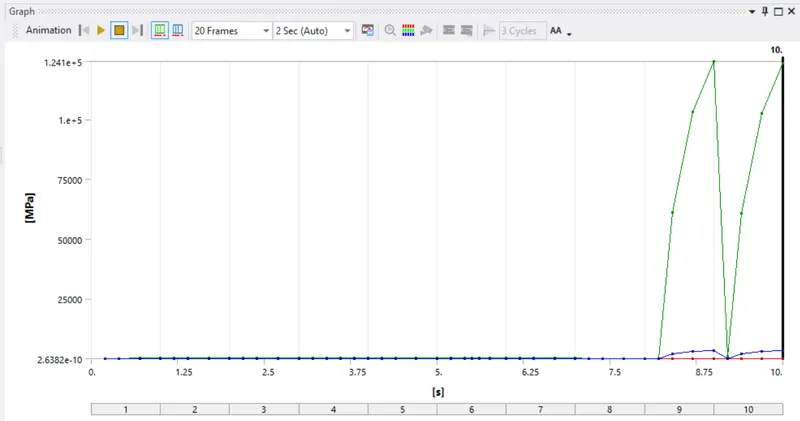
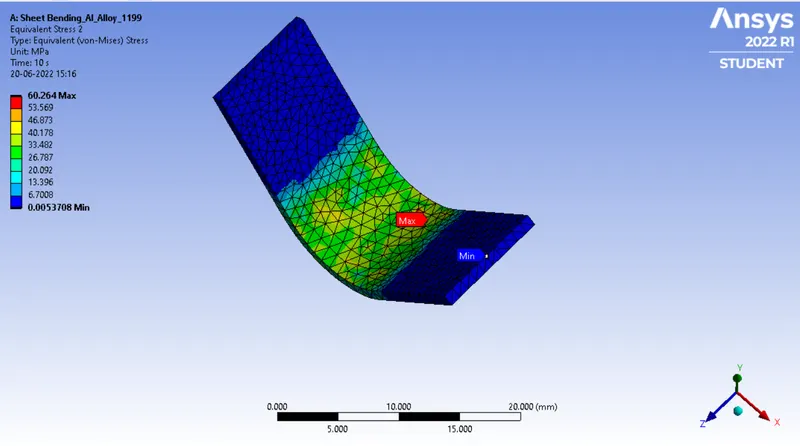
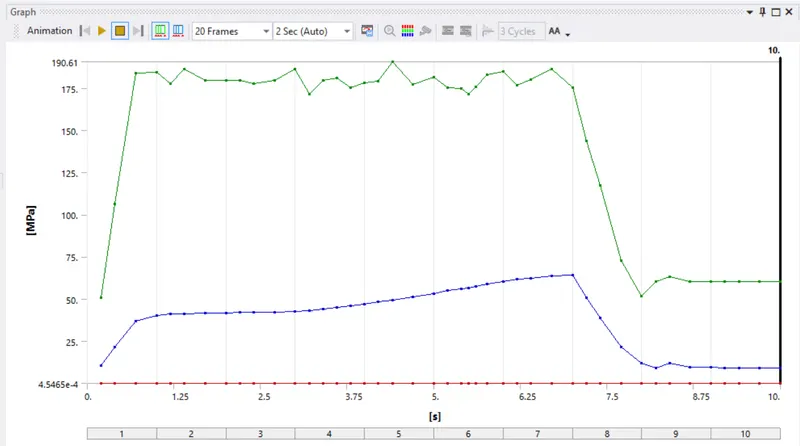
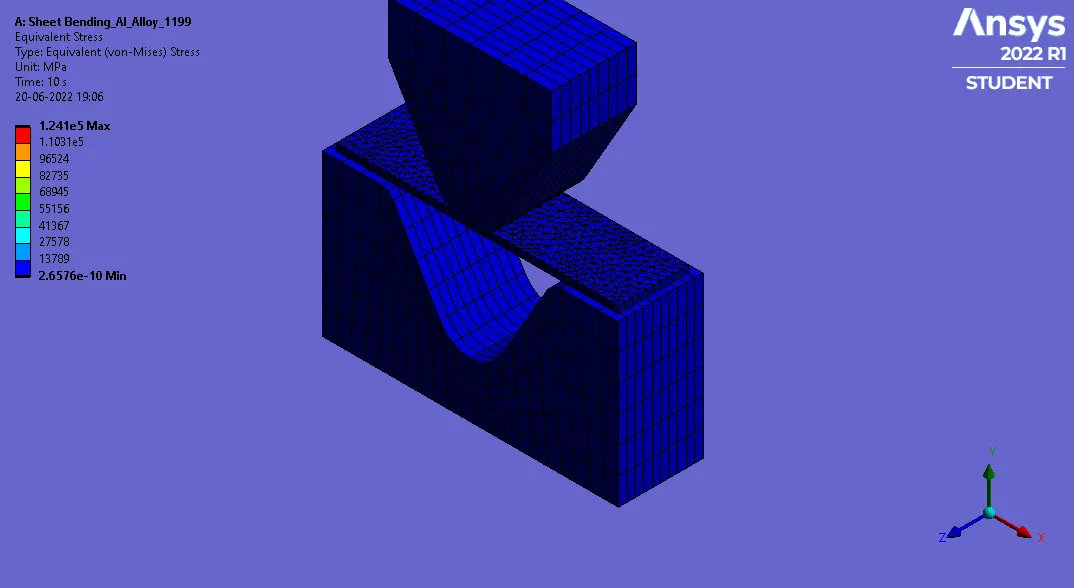
Equivalent Stress-
1. Aluminium Alloy 1199 (friction Coefficient of 0.1)-
2. Aluminium Alloy 1199 (friction Coefficient of 0.19)-
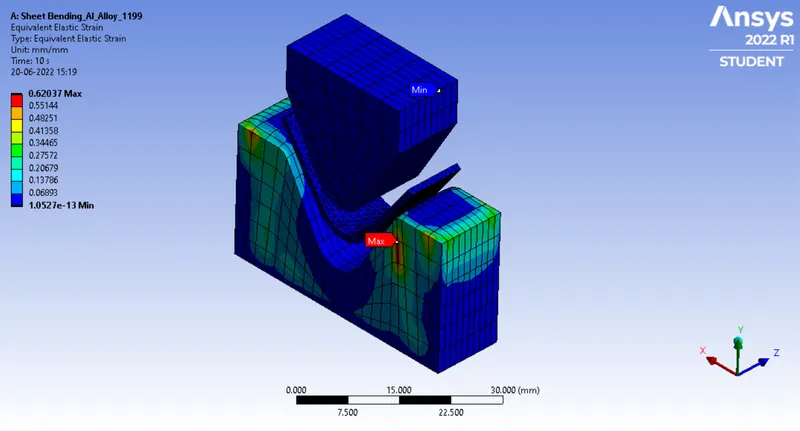
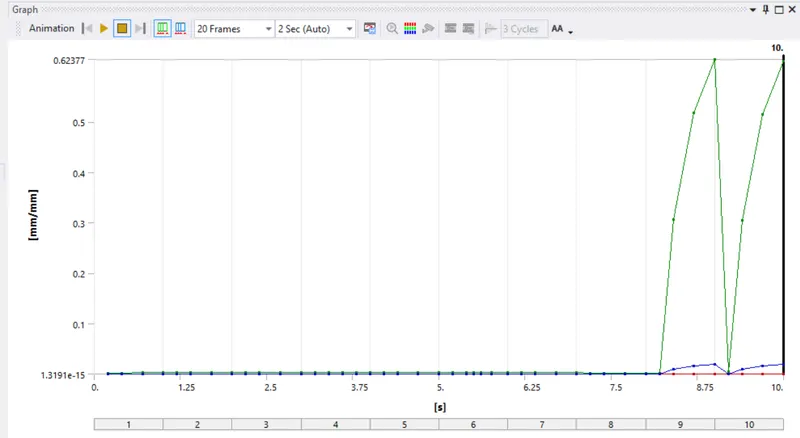
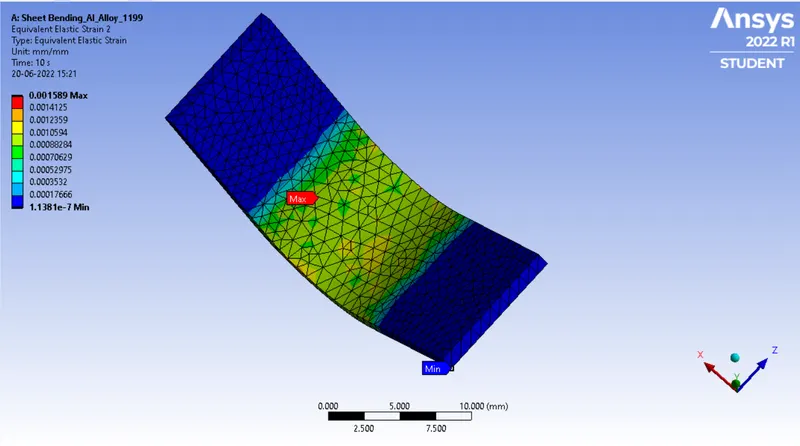
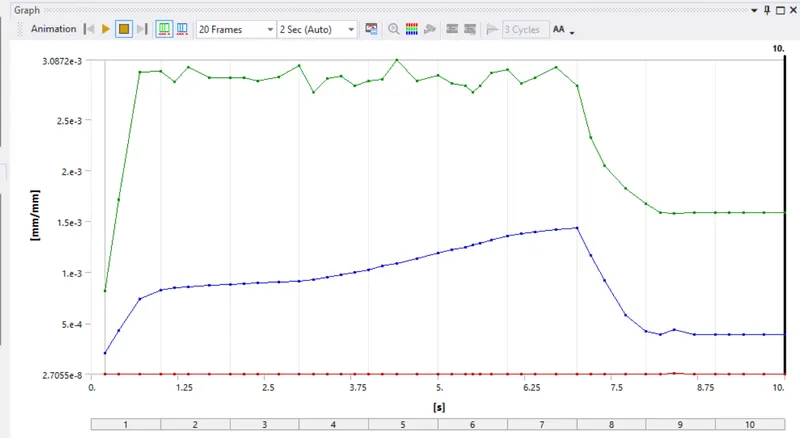
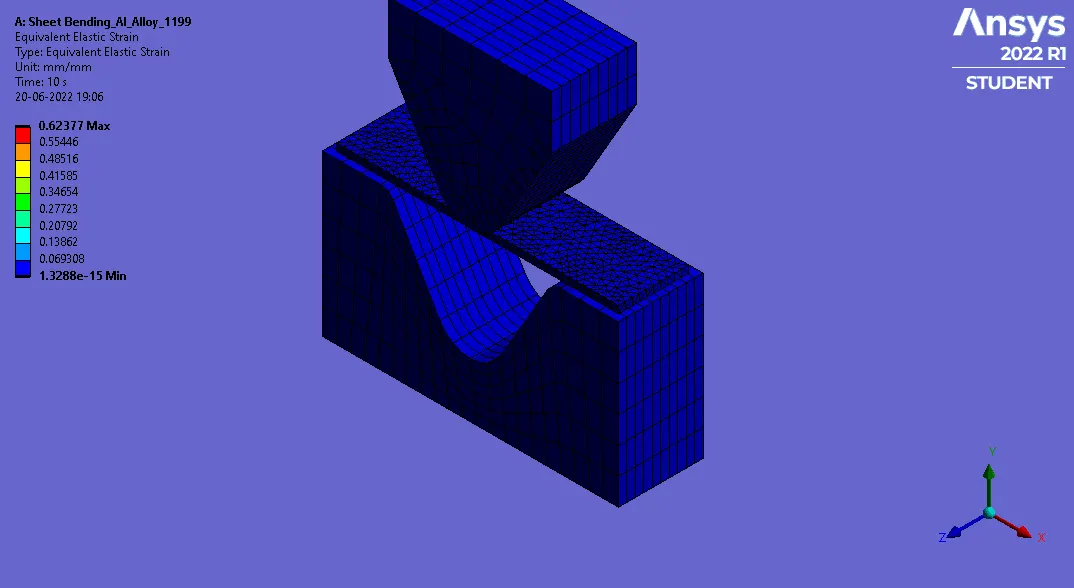
Equivalent Strain-
1. Aluminium Alloy 1199 (friction Coefficient of 0.1)-
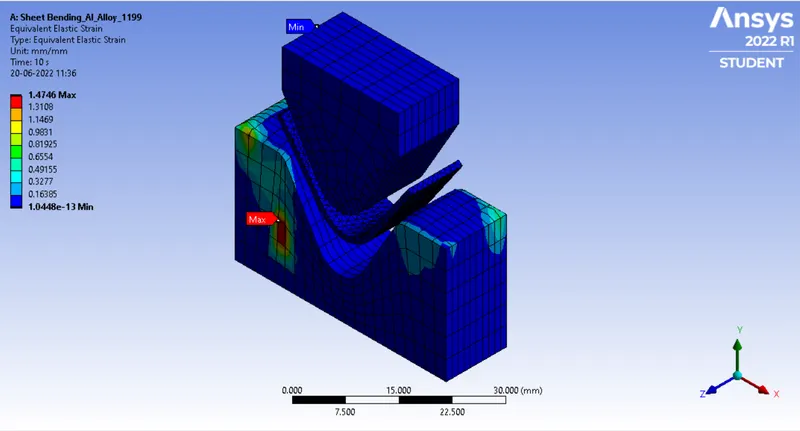
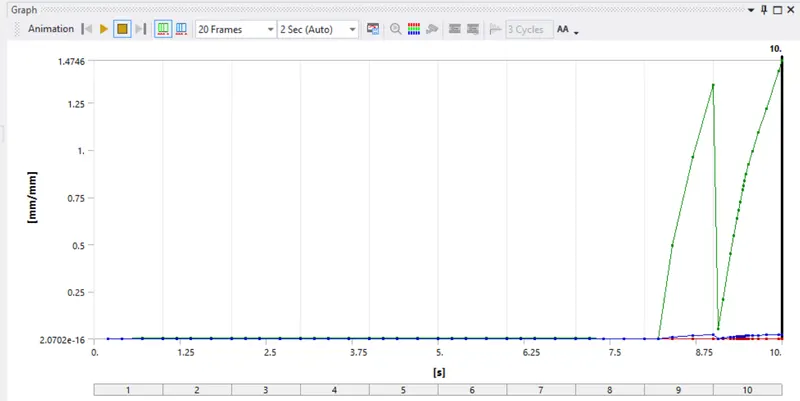
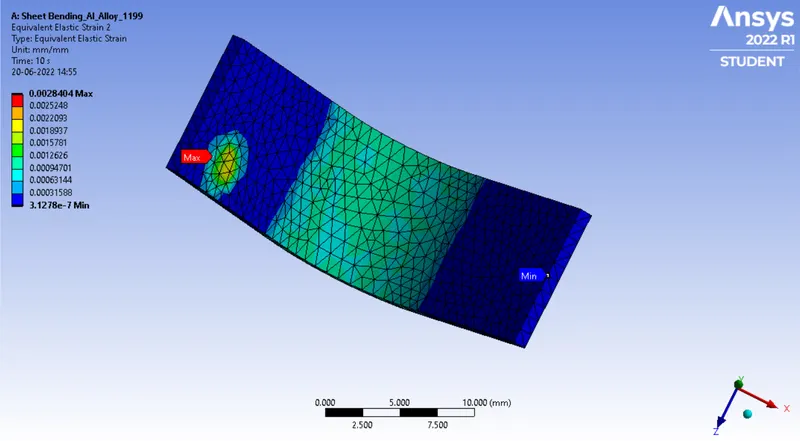
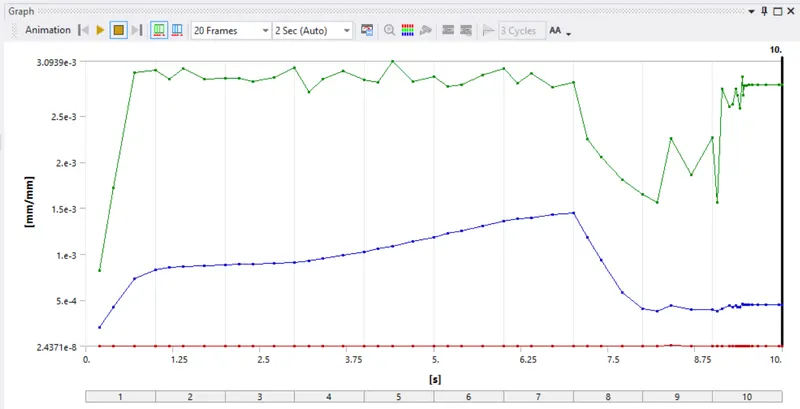
2. Aluminium Alloy 1199 (friction Coefficient of 0.19)-
Directional Deformation Along Y-axis-
1. Aluminium Alloy 1199 (friction Coefficient of 0.1)-
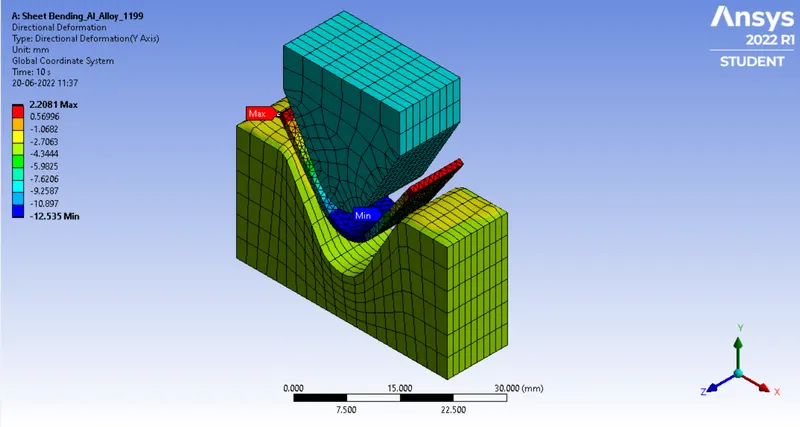
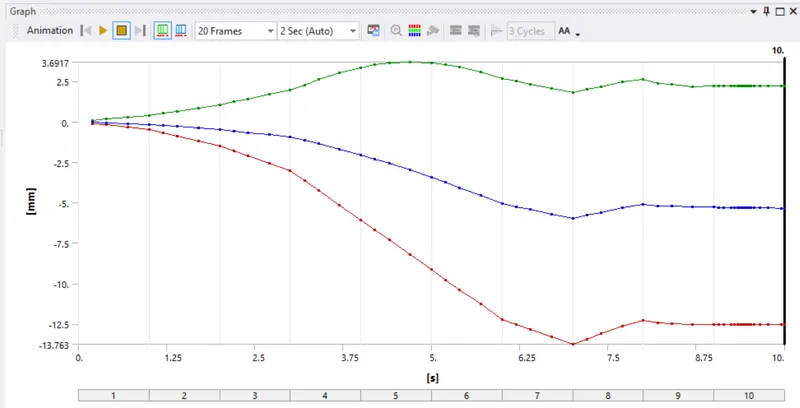
2. Aluminium Alloy 1199 (friction Coefficient of 0.19)-
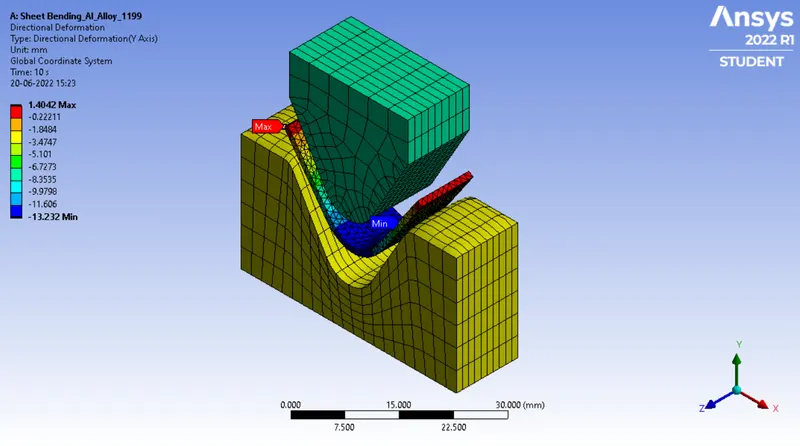
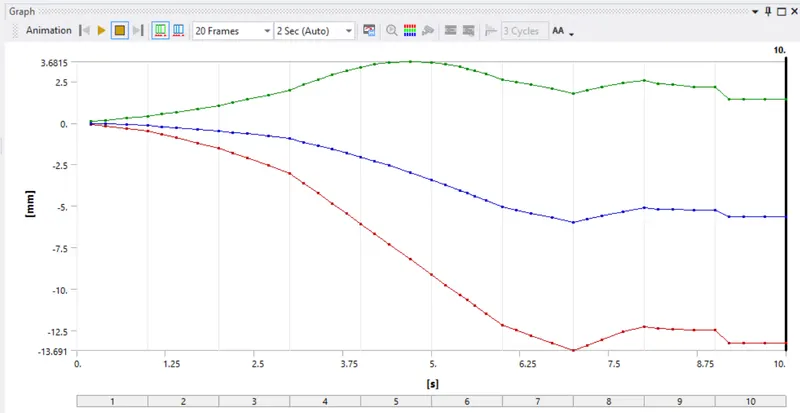
Result Comparision-
|
Case-1 Materials |
Equivalent Stress (MPa) |
Equivalent Strain |
Directional Deformation along Y-axis (mm) |
|||
|
Min. |
Max. |
Min. |
Max. |
Min. |
Max. |
|
|
Aluminium Alloy 1199 with COF-0.1 |
2.0768E-8 |
2.921E5 |
1.0385E-11 |
1.4735 |
-12.532 |
2.2157 |
|
Aluminium Alloy 1199 with COF-0.19 |
2.1044E-8 |
1.2341E5 |
1.052E-13 |
0.62037 |
-13.232 |
1.4042 |
|
For sheet with COF-0.1 |
0.01745 |
84.545 |
3.1278E-7 |
0.002840 |
- |
- |
|
For sheet with COF-0.19 |
0.00537 |
60.264 |
1.138E-7 |
0.001589 |
- |
- |
From above table we can say that the stress, strain and deformation values decreases with increase in Friction coefficient.
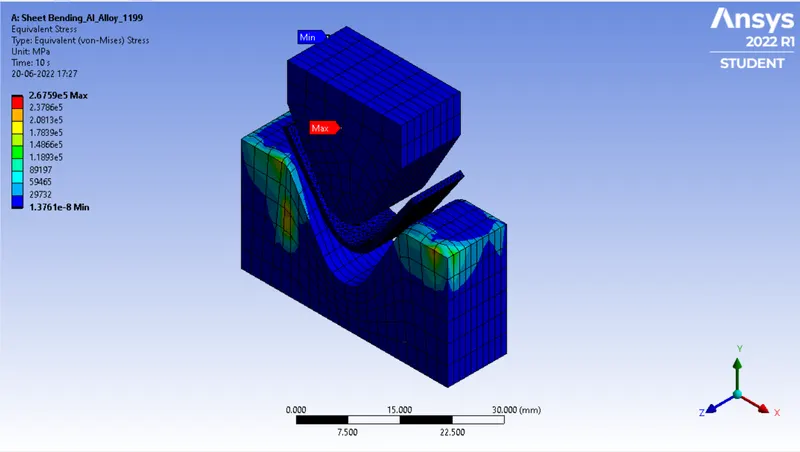
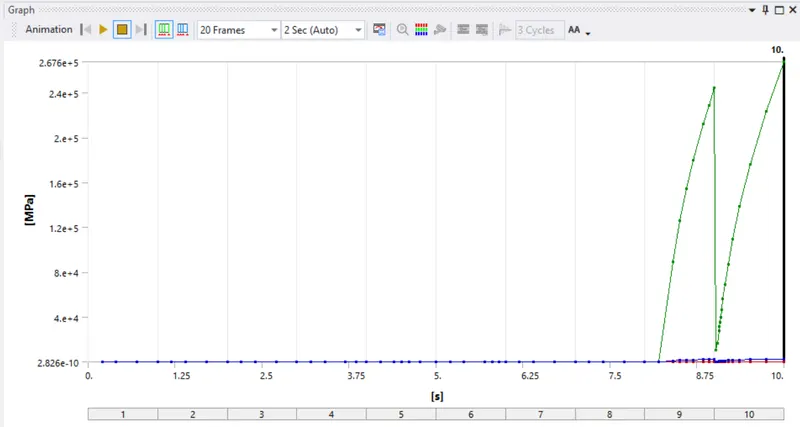
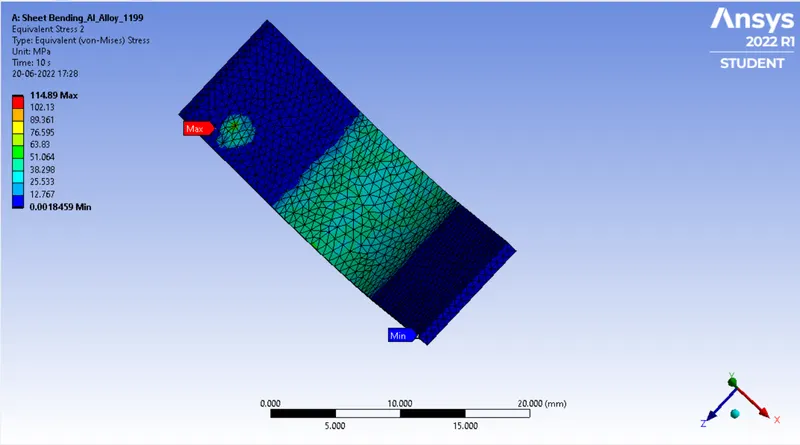
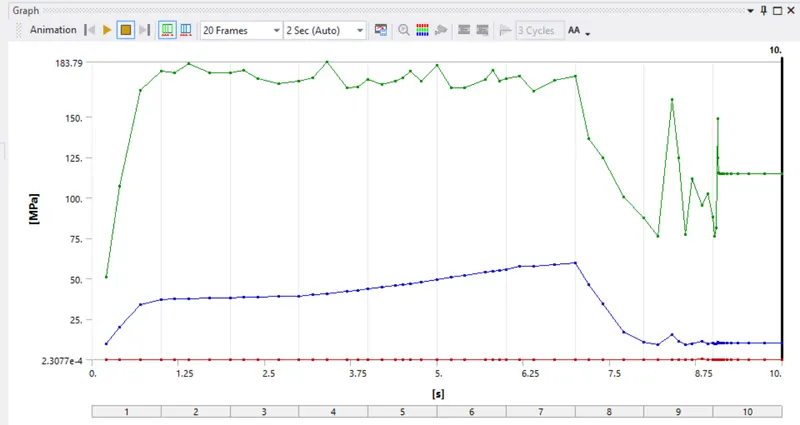
Case-3-Refining the mesh further of aluminium alloy and comparing with Case-1-
Equivalent Stress-
1. Aluminium Alloy 1199 (plate mesh size of 1mm)-
2. Aluminium Alloy 1199 (plate mesh size of 0.7mm)-
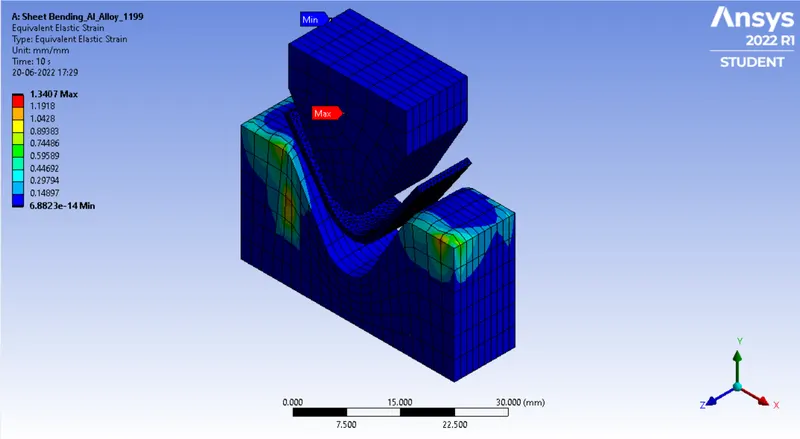
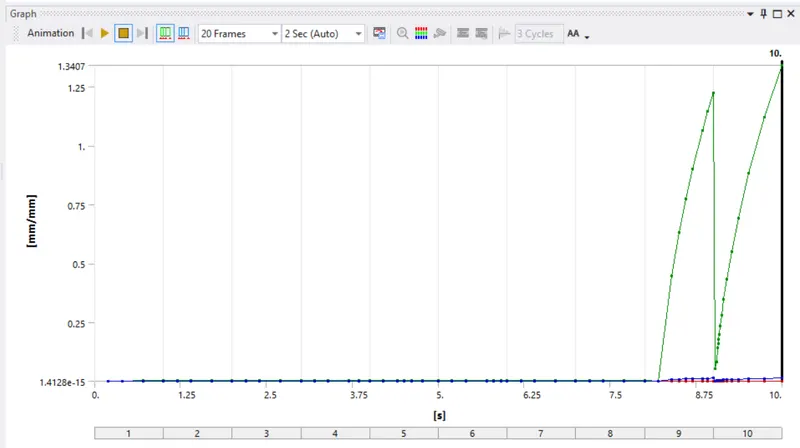
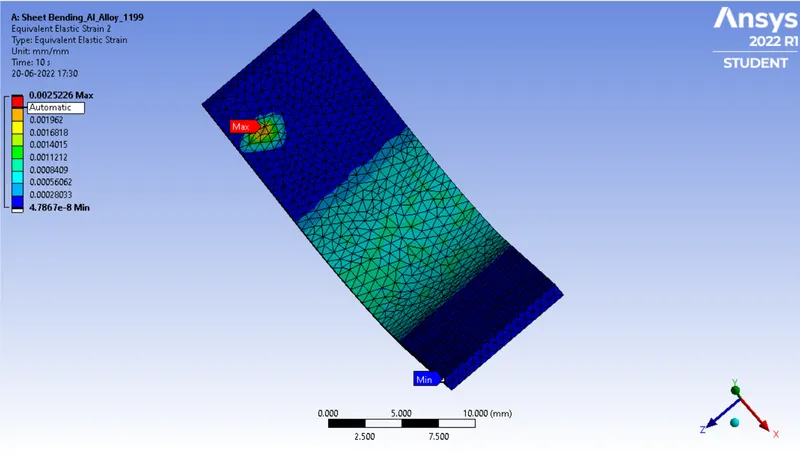
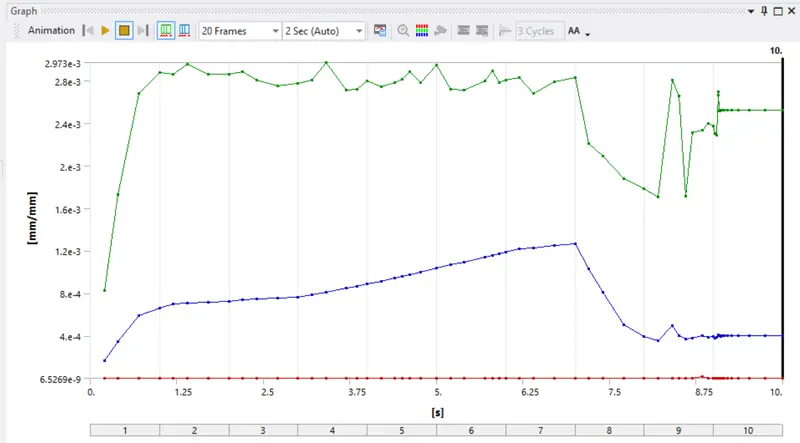
Equivalent Strain-
1. Aluminium Alloy 1199 (plate mesh size of 1mm)-
2. Aluminium Alloy 1199 (plate mesh size of 0.7mm)-
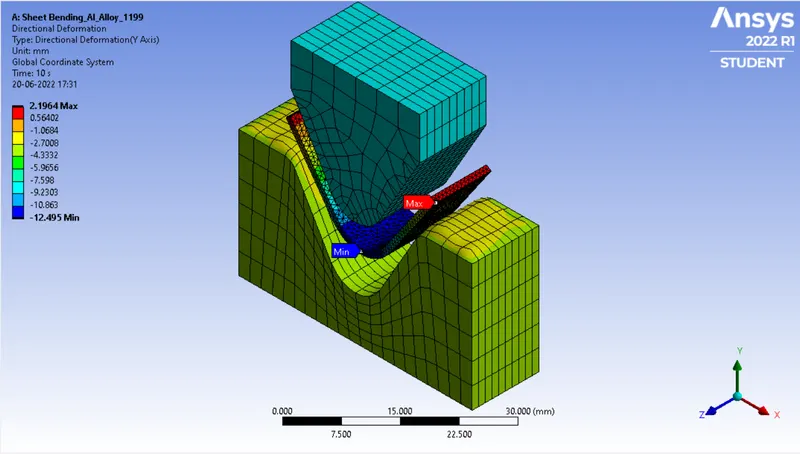
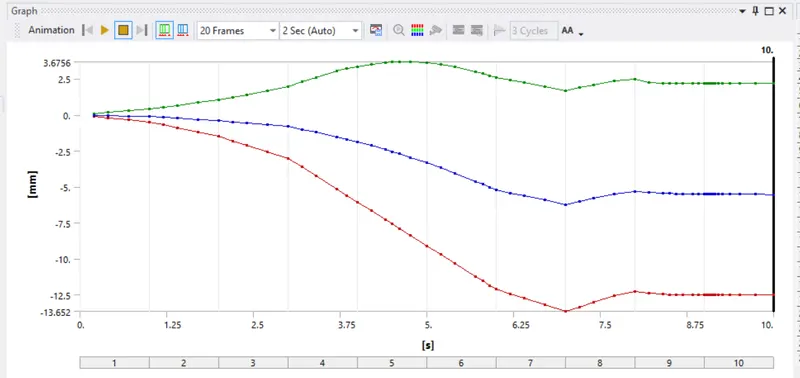
Directional Deformation Along Y-axis-
1. Aluminium Alloy 1199 (plate mesh size of 1mm)-
2. Aluminium Alloy 1199 (plate mesh size of 0.7mm)-
Result Comparision-
|
Case-1 Materials |
Equivalent Stress (MPa) |
Equivalent Strain |
Directional Deformation along Y-axis (mm) |
|||
|
Min. |
Max. |
Min. |
Max. |
Min. |
Max. |
|
|
Aluminium Alloy 1199 with Mesh-1mm |
2.0767E-08 |
2.921E5 |
1.0385E-11 |
1.4735 |
-12.532 |
2.20157 |
|
Aluminium Alloy 1199 with Mesh 0.7mm |
1.3761E-08 |
2.67591E5 |
6.8823E-14 |
1.340749 |
-12.4951 |
2.1964 |
|
For sheet with Mesh-1mm |
0.01745 |
84.545 |
3.1278E-7 |
0.002840 |
- |
- |
|
For sheet with Mesh 0.7mm |
0.001845 |
114.89 |
4.786E-8 |
0.002526 |
- |
- |
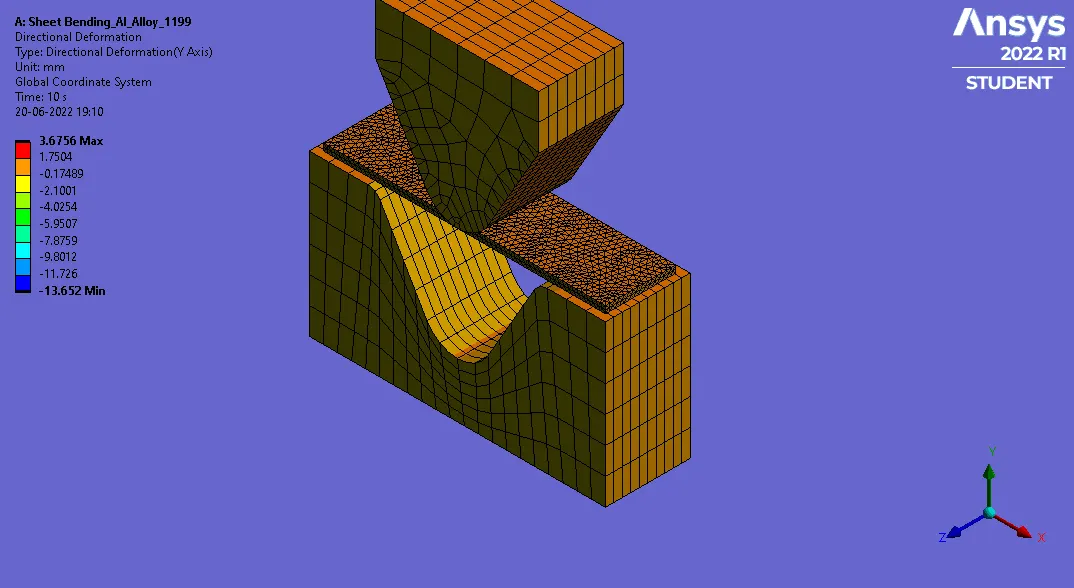
From above table we can onserve that the values of strees, strain and deformation are approx. same except that the value of stress on sheet in finer mesh is more as compared to case-1.
Aminamted Results-
Case-1
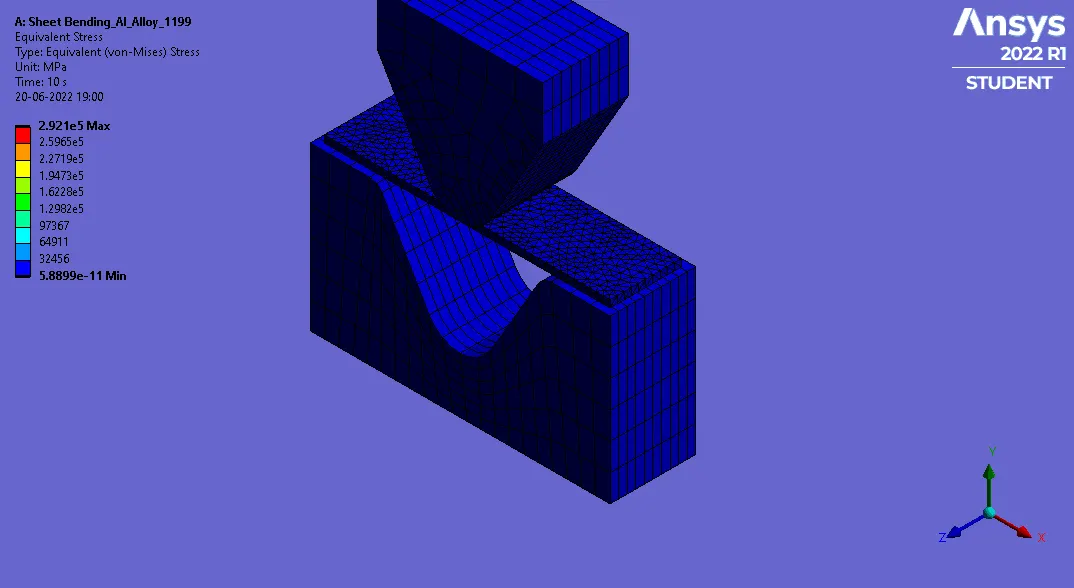
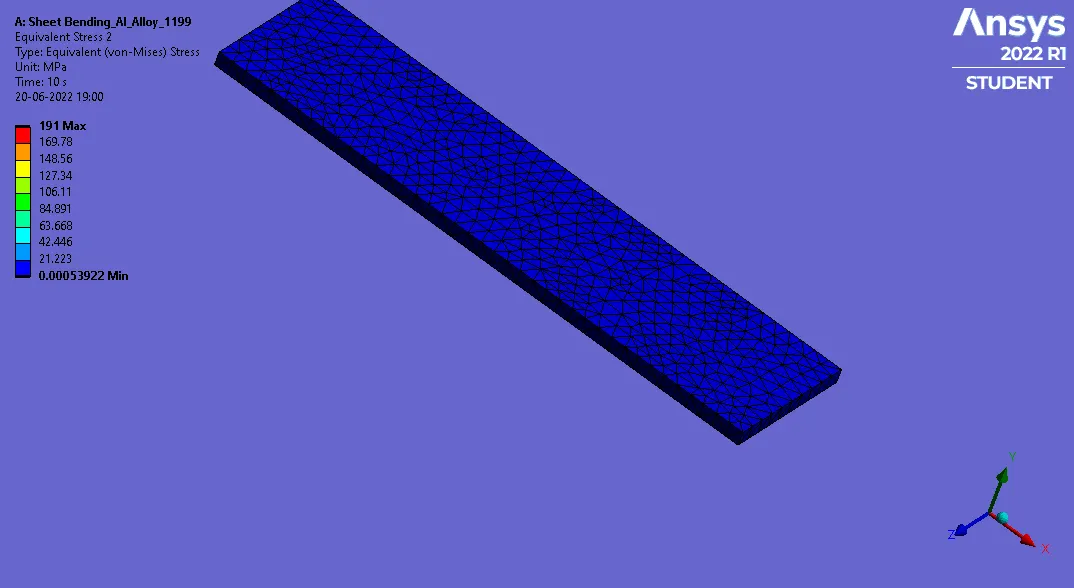
1. Aluminium Alloy 1199(COF-0.1, Mesh Size-1mm)-
Equivalent Stress
Equivalent strain
Directional Deformation
2. Copper Alloy NL-
Equivalent Stress
Equivalent strain
Directional Deformation
3. Magnesium Alloy NL-
Equivalent Stress
Equivalent strain
Directional Deformation
Case-2
1. Aluminium Alloy 1199(COF-0.19, Mesh Size-1mm)
Equivalent Stress
Equivalent strain
Directional Deformation
Case-3
1. Aluminium Alloy 1199(COF-0.1, Mesh Size-0.7mm)
Equivalent Stress
 Equivalent strain
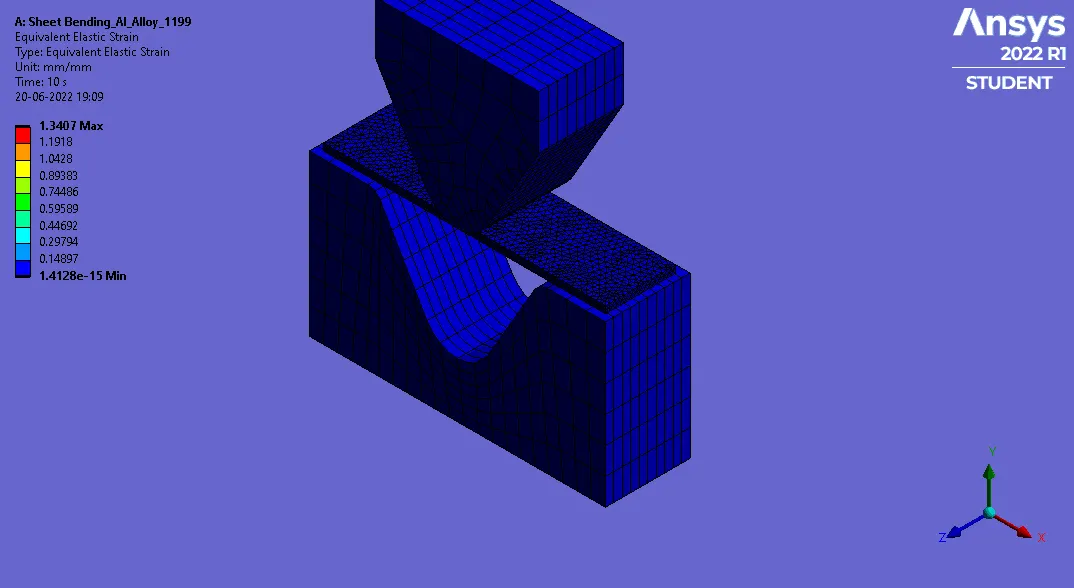
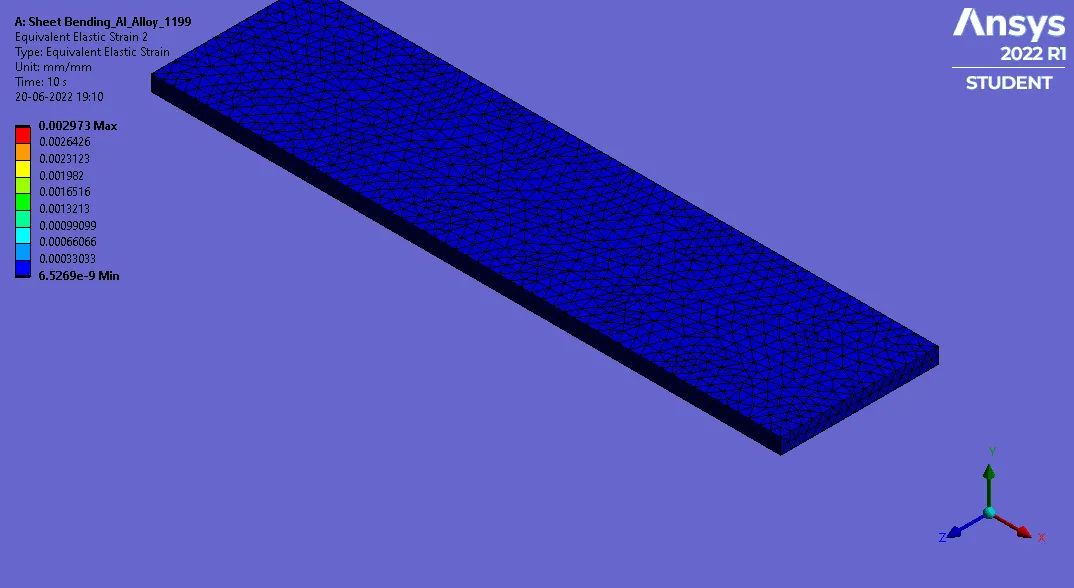
Directional Deformation
Conclusion-
- From above results we can conclude that the ductile materials are most effective matrial for metal forming process.
- Also we can say that the materials bends inducing permanent plastic deformation.
- Since stress induced in the aluminium is high in refined mesh case so there we can see the better stress distribution in it.
- So overall we can say that the aluminium is the best suited material in above analysis.