Week-3 Challenge: ADVISOR Tool
1)
Aim:
To observe the performance of EV_defaults_in file with FTP drive cycle.
Given Data:
- Cargo mass:500 kg
- Drive cycle: FTP
ADVISOR Tool:
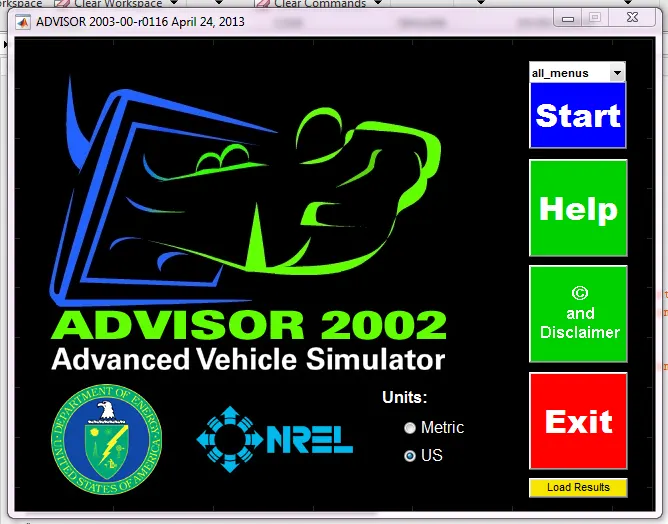
- Advanced Vehicle Simulator (ADVISOR)—the US Department of Energy’s (DOE’s) ADVISOR
written in the MATLAB/Simulink environment and developed by the National Renewable Energy Laboratory. - ADVISOR provides the vehicle engineering community with an easy-to-use, flexible, robust and supported analysis package for advanced vehicle modeling.
- It is primarily used to quantify the fuel economy, the performance, and the emissions of vehicles that use alternative technologies including fuel cells, batteries, electric motors, and internal combustion engines in hybrid configurations.
Observations:
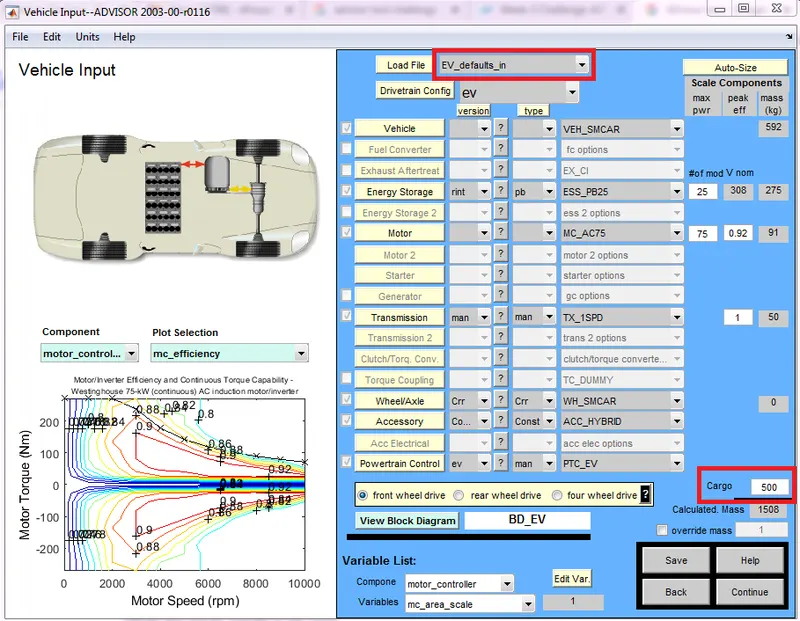
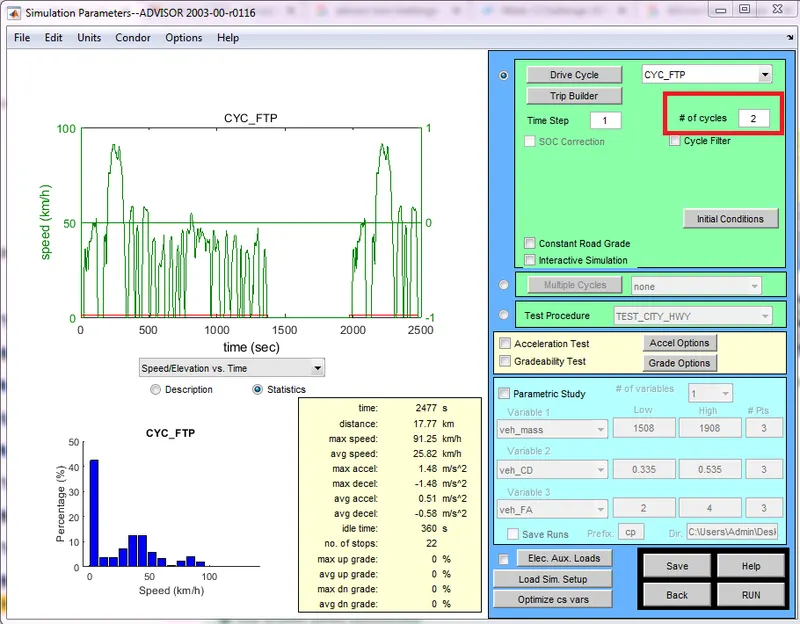
- The EV_defaults_in file is choosen and the cargo mass of 500 kg is given to the vehicle input.
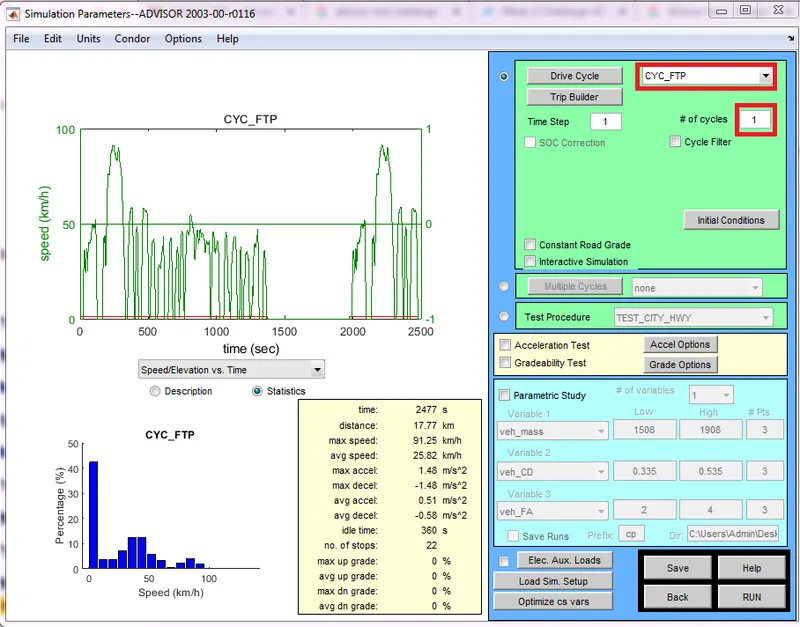
- Then the simulation parameters for one FTP drive cycle is added to know the results.
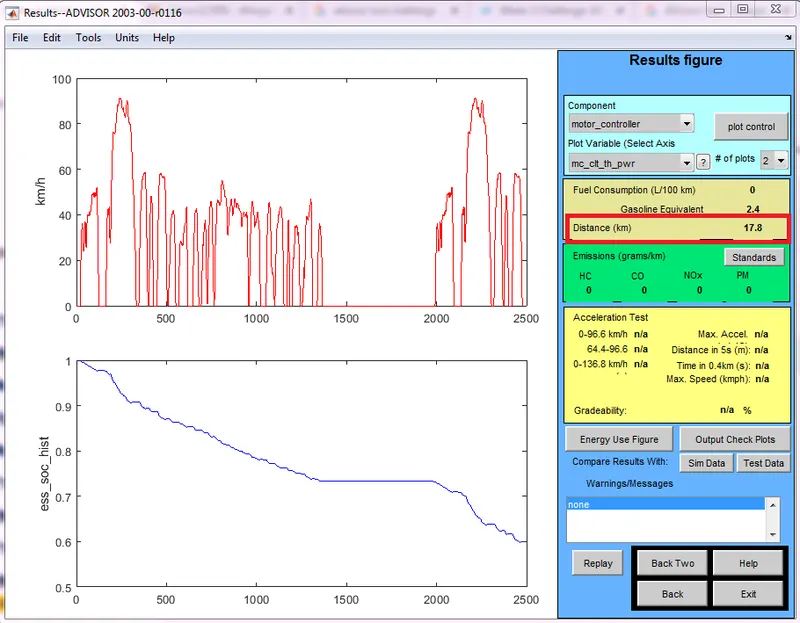
- From the above image it is observed that for one FTP drive cycle the vehicle covers a distance of 17.8km.
- The two graph represents the FTP drive cycle and the usage of SOC battery to run the vehicle.
- Similarly the above procedures are followed for the 2 drive cycles of FTP by changing the input parameter.
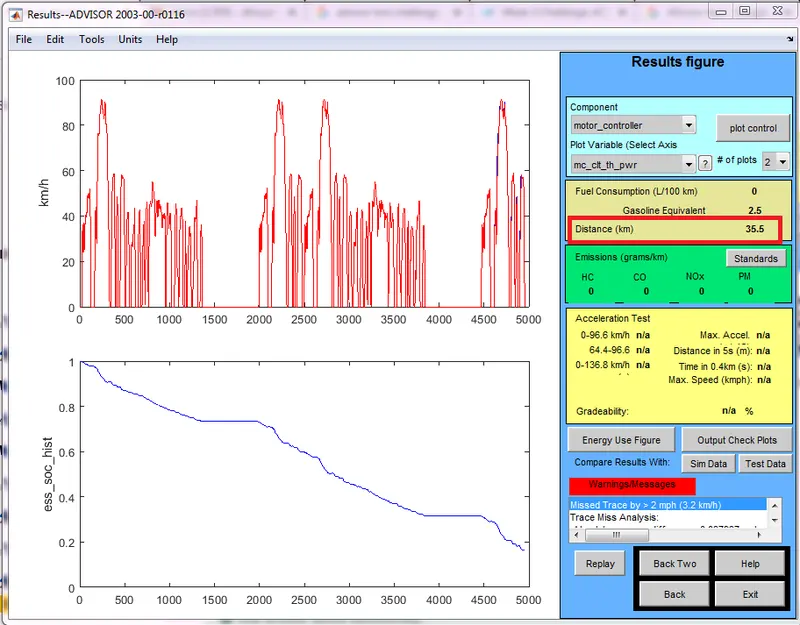
- It is found that two drive cycles of FTP covers 35.5 km of distance.
- The SOC battery reaches nearly 0.2 V at 5000 time periods.
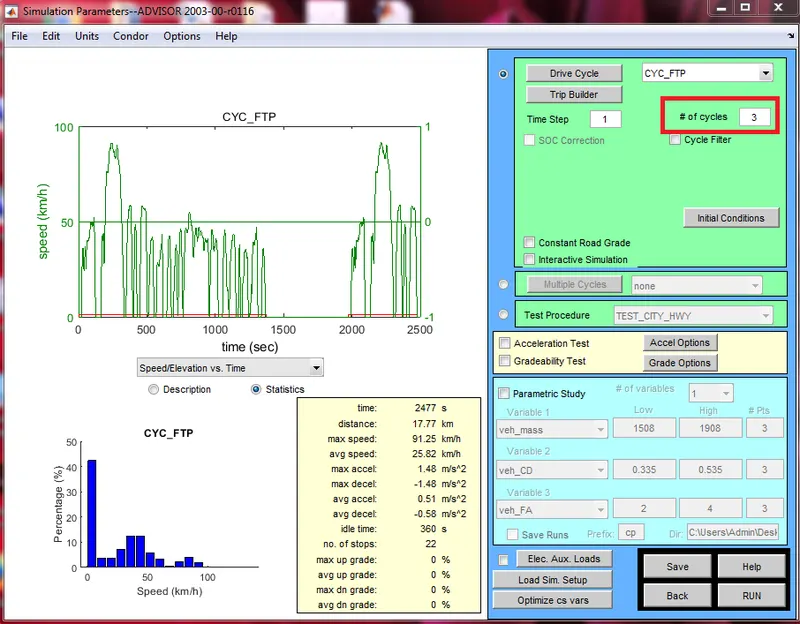
- Now the number of FTP cycle is fixed to 3.
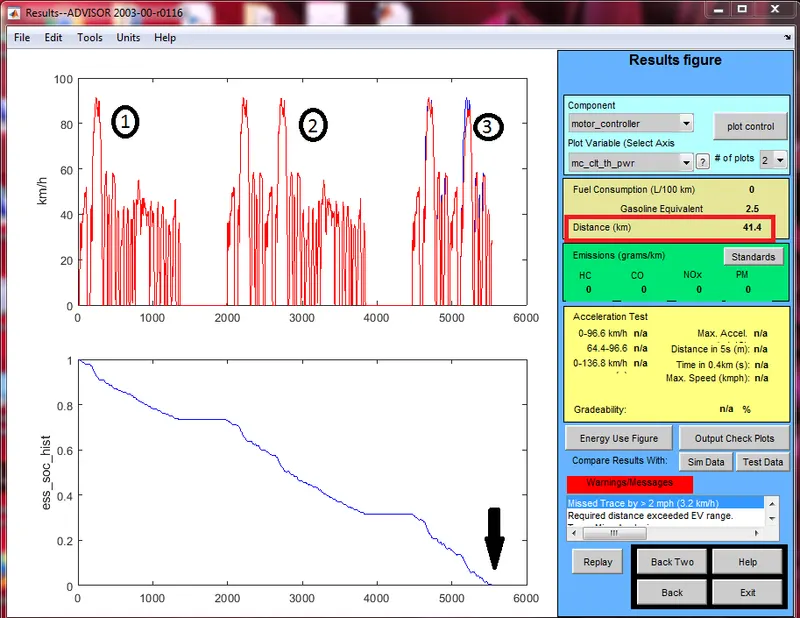
- We can see that at the completion of 41.4 km distance the SOC battery level reaches zero.
- So , it is clear that for EV_defaults_in file the vehicle cannot travel for 45 km with FTP drive cycle.
Result:
The following observations are made and it is clear that the EV vehicle with FTP drive cycle can travel only upto 41.4 km.
|
FTP Drive Cycle No. |
Distance Covered (km) |
|
1 |
17.8 |
|
2 |
35.5 |
|
3 |
41.4 |
2)
Aim:
To change the battery capacity and observe the results.
ADVISOR Tool:
- Advanced Vehicle Simulator (ADVISOR)—the US Department of Energy’s (DOE’s) ADVISOR
written in the MATLAB/Simulink environment and developed by the National Renewable Energy Laboratory. - ADVISOR provides the vehicle engineering community with an easy-to-use, flexible, robust and supported analysis package for advanced vehicle modeling.
- It is primarily used to quantify the fuel economy, the performance, and the emissions of vehicles that use alternative technologies including fuel cells, batteries, electric motors, and internal combustion engines in hybrid configurations.
Observations:
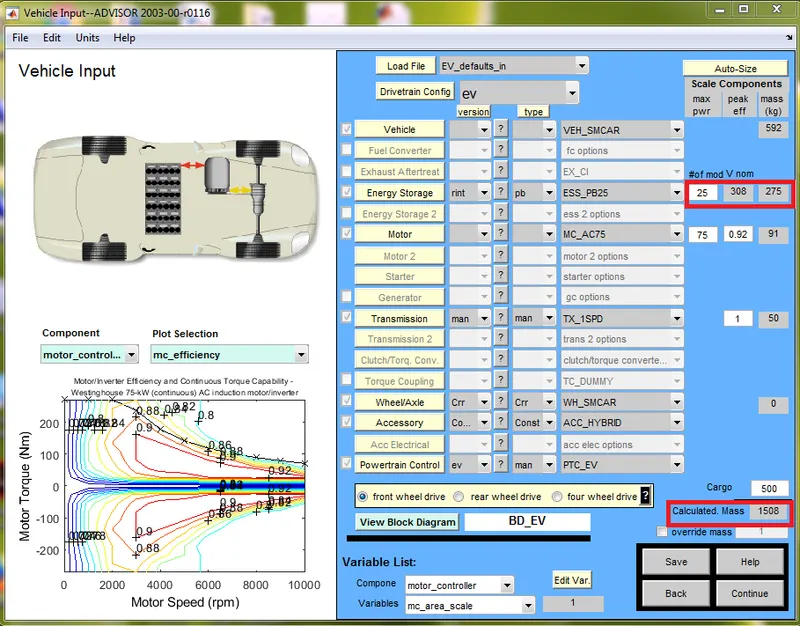
- In the above model the battery module is set to 25 .
- The mass of the battery module is added to the total mass of the vehicle.
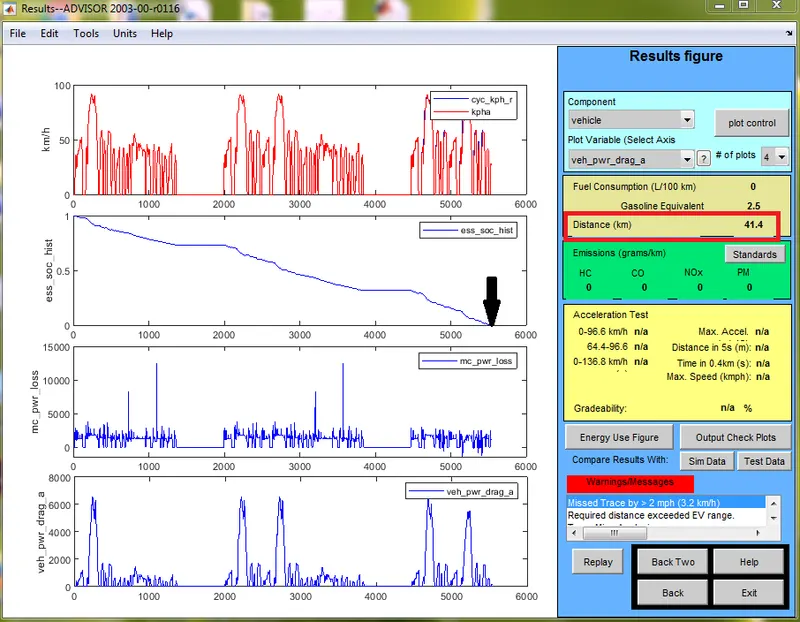
- It is observed that 41.4 km of distance is travelled by the vehicle completing 3 FTP drive cycles.
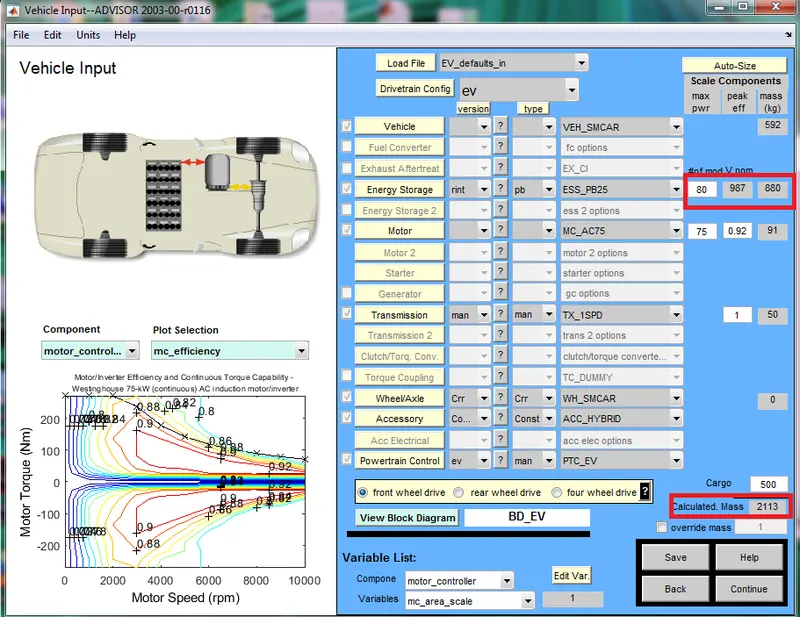
- Now ,the input number of battery module is increased to 80.
- The total vehicle mass is increased to 2113 kgs.
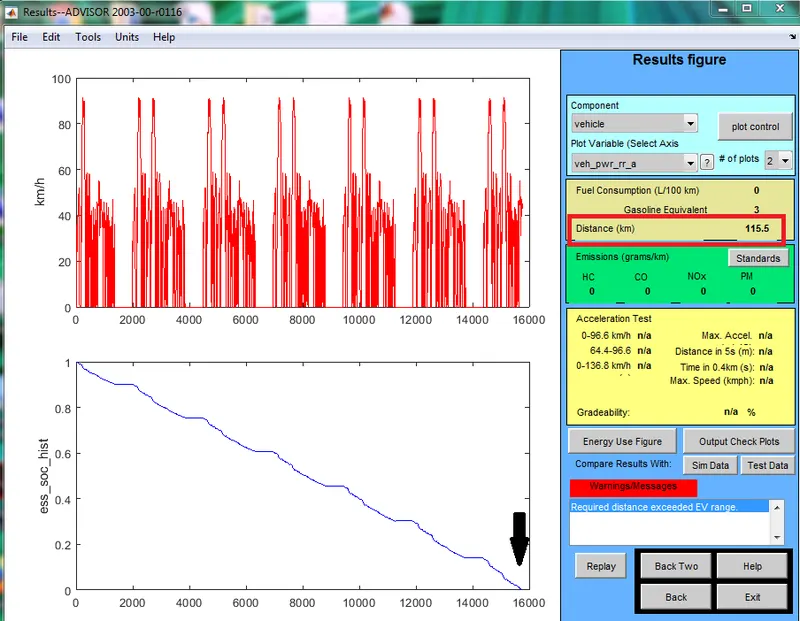
- The obtained output shows that the vehicle can travel 115.5 km completing7 FTP drive cycle.
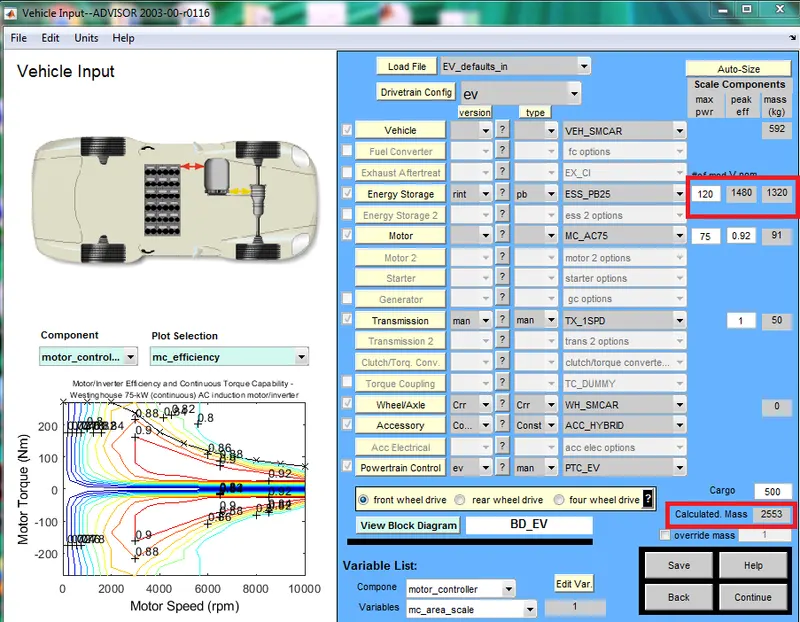
- The input number of module is changed to 120 and the vehicle mass is increased to 2553 kgs.
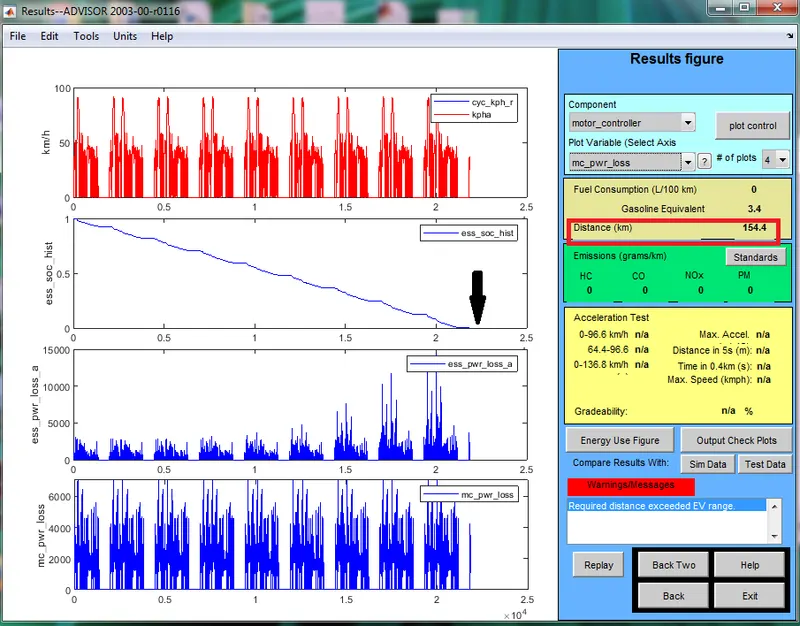
- In output it is observed that the vehicle travels 154.4 km completing 9 FTP drive cycles.
Result:
| No. of Modules | Mass of the vehicle | Distance covered |
| 25 | 1508 | 41.4 |
| 80 | 2113 | 115.5 |
| 120 | 2553 | 154.4 |
- From the above table it is clear that as we increase the number of battery modules the mass of the vehicle increases .
- The distance covered by the vehicle increases as the capacity of battery modules increases.
3)
Aim:
To perform gradeability test with PRIUS_Jpn_defaults_in file and to compare results in table.
ADVISOR Tool:
- Advanced Vehicle Simulator (ADVISOR)—the US Department of Energy’s (DOE’s) ADVISOR
written in the MATLAB/Simulink environment and developed by the National Renewable Energy Laboratory. - ADVISOR provides the vehicle engineering community with an easy-to-use, flexible,robust and supported analysis package for advanced vehicle modeling.
- It is primarily used to quantify the fuel economy, the performance, and the emissions of vehicles that use alternative technologies including fuel cells, batteries, electric motors, and internal combustion engines in hybrid configurations.
Gradeability at Speed:
- This test determines the maximum speed which can be achieved on roads with 3% and 6% grades.
- Vehicles should achieve a minimum sustainable speed of 55 mph when loaded with two 166-pound
occupants on a 3% grade, and 45 mph on a 6% grade, with RESS at 50% SOC.
Simulation:
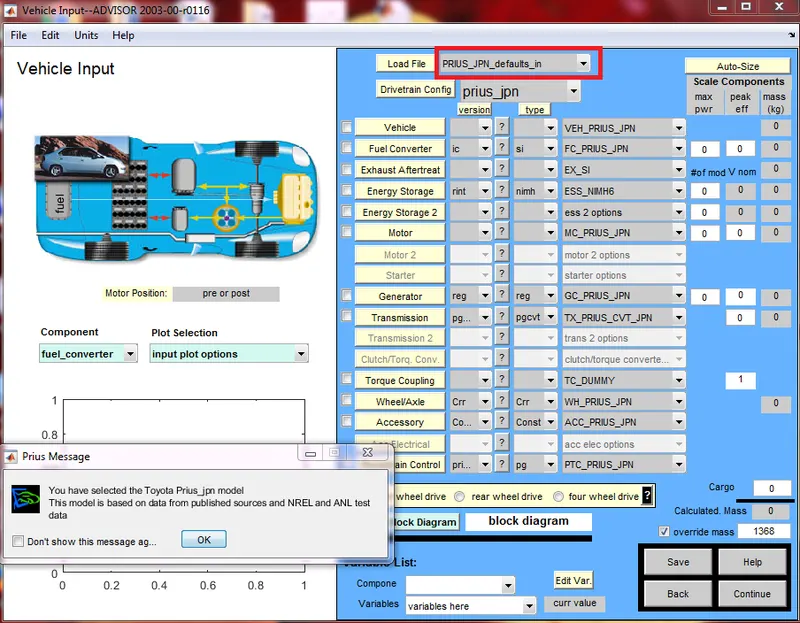
- Prius_jpn vehicle model is selected for the gradeability test.
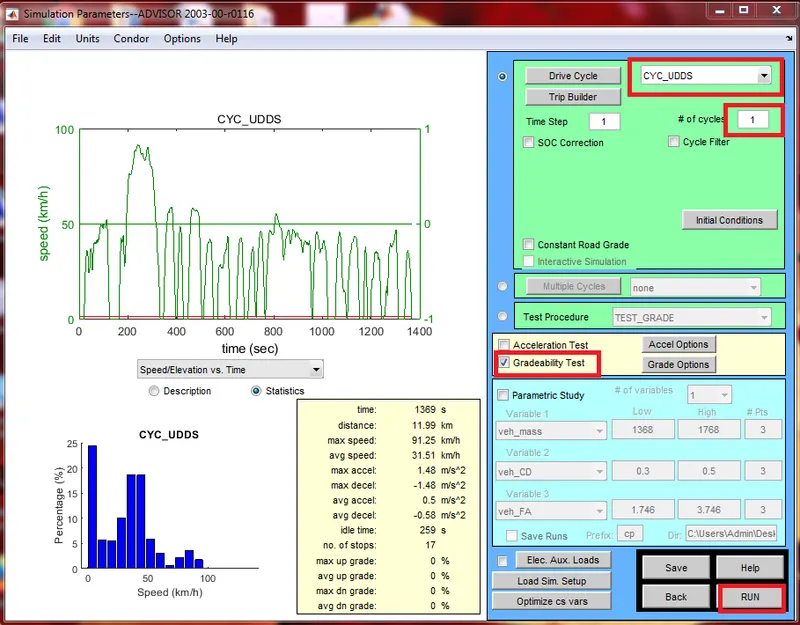
- One UDDS drive cycle is choosen as shown in the above image.
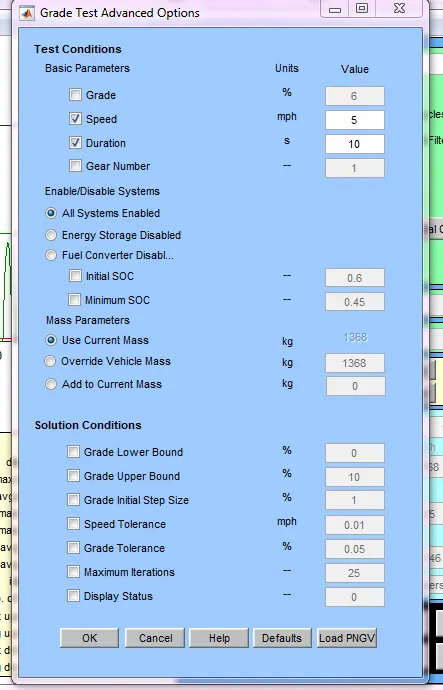
- The grade value 6% or 3% is kept constant and the speed is varied to see the percentage of gradeability.
- When 5mph input is given, we obtain 32.8% gradeability at 8km/h for 6% constant grade .
- Similarly the input is varied to check the output percentage of gradeability.
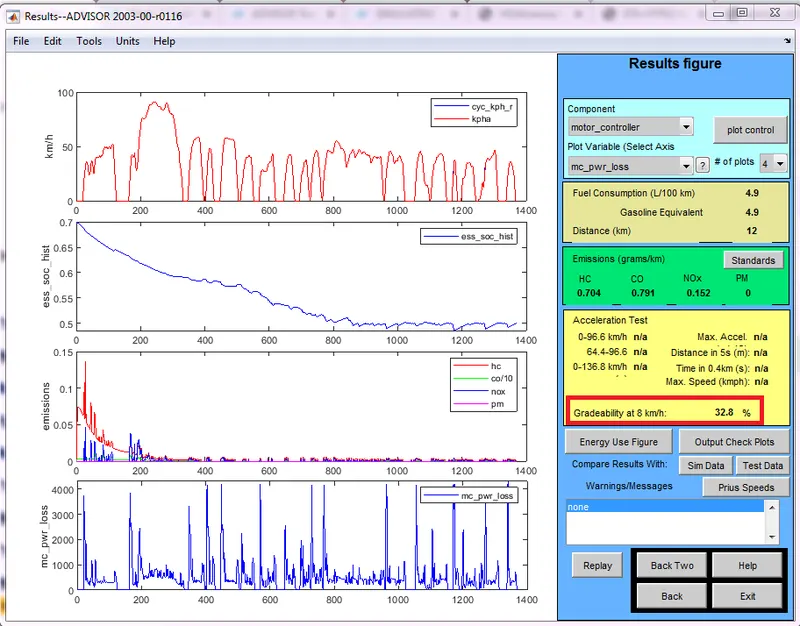
- 10 mph input is given and we obtain 30.3% gradeability at 16.1 km/h .
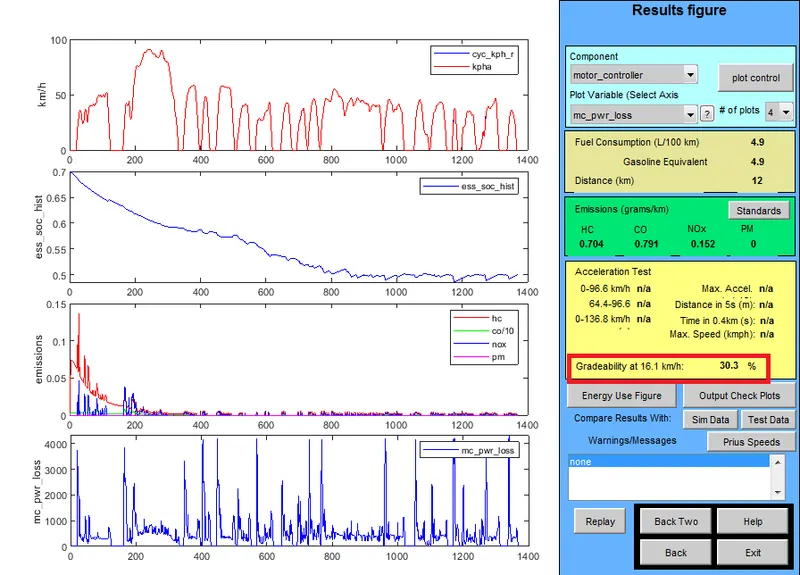
- 15 mph input is given and we obtain 24.4% gradeability at 24.1 km/h .
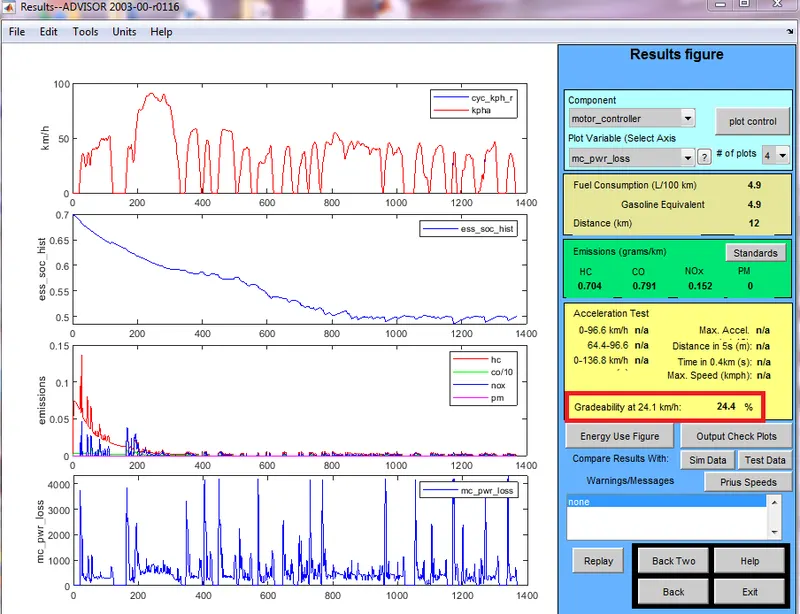
- 20 mph input is given and we obtain 19.8% gradeability at 32.2 km/h .
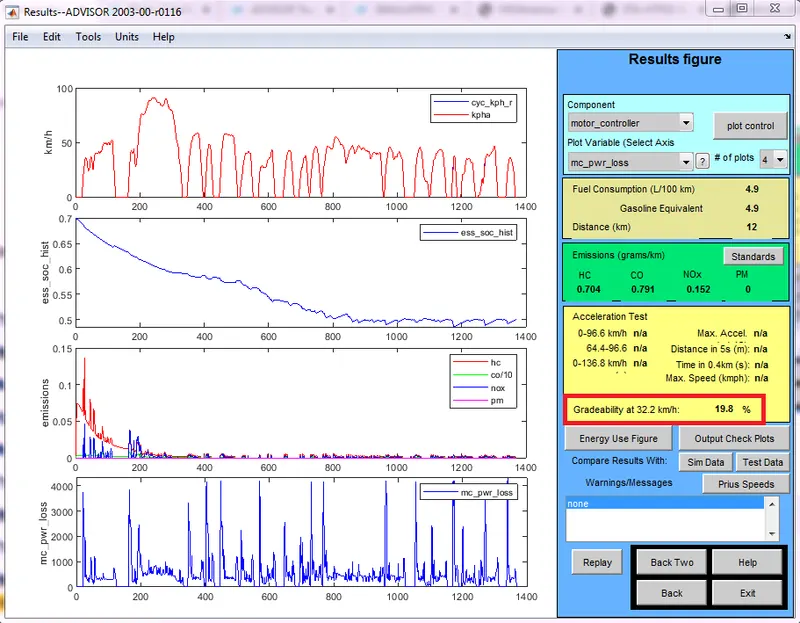
- 25 mph input is given and we obtain 16.5 % gradeability at 40.2 km/h .
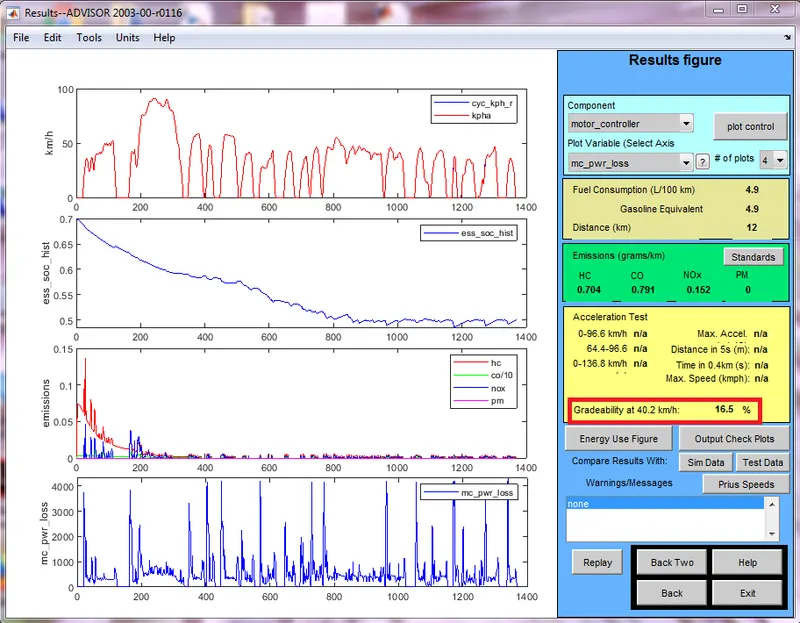
- 30 mph input is given and we obtain 14.7% gradeability at 48.3 km/h .
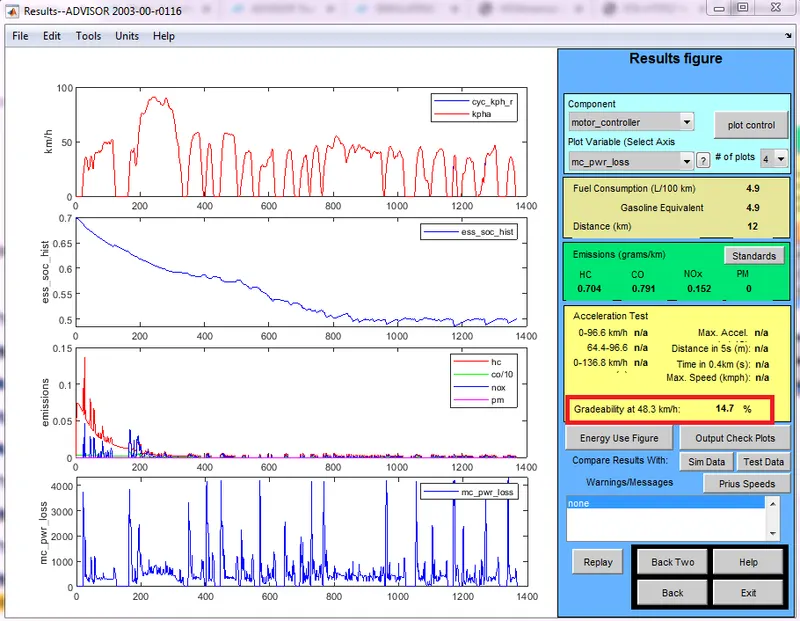
- 35 mphinput is given and we obtain 13 % gradeability at 56.3 km/h .
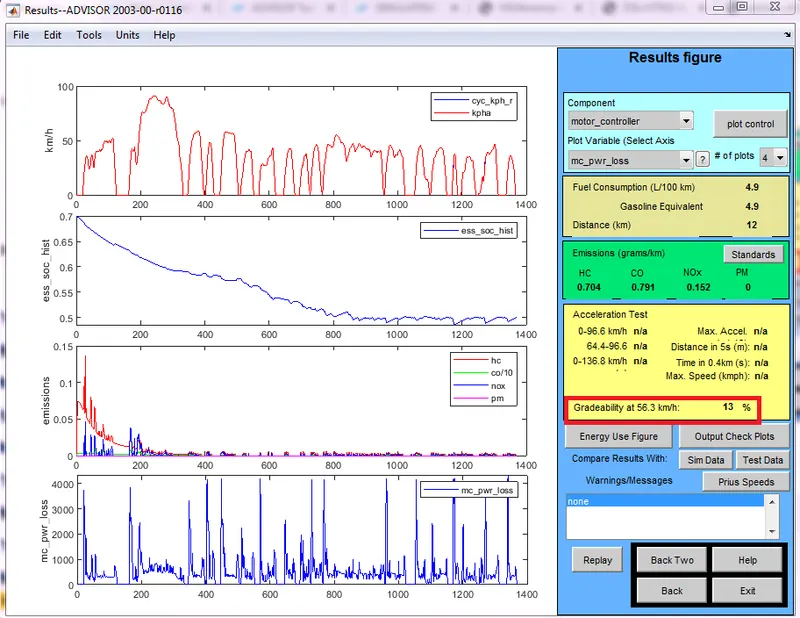
- 40 mph input is given and we obtain 11.7% gradeability at 64.4 km/h .
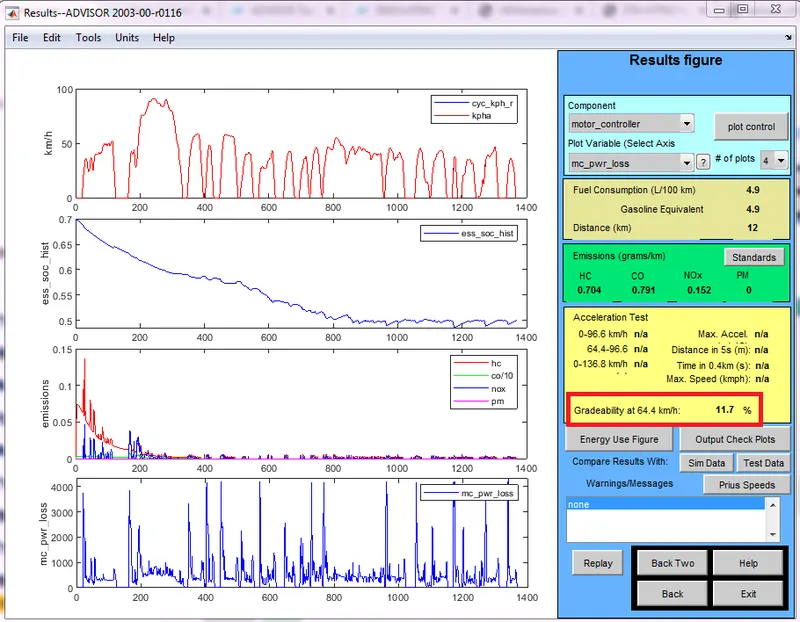
- 45 mph input is given and we obtain 10.7% gradeability at 72.4 km/h .
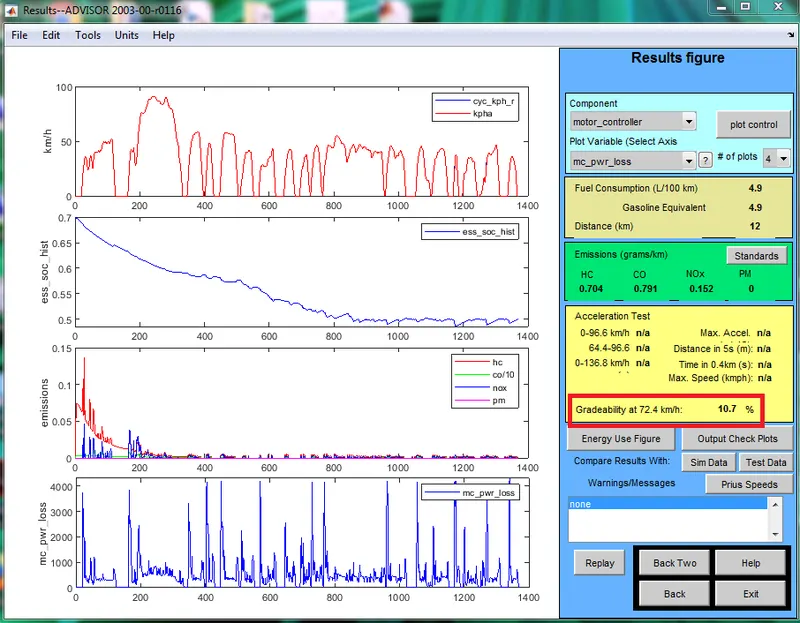
- 50 mph input is given and we obtain 9.7% gradeability at 80.5 km/h .
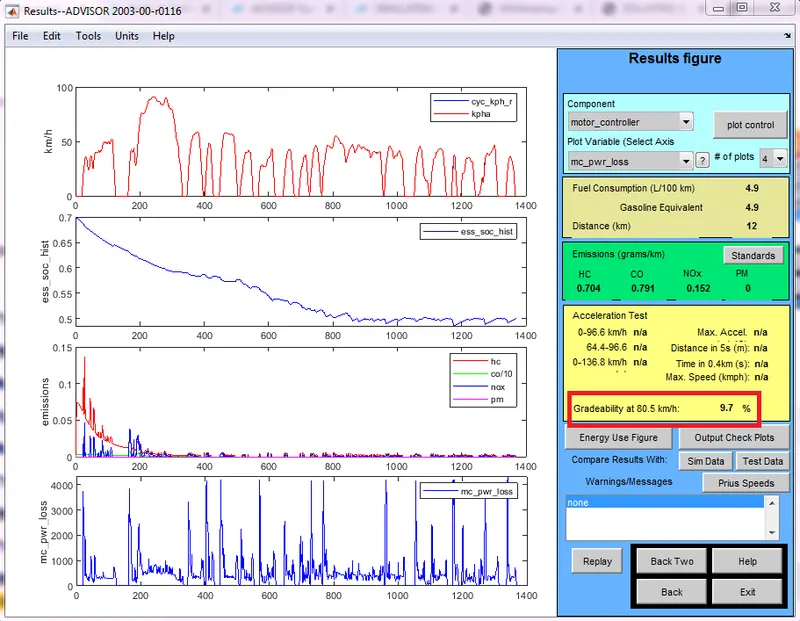
- 55 mph input is given and we obtain 8.9% gradeability at 88.5 km/h .
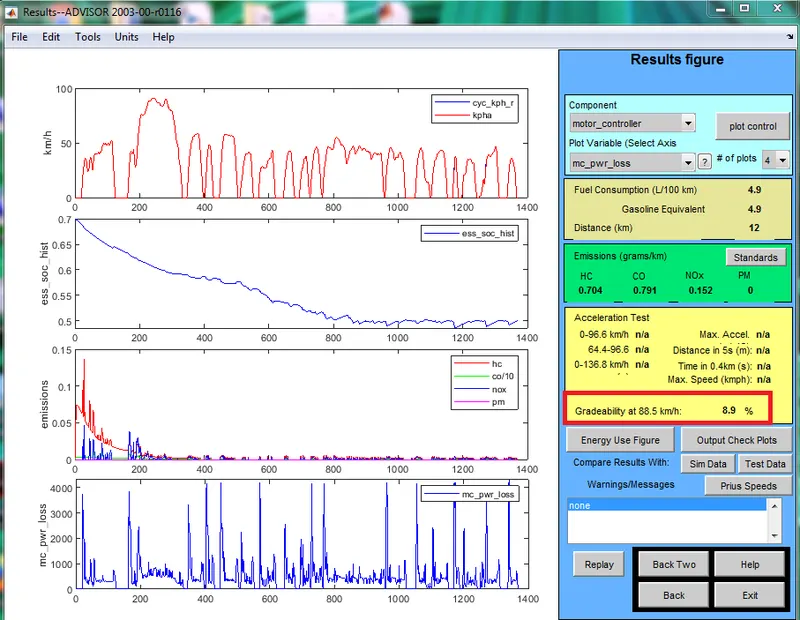
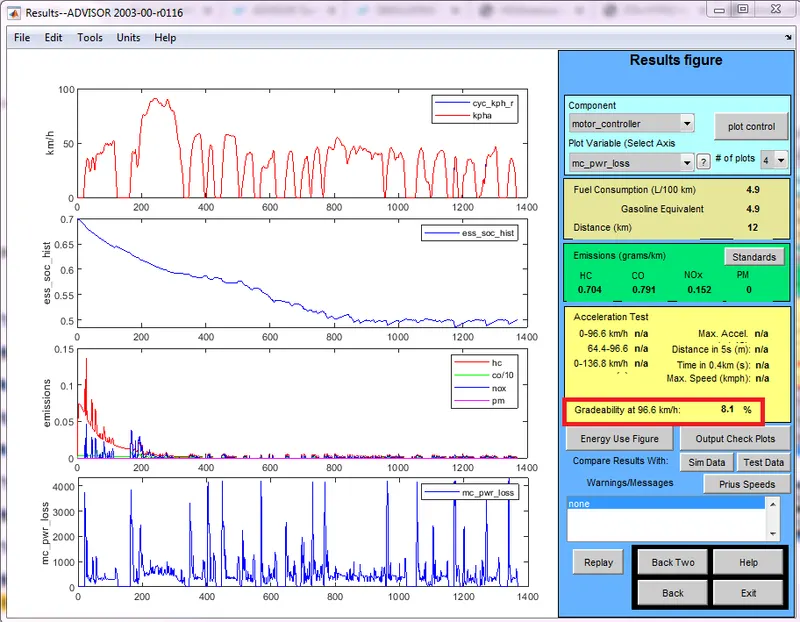
- 60 mph input is given and we obtain 8.1% gradeability at 96.6 km/h .
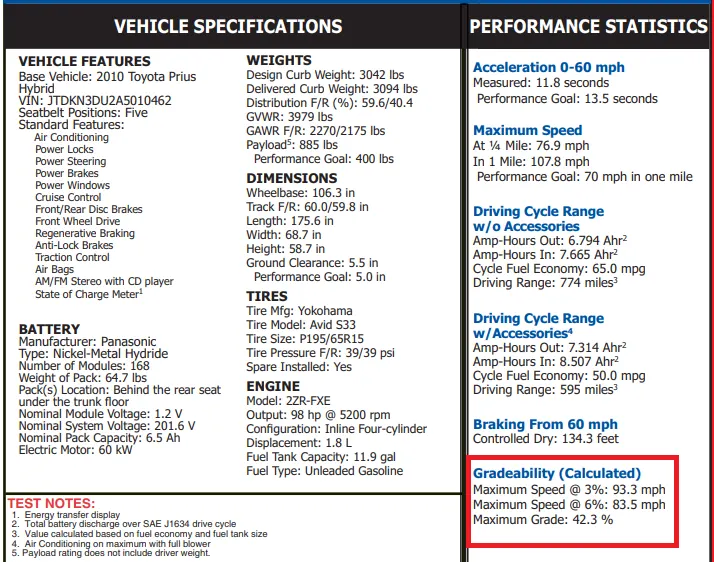
Simulation As Per The Vehicle Specification:
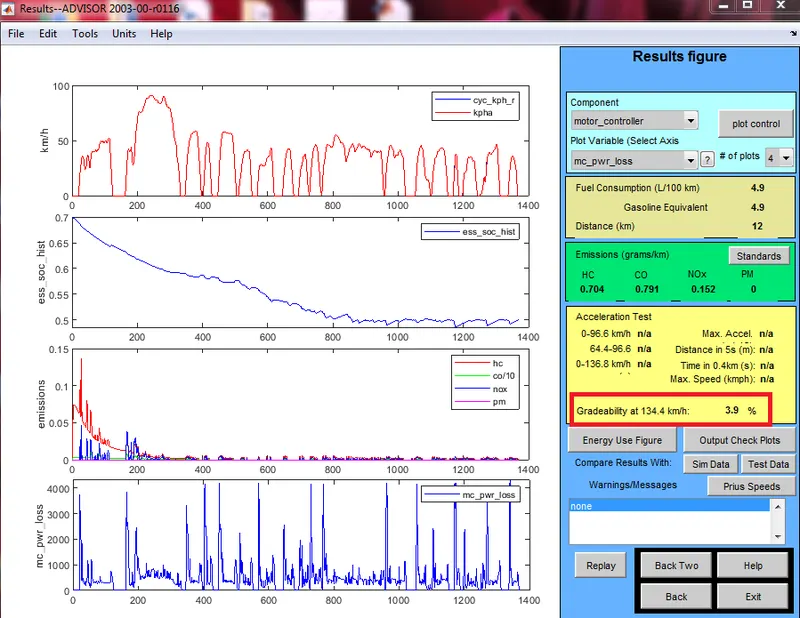
6%:83.5 mph
Gradeability is 134.4 km/h at 3.9%
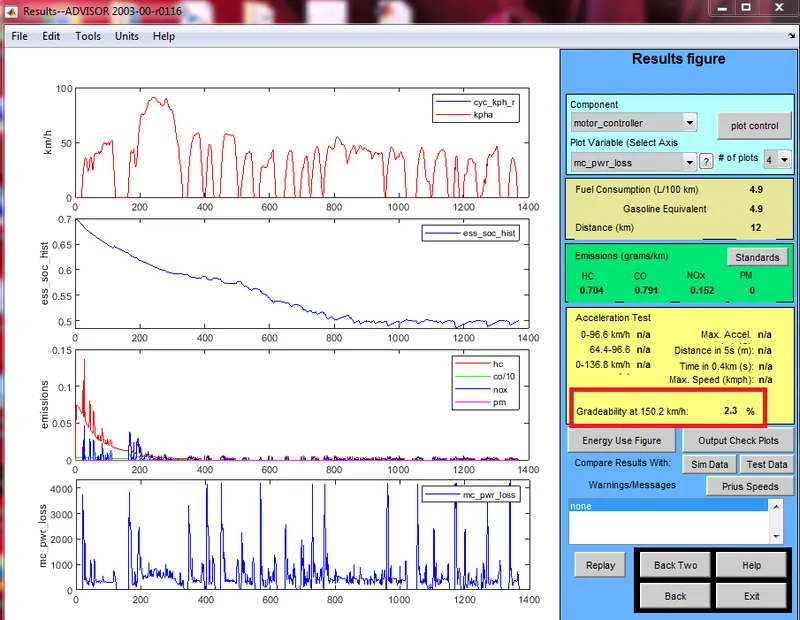
3% Grade :93.3 mph
Gradeability is 150.2 km/h at 2.3%.
Result:
|
Input (m/s) |
Output (km/h) |
Gradeability (%) |
|
5 |
8km/h |
32.8 |
|
10 |
16.1 |
30.3 |
|
15 |
24.1 |
24.4 |
|
20 |
32.2 |
19.8 |
|
25 |
40.2 |
16.5 |
|
30 |
48.3 |
14.7 |
|
35 |
56.3 |
13 |
|
40 |
64.4 |
11.7 |
|
45 |
72.4 |
10.7 |
|
50 |
80.5 |
9.7 |
|
55 |
88.5 |
8.9 |
|
60 |
96.6 |
8.1 |
- The above table represents the gradeability test of the PRIUS_Jpn.
- We can find that as speed of input m/s increases the gradeability percentage decreases and speed in km/h increases.
- Maximum speed for 3% grade, 93.3mph : gradeability is 150.2 km/h at 2.3%
- Maximum speed for 6% grade, 83.5 mph :gradeability is 134.4 km/h at 3.9%
Attachment:
https://drive.google.com/file/d/1n-Q_IifkL8M2WZzyKKWn9InGK8ho6Yto/view?usp=sharing