Week 11 - Final project
Aim:
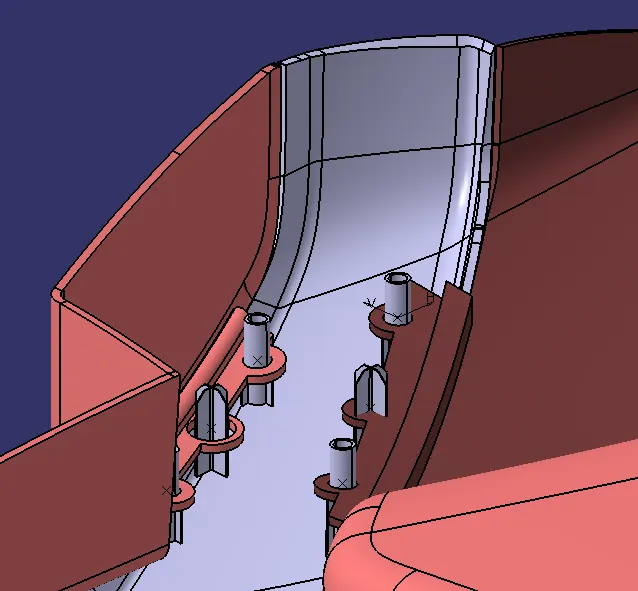
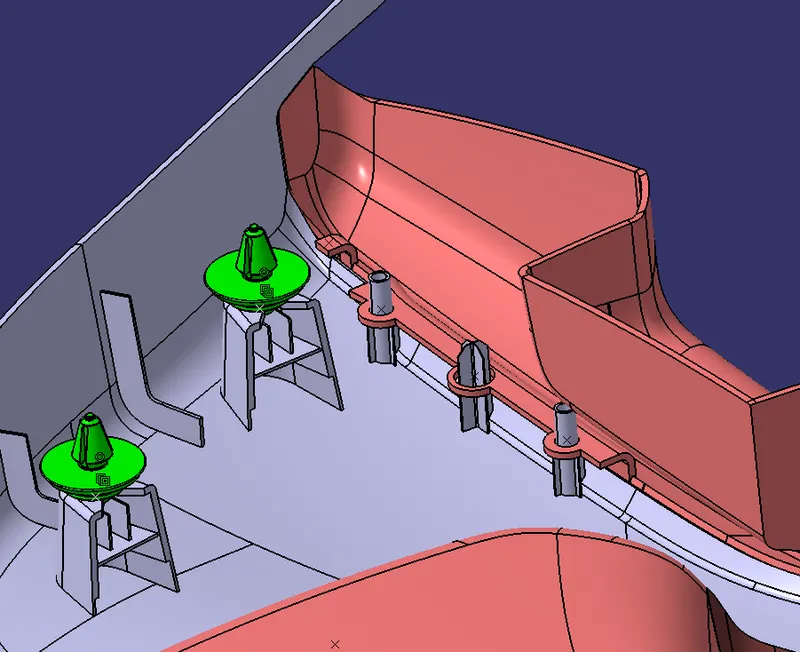
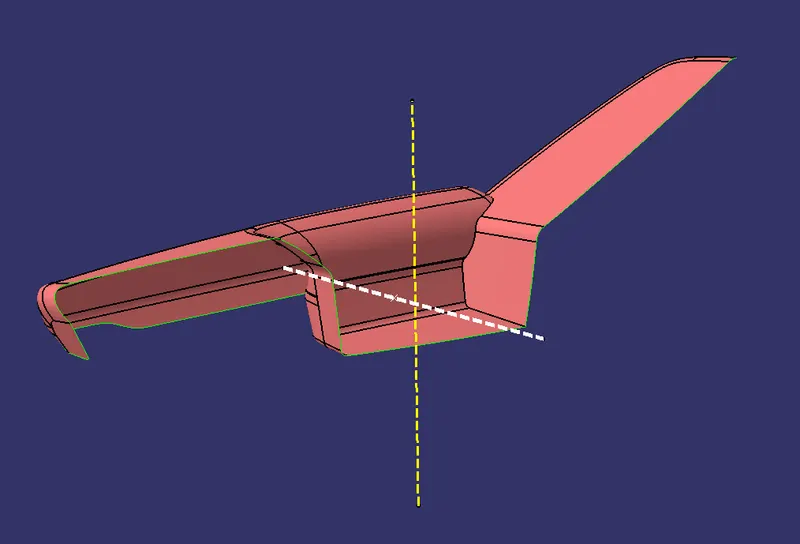
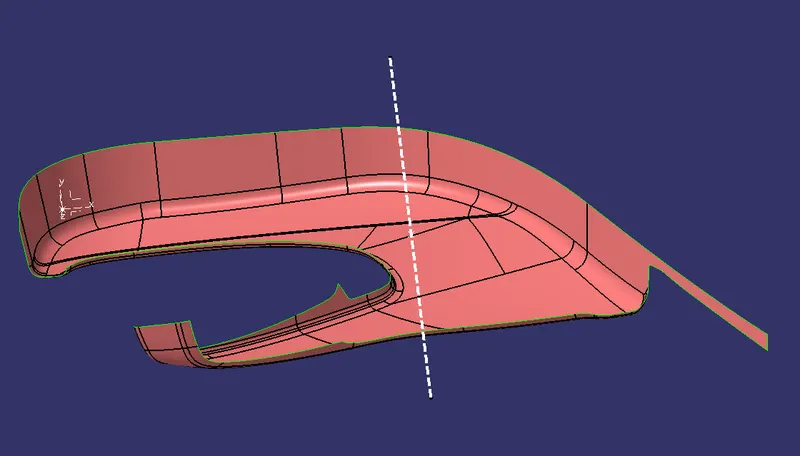
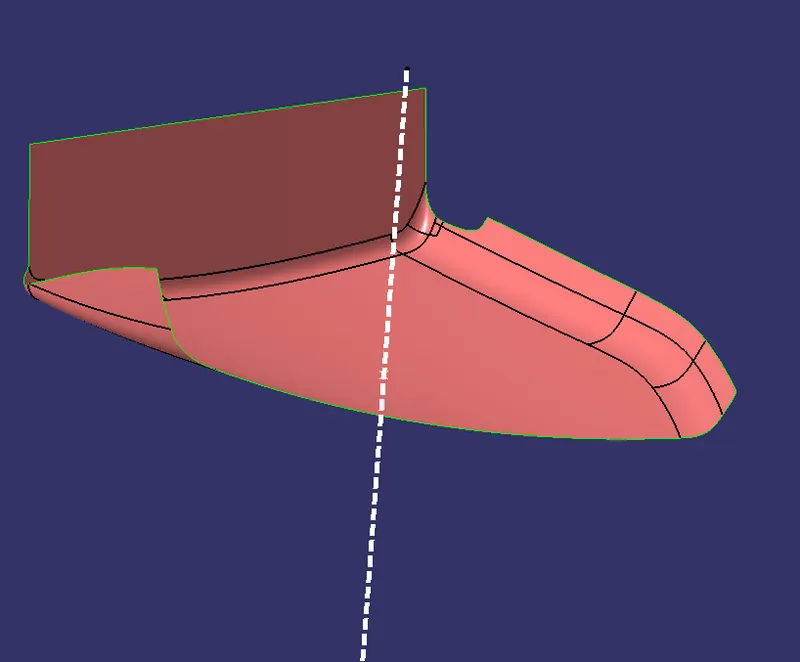
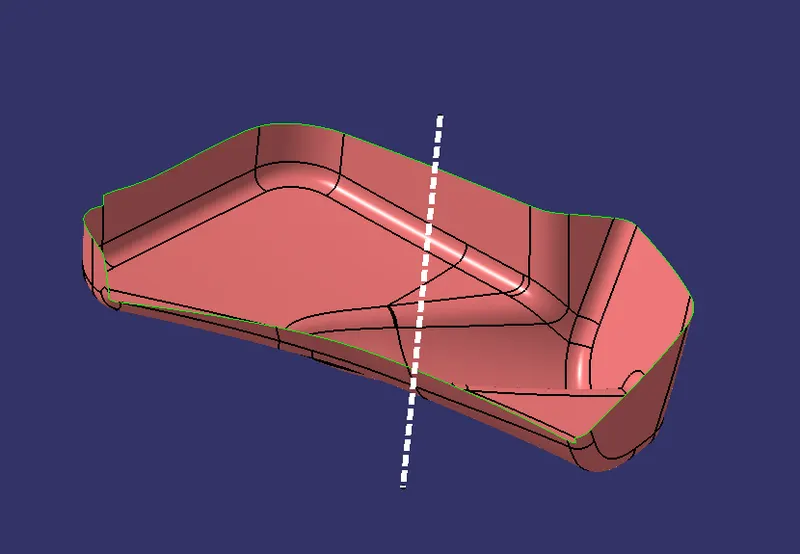
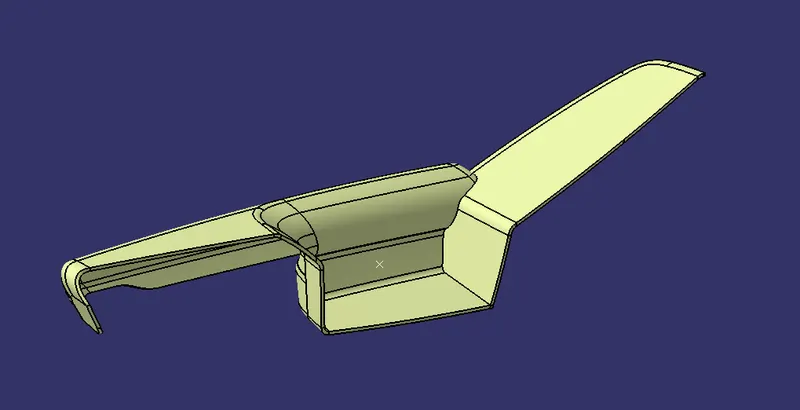
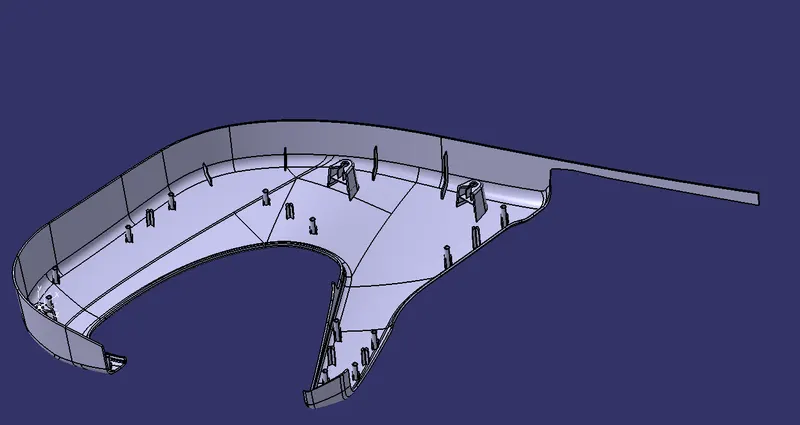
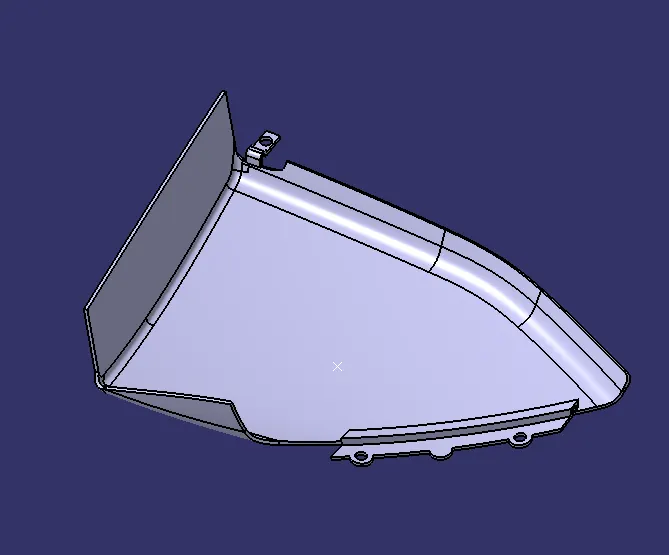
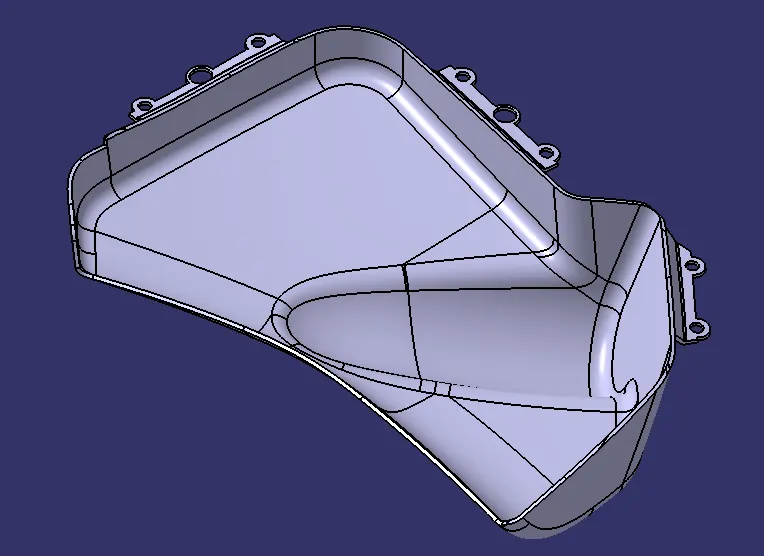
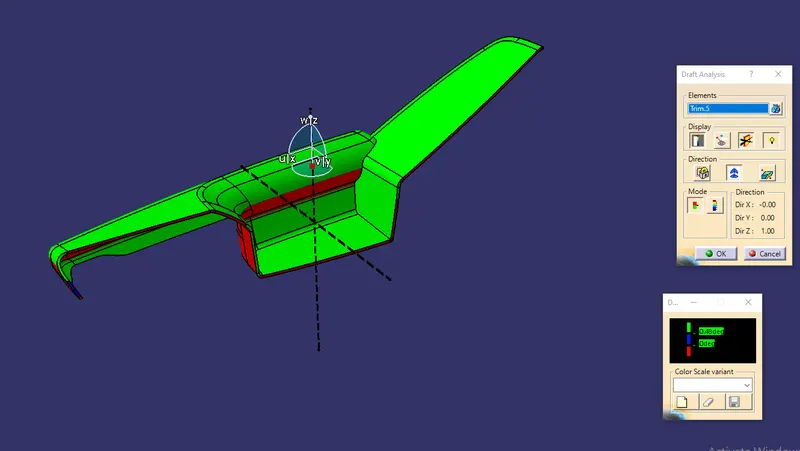
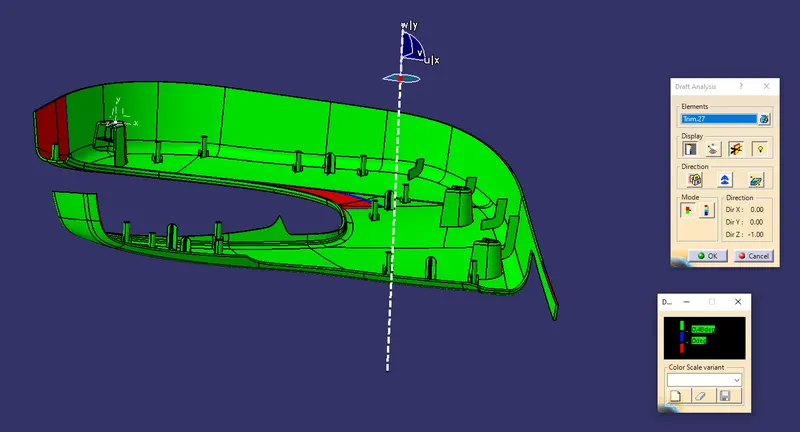
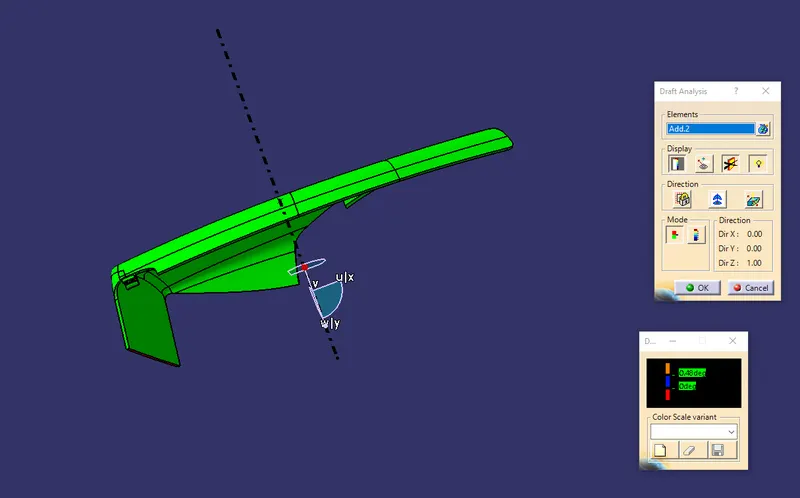
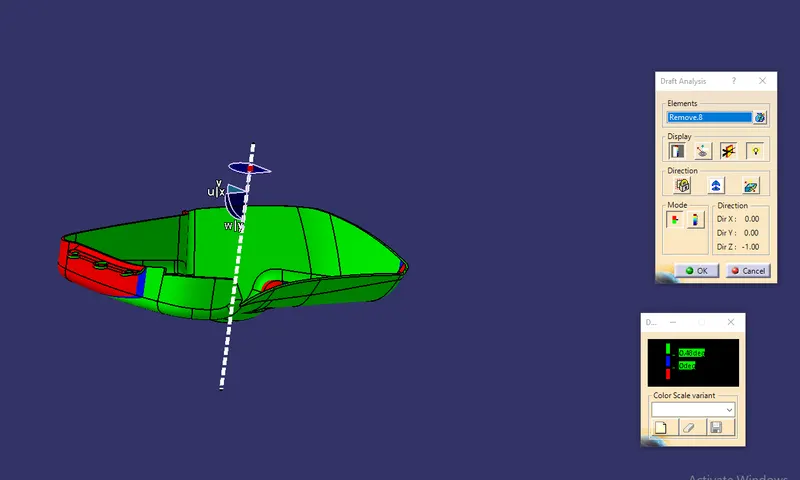
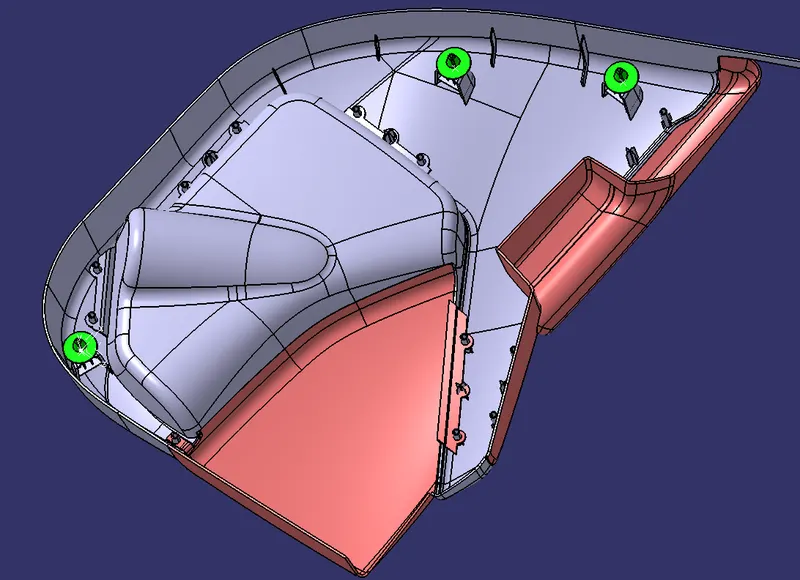
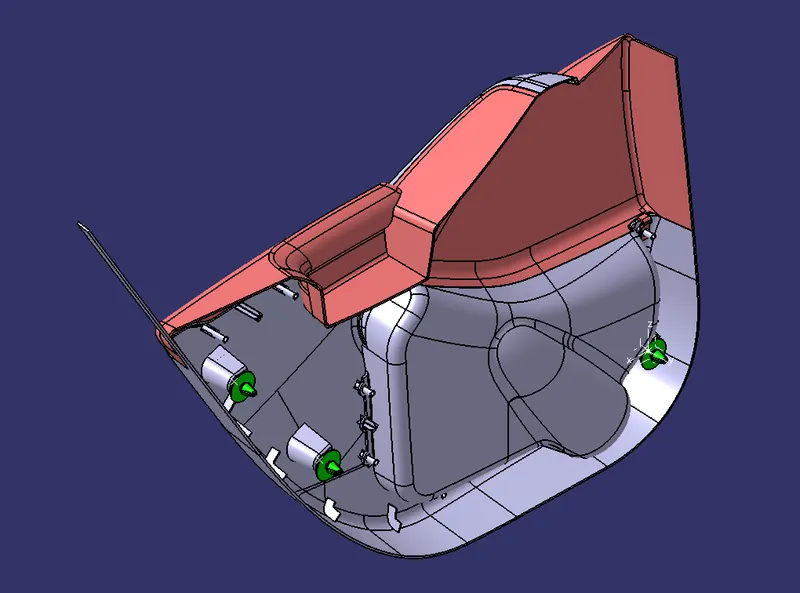
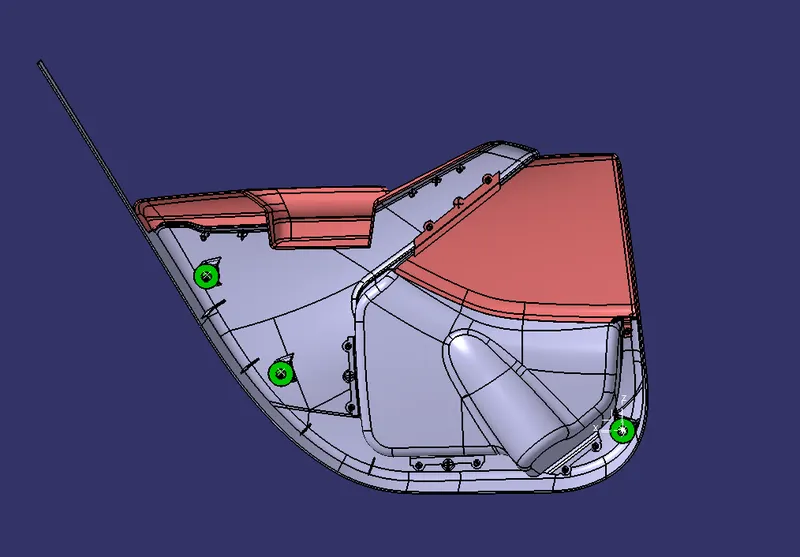
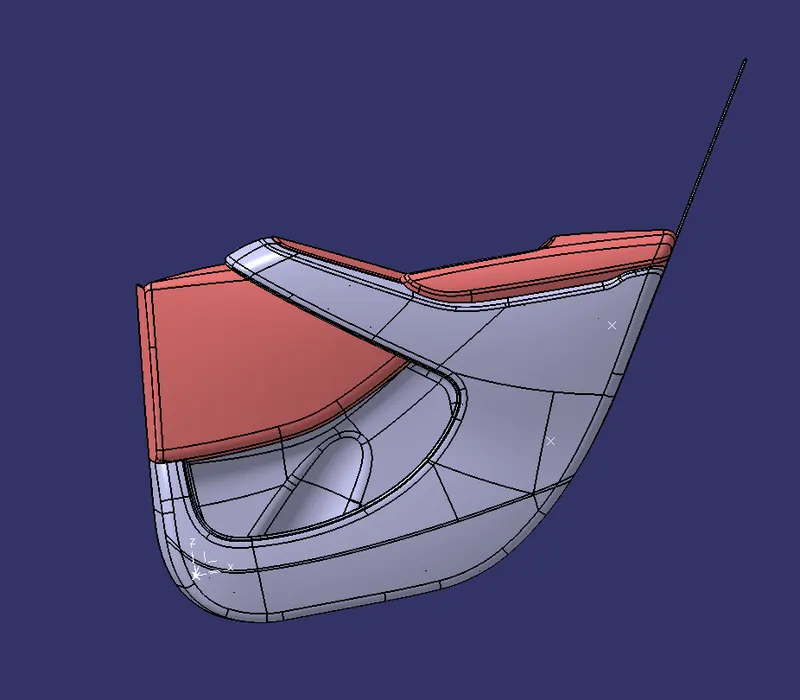
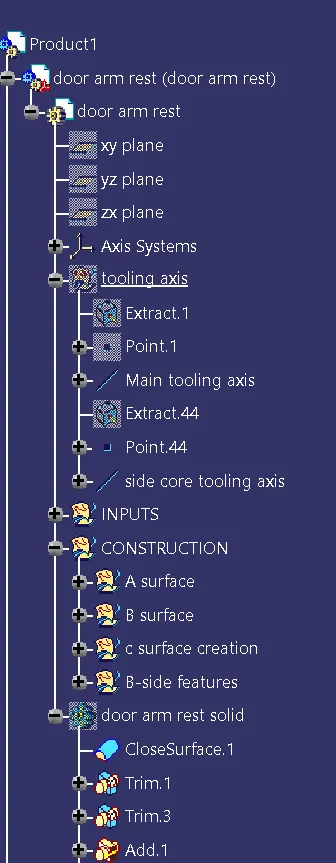
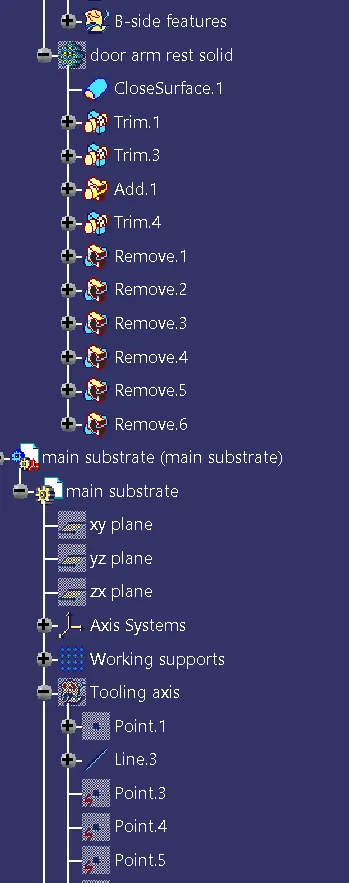
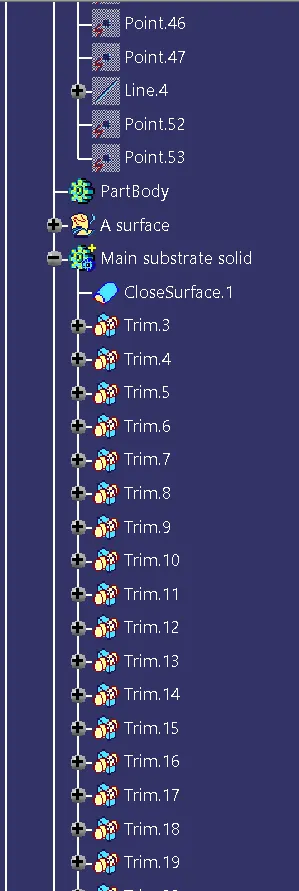
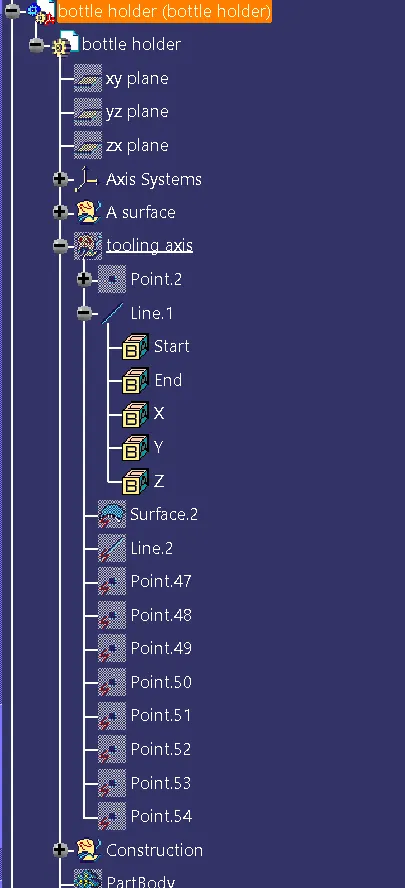
To create a complete solid body of the inner door panel from the given Class A surfraces. Main substrate ( Lower substrate ),Door arm rest , Map pocket and Bottle Holder are the A surfaces given to us and these are the parts that requires to be convertred into solid bodies and assemble them along with the attachment features.
Thesis:
Role of a plastic in automobile industry:
The use of polymers as plastics in the construction of automobiles has continued to grow over the last decades. Nowadays they are the second most commonly found material in cars.
Here are four reasons why plastic is used in car manufacturing:
- Plastics reduce the weight of cars
- Plastics and polymers contribute to the safety of cars
- Plastics help to lower car manufacturing costs
- Polymers advance the design of vehicles
To give you a concrete example in numbers: an average modern car weighing 1,500 kg contains about 20% of plastic materials (considering thermoplastics and elastomers). This means 300 kg distributed over 2,000 parts and components of all shapes and sizes.Polymers have revolutionised the performance, safety, construction and functionality of cars. Parts made of plastics are resistant to corrosion, offer flexibility and resilience for added safety, have very good thermal insulation, reduce noise and allow optimum space utilization.Plastics have been used widely in vehicle claddings to improve fuel efficiency by making vehicles lighter and reducing corrosion due to salt and water on metal surfaces. Although plastics have been used for decades both externally and internally, many automotive manufacturers have now switched to making bioplastics and polymers, instead of relying on fossil-based plastics, to improve their carbon footprint and promote sustainability. Below, we will look at the history of plastic vehicle cladding, and the increased use of plastics in vehicles over the past century. Also Weather constantly takes a toll on your vehicle, which is why synthetic coatings on metal surfaces are used to reduce the chance of corrosion due to salt damage, extreme heat, and water exposure. Even glass windshields are coated with plastic film to improve weather resistance, wear and tear, and reduce the chance of shattering. Under the hood, car parts are either coated or made entirely from plastics such as polyurethane which is heat-resistant, abrasion-resistant, yet flexible. The safety features in your car such as airbags and seatbelts are made from durable polyester. In an accident these polymer-based safety features and exterior items such as car door cladding and bumpers can take an impact far better than metal, often leading to a better outcome for you and your vehicle. Thus plastic is largerly preferred in autombile industry.
Some of the plastics used in a Car along with area where it is used is shown below:
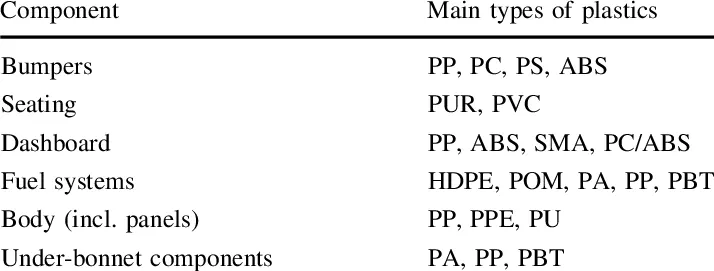
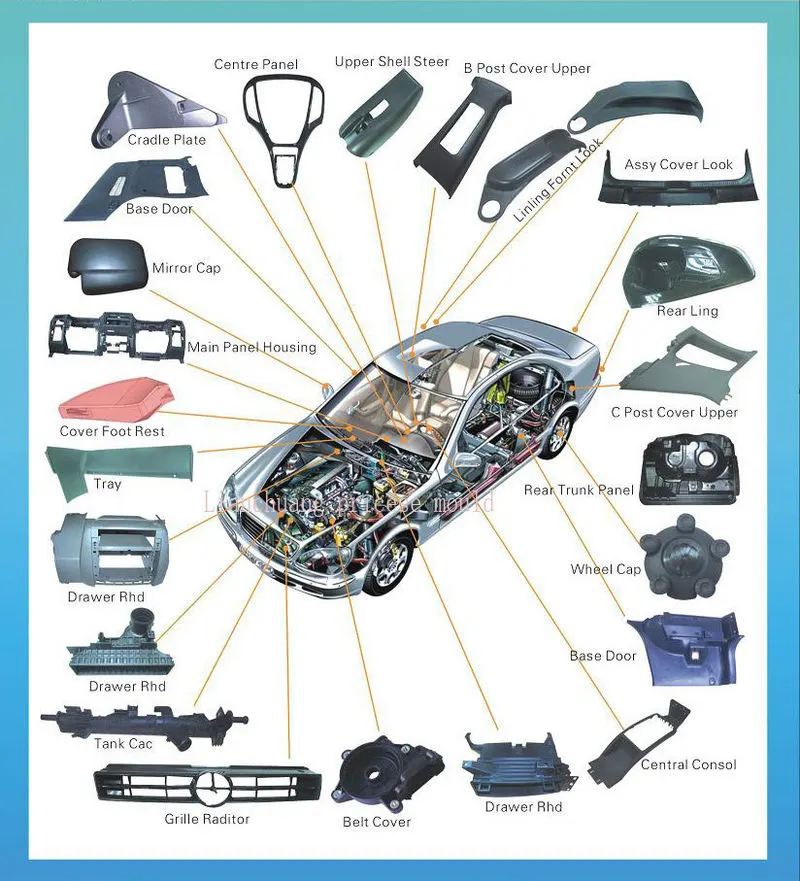
Plastic parts are all individually designed and manufactured by a method called injection moulding and then later using attachment features they are all assembled together to make it a functionable component.
Injection moulding:
Injection moulding is a manufacturing process that allows for parts to be produced in large volumes. It works by injecting molten materials into a mould (or ‘mold’ in the United States). It is typically used as a mass production process to manufacture thousands of identical items. Injection moulding materials include metals, glasses, elastomers and confections, although it is most commonly used with thermoplastic and thermosetting polymers.
The first stage of injection moulding is to create the mould itself. Most moulds are made from metal, usually aluminium or steel, and precision machined to match the features of the product they are to produce.
Once the mould has been created by the mould-maker, the material for the part is fed into a heated barrel and mixed using a helical shaped screw. Heating bands melt the material in the barrel and the molten metal or molten plastic material is then fed into the mould cavity where it cools and hardens, matching the shape of the mould. The cooling time can be reduced through the use of cooling lines that circulate water or oil from an external temperature controller. Mould tools are mounted on plate moulds (or ‘platens’), which open once the material has solidified so that ejector pins can eject the part from the mould.Separate materials can be combined in one part in a type of injection moulding called a two-shot mould. This technique can be used to add a soft touch to plastic products, add colours to a part or produce items with different performance characteristics.
Moulds can be made of single or multiple cavities. Multiple cavity moulds can have identical parts in each cavity or can be unique to create parts of different geometries. Aluminium moulds are not best suited to high volume production or parts with narrow dimensional tolerances since they have inferior mechanical properties and can be prone to wear, deformation and damage due to the injection and clamping forces. While steel moulds are more durable they are also more expensive than aluminium moulds.
The injection moulding process requires careful design, including the shape and features of the part, the materials for the part and the mould and the properties of the moulding machine. As a result, there are various considerations that need to be taken into account when injection moulding.
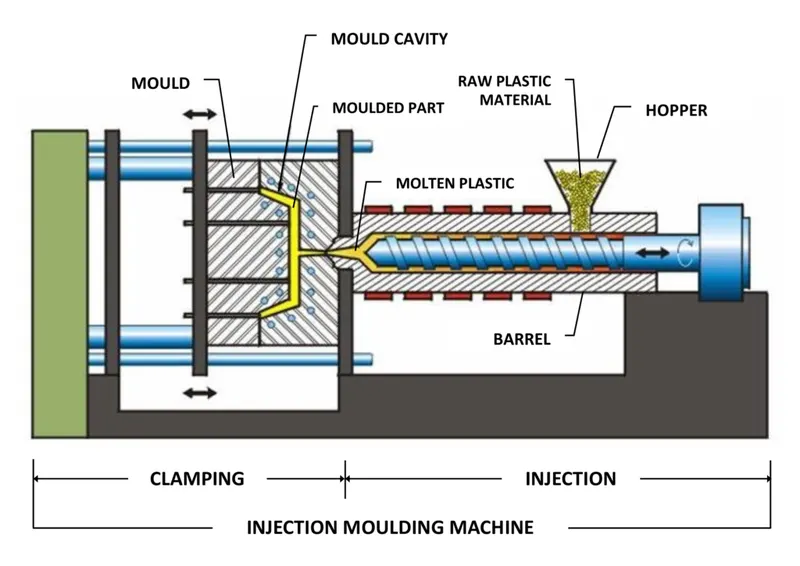
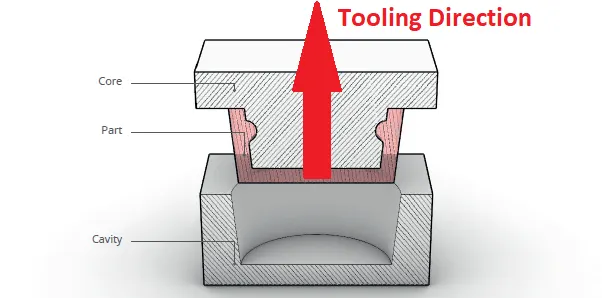
Tooling Direction for Plastic Part
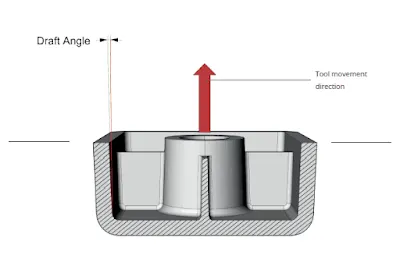
Tooling direction is main consideration for plastic part and mold parts because it defines movement of mold part and possibility of plastic part to come-out from mold part (Core and Cavity).
Tooling Direction:-
- In Molding machine arrangement is given to open the mold along a direction which is known as Tooling Direction.
- In other words. The mold is built from two separate halves (Core and Cavity) and tooling direction basically define the direction of mold pulls apart.
- Tooling direction is known as primary direction.
- Core is the male part of the mould which holds the inner design of the component and the cavity is the female part which holds the outer shape of the component.