Week 10 - Simulating Combustion of Natural Gas.
AIM:-To perform a Simulating Combustion of Natural Gas.
OBJECTIVE :
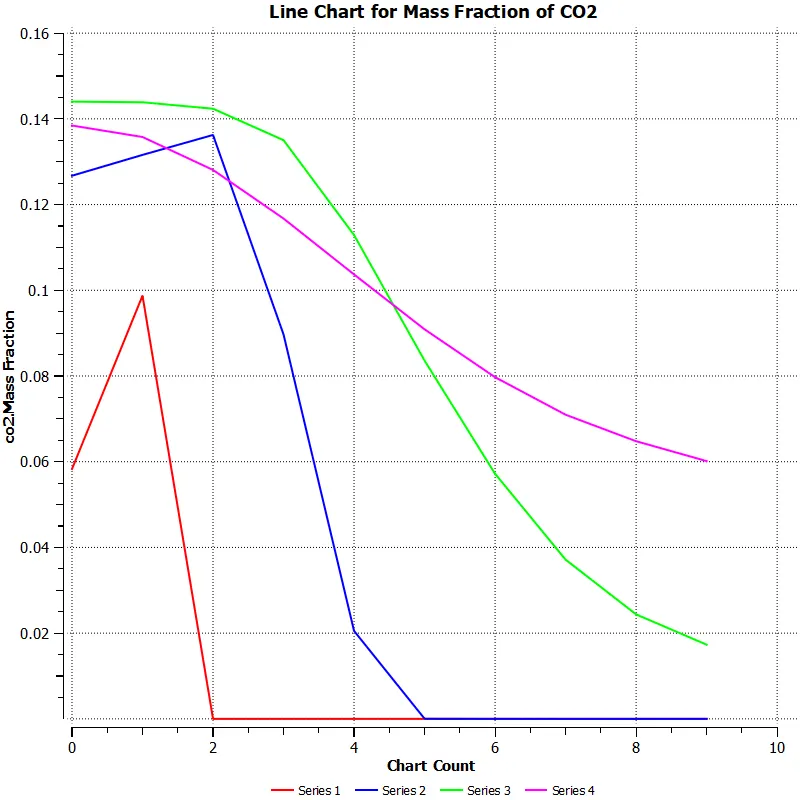
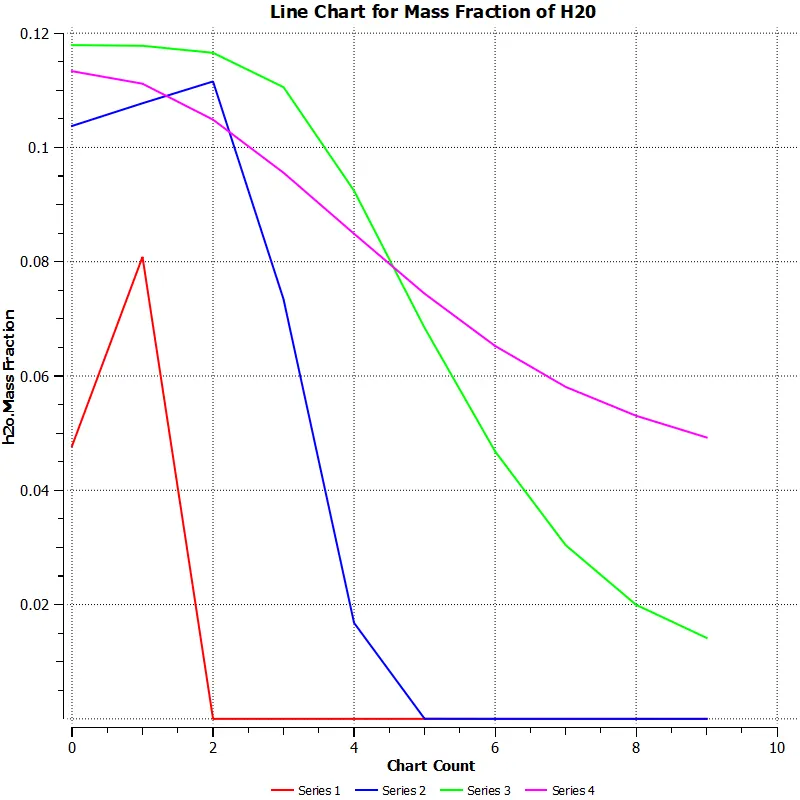
- To Perform a combustion simulation on the combustor model and plot the variation of the mass fraction of the different species’ in the simulation using line probes at different locations of the combustor and plot for CO2, H2O, CH4, N2, O2, NOx emissions & Soot formation.
- To add water content (5-30% by mole)to the above case and observe the difference in results of soot and NOx formation .
THERRITICAL EXPLANATION:-
Combustion, or burning, is a high-temperature exothermic redox chemical reaction between a fuel (the reductant) and an oxidant, usually atmospheric oxygen, that produces oxidized, often gaseous products, in a mixture termed as smoke. Combustion does not always result in fire, because a flame is only visible when substances undergoing combustion vapourise, but when it does, a flame is a characteristic indicator of the reaction. While the activation energy must be overcome to initiate combustion (e.g., using a lit match to light a fire), the heat from a flame may provide enough energy to make the reaction self-sustaining.
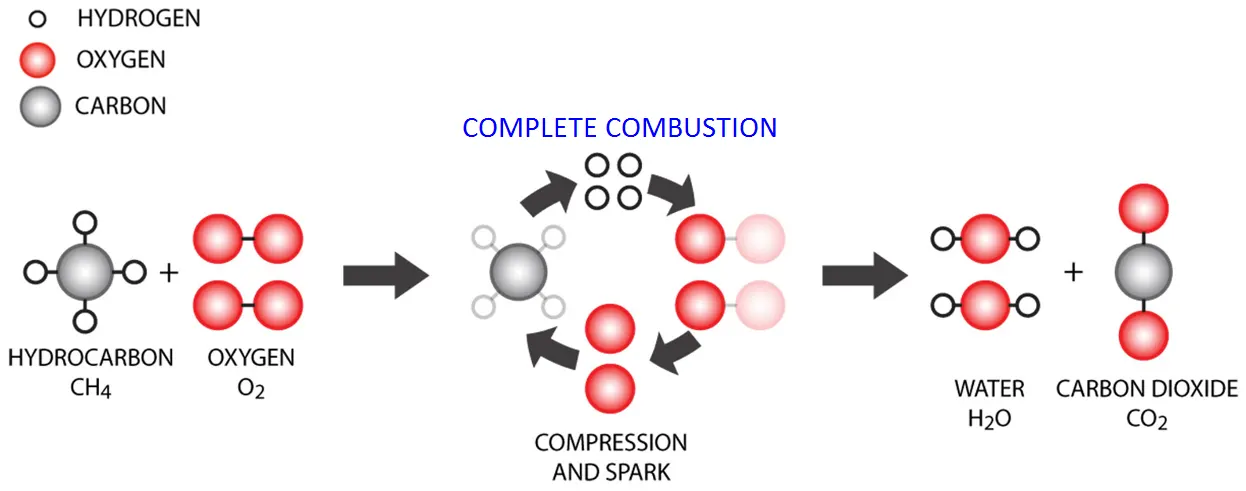
Combustion is often a complicated sequence of elementary radical reactions. Solid fuels, such as wood and coal, first undergo endothermic pyrolysis to produce gaseous fuels whose combustion then supplies the heat required to produce more of them. Combustion is often hot enough that incandescent light in the form of either glowing or a flame is produced. A simple example can be seen in the combustion of hydrogen and oxygen into water vapor, a reaction commonly used to fuel rocket engines. This reaction releases 242 kJ/mol of heat and reduces the enthalpy accordingly (at constant temperature and pressure):
2H2(g) + O2(g) → 2H2O(g)
Combustion of an organic fuel in air is always exothermic because the double bond in O2 is much weaker than other double bonds or pairs of single bonds, and therefore the formation of the stronger bonds in the combustion products CO2 and H2O results in the release of energy. The bond energies in the fuel play only a minor role, since they are similar to those in the combustion products; e.g., the sum of the bond energies of CH4 is nearly the same as that of CO2. The heat of combustion is approximately −418 kJ per mole of O2 used up in the combustion reaction, and can be estimated from the elemental composition of the fuel.
Types of Combustion:-
Complete Combustion
In complete combustion, the reactant burns in oxygen and produces a limited number of products. When a hydrocarbon burns in oxygen, the reaction will primarily yield carbon dioxide and water. When elements are burned, the products are primarily the most common oxides. Carbon will yield carbon dioxide, sulfur will yield sulfur dioxide, and iron will yield iron(III) oxide. Nitrogen is not considered to be a combustible substance when oxygen is the oxidant. Still, small amounts of various nitrogen oxides (commonly designated NOx species) form when the air is the oxidative.
Incomplete combustion
Incomplete combustion will occur when there is not enough oxygen to allow the fuel to react completely to produce carbon dioxide and water. It also happens when the combustion is quenched by a heat sink, such as a solid surface or flame trap. As is the case with complete combustion, water is produced by incomplete combustion; however, carbon, carbon monoxide, and hydroxide are produced instead of carbon dioxide.
For most fuels, such as diesel oil, coal, or wood, pyrolysis occurs before combustion. In incomplete combustion, products of pyrolysis remain unburnt and contaminate the smoke with noxious particulate matter and gases. Partially oxidized compounds are also a concern; partial oxidation of ethanol can produce harmful acetaldehyde, and carbon can produce toxic carbon monoxide.
Incomplete combustion Produced Carbon-monoxide:-
Carbon monoxide is one of the products from incomplete combustion. Carbon is released in the normal incomplete combustion reaction, forming soot and dust. Since carbon monoxide is a poisonous gas, complete combustion is preferable, as carbon monoxide may also lead to respiratory troubles when breathed since it takes the place of oxygen and combines with hemoglobin.
Problems associated with Incomplete Combustion:-
Environmental problems:
These oxides combine with water and oxygen in the atmosphere, creating nitric acid and sulfuric acids, which return to Earth's surface as acid deposition, or "acid rain." Acid deposition harms aquatic organisms and kills trees. Due to its formation of certain nutrients that are less available to plants such as calcium and phosphorus, it reduces the productivity of the ecosystem and farms. An additional problem associated with nitrogen oxides is that they, along with hydrocarbon pollutants, contribute to the formation of ground level ozone, a major component of smog.
Human health problems:
Breathing carbon monoxide causes headache, dizziness, vomiting, and nausea. If carbon monoxide levels are high enough, humans become unconscious or die. Exposure to moderate and high levels of carbon monoxide over long periods is positively correlated with risk of heart disease. People who survive severe carbon monoxide poisoning may suffer long-term health problems.Carbon monoxide from air is absorbed in the lungs which then binds with hemoglobin in human's red blood cells. This would reduce the capacity of red blood cells to carry oxygen throughout the body.
General Applications of Combustion:-
- In heating Devices
- In Explosives
- In Internal-Combustion Engines
- In Rocket Propulsion
- In Chemical Reactions
Possible Types of Combustion simulations:
On the Basis of mixing
- Non-Pre mixed Combustion (Direct Injection)
- Premixed Combustion (Carburator)
- Partially Premixed combustion
On the Basis of phase
- Fluid Phase (Volumetriic Reactions)
- Wall (surface reactions)
- Partcles (surface reactions)
- Porous region (after Treatment system)
Basics of Combustion Simulations:
For Combustion simulation, Equations are solved as given below:
- Mass
- Momentum
- Energy
- Species Transport Equations(Source term is computed using Combustion Model)
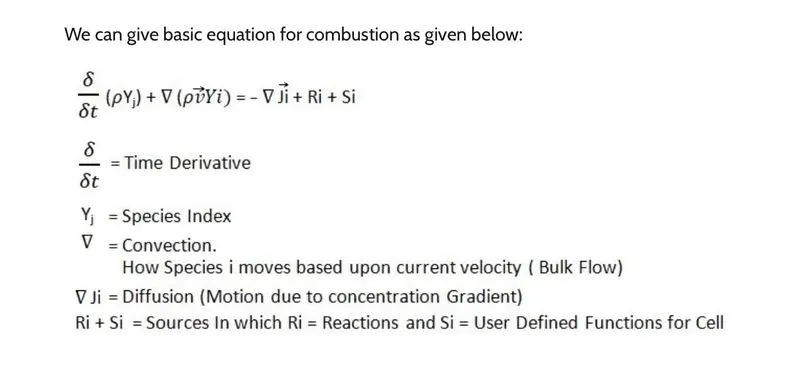
Non-premixed Combustion:-
In non-premixed combustion, fuel and oxidizer enter the reaction zone in distinct streams. This is in contrast to premixed systems, in which reactants are mixed at the molecular level before burning. Examples of non-premixed combustion include pulverized coal furnaces, diesel internal-combustion engines and pool fires.
Under certain assumptions, the thermochemistry can be reduced to a single parameter: the mixture fraction. The mixture fraction, denoted by , is the mass fraction that originated from the Fuel stream. In other words, it is the local mass fraction of burnt and unburnt fuel stream elements (C, H, etc.) in all the species (CO , H O, O , etc.).
The approach is elegant because atomic elements are conserved in chemical reactions. In turn, the mixture fraction is a conserved scalar quantity, and therefore its governing transport equation does not have a source term. Combustion is simplified to a mixing problem, and the difficulties associated with closing non-linear mean reaction rates are avoided. Once mixed, the chemistry can be modeled as being in chemical equilibrium with the Equilibrium model, being near chemical equilibrium with the Steady Laminar Flamelet model, or significantly departing from chemical equilibrium with the Unsteady Laminar Flamelet model.
Here, we are taking Considerations regarding non-Premixed combustion Simulations, which are as given below:
Diffusion:-
Turbulent Diffusion:
- Diffusion is a combination of Laminar and Turbulent diffusion.
- For Engineering Applications, Turbulent Diffusion is so high, that we can ignore the Laminar Diffusion.
- Typically, for IC Engines, Gas Turbines and Large Burners etc.
Turbulent Diffusion>> Laminar Diffusion:
- So, we use Fick's Law for 'Dilute Diffusion'.
- with the help of 'Dilute Approximations'. We are looking at diffusion coefficients of each and every species. In which how they diffuses into entire mixture, instead of diffusion coeffcient from species to species.
- Generally, when the Flow is Turbulent, we should adopt the 'Dilute Approximation'.
Combustion Source Calculation:
- It is a combination of "Finite Rate Chemistry" and Eddy Dissipation' Model.
- Where "ignition" is going to take place and "ignition Delay" is important, this model would ideally choose "finite Rate chemistry".
- and where Turbulence has major role than reaction rate is going to predicted by "Eddy dissipation" Model. So, we are applying both the Models.
- Based upon the Flow conditions, whichever rate is going to be the slowest, Solver will pick that.
PROCEDURE:-
*The given model was imported to space claim . Since the given model is axisymmetric , we can reduce the model to 2D for ease of calculations.
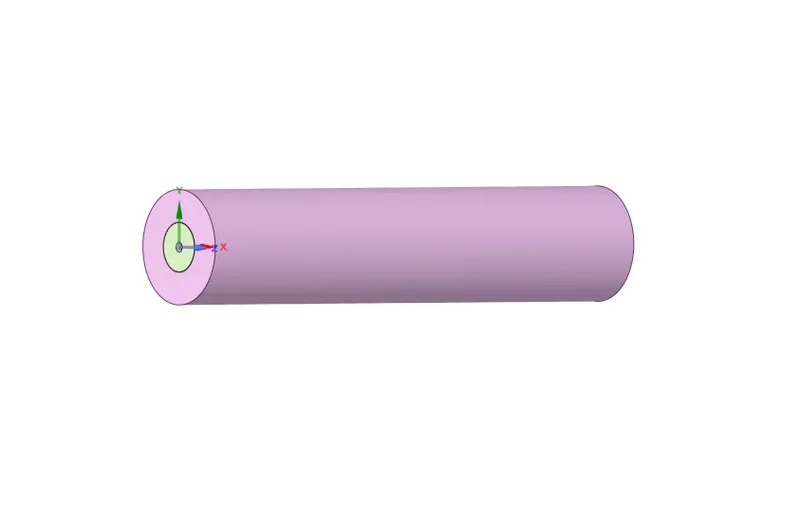
*Plane tool was used to create 2 planes on xy and xz axes . Split by plane option was used to reduce the model to required geometry .
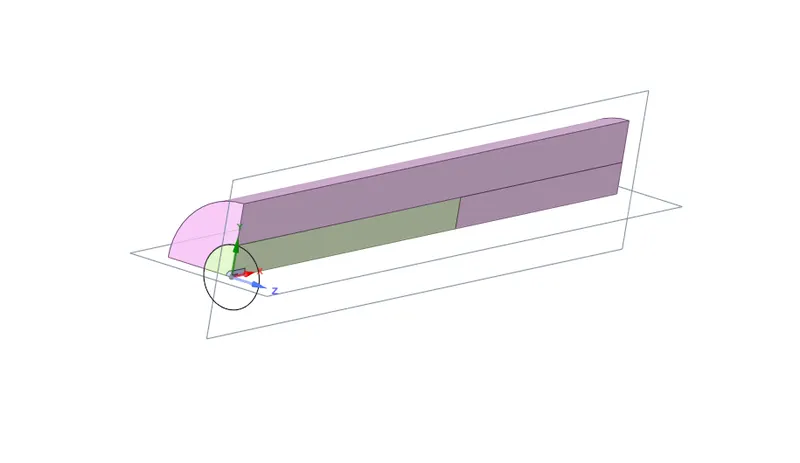
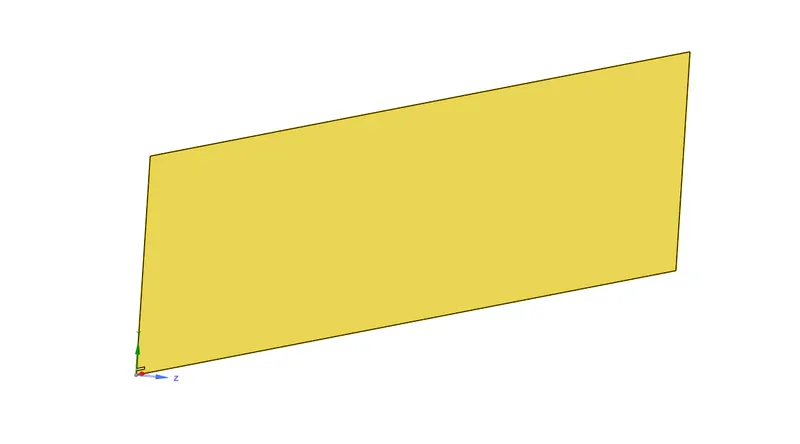
*Pull tool was use to extract the required surfaces from the model . Merge faces option was used to join the various surfaces to create a single surface .
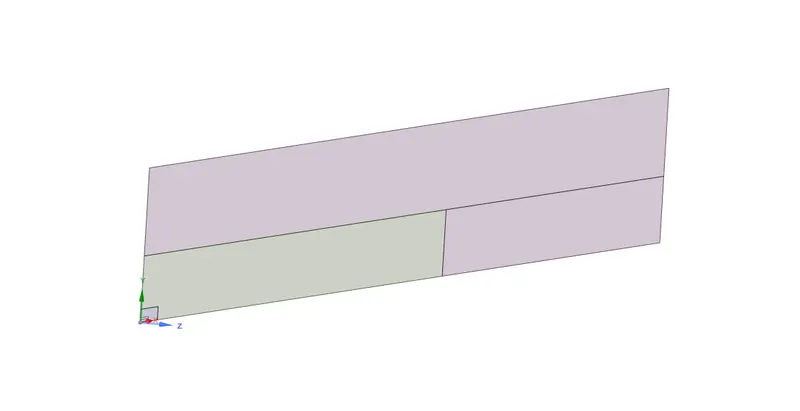
*Geometry clean up was thus completed and meshing module was opened
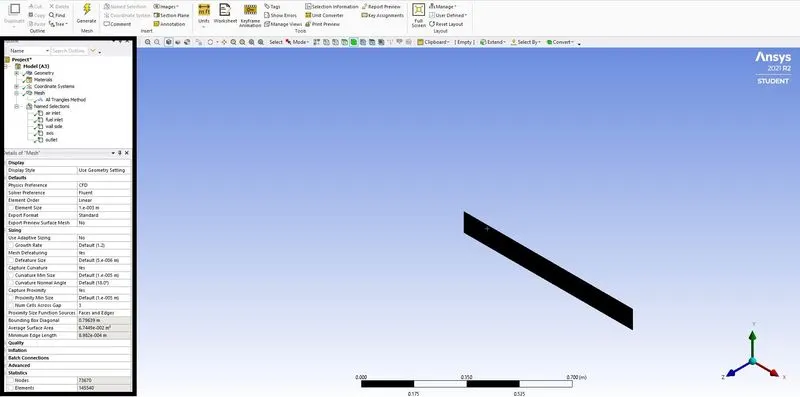
*The element size was changed to 10mm , Capture proximity option was turned on in sizing .
*The turbulent model is used with K epsilon model with realizable and Standard wall function.
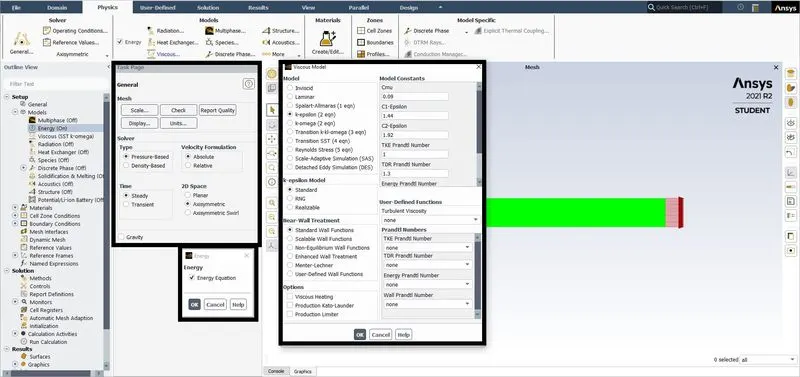
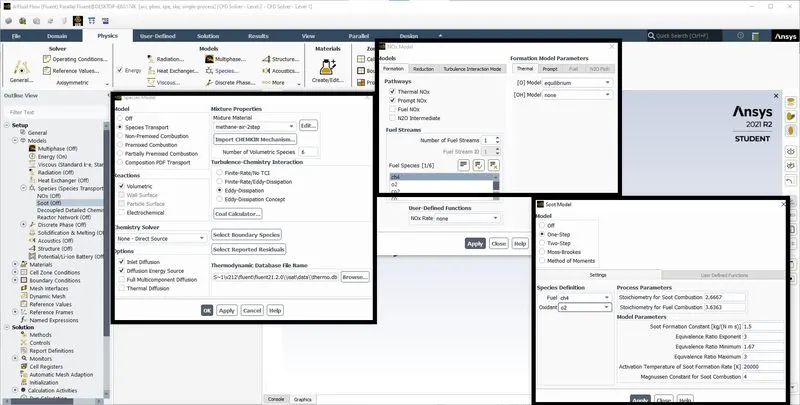
*The species is been activated for the Methane air (2 steps) and the nox and soot is been initiated.
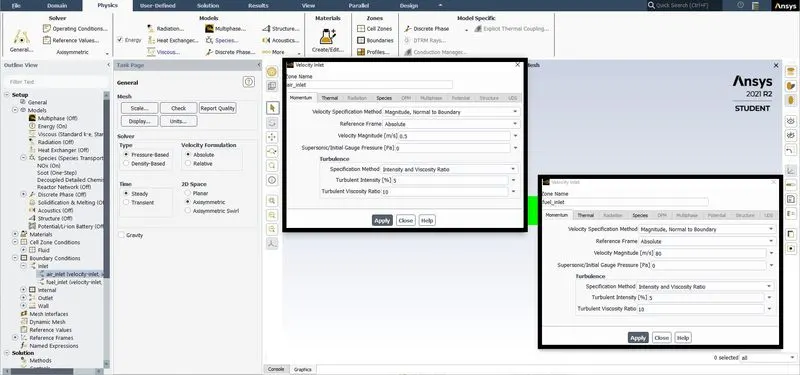
*Boundary Conditions are applied on the inlet in air and fuel with velocity values, outlet with pressure at zero.
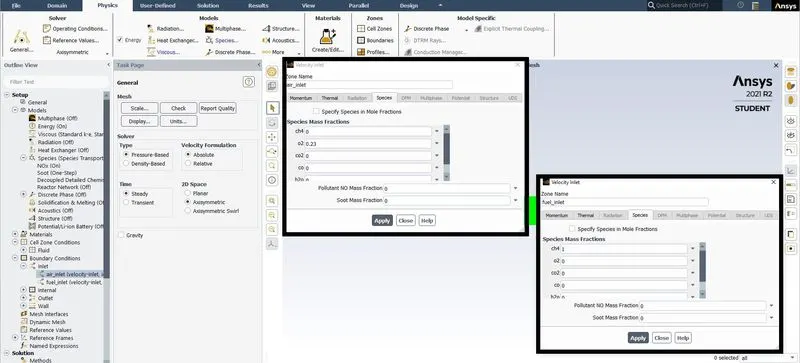
*Species mass fractions are given a value for O2 and CH4.
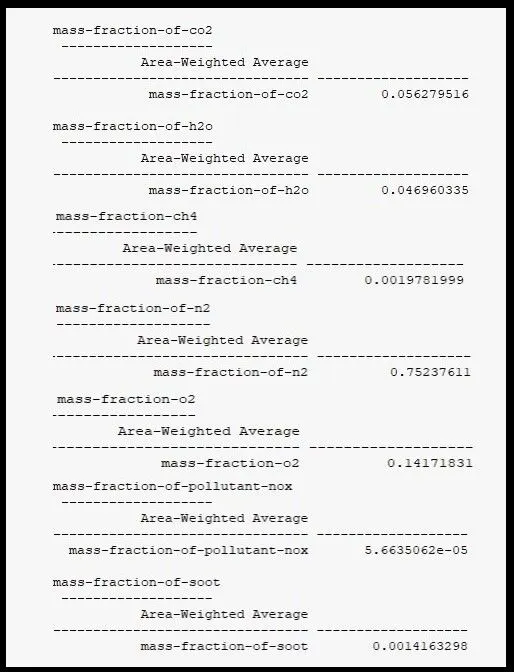
PART 1
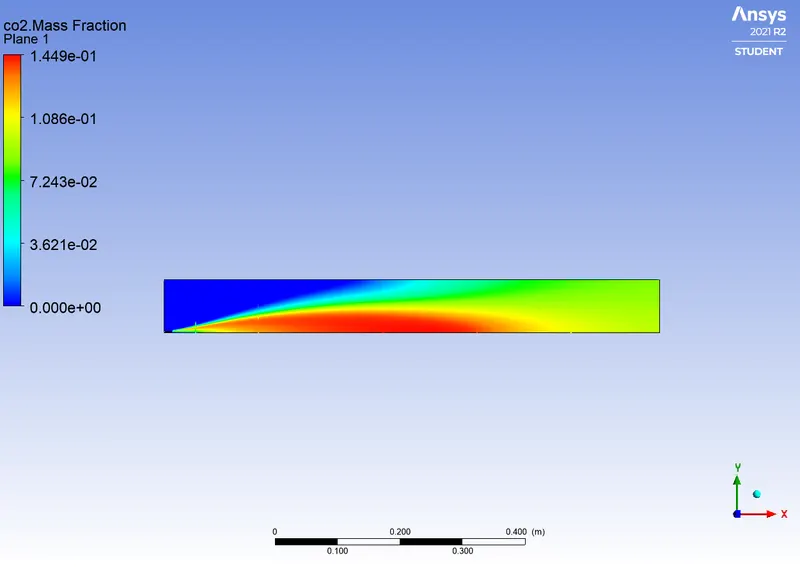
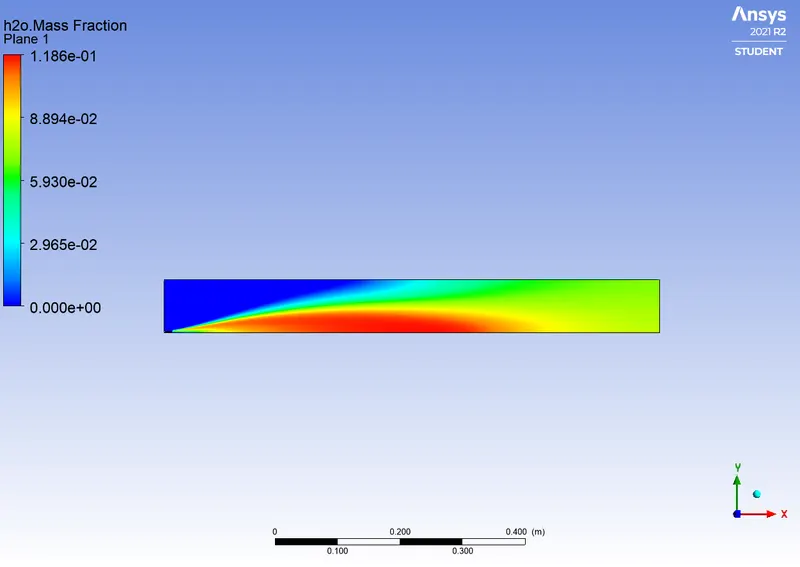
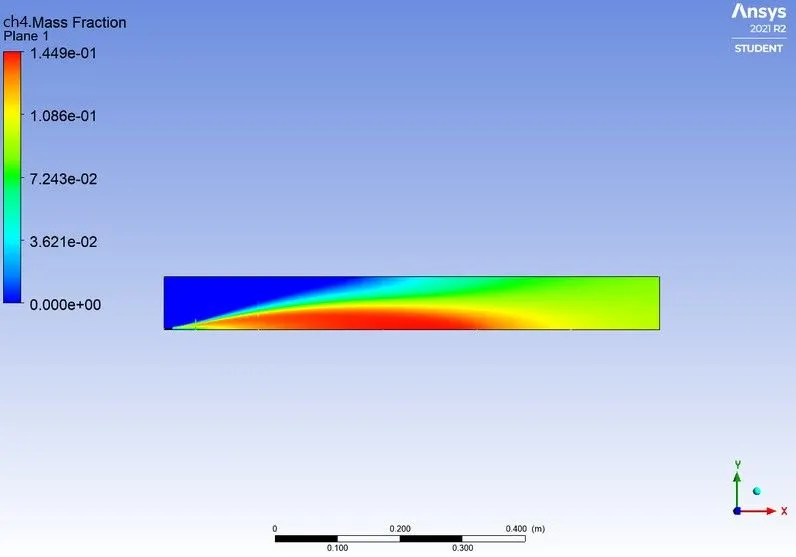
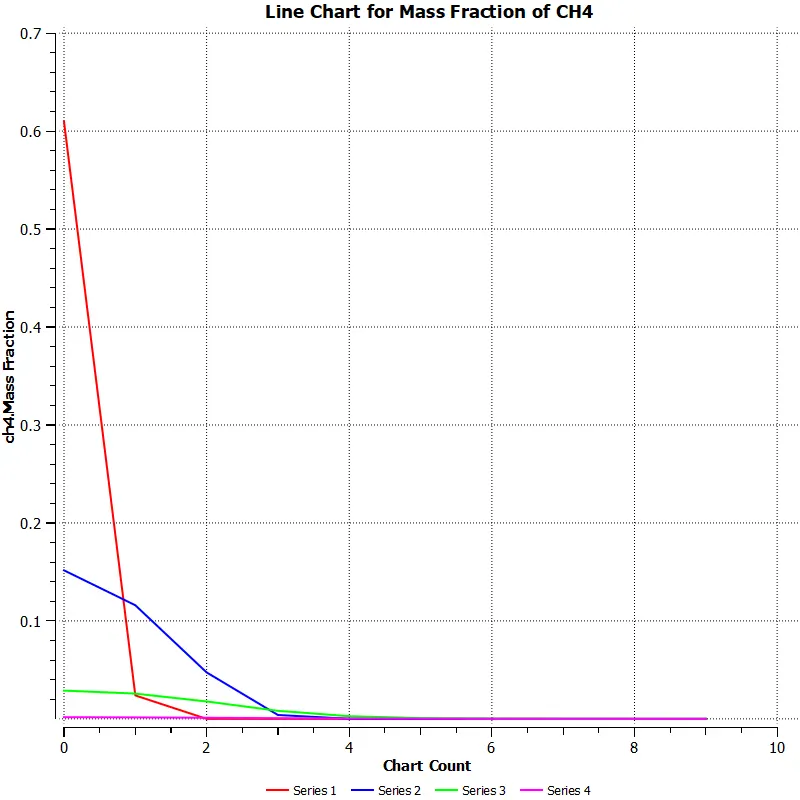
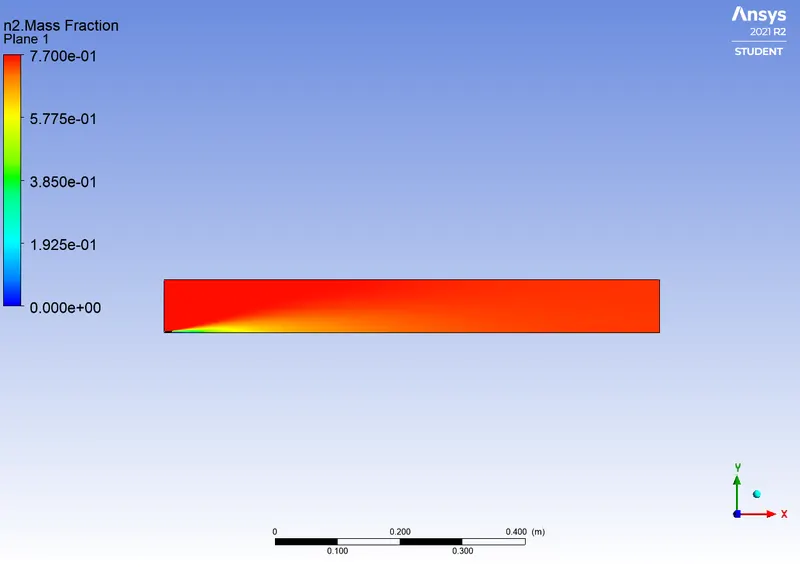
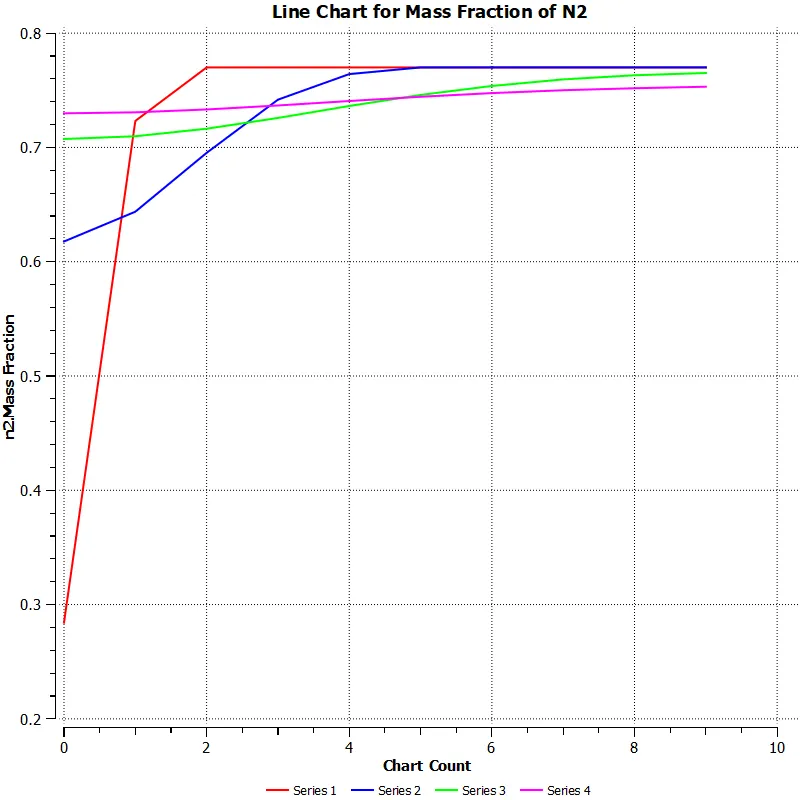
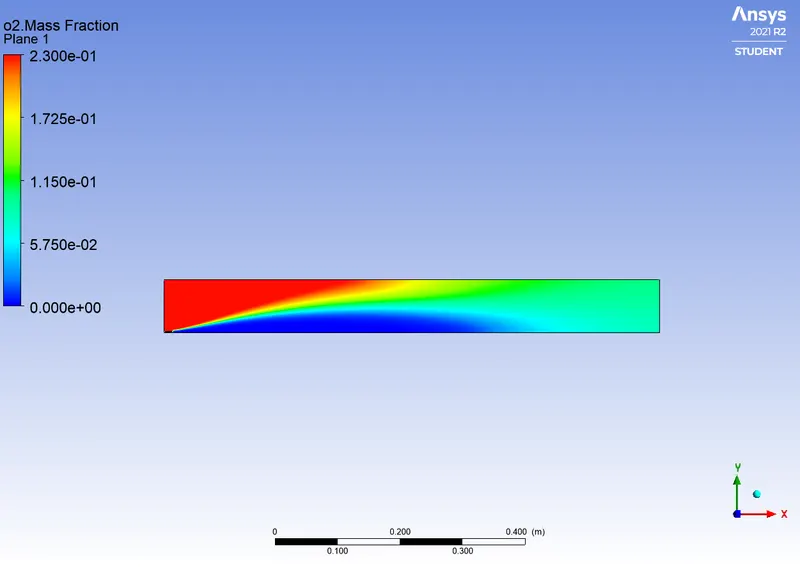
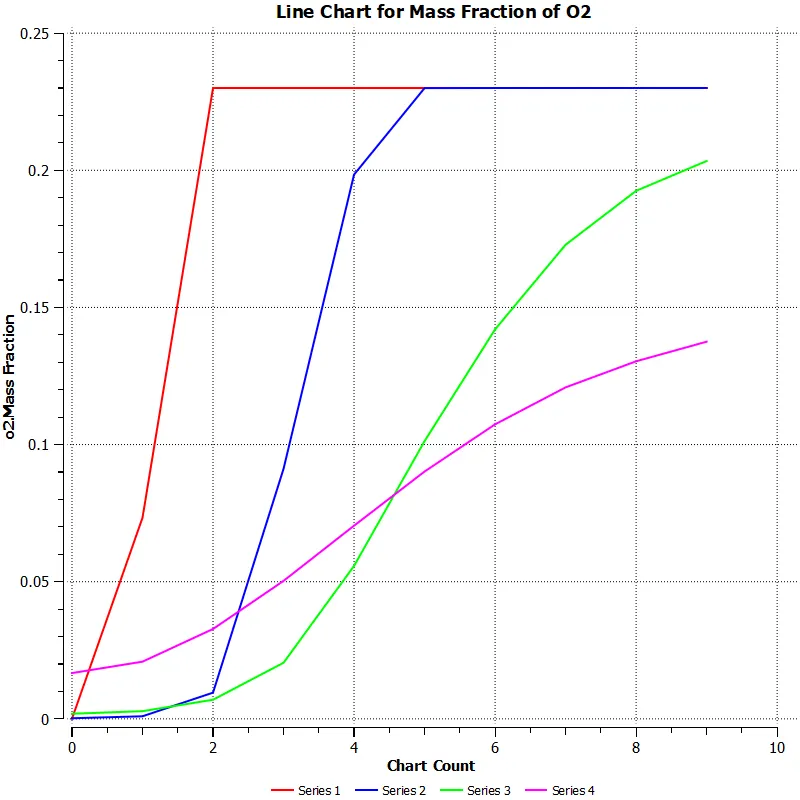
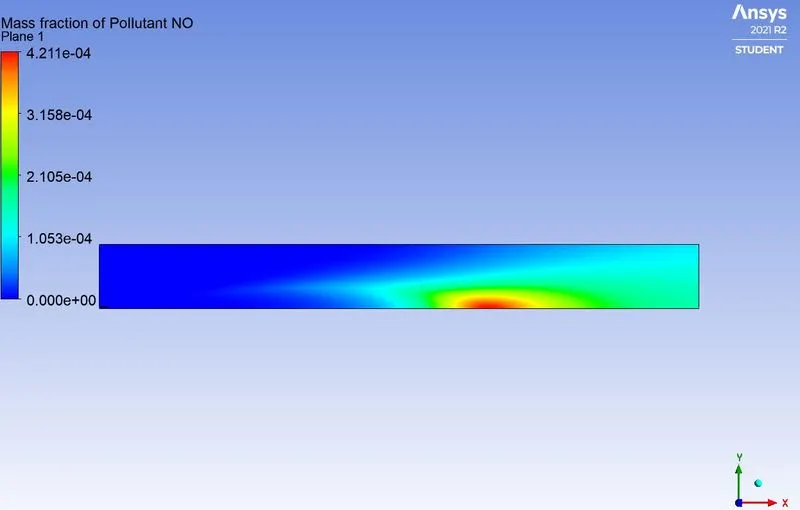
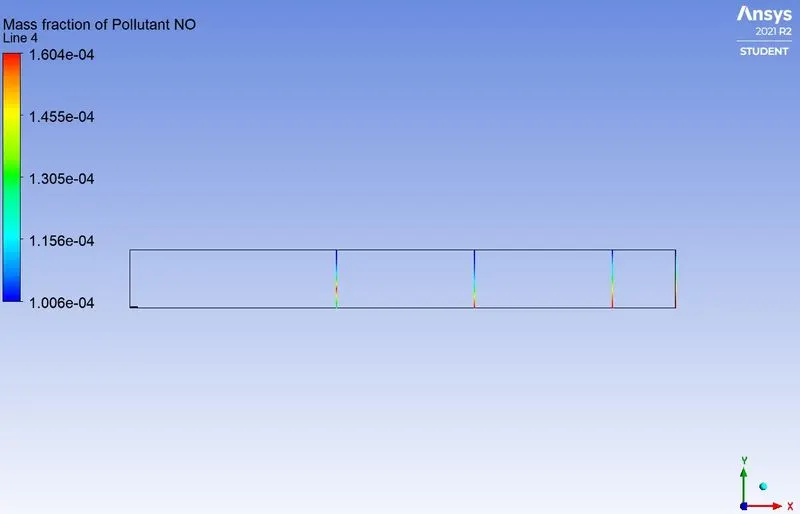
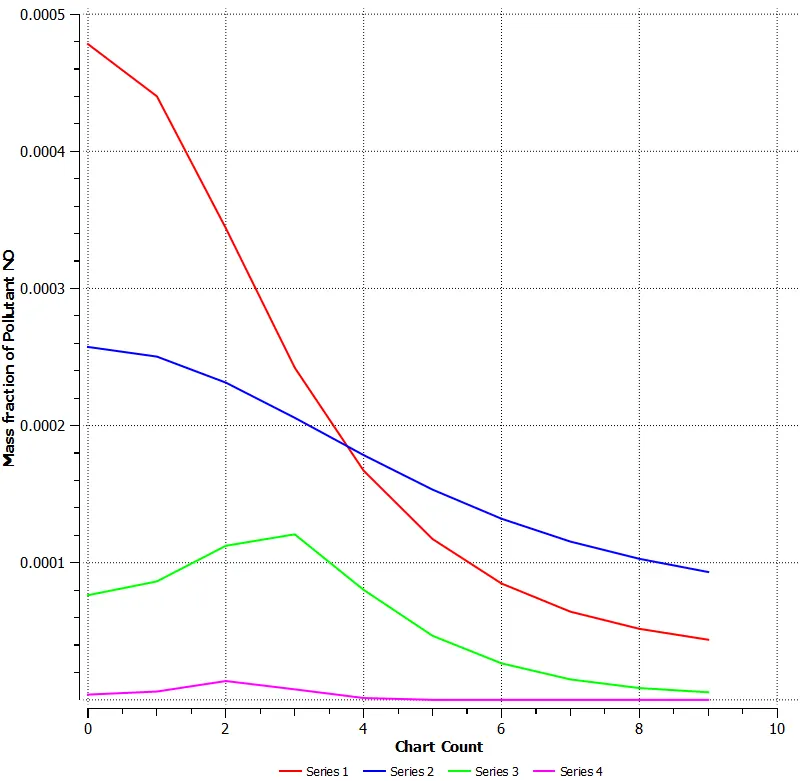
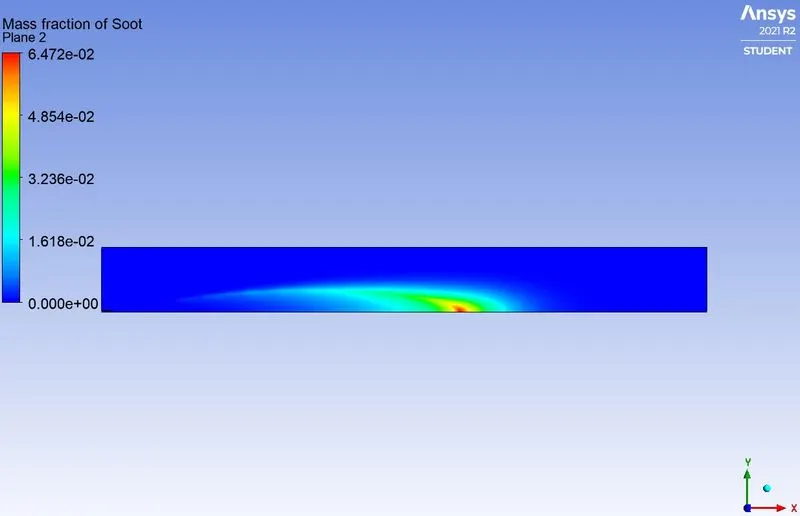
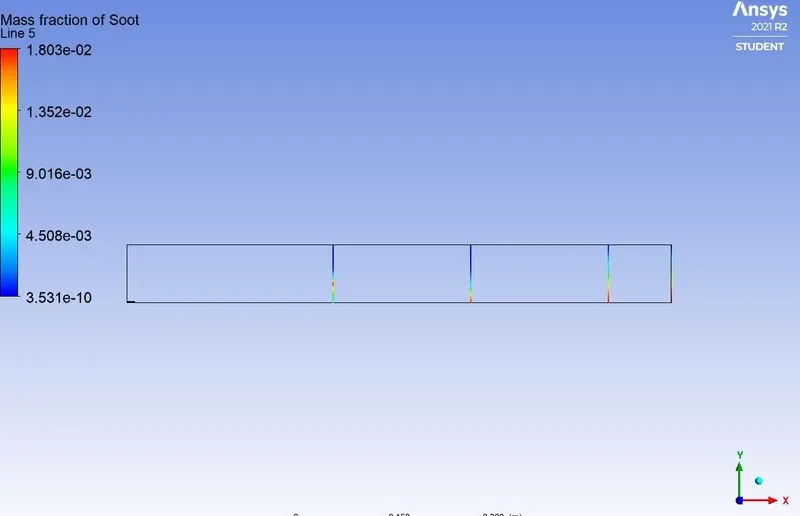
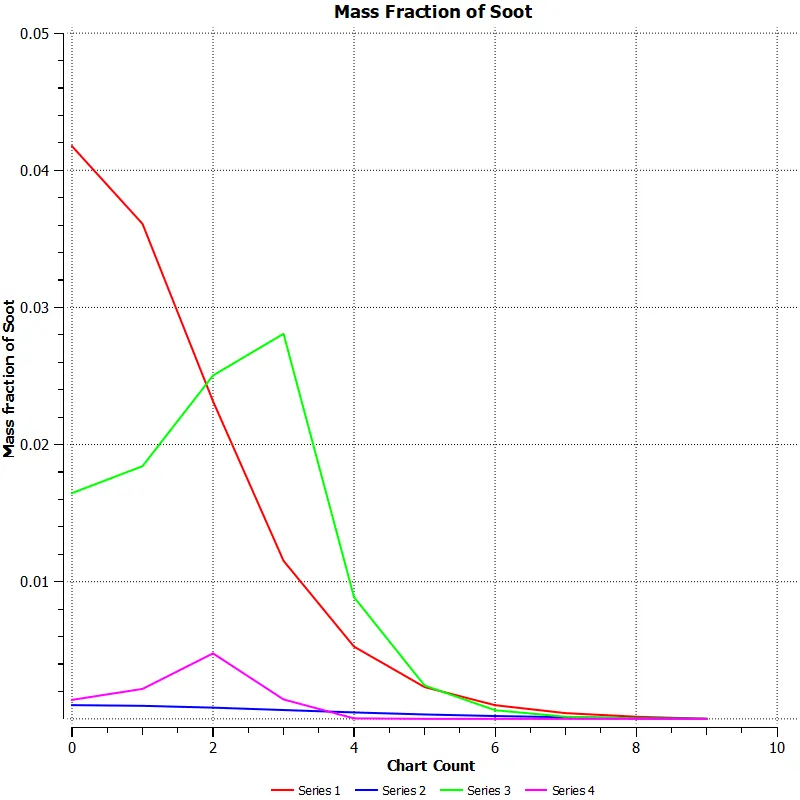
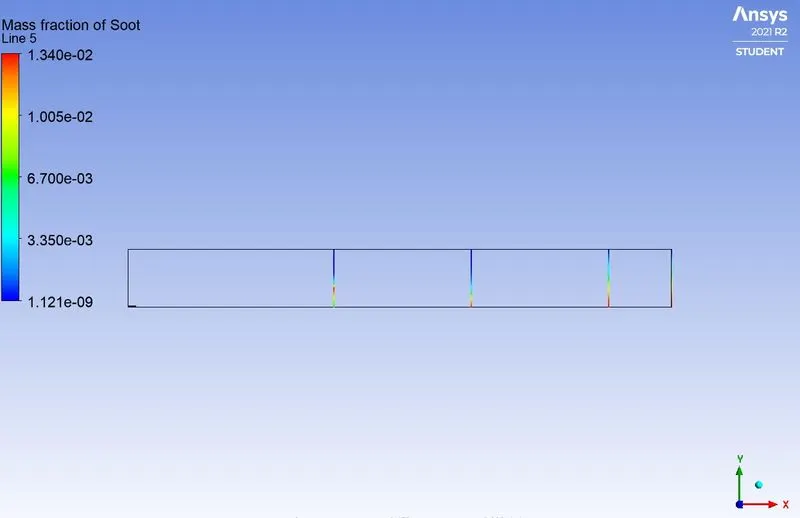
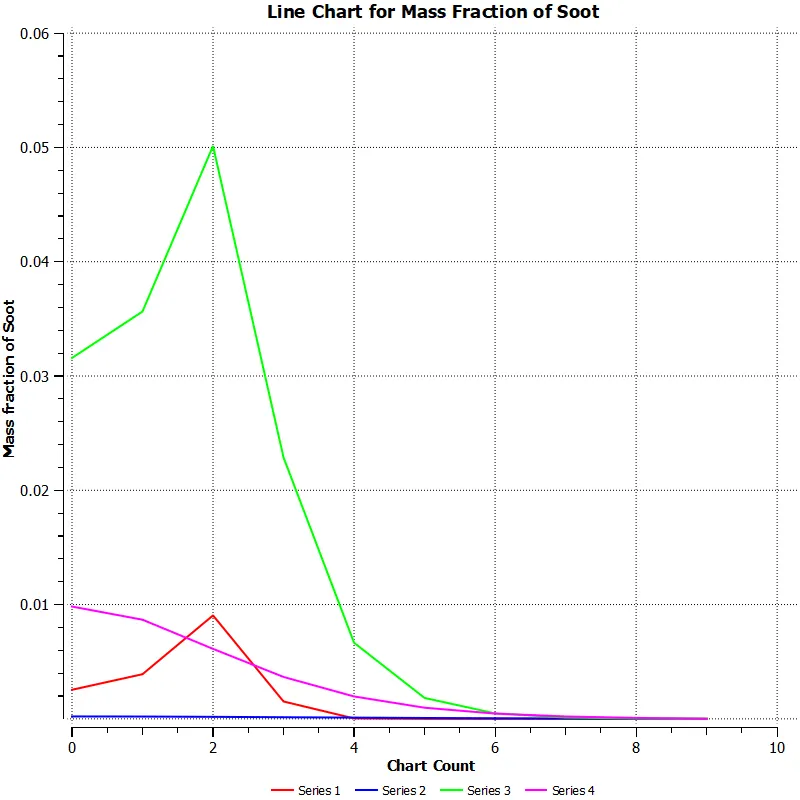
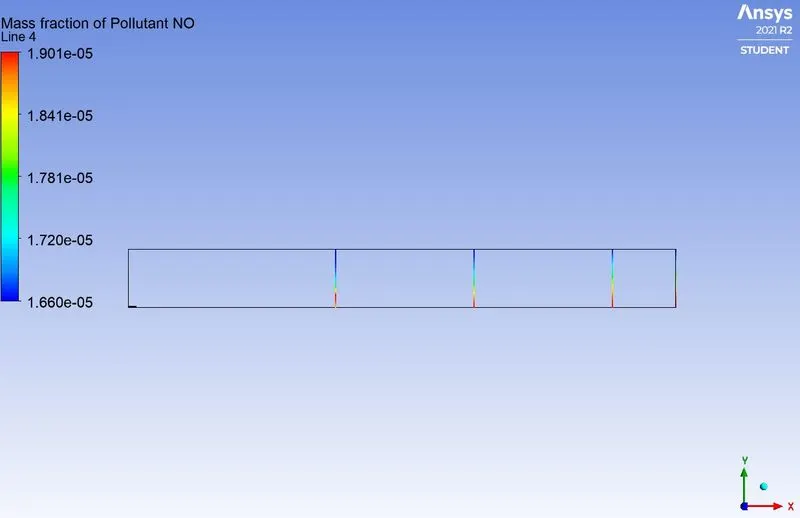
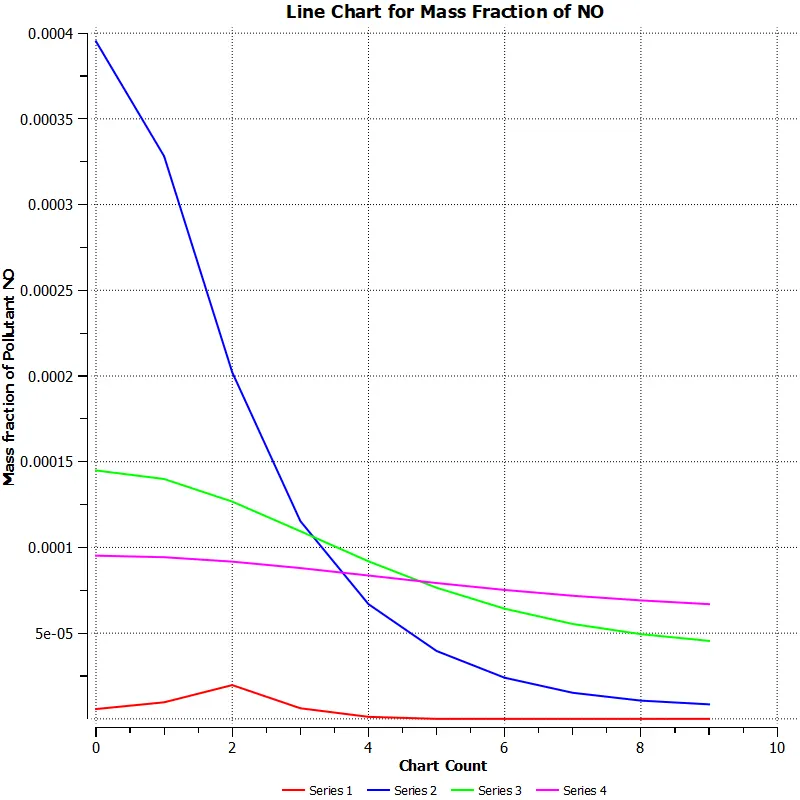
Perform a combustion simulation on the combustor model and plot the variation of the mass fraction of the different species in the simulation using line probes at different locations of the combustor and to plot for CO2, H2O, CH4, N2, O2, NOx emissions & Soot formation.
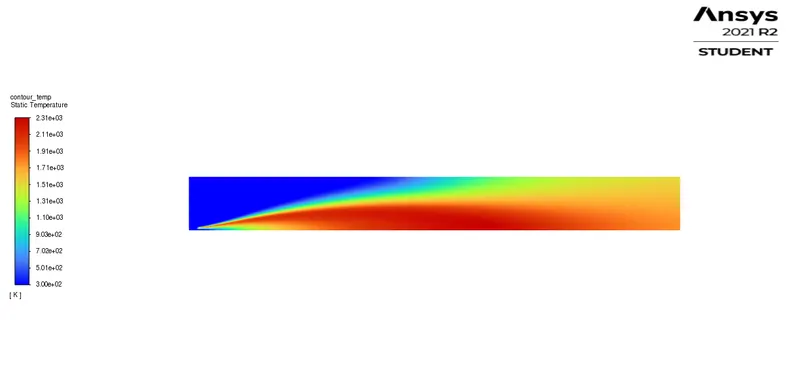
PART 2
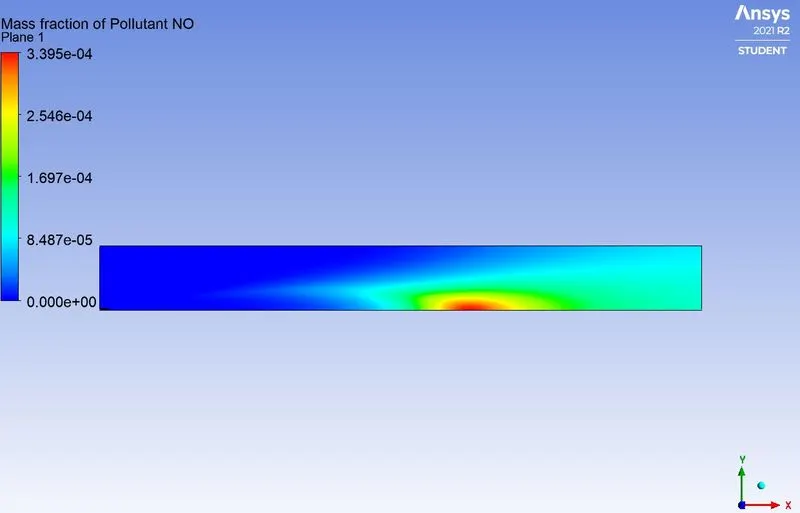
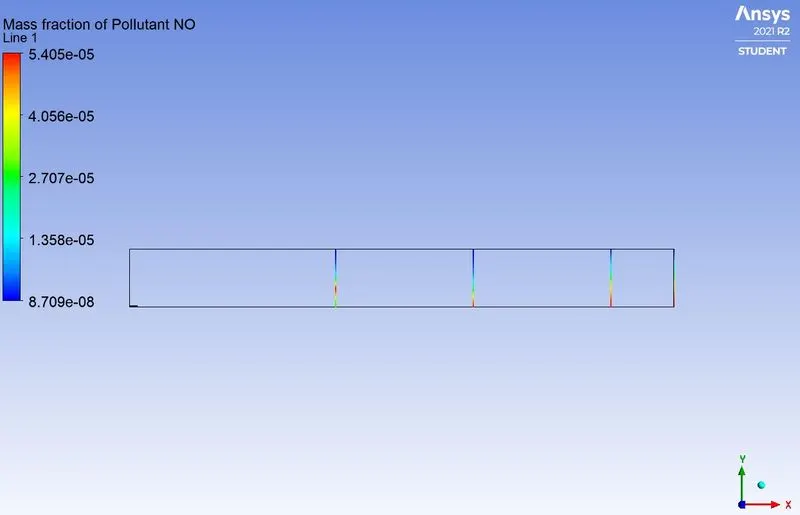
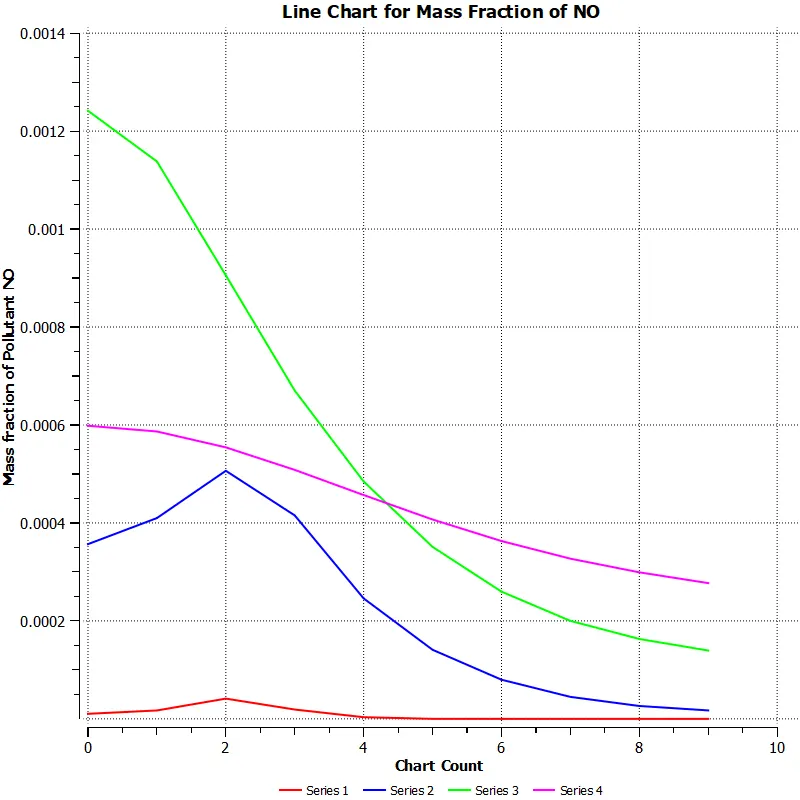
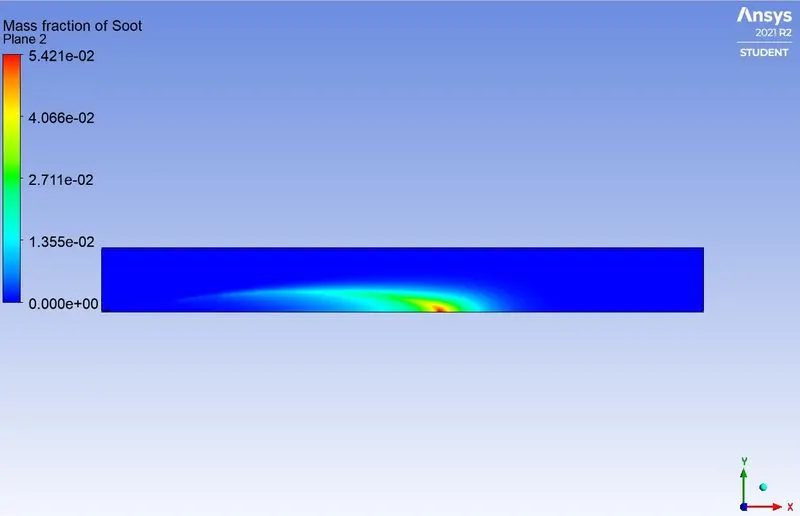
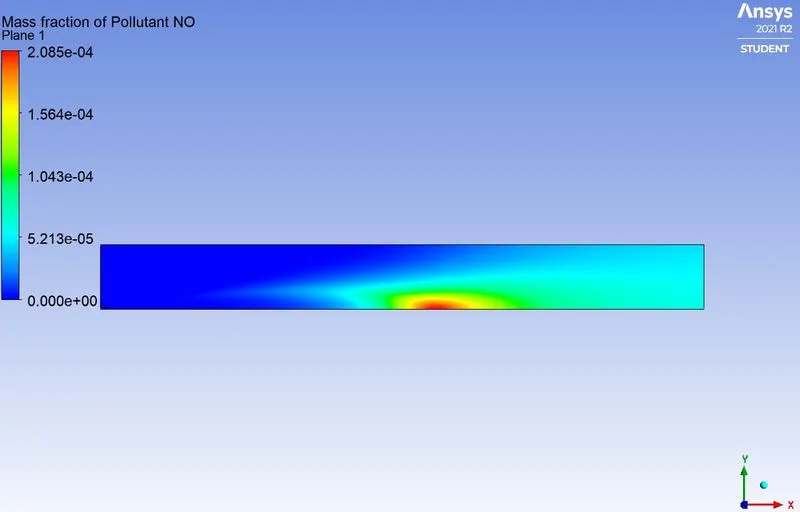
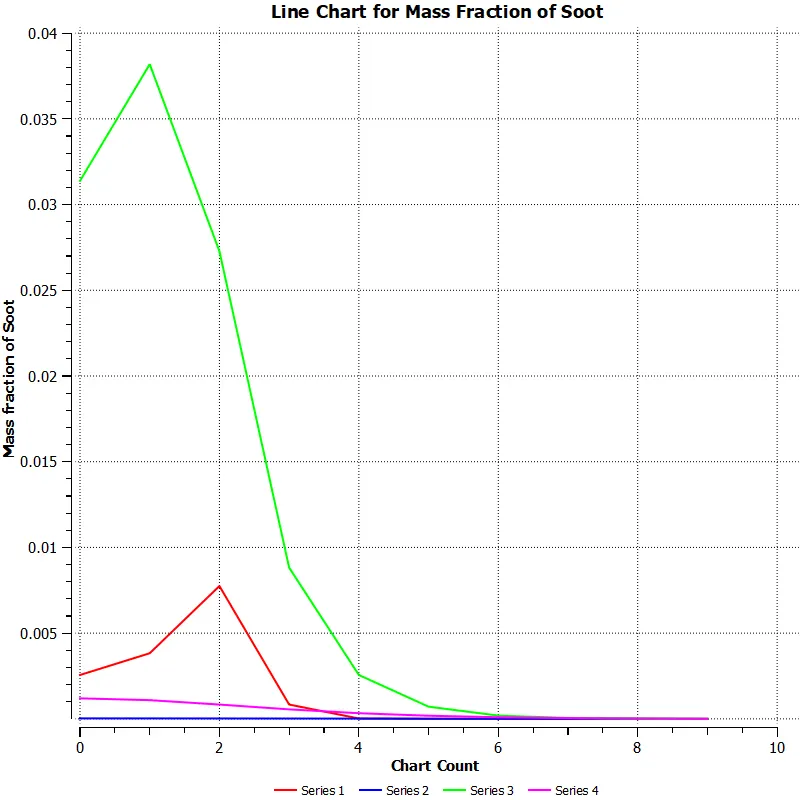
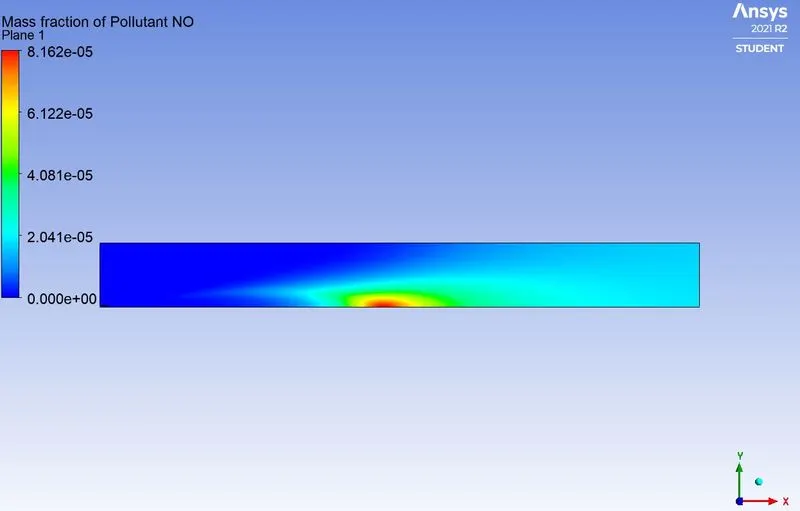
In this part, We need to add the water content in the fuel for 5%,15%,and 30% by mole and observe the effect of it on the results. Also provide line plots and contours ,the parametric study approach is used.

FOR 5% water content.
FOR 15% water content.
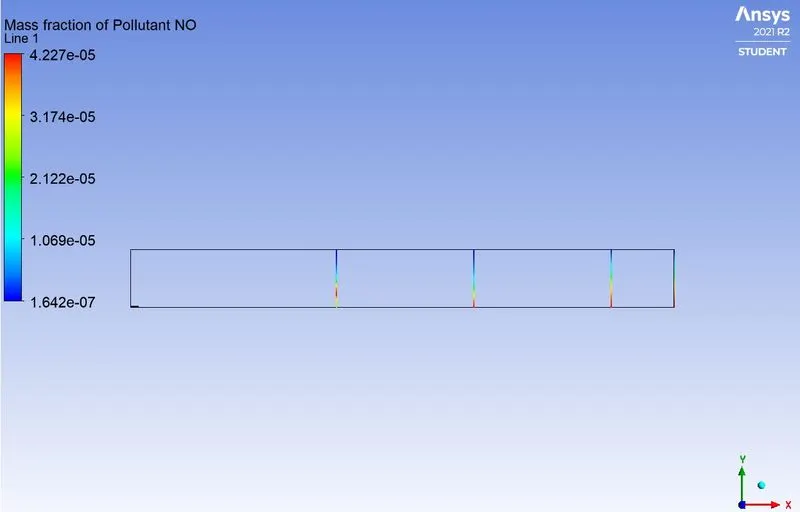
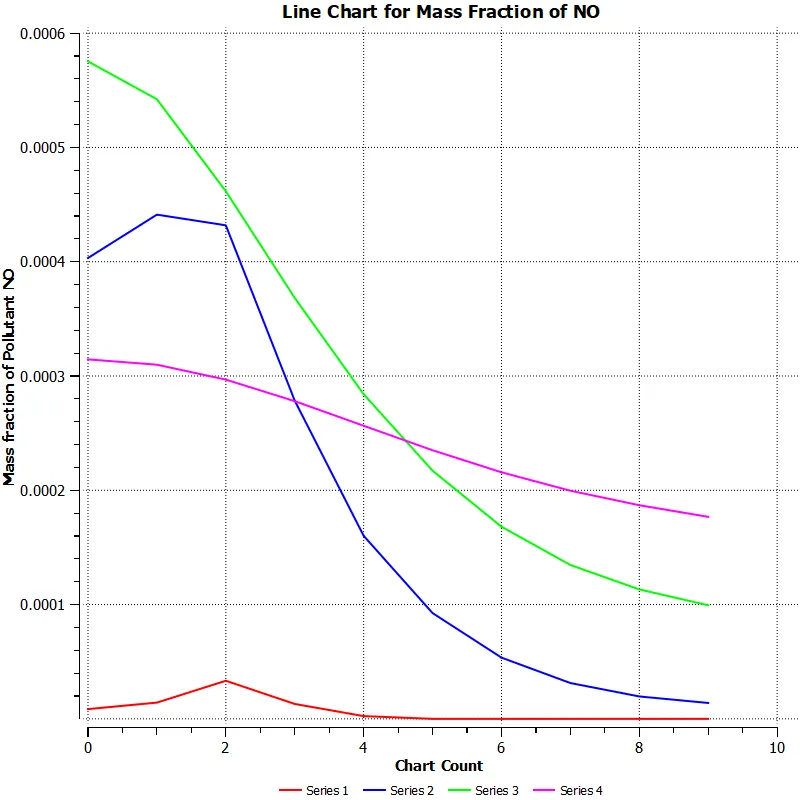
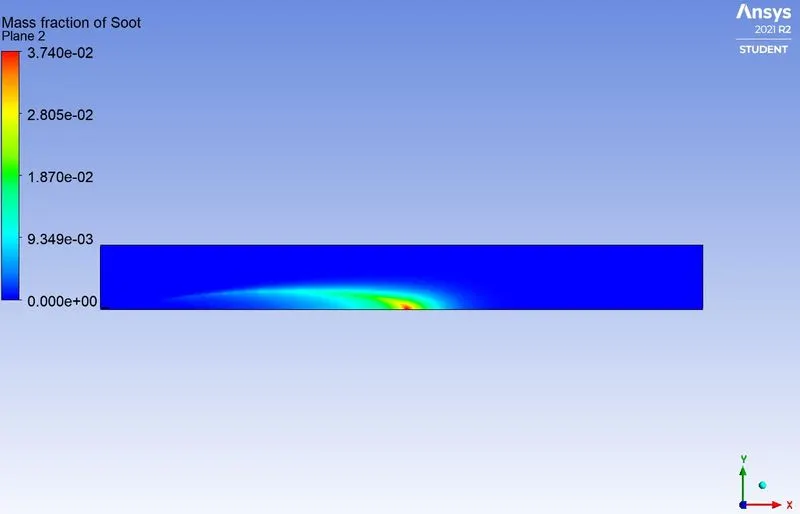
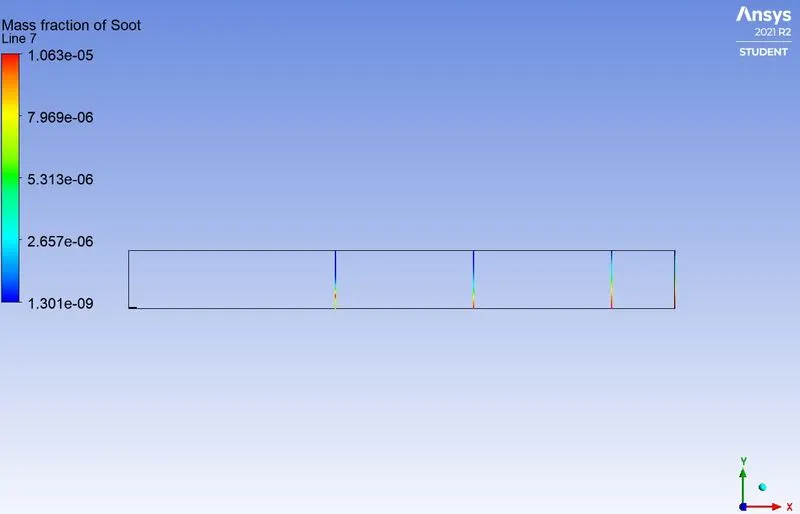
FOR 30% water content.
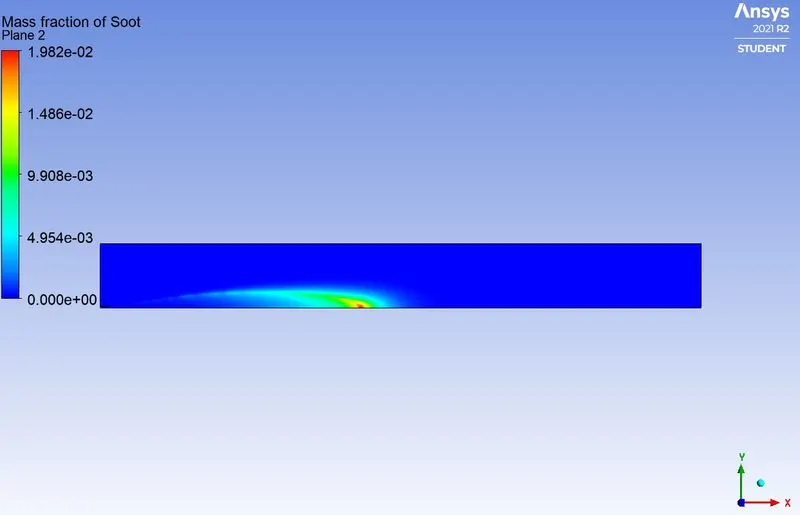
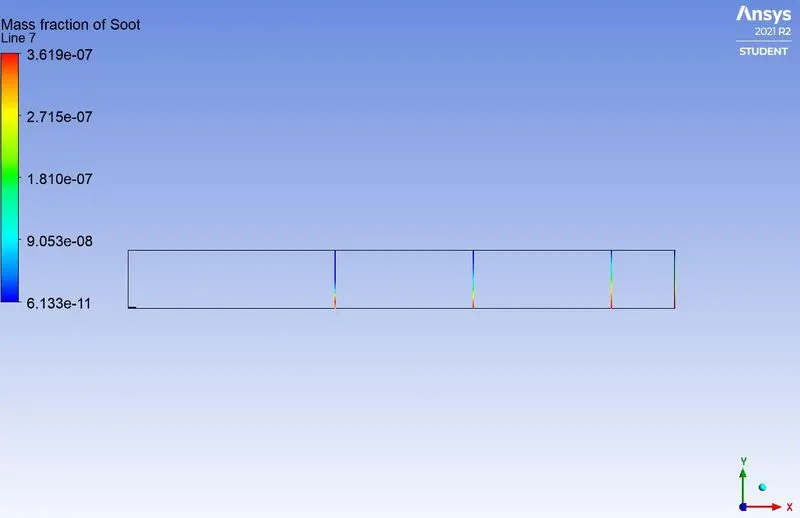
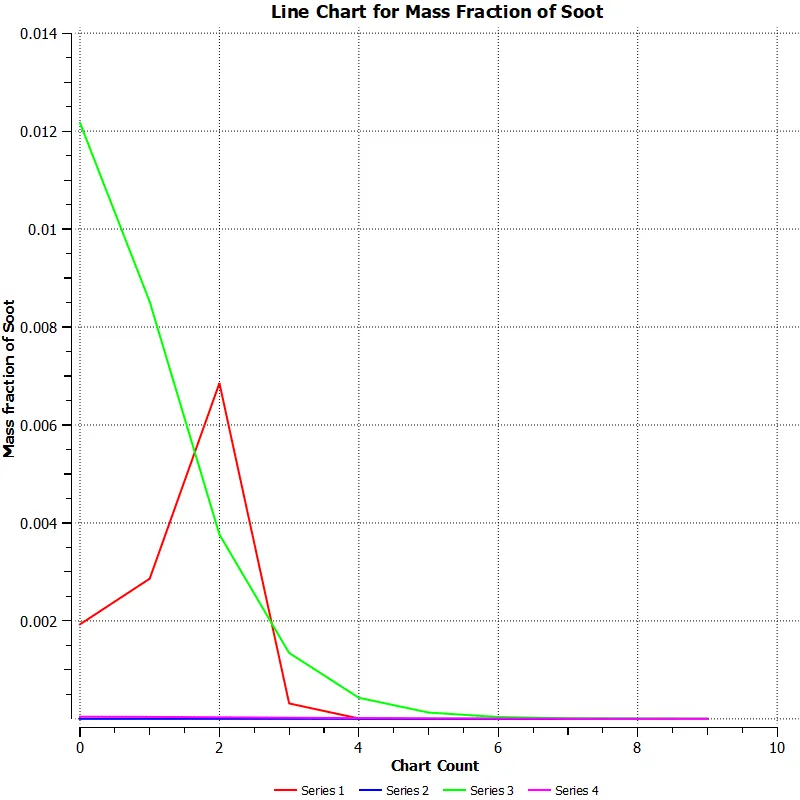
TABULATED RESULT:-
|
Percentage of Water added |
Methane added in moles |
water added in moles |
mass fraction of Pollutant Nox |
mass fraction of Soot |
|
0 |
1 |
0 |
5.664 |
0.0014165 |
|
5 |
0.95 |
0.5 |
4.528 |
0.00098774 |
|
15 |
0.85 |
0.15 |
2.6741 |
0.00049171 |
|
30 |
0.7 |
0.30 |
0.9738 |
0.00015652 |
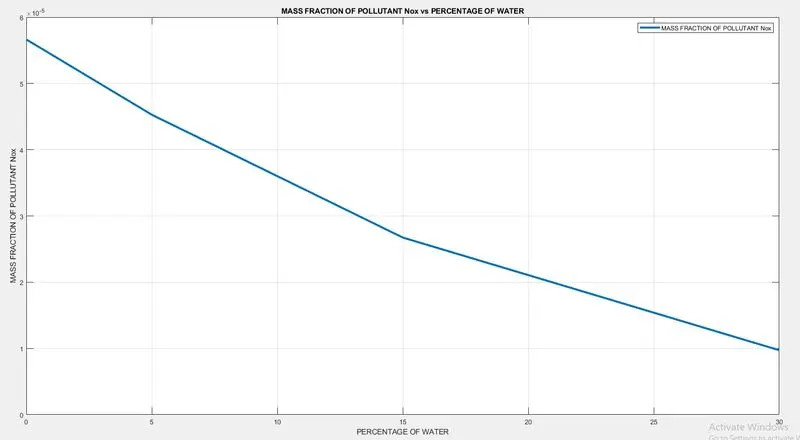
GRAPHS
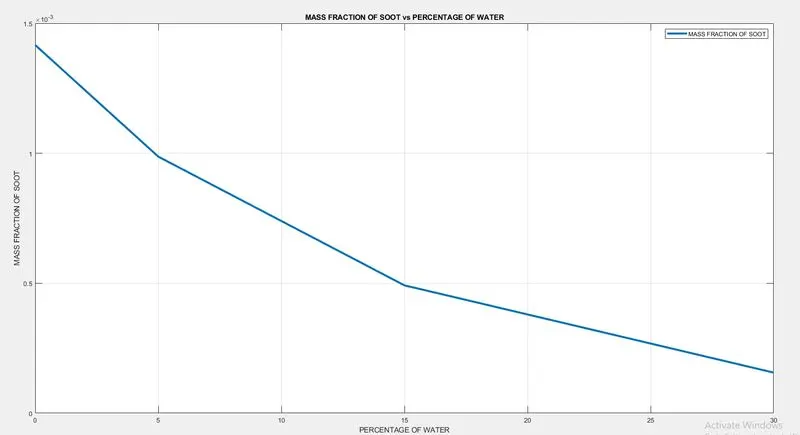
CONCLUSION:-
- From the Above study we can see that the value of Mass fraction of Nox decreases with increase in addition of water in Simulation which is great as according to the Government norms with Reduction of Nox Formation.
- Water Addition leads to increase the OH radicals that might have a significant impact in Soot Oxidation and reduce the Soot Formationin the Gas phase.
- From the Addtion of Water Combustion Temperature is also Decreases that is why Nox Formation is reduced significantly.
- As we can see there is small decreament in the Temperature. Reducing Combustion Temperature means avoiding stochiometric ratio. If this ratio is low, it generates lower concentration of thermal NOx.
- So, we can reduce the Nox emissions and soot formation, which is great as per Government Norms and It also reduces harmful effects on Environment and Humans.