ANSYS Week 1 Spur Gear Challenge
WEEK 1: SIMULATION ON SPUR GEAR
AIM
Simulation on Spur Gear using three different materials Cast Iron (Ductile) Cast steel and Cast Bronze analyze the stress Intensity, stress
OBJECTIVE
To perform the simulation on Spur Gear using static structural analysis using Cast iron (ductile), Cast steel, and cast bronze as a material to find the result out the equivalent stress, Total deformation, and Stress Intensity.
Analysis of the result on spur gear using three different materials evaluate it and then compare the best material that can be used in the manufacturing process.
SUMMARY
To solve the simulation problem using the FEA method on Ansys workbench. First, assigning the material such as Cast Iron (ductile), Cast steel, and Cast bronze from the library using the static structural and then open the model in Ansys mechanical with remaining the geometry for the gear are left-side gear.
To evaluate the model setup need to be done with respect to mesh size, joints, joint load in static structural, and giving the analysis settings and then generating the result.
Properties of materials:
1) Cast Iron Ductile
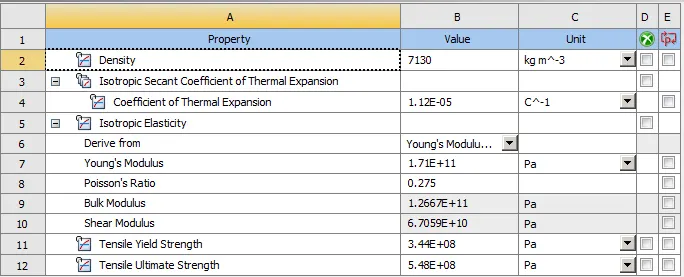
Fig 1: Cast Iron (Ductile) properties
2) Bronze cast
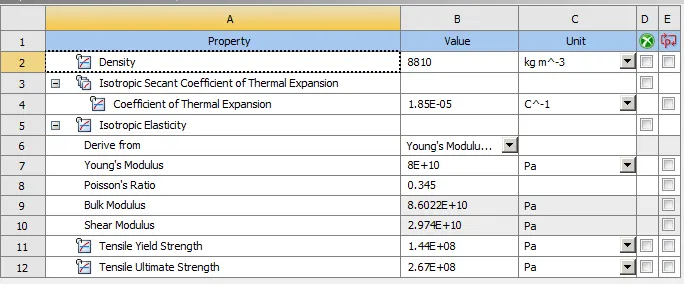
Fig 2: Bronze cast properties
3) Cast steel
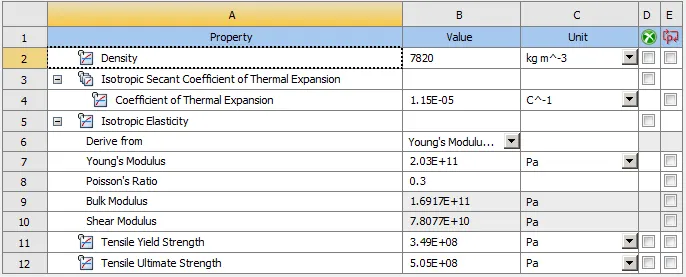
Fig 3: Cast steel properties
PROCEDURE
Model setup
Geometry rename
- Left side gear
- Right side gear
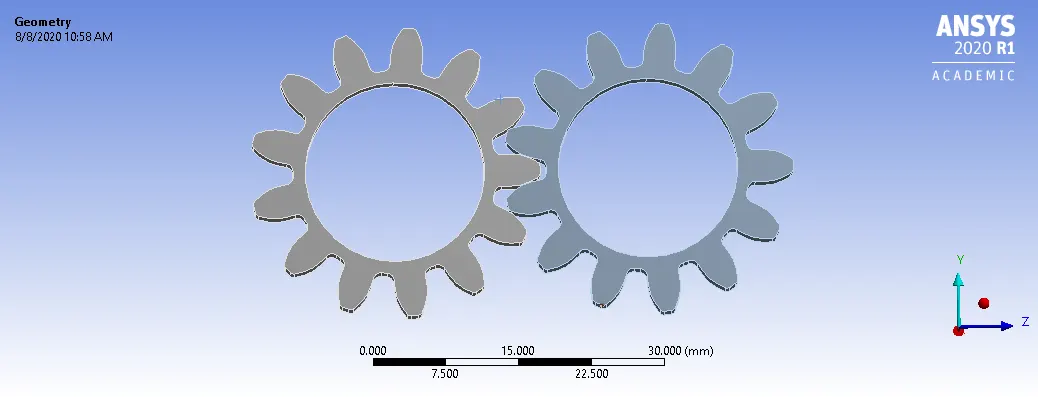
Fig 4: Spur Gear
Giving the frictional contacts to the bodies with selecting the contact bodies as right gear with 26 faces and the target bodies as a left gear with 26 faces.
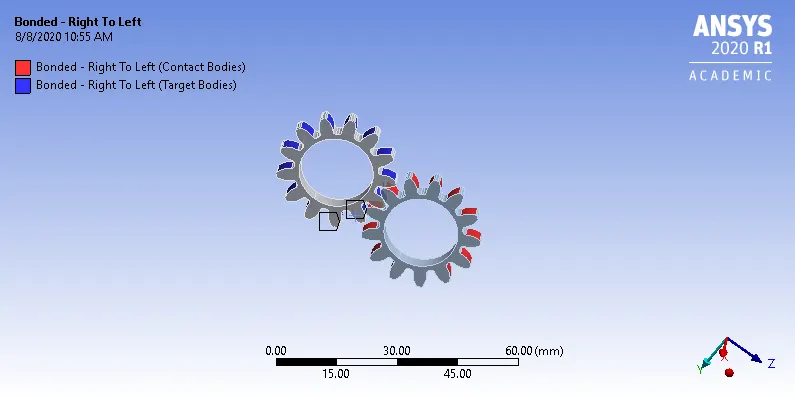
Fig 5: Frictional Contact spur gear
Assigning the revolute joint to both gears as a ground to left gear and ground to the right gear
Revolute joints Settings:
| Connection Type | Body-Ground |
| Type | Revolute |
| Behavior | Rigid |
| Scope | 2 Faces each |
| Body | left and right |
Mesh Settings:
| Element Size | 1mm |
| Use adaptive sizing | No |
| Smoothing | Low |
Checking the mesh metrics as the element quality for 1mm size.
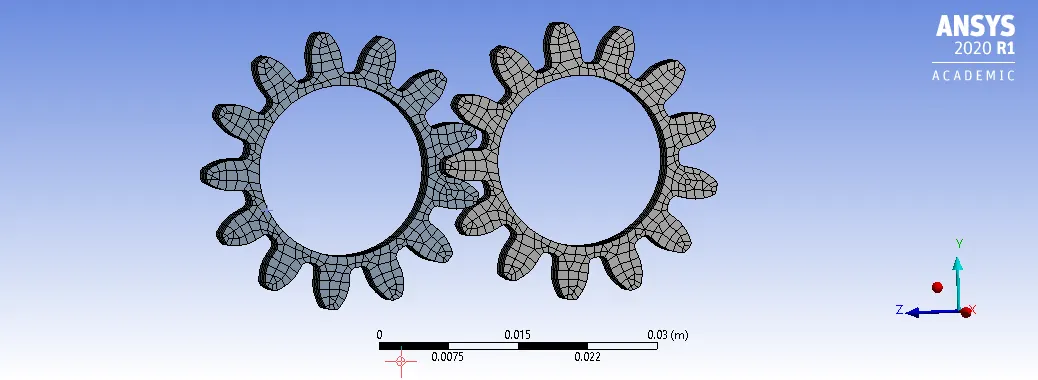
Fig 6: Mesh on the spur gear
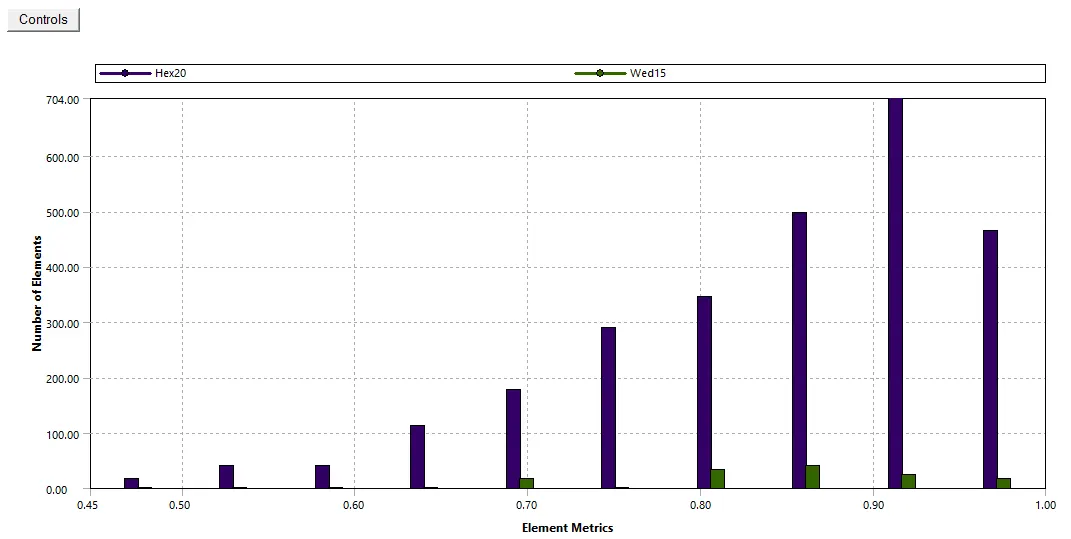
Fig 7: Mesh metrics spur gear
In static structural assign the joints to the left gear and right gear as rotation and a moment.
The left gear is assigned as rotation and the right gear is assigned as a moment.
Settings:
| Joint | Revolute- Ground to left and Ground to right |
| Type | Rotation to left gear and moment to the right gear |
| Magnitude | Tabular data |
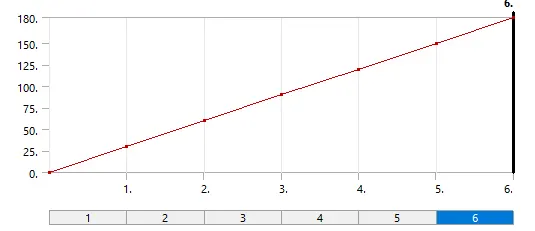
Fig 8: Joint rotation graph
Tabular data
Steps Time [s] Rotation [°]
1 1 0. 0.
2 1 1. 30.
3 2 2. 60.
4 3 3. 90.
5 4 4. 120.
6 5 5. 150.
7 6 6. 180.
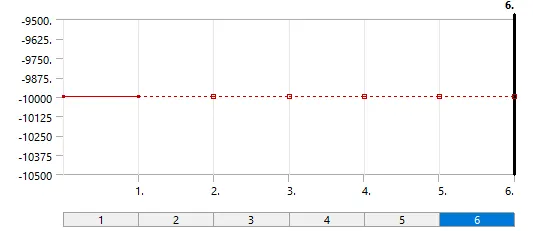
Fig 9: Joint moment graph
Steps Time [s] Moment [N·m]
1 1 0. -10.
2 1 1. -10.
3 2 2. -10.
4 3 3. -10.
5 4 4. -10.
6 5 5. -10.
7 6 6. -10.
RESULT
Generating the result for the setup of the spur gear, checking the solution for equivalent stress, stress intensity, and total deformation.
Results obtained for the cast Iron (ductile) after solving each node for the meshing and running the simulation.
Case 1:
Cast Iron is a group of Iron-carbon alloys contains 2% more carbon. It derives from its relatively low melting temperature. cast iron tends to be brittle except for malleable cast iron. This material is used in the automotive industry such as cylinder heads, cylinder blocks, and gearbox cases. It is resistant to damage by oxidation.
Equivalent stress:
The name suggests as maximum stress is produced in the spur gear when it runs for its application. It predicts the yielding of materials under multiaxial loading conditions using the result from simple uniaxial tensile stress.
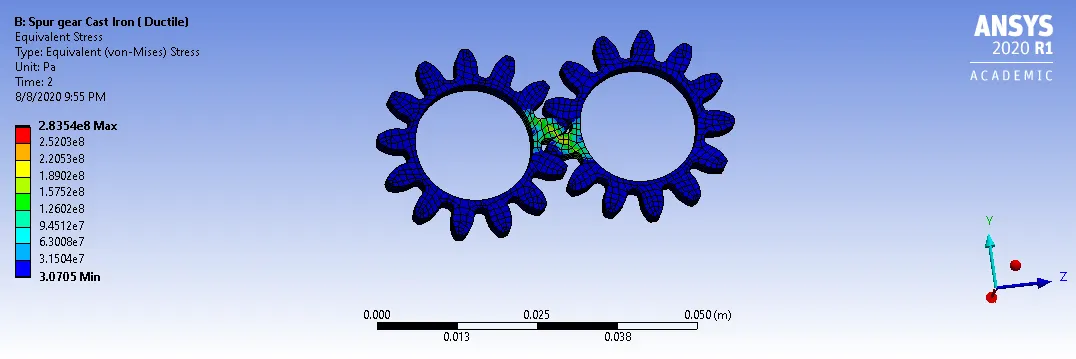
Fig 10: Cast Iron Equvi Stress
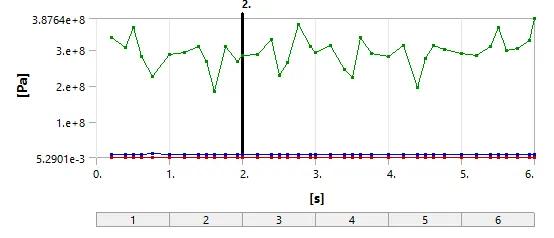
Fig 11: Equvi stress graph
Stress Intensity:
The stress intensity is a measure of stress fields and distribution around a formed crack in terms of fracture mechanics and is a fundamental parameter used to study crack propagation leading to failure.
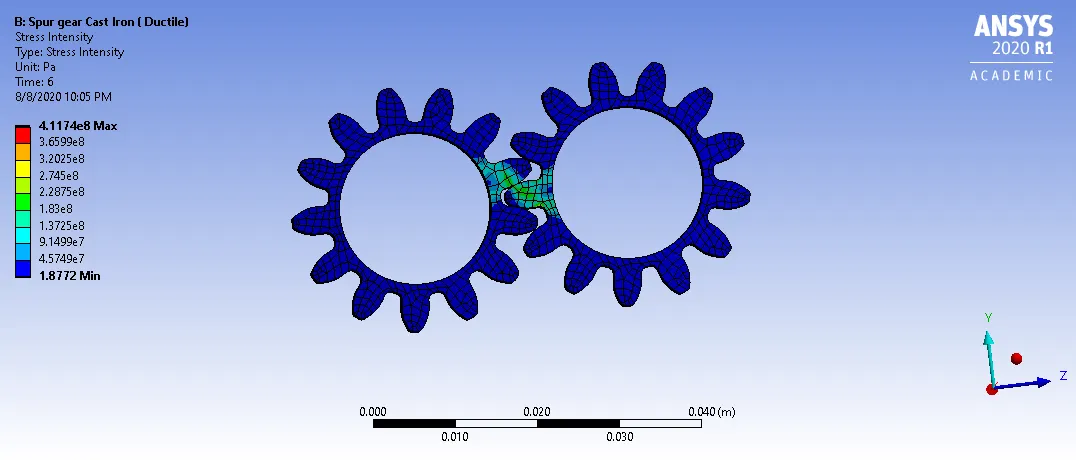
Fig 12: Stress Intensity
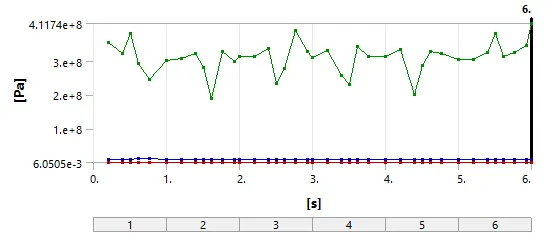
Fig 13: Stress Intensity graph
Total Deformation
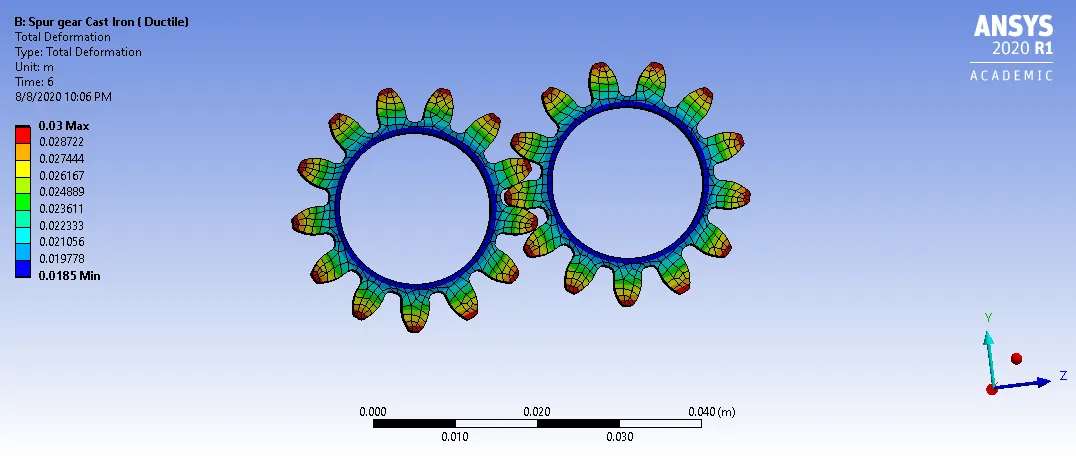
Fig 14: Total deformation
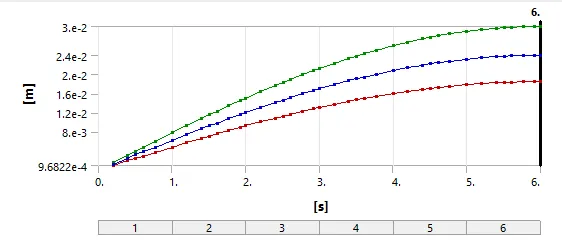
Fig 15: Total deformation graph
Case 2:
Cast Steel is a ferrous alloy with a maximum carbon content of approximately 0.75%. steel castings are solid metal objects produced by filling a void within a mold with liquid steel. As they are available in many same carbons and alloy steels that can be produced as wrought metals.
Equivalent stress
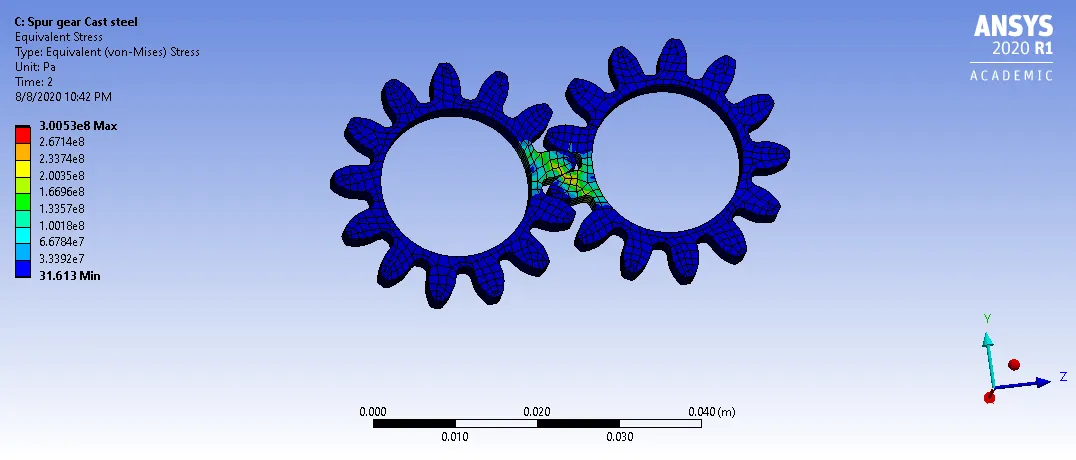
Fig 16: Equivalent stress
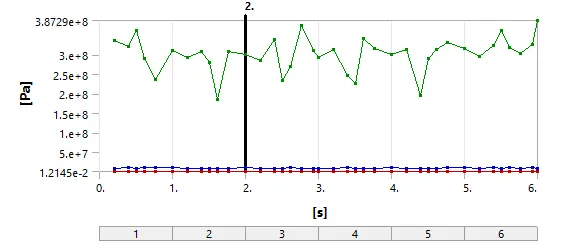
Fig 17: Equvi stress graph
Stress Intensity
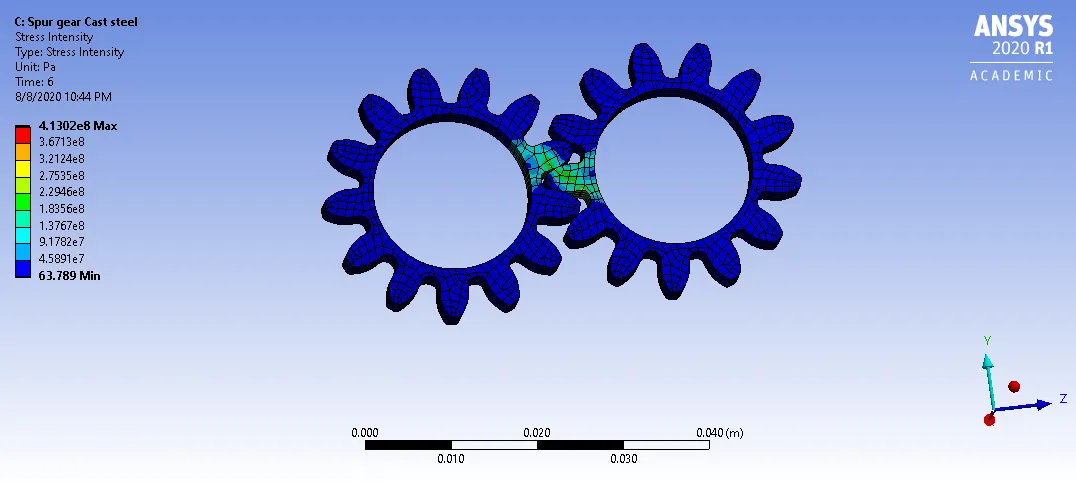
Fig 18: Stress Intensity
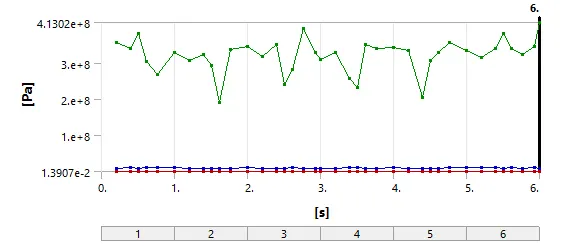
Fig 19: Stress Intensity graph
Total Deformation
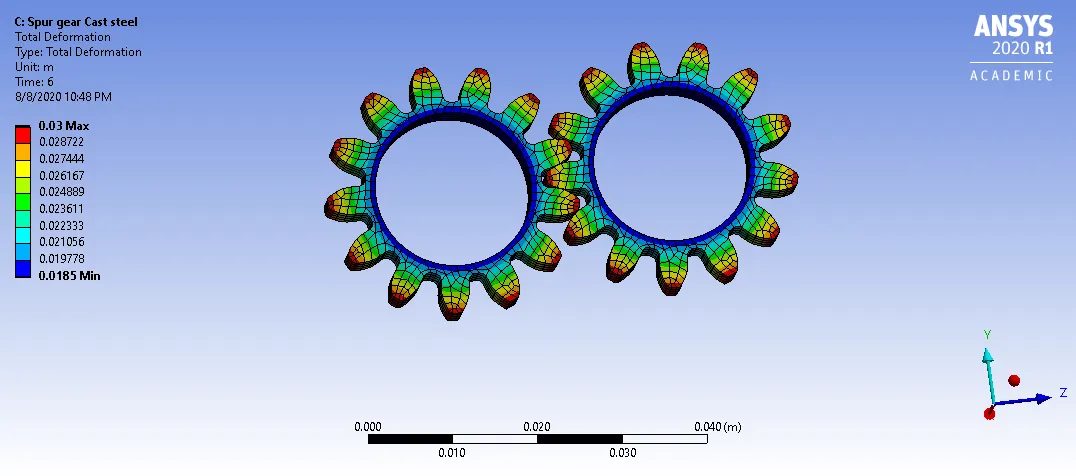
Fig 20: Total deformation
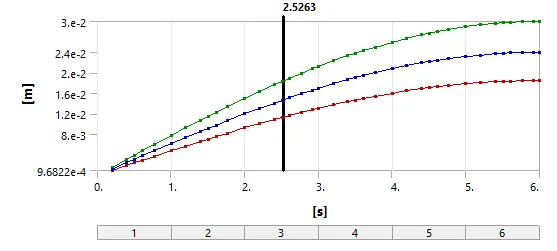
Fig 21: Total Deformation Graph
Case 3
Cast Bronze is the most popular metal for cast metal sculptures is simply called bronze. They can be used for statues, singly or in groups, reliefs, and small statuettes and figurines, as well as bronze elements and, can be fitted to other materials.
Equivalent stress
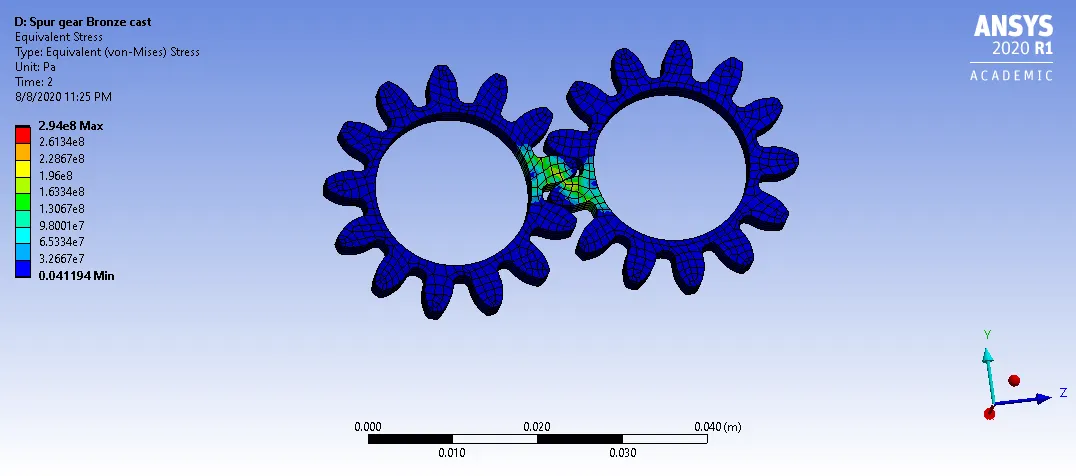
Fig 22: Equivalent stress
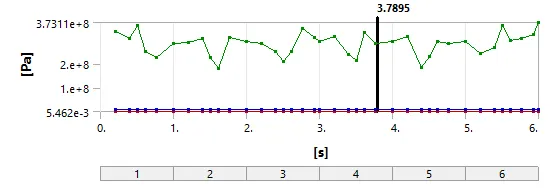
Fig 23: Equivalent stress graph
Stress Intensity
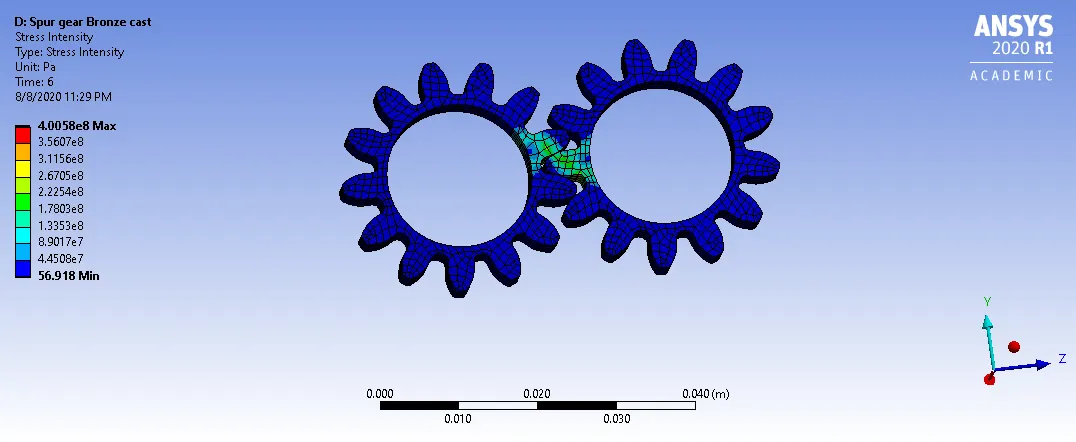
Fig 24: Stress Intensity
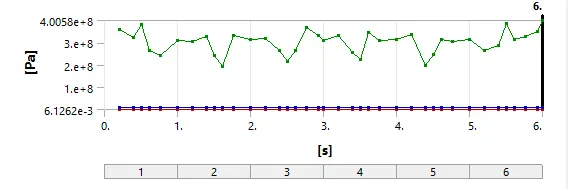
Fig 25: Stress Intensity graph
Total deformation
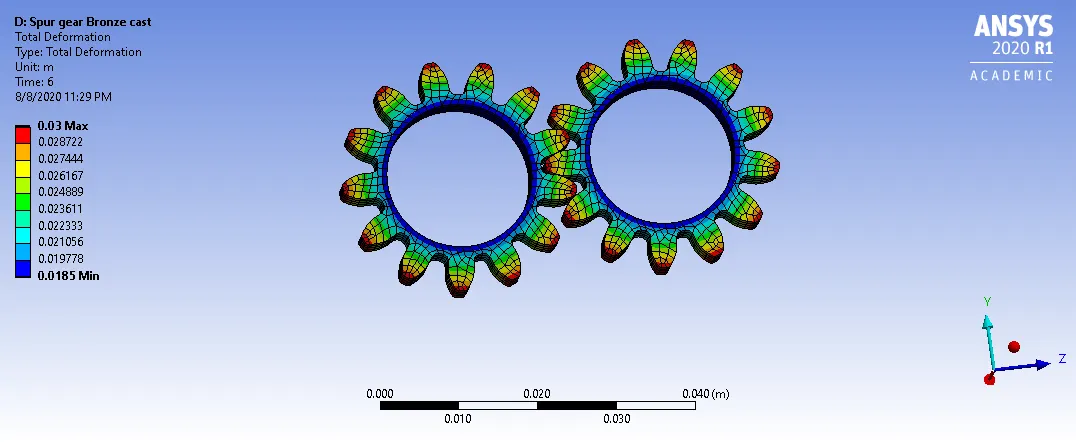
Fig 26: Total deformation
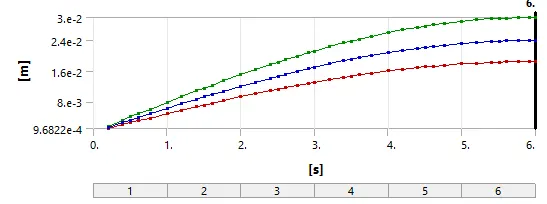
Fig 27: Total deformation graph
DISCUSSION
Equivalent stress
The equivalent stress on all three materials is approximately 3.00e+08 MPA as the stress will be the same in the process for all materials, except the minimum stress which differs for cast steel with a value of 31.613 MPa.
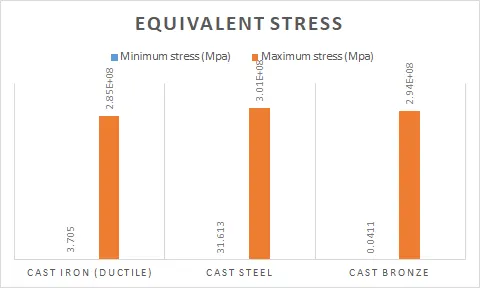
Fig 28: Equivalent stress
Stress Intensity
Stress intensity factor is used in fracture mechanics to predict the stress near the tip of the crack caused by a remote load or residual stresses. The graph indicates that the cast steel has maximum stress intensity approx 4.13 e08 MPa and minimum stress 63.87MPa but the cast bronze has less stress instensity compare to other materials.
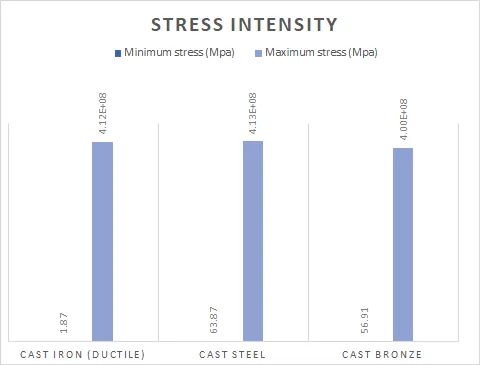
Fig 29: Stress Intensity
Total deformation
The total deformation for all three materials approximately is the same, which states that the force applied on the body with carrying each material respective will have the same deformation.
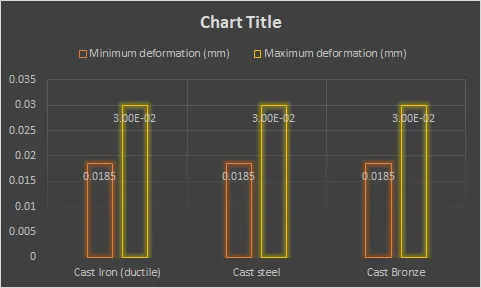
Fig 30: Total deformation
CONCLUSION
The spur gear is simulated by three materials cast Iron (ductile), Cast steel, and cast bronze which indicates that Cast Steel will more equivalent stress and stress intensity compares to the other two materials, the steel will fracture at some on the mentioned load.