Underbody Coating
UNDERBODY COATING
Underbody coating provides long term protection from corrosion to car's underbody. It also protects parts like internal body panels, frame rails and other inner cavities that are not physically accessible but are prone to corrosion.
You might know car underbody coating as undercoating, and that’s easier to say. This add-on is applied during the manufacturing or at your local car dealer center, as you must have understood while reading up till here that it is applied as a protective layer for the undercarriage.
The coating is the formulation of spray that is applied to the chassis protecting it from rusting. You must have come across such advertisements that endorse these products, which reduces the road noise.
Applying to undercoat, as soon as you get your new car, is the best way to keep the chassis intact. This covers the undersurface saving it from road grime and other stuff.
Benefits
- Minimizes Sound: It minimizes the sound from underneath the car resulting a noiseless, smooth driving experience.
- Heat Insulation: It insulates the interior of the car from extreme temperatures from beneath the vehicle providing a comfortable cabin experience.
- Anti-chipping property: If any stone hits the coating it does not get chipped away hence protects the underbody from exposure to water.
Underbody coating is usually a dense cladding (often based on rubber) applied uniformly to the undercarriage of the automobile. It is normally sprayed or painted on when the car is just out of the dealership and is clean. But even if you are getting the undercoating applied after a couple of years, it's fine too.
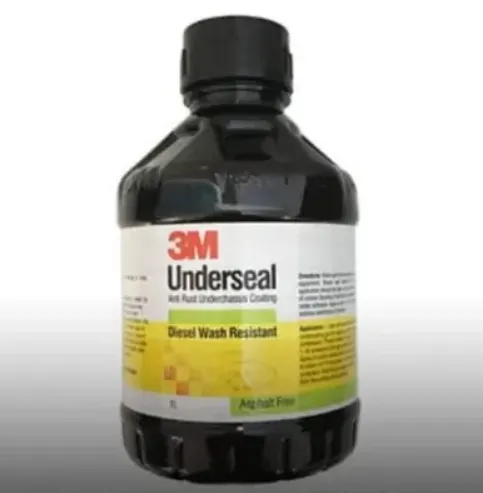
First, the car under body is washed and degreased. Then, the 3M™ Protective Coat is applied with Body Schutz Gold Gun (5 year Warranty) or Undershield gun (2 year warranty).
Before applying, the surface must be free of any dirt, dust, oil, grease and any contamination that may interfere with adhesion. Remove loose paint and rust with a wire brush or sandpaper. Remember to mask off any areas that you do not want coated with Undercoating before spraying the product.
Difference Between Rust Proofing and Car Underbody Coating
You would hear these two terms interchangeably; however, they completely differ in the literal meaning. There is no doubt that the purpose of both treatments is to protect your car from developing rust and corrosion in the end.
Underbody Coating
An undercoating is a spraying accessory that protects the vehicle’s body underneath.
Rust Proofing
Applying a protective layer of wax or other coatings on corrosion-prone areas outside the vehicle is rustproofing. This layer is mainly applied to fenders, weld points, upper body panels, and tailgates.
Rust Protection
Rust protection is often confused with rust proofing. However, when a rust inhibitor is applied during the manufacturing process, it is called rust protection. A rust inhibitor blocks the circulation of electrical current stopping rust from developing in the first place.
Such ingredients are applied to almost every vehicle, car, truck, and SUV by mixing into its materials during the manufacturing process. On the other hand, rust-resistant material is also used for manufacturing cars these days.
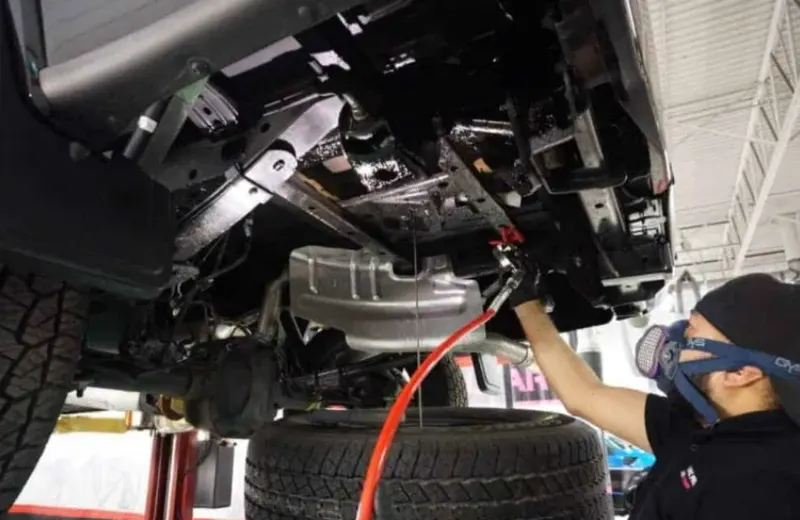
How to Undercoat Your Car?
You have a few options to select from while considering an undercoating for your vehicle. Obviously, if you are getting it done through an authorized dealer, then you would have no choice as they have their own preferences.
1. Spray
The spray is the most common method used by dealers. The spray consists of a tar-like substance that is applied to the undercarriage. It functions as a barrier for salt, moisture, and oxygen, which causes corrosion.
You can also purchase it as a DIY product, but the whole magic lies behind the method of application, so it’s better to do the job with a dealer, especially if you have a new vehicle.
2. Electronic
Removing the electrical current capacity of items underneath the vehicles is another method for applying to undercoat. A weak electric current circulates through the material, reducing the chances of rusting.
For using this method, a DIY solution wouldn’t work; you would need an expert.
3. Drip Oil Spray
If you want to do it yourself, then drip oil spray is the best option. This can be messy but incredibly effective at protecting the undercarriage. It covers every nook and corner of the chassis, forming a robust layer of protection.
Time is the factor where you have to show patience in this method. It takes a long time to dry. In some cases, it drips around 48 hours to a week.
4. Dripless Oil Spray
Coming to the last option, the dripless oil spray. This waxy substance is applied to the body and undercarriage, forming a strong protective layer. It doesn’t take much time to dry; however, the layer can easily wear and tear than the other counter methods.
Disadvantages
Nothing comes for free in this world. The same goes for undercoating. The undercoating or rustproofing spray is heavy in pockets. However, it is nothing when you compare it with the cost of replacing a vehicle after corrosion.