Underbody Coating
UNDERBODY COATING:
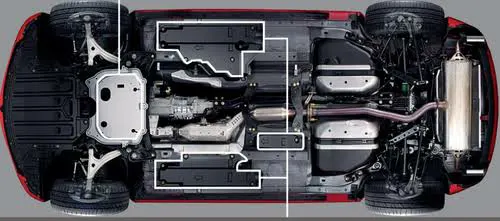
- A car’s underbody is exposed to the most wear and tear caused by muddy water, potholed roads, stones and other obstacles on the road and because it’s not in plain sight, we often do not see the damage.
- In Indian road conditions, a cars underbody is most prone to corrosion.
- Underbody coating provides long term protection from corrosion to car’s underbody. It also protects parts like internal body panels, frame rails and other inner cavities that are not physically accessible but are prone to corrosion.
- Underbody coating is usually a dense cladding (often based on rubber) applied uniformly to the underbody of the automobile.
- The coating is the formulation of spray that is applied to the chassis protecting it from rusting.
- This coating is applied during the manufacturing or at your local car dealer center.
- It is normally sprayed or painted on when the car is just out of the dealership and is clean.
- But even if you are getting the undercoating applied after a couple of years, it’s fine too. This is because it can prevent further damage to the underbody.
PURPOSE:
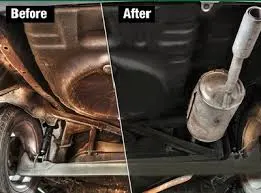
- The main purpose of undercoating is to check rust especially in the body components like frame rails along with other exposed metal parts
- To increase the life span of the vehicle
- To protect the car from corrosion especially in the rainy season
- Underbody coating can also reduce wear and tear
- To maintain the resale value of the car
METHODS OF UNDERCOATING:
Spray:
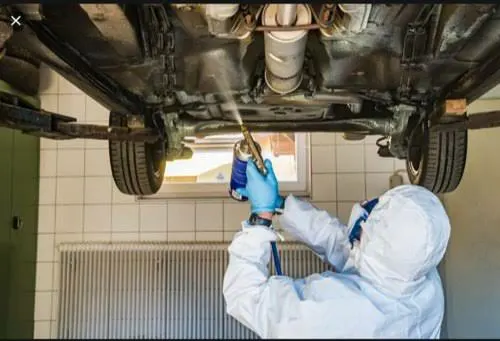
The spray is the most common method used by dealers. The spray consists of a tar-like substance that is applied to the undercarriage. It functions as a barrier for salt, moisture, and oxygen, which causes corrosion.
Electronic:
Removing the electrical current capacity of items underneath the vehicles is another method for applying to undercoat. A weak electric current circulates through the material, reducing the chances of rusting.
Drip Oil Spray:
If you want to do it yourself, then drip oil spray is the best option. This can be messy but incredibly effective at protecting the undercarriage. It covers every corner of the chassis, forming a robust layer of protection. It takes a long time to dry. In some cases, it drips around 48 hours to a week.
Dripless Oil Spray:
In dripless oil spray method a waxy substance is applied to the body and undercarriage, forming a strong protective layer. It doesn’t take much time to dry; however, the layer can easily wear and tear than the other counter methods.
TYPES OF UNDERCOATING:
- Rubberized Underbody Coating
- Wax Based Underbody Coating
- Asphalt Based Automotive Undercoating
- Bitumen Based Undercoating
- Polyurethane Underbody Coating
ADVANTAGES OF UNDERCOATING:
Protects Against Rust & Corrosion:
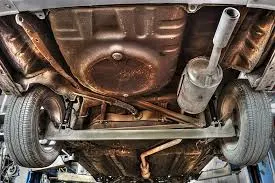
The primary objective of getting underbody coating done is preventing metal components that are exposed on the bottom side of the car to damage from corrosion. You can shut out the adverse effects of corrosion on your car by simply applying a rubberised anti-rust coating all over the belly of your car.
Absorbs Noise:
Very thick undercoating can soften the noises that reach the cabin. Since the undercoating is often made up of rubber it absorbs some of the rackets. The occupants of the car could spare themselves of the road noises at least up to a certain extend.
Prolong Car’s Life:
Good undercoating not only defends the underbody from corrosion but also protects the engine and transmission as well. Less rusting coupled with slower wear and tear can surely add years to the lifespan of your vehicle. There would be fewer dents, dings and scratches on the undercarriage for you to fret about.
Heat Insulation:
It insulates the interior of the car from extreme temperatures from beneath the vehicle providing a comfortable cabin experience.
Prevents Paint Chippin:
A thick layer of underbody coating definitely comes to aid and minimises the effects of scrapes and metal chippin caused by stones and sharp gravels.
DISADVANTAGES OF UNDERCOATING:
- The undercoating or rustproofing spray is heavy in pockets. However, it is nothing when you compare it with the cost of replacing a vehicle after corrosion.
- Undercoating might be required to be done periodically after a span of 1-2 years