Underbody Coating
|
2021 |
|
|
SKILL-LYNC UNDERBODY COATING |
By
ABHIJNA K
CHAPTER 1
INTRODUCTION
UNDERBODY COATING:
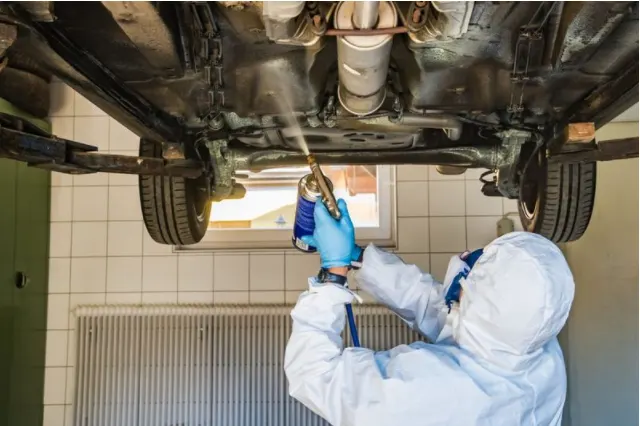
It is process used to provide coating on the car surfaces by undergoing pretreatment removal of excess metal and by electrodepositing of anti-corrosion layers. Under body protective coatings is used to protect the vehicle chassis from external environment, to ensure the integrity and safety of cars. The usage of coating plays a very important role in the service life of the vehicle.
Underbody coating is also called as under seal. It protects the car belly from corrosion like rusting. It even protects the underbody from being chipped away by stones and humps. There are many useful purposes for applying underbody coating. These are listed below:
- By preventing from stone chip:
Under body coating or the anti-stone chip coating is a thick elastic layer which could not be easily damaged by stone chipping or scratch, therefore could basically protect the metal sheet of the under body. As such the thin corrosion protection coating on the metal sheet will be destroyed and leave the bare metal exposed to the air, which will soon come to corrosion when contact with the moisture in the air. If not promptly getting anti-rust treatment, then the rust will soon spread to large areas.
- Provides protection from external environment:
Under body is covered by the thick and tight layers, it would act as a strong barrier to prevent these external substances attaching the metal sheet. External environment, such as the from the hot road in summer anti-frozen gent in winter, raining water and the salty water in the atmosphere, will attach the under body of a car Particular in coast areas, the wind from the sea will bring more salt to the air, which will accelerate the corrosion and will reduce the service life of a car.
- Increases longevity of the car:
It could keep the car in a good condition and extend the cars service life and could keep a high value while it is well maintained.
- Reduces vibration and provides driving comfort:
Under body coating becomes a thick elastic coating covering the whole under body, which could act as a good dampening material, significantly reduce the vibration of the metal sheet and reduce the noise inside the car.
CHAPTER 2
PROCESS AND TYPES
PROCESS:
Before underbody coating the BIW frame is treated with the electrolyte coating for internal corrosion resistance and sent through the chemical treatment for removing the over coating in the small holes and after this stage it is sent for underbody coating depending upon its requirements. Then inspection and painting is started.
TYPES:
Types of underbody coating are,
- Rubberized Coating :
Rubberized Coating is used for protection from dust, moisture and dings and it is safe to apply on the wheel wells and panels. It has a thickness of 2-3mm.
- Polyurethane Coating :
This coating closes up splits and fractures on the underbody of the vehicle. It offers up good protection against corrosion and also bond with the metal. Unlike in the case of asphalt-based coating, you can paint over the polyurethane coating.
- Wax Based underbody coating:
Wax based undercoating puts up a big fight against moisture. It is also the most affordable option out there.
- Asphalt Based Automotive Undercoating:
This is best suited for Lorries, trucks and large vehicles this provides a greater degree of protection compared to rubber based coating. However, asphalt-based coating contains little amounts of rubber for sound-insulation purposes. The process of applying this coating is bit time-consuming though.
CHAPTER 3
ADVANTAGES AND DISADVANTAGES
ADVANTAGES:
- To protect the car body externally from corrosion and damage, especially for vehicles in coastal regions it is required, as it may get corroded easily due to salt water.
- It also protects parts like internal body panels, frame rails and other inner cavities that are not physically accessible but are prone to corrosion.
- It provides the long term protection.
- Thicker under body acts as sound dampers, helps in reducing noise.
- Easy maintenance.
DISADVANTAGES:
- Cost is more.
- Third party underbody coating might void vehicle's warranty.
- It adds additional weight to the vehicle.
- Must be re-applied every 3-5 years.
CHAPTER 4
CONCLUSSION
- Applying underbody coating will not have any effect to the already corroded part
- Undercoating is costly.
- The coating is not for life time, it removes or chipped out as time passes. In wet area, the coating damages faster as compared to dry area. So therefore, check-up is required over every 1 or 2 years.