Underbody Coating
UNDER_BODY COATING
AIM
Report on Topic 'Under-Body Coating and its purpose, its types in detail, and its pros and cons.'
THEORY
Introduction
The war against rust may be ultimately unwinnable, but rustproofing and undercoating can help extend your vehicle’s life. Rustproofing and undercoating can defend against the onslaught of rust-causing road salt and brine for so long. Your car is a major investment, and it should be protected! Overtime this rust will cause corrosion and can lead to part failure and a whole host of other issues. Rust is not just ugly but can trigger a number of different system breakdowns, such as leaks that can lead to gradual fuel wasting and even sizable components like the engine and transmission failure.
What is Undercoating?
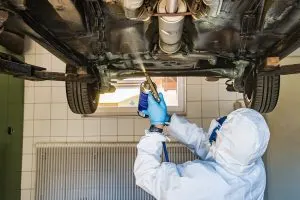
A lot of attention is given to the coating and paintwork of the visible aspects of a vehicle but those unseen places tend to get overlooked. In Indian road conditions, a cars underbody is most prone to corrosion. Underbody coating provides long term protection from corrosion to car’s underbody. It also protects parts like internal body panels, frame rails and other inner cavities that are not physically accessible but are prone to corrosion.
So inorder to prevent we use the part painted with different layers. The different layers are as shown in above figure. Outer of this layer the protective coating is done.
What is the advantages of the undercoating?
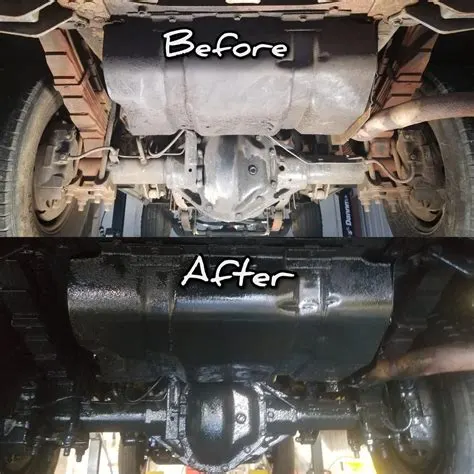
Prevents stone chip damage – A car underbody coating provides a durable elastic over the underbody and wheel arches which protects the substrate from stones, gravel, salt, and other debris which is thrown up by the road.
Protects from corrosion – The automotive coating process consists of at least five layers of protective and decorative paint. However, the underbody only receives the first two layers – the layers that provide the corrosion protection. But if that is the case why would another layer of coating be needed to protect from corrosion? The initial two layers provide corrosion protection, but are not very durable. Stone chip damage may expose the metal itself, leading inevitably to corrosion.
Prevents water ingress – By covering cracks in the paintwork or joints in the undercarriage of a vehicle, moisture or water from humid or wet environments is prevented from creeping into the underbody and causing corrosion.
Minimises sound – The noise of debris hitting a vehicle, or vibrations from the road can be dampened by the application of a car underbody coating. They prevent vibrations and because they are elastic, they make far less noise when struck than the metal underneath.
Is easy to maintain – Giving the undercarriage of a vehicle a uniform appearance means cleaning it down is simpler and so is identifying possible problems.
Types of Undercoating
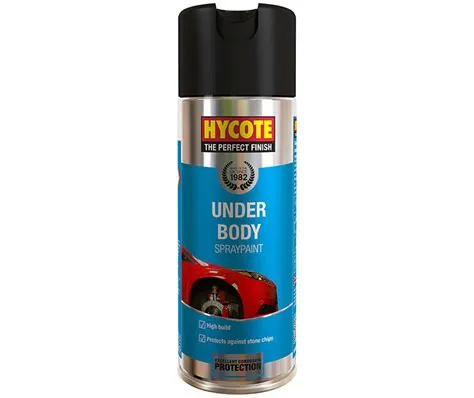
Wax-based: An excellent anti rust coating suitable for all substrates. The wax is applied soft and cures hard, either by brush or spray, and can be layered thickly. It cannot be top coated.
Bitumen-based: These car underbody coatings provide hard-wearing protection against stone chip damage and corrosion. They also have sound-deadening properties. Suitable across many substrates, but cannot be painted over. Can be applied by brush or spray, high build, and good for very tough conditions such as off-road.
Resin-based: Polyurethanes and rubber coating are popular because their elastomeric properties provide long-term stone chip damage and corrosion protection as well as sound deadening effects. These also have the benefit of being suitable for a wide range of substrates and they can be painted over. Can be spray-applied, high build, and particularly good for salted roads.
How to Undercoat
Step 1 – Cleaning the Underbody
You have to remove all debris and contaminants from the chassis to start with the undercoating process. It is another way to maintain your car in routine. You will need a hydraulic hoist or lift to complete this step in the right manner.
Its possible by
Degreaser:
A high-quality commercial-grade degreaser would be helpful in removing oil and grime from the undercarriage. Follow the exact steps listed on the cover or recommended by the manufacturer. Spray the degreaser, then allow it to soak for a moment, then wipe it off with a microfiber towel or shop rag.
Grinding:
Now, grind the existing hard contaminants and rust from the undercarriage and other components that you want to treat. You can use a mild grinding pad to remove the debris easily, but remember to wear eye protection while doing it.
Sanding:
After degreasing and grinding, remove those scratches and other stubborn contaminants using a 200 to 400 grit.
Step 2 – Applying Priming
You will need a primer for applying DIY consumers. Primers serve as a basecoat. You need to follow the instructions listed by the manufacturer for expected results. The recommended primers usually contain a high level of zinc. Zinc helps in reducing rusting, even if the protective layer is penetrated.
Step 3 – Applying Undercoating
This is the final step. The undercoating sprays are similar to bed liners. Most products are applied in two steps as dual layers. The first layer should be thin, covering the entire surface. Allow it to rest at least for an hour
Coating methord
1. Spray
The spray is the most common method used by dealers. The spray consists of a tar-like substance that is applied to the undercarriage. It functions as a barrier for salt, moisture, and oxygen, which causes corrosion.
- Electronic
Removing the electrical current capacity of items underneath the vehicles is another method for applying to undercoat. A weak electric current circulates through the material, reducing the chances of rusting.
- Drip Oil Spray
If you want to do it yourself, then drip oil spray is the best option. This can be messy but incredibly effective at protecting the undercarriage. It covers every nook and corner of the chassis, forming a robust layer of protection.
- Dripless Oil Spray
Coming to the last option, the dripless oil spray. This waxy substance is applied to the body and undercarriage, forming a strong protective layer. It doesn’t take much time to dry; however, the layer can easily wear and tear than the other counter methods.
Undercoating Probs
Nothing comes for free in this world. The same goes for undercoating. The undercoating or rustproofing spray is heavy in pockets.
Undercoating Cons
Oil-based Rustproofing must be reapplied every year for the best results.
The only way for an undercoating to provide ongoing protection for your vehicle is to have the service repeated frequently. Most owners can have a new layer applied each year without worrying about their underbelly being compromised. In salty or destructive environments this is a must! Don’t wait until you have a structural failure or fail a safety inspection. Deal with rust as you would any other maintenance item on the vehicle.
Conclusion
As a final conclusion we can say that, Even though it is expensive , the Underbody coating is a must to make sure the underbody is given a layer of protection from all corrosion and annual clean up and touch up is necessary.