Section Modulus calculation and optimization
- Challenge -
Use the Section from your Hood design and calculate the section modulus using the formula S = I/y
S = Section Modulus
I = Moment of Inertia
y = distance between the neutral axis and the extreme end of the object
Come up with a new section that has improved the section modulus of the previous section and mention what change you made that has increased the strength.
- Section Modulus calculation and optimization
The section modulus is geometric property of the cross section used for designing flexural and beam members. It does not represent anything physically.
Section modulus is a geometric property for a given cross-section used in the design of beams or flexural members. It can be defined as the ratio of total moment resisted by the section to the stress in the extreme fibre which is equal to yield stress.
S = I/Y,
Where
S = Section modulus (mm^3)
I = Moment of Inertia of the section about the bending axis(mm^4).
Y = Distance between the neutral axis and extreme end of the object (mm).
Area moment of Inertia:
The area moment of inertia of a beams cross sectional area measures the beam ability to resist bending. The larger the moment of inertia less will be the bend.
Neutral axis: When beam is subjected to pure bending the top most fibres of the beam are subjected to maximum compression, while the bottom most fibres of the beams are subjected to maximum tension.
- Elastic section modulus
For general design, the elastic section modulus is used, applying up to the yield point for most metals and other common materials.
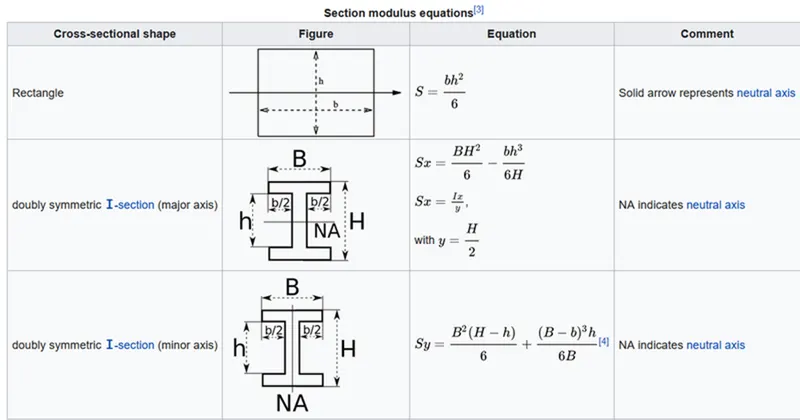
The elastic section modulus is defined as S = I / y, where I is the second moment of area or area moment of inertia(attention it is not moment of inertia) and y is the distance from the neutral axis to any given fiber. It is often reported using y = c, where c is the distance from the neutral axis to the most extreme fiber, as seen in the table below. It is also often used to determine the yield moment (My) such that My = S ⋅ σy, where σy is the yield strength of the material.
- Plastic section modulus
The plastic section modulus is used for materials where elastic yielding is acceptable and plastic behavior is assumed to an acceptable limit. Designs generally aim to ultimately remain below the plastic limit to avoid permanent deformations, often examining the plastic capacity against amplified forces or stresses.
The plastic section modulus is the sum of the areas of the cross-section on each side of the PNA (which may or may not be equal) multiplied by the distance from the local centroids of the two areas to the PNA:
The plastic section modulus is used to calculate the plastic moment, Mp, or full capacity of a cross-section. The two terms are related by the yield strength of the material in question, Fy, by Mp = Fy ⋅ Z. Plastic section modulus and elastic section modulus are related by a shape factor which can be denoted by k, used for an indication of capacity beyond the elastic limit of the material. This could be shown mathematically with the formula.
- Section modulus
Another property used in beam design is section modulus.
The section modulus of the cross-sectional shape is of significant importance in designing flexural. It is a direct measurement of the strength of the flexural. A beam that has a larger section modulus than another, will be stronger and will be capable of supporting greater loads.
It includes the idea that most of the work in bending is being done by the extreme fibers of the beam, i.e. the top and bottom fibers of the section. The distance of the fibers from top to bottom is therefore built into the calculation.
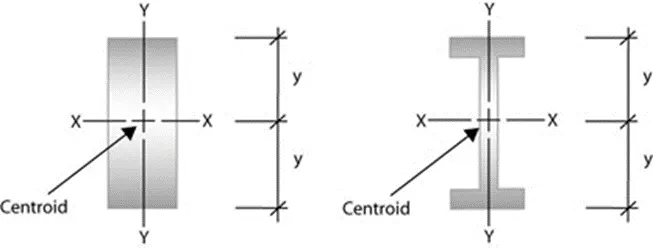
The elastic modulus is denoted by S. To calculate S, the distance (y) to the extreme fibers from the centroid or neutral axis must be found as that is where the maximum stress could cause failure.
- Moment of Inertia
The moment of inertia, also known as the mass moment of inertia, second moment of mass, angular mass or most accurately, rotational inertia, of a rigid body, is a quantity that examinens the torque required for a desired about a rotational axis, it is a kind to know how mass determines the force required for the desired acceleration. It depends on the body's axis chosen and the mass distribution, with larger moments requires more torque to change the body's rate of rotation.Its SI unit is Kg m2.
- CASE 1: Before Optimization
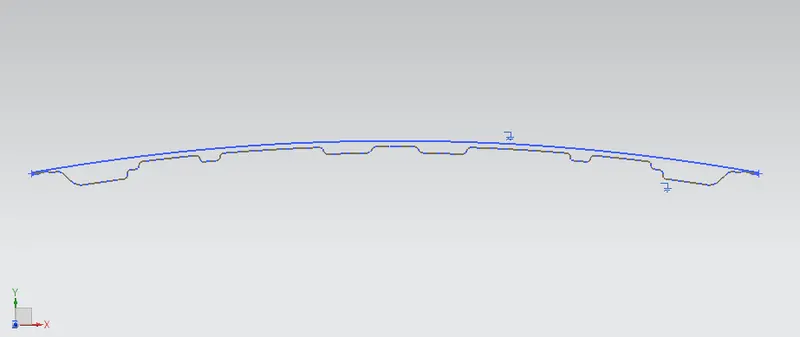
The Hood which is already created is imported and the section inertia analysis is done.
We have to make sure that the curve obtained is a single/closed curve.
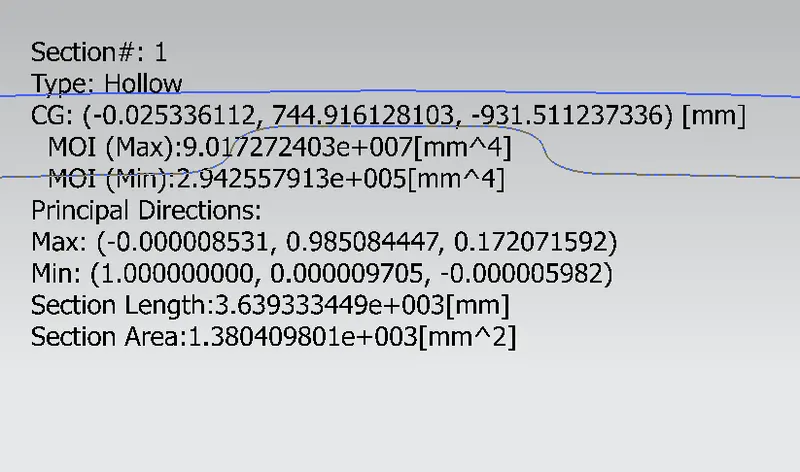
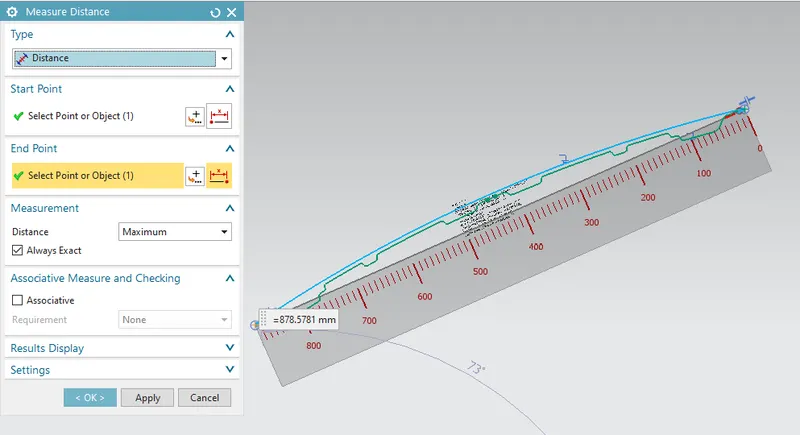
- Moment of Inertia (MOI)max = 9.017272403 x 10^7 [mm^4]
- Moment of Inertia (MOI)min = 2.942557913 x 10^5 [mm^4]
- Distance between the neutral axis and the extreme end of the object, y = 878.5781 mm / 2 = 439.28905 mm
Section Modulus, S = Moment of Inertia (MOI), I / Distance between the neutral axis and the extreme end of the
object (y)
- For Maximum (MOI),
S = (9.017272403 x 10^7 mm^4) / (439.28905 mm)
Smax = 20.52691^4 mm^3
- For Minimum (MOI),
S = (2.942557913 x 10^5 mm^4) / (439.28905 mm)
Smin = 0.06698454 x 10^4 mm^3
- CASE 2: After optimization
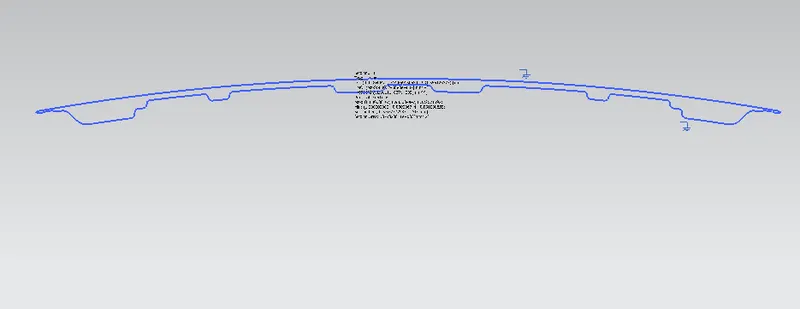
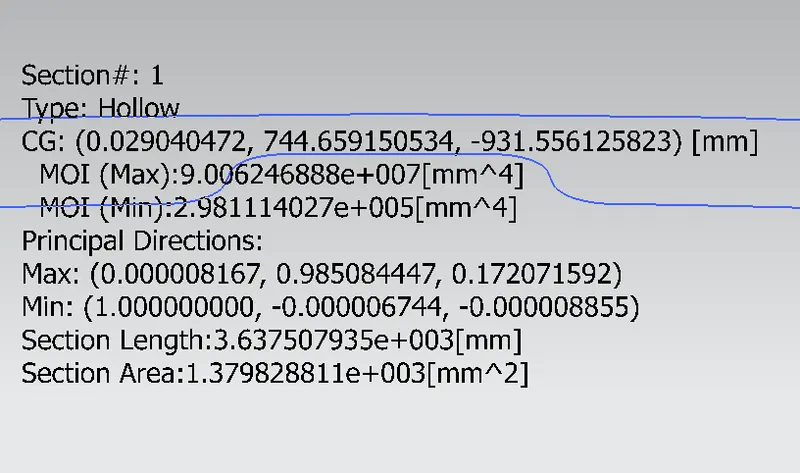
- Moment of Inertia (MOI), Imax = 9.006246888 x 10^7 [mm^4]
- Moment of Inertia (MOI), Imin = 2.981114027 x 10^5 [mm^4]
- Distance between the neutral axis and the extreme end of the object, y = 878.5781 mm / 2 = 439.28905 mm
Section Modulus, S = Moment of Inertia (MOI), I / Distance between the neutral axis and the extreme end of the
object (y)
- For Maximum (MOI),
S = (9.006246888 x 10^7 mm^4) / (439.28905 mm)
Smax = 20.5018697552 x 10^4 mm^3
- For Minimum (MOI),
S = (2.981114027 x 10^5 mm^4) / (439.28905 mm)
Smin = 0.0678622430265 x 10^4 mm^3
- Conclusion: Section Modulus of Hood of the car is counted and section modulus optimized with some changes for some better results.
- Comparing case 1 & case 2,
- The section modulus value of case 1 is lower than the case 2.
- As we increase the section area, the moment of inertia & section modulus increases that means material load and strength also increase.