Project - Analysis of a practical automotive wiring circuit
Q1=Identify each of the major elements in the above automotive wiring diagram.
Ans=the major elements in the above automotive wiring diagram.
1] Fuse
2] Battery
3] Starter
4] Earthing
5] Generator
6] Current and voltage
7] Regulator
8] Distributor
9] Junction block
10] All switches
11] Breaker
12] Horan
13] Ignition coil
14] Ignition switch
15] Fuel gauge
16] Gas tank unit
Q2=Explain the purpose and working of any three elements briefly.
Ans=
Fuse=
-working
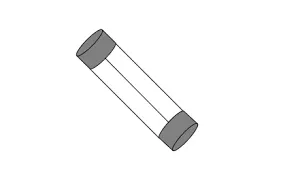
To guarantee the supply in the power system, it is very important to keep the supply system healthy. So in this context we have many types of protective systems in the supply systems. So that our supply can make the supply circuit alive on meeting any kind of fault. Fuse is one of these safety devices.
There is a small metal wire in the fuse. When overload condition occurs in the circuit, the value of current in the circuit increases excessively and when this excessive current passes through a small thin wire, heat is generated in the fuse wire according to Joule's law (I2Rt). And the fuse wire melts. Due to which the connection of the circuit to the load is cut off. Thus our faulted section is separated from the healthy section.
The fuse wire should be of low melting point so that in case of fault, it melts quickly and breaks the circuit.
Fuse wire should be of low resistance and high conductivity. Therefore, silver is the best metal for this, but silver metal is very costly, so its use is almost negligible.
For circuits less than 10 amperes, fuses made of an alloy of lead and tin are used. 63% tin and 37% lead are used in this.
Fuse behaves like inverse-current characteristics. In this when the value of fusing current increases. And the timing of circuit breaking decreases.
The cost of fuse should be reduced. Such as copper, tin & lead fuse.
-purpose
Fuse is a protective system. Which is applied in the main circuit. It is applied in series order in the main circuit. It is connected in series to the face wire of the main circuit
When there is excessive voltage fluctuation in the circuit, it protects our circuit from this fluctuating voltage.
Battery=
-working
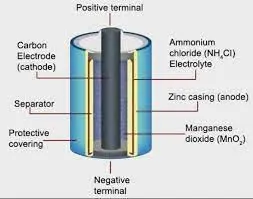
Battery is an energy storage device which is made by connecting many cells. Electro Chemical Reaction takes place inside the Cells (Battery Cells) which convert Chemical Energy into Electrical Energy. These Electro Chemical Reactions are caused by the ions present in the chemical. Cathode and Anode are two types of plates present in each cell which help in the flow of electrons. In this way, we can extract energy from a cell. In this way a battery is made by connecting one cell to another cell in parallel or series. The chemicals present in the cell do not generate energy until the circuit of its positive (cathode) and negative (anode) terminals is completed.
There are two terminals in the battery - Positive Terminal (+) and Negative Terminal (-). In this we can extract energy from the battery by adding our load. The flow of electrons inside the cells is from negative to positive, but the current in the circuit is from positive to negative. In this way the Output Current and Voltage are measured from the battery.
First of all divide the battery into two types – Primary Battery and Secondary Battery. Primary Battery is the kind of battery which is used once and thrown away (Use & Throw). It is also called Non-rechargeable battery. For example - clock cell. Wherein Secondary Battery, such a battery which can be repeatedly charge-discharged. It is also called Rechargeable Battery. Such as Inverter Battery, Car Battery, Lithium Battery
-purpose
- The main purpose is to provide an electric current to the electric-powered starting motor, which in turn starts the chemically-powered internal combustion engine that actually propels the vehicle.
- the battery also provides power to the other elements like AC, lights, and so on other elements to run.
- the battery can store energy and supply the energy when needed.
- the battery can continuously supply surge current to the circuit.
Earthing=
-working
Earthing means that the neutral point of the supply system and various types of equipment used in the electrical system such as fridge light fan charger distribution board etc. have to be connected to the ground through a copper wire so that any type of fault condition Pass the leakage current generated in the earth directly and avoid any kind of danger. It is a kind of production system which always protects us.
When we do earthing of any electrical equipment, then the outer part of that equipment which normally should not have electric charge but if due to some fault condition electric charge comes on it. That charge or electric current goes directly to the ground through the earth wire. Due to which the electric charge in its outer part becomes zero and electric shock is avoided.
-purpose
When we do earthing of electrical equipment, then the voltage of the outer part of that equipment is always equal to the potential of the earth, that is, it remains zero. There is no fear of electric shock.
When a fault condition occurs due to earthing, then the leakage current goes directly to the ground through earthing, due to which the value of leakage current increases. Due to which the leakage relay, fuse, MCB etc. in the electrical system works properly and causes the power supply to trip.
Q3=If the total load is 10A from battery, what should be the fuse rating?
Ans=
Ans=
1] Parking lamp
2]Horn
3]Sealed beam
4] Tail stop
5] dome light
6] Plastic light
1] ammeter
2] Fuel gauge
3]dome light switch
4] stop light switch
5] basically all the switches
the sender in the gas tank unit varies its resistance according to the amount of fuel in the tank, and 'sends' a small electrical current to the fuel gauge.The two components are connected in series so that the varying resistance in the sender will affect the position of the needle on the gauge.similarly, for all switches, switches used to on or off the circuit means they should connect in series so that circuit will complete.