Project
AIM : To carry out a system level simulation of BAJA ATV
OBJECTIVES :
To analyse all components and understand the relation and flow between blocks.
To understand the different type of ways to model this BAJA ATV.
CONCEPT :
An ATV is a small motor vehicle with 3 or 4 low pressure tires designed for various type of terrains. Recreational activities in deserts are usually carried out in ATV's . Thhis project is in refernce to one of the type of ATVs used In BAJA SAE competetions.
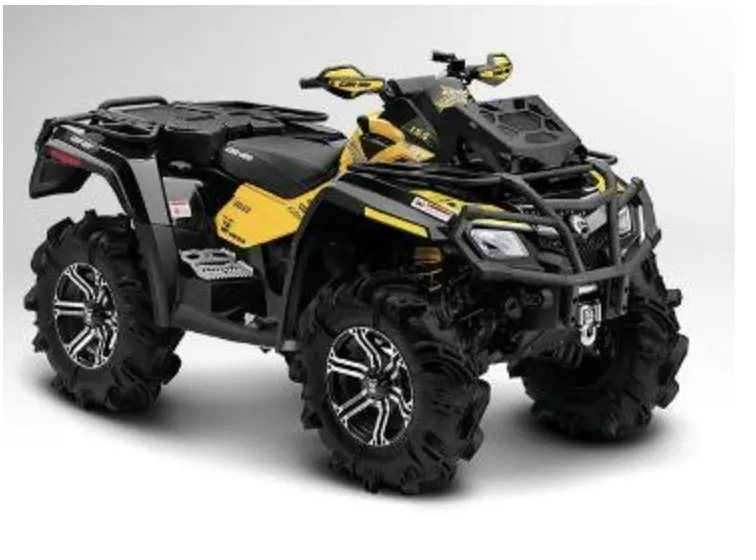
BAJA ATV model ;
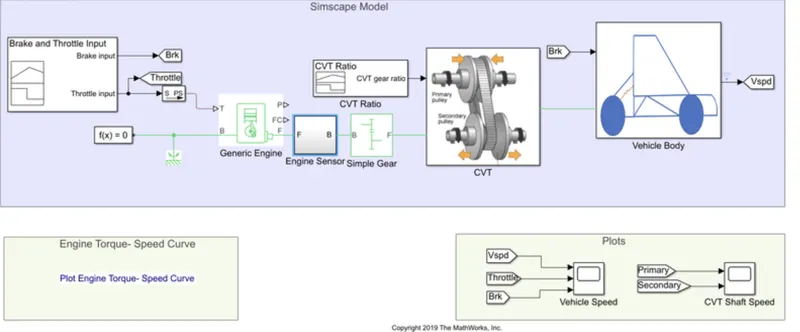
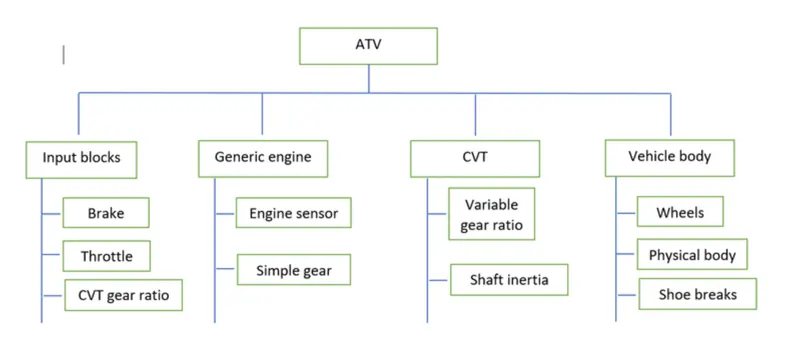
From this model the components present are
Continously Variable Transmissiom (CVT) : 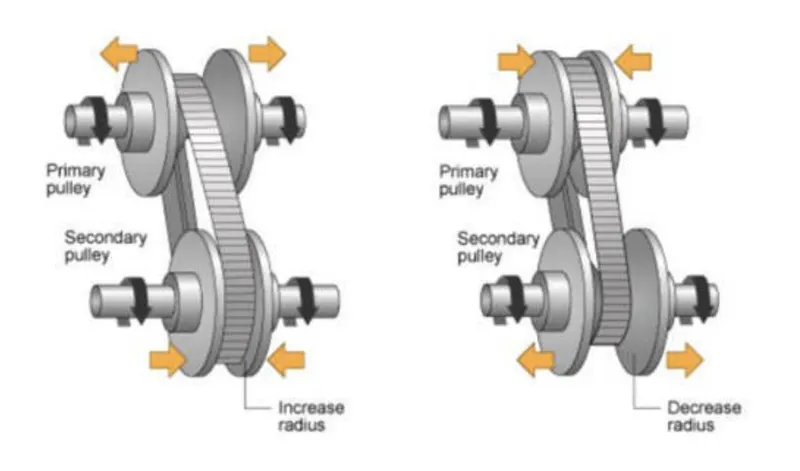
As evident in the media above, 2 cone shaped pulleys Connected by a steel or composite belt whose diameter is a continuously variable work together to provide infinite gear ratios. Optimising engine speed in a variety of road conditions according to the speed and torque requirements of the terrain.
Differ from automatic transmissions in the sense that there aren't gears the vehicle needs to step up or down to for different speed/torque requirements. Similar to automatic transmissions in the sense that the gears are shifted automatically.
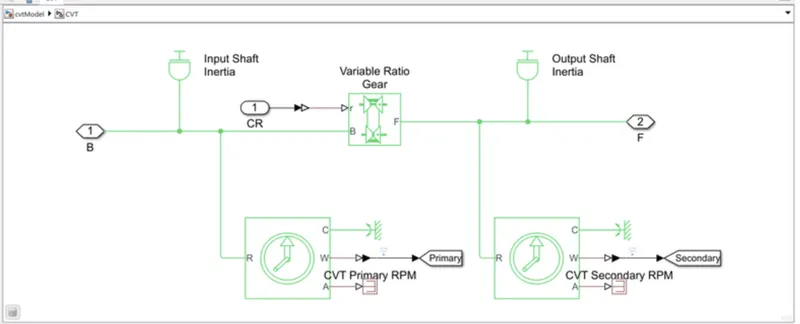
CVT Subsystem Block :
The input and output shop inertia represent primary driver and secondary driven Pullley .
The variable ratio gear Block represents the multiple gears of the CVT with gear ratio input given to portR
Two rotational motion sensors are for tracking the angular velocity is of the two pulleys.
Vehicle Body SubSystem Block :
The vehicle body accounts for body mass aerodynamic drag Road incline, and weight distribution between axis due to acceleration and road profile. The double shoe brake is to apply brakes to the rear wheels with this component 2 break blocks are applied at opposite ends of the drum. This prevents an unbalanced force from acting on the shop and bearing connecting the drum to the wheel which would be the case with a single shoe brake
All of the above is applied to the four wheels
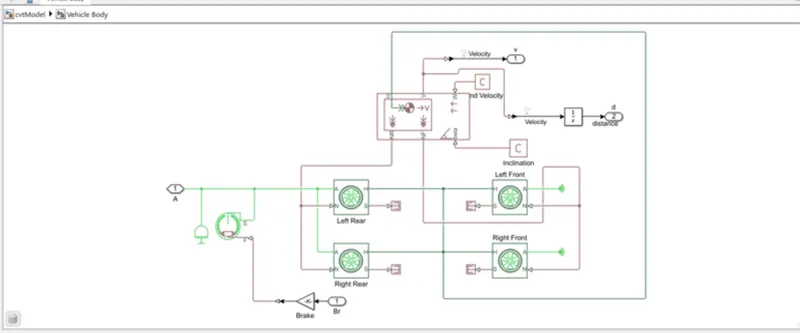
The vehicle body accounts for body mass aerodynamic drag Road incline and weight distribution between axis due to exploration and road profile. The double shoe brake is to apply brakes to the rear wheels. With this component to break blocks are applied at opposite ends of the drum. This prevents an unbalanced force from acting on the shop and bearing connecting the drum to the wheel, which would be the case with a single shoe brake.
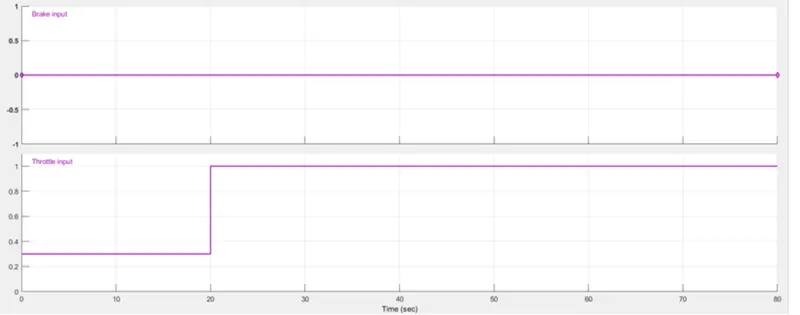
Brake and throttle input signals : A signal buildr is used to give input for brakes and throttles.
CVT input :
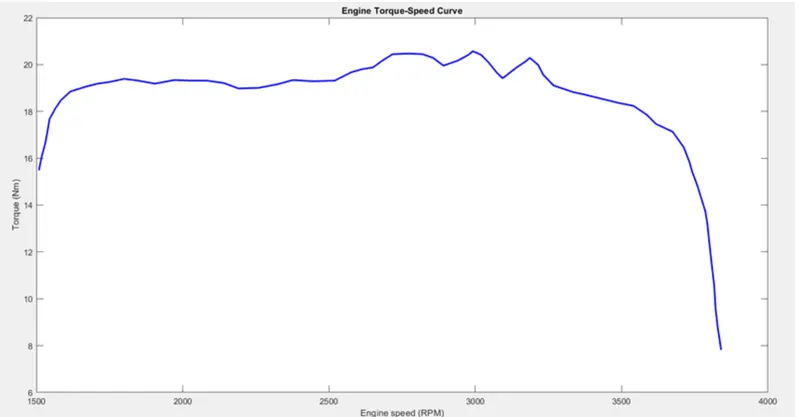
The engine uses a programmed relationship between speed & torque, modulated by the throttle signal. The throttle input seen above and the speed torque data points are extracted from graph shown below and fed into the engine throgh the creation of column vectors in matlab. Crankshaft is connected to an engine sensor, which simply senses the angular velocity and angular displacement of the crankshaft.
the simple gear between engine and the CVT gear box is to slow down the engine RPM before it is fed to CVT. An appropriate gear ratio needs to be selected so that over or under revving isnt an issue.
Thae graph below is torque vs engine speed curve
OUTPUT :
this is vehicle speed output based on throttle & brake signals.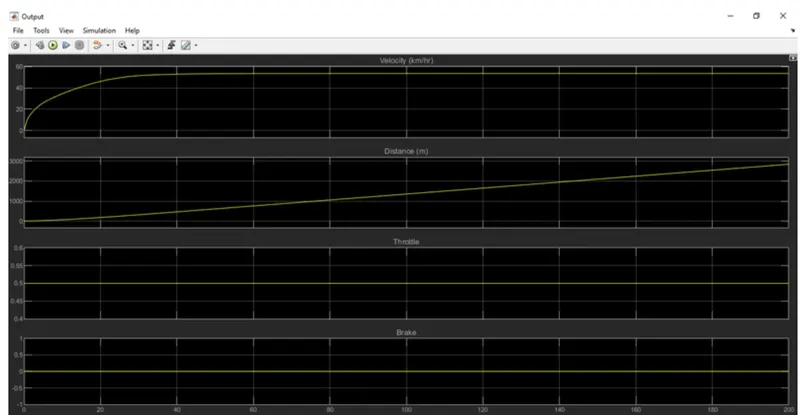
CASE 2- Simulink model using dashboard
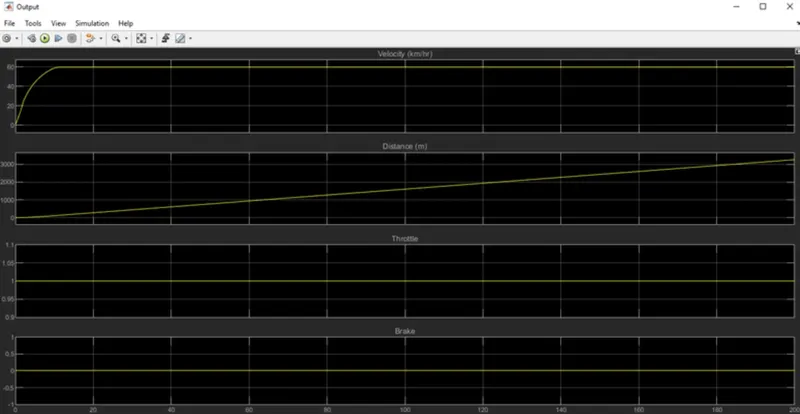
From the above graph it can be seen that velocity increases considerably when throttle is 1 and brake is 0.
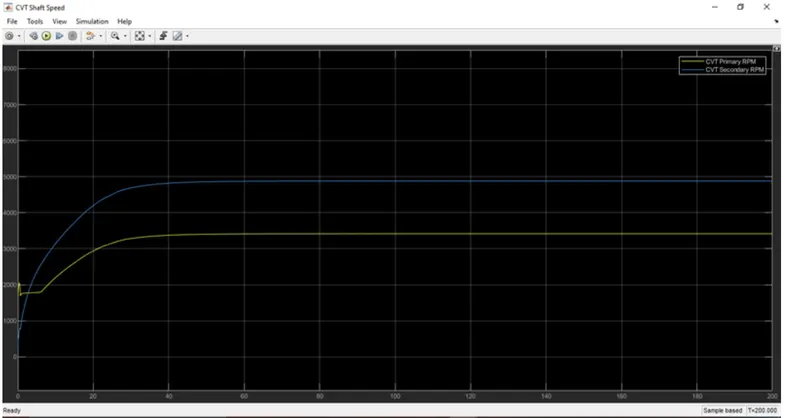
CVT shaft speed :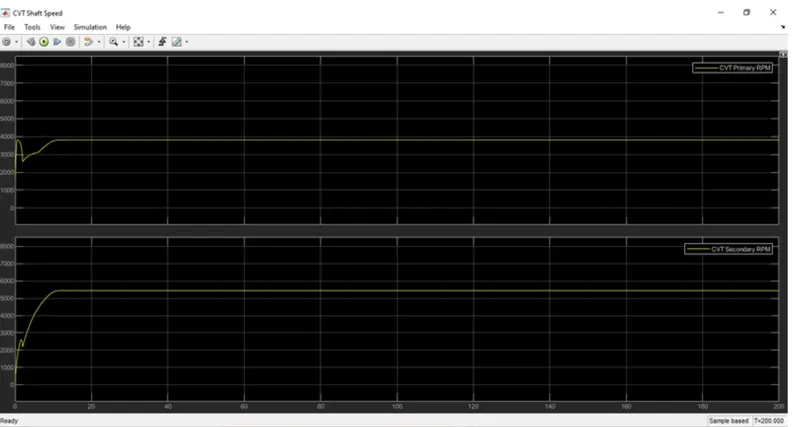
STUDY 2 :
Simulink Model with Lookup table
CVT BLOCK :
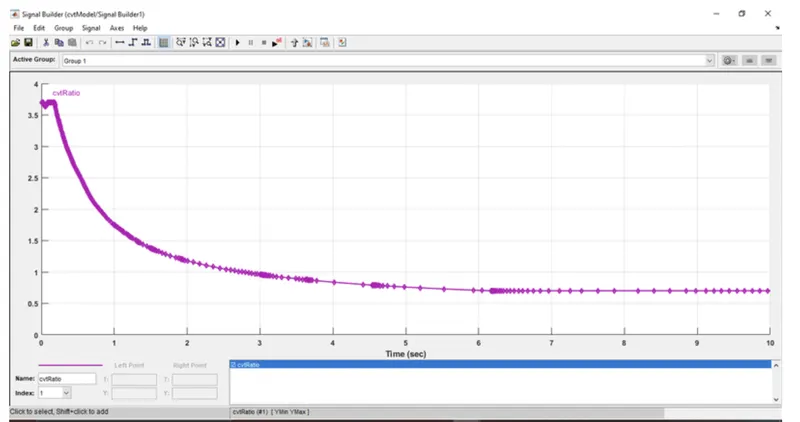
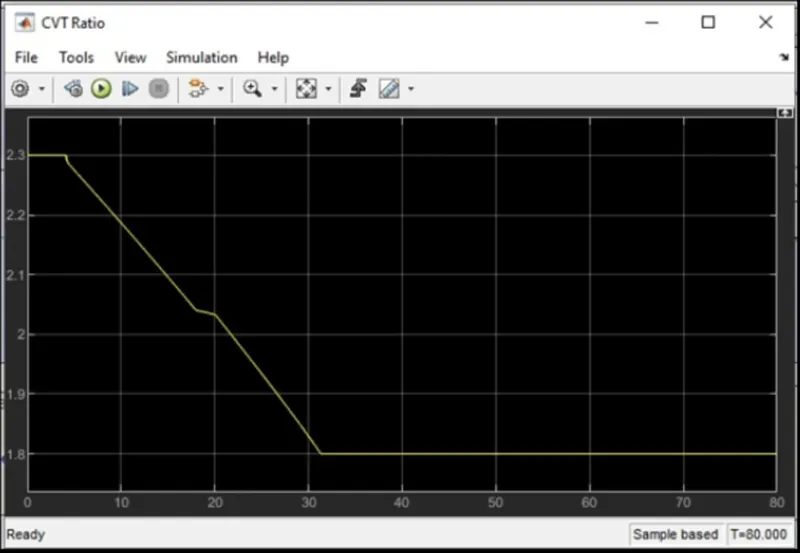
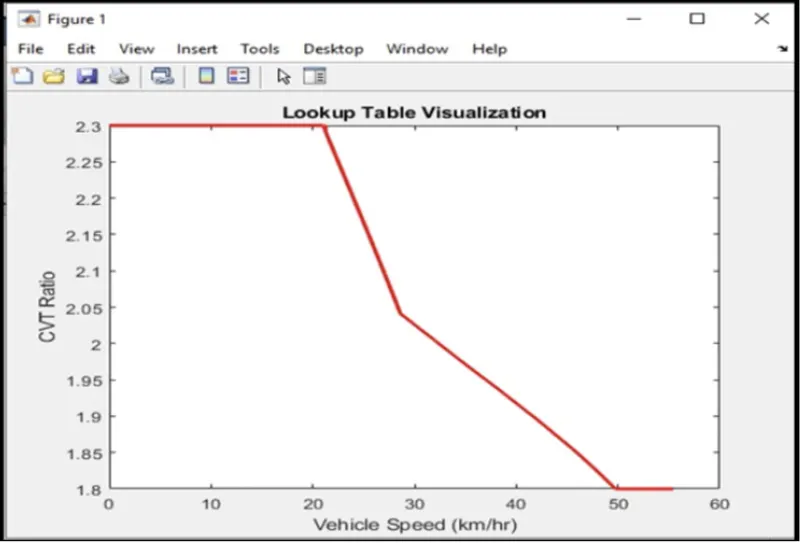
Here the gear ration input to CVT is provided using a lookup table.
CVT shaft speed output based on CVT gear ration input.
Lookup Table Visualization :
CONCLUSION :
We have sucessfully analysed BAJA ATV with CVT and rcoreded ouputs (Vehicle velocity and shaft RPM) wrt to variation in input throttle and brake.