Project-1: Powertrain for aircraft in runways
AIM :
Part A:
1.To Search and list out the total weight of various types of aircrafts.
2.To find Is there any difference between ground speed and air speed?
3.To know Why is it not recommended to use aircraft engine power to move it on the ground at Airport?
4. How an aircraft is pushed to runway when its ready to take off?
5.To Learn about take off power, tyre design, rolling resistance, tyre pressure, brake forces when landing.
Part B:
6. A. With necessary assumptions, calculate the force and power required to push / pull an aircraft by a towing vehicle.
B. Develop the model for the calculated force and power using Simulink.
7. A. Design an electric powertrain with type of motor, it’s power rating, and energy requirement to fulfill aircraft towing application in Simulink. Estimate the duty cycle range to control the aircraft speed from zero to highest. Make all required assumptions. Prepare a table of assumed parameters. Draw a block diagram of powertrain.
(Hint :DC7 Block)
B. Also, Design the parameters in excel sheet.
OBJECTIVE (1) To Search and list out the total weight of various types of aircrafts.
• Weight is a major factor in aeroplane construction and operation.
• Accessing it reduces the efficiency of an aircraft in the available safety margin it an emergency situation arises.
• The total weight is the maximum takeoff weight it is the maximum mass at which the aircraft is certified for take off due to structural or other limits.
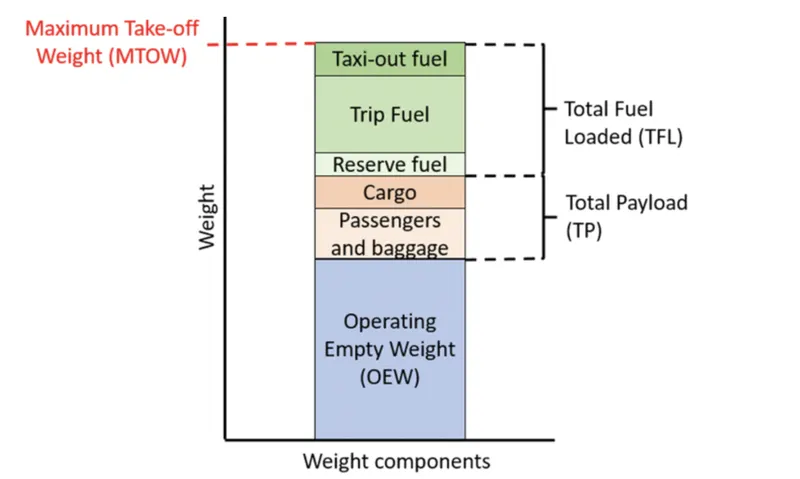
MTOW = minimum take weight
MLW = max loading weight
TOR = Take off run
LR = landing run
Type MTOW(kg)
ANTONOV AN 225. 640,000
AIRBUS A380-800 589670
BOEING 747-8F 447700
BOEING 8F 443613
BOEING 747-400ER 412770
DOUGLAS DC-8-32. 140,000
TUPOLEV TU-154M 104,000
ATR 42-500 18,600
LEARJET 75 9752
CESSNA CITATION CJ14. 7761
OBJECTIVE(2) : Is there any difference between ground speed and air speed?
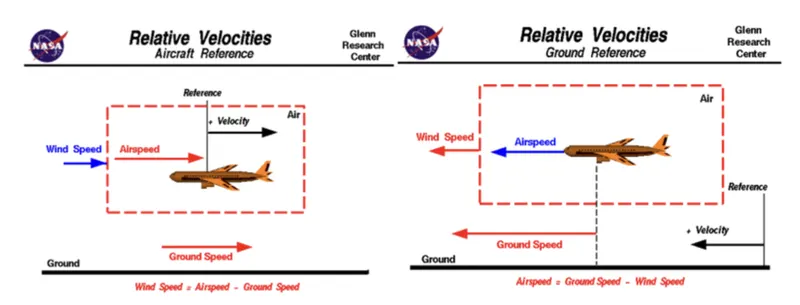
Ground sped ;
•Ground speed is the horizontal speed of an aircraft relative to the ground.
•An aircraft heading vertically would have a ground speed to 0. Ground speed can be determined by the vector sum of the aircraft is true is speed and current wind speed and direction; a headwind subtract from the ground speed while tailwind add to it.
•Winds at other angles to the heading will have components of either headwind or tail wind as a crosswind component.
Wind speed :
•For a reference point on the ground the air moves relative to the reference point at the wind speed.
•A positive velocity is defined to be in the direction of the aircraft's motion. We are neglecting crosswinds which are perpendicular to the flight path but parallel to the ground and updrafts and downdrafts which are perpendicular to the ground.
Airspeed :
•The important quantity in the generation of lift is the relative velocity between the object in the air, which is called the airspeed.
• Airspeed cannot be directly measured from a ground position but must be completed with a brown speed and the wind speed. Where is speed is the vector difference between the ground speed in the wind speed.
Airspeed ground speed-wind speed :
• The aircraft usually operates on land as well as in air and so we need to study the difference of speed in ground and air.
• The ground speed and the airspeed usually changes based on the wind component. If we consider that there is no wind component and sound speed is equal to air speed. In the wind is blowing in the tail direction of the aircraft in(airspeed> ground speed) so airspeed = ground speed+wind component
• In the wind is blowing in the head direction of the aircraft then,(airspeed
• Also gravity will play a More major role in increasing order of speed while its descending.
• Wind speed is the letter a difference between Ground and electric on a particular day the windspeed may be zero and it is equal to the ground speed. It is the measure air speed is greater than the observed ground speed the windspeed becomes positive.
OBJECTIVE(3) - Why is it not recommended to use aircraft engine power to move it on the ground at Airport?
• Aircraft and move using their own engine power all the time on the airport and taxes under their own power to go towards runways and after landing taxi to the assigned get.
• But the trust produced resulting Jat last might cause damage to the terminal building or equipment. Engine is close to the ground also blow sand and debris forward and then suck them into the engine, causing damage to engine.
• A push is there for the preferred method to move the aircraft away from the gate, and it can also reduce the cost for fuel.
•Taxxing can save money.
• Effectively a loss of control can happen especially during high power engine running damage can occur to the aircraft itself other aircraft nearby or to air side structures.
• There is a risk of injury to ground support personnel who may be in relatively close proximity to the aircraft.
• It is easier for truck driver to see the surrounding is better than the pilot sitting in the cockpit with limited window. The pushback driver knows the airport better than the pilot.
• It also saves fuel in which pushback truck will move the aircraft all the way to runway to say fuel and reduce impact of environment
• The plane engines are very loud when more than one plane will add up to the sound and it will not be pleasant for passengers and others near airport.
OBJECTIVE(4) - How an aircraft is pushed to runway when its ready to take off?
Taxxing :
Taxing is the moment of an aircraft on the ground under its own power, in contrast to towing or push back where the aircraft is moved by a tug. The aircraft usually moves on wheel, but the term also includes aircraft with skis or floats. An airplane uses taxiways to taxi from one place to an airport to another , for eg: when moving from hangar to runway.
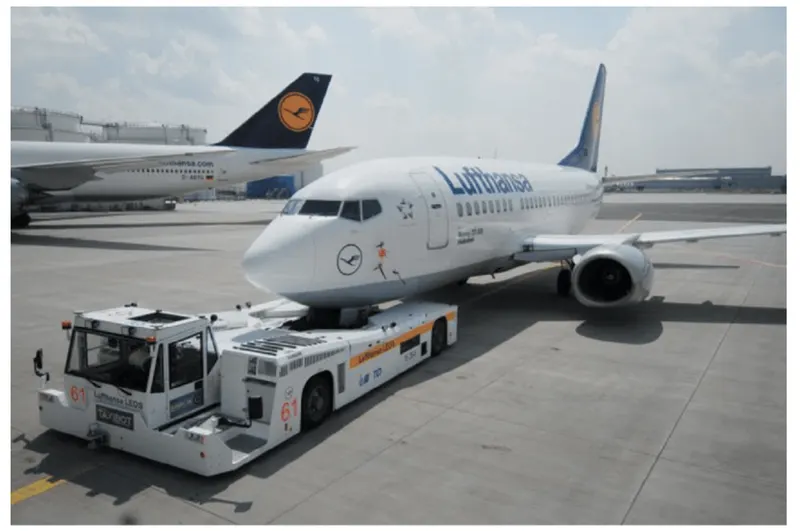
Towing: ‘
• Movement of large aircraft about the airport, flight line, and hangar is usually accomplished by towing with a tow tractor.
• In the case of small aircraft some moving is accomplished by hand pushing on the correct areas of the aircraft. AirDrop me also be taxied about the flight line but usually only by certain trained person.
• Towing Aircraft can be a result is operation causing damage to the aircraft and injury to the person if done recklessly or carelessly.
• This article outline the general procedure for towing aircraft. However, specific instructions for each model of aircraft are detailed in the manufacturer’s maintenance instructions and are to be followed in all instances.
QUESTION (5) - Learn about take off power, tyre design, rolling resistance, tyre pressure, brake forces when landing.
Take off power:
Takeoff power can be predicted using a simple measure of the acceleration of the aircraft along the runway based on force equilibrium.
The forces involved are,
T is thrust of propulsion system pushing aircraft along the runway.
D Facebook aerodynamic drag of vehicle resisting the aircraft motion
F is the rolling resistance friction due to contact of bills or skids on the ground.
During the takeoff from the imbalance in this process will produce an acceleration along the runway.
m*(dv/dt) = T-D-F
Where d/dt is acct along runway and m is mass of aircraft.
The procedure for takeoff will be that the vehicle will accelerate until it reaches a safe initial flying speed. The pilot and then rotate the vehicle to an altitude to produce a client lift and it will ascend from the ground. The determination of this save my speed or rotation speed V is a critical factor in determining take of performance.
Take off rules vary slightly depending on the aircraft category.
For small commuter aircraft
V = 1.1 * VSTALL
Or V = 1.05 * Vcontrol
Vstall = sq rt (W/0.5Clmax* rho*S)
Where S = runway length
Take off power = force * displacement
(m*dv/dt) .2. S1 = (T_D-F) *S1
Tyre design:
• Designing aircraft tires is a very intense undertaking undertaking . The tyre is designed to withstand heavy loads while landing , take off, taxing and parking.
• The number of wheels required for aircraft increases with the weight of aircraft, as the weight of the aircraft needs to be distributed more evenly.
• Aircraft tyre generates more heat during landing, as aircrafts drags the wheel until they match rotational velocity of wheels.
• Due to this heat generates. Aircrafts tread pattern is designed to facilitate stability in high crosswind conditions, to channel Water away to prevent hydroplaning and for braking effect.
Constructin of Tyre :
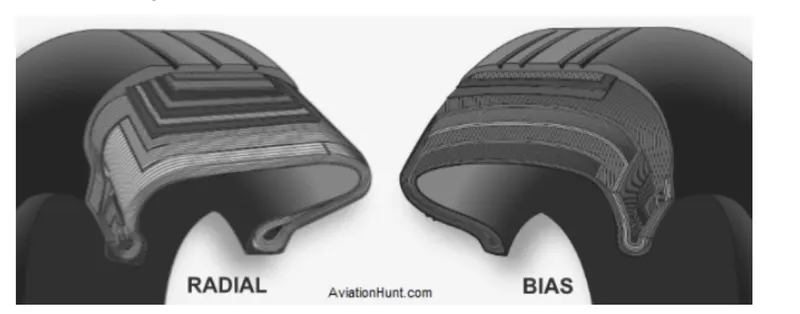
Radial tyre :
• it has a fibre strands of the fly fabric oriented at 90° to the direction of rotation and the tire sideawll. This let's fix flexibility by directional in the flexibility of the side wall while it strengthens the tire to carry heavy loads.
• Due to their unique construction More should radial tyres resistant to penetration and cuts. Due to stiffer tread they distribute weight evenly. Does providing greater traction. Radial tyres have an advantage in term of reducing the heat better.
Bias-ply Tyre :
• It has the fabric bias oriented with and across the direction of rotation and the side wall. Since fabric can stretch on the bias the tire is flexible and can absorb loads.
• Tire strength is obtained by adding plies. It is cut resistance inside one area the styles do not offer as much sun is in terms of riding quality.
Rolling Resistance :
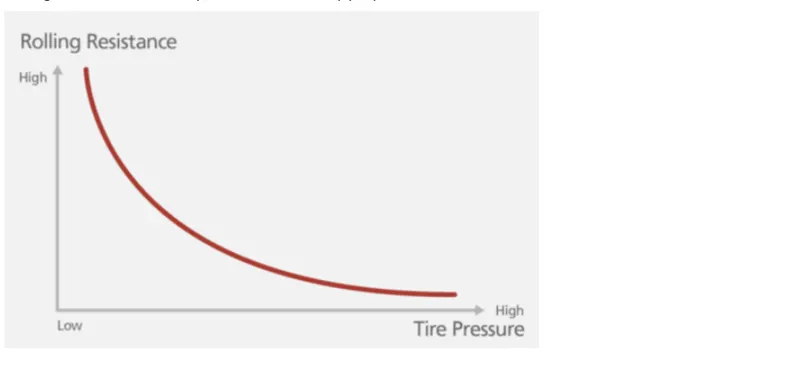
Rolling resistance is the force resisting the motion when a body rules on a surface. Resistance can be seen in the air from when the aircraft takes off from the runway and while landing on the runway with the help of the wheels.
Rolling resistance can be expressed as For = mu.r.r.g(N)
Where,Frr = rolling resistance
rr*mu = coefficient of rolling resistance
M = mass
G = accn due to gravity = 9.8m/s
Tyre pressure :
• Aircraft tires operate at such high extreme pressure load and speed that care and service is critically important.
• The most important action and operator can take to prevent tire related events is to maintain proper tire inflation pressures. Feeling to keep aircraft tires properly inflated can lead to a very serious consequences.
• One relatively easy way to help avoid this consequences is to check tyre pressures regularly and service them as necessary. Following this action it is a very good me to make sure we get the most value out of a tires and contribute to the safe operation of the aircraft.
Relation to rolling resistance and tyre pressure :
Braking force during landing :
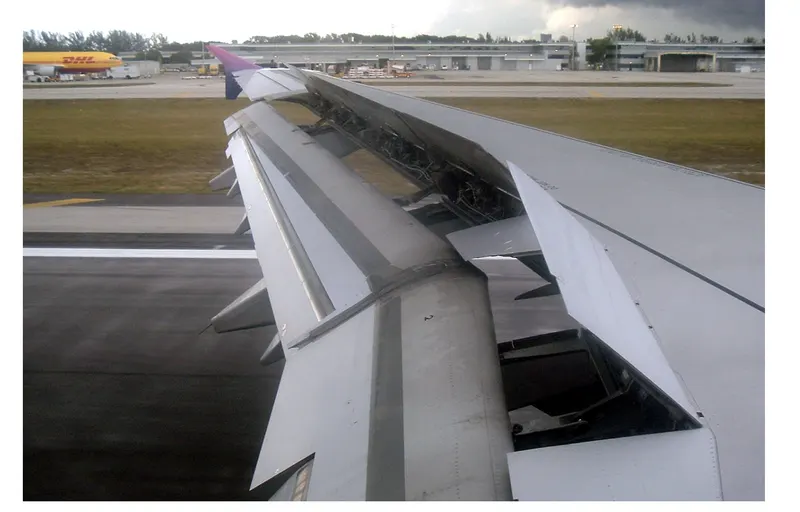
Following braking devices are used to decelerate the aircraft -
- Spoilers
- Wheel brakes
- Reverse thrust
- Spoilers - the mechanical defection of parts of the wink upper surface by increasing aerodynamic drag on the moving aircraft. This can be achieved by rising upper wing surface panel called ground spoilers or by operation of a tail cone clamshell type a break and also by increasing the effective download load on the landing gear and thereby increasing the efficiency of wheel breaking.
Wheel Brakes :
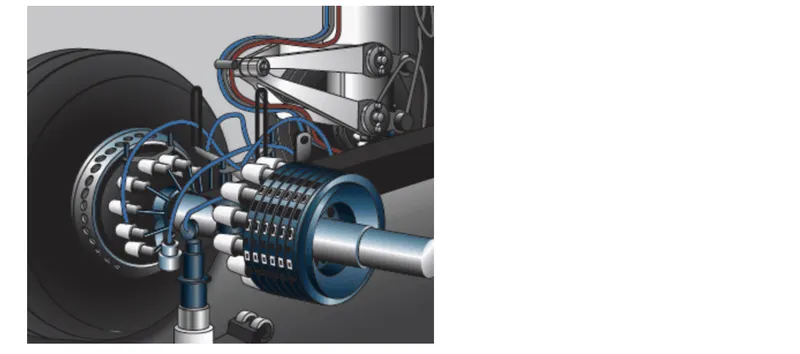
To be effective breaking action at any speed depends upon sufficient friction existing between the tire in the runway surface achieve through freely rotating wheels.
Anti Skid system :
When landing on slippery runways there is a chance that the wheels may starte to skid as the brakes are applied. To prevent this from happening and to maintain maximum effect of breaking each wheel has antiskid protection. Using a variety of sources to determine the aircraft speed the brake units know how fats is the wheels should be spinning. If that speed drop significantly it's because the current break pressure on that it is too great and wheel is just kidding over the surface.
In this situation the antiskid system automatically reduces the breaking on that wheel to a point where the skid stops before applying the pressure.
Reverse thrust :
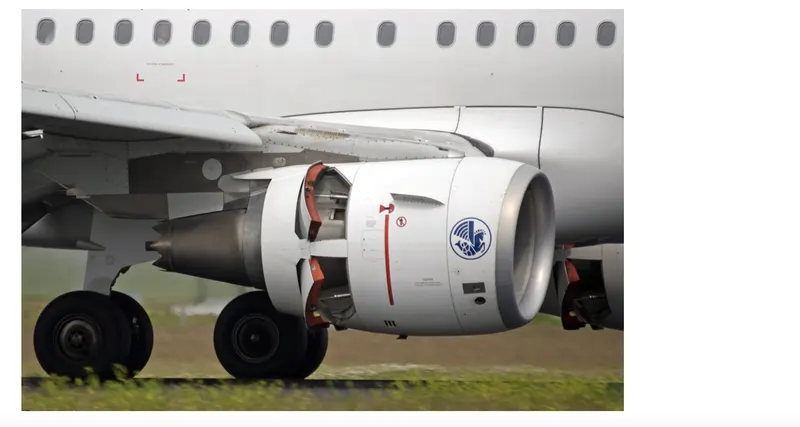
Thrust reverses provide a deceleration force that is independent Force that is independent of runway condition. Thrust reverser efficiency is higher at high air speed . Treversers must be selected as early as possible after touch down.
Thrust reversers should be returned after reverse idle at low airspeed to prevent engine stall or foreign object damage.
OBJECTIVE (6A) - With necessary assumptions, calculate the force and power required to push / pull an aircraft by a towing vehicle.
Considering,
Total mass of aircraft for airbus a380 = 575,000kg
Mass of the push block = 1000kg
Rolling resistance (Frr)
Coefficient of rolling resistance(Crr) = 0.002
Rolling resistance force is given by, Frr = Crr*m*g
For the aircraft: Frr = 0.002 * 575000* 9.81 = 11281.5N
Frr = 11.2815KN
For the towing vehicle, Frrt = 0.002 * 1000 * 9.81
Frrt = 19.62N
As the towing vehicle assistance is so less compared to a craft because this is a heavy aircraft so these can be neglected
Aerodynamic resistance (F ar):
Drag coefficient (Cd) = 0.025
Air density (rho) = 1.125kg/m^3
Frontal are (A) = 150m^2
Velocity (V) = 14.5kmph or 4m/s
F ar = 0.5 * Cd * rho * A *V^2
F ar = 0.5 * 0.025 * 1.125 * 150 * 4^2
F ar = 33.75N
As the vehicle and plane is moving at a very low speed aerodynamic resistance can be neglected,
Hill Climb Resistance :
Runways are constructed flats so hill climb force is neglected
Total Resistance :
Ft = 11.2815KN
Power required :
P = Ft * V
P = 11.2815 * 4
P = 45.26KW
The minimum power required by the tow vehicle is 45.26KW to taxi a heavy aircraft at 4m/s
OBJECTIVE (6B)- Develop the model for the calculated force and power using Simulink.
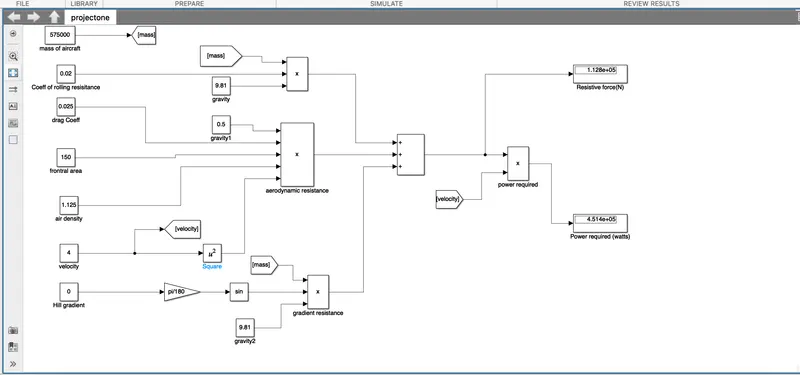
Google drive link for simulink model :
https://drive.google.com/file/d/1rK2Abm-m5T4zaHw4TtyOp02YjCtIO-_7/view?usp=sharing
OBJECTIVE(7) - Design an electric powertrain with type of motor, it’s power rating, and energy requirement to fulfill aircraft towing application in Simulink. Estimate the duty cycle range to control the aircraft speed from zero to highest. Make all required assumptions. Prepare a table of assumed parameters. Draw a block diagram of powertrain.
Estimation of duty cycle :
Based on calculation from question 6
The power required is 45.26KW
Motor considered for the drive train is REB 90
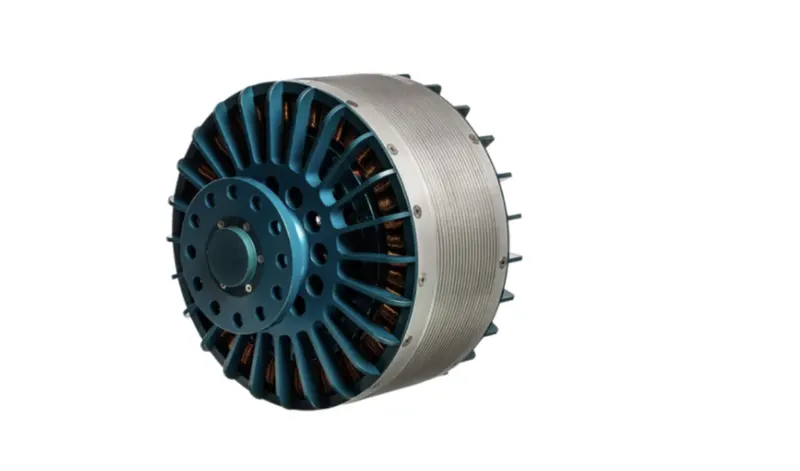
DATA :
Type : REB 90
Voltage : 400-800V
Peakk power = 60-70KW/80KW
Working rotation : 1500-4000rpm
Max torque = 300Nm
Weight = 22000g
Cooling = Air/hybrid (air+fluid)
Considering 60KW as continuous power, so the voltage will be 400v
Battery power is considered to be 550v
Duty cycle is given by Vo/ Vb
Vo = motor required voltage
Vb = Battery voltage
d= 400/550 = 0.7272
As there will be losses due to resistance at FET and inductance
Correction factor is considered to be 90%
As there is 10% loss, the voltage demanded by the motor should be 10% more then required
d= 0.7272 * (1+0.1)
d=0.799
So the voltage demand should be around 440V from battery.
Assumed Parameters
Mass of aircraft = 575000kg
Mass of push back truck = 1000kg
Coefficient of rolling resistance = 0.002
Drag coefficient = 0.025
Air density = 1.125kg/m^3
Frontal Area = 150m^2
Velocity = 4m/s
Uphill gradient = 0
Battery voltage = 550v
Correction factor = 0.8
Block Diagram :
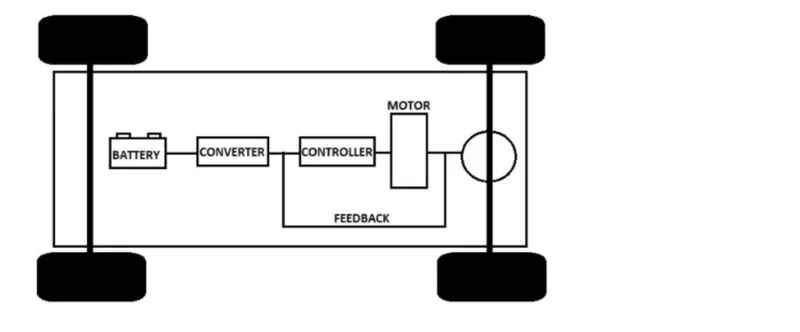
Simulink Model :
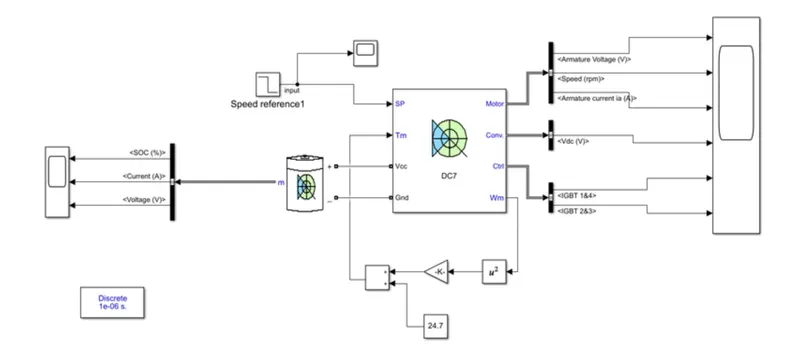
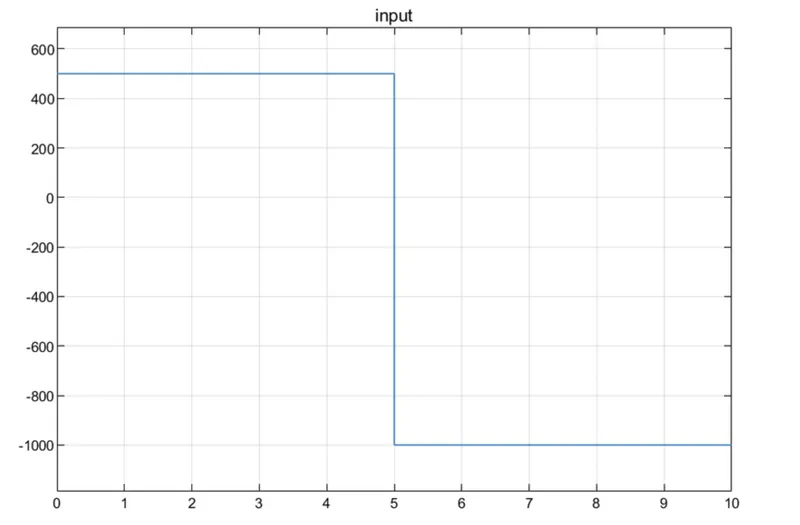
Input :
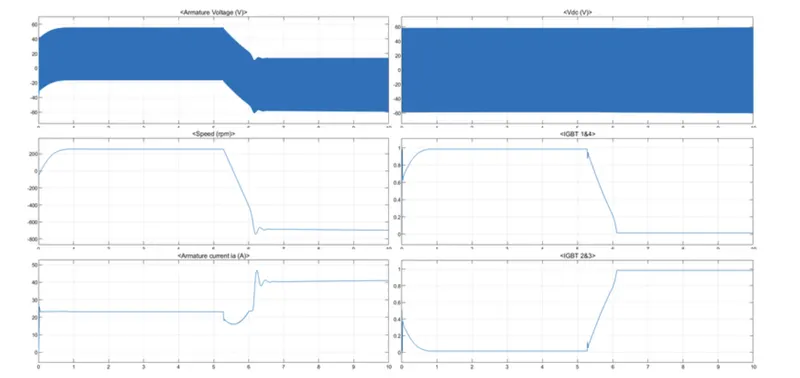
OUTPUT :
From the Motor
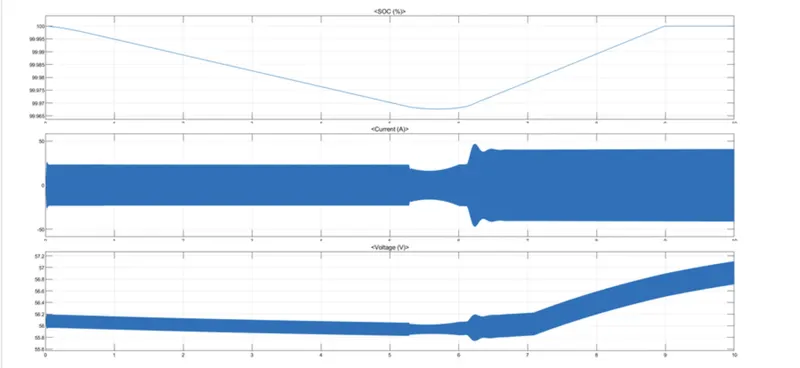
Output From Battery :
OBJECTIVE (7B) - Also, Design the parameters in excel sheet.
Google drive link :
CONCLUSION :
We have achieved all our objectives.