Project 1
# OBJECTIVES:
To develop a forward-based fuel consumption model of a conventional model of aconventional vehicle using matlab and simulink to analyse data and generate plots.
#THEORY:
- In a conventional vehicle the power is genetared by an internal combustion engine taht converts the chemical enenrgy of fuel into the mechanical energy.
- This mechanical energy comming out from the engine is then utilised to perform the rotatinal operation of the wheel.
- The efficiency of an IC engine is calculated as the ratio of work don e to the energy supplied to the engine.
#Model:
- A matlab code 'project_initfile.m' is provided to load the variable to the workspace.
- .In this project , a typical midsize car with a 1.9 l engine and a 4-speed automatic transmission is considered .dat is taken from ADVISOR dat base developed by NREL,USA.Transmission shift map and controller is taken from matlab/simulink example database.
- The developed model has capability to simulate the vehicle on different drives cycle like UDDS,HWFET,FTP,NEDC,etc.
#Simulink model:
- Firstly we have to download the given zip file into your laptop and then unzipp it.
- aftre that we have to move or copy that all files into the matlab directory ,where we are going to perform the operations
- Our first task is to open the .m file and run it in matlab.After that open the simulink and then open the .slx file into it.
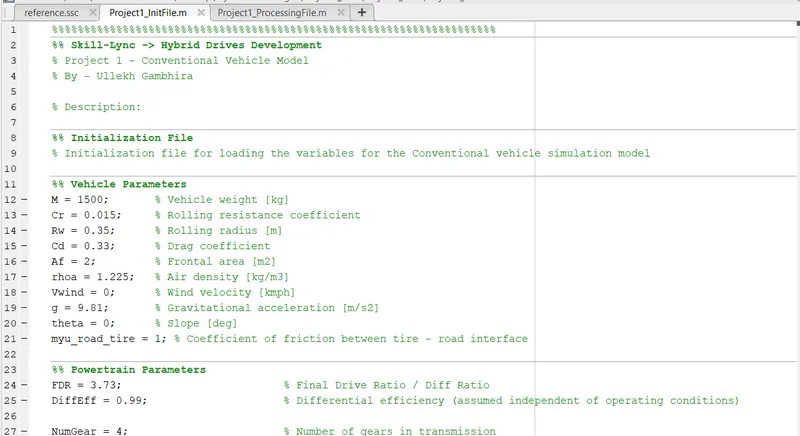
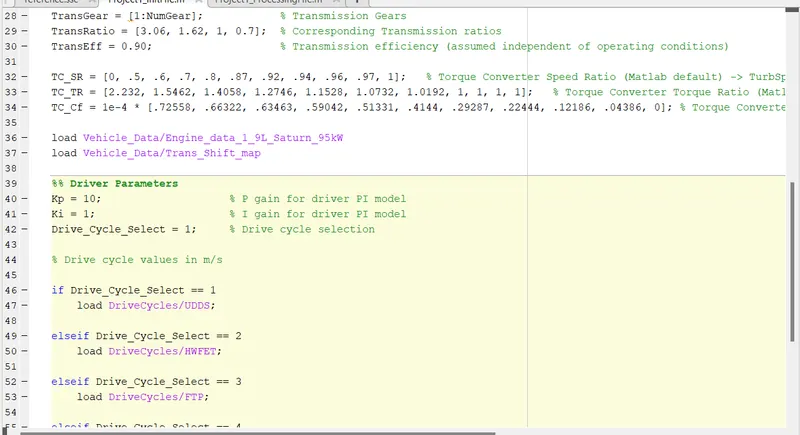
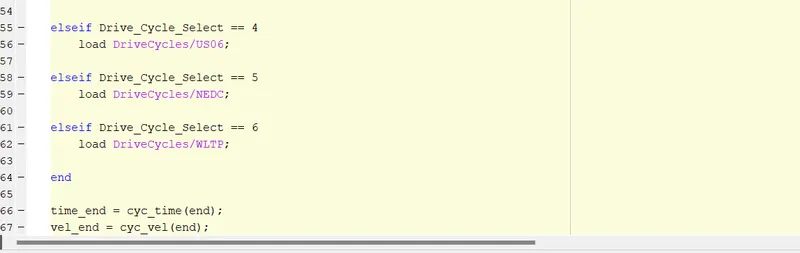
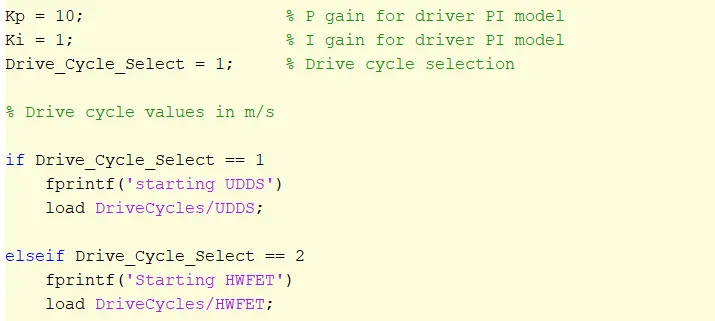
here in this MATLAB code we don't have to change anything.Just only change is that in drive cycle .If we put drive cycle =1 then it is UDDS and when we put drive cycle =2 then HWFET.
- here we see the following three subsystem blocks as
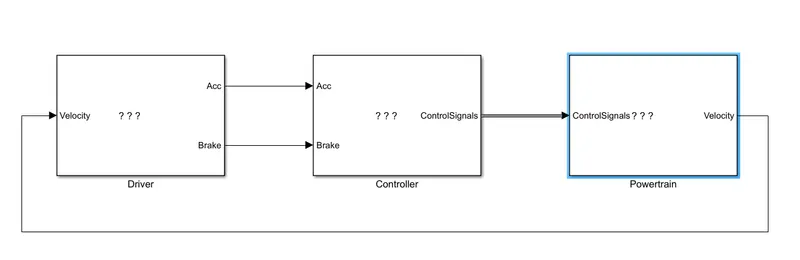
- Our task is to complete the engine and vehicle dynamics ,which is in powertrain block
- double click on powertrain block and by watching the vedio perform or built a models
Engine block
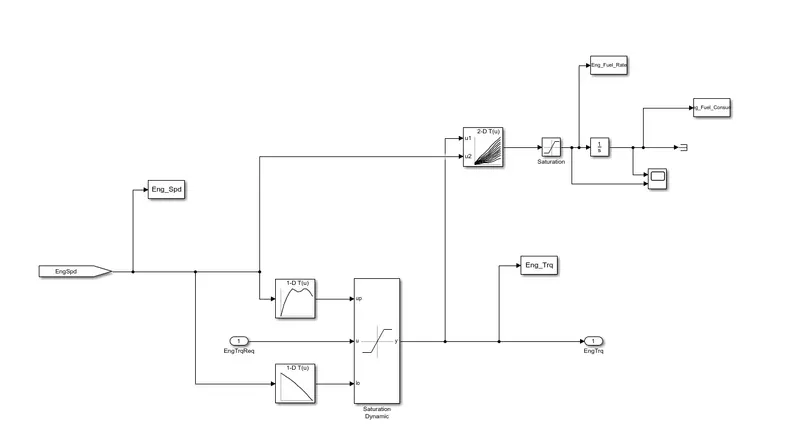
here ,the new block is only the 'to workspace' block is used ton give the output value into the matlab workspace that we are got in the simulink .
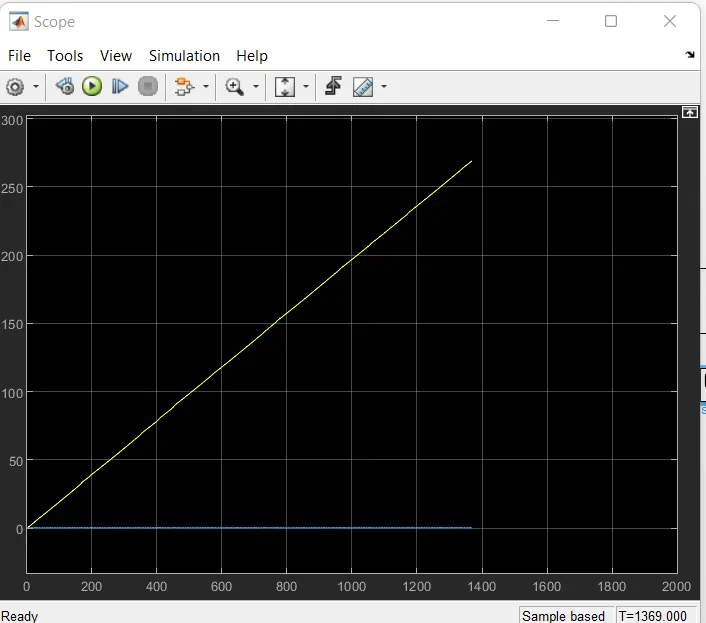
the output from scope is:
Vehicle dynamics block:
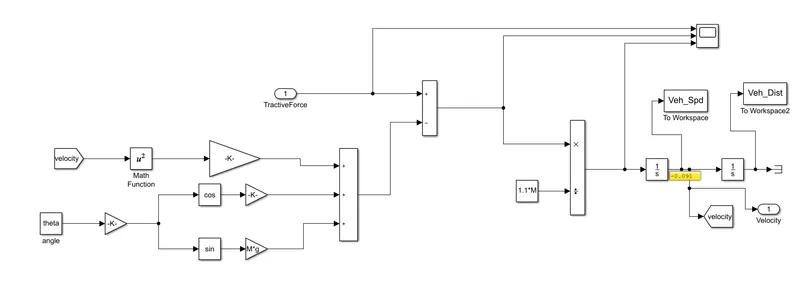
This block is also simple to biuld just we have to watch the videos carefully. here the change only is that here we are using to integration blocks .First is used to calculate the speed and second one is to calculate the distance.We know if we intergrate the acceleration then we get velocity and when we integrate the velocity then we get the distance.
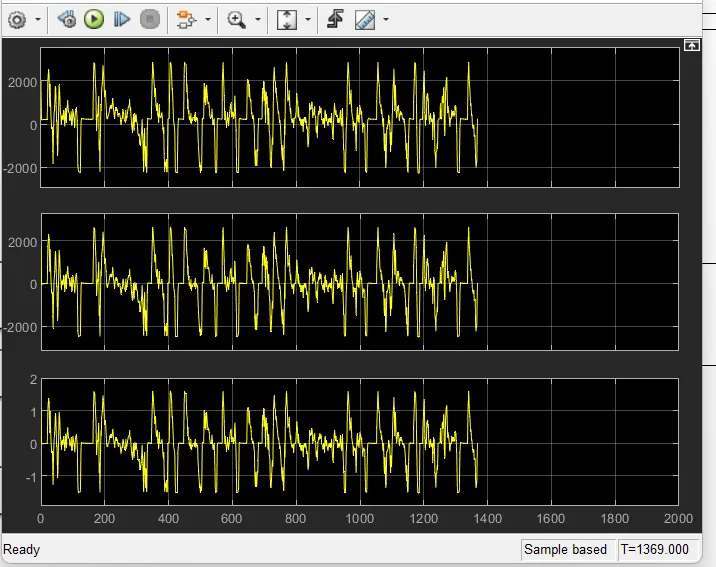
Output for this block is
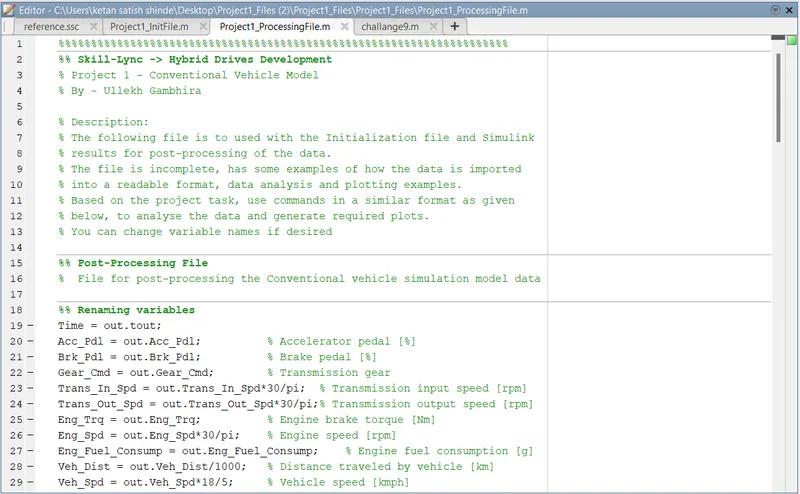
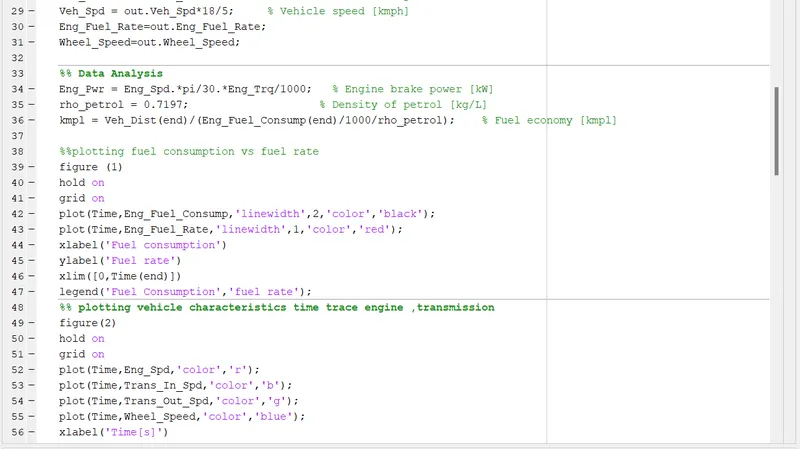
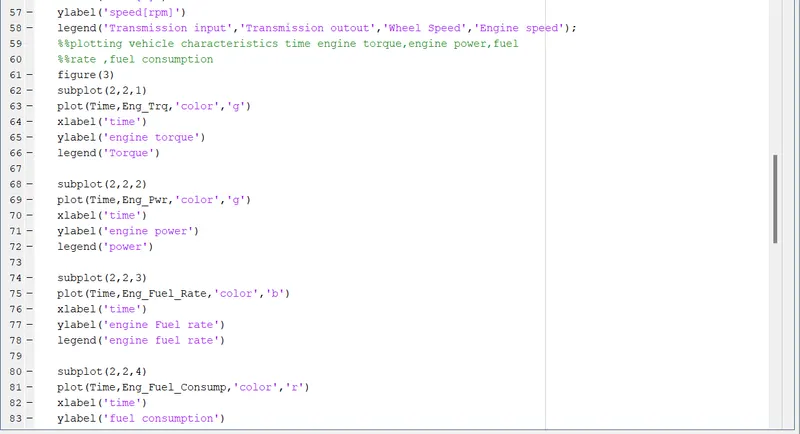
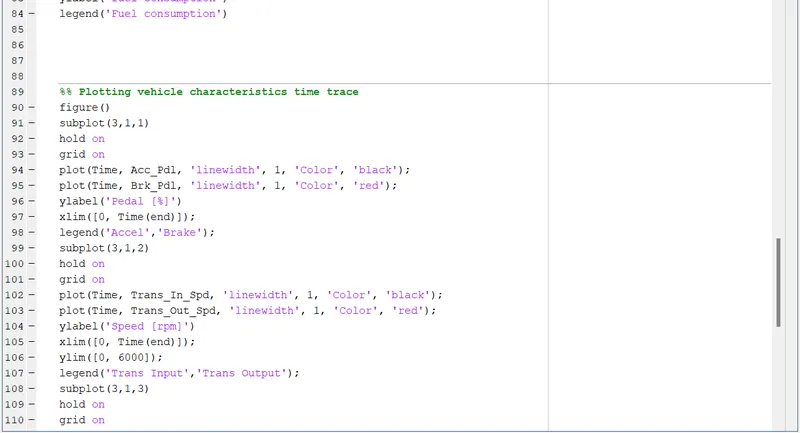
After completing these to block now oiur task is to plot the graphs by modifying the given file (project_processing_file.m) ..
The modifications are only to draw the plots using subplot command.
Modifieid project processing file .m is as:
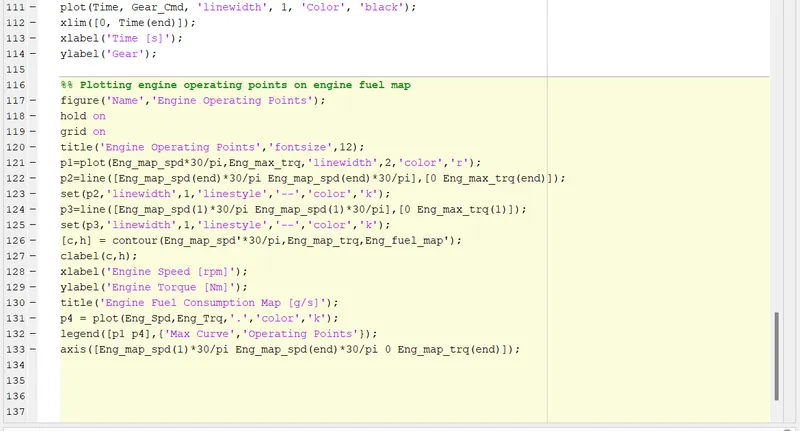
#For UDDS Cycle
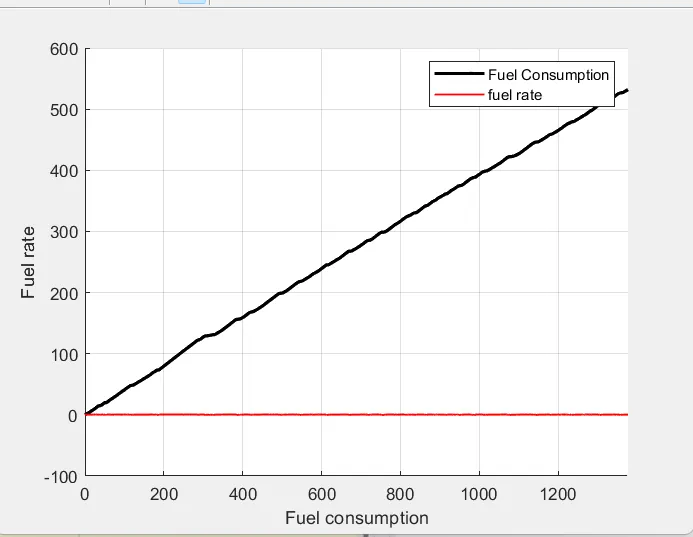
OUTPUT for UDDS cycle:
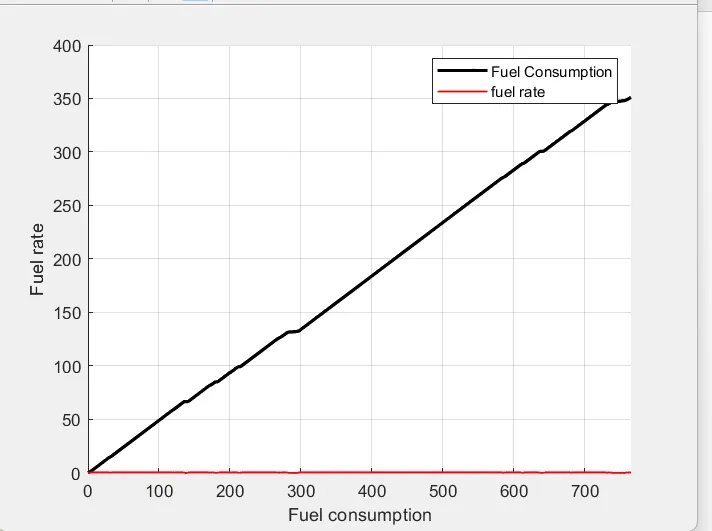
1.Fuel consumption vs fuel rate
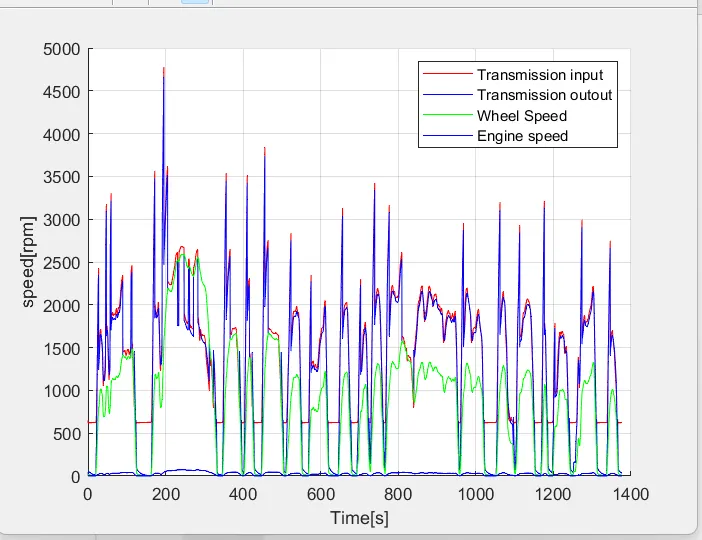
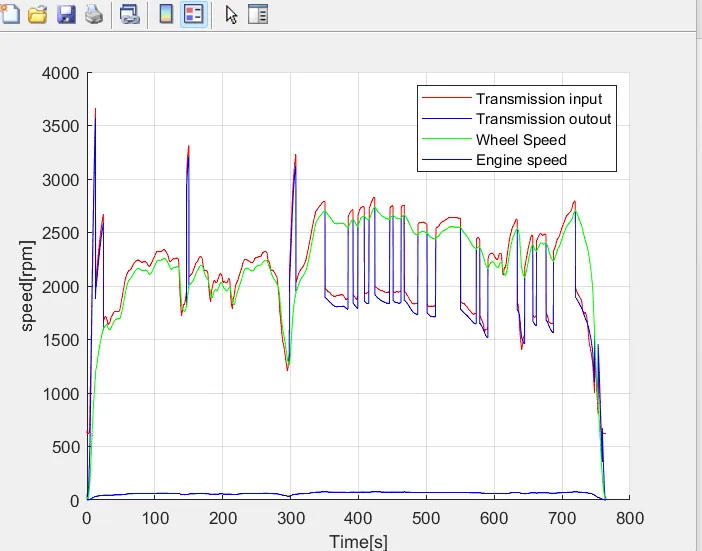
2.(transmission output and input speed,wheel speed ,engine speed ) vs time
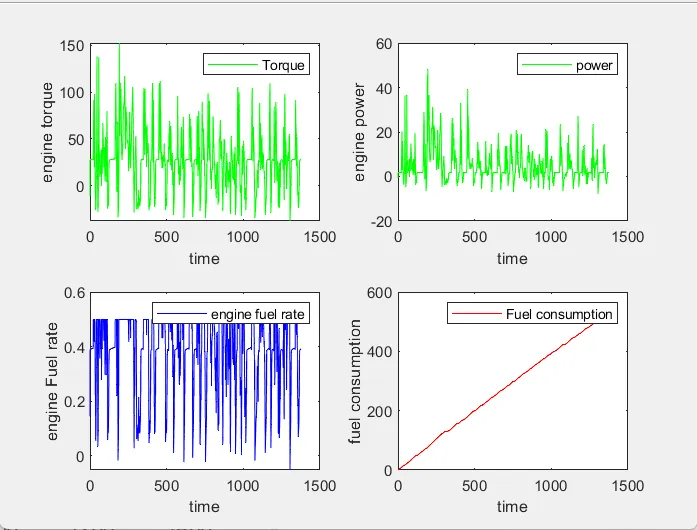
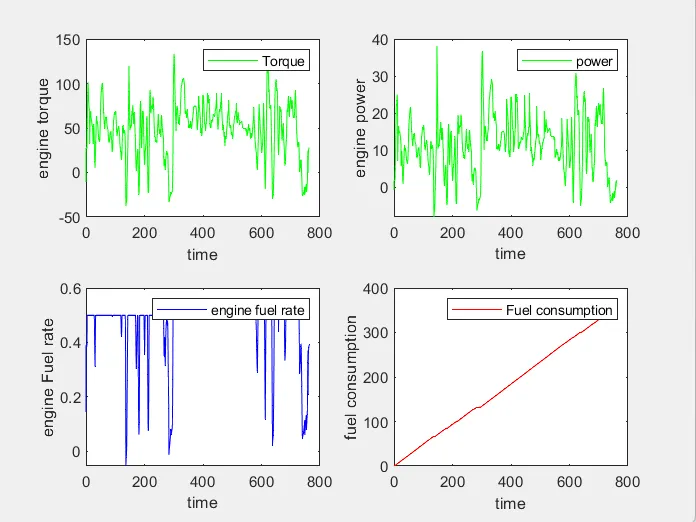
3.(torque,power,fuel rate and fuel consumption) vs time
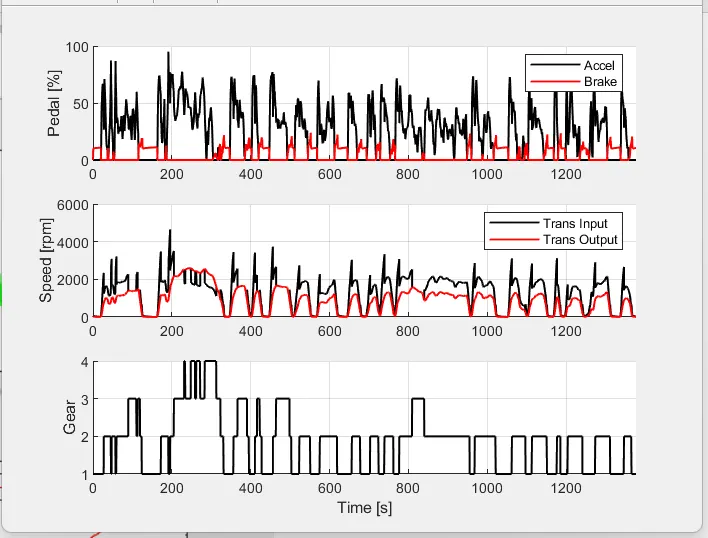
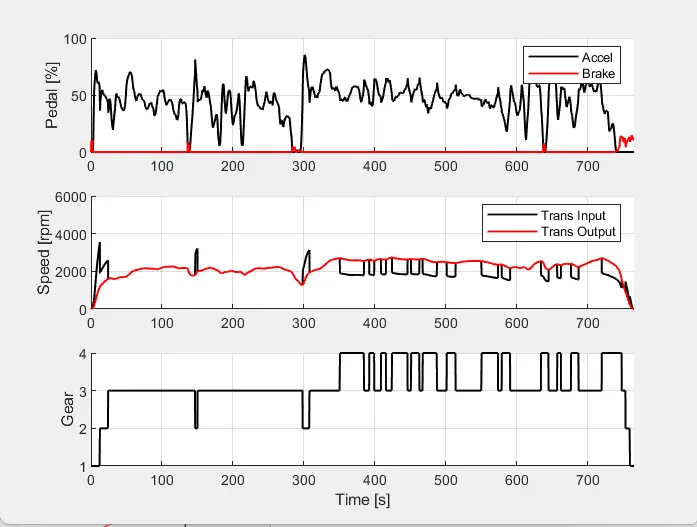
4.Vehicle characteristics time trace accelerator and brake pedal ,gear shift ,vehicle desired and actual speed.
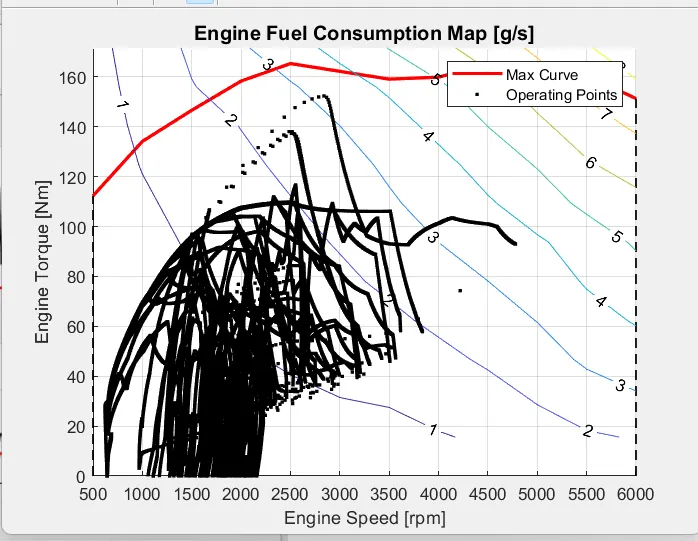
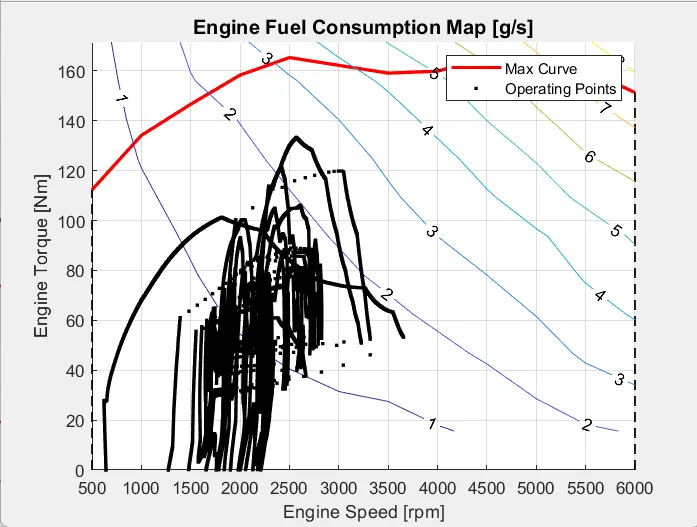
5.Engine operating points on engine fuel map.
# for HWFET Cycle:
1.we have change in intializing file(project_intfile.m) as shown below
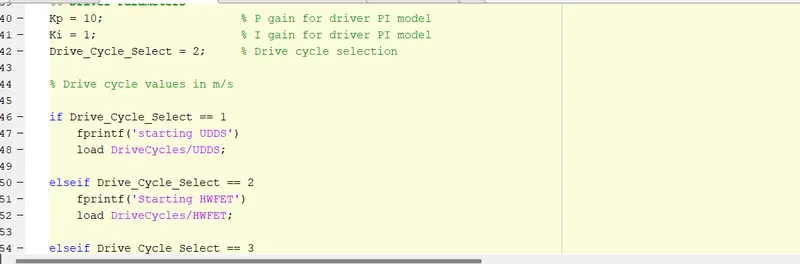
here only this much change in code is necessory.
#outputs for HWFET:
1.fuel consumption vs fuel rate
2.vehicle characteristics time engine ,transmission input,transmission output and wheel speed.
3.vehicle characteristiocs time trace engine torque ,engine power,fuel rate and fuel consumption
4.Vehicle characteristics time trace accelerator and brake pedal ,gear shift ,vehicle desired and actual speed.
5.Engine operating points on engine fuel map
#Conclusion:
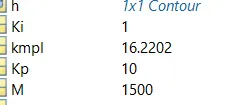
1.KMPL for for UDDS =16.22
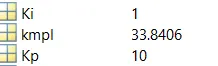
2.KMPL for HWFET =33.84
The forward energy based fuel consumption model of a convensional vehicle is developed by thusing MATLAB and SIMULINK and plots are obtain.Also we understand that per litre the vehicle covers more distance in HWFET cycle than UDDS cycle.
#