MBD Simulation on IC Engine Valve Train
Aim
To Create a 3D Model of Valve Train Assembly and perform motion analysis.
Introduction
Valve Train Assembly
A valvetrain or valve train is a mechanical system that controls the operation of the intake and exhaust valves in an internal combustion engine. The intake valves control the flow of air/fuel mixture (or air alone for direct-injected engines) into the combustion chamber, while the exhaust valves control the flow of spent exhaust gasses out of the combustion chamber once combustion is completed.
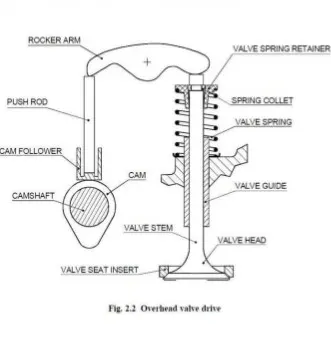
The valvetrain consists of all the components responsible for transferring the rotational movement of the camshaft into the opening and closing of the intake and exhaust valves. Typical components are listed below:
- Cam
- Push Rod
- Valve
- Valve Stem
- Rocker Arm
Objectives: -
- Create 3D models for Valve Train Assembly
- Run the simulation using the below parameters
- 3.5 mm of CAM Lift with the speed of 1500 rpm having Cast Carbon Steel as material
- 6 mm of CAM Lift with speed of 1500 rpm having Cast Carbon Steel as material
- Obtain the following results:
- Valve Lift.
- The contact force between Cam and Push Rod
- The contact force between Pushrod and Rocker Arm
- The contact force between Rocker Arm and Valve
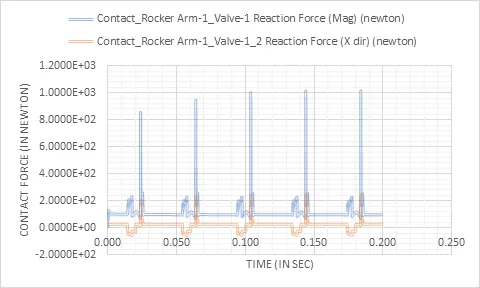
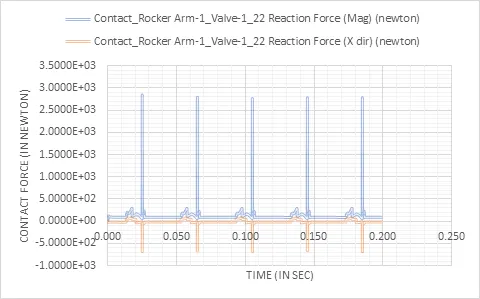
- Explain why the contact force between the Rocker arm and valve varies while measuring with respect to the X-direction and measuring with respect to magnitude
Setup: -
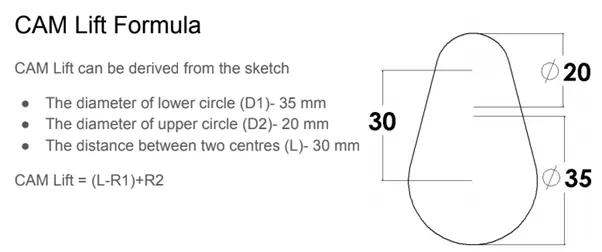
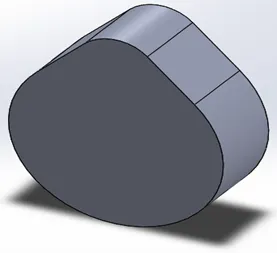
- Geometry of Cam
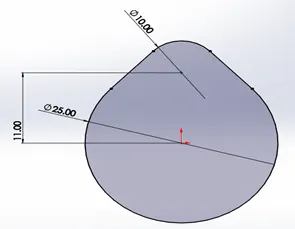
(R1)- 12.5 mm (R2)- 5 mm (L) - The distance between two centers
CAM Lift = (L - R1) + R2 è L = (CAM Lift - R2) + R1
Case 1
L = (CAM Lift - R2) + R1
= (3.5 – 5) + 12.5
= -1.5 + 12.5
= 11
Case 2
L = (CAM Lift - R2) + R1
= (6 – 5) + 12.5
= 1 + 12.5
= 13.5
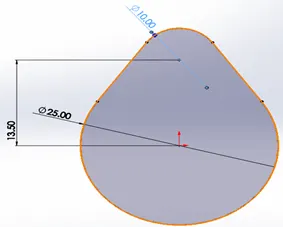
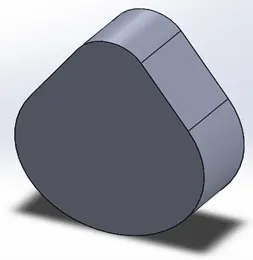
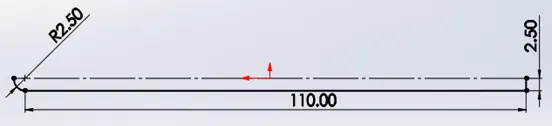
- Geometry of Push Rod

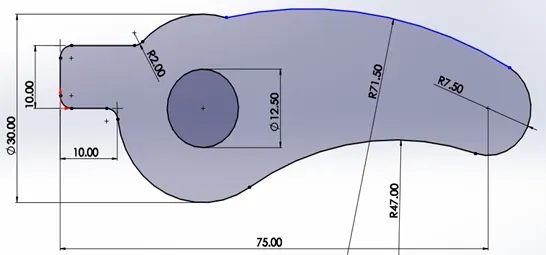
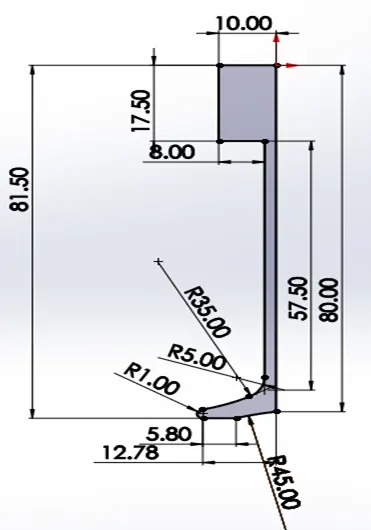
- Geometry of Rocker Arm
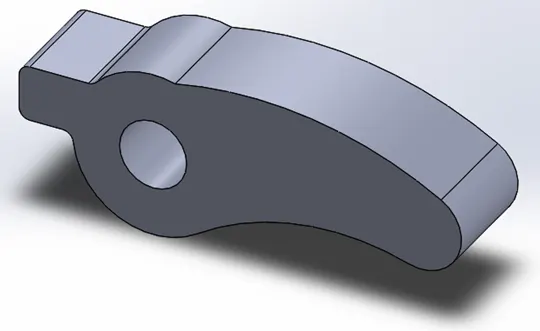
- Geometry of Valve
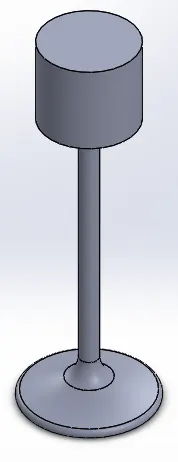
- Geometry of Valve Stem
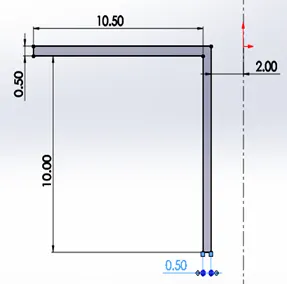
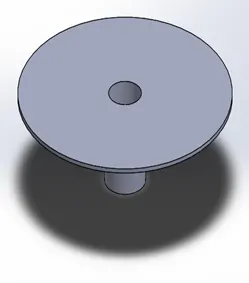
- Assembly
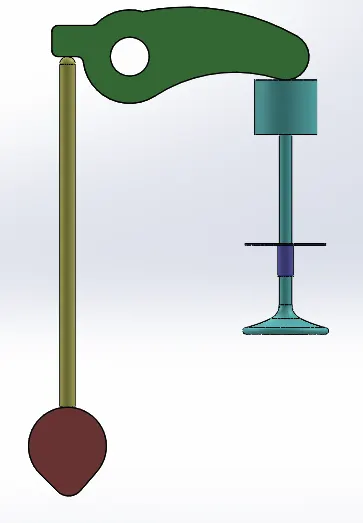
Study: -
(1500 rpm) (Material – Cast Carbon Steel)
- Case 1 – Lift = 11mm
- The contact force between Cam and Push Rod
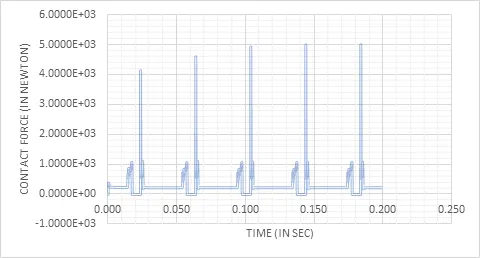
- The contact force between Pushrod and Rocker Arm
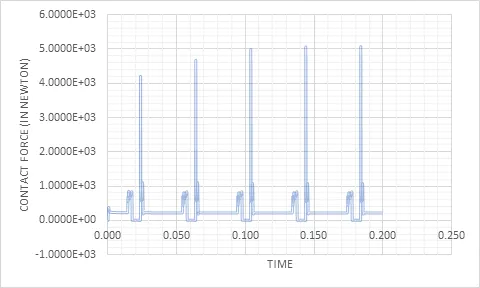
- The contact force between Rocker Arm and Valve
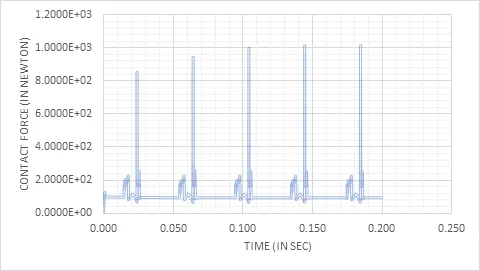
- Comparison between the contact force between Rocker Arm and Valve while measuring with respect to the X-direction and measuring with respect to magnitude.
- Case 2 – Lift = 13.5
- The contact force between Cam and Push Rod
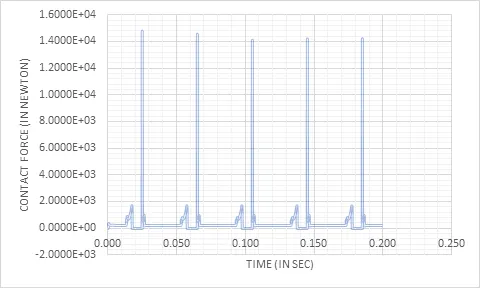
- The contact force between Pushrod and Rocker Arm
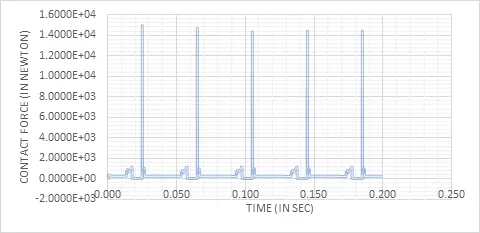
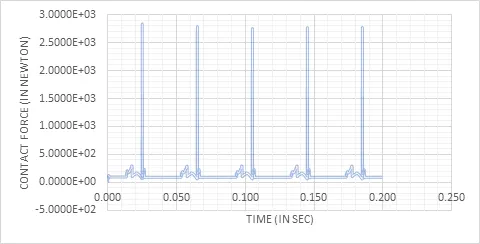
- The contact force between Rocker Arm and Valve
- Comparison between the contact force between Rocker Arm and Valve while measuring with respect to the X-direction and measuring with respect to magnitude.
Observation and Conclusion: -
- We have finally able to get the plots for both cases.
- We can observe the phenomena of Jump in the case of contact force between Cam and Push Rod when the force is 0. It means push rod leaves cam and then force suddenly increases because of impact after the jump.
- The contact force between the Rocker arm and valve varies while measuring with respect to the X-direction and measuring with respect to magnitude because the contact force line of action is changing continuously and along X direction the surfaces of the valve and rocker arm rub over each other and produce friction between them and is both positive and negative as obtained from the plots. This frictional force will tend to losses in energy and will dissipate as heat. Whereas the contact force magnitude calculates the vector sum of forces in all three directions and will be greater than forces in either direction. This is the main reason we use avoid using Cams nowadays because of friction. Although different types of cams are present in order to minimize the dissipation of extra energies we are switching to electronic control valves