Internal Geneva Mechanism
Aim
To Create a 3D Model of the Internal Geneva Mechanism and perform motion analysis.
Introduction
Internal Geneva Mechanism - It is a gear mechanism that translates a continuous rotation movement into intermittent rotary motion.
The rotating drive wheel is usually equipped with a pin that reaches into a slot located in the other wheel (driven wheel) that advances it by one step at a time. The drive wheel also has an elevated circular blocking disc that "locks" the rotating driven wheel in position between steps.
An internal Geneva drive is a variant of the design. The axis of the drive wheel of the internal drive can have a bearing only on one side. The angle by which the drive wheel has to rotate to effect one step rotation of the driven wheel is always smaller than 180° in an external Geneva drive and always greater than 180° in an internal one, where the switch time is, therefore, greater than the time the driven wheel stands still.
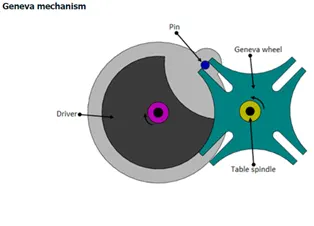
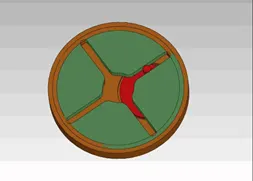
Contact force - It is any force that requires contact to occur. Contact forces are ubiquitous and are responsible for most visible interactions between macroscopic collections of matter.
Objectives: -
- Create 3D models for driver and driven wheels.
- Perform motion analysis by rotating the driver wheel at 10rpm.
- Obtain the following plots
- Contact force (between driving and the driven wheel) as a function of time.
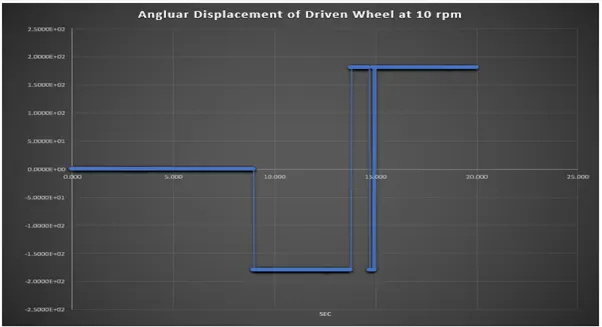
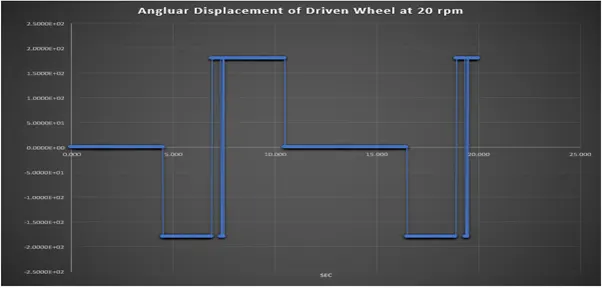
- Angular Displacement of the driven wheel.
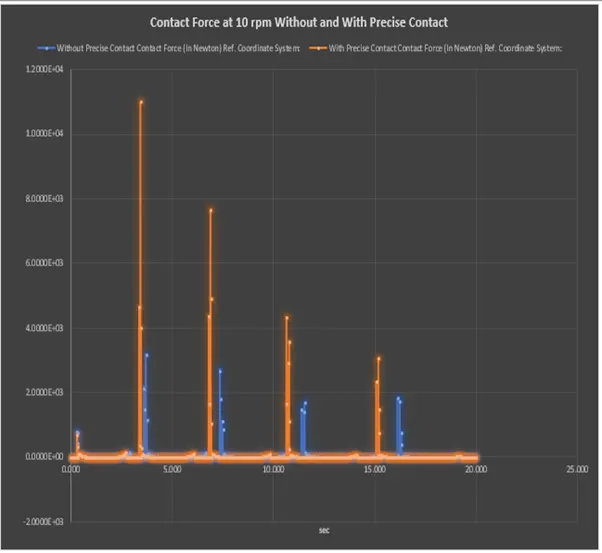
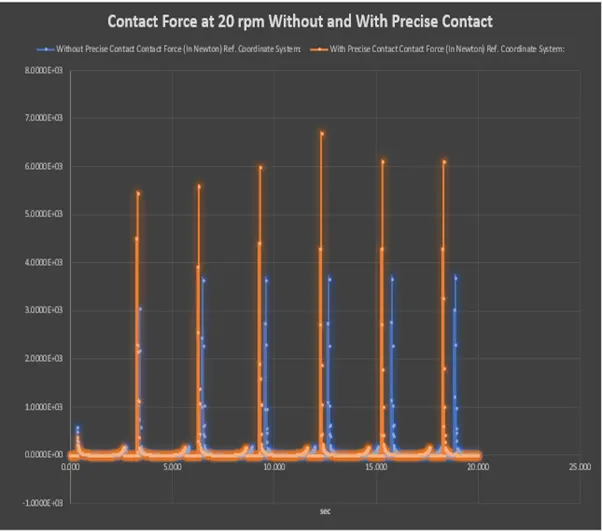
- Compare the contact forces with and without "Precise contact"
- Show image for precise contact selection
- Export the results that you get to Excel and make the plots over there
- Use 60 Frames per second for 10 rpm and then 120 Frames per second for 20 Rpm
- Once you have completed the previous study, change the rpm to 20
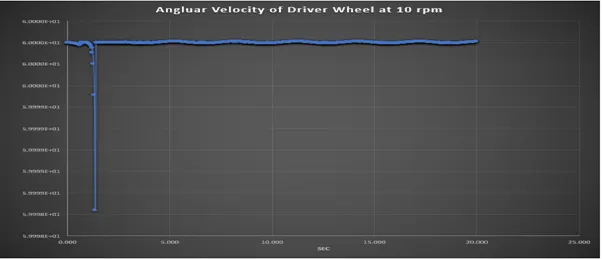
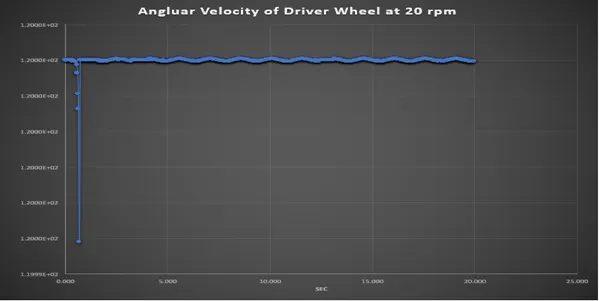
- Make a plot of the driver wheel's angular velocity and discuss the results
Setup: -
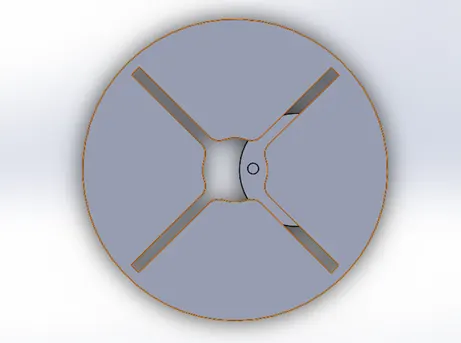
- Geometry Of Driver Wheel
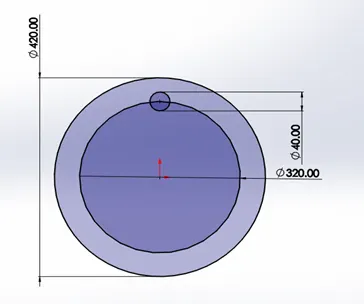
- Geometry of Driven Wheel
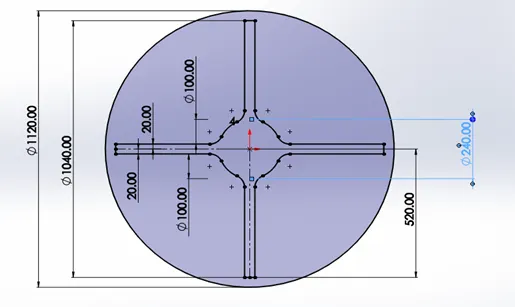
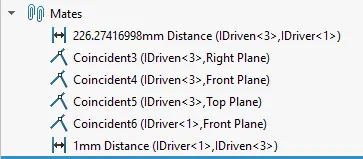
- Assembly
- Mates (In Assembly)
Study: -
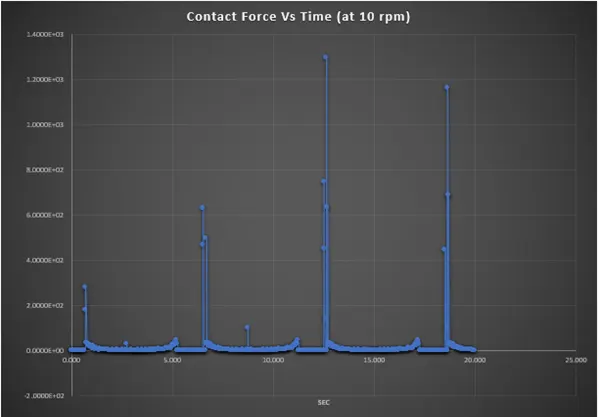
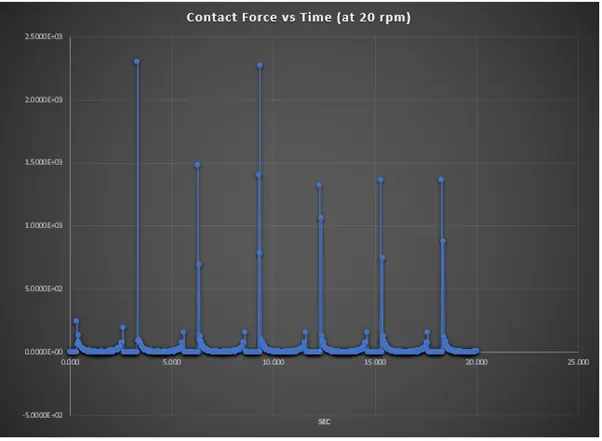
- Contact force (between driving and the driven wheel) as a function of time.
- Selection of Precise Control
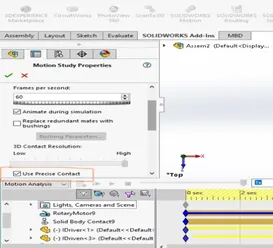
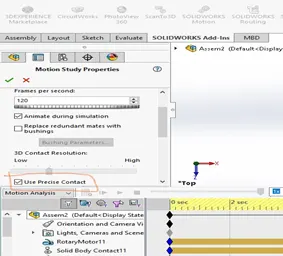
- Compare the contact forces with and without "Precise contact"
- Angular Displacement of the Driven Wheel
- Angular velocity of the Driver Wheel
Observation and Conclusion: -
- Contact Force is proportional to the speed of the driver it increases with an increase in the speed.
- Precise Contact gives more accurate results this is because this uses equations that represent the solid bodies instead of 2d drawing.
- The big deviation in Angular Velocity is because due to the fact that during entering the slot for the first time it enters very gently in order to adjust any misalignment and as soon as alignment is set it gets steadied from there.