Independent Research Project
Aim-
To perform static structural analysis on the deep groove ball bearing (std. skf 6208) and to check whether the bearing is suitable for the given application of ATFE or not.
Theory-
- A ball bearing is a type of rolling-element bearing that uses balls to maintain the separation between the bearing races. The purpose of a ball bearing is to reduce rotational friction and support radial and axial loads.
- It achieves this by using at least two races to contain the balls and transmit the loads through the balls. In most applications, one race is stationary and the other is attached to the rotating assembly (e.g., a hub or shaft).
- In our case Inner race is rotating while outer race will be stationary.
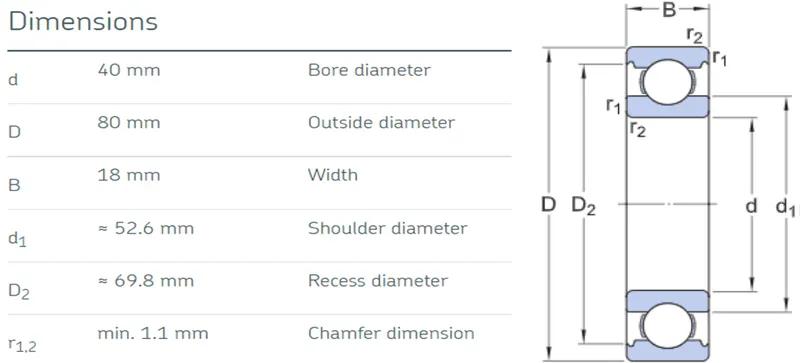
Bearing dimensions-
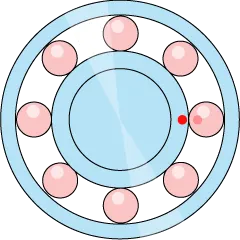
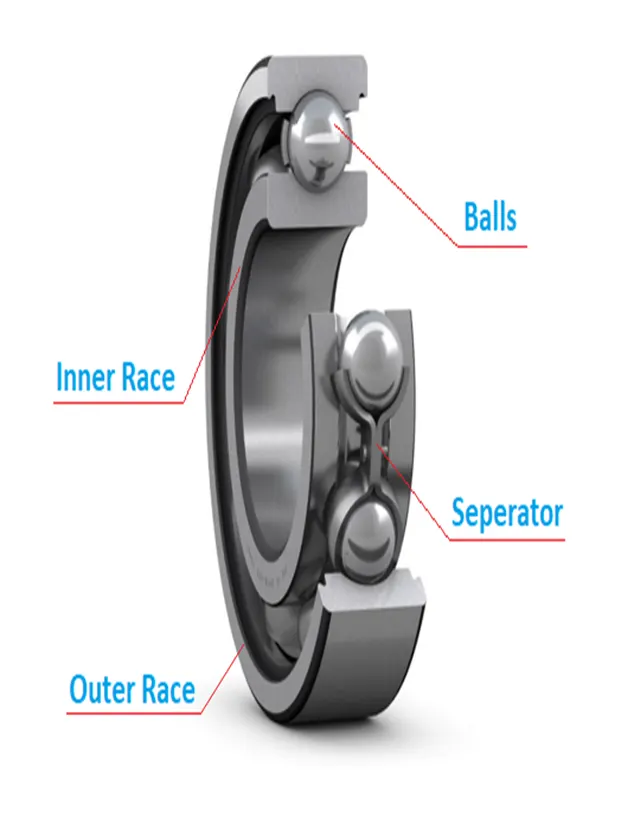
Assembly Details-
Problem Statement-
For a given application of ATFE the following standard data is considered of the equivalent load (PE) that the bearing can sustain is 6 KN, the speed (N) of rotor is 750 rpm. This bearing is subjected to pure axial load thus no effect of radial load (Since bearing is mounted vertically).
Analytical Calculation-
Standard data from SKF bearing catalogue for 6208 bearing is taken as given below:
Dynamic load (C) =32.5 KN
Static load (C0) = 19 KN
Equivalent Load (Pe) = 6KN
Radial load (Fr) for given bearing can be calculated as:
PE= (X*Fr + Y*Fa) S …. (1)
Where Y=Dynamic Axial Load factor (bearing subjected to pure axial load) = 1.4
X=Dynamic Radial Load factor (bearing subjected to pure axial load) = 0
Fr= Radial Load
Fa=Axial Load
S = Service factor for medium duty = 1.2
Substituting the values in equation (1)
6000 = (0+ 1.4*Fa) 1.2
Fa= 3571.43 N = 3.571KN
For pure axial loading condition, Fa≤0.5*C0 (8.5KN)
So, as per catalogue C0 value our condition has been satisfied.
Here our condition has been satisfied.
Calculating life for 90 % probability of success (L10):
Calculating life for 90 % probability of success (L10):
L10 = (C/Pe) K
Where L10= life for 90% probability of success
K= 3 for ball bearings
L10= (32.5/6)3
L10=158.91~160 revolution
So bearing with values above calculated will be selected and considered for application.
Different materials used for bearing manufacturing-
1.Chrome Steel Bearings-As one of the most commonly sourced bearing, it has a wide range of industry applications. For example, vibrating motor systems, food processing machines and linear motion components.
2.Stainless Steel Bearings- Examples include food processing, manufacturing, metal plating, instrumentation, high humidity and highly chemical areas.
3.Ceramic Bearings-The industry applications for a ceramic ball bearing are often within aircrafts, in the dental profession and in food processing machines.
4.Polymer Plastic Bearings-The polymer plastic bearing is often used within electrical switch gears, water turbines, ship propeller shafts, household appliances, filming gear, instruments, textiles, factory floor applications and more.
5.Hybrid Bearings- High-level research and science machines such as cryogenic chambers, aerospace engineering and medical equipment make use of the hybrid bearing components and materials.
So for the given equipment type we can use Chrome steel and stainless steel as well.
But above mentioned types may be costlier and dependent upon criticality of processed material.
Procedure-
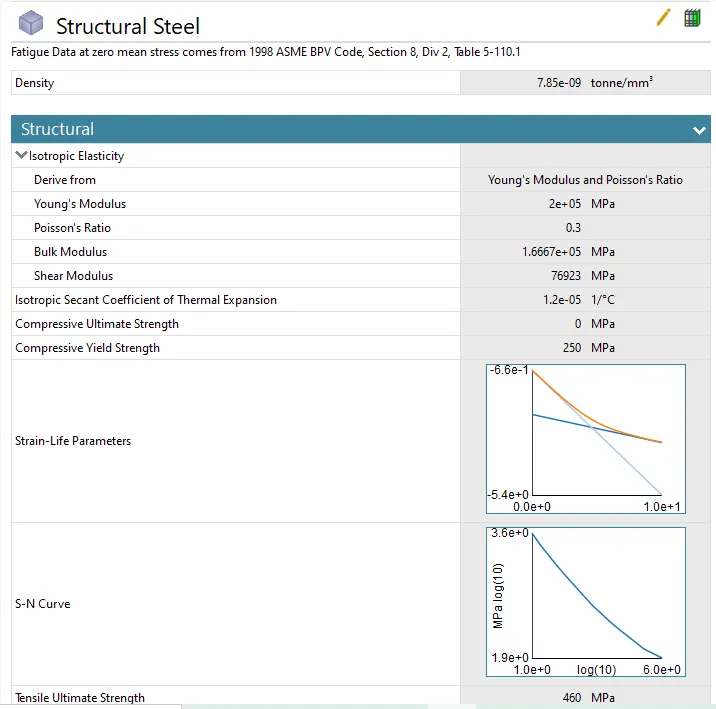
- We have to first start as new project in the ansys workbench and select the proper material for the bevel gear.
- Here no material has been specified in the project so we will select the structural steel as material.
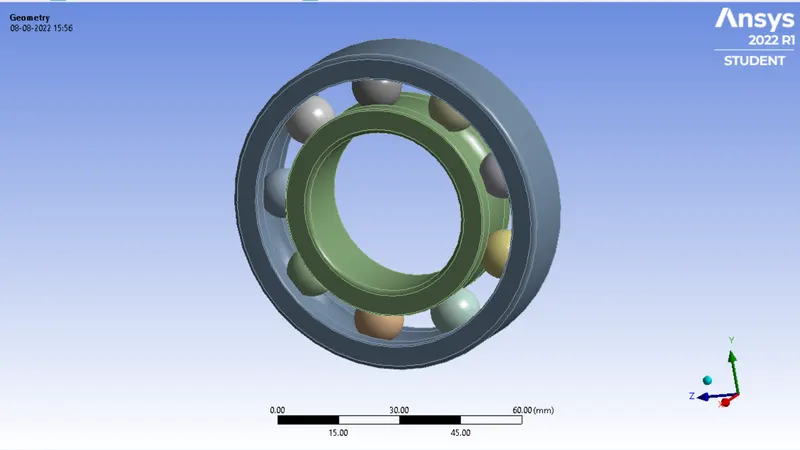
- Now we have to import the model for that right click on the geometry tab and hit import>>then select the file from saved location and hit ok.
Connections-
- Now we have to open mechanical model and the need to specify connections to bearing.
- now go to contacts from dop down arrow of connections and select all faces and othe setting shown as per below.
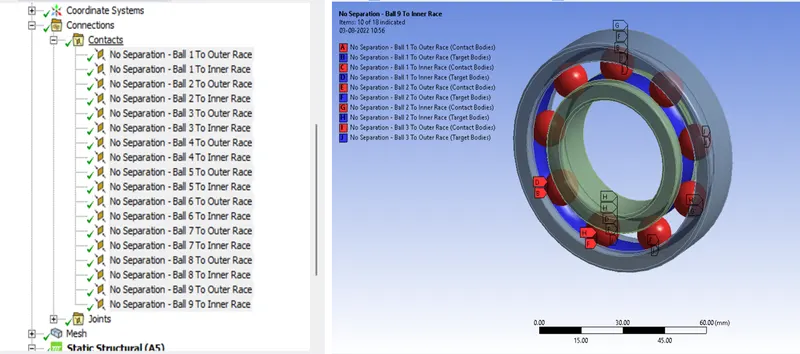
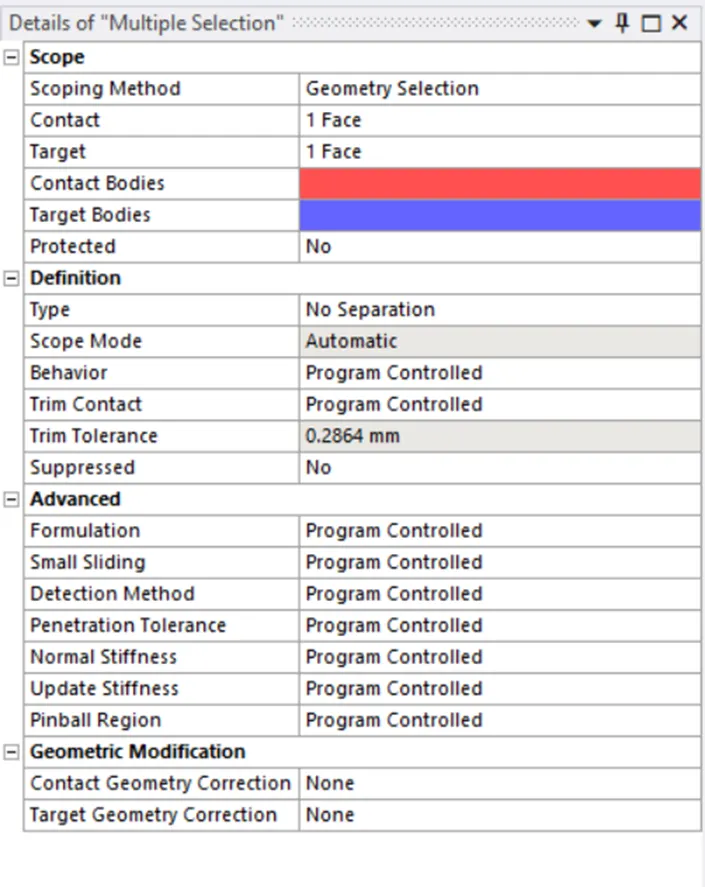
- Here we have used No-separation contact for balls to races.
- The Sliding/No Separation contact allows relative sliding between contact faces, but prohibits separation.
- Since we can not accept separation of ball from races at any condition.
- Now we have to create the joints for bearing.
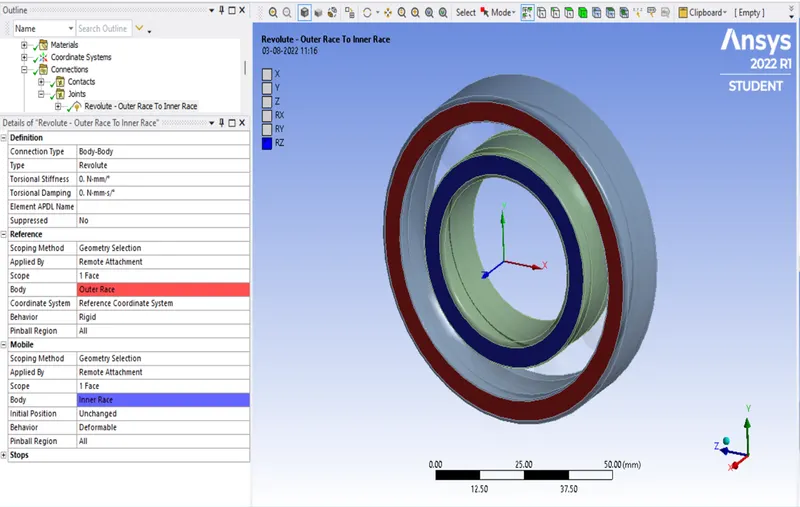
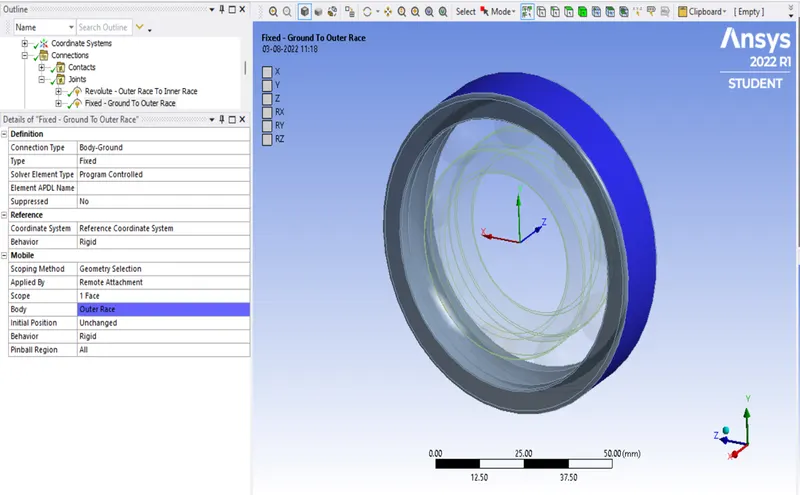
- Here as per our problem statement inner race will rotate and outer race is fixed.
Mesh-
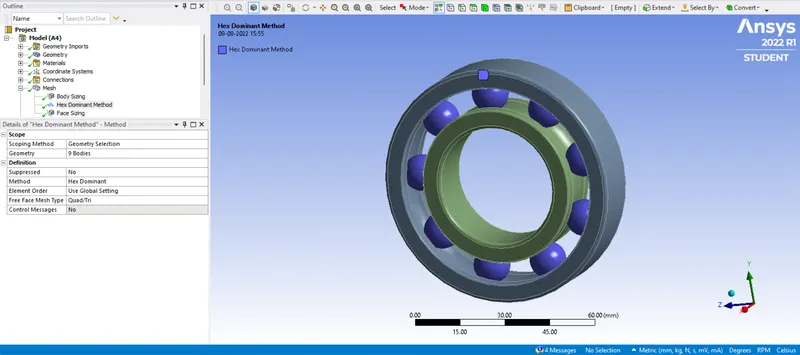
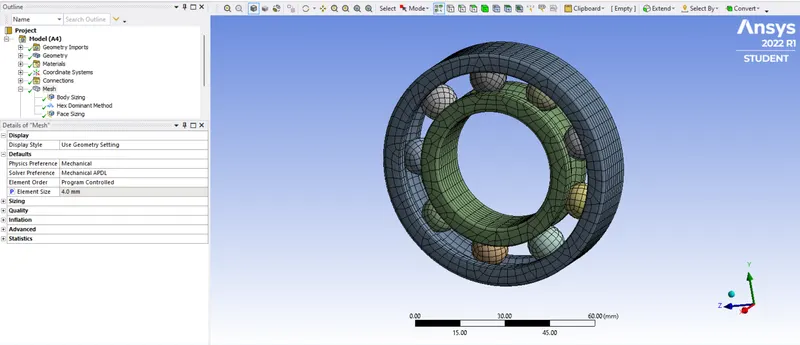
- First right click on the mesh>>insert>>method>>select whole component and select type as hexdominent for cutting tool.
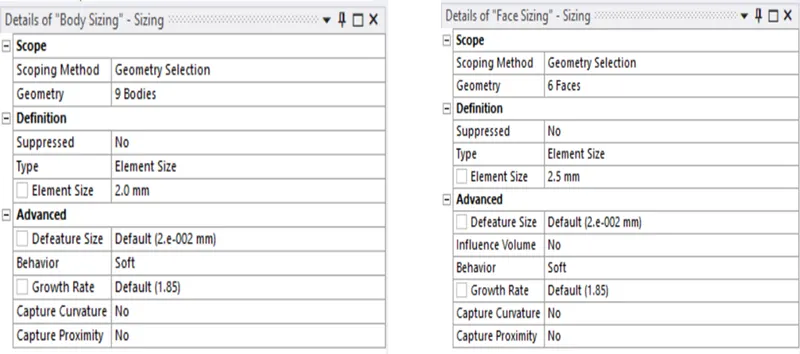
- Now we have to create mesh for bearing, to generate mesh, mesh>>insert>>sizing>>select edges of bearing races and in type select size as 2.5mm & for balls we input size of 2mm.
Analysis Setting-
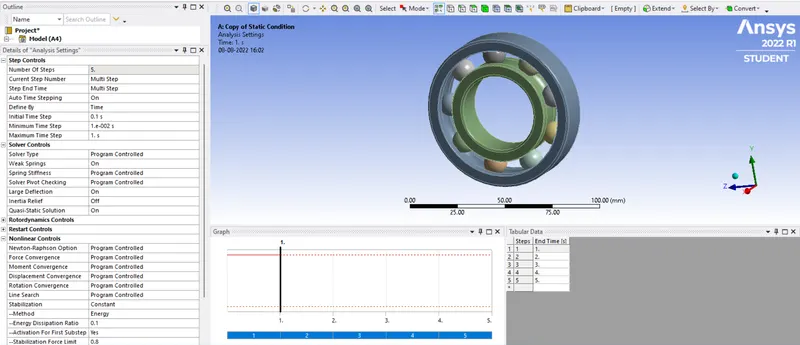
- Refer Below setting.
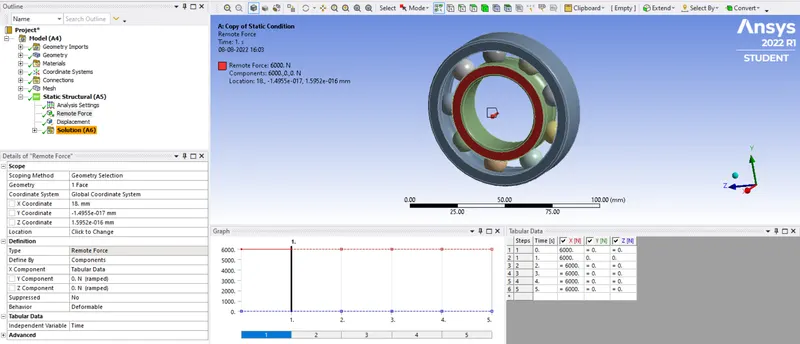
- Remote force is applied in axial direction of bearing in X-axis as 6000N.
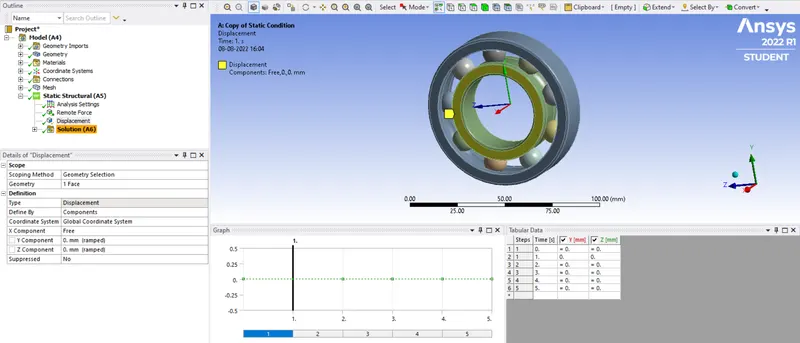
- Due to force application there is some displacement we it must be free to rotate in X-direction.
Solution Setting-
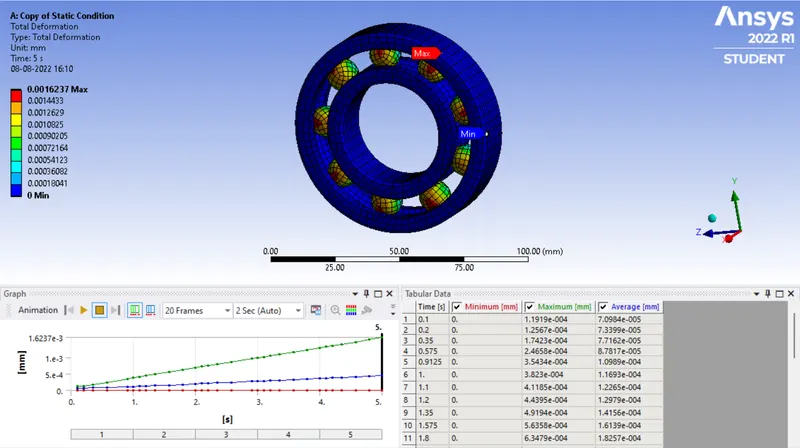
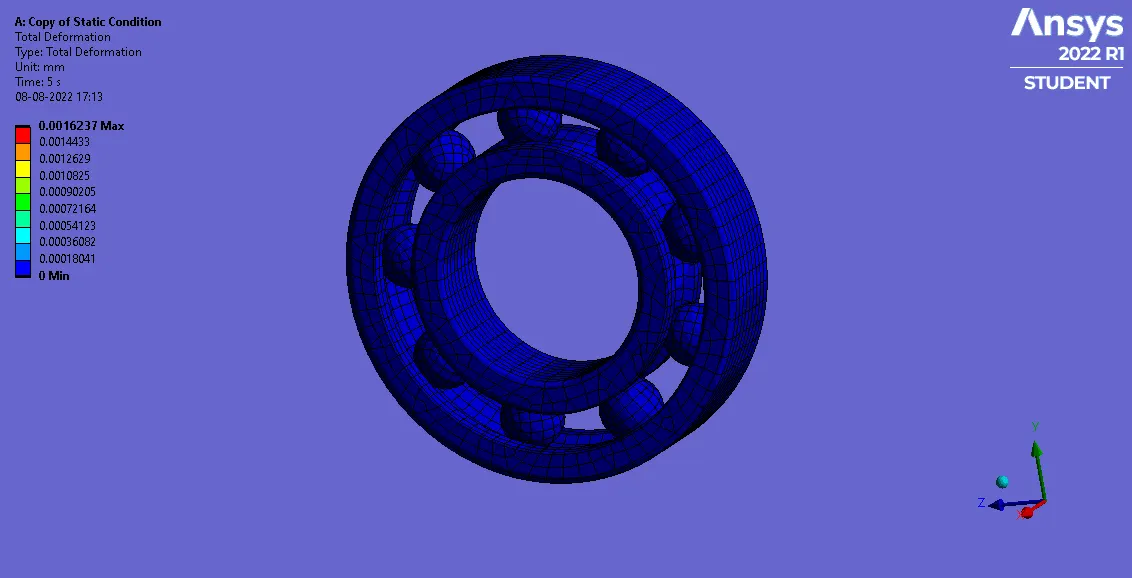
- Here we have to define total deformation, to do so right click solution>>insert>>deformation>>Total.
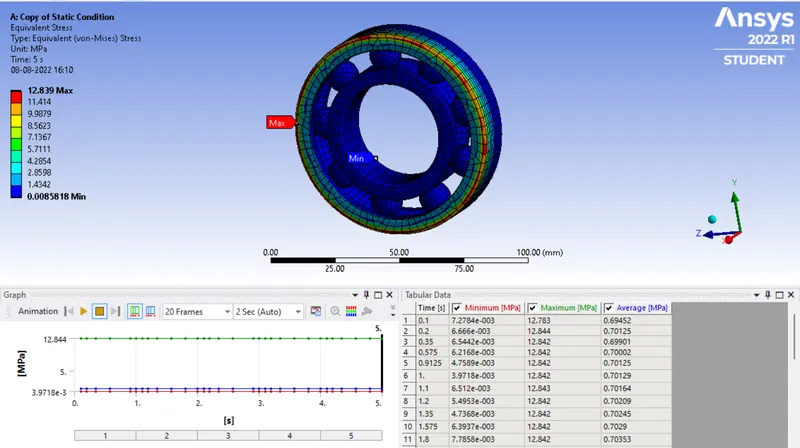
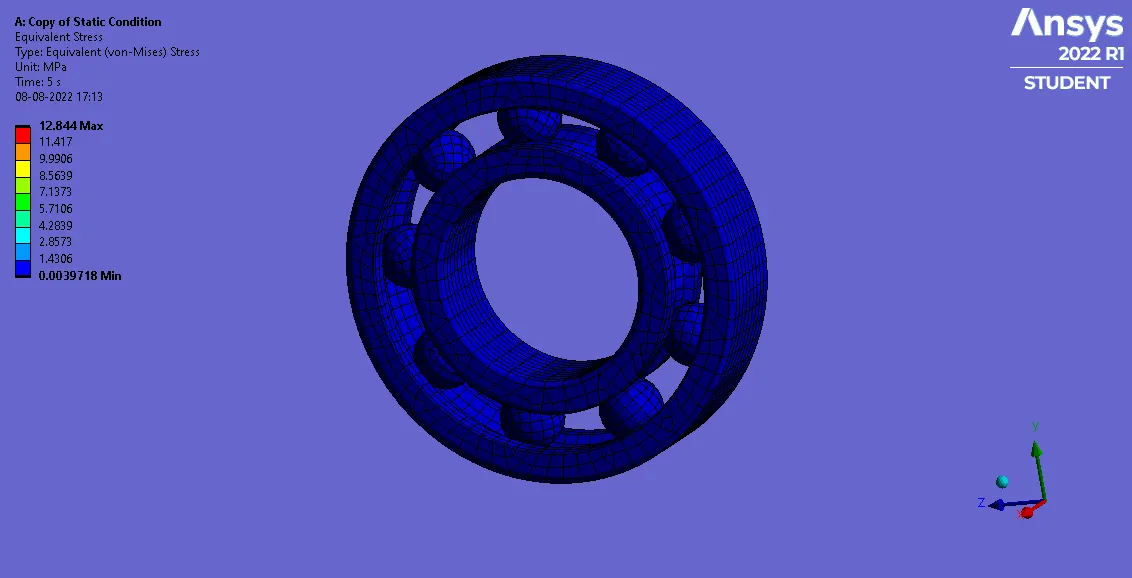
- Now for stress right click on the solution>>insert>>stresses>>equivalent (von-Mises).
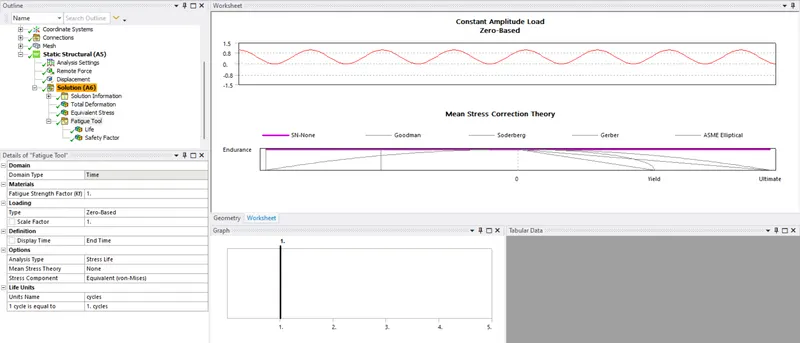
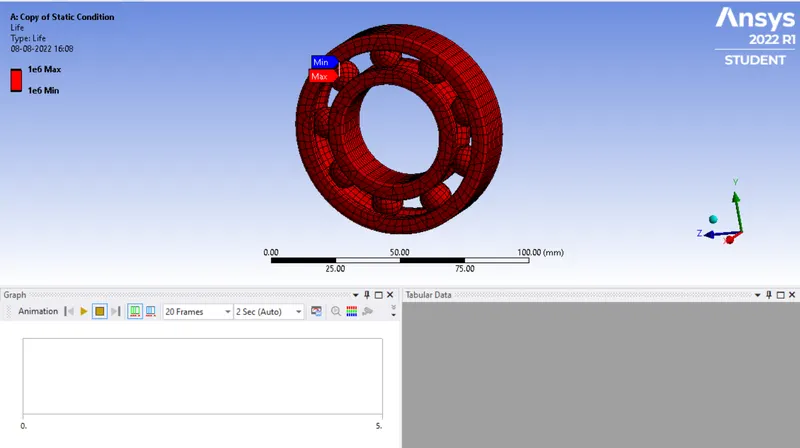
- For fatigue life, right click on the solution>>insert>>fatigue tool>>life.
Results-
Total Deformation-
Equivalent Stress-
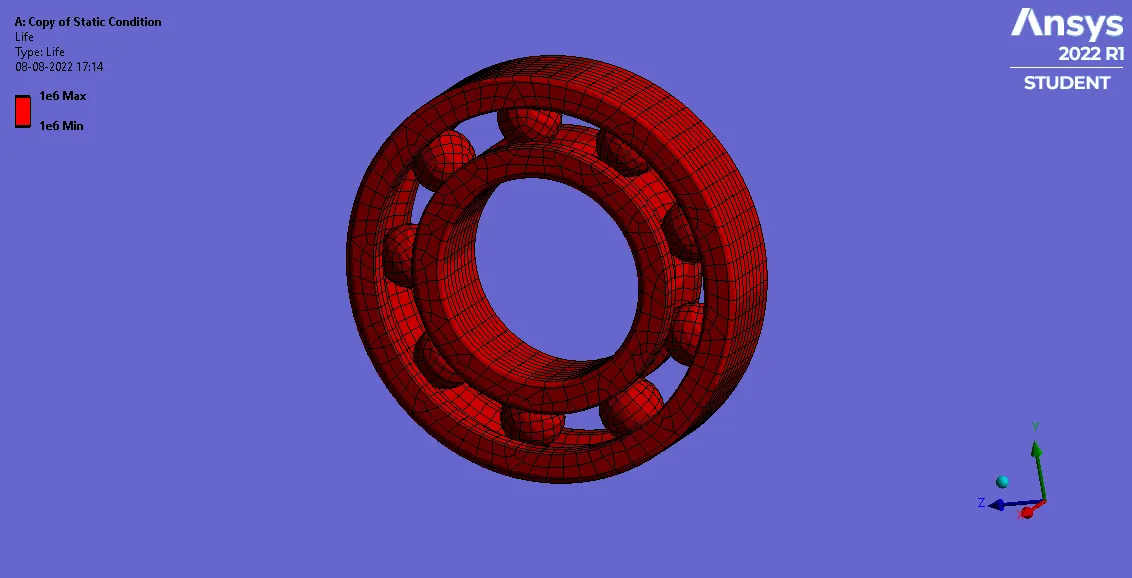
Fatigue life-
Parametric Study-

-
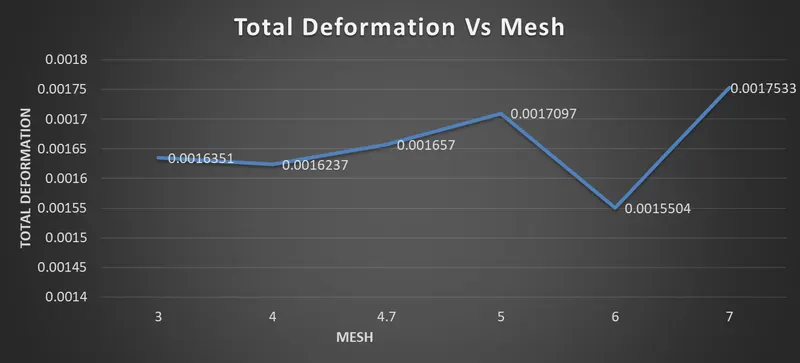
From above table we can observe that mesh with sizes 3, 4 and 4.7 are giving almost similar results.
-
We can use any of the above mentioned mesh size but for getting optimal solution and less computational time we will go for 4.7mm mesh size for future reference.
Conclusion-
-
So from analytical calculations we get the value as 160 revolution for 90% success probability
-
From Analysis we get the value as 10,00,000 revolutions so the selected bearing 6208 is considerably very safe to use and can work for longer life than expected.
-
From the above results we can conclude that Equivalent (von-mises) stress in static analysis is 12.844 MPa which is less than the fatigue value of 86.2 MPa, so bearing is safe to use as less stress is inducing.
- So the type of bearing 6208 we used here will be a good choice as it can withstand even high loads in dynamic conditions and also after material change.
Animations-
Total Deformation-
Equivalent Stress-
Fatigue Stress-