Hood design-Week 2
CAR HOOD DESIGN
OBJECTIVE
- To design and model a passsenger Car Hood with outer panel, Inner panel, Hinge and striker assembled
- Provide the required emboss defenitions and the Mastic data.
SOFTWARE USED
Catia V5
INTRODUCTION
The hood is an opening body panel which is the frontal BIW enclosure componnent in a front engine vehicle. It consists of an outer panel functions as metal cover. It is very critical component because of the frontal crash requirements and pedestrian and passenger safety requirements. The design of the hood is a vital since it affects the aerodynamic flow around the car.
IT is also known as BONNET, its's main purpose was to act as a hinged cover and allow access to the engine compartment of a motor vehicle repair and manufacture. Over the years it became a major styling component in highlighting the aeshtetic of the vehicle and more recently it is bieng used as an active structure in improving the safty standards of a vehicle. It is to be noted that, the Hood along with the frontal portion of the car, is to absorb maximum impact upon collision and redirect the forces towards its hinges and then into the frame to minimize the damage to the driver and the passengers. Pedestrian safe is also taken into consideration and regulation have cometo an effect to heep in check the severity of head injury to the pedestrians when struck by a vehicle.

A Hood is safely held up either by a Support Rod or a Gas Spring when fully extended. They are soften mounted to the inner left, when viewing head on, for avoiding uneccassary obstrutions to technician while performing the inspection and maintainance of the engine compartment. Depending on the design weight of the hood, a secondary support is alse provided in the opposite end.
Support rods are made of carbon steel to avoid bending or buckling under the weight of the hood. They are given a slighly curved shape to lift properly in engine compartment and also to lock onto the latch which is provided either on the hood or in the engine compartment. Due to simple design and light weight, they are seen in majority of vehicles.
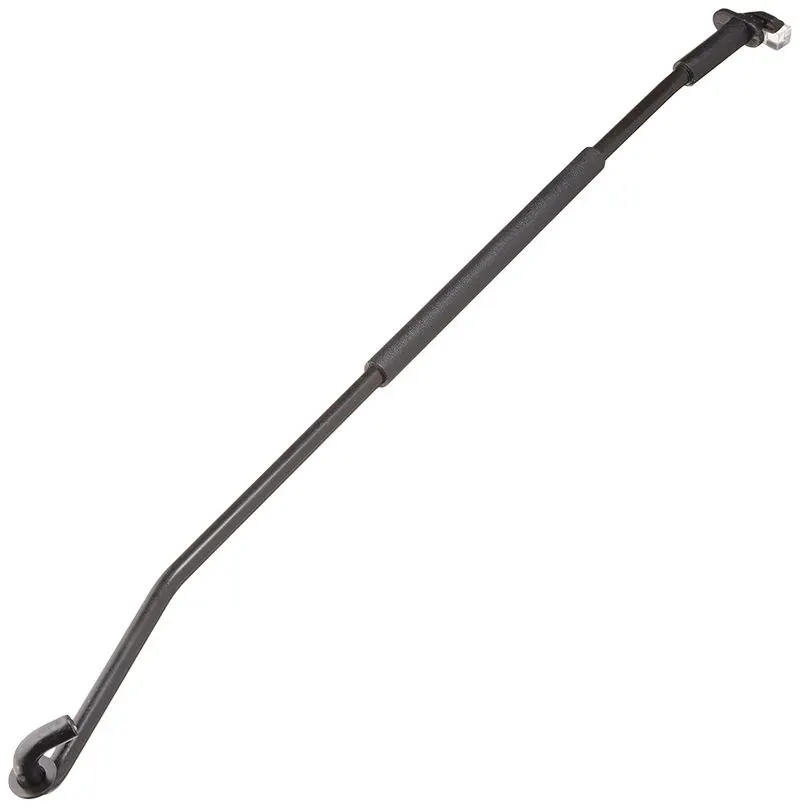
Fig. Image of a Nissan Hood support rod.
Gas Springs, commonly known as Gas struts or Gas, are a type of springs that use a compressed gas cylinder with asliding piston to pneumatically store potential energy and withstand external force applied parallel to the direction of the piston shaft. These are often provided in premium cars for easy and smooth opening and closing of the hood without much effort.
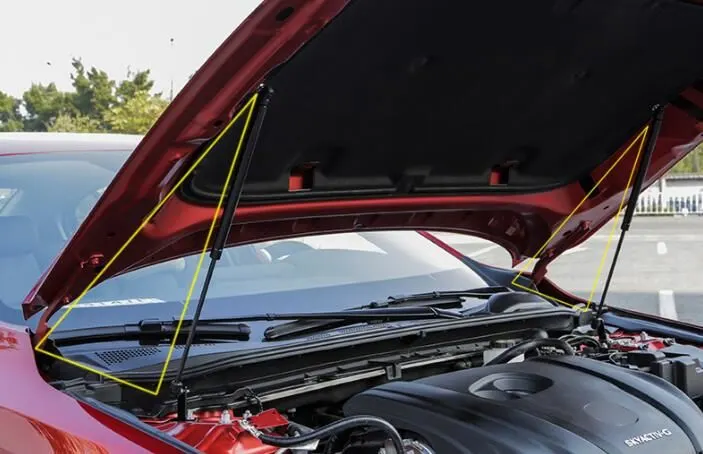
Fig. Image of Mazda 3 Axela 2020 BP car Bonnet Hood lift support spring shock Gas bracket strut
Inner And Outer Panel
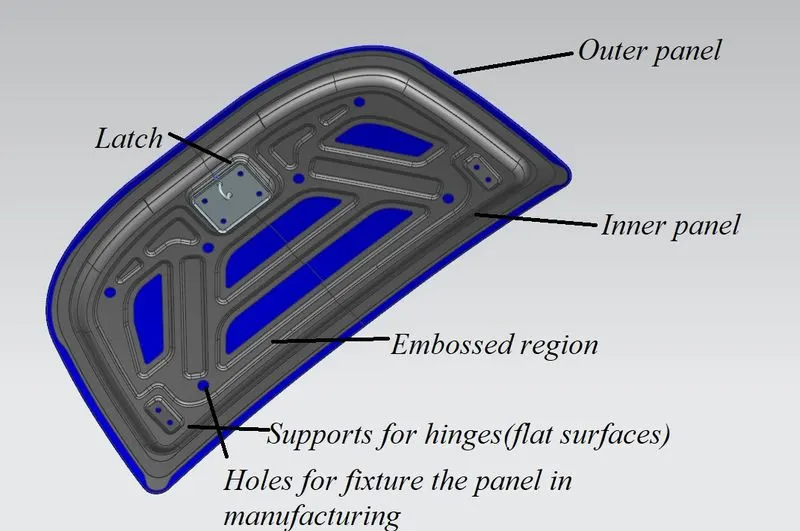
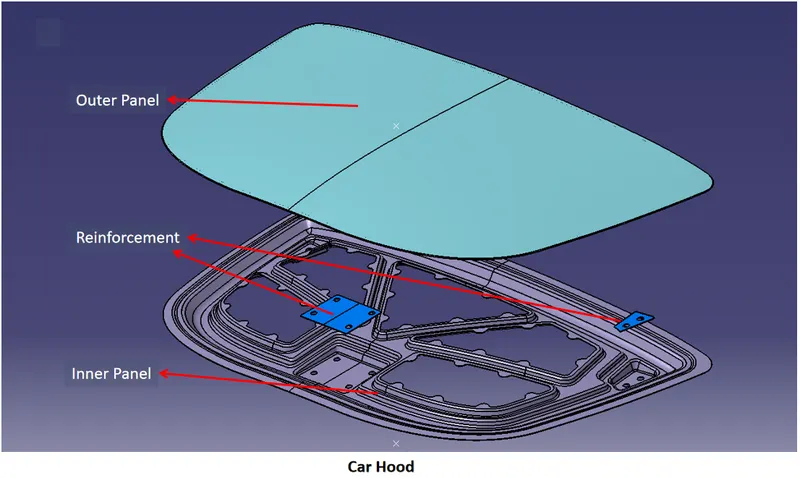
The inner panel provides strenght while the outter panelfunctions as metal cover. They are 0.65-0.75 nilliemetres(mm) thick. To improve NVH ( Noise, Vibration and Harshness ) i.e to reduce these levels, Mastic Sealants are used.
Mastic Sealants improves the strenght locally at around 80mm diameter. They are psitioned between the inner and outer panel of the hood in such a way that it covers most of the hood region. They are made of hard rubberr and are introduced as a paste thereby joining the inner and outer panel with a thickness of 5mm.
PEDESTRIAN - VEHICLE COLLISION:
- Road transport remains the most favoured mode of transprt for both freight and passenger movement in india. THe fast growing population, exceptional rate of motorization coupled with the ever- growing urbanization has made people vulnerable to frequent road accidents resulting in fatalities, injuries / disabilities.
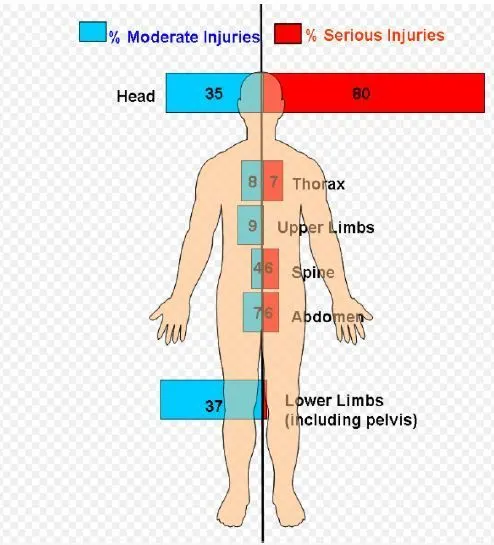
- The sequence of injuries and events in pedestian collision image is mentioned below
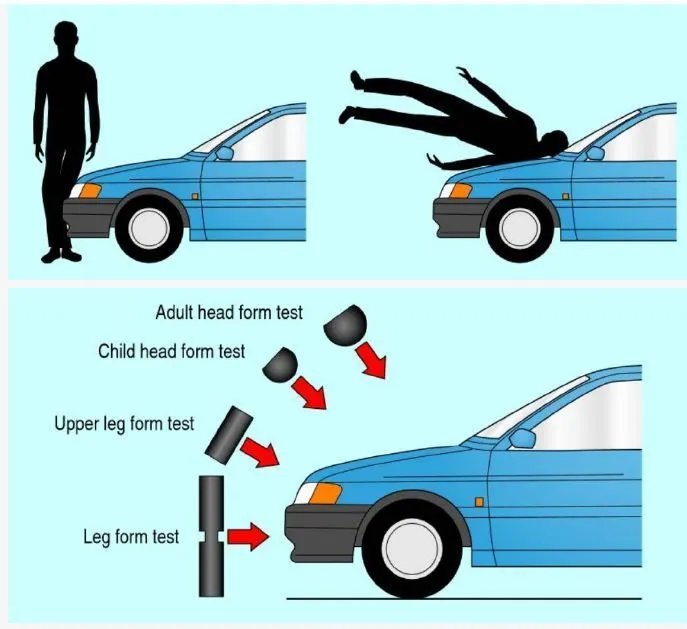
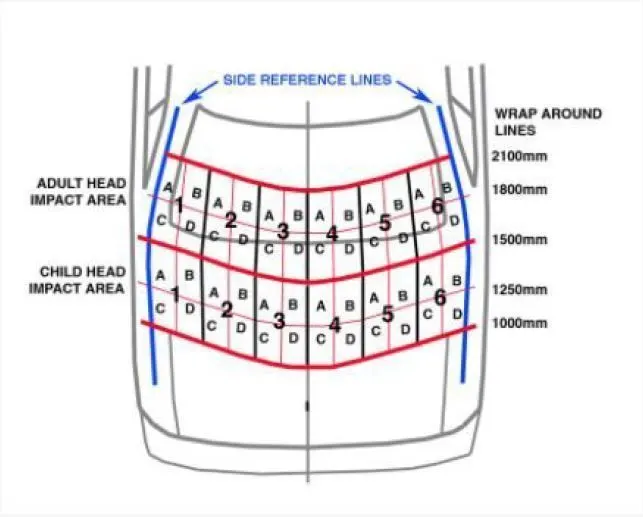
Two main zones are consideered while designing stage: thechild head impact zone (1000mm to 1700mm WAD ) and the Adult head impact zone ( 1700mm to 2100 WAD ). If the side reference lineis on the fender, the WAD will be more and impact zone will be less and vice-versa.
Occupant safety:
The hood panel should be designed in such a way that they diverge the impact forces during collison away from the occupants inside the cabin. the forces should be damped properly to avoid or reduce the risk of injuries and death.
Vehicle Quality:
Here the factor such as torsional stifness. dent resistance, corrosion resistance, weight distribution, and noise attenuation etc. are considered.
Styling:
It is a major factor that often influnces vehicle sales in the market. The outer panel is the main consideration here as it is the only component that is visible outside. The factors such as surface quality, tight radii on hemmed panel edges aesthetic design, etc are crucial factors. Other than styling, aerodynamic factors are important while designing the outer panel.
Ability To Manufacture:
Here various sheet metal operations such as blanking, piercing, embossing hemming, etc are used for manufacturing the hood components. Minimum 7-degree draft angle is maintained respectively tot he tooling direction considering the stamping process. Mastic points were implemented to join the outer and inner panels as we cannot apply the spot welding process here. the materials used are typiclly steel or aluminium based.
GIVEN INFORMATION
The given data and design parameters are as follows:
- Outer Panel Thickness = 0.75mm
- Inner Panel Thickness = 0.75mm
- Reinforcement Thickness = 1.5mm
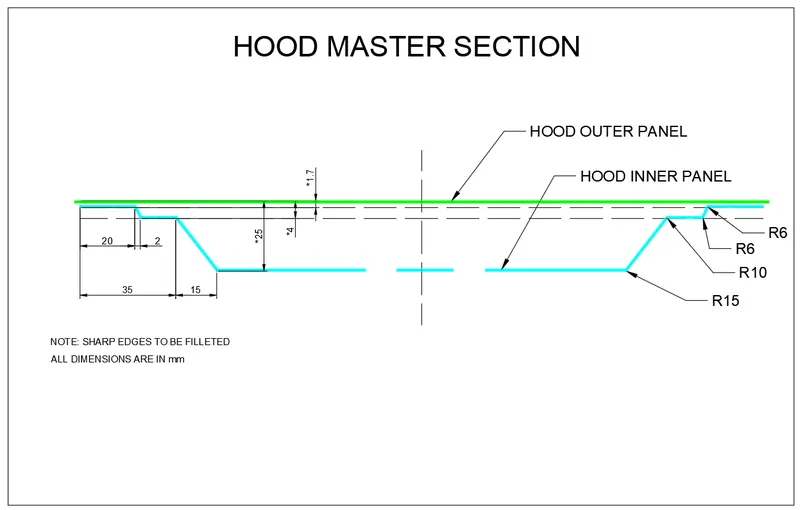
Master section
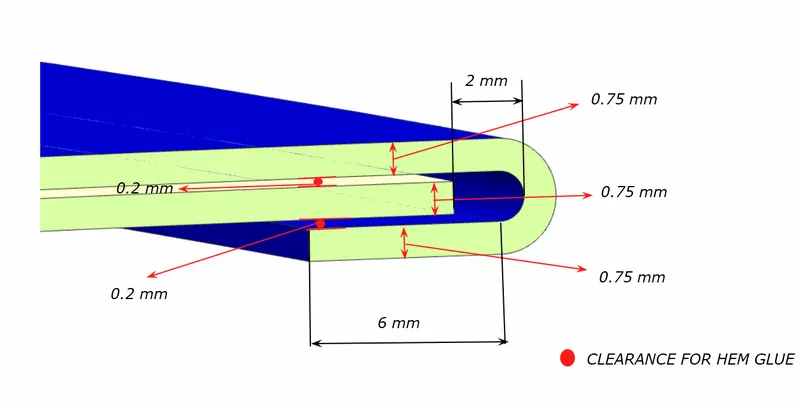
Hemming Data
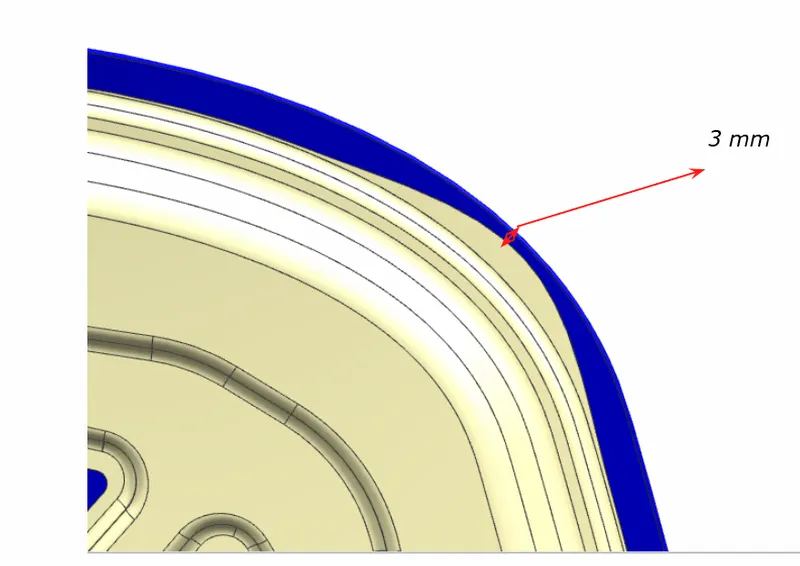
Front corner Relief for Hemming
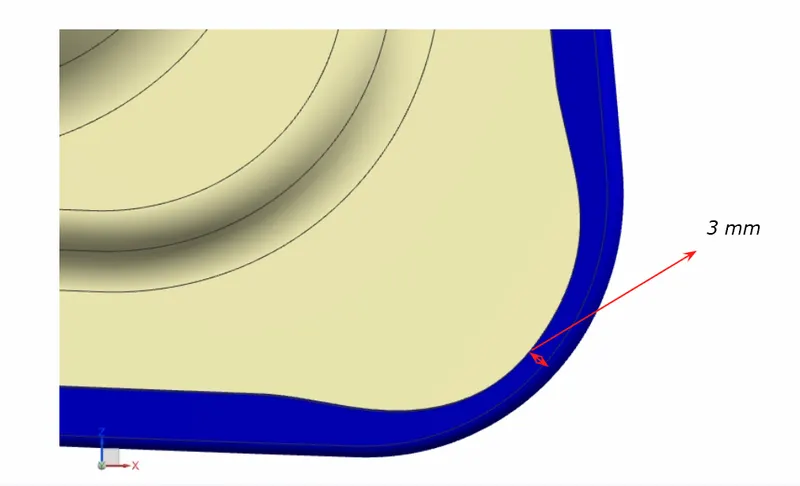
Rear coner Relief for Hemming
- HOOD INNER PANELS
THE structural integrity of the hood depend majorly on the inner panel. It is only on the inner panel, that the structual elements can be designed and reinforements can be attached to. Here, the basic shape of the inner panel is created from the provide thickness information and master section. Apart from the given information, it is crucial that inner panel is provided with embosses in way that the impact forces are also provided to reduce the component weight.
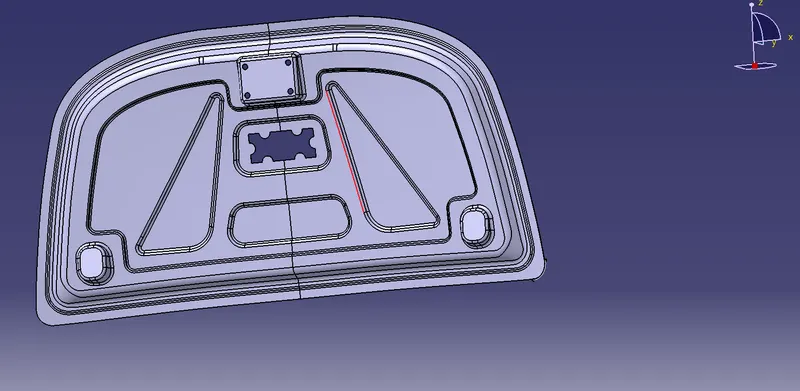
Fig. Image of Inner panel having 0.75mm thickness.
HINGE AND STRIKER
Hinges enable the opening and closing of the hood. The latch and striker forms the locking mechanism of the hood with the engine compartment. onepart of the hinge is mounted to the engine compartment and the other to the inner panel of the Hood, on both sides.
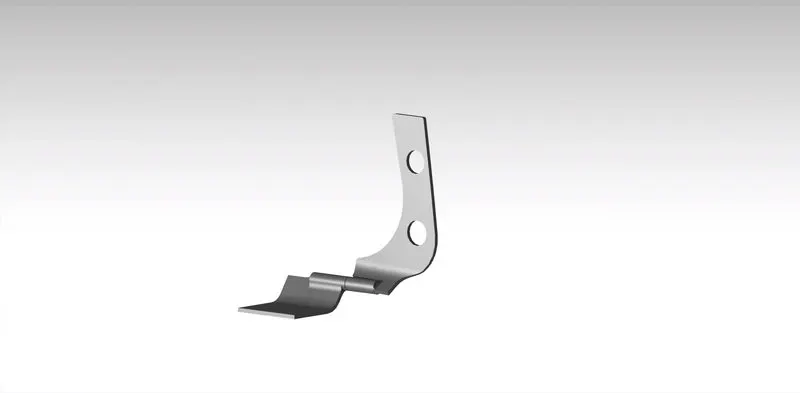
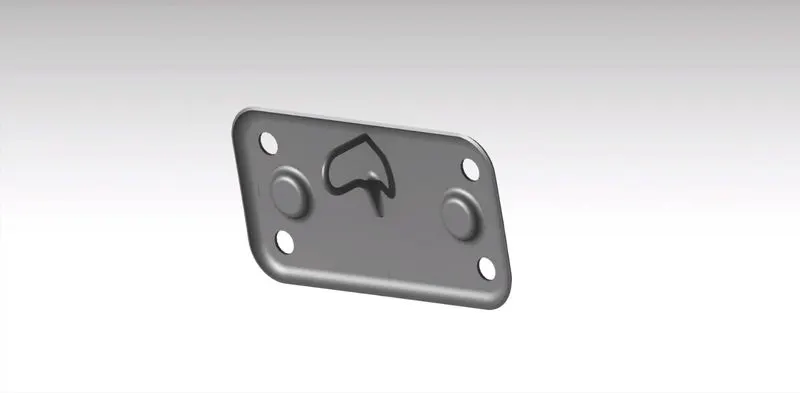
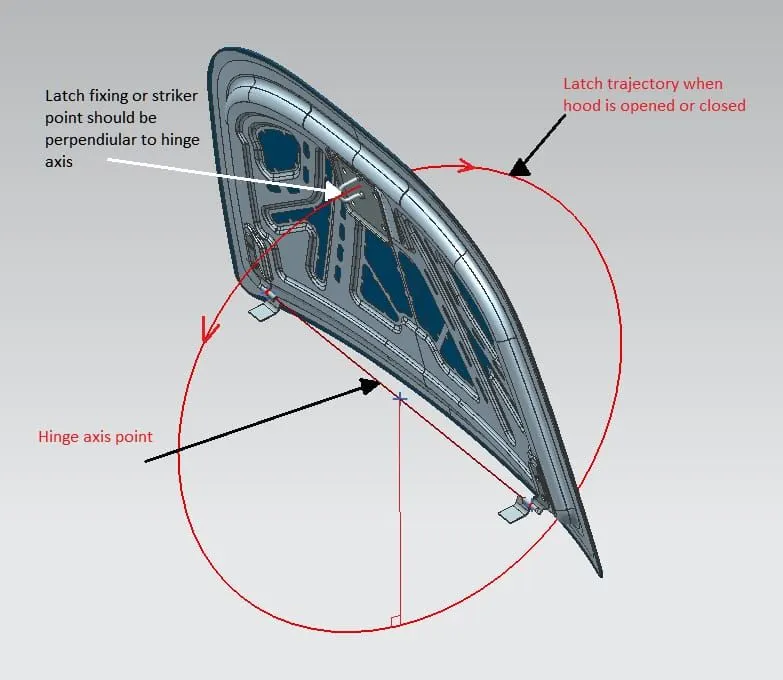
Latch Trajectory and Hinge Axis:The hood is mounted on to the car body with the support of two hinges, one on the either corner.To lock the hood closed, a latch and striker mechanism is used. The striker is mounted on the inner panel of the hood, While the latch is provided on the car body. Here, the embosses for the Hinges and the Striker are created by first aligning the Hinges with the Inner Panel and then crating a HInge Axis around which the trajectory of the Latch and Striker mechanism is created. The striker is then aligned to trajectory and the inner panel as well. After finalizing the positions of the hinges and the striker , the necessary emboss to complete the inner panel.
DESIGN
The Hood design can be approached as the steps below;
- Study the given information and prepare the given skin data.
- Develop the shape of inner panel from the given skin data and provided Master section.
- Design the necessary points for the inner panel.
- Develop the Hemming of for outter panel providing Corner Relief as indicated.
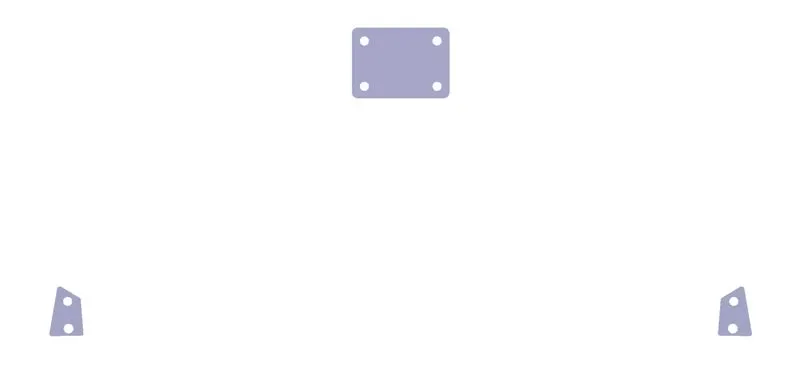
- Develop the Reinforcements for Hinges and Striker.
There is a master section for every region which would be adoptable on differet of the part to be designed. The inner panel including all its emboss are designed by offsetting the outterpanel. The maximumm gap between the innerpanel and outer panel in the master section is 25mm, under which the Engine compartment is situated. This specification is given taking into consideration pedestrian safety. Process of Deep Drawing is used in manufacturing the inner panel and the desing consideration are kept in mind for the same.
EMBOSING
Embosses are added to the inner panel to improve the stiffness of the part. The embossing are done in such a way as to perform the Deep Drawing direction smoothly. 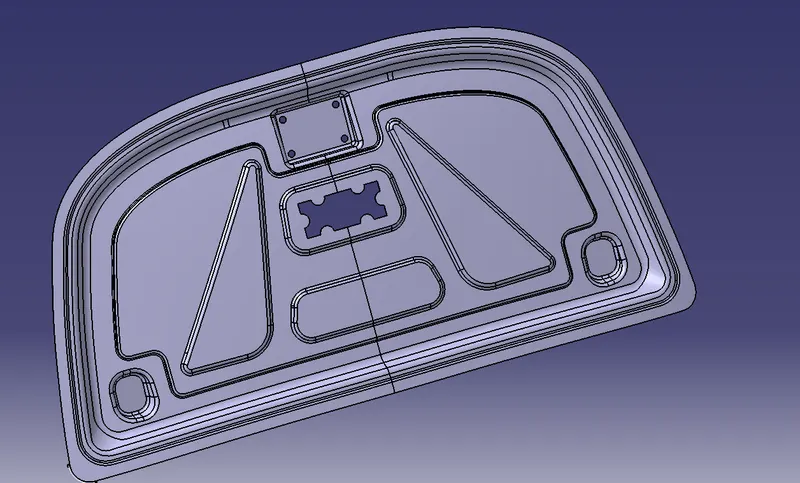
Fig. Emboss defenition on both sides of the inner panel.
REINFORCEMENT
oth the Hinges and the striker are fastened to the inner panel by the means of screws and bolts. Reinforcements of the thickness as provided in the given data are spot welded to the mounting region on the inner panel to provide additional strendth.
- HOOD OUTER PANEL
The outer panel of the Hood is already well defined by input skin data and is often developed without altering its outward design. The only addition is the extension for hemming which fixes the outer panel in place with inner panel. Here, the provided hemming data and the Corner Relief parameters are taken into consideration in developing the Outer panel.
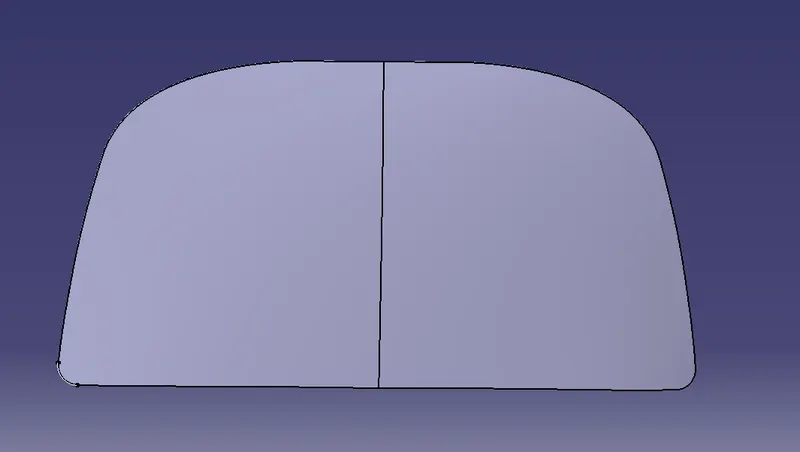
Fig. Image of the outer Panel having 0.75mm thickness, provided with Hemming extension and corner Relief
- HOOD ASSEMBLY
The inner panel, outer panel, Hinges and the striker are assembled in the Assembly application CATIA V5 as shown below.
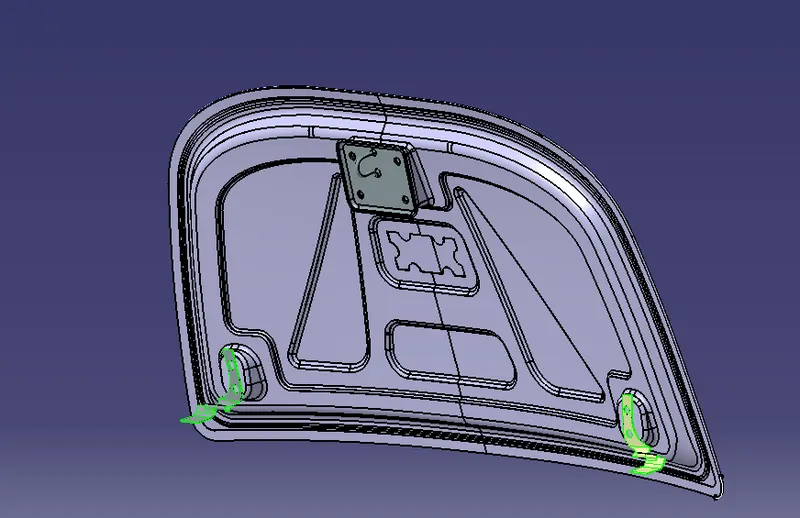
Fig. Isometric View of Hood Assembly.
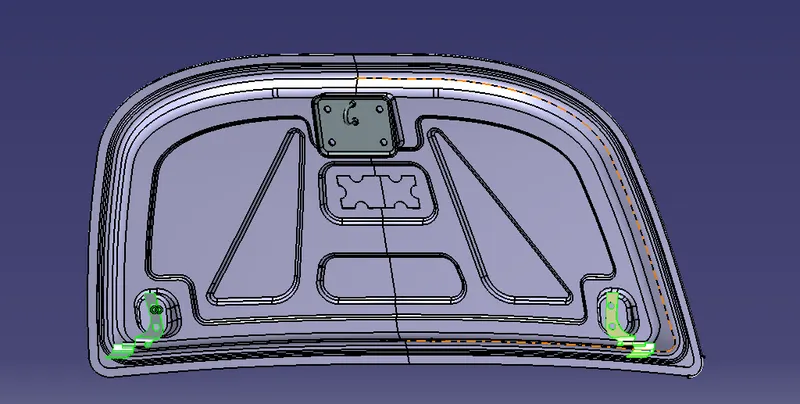
Fig. Front view of Hood Assembly.
MANUFACTURING PROCESS EMPLOYED IN CREATING THE HOOD
- Deep Drawing: It is a sheet metal forming process where in a sheet metal bank is converted into a cup shape by pressing the sheet metal in the centre with a cicular punch fitting into cup shaped die. During the process, the sheet metal is subjected to a complicated pattern of stress making it one of the most difficult sheet metal operations. The portion of the sheet between the punch and the die wall is subjected to pure tension, where as the portion at the bottom is subjected to both tension and bending. The outer end portion of the sheet between the die blocks is subjjected to circumferential compressive stress and buckling. Here, the basic shape of the hood Inneer panel is achieved from deep drawing.
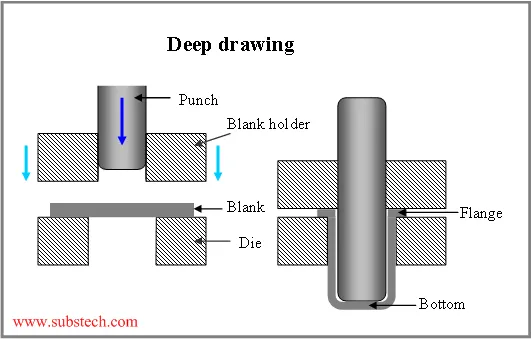
Fig. Image of Deep Drawing operation.
- Embossing: It is a sheet metal forming process in which the impressions are made on a sheet metal blank such that hte thickness remains uniform throughout the sheet even after embossing has been done. It is a form of presing operation where not much force is needed. The blank is kept on the bottom half of the die and the stroke of the punch is adjusted that, when it moves down to its lowest position, it leaves a uniform clearance between the impression carved the punch and the die which is equal tot he thickness of the sheet being embossed. As a result, the design is transferred on the sheet up or down without altering its thickness. Here, embosses are provided on the inner panel to both increase the structural rigidy as well s to transfer the impact forces towards the hinges.
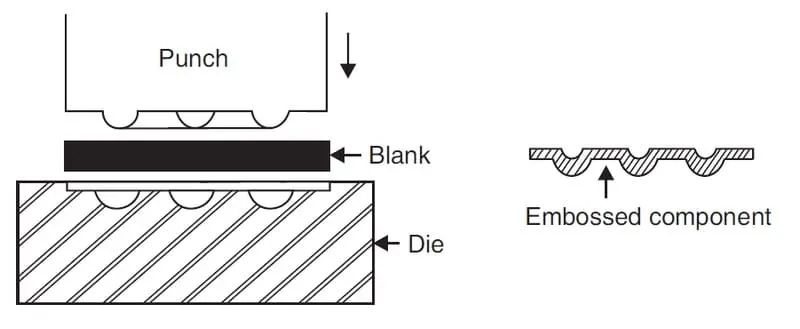
Fig. Image of an embossing operation
- Blanking: It is a form of sheet metal punching process in which asheet metal is kept on adie and is sheared or pierced by a punch of desired profile. Here, thepunched out part is called blank and usually requires no further machining. the process is ambiguous with punching. here , the outer shapes of both the inner and outer panels as well as the corner relief for hemming of the outer panel are obtained by this process.
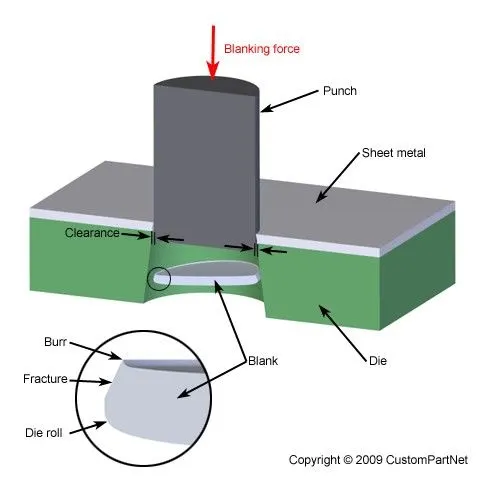
Fig. Image of Blanking operation
- Punching: It is aform of sheet metal punching process in which a punch is forced through a sheet metal to create a hole of desired profile. Here, the part of the blank which is punched is the workpiece and the punched out part is scrap. Here, this process is used for removing material in the form of cut outs and holes wherever required on the inner panel of the hood.
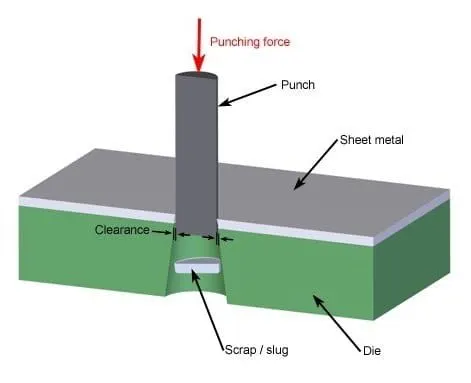
Fig. Image of a punching operation
- Hemming: It is asheet metal forming process in which th outer flanges of sheet metal are bent and rolled over onto the sheetmetal itself. This is commonly used to reinforce the edges, hide the burrs and rough edges thereby improving the appearance of the hseet metal and offering safer handling of the component. here, the extended flanged edges of the outer panel are bent over to wrap arounf the inner panel so that both the parts are fixed together. As the shape of the bending region is closed profile, it is suggested to provide corner reliefs wherever necessary to avoid inaccurate overlapping or wrinkled edges. Usually, in automotive applications, roller hemming is employed for effective and efficient manufacturing.
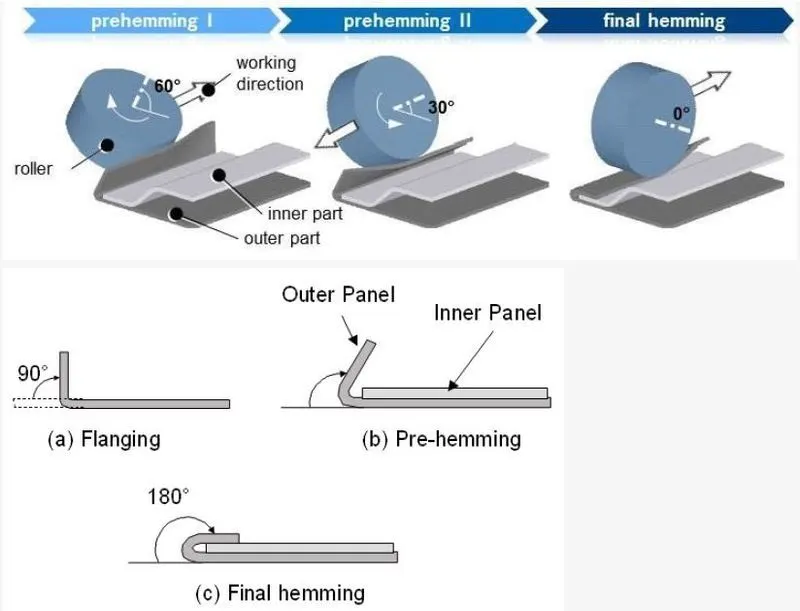
Fig. Image of a Roller Hemming operation.
CONCLUSION
Hence the Car Hood comprising the inner and outer panels, hinges and striker was modelled using CATIA V5 according to the industry as well as the EuroNCAP standards.
- Gowthaman MHi bro, This is gowthaman.how to design outer panel