Hood design-Week 2
AIM: Design HOOD using CATIA V5 Latch trajectory, Mastic data, Emboss definitions, manufacturing process like deep drawing and hemming, and all the parameters.
WORKBENCH USED:
1. Part design
2. Generative shape design
3. Assembly Design
MAJOR PARTS OF A HOOD :
- Support Rod: It is the main component of the front portion. The shape of the bonnet is made aerodynamic in order to minimize the air resistance. It is used to access the parts like radiator, engine and many parts. ... Support rod is like different curves and bend to make it more strong to support the hood.
- Gas tray: Device to support the engine hood of the motor vehicle in its open position by the mean of an actuator which is activated by the gas.
- Inner and outer panel: Inner panel provides strength while outer panel functions as metal cover. To reduce NVH(Noise, vibration and hardness) the mastic sealants are used in the inner panel.
- Hinges/striker: A hinge is a type of joint that attaches two things together while allowing for limited movement. The latch and striker form the locking mechanism of the hood.
Hinge axis point, which is the midpoint of the axis of the hinges should be aligned with the striker through the trajectory of the hood opening and closing.
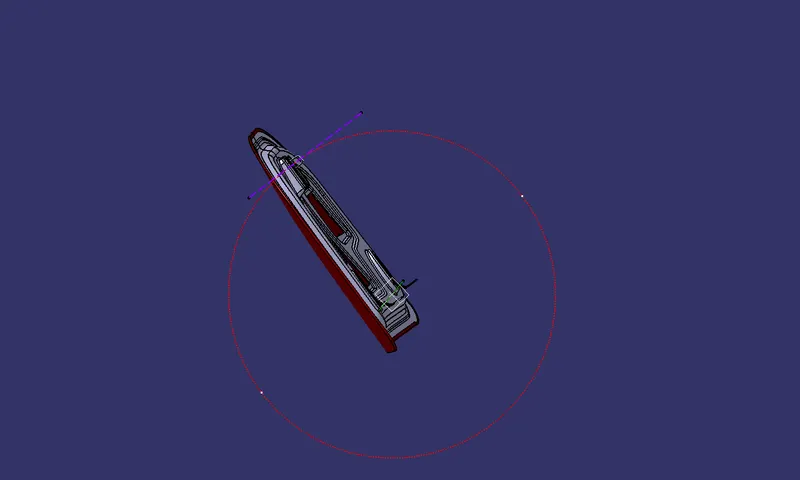
Hinge axis point aligned with the striker.
Procedure or steps followed :
Aesthetic surface of the hood design is provided as below :
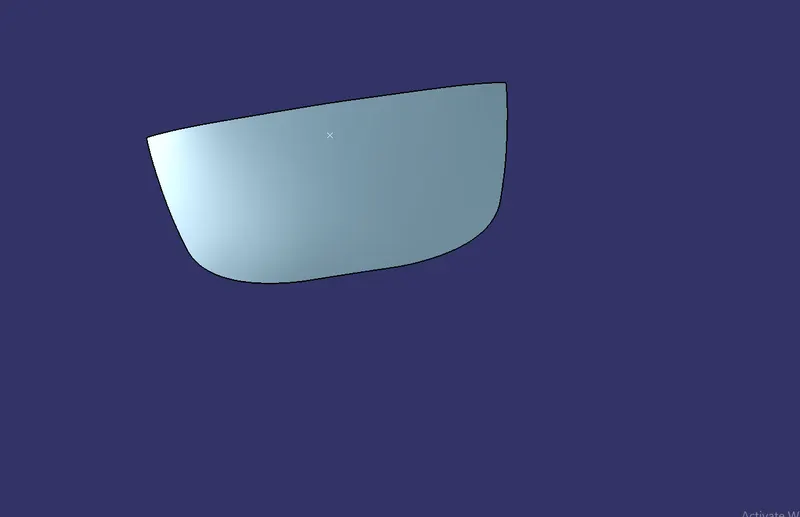
There is the master section which would be adopted for every region which gives us dimension for the part to be designed.
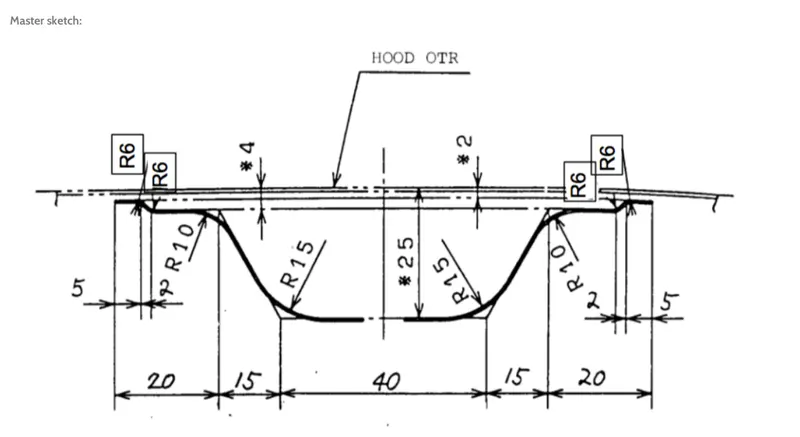
Sketch :
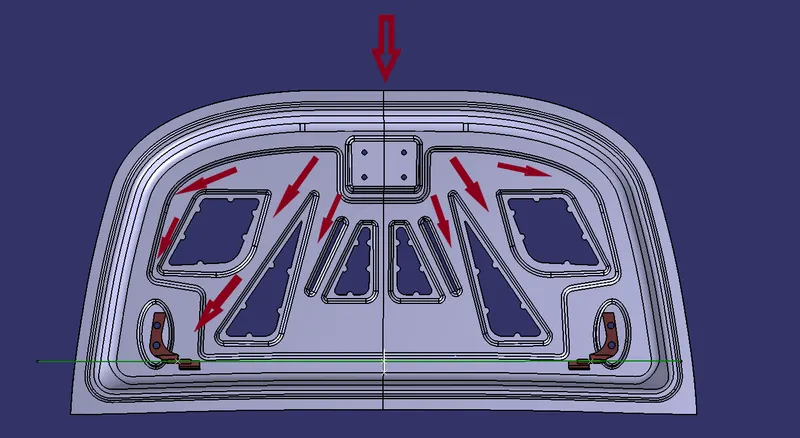
Embossing: Embossing are added to the inner panel to improves the stiffness of the parts.
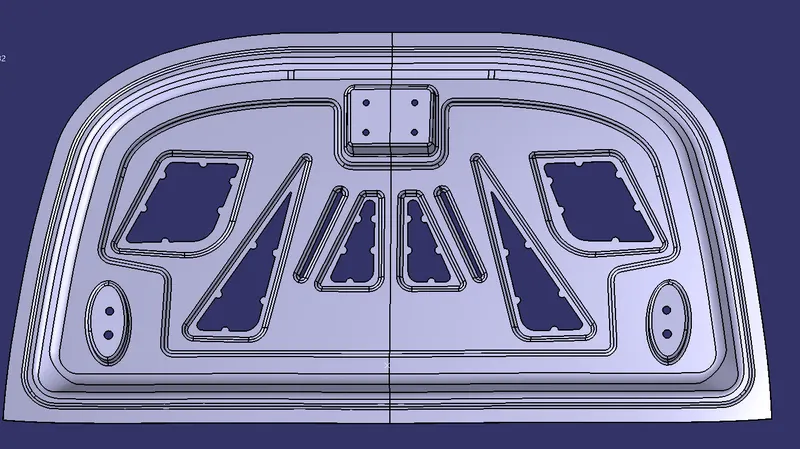
Embossing defines on both sides of the panel of the inner panel.
The design and the direction of the embossing should be such that In case of collision the force dissipating in all the direction to reduce the impact on the passengers.
Hemming: It is the metalwork process in which sheet metal edges is rolled over onto itself. In this case, hemming is used to assemble the inner panel with the outer panel and should be 0.2 mm gap between both the panel. Where sealants are applied to achieved water tightened.
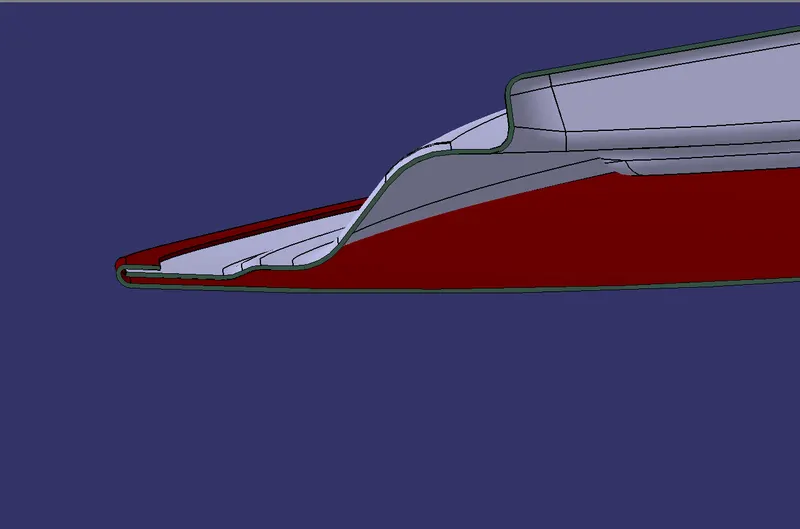
Hemming done on the outer panel
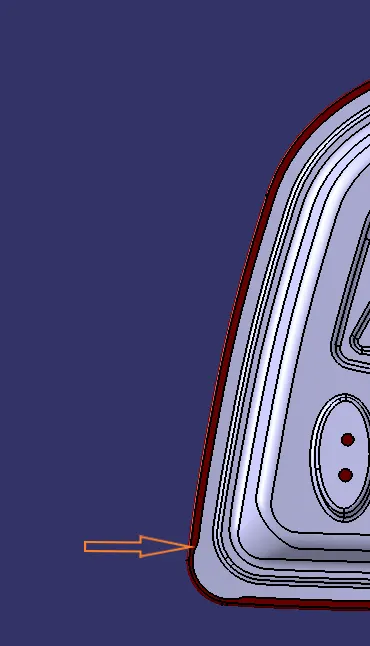
The relief provides on the hood corner to avoid the intolerance issue arises from the rolling process in the hemming operation.
Mastic Sealents : It improves the strength locally at around 80mm diameter. They are provided in inner and outer panel of hood such a way that it covers most of the region of hood. They are made up of hard rubber and are introduce as a paste the inner and outer hood with the thickness of 5mm.
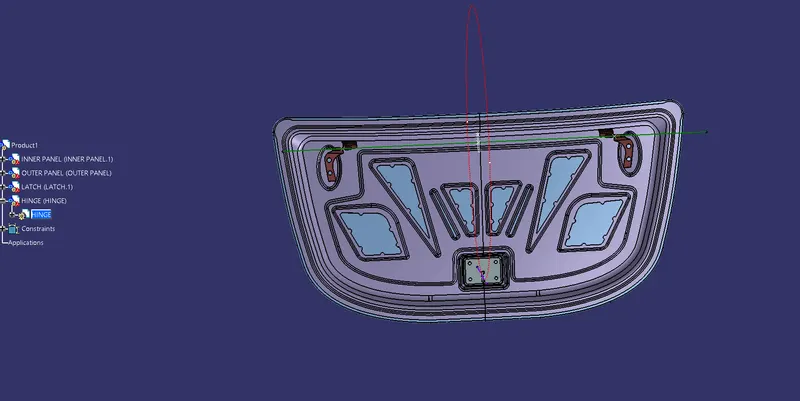
Final model somewhat looks like the below figure:
Conclusion :
Thus the passenger car hood comprising the inner and outer panel, hinges and striker was modelled using CATIA V5 according to industry standards.