Flow over a cylinder
Aim: To study the flow over a cylinder using the Solidworks simulation feature for a baseline simulation & with a varying Reynolds number by a factor of 20%,40% & 100%.
objective :
- calculate the Reynolds number for a baseline simulation.
- Run a baseline simulation.
- Run the transient simulation feature by varying the Reynolds number by Factor of 20%,40%& 100% with a baseline simulation.
- Create animations for pressure-velocity for all the three Reynolds numbers.
Theory:
Transient Flow Simulation
Transient flow is a flow where the flow velocity and pressure are changing with time. when changes occur to fluid systems such as starting or stopping a pump, closing or opening a valve, or changing a tank level then transit flow conditions exist. otherwise, the system is in a steady state.
The transient flow conditions persist as oscillating pressure and velocity waves for some time after the initial event that caused it.
Explanation:
Reynolds Number

 =reynolds number
 =density of fluid
 =flow speed
 =chraterstic linear dimension
 =dynamic viscosity of the fluid.
Step 1- Draw a cylinder as per dimension for a simulation.
Diameter, D= 0.04m Length,L =0.05m
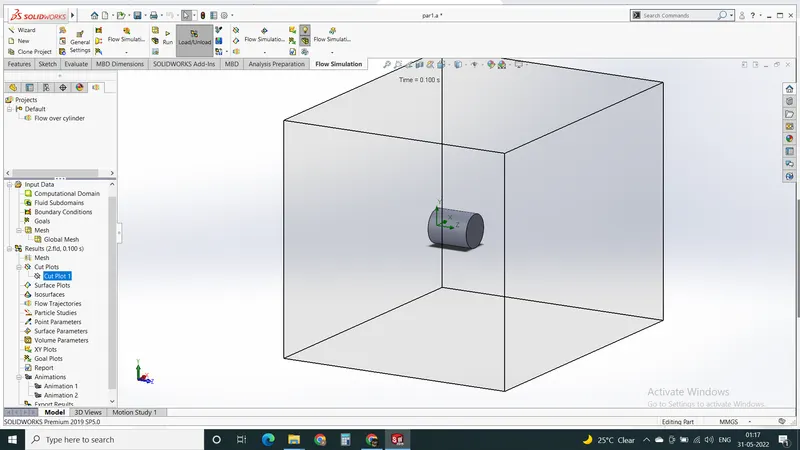
characteristics of fluid flowing over a cylinder,fluid type - Air
=1.81 × 10⁻⁵ kg/(m·s)
= 1.125 kg/m3
simulate the flow over a cylinder as per shown in video.
calculate the baseline case reynolds number.
calculations:
For a basline simulation
v= 10m/s
Re = ( ρ x v x D)/(`μ`)
= (1.125x 10x 0.04)/(1.81 × 10-5 )
= 27012.13
similarly , for a reynolds numbers increase by factor of a 20,40 & 100 percent.
At 20% - 32414.55
40% - 37817
100% - 54024.26
Total Analysis time
The Physical time period until the simulation will be run from its initial instant of time (t=0 sec by dependent)
T = 2t
for Re= 120% of 27012 .13 = 32414.55
v= 12m/s
flow throgh time = domain length / velocity
flow through time = 0.04166 sec
simulation end time = (2t)= 2x 0.04166=0.0833 sec
similarly ,
| Re =27012.13 | 120% | 140% | 200% |
| velocity (m/s) | 12 | 14 | 20 |
| Re | 32414.55 | 37817 | 5402.26 |
| time (t) sec | 0.833 | 0.0714 | 0.05 |
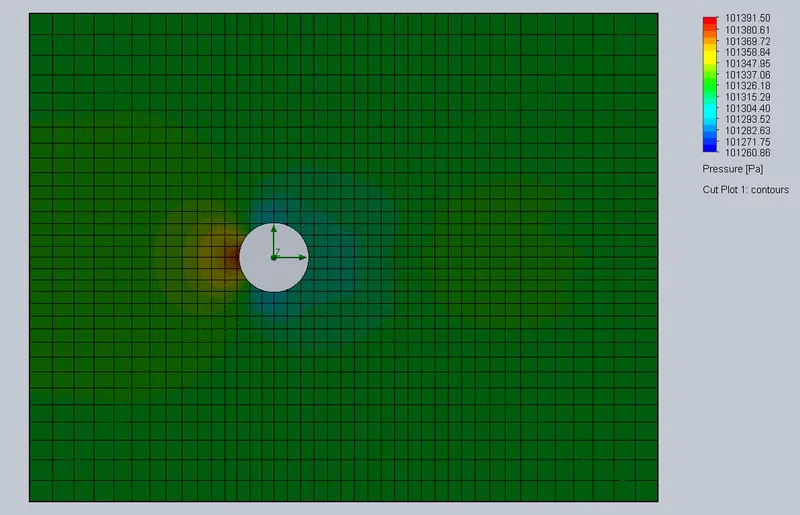
Results:- Simulation
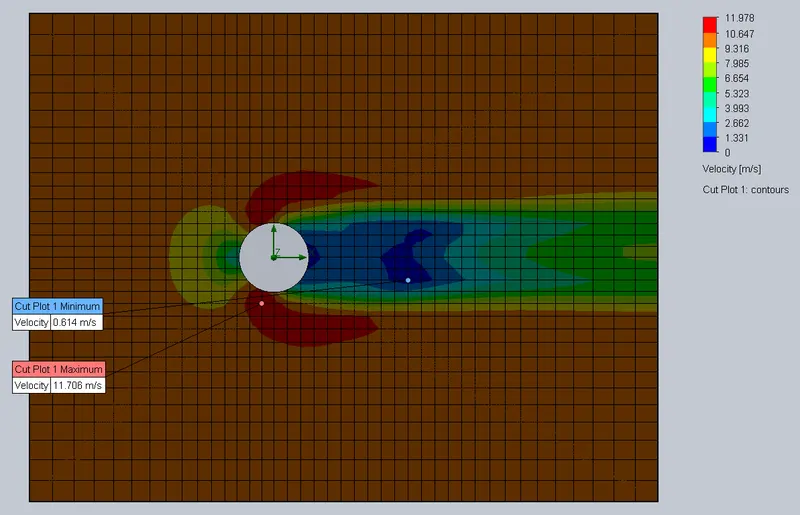
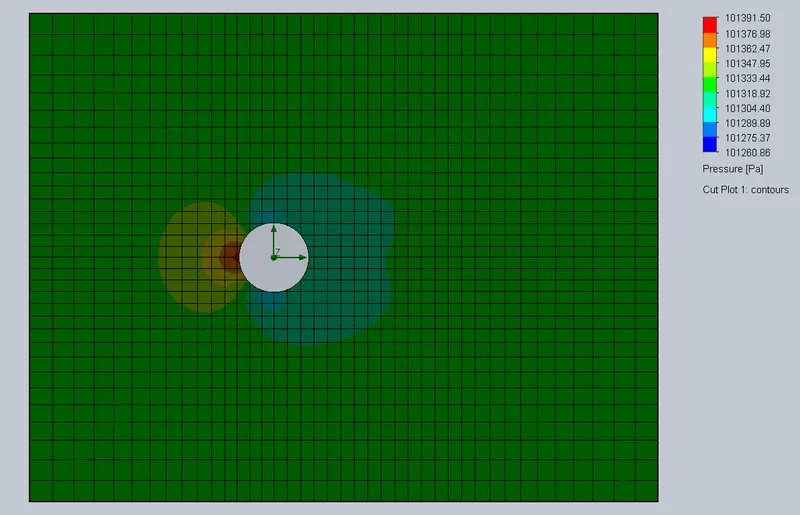
velocity = 10m/s Pressure
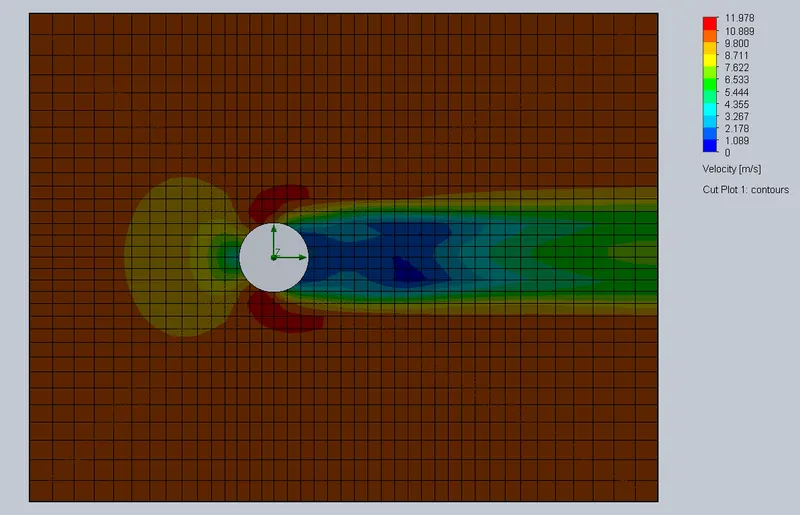
v1= 12m/s Pressure 1
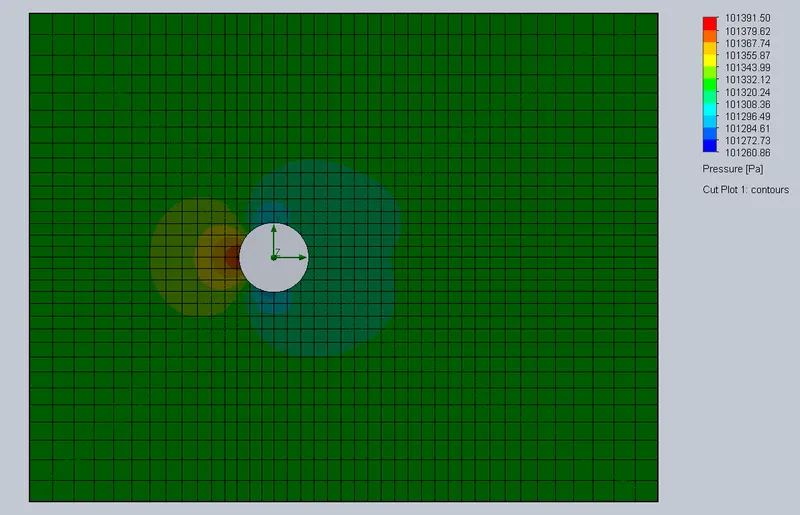
V2 = 14m/s Pressure 2
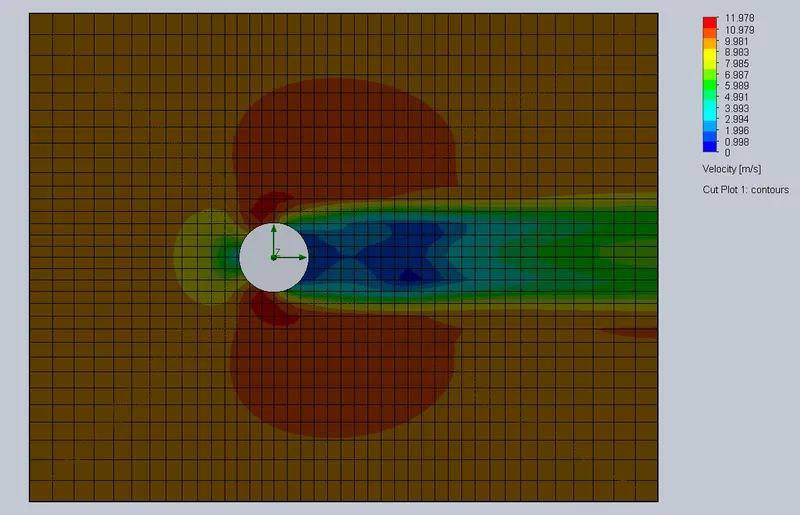
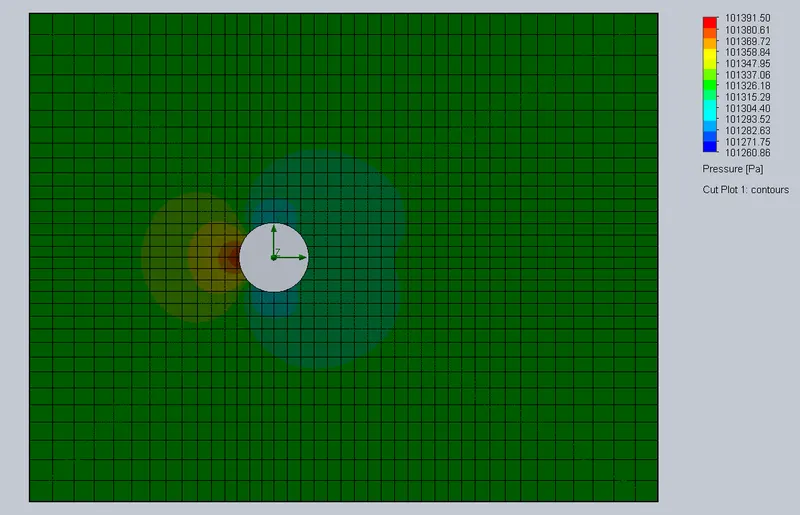
V3 = 20m/s Pressure 3
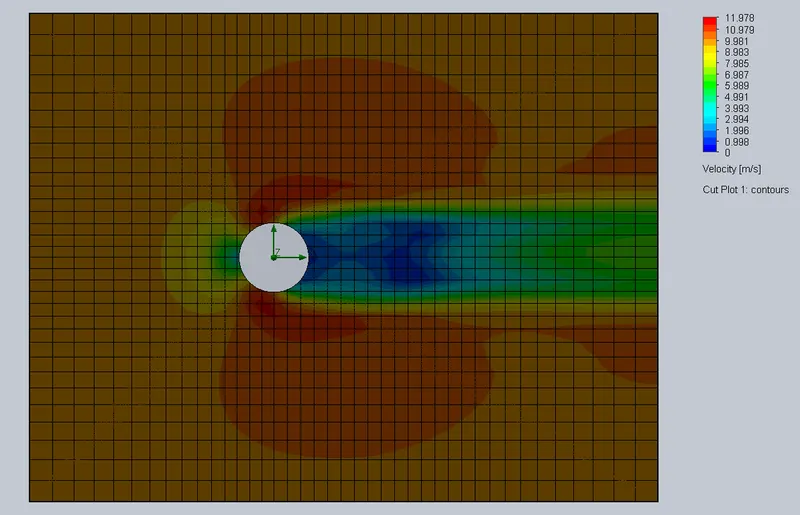
conclusion:
- as per the above assignment, we can conclude that the max velocity variation over a cylinder, maximum at the surface of cylinder contact, at the inlet velocity becomes zero observed.
- The relative pressure variation does not vary due to the large Reynolds number. There is no pressure variation over a cylinder.
- from the above calculation, we can say the Reynolds number directly to velocity, as velocity increases the Reynolds number also increases.