Fender Design Challenge
Automotive Fender Design
Aim:
To design automotive fender from the given fender skin model and also to create different mountings on it for attachment.
Introduction:
Fender is a metal or plastic enclosure over the wheels of an automobile or other vehicle to protect against splashing mud, etc.
Wheel arch is an arch-shaped cavity in the body of a vehicle, which houses a wheel ande and in the case of front wheels, enable them to be steered. The design of Wheel arch of a fender should be such that it must shield wheels and protect both passengers' compartment and pedestrians from projection of water, mud and stones.
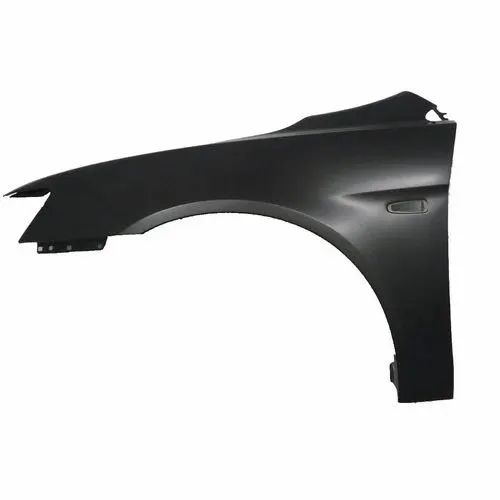
Also, wheel arch is semi-circular edge of the fender which houses wheel-well. The wheel arch gives access to the wheel and other components attached to it.
Usually there are two types of fender design,
- Full bumper type
- Half bumper type
The full bumper type fender was typically used in olden cars whereas the Half bumper type is generally used in modern cars in order to reduce the wastage / scrap which decreases the production and manufacturing cost.
Manufacturing process:
The process used to manufacture an automotive fender is "Reaction injection molding" process.
Reaction Injection Molding is a low pressure, low temperature process used to mold many types of plastic parts. This process is typically used for the medical, industrial and automotive industries.
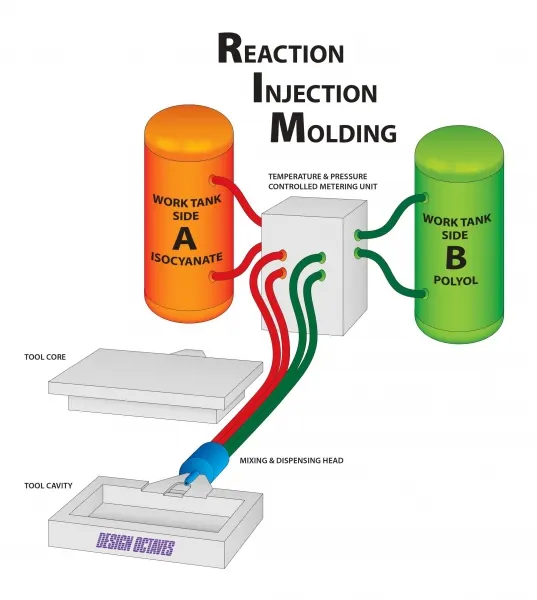
The RIM process begins with polymer liquids (polyol and isocyanate) stored in storage tanks that are eventually dispensed by high-pressure industrial pumps. The polymers are recirculated from the storage tanks to a multi-stream mix-head and back to the storage tanks in a continuous loop.
The reaction injection molding (RIM) process utilizes low-viscosity liquid polymers. These polymers expand and thicken through a variety of chemical reactions. After the polymers have been injected into the heated mold they eventually harden. Through the RIM design process raw materials and molding techniques can be selected, and customized, to deliver the desired weight, strength, density and hardness characteristics that you are looking for.
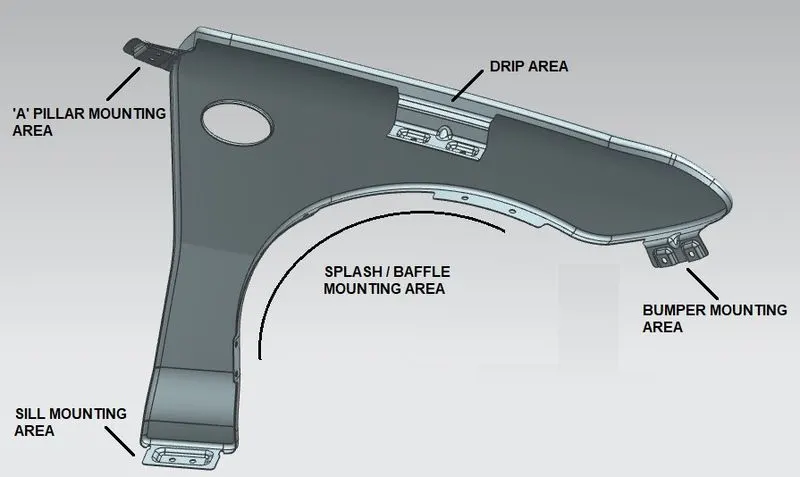
Mounting types on fender:
- Drip area
- A - pillar mounting
- Bumper mounting
- Baffle mounting
- Sill mounting
Design Procedure:
Given Master Section for Drip area -
It is on of the most important mounting to be created. The drip area will be attached to engine compartment.
The drip area should be located more than 150mm apart from the front of the fender and the height should be less than 40mm as shown in the master section.
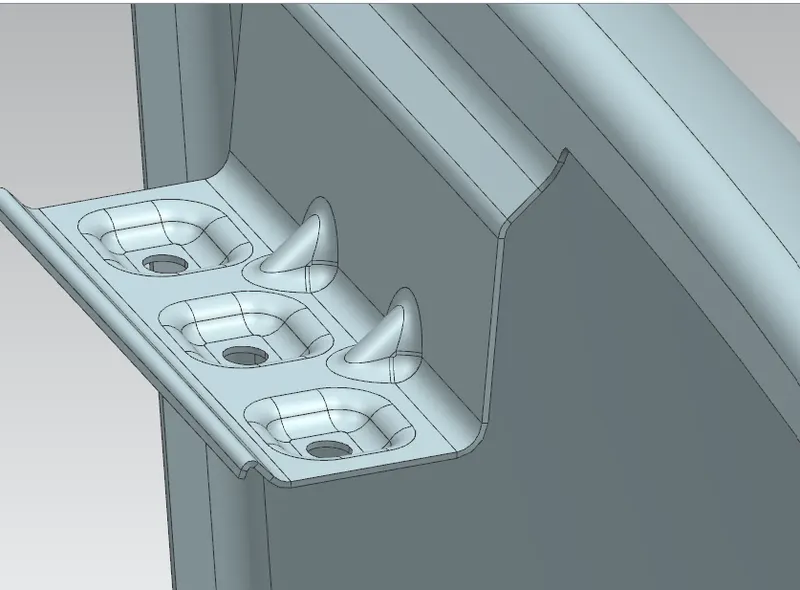
Two ribs should be created between the rectangular slots to provide the stifness fort he support. This is created using Dart option in NX workbench.
Similarly all the mountings are created.
- A - pillar mountig design:
The A -pillar is the structural pillar that combines the body to the roof . this make the sides of the windshield rest.
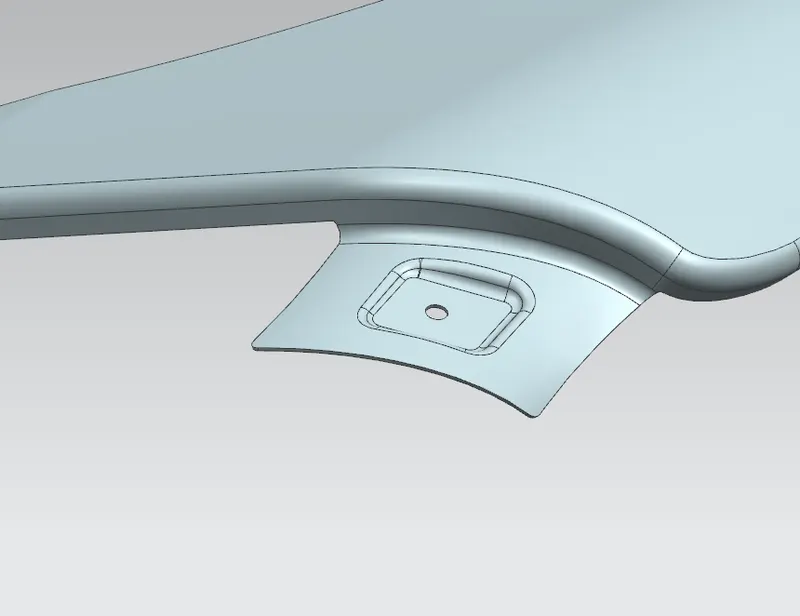
Fillet should be appield to the sharp edges.
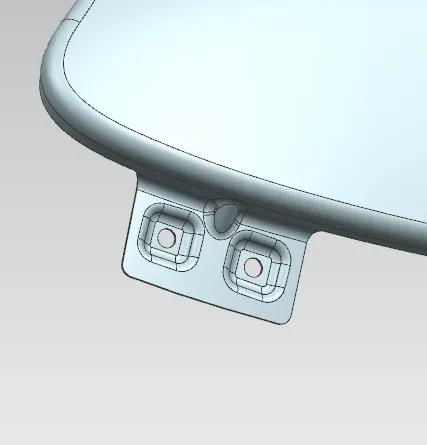
- Bumper Mounting Area:
Bumper mounting area is used to fix the plastic bumper to the fender with the help of the fasteners
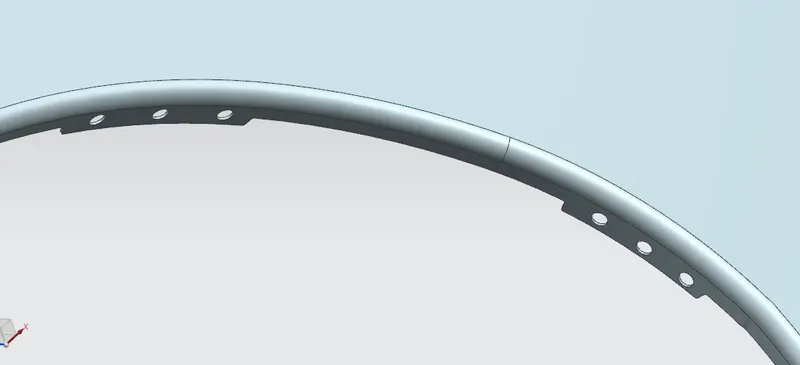
- Baffle mounting area:
Baffle mounting are clip fit type of mounting on the inner side of the fender arch over the tyre. It protects the car engine compartment and pedestrians from causing injuries from chip out debris on the road when the car is in motion.
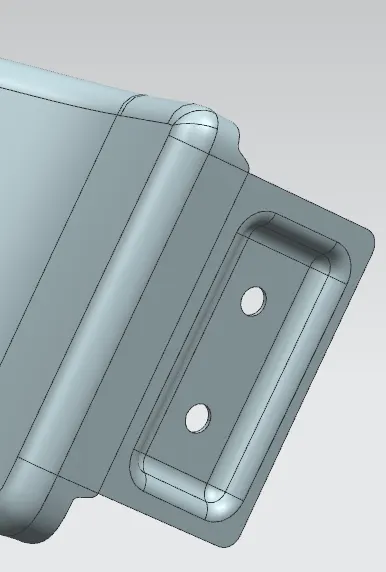
- Sill mouniting area:
Sill is the panel directly below the bottom of the door supporting the floor. The bottom end of the fender is mounted on the sill body for reinforcement of the fender panel , thus the sill mounting position is designed with holes and emboss.
Views of Fender Design:
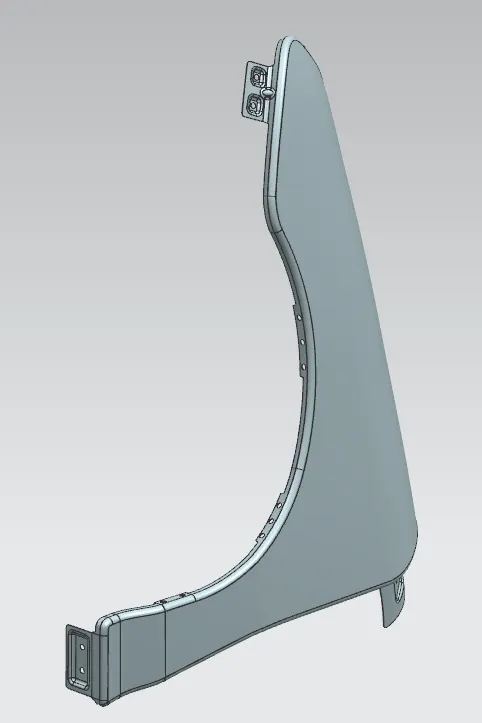
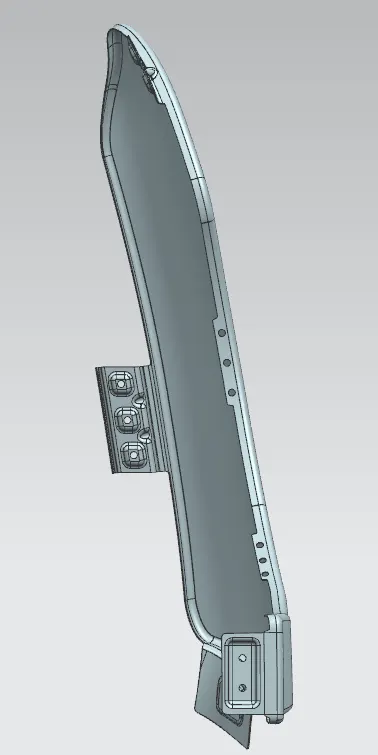
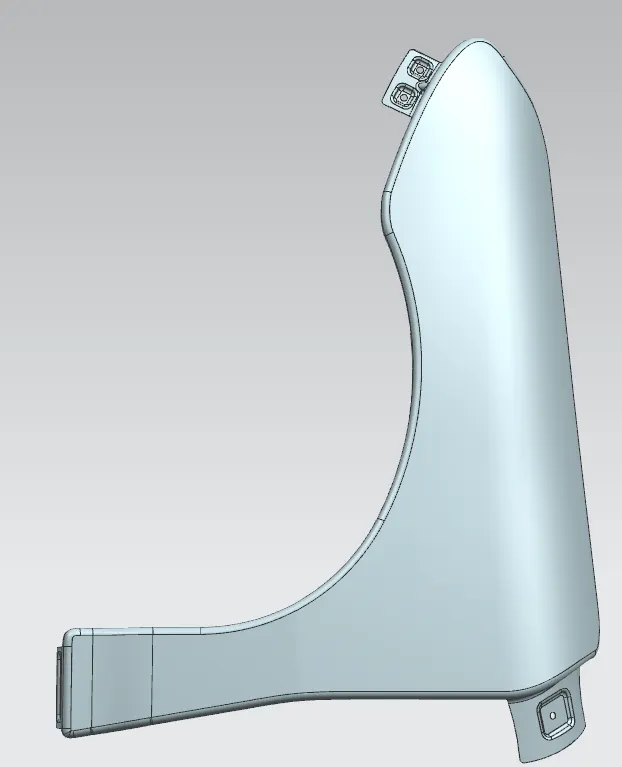
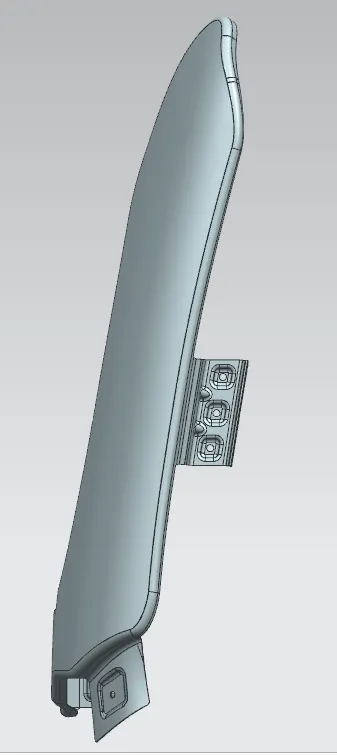
Conclusion:
The Fender is designed with all the required mountings as per the information provided in the Master section.